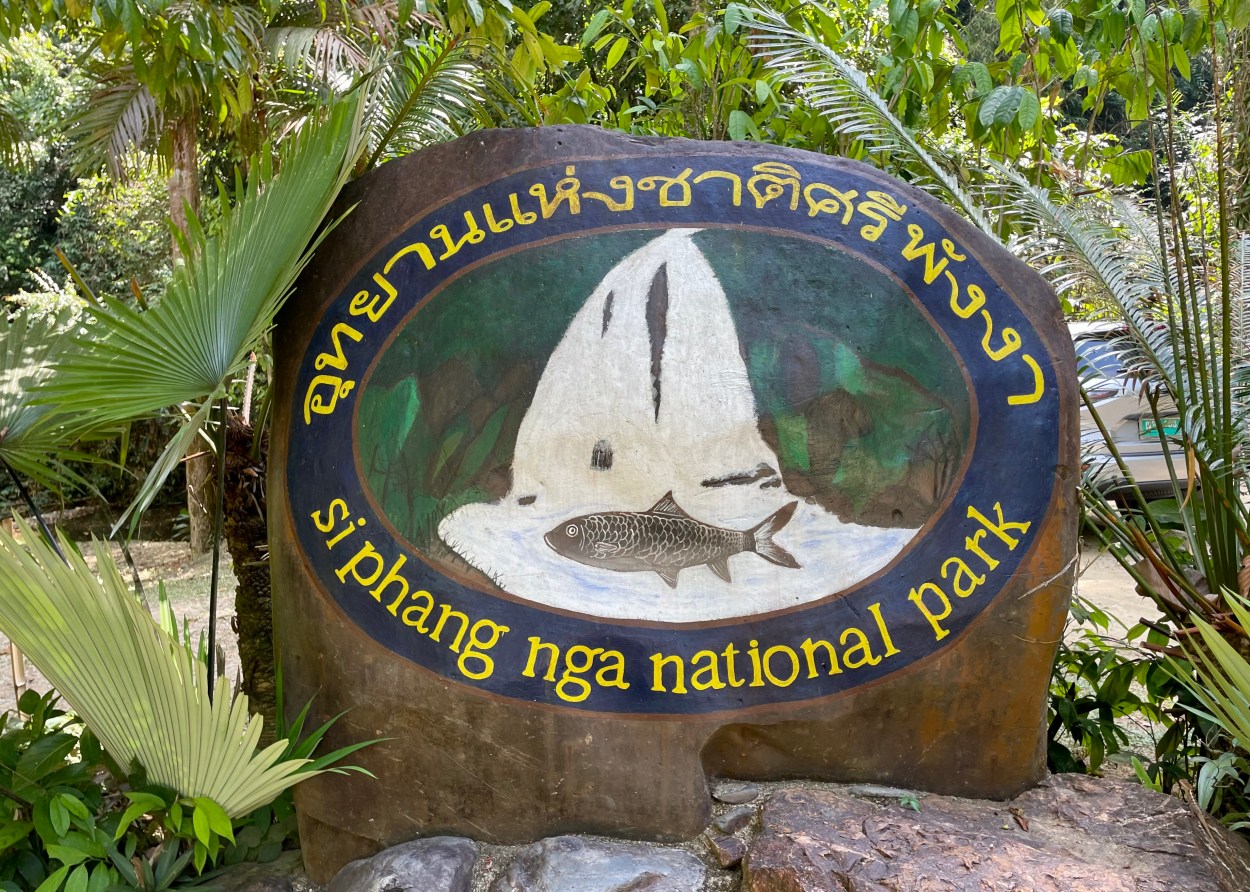
We enjoyed a great day birding the National Park of Si Phang Ngatoday
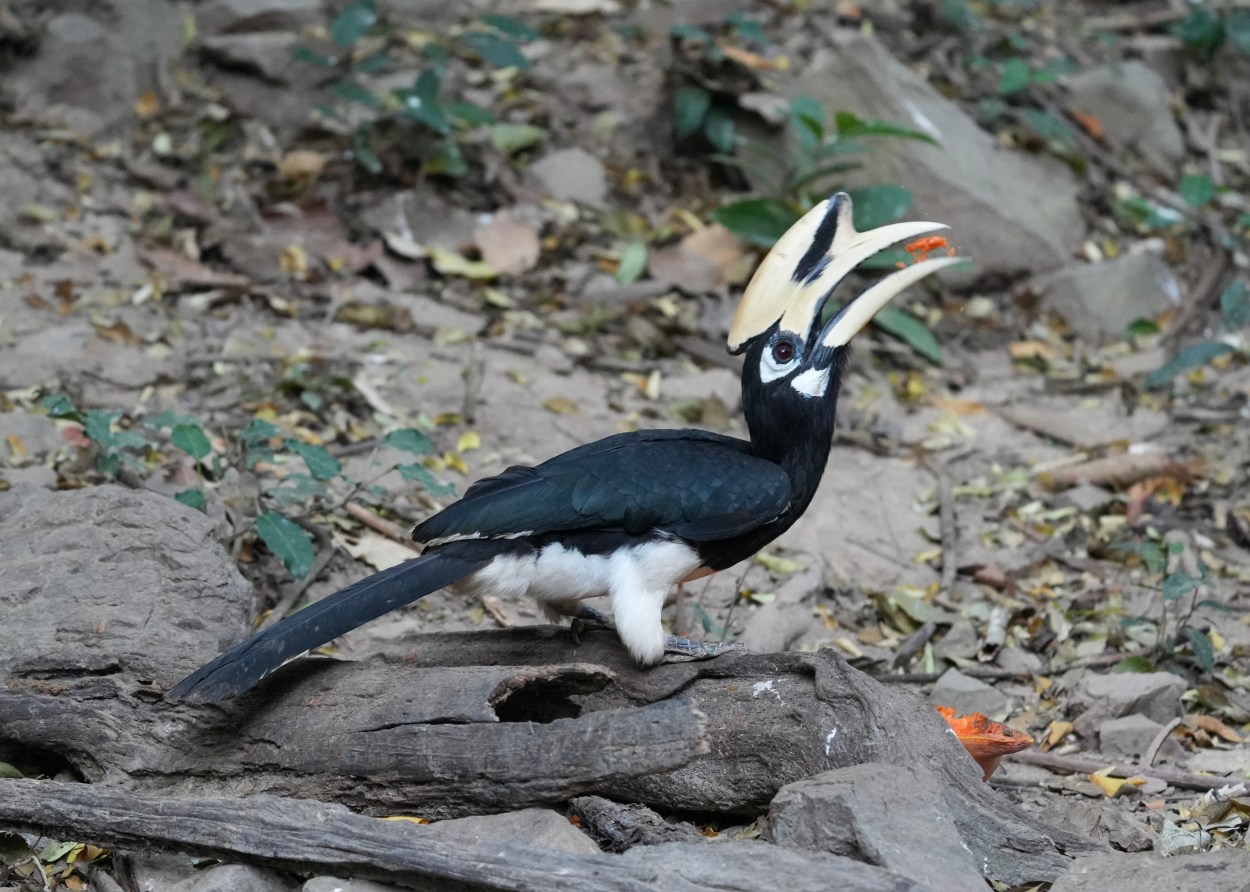
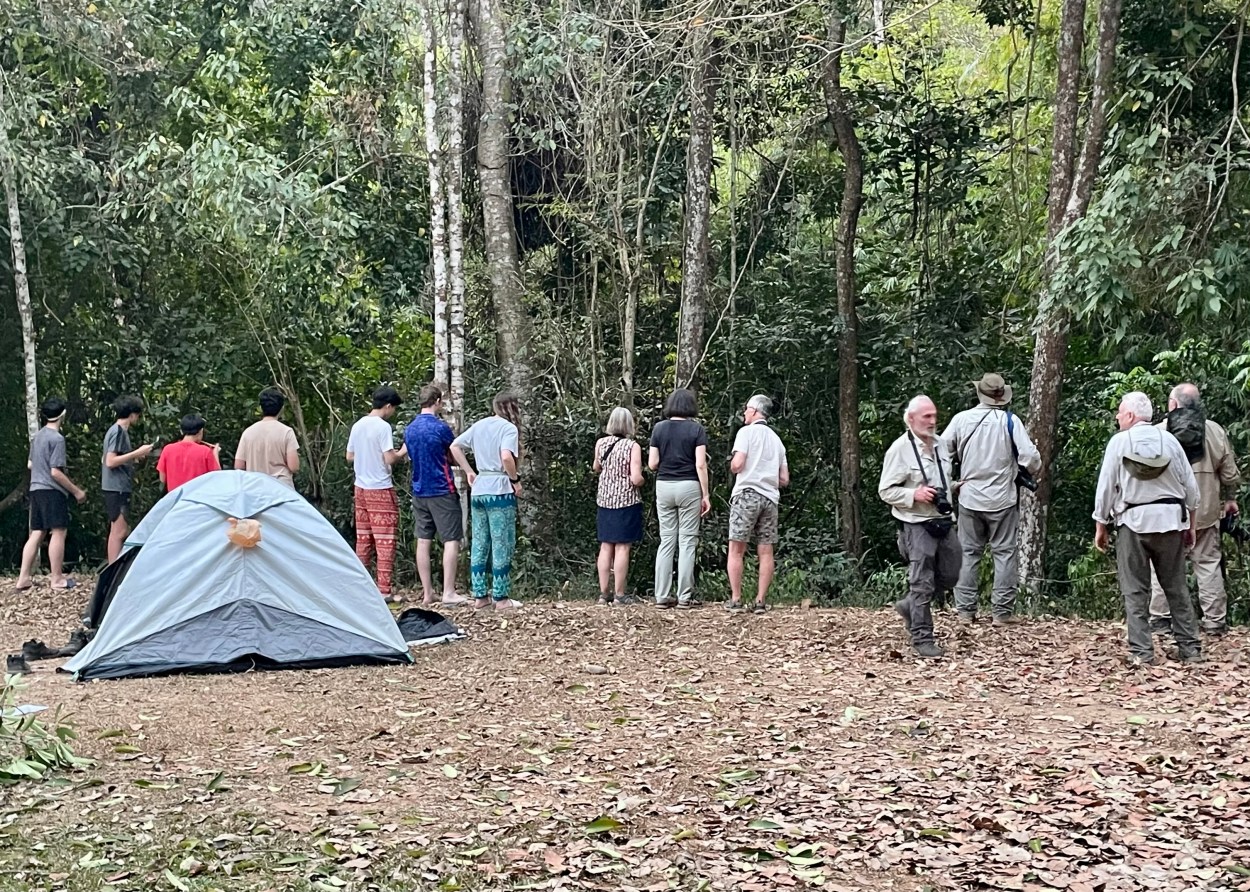
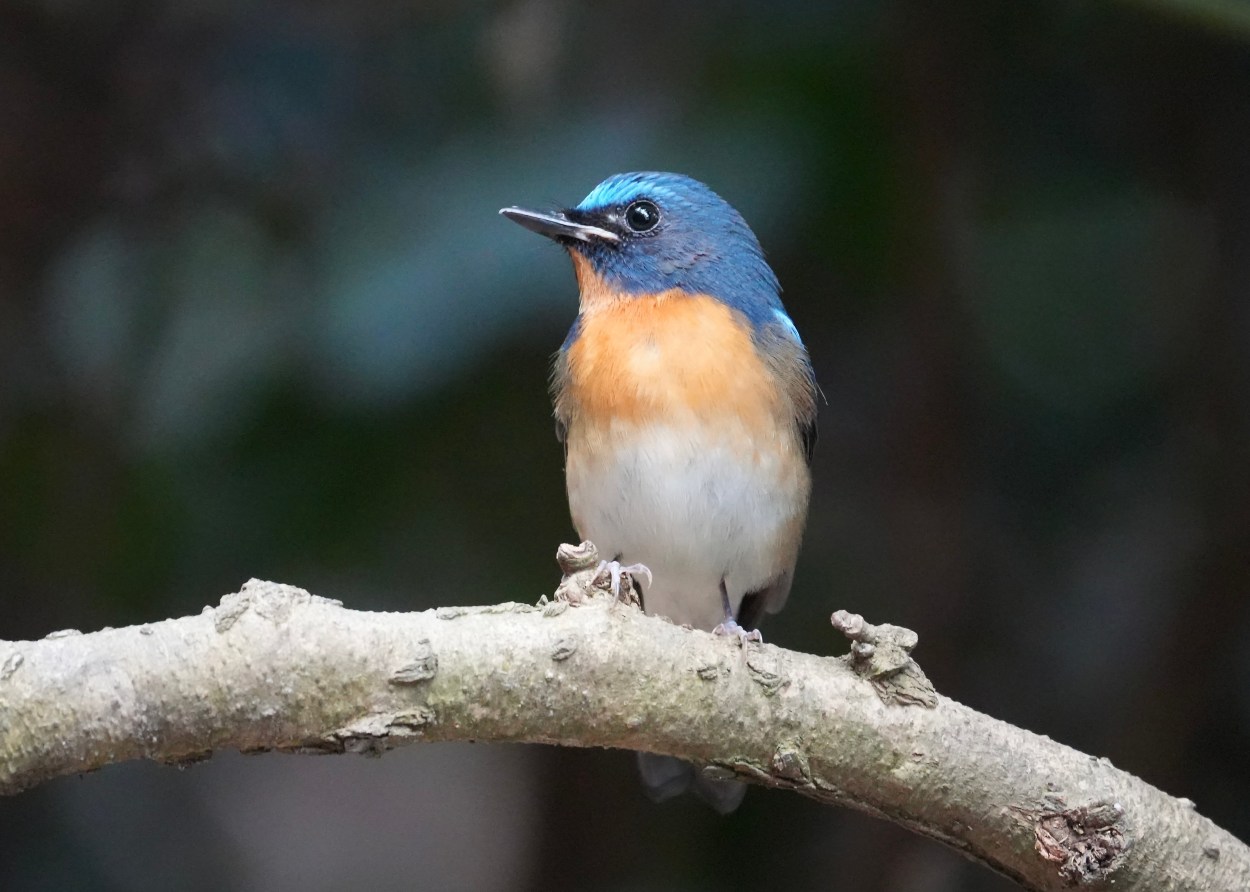
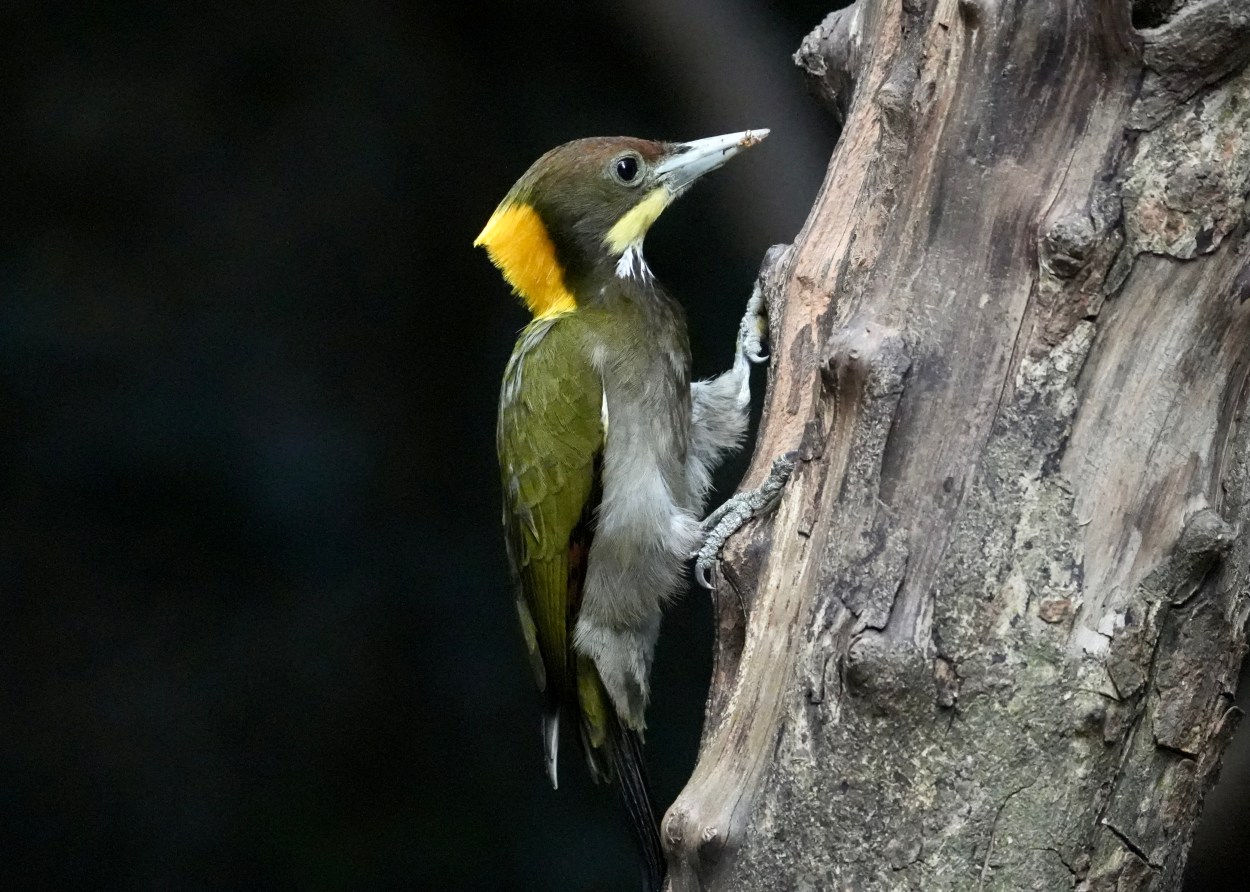
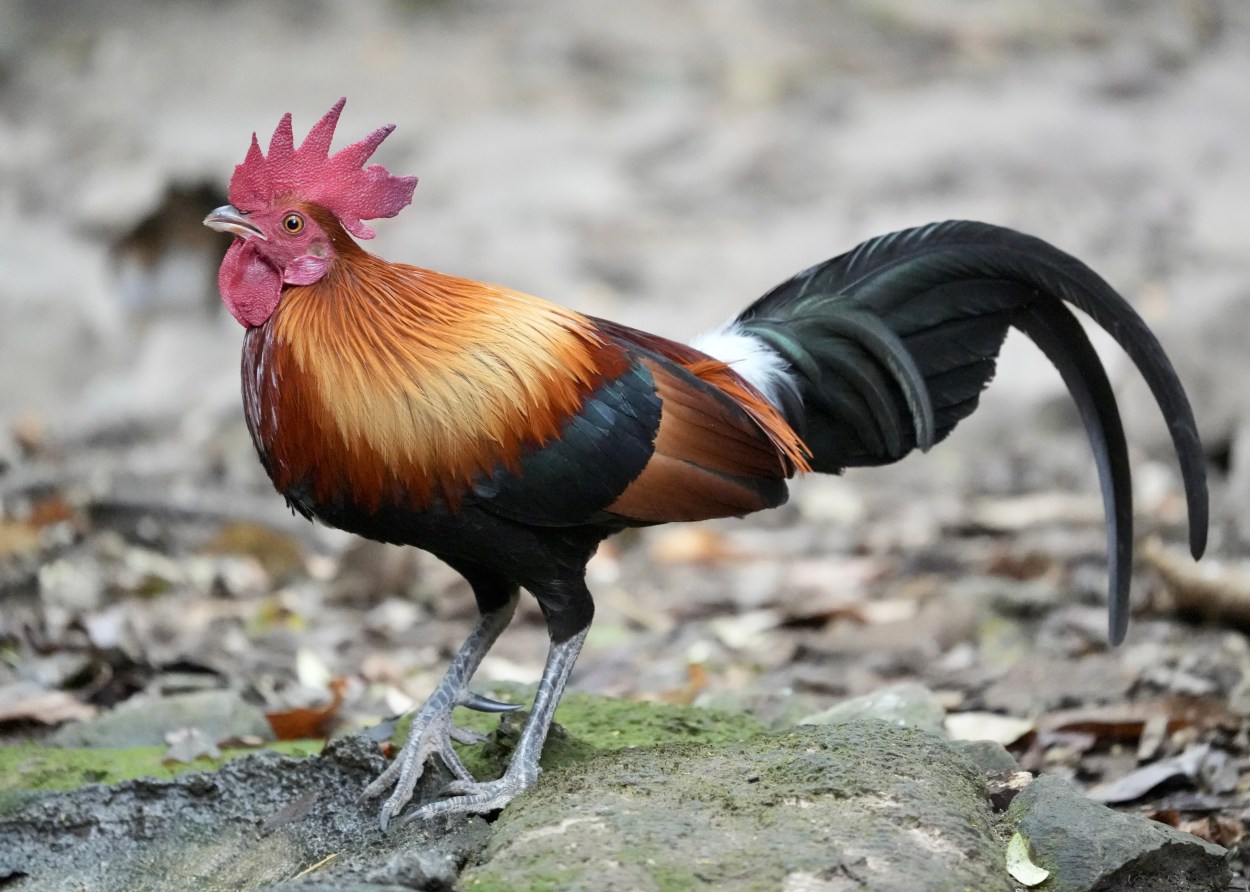
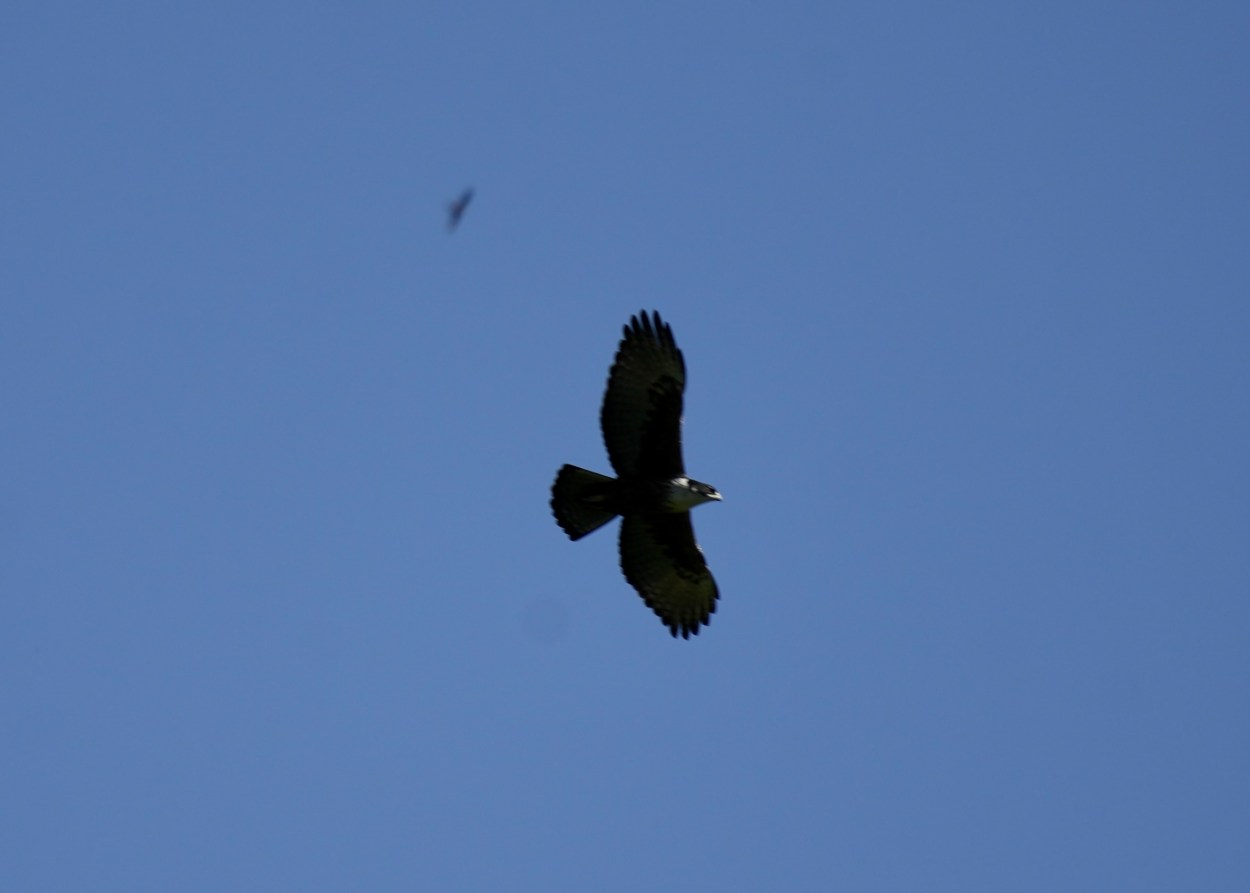
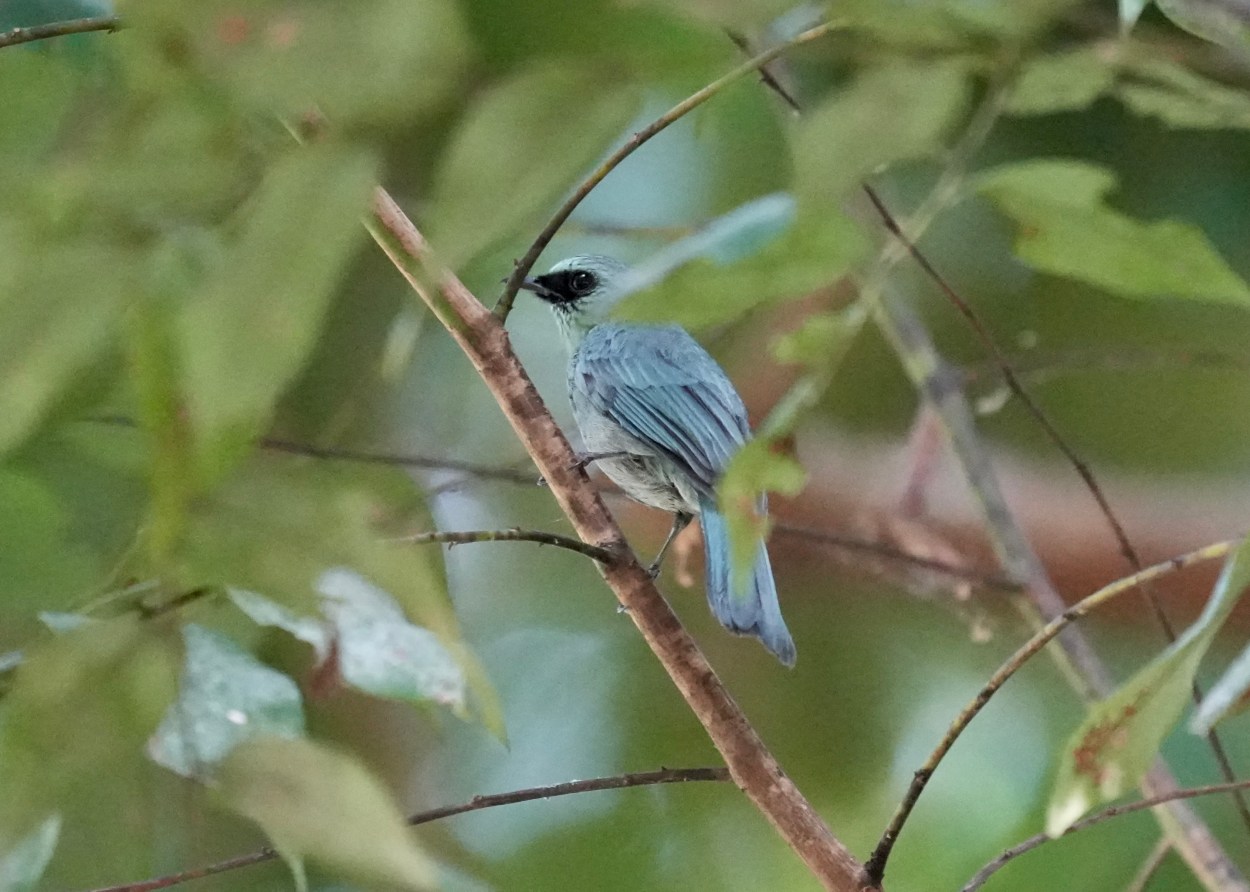
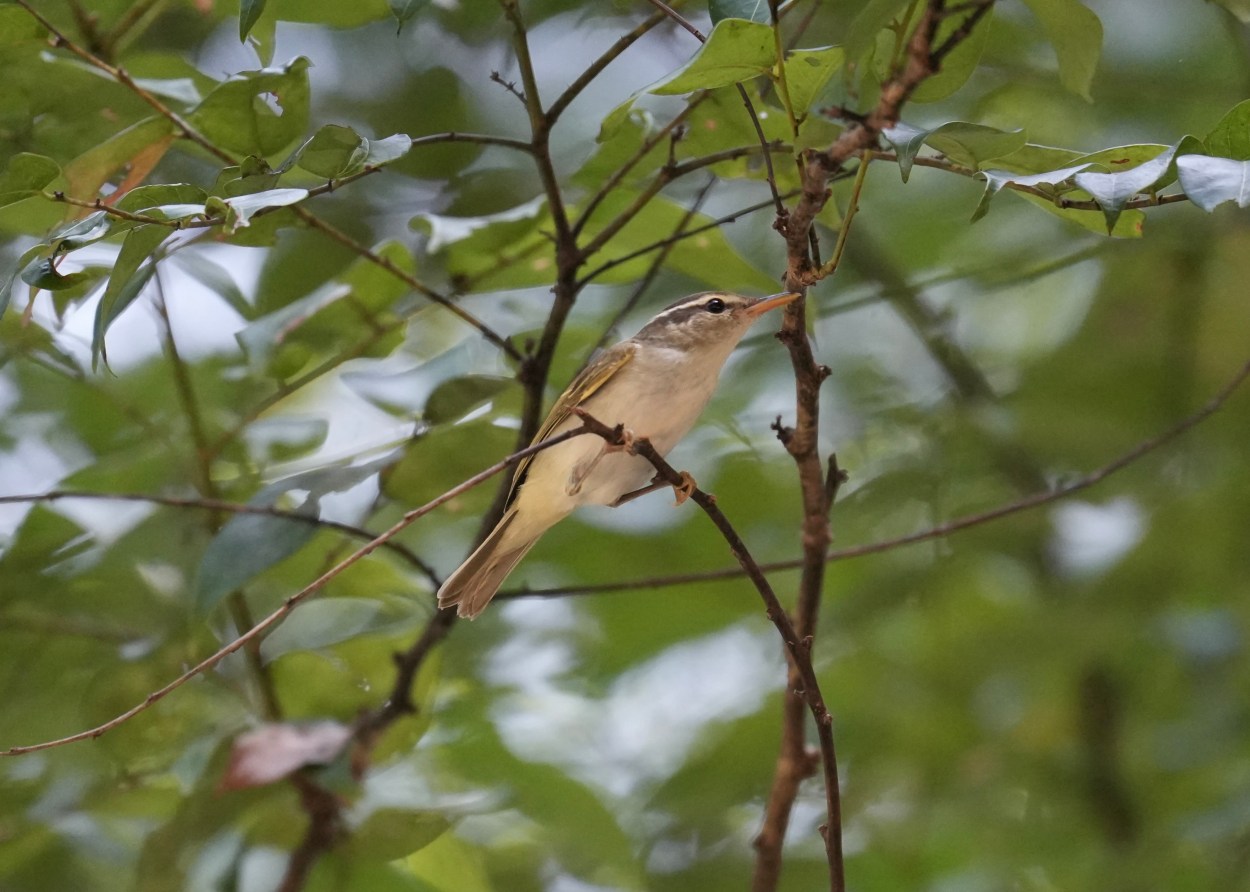
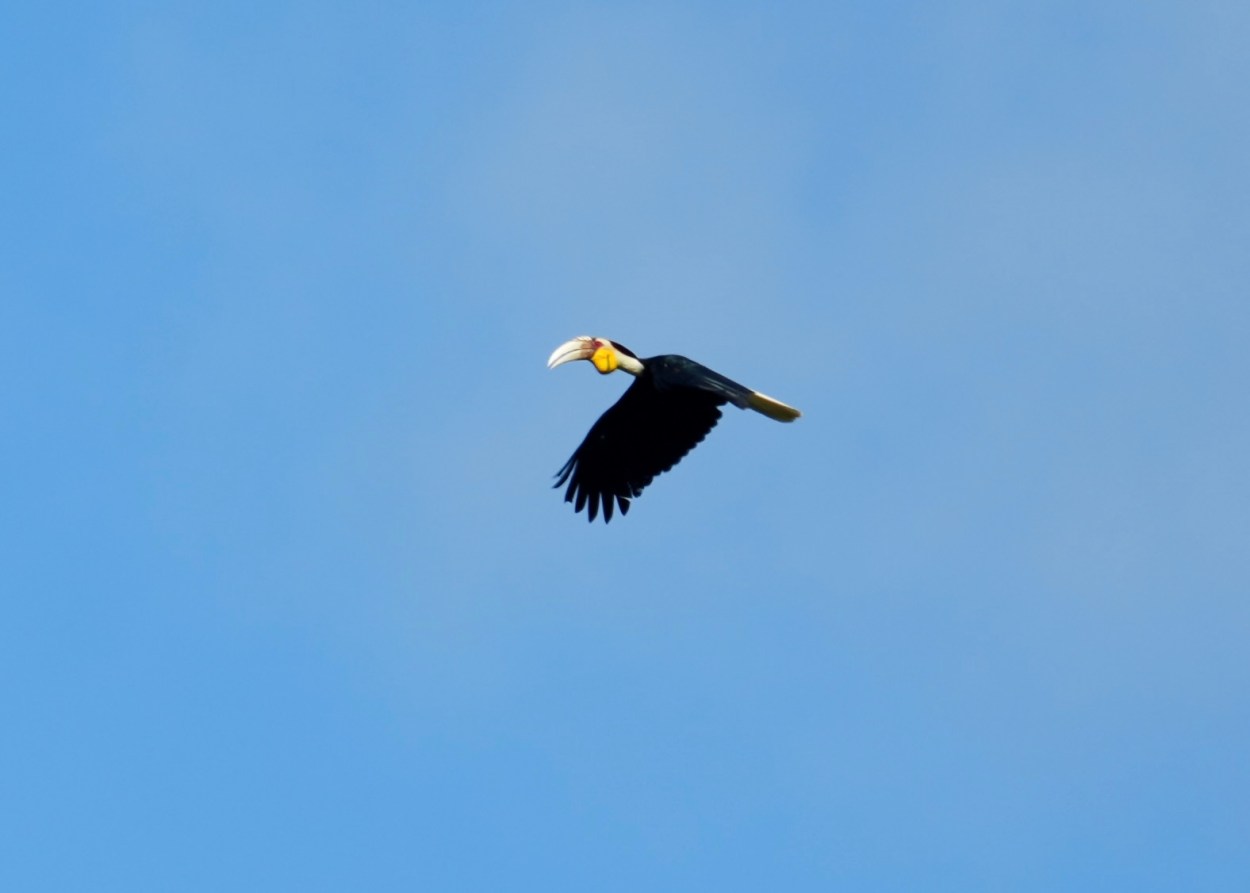
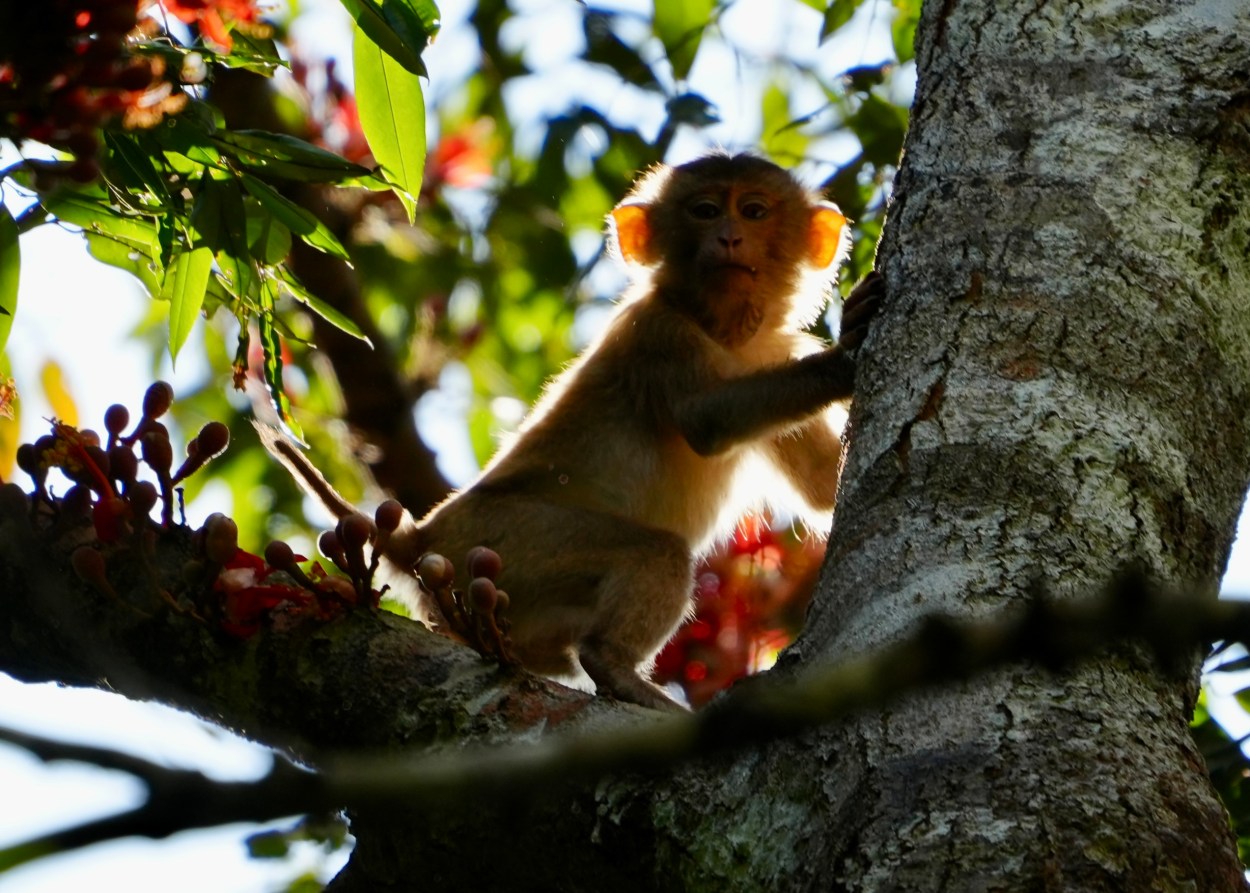
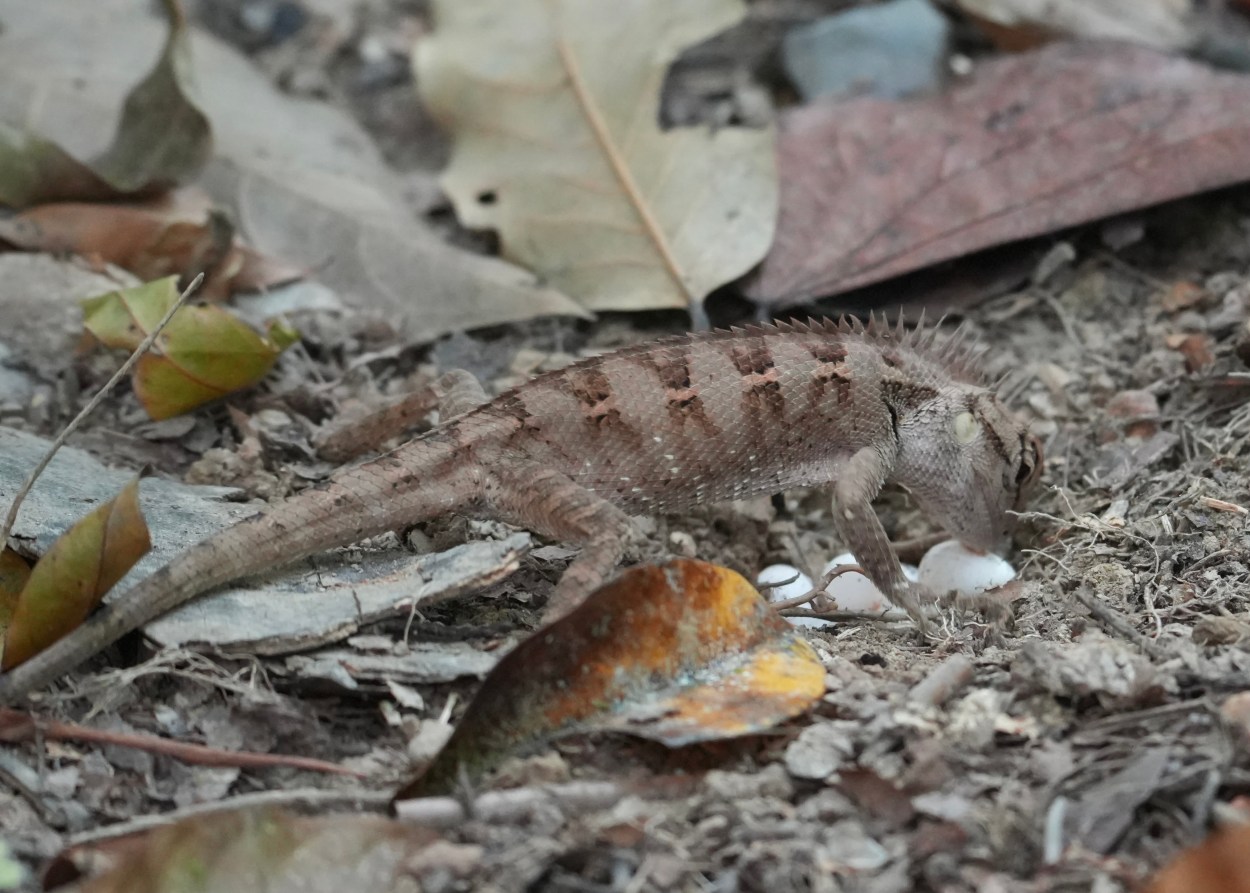
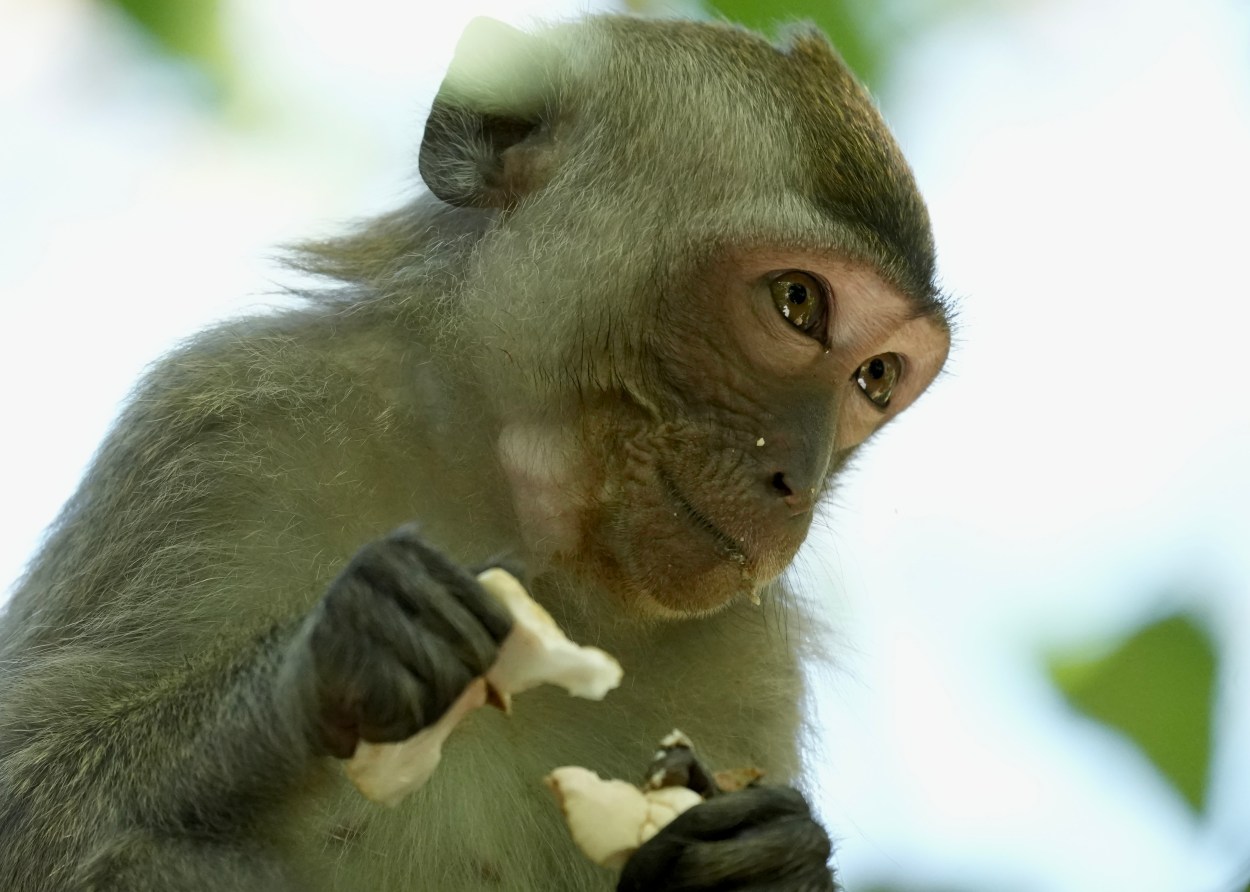
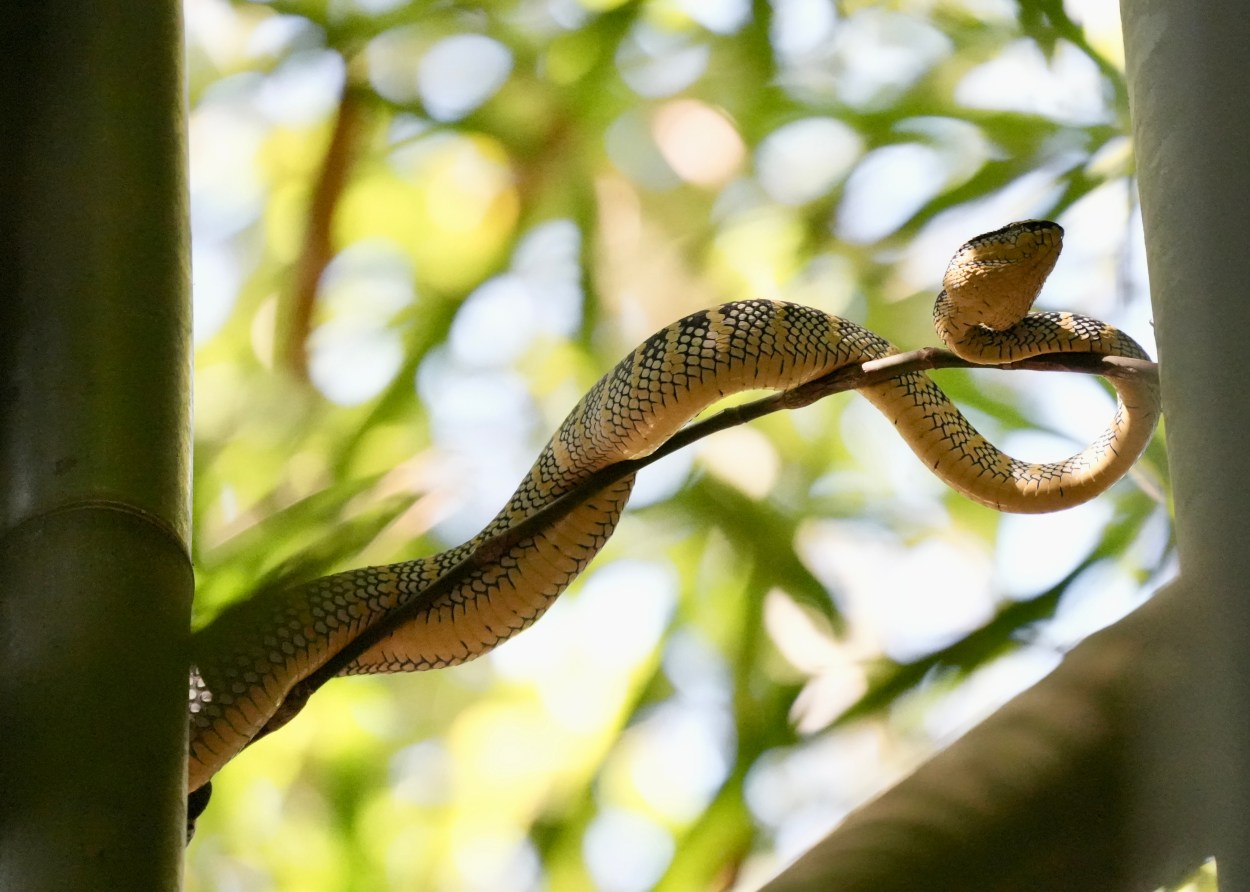
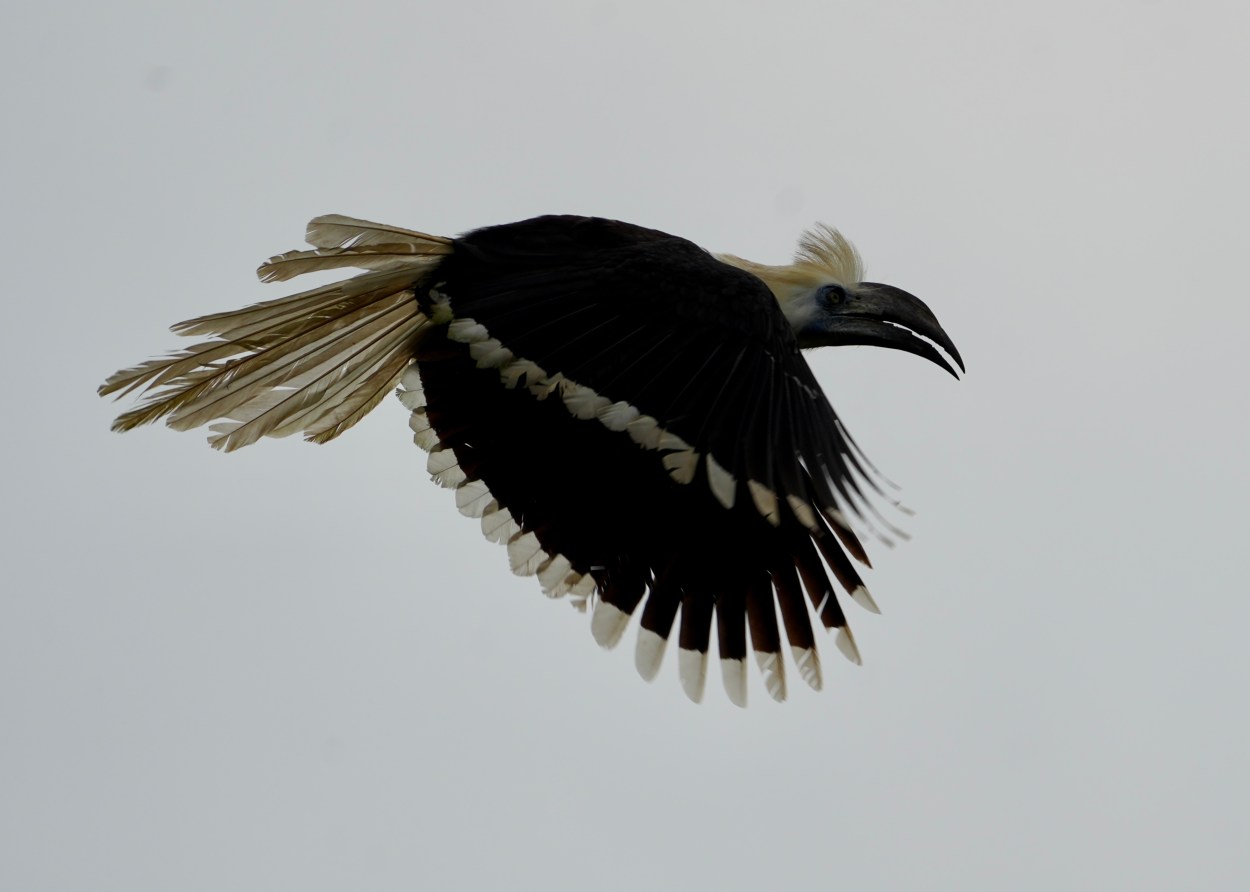
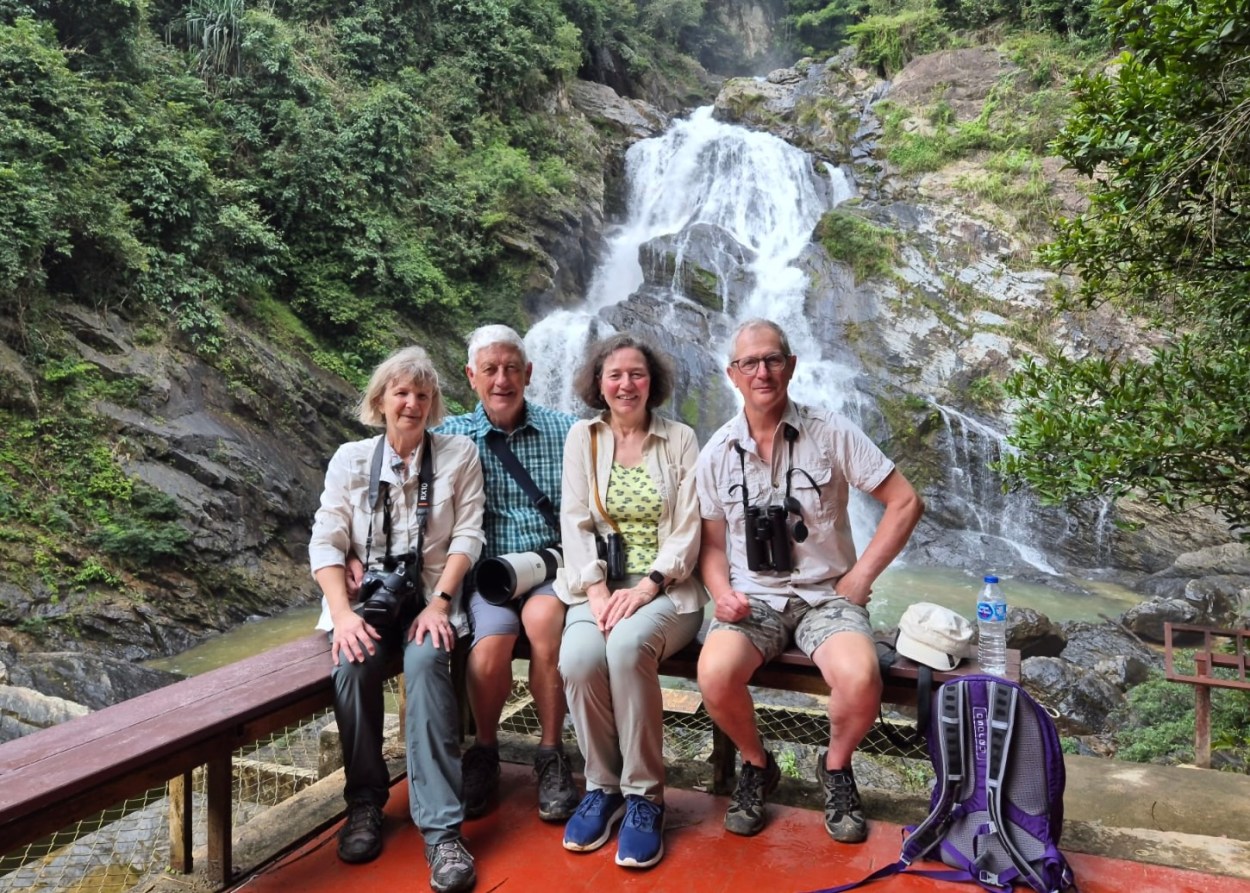
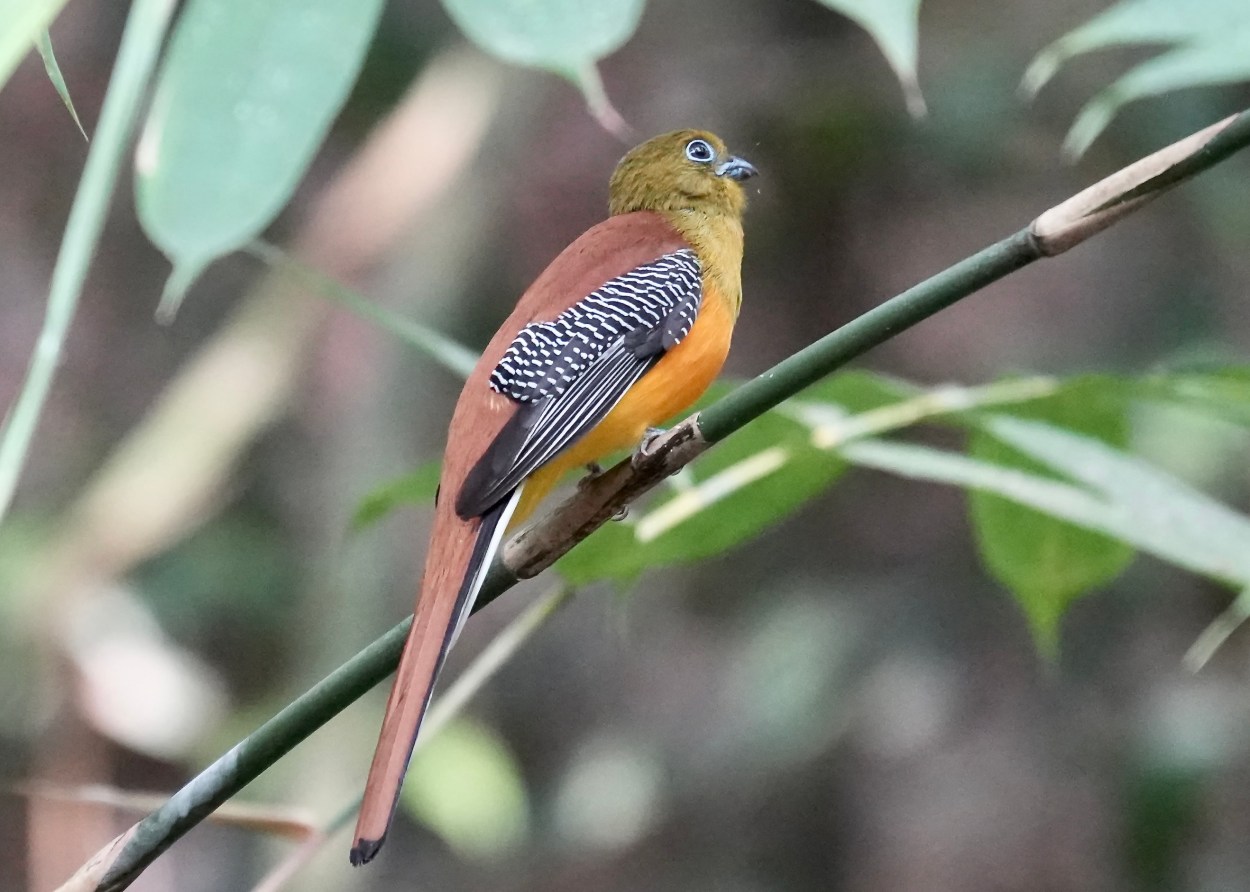
We’ve just enjoyed a delightful day birding in the small rain forest reserve of Si Phang Nga. We saw some excellent birds throughout the seven hours we were in the park, including good views of Wreathed Hornbill, Black Baza, Eastern Crowned Warbler, Ashy Minivet, Rufous-bellied Eagle, Pacific Swallow & Golden Whiskered Barbet. In addition to the birds, other wildlife sightings included White-handed Gibbon and Pigtail Macaque (subject to id confirmation). But perhaps the most amazing wildlife encounter was of a pair of Forest Crested lizard – looking after their clutch of eggs. When we got back to our hotel Jane found a Peregrine (peregrinator) sat on the local radio mast. An excellent day of Thai birding, taking our total to 192.
Rufous-bellied Eagle in the skies above Si Phang NgaAshy MinivetEastern Crowned WarblerWreathed Hornbill presumed visiting near-by known nest siteA presumed young Pigtail MacaqueA female Crested Forest Lizard checks her newly-laid eggs before burying them and covering with leaves
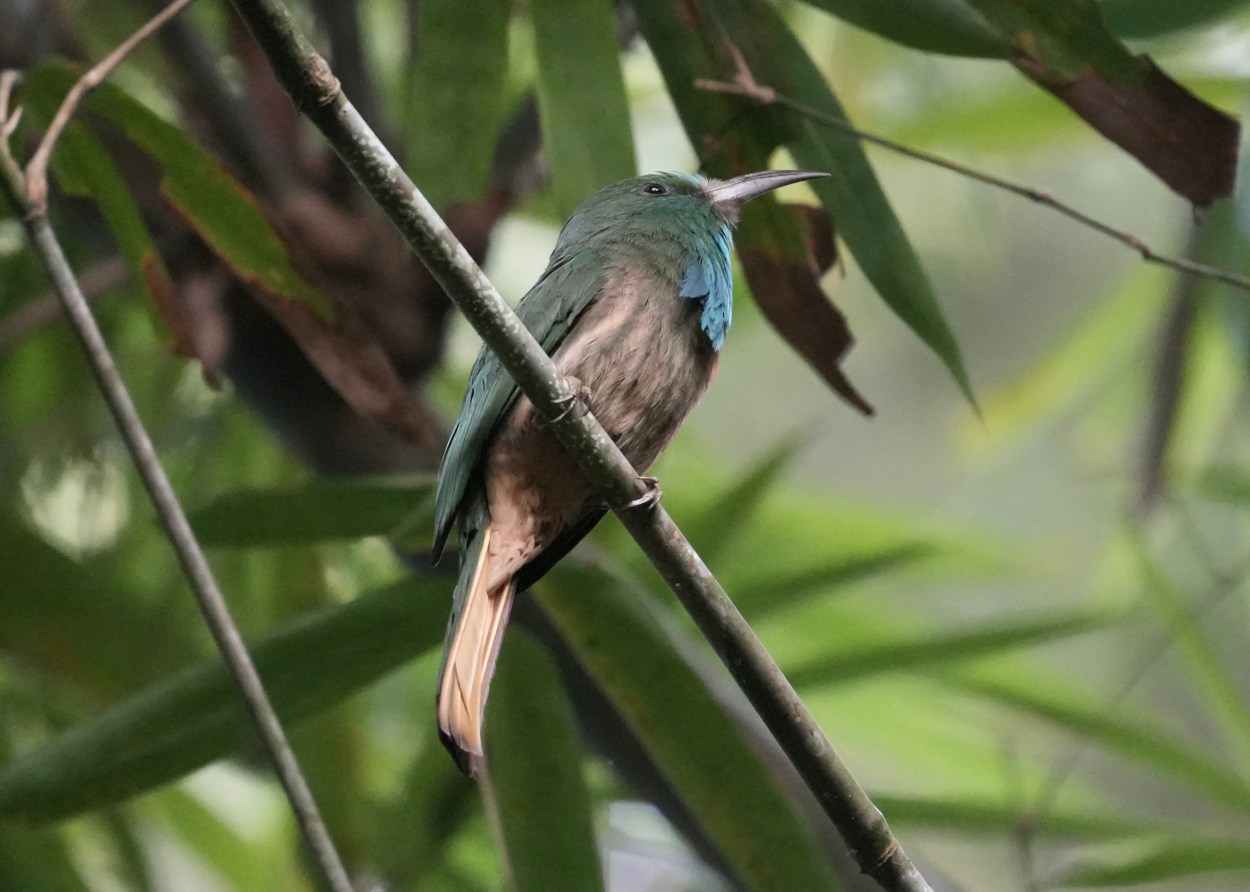
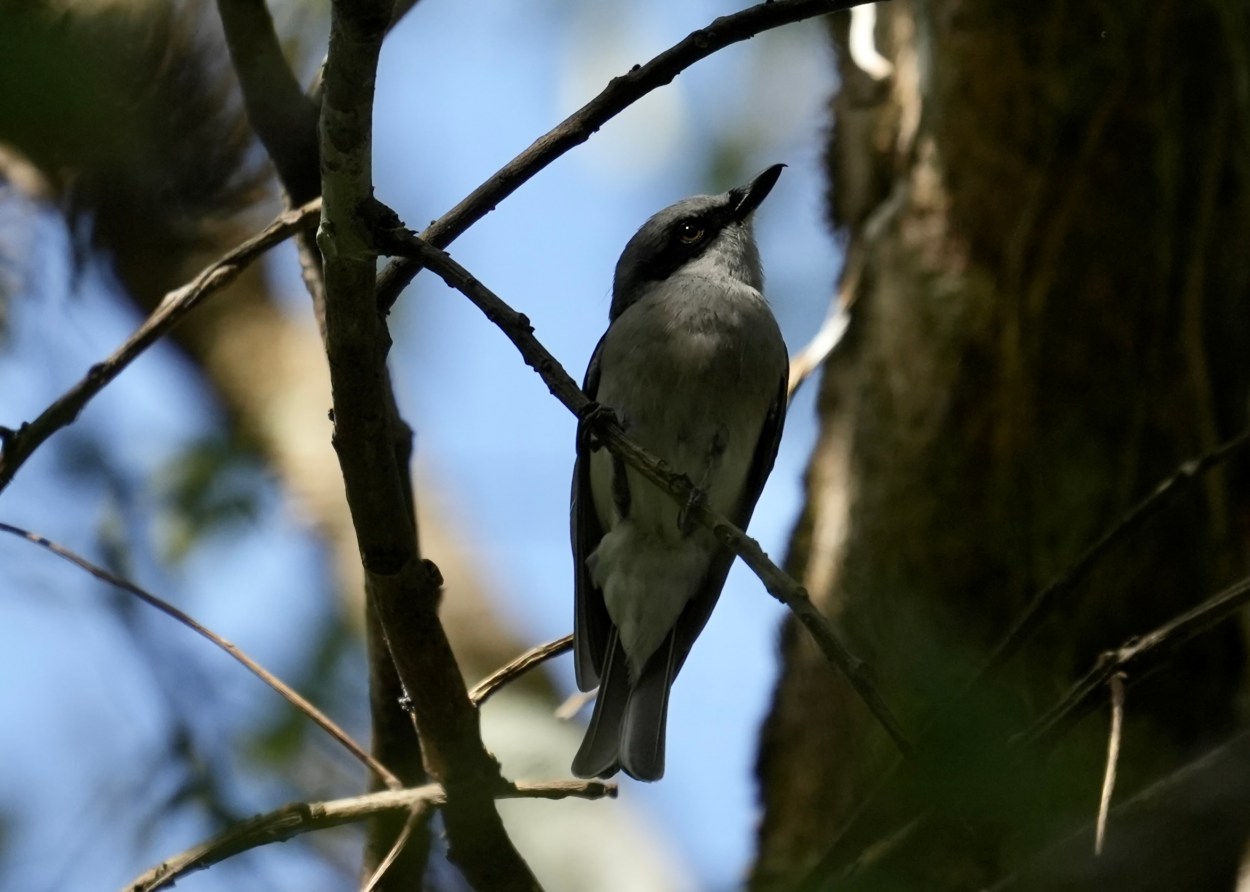
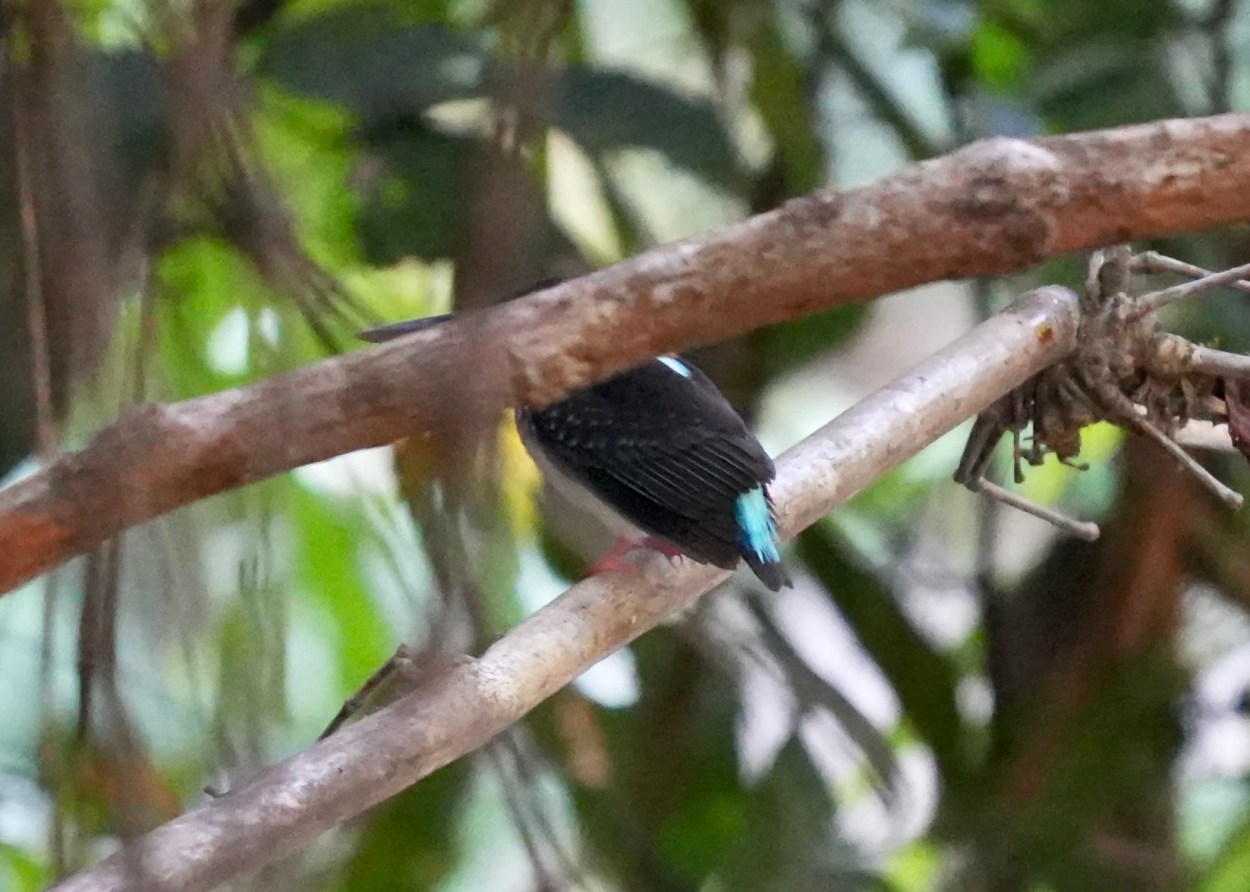
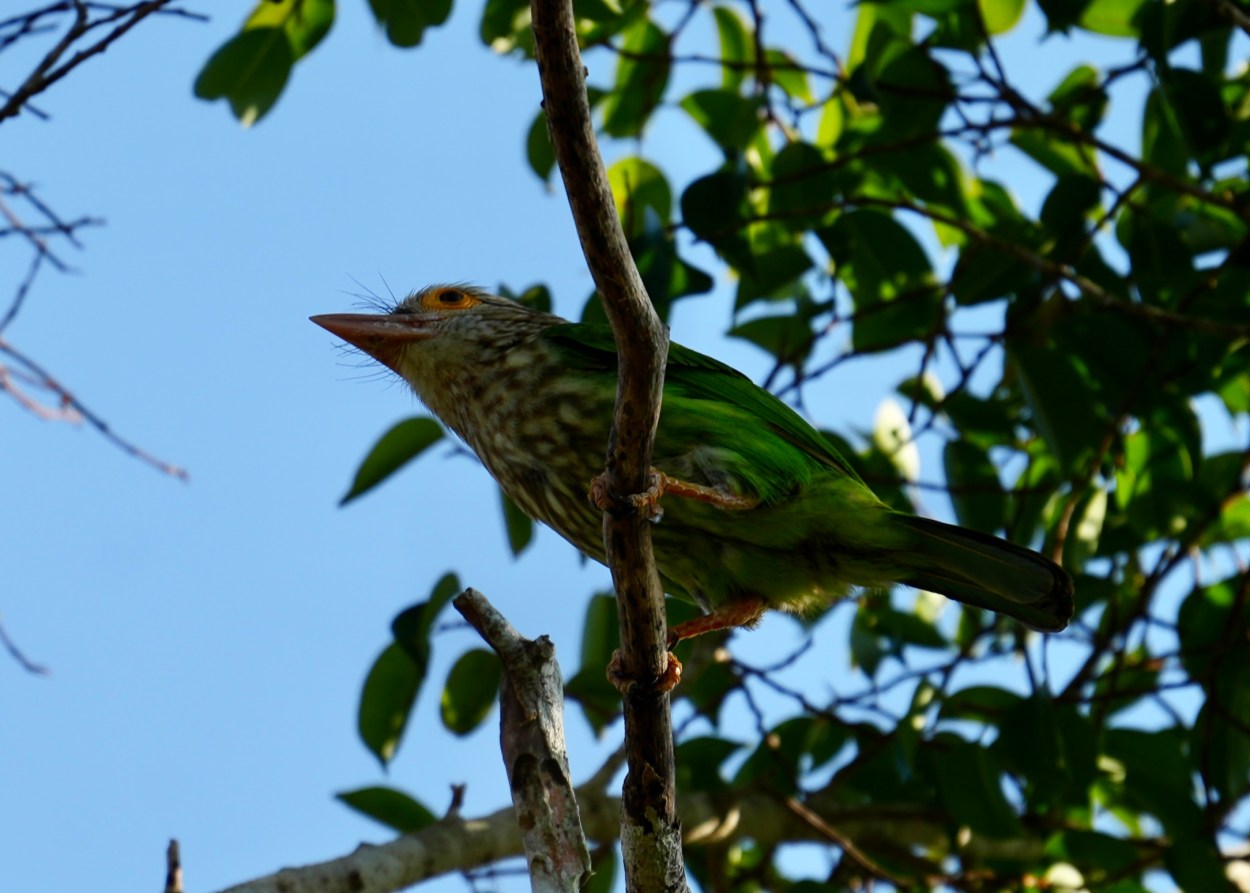
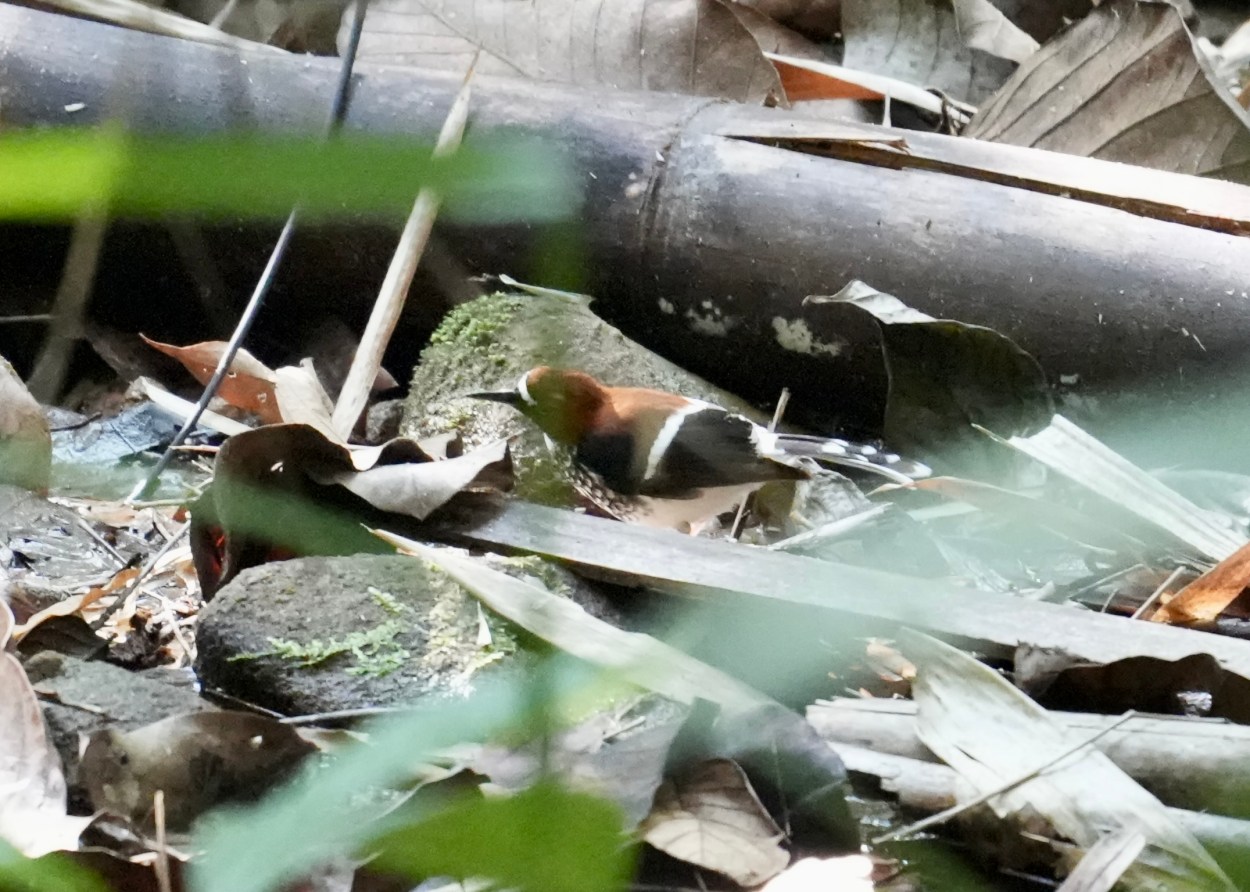
We’ve travelled west to the Andaman Sea, after two days (three nights) birding the rain forests around Khao Sok. As at our previous forest sites the birding was hard work, with the most productive periods the two hours after sun rise and before sun set. By walking and methodically birding we did eventually clock up quite a list and did get to see some lovely birds. Yesterday we drove to the coastal mangroves around Phang Na before exploring a coastal estuary at Pakarang Beach, it was then on to our hotel of Palm Scenery Resort at Ban Nam. In the process of the past few days I’ve got over the ‘500’ line for birds in Thailand – our current trip list stands at 182. Last night it rained – heavily! There’s already evidence of an insect emergence – which could be good for the birds, if not the bites!
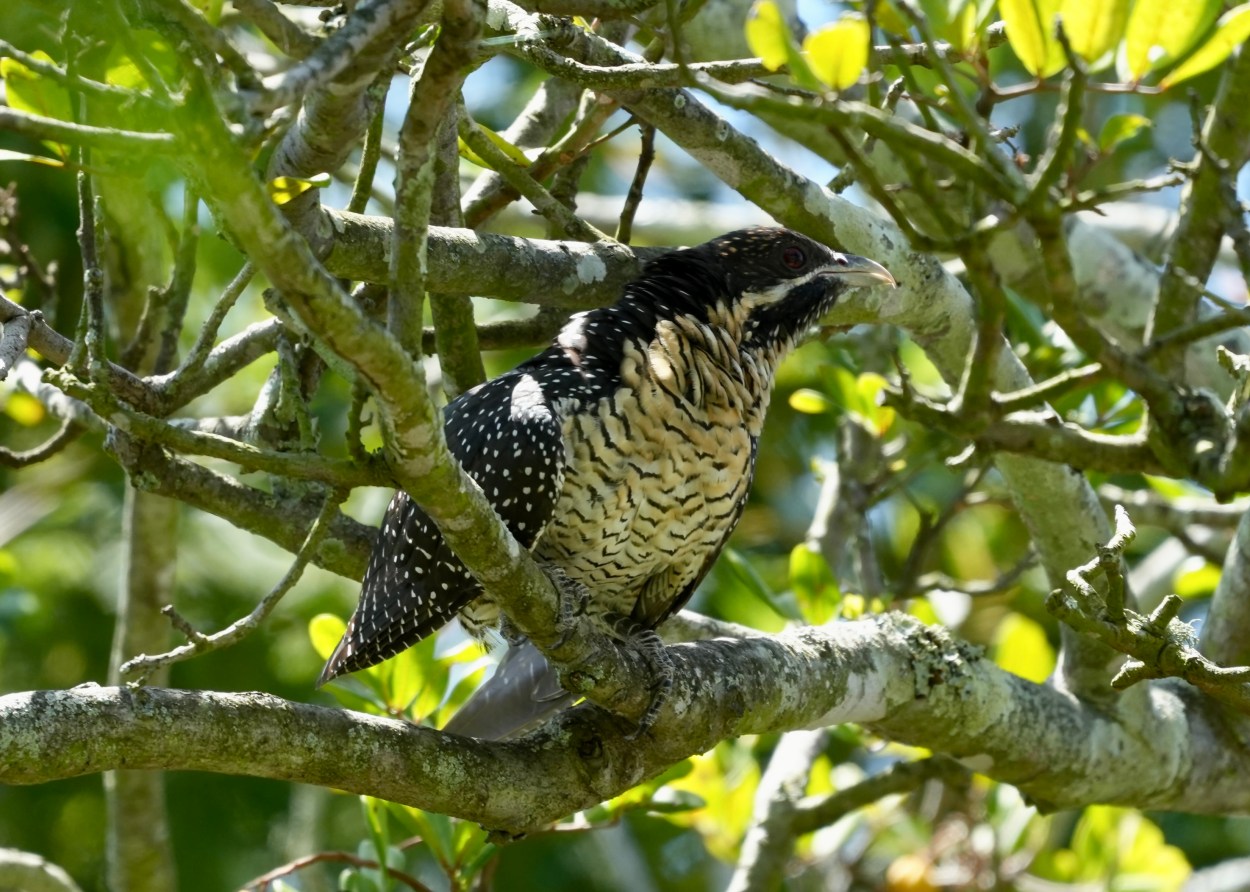
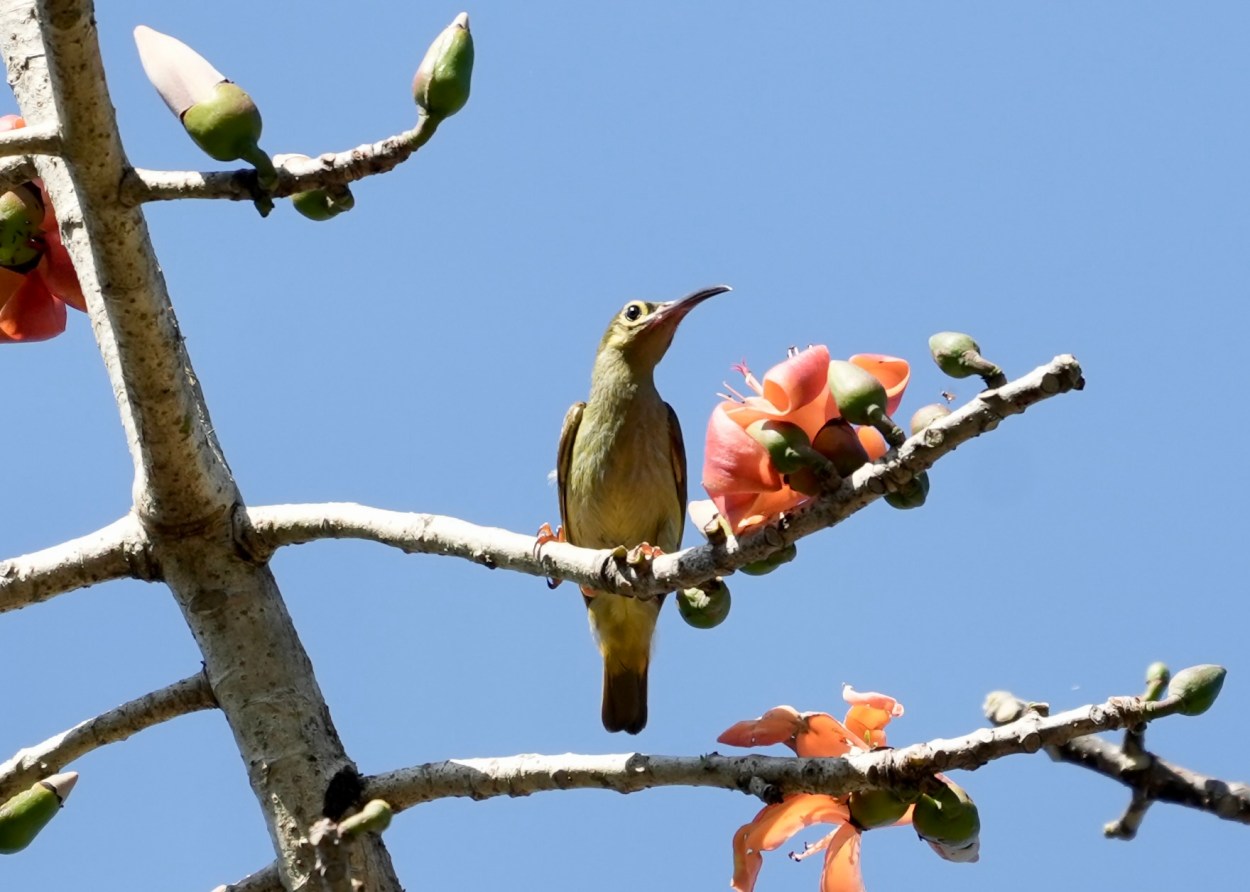
Some of the forest birding highlights – this is Large WoodshrikeNot the best view but perhaps the best bird – Blue-banded KingfisherLineated Barbet at the lakeChestnut-naped fork-tail – difficult to see in the dark forest at duskThis guy was having breakfast outside our cabin yesterdayand we found this guy in the forest on one of our walks Spectacled Spiderhunter around the Khoa Sok visitors centre
White-crowned Hornbill – possibly the stand-out bird of Krung Ching
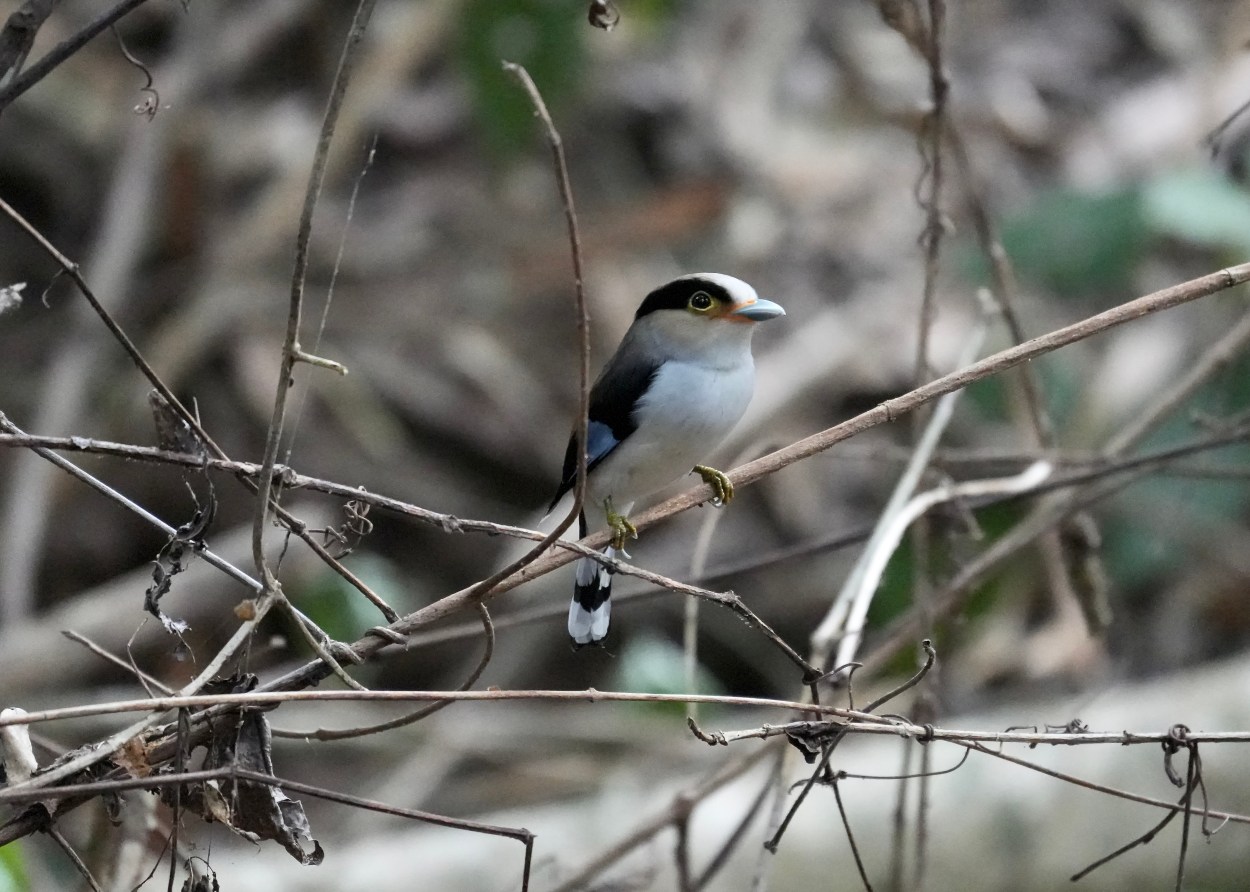
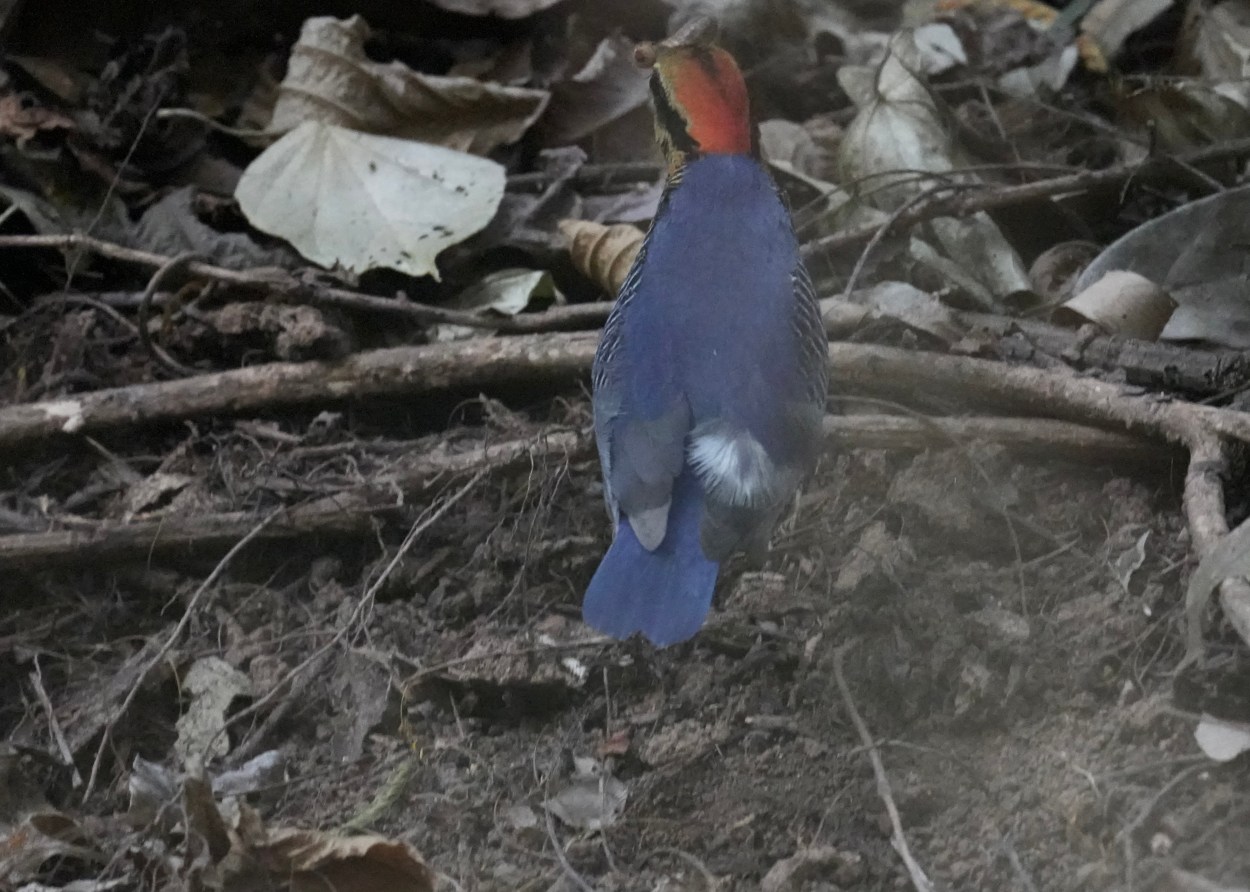
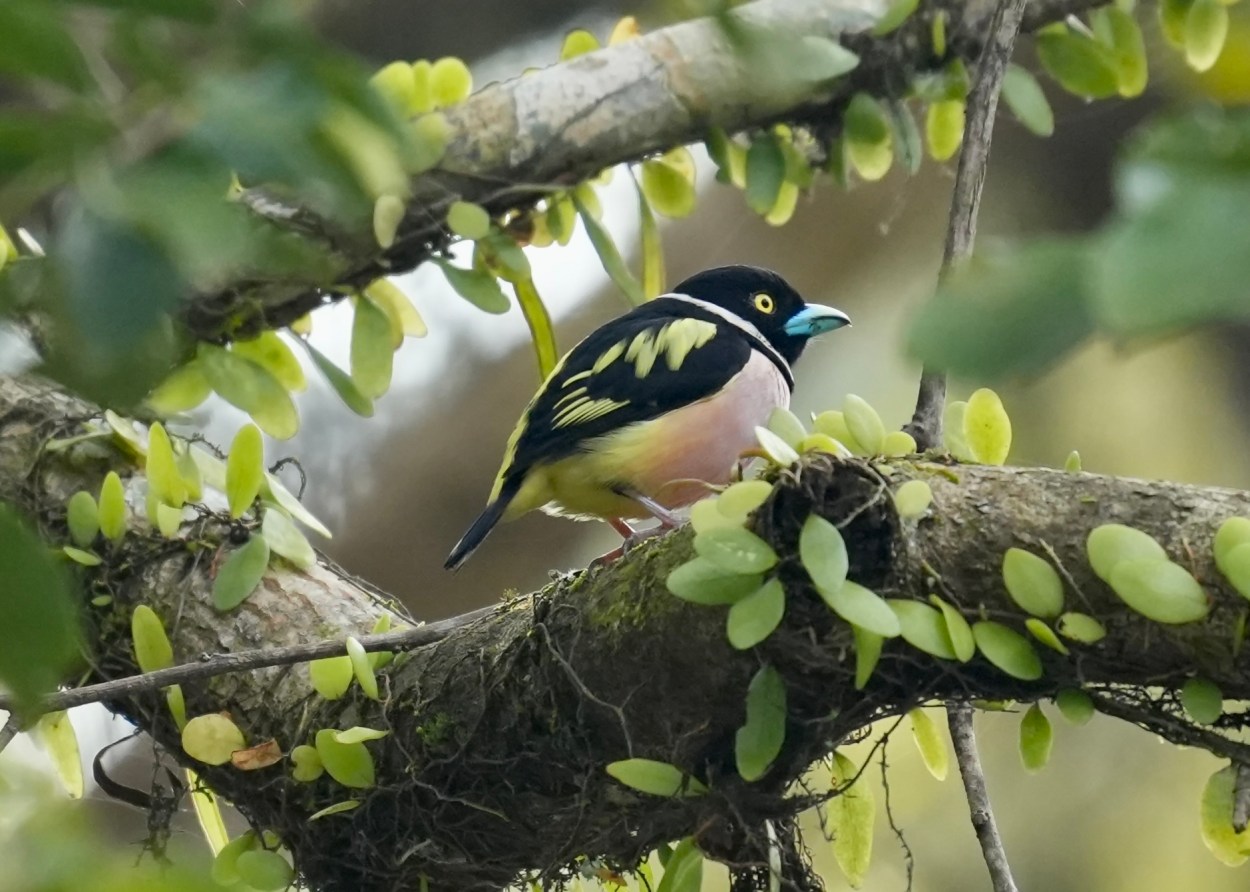
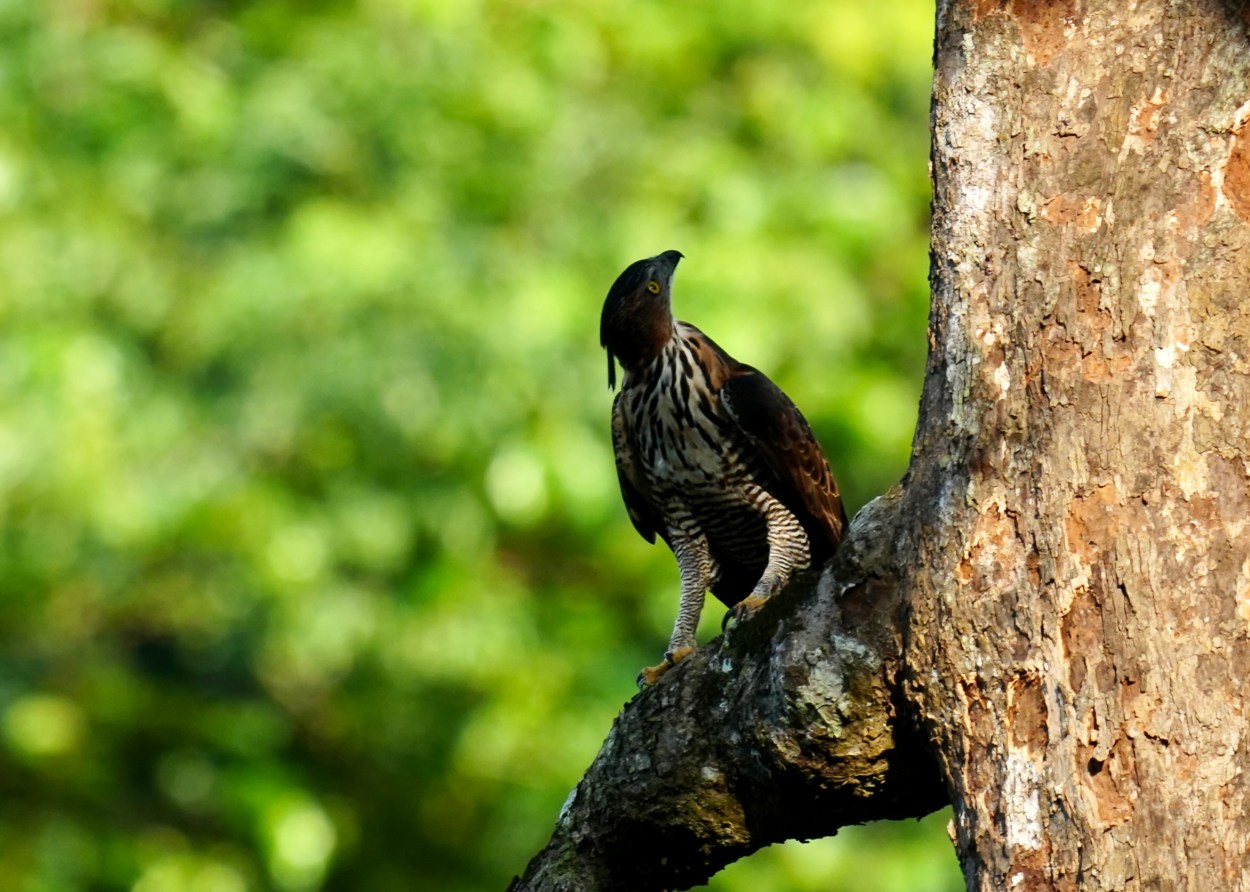
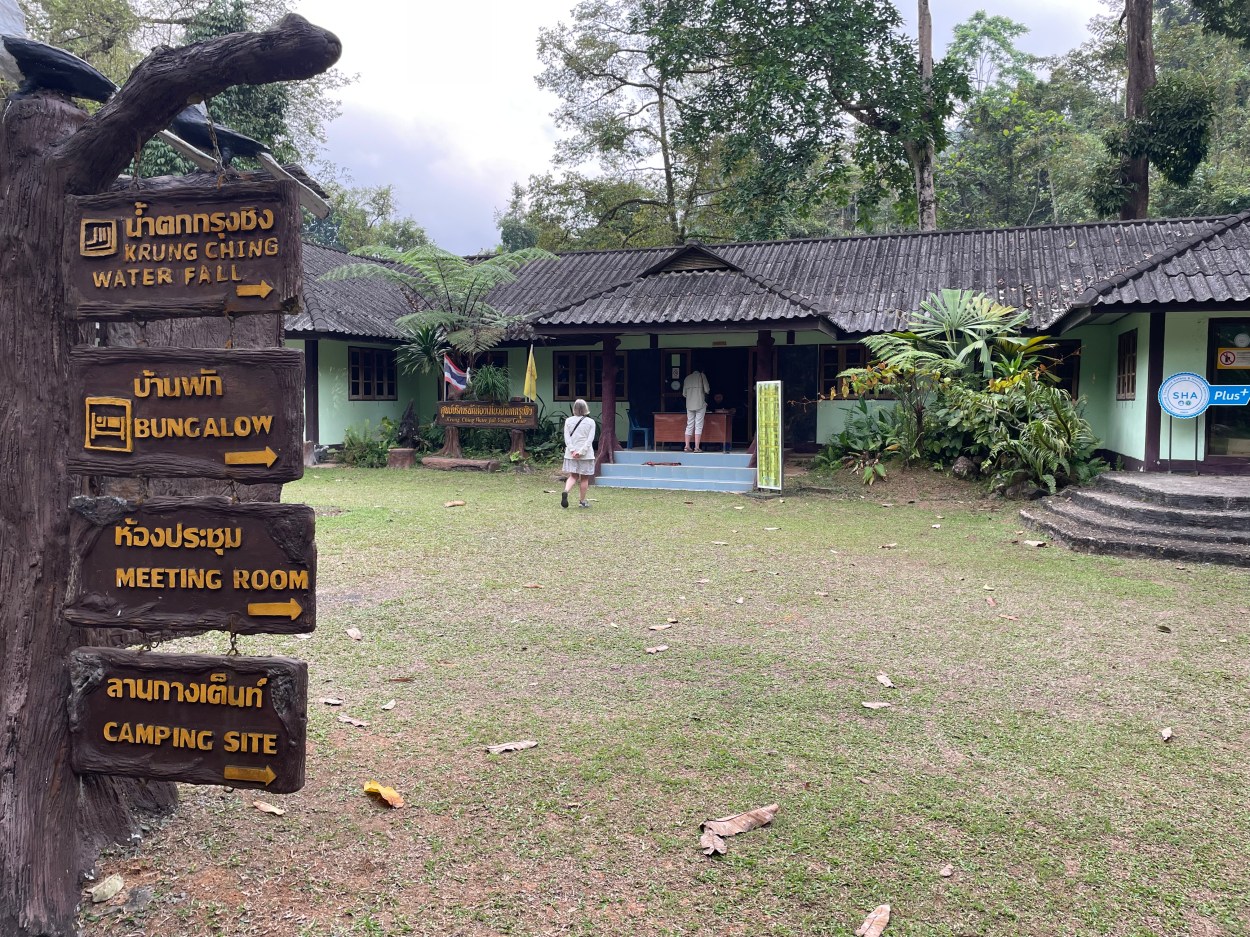
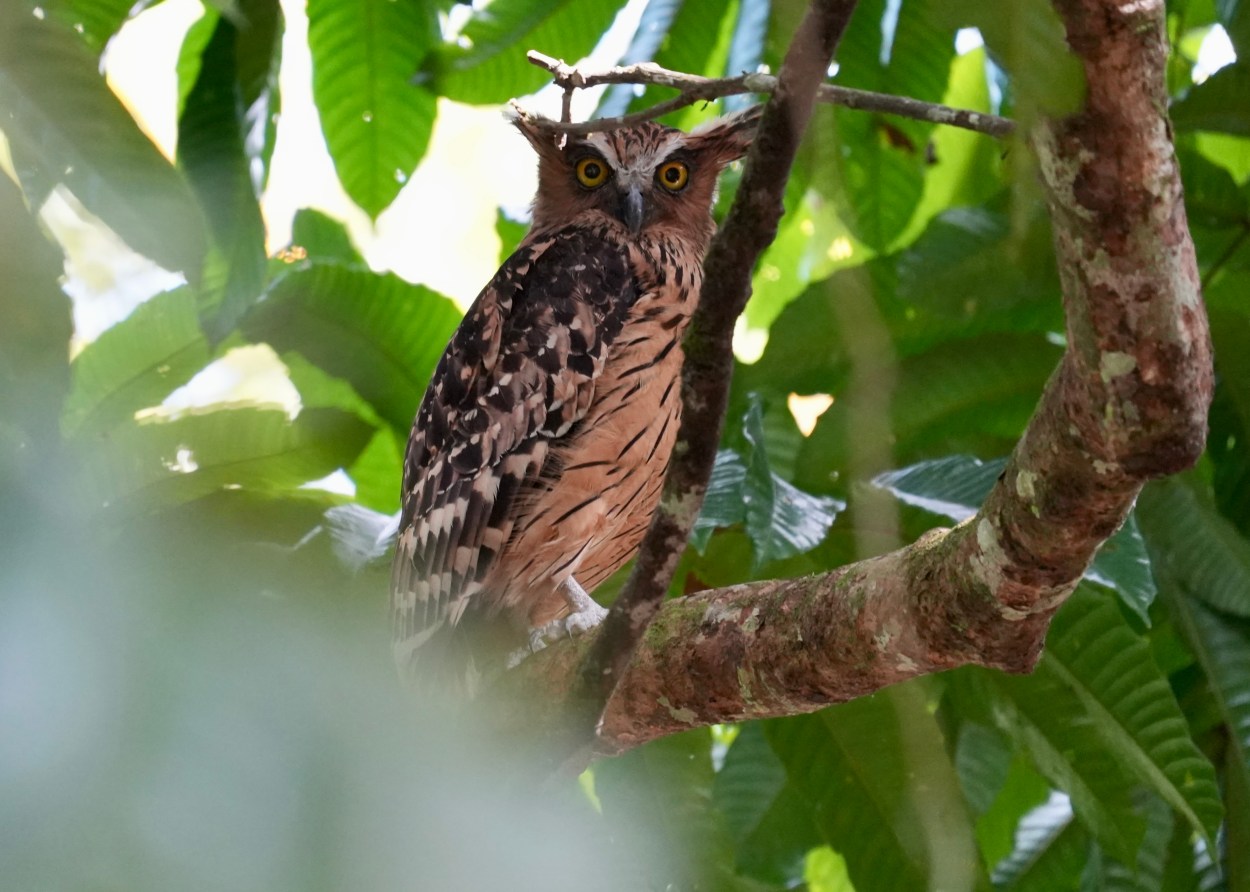
We’ve just spent the last couple of days birding the rain forests of Krung Ching, staying in a lovely home-stay at Ban Phi Tam. The birding certainly had its amazing moments but generally it was very hard work with most birds only heard or occasionally glimpsed. A few stand-out birds remained visible to see, enjoy and photograph – Buffy Fish Owl, Black and Yellow Broadbill, White-crowned Hornbill and Wallace’s Hawk-eagle included. On Sunday we made the 8k (return) trek to the spectacular Krung Ching waterfalls – great scenery, very few birds and – in the hot and humid conditions – utterly exhausting. Today we travelled to Khao Sok National Park with more forest birding in prospect.
A real Bobby Dazzler – Yellow and Black BroadbillA pair of Wallace’s Hawk-eagle came into roost behind the visitors centre at Krung ChingAcross the road from the visitors centre this Buffy Fish Owl was a real crowd pleaserAfter a hard slog through the rain forest we finally arrive at Krung Ching waterfalls
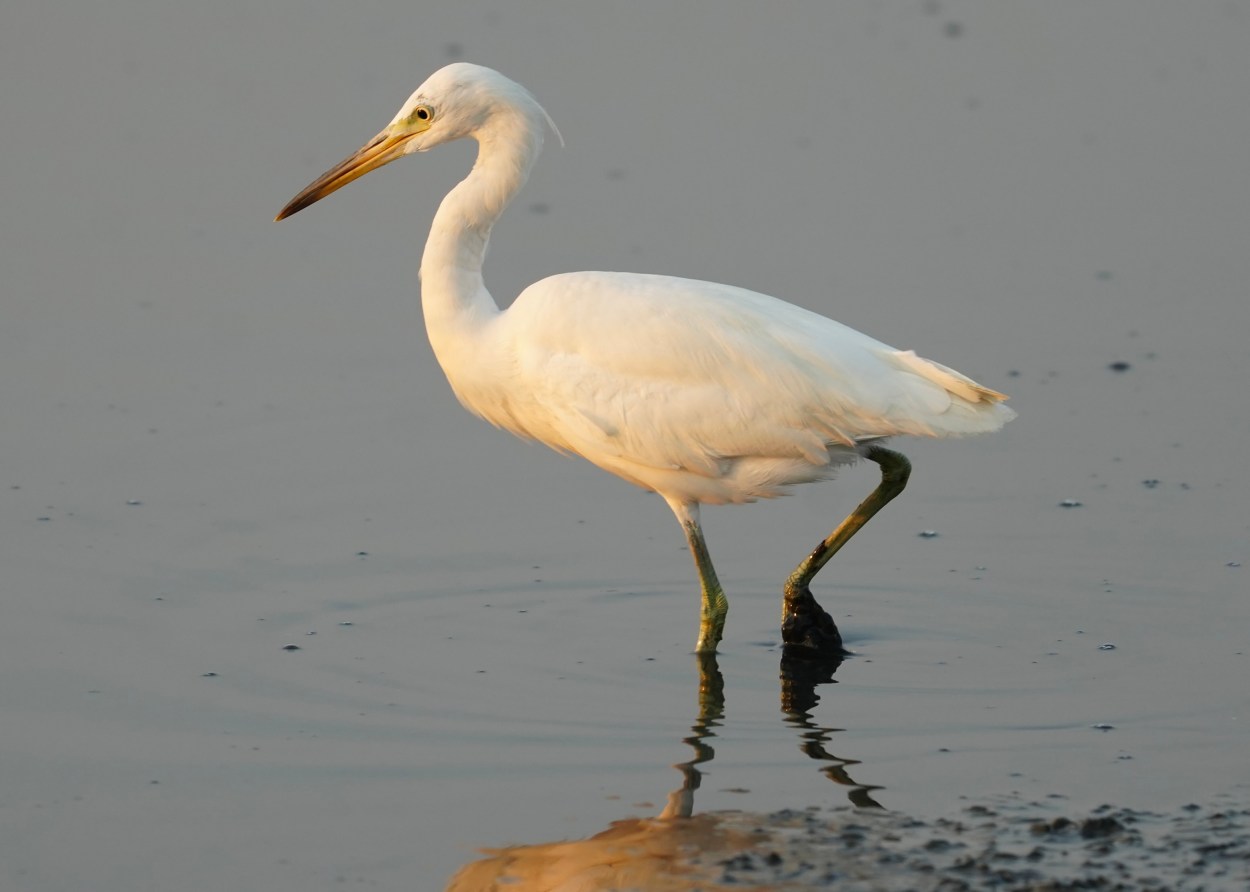
Reading the literature we’re pretty happy that this is Chinese Egret – a scarce bird in Thailand
After arriving in Thailand on Wednesday we travelled a couple of hours south, following the Bay of Bangkok, to just east of Phetchabori. The whole area is a patchwork of salt pans and coastal lagoons. Three adjacent sites: Pak Thale, the Kings Project and Laem Phak Bia have kept us fully occupied for a day and a half, wader watching. Unfortunately, on this occasion, no Spoonies (Spoon-billed Sandpiper) but we did see 28 species of shore birds. Our best bird however was new for us in Thailand (and anywhere else for that matter) – Chinese Egret. Today we’ve headed further south to Krung Ching National Park and the start of two days of forest birding. Hopefully some more additions to my Thailand list.
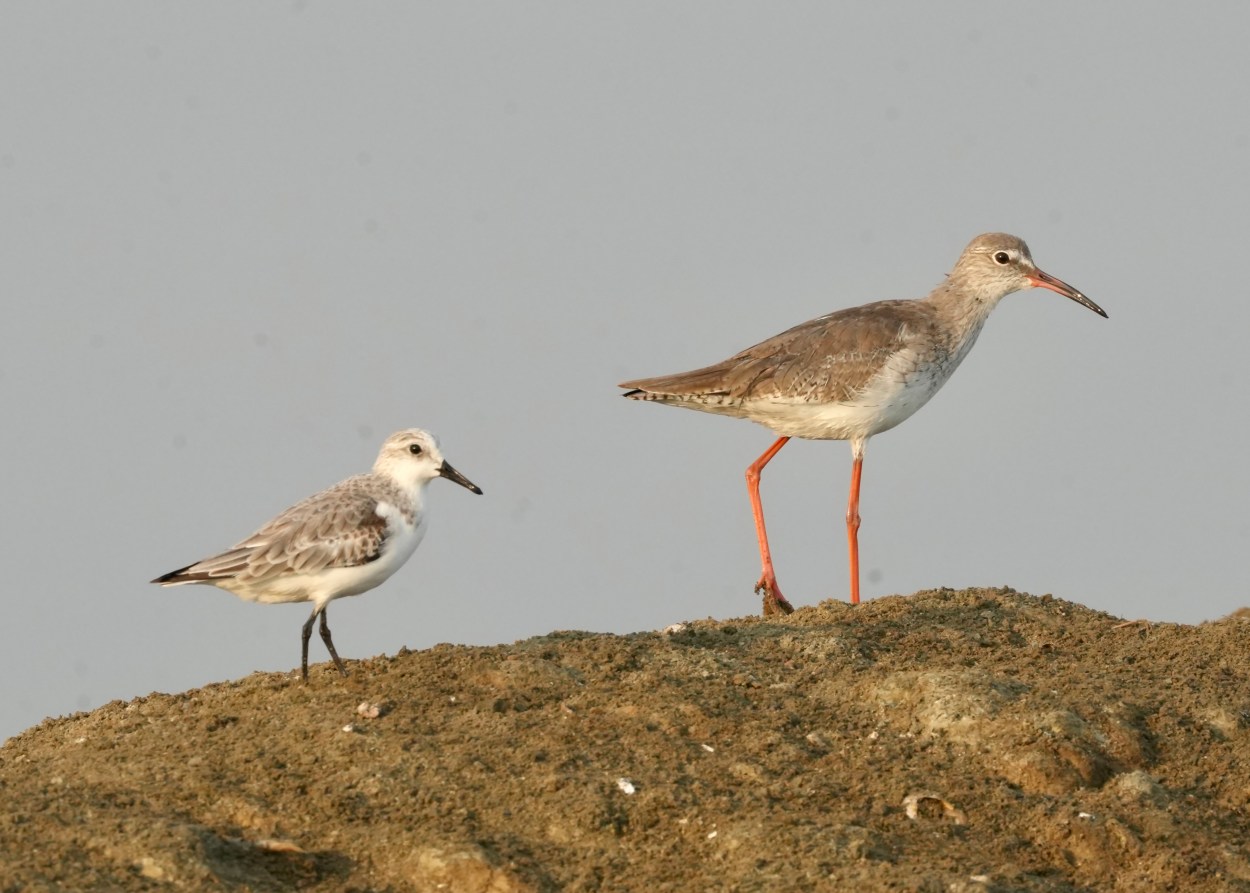
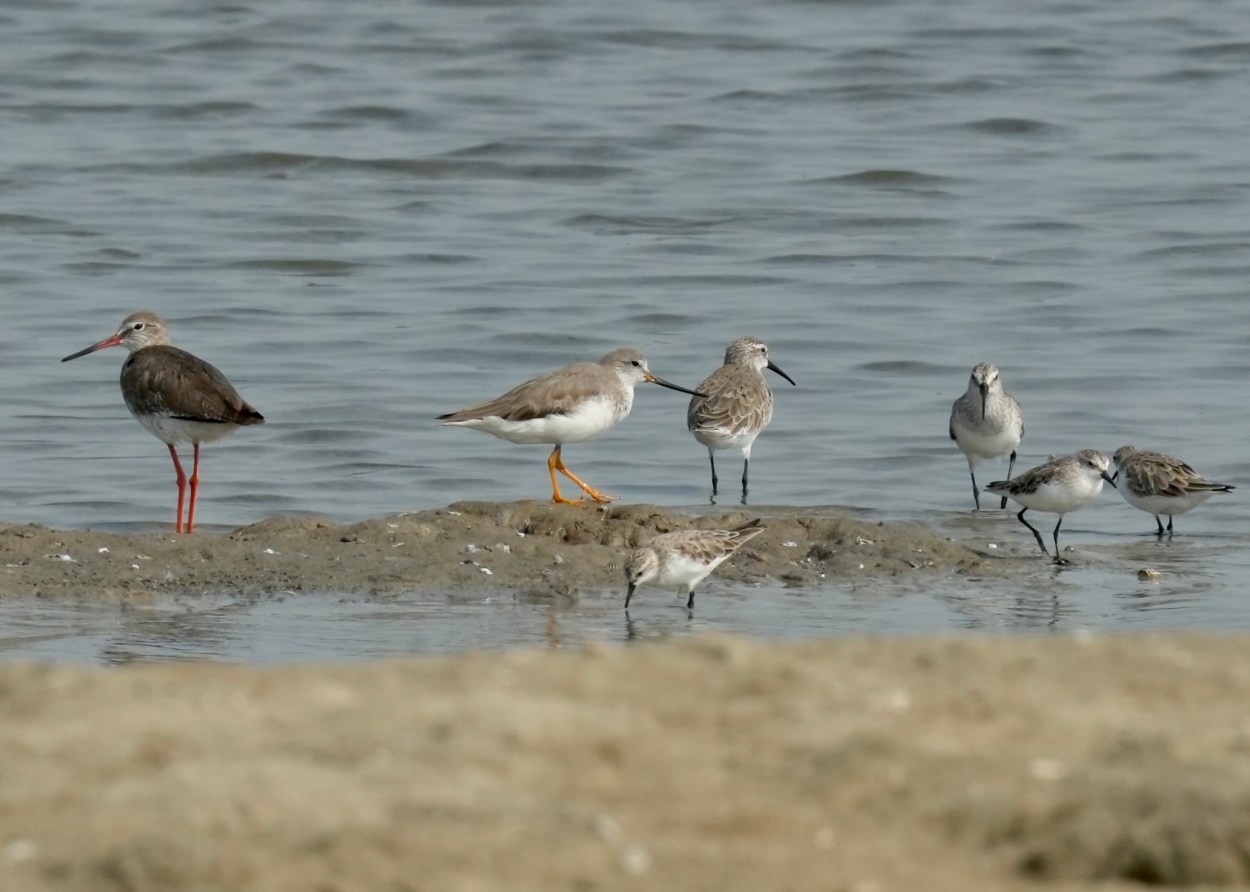
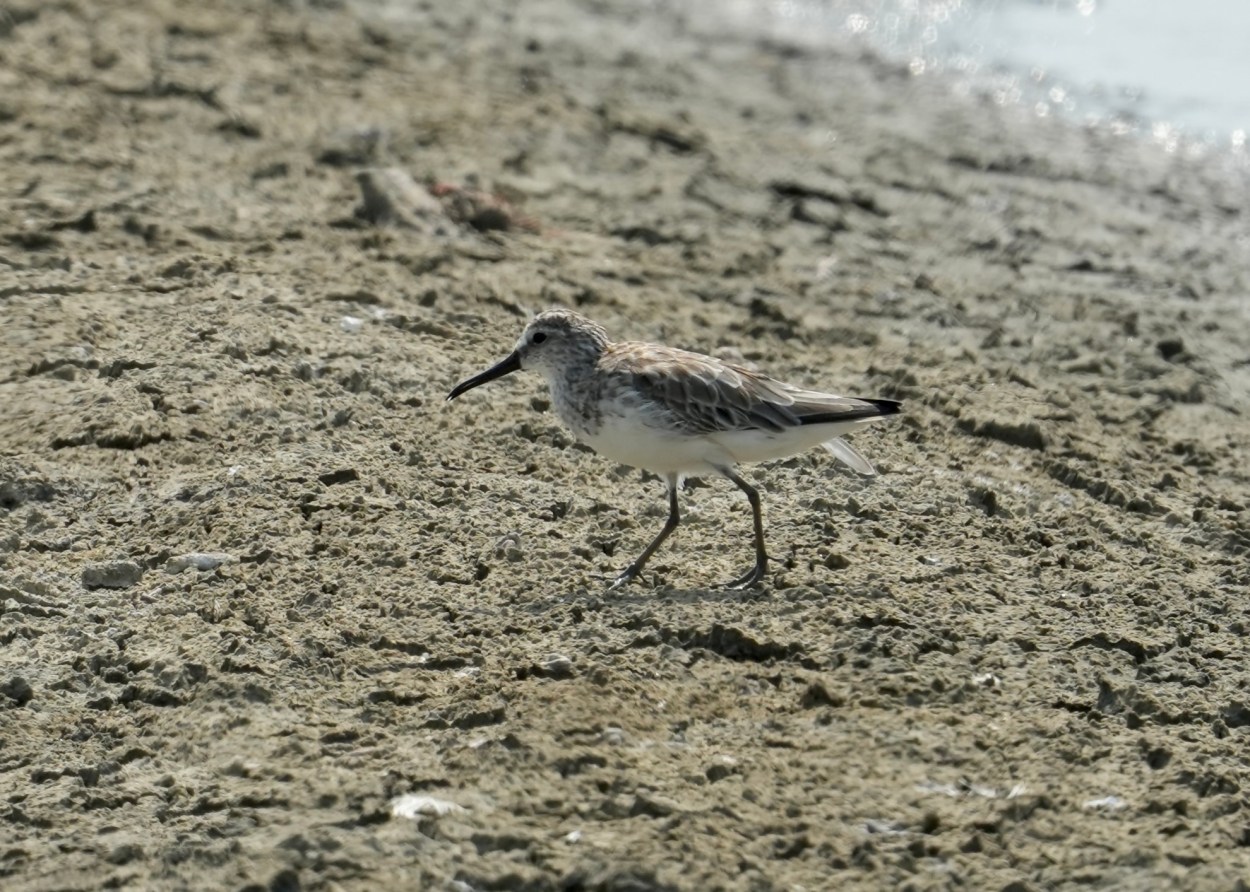
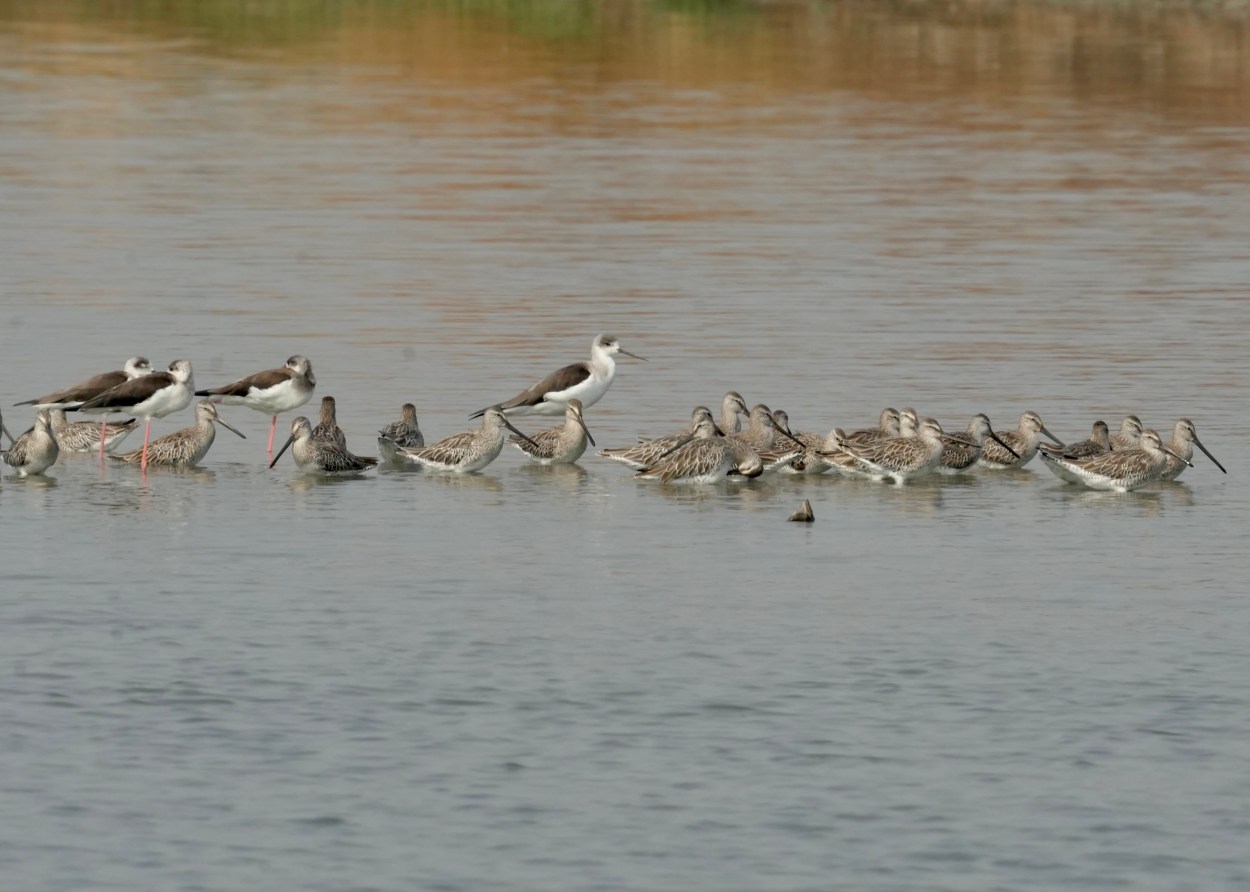
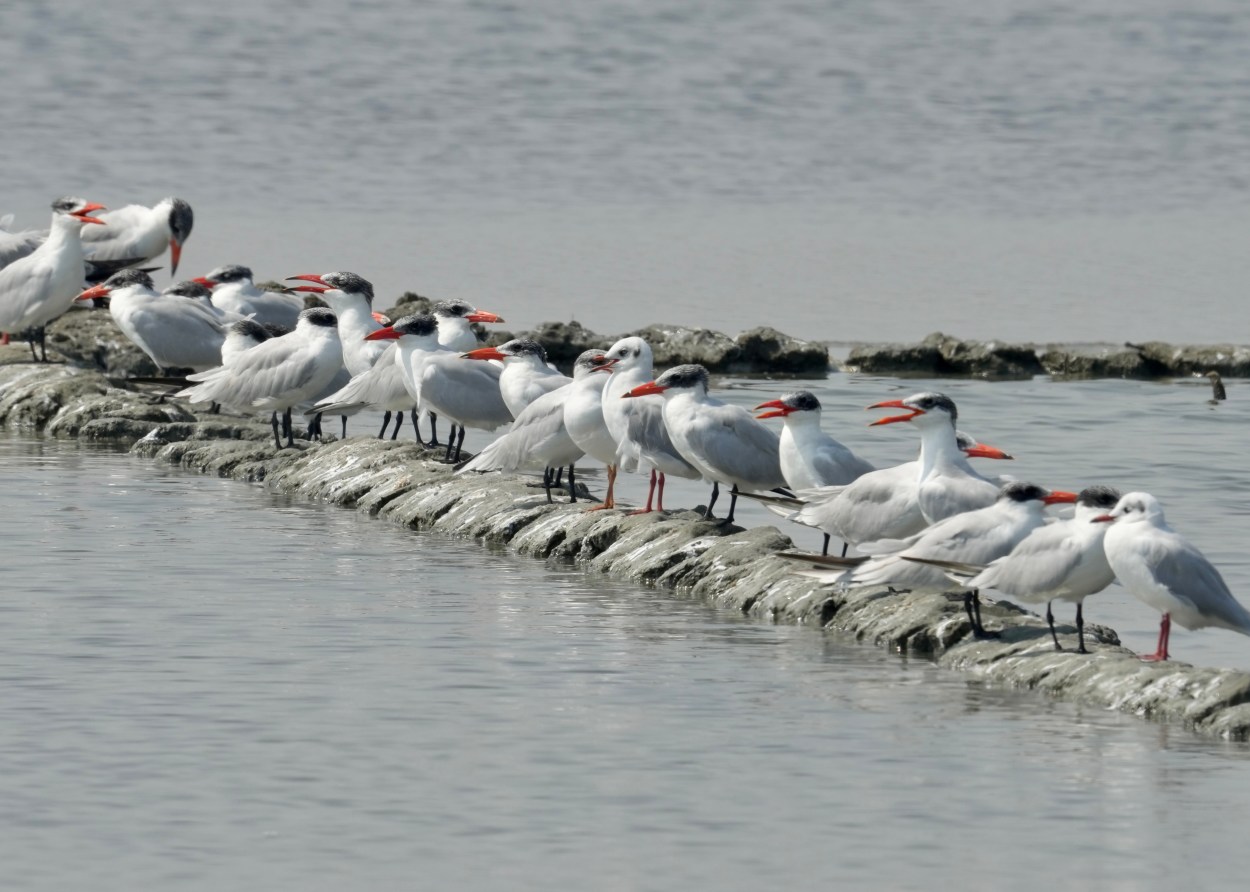
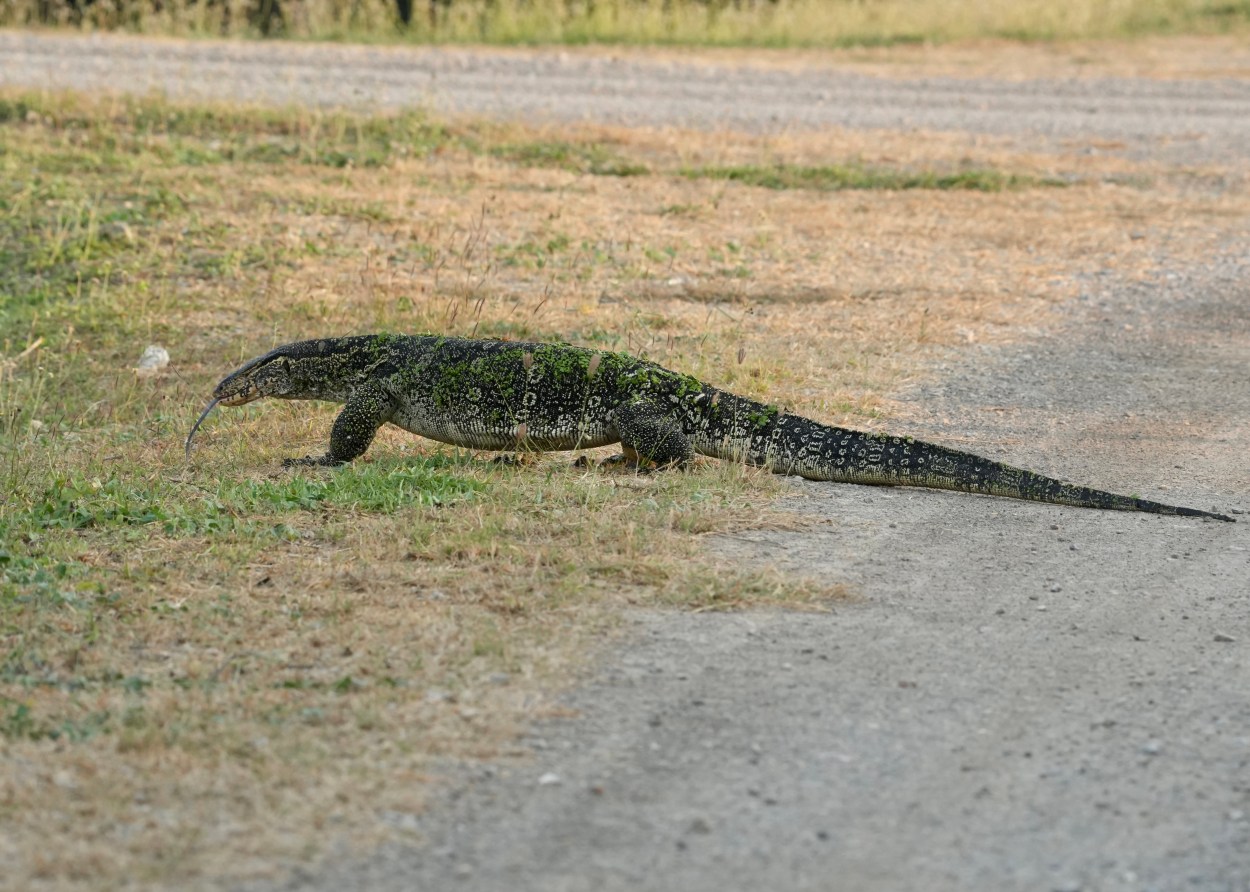
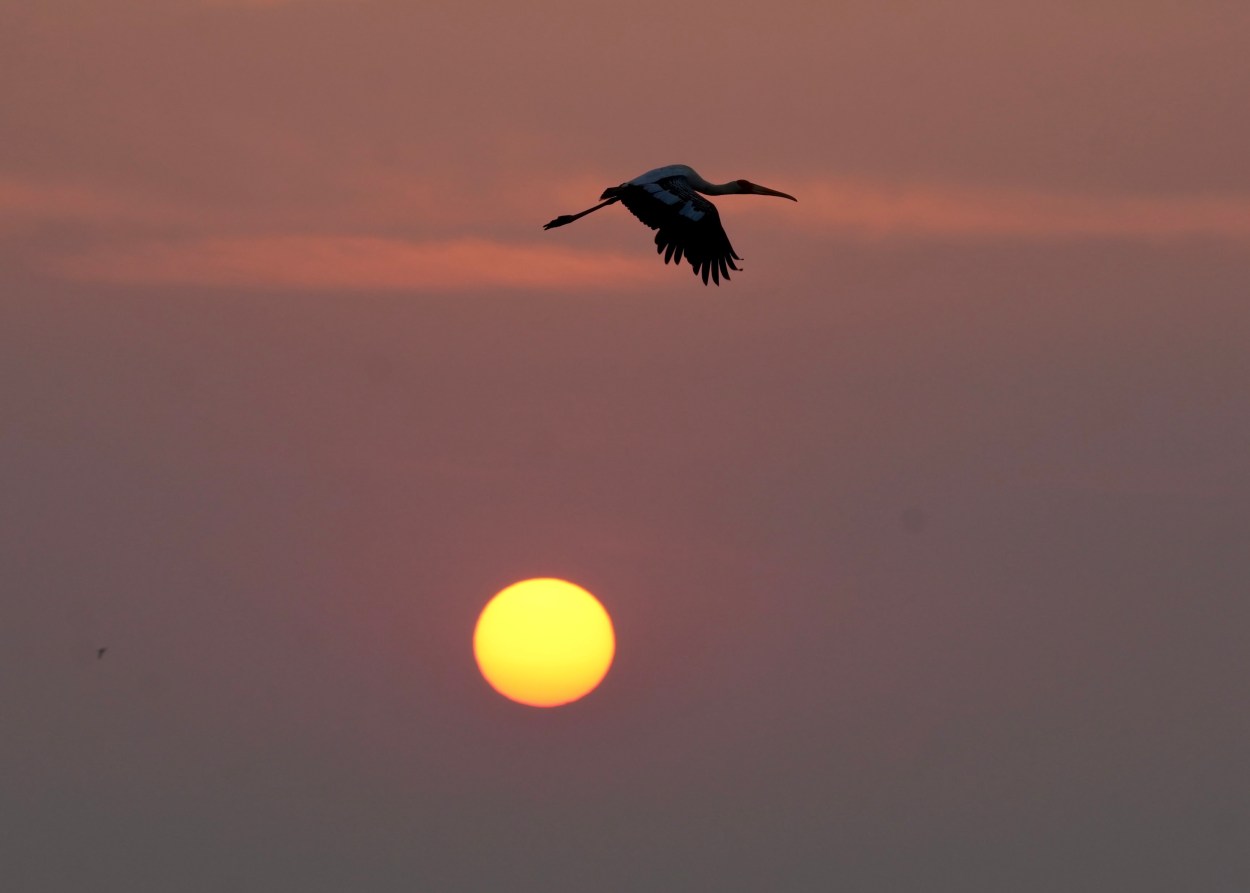
There something rather comforting about seeing familiar birds abroad – here Sanderling and Spotted RedshankHere ‘Spot Red’ and Curlew Sandpiper are joined by Red-necked Stint and Terek Sandpiper Broad-billed Sandpiper were a highlightAs were the Asian Dowitcher– with Black-necked StiltThere was plenty of tern activity – a lot of Caspian Not all the action was avian – this monitor was six foot or morePainted Stork at dawn
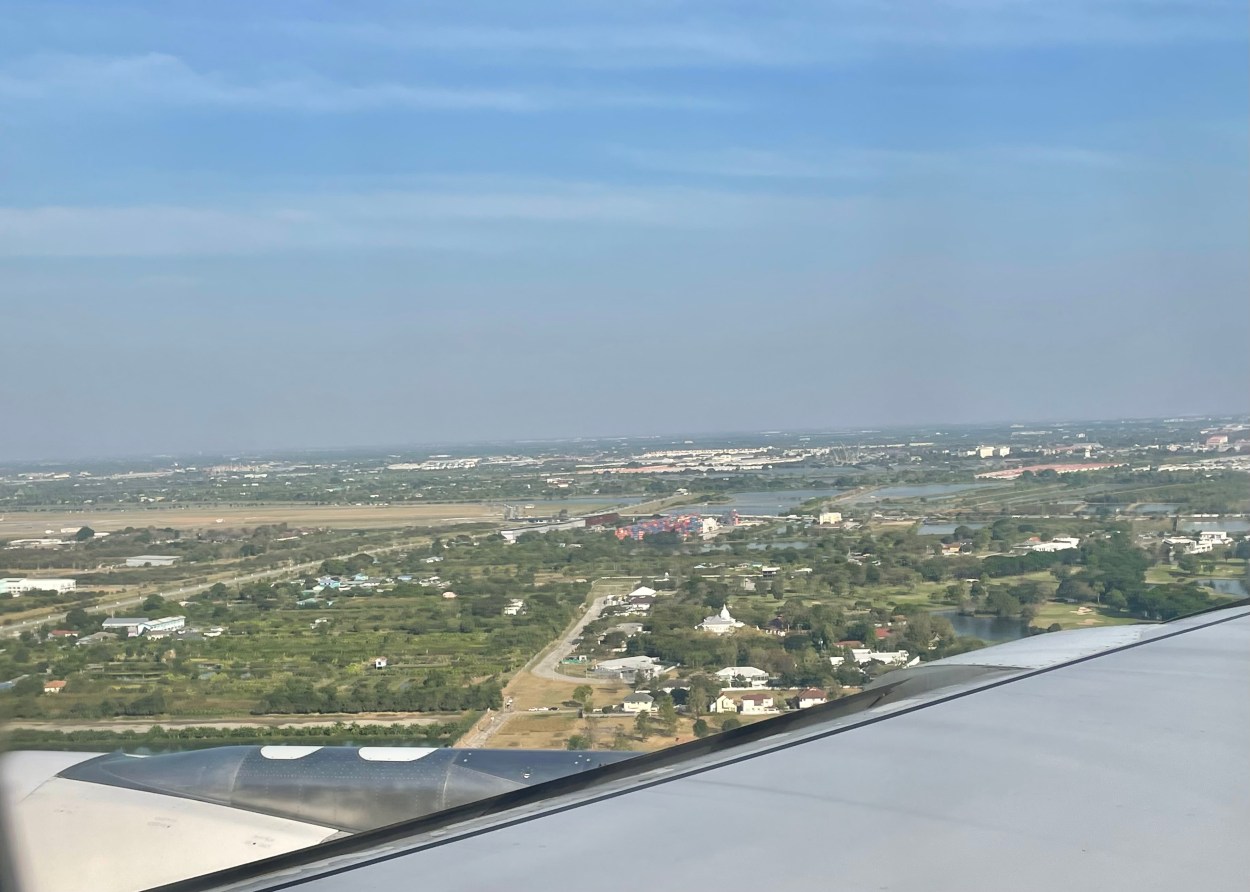
Arriving at Suvarnabhumi International Airport, Bangkok
A 4.30 wake-up in Newcastle meant we arrived at Sydney airport for an 8.00 check-in. Our flight was late departing but we made up time and landed in Bangkok on schedule, to be greeted by Neil and Nicola. The transfer from Suvarnabhumi International Airport to Petchaburi took longer than expected because of the motorway closure following the recent crane collapse. We managed to see a few birds to start our Thai list off before nightfall. In all we were 20 hours in transit but I awoke this morning with the sound of waves lapping on the beach and Asian Koel calling in the gardens surrounding our Chidlom Resort hotel – what could be nicer.
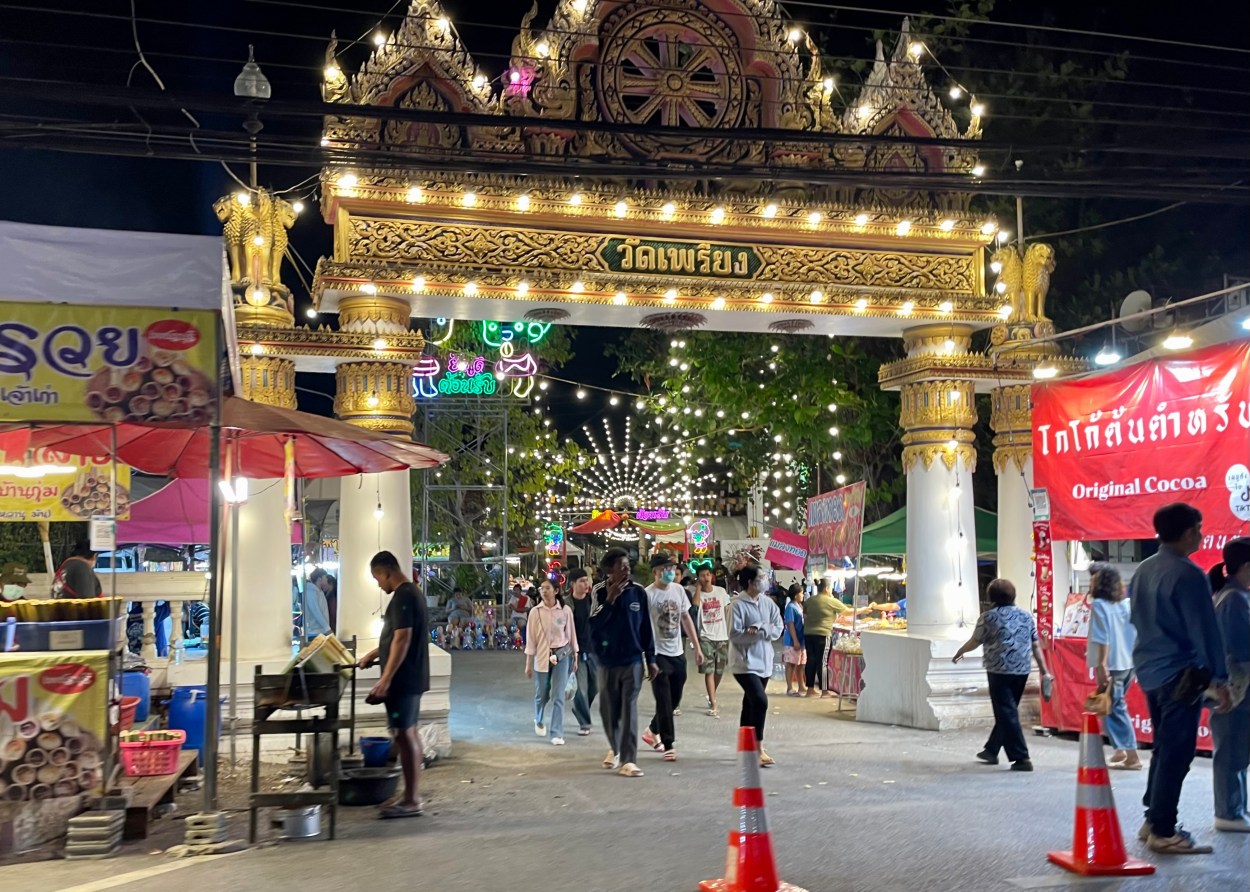
Asian Koel calling outside my hotel window this morning (this is a female taken last week at Lake Macquarie)Night market in Petchaburi – not far from our first night’s accommodation
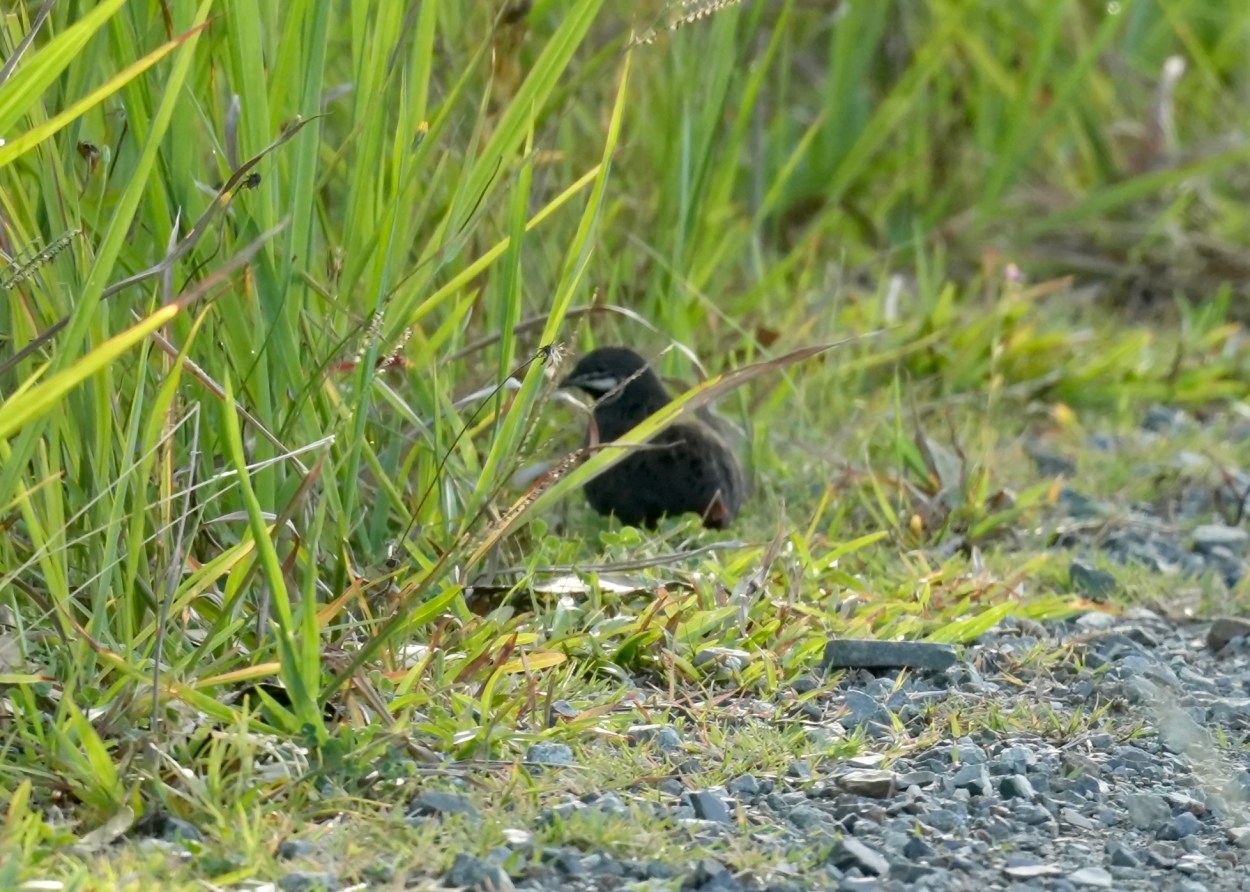
Extraordinary views of King Quail at Minimbah – our only other previous sighting was a two second flight view
We went out this morning on our final birding session of our current Australia tour to see if we could mop up a few more trip ticks. First stop was a return to the coastal heath of Minimbah, looking for quail. Plenty of Brown along the sides of the approach track but then, through the thermal imager, I picked up a small heat source some 50m in front of us. Approaching with caution we eventually got good views of King Quail (body size of a tennis ball) on the deck. Our only previous sighting was of a bird flushed and then in flight for just a couple of seconds. A quick pit-stop coffee near Coolongolook yielded up a Comb-crested Jacana before heading inland to O’Sullivans Gap – a now neglected rainforest walk and picnic ground. It was very quiet but somehow Dan managed to magic up a Pale-Yellow Robin – his first at the site and a Hunter tick for me! Our final stop, with too little time to do it justice, was Mungo Brush, where we failed to see the Rose-crowned Fruit Dove (again!) but did added Black-faced Monarch to our trip list – which closes on 244 after our three week family holiday, split between Victoria and New South Wales. Tomorrow we head to Sydney airport for our flight to Thailand to meet up with Neil and Nicola and ten days leisurely birding in the south of the country.
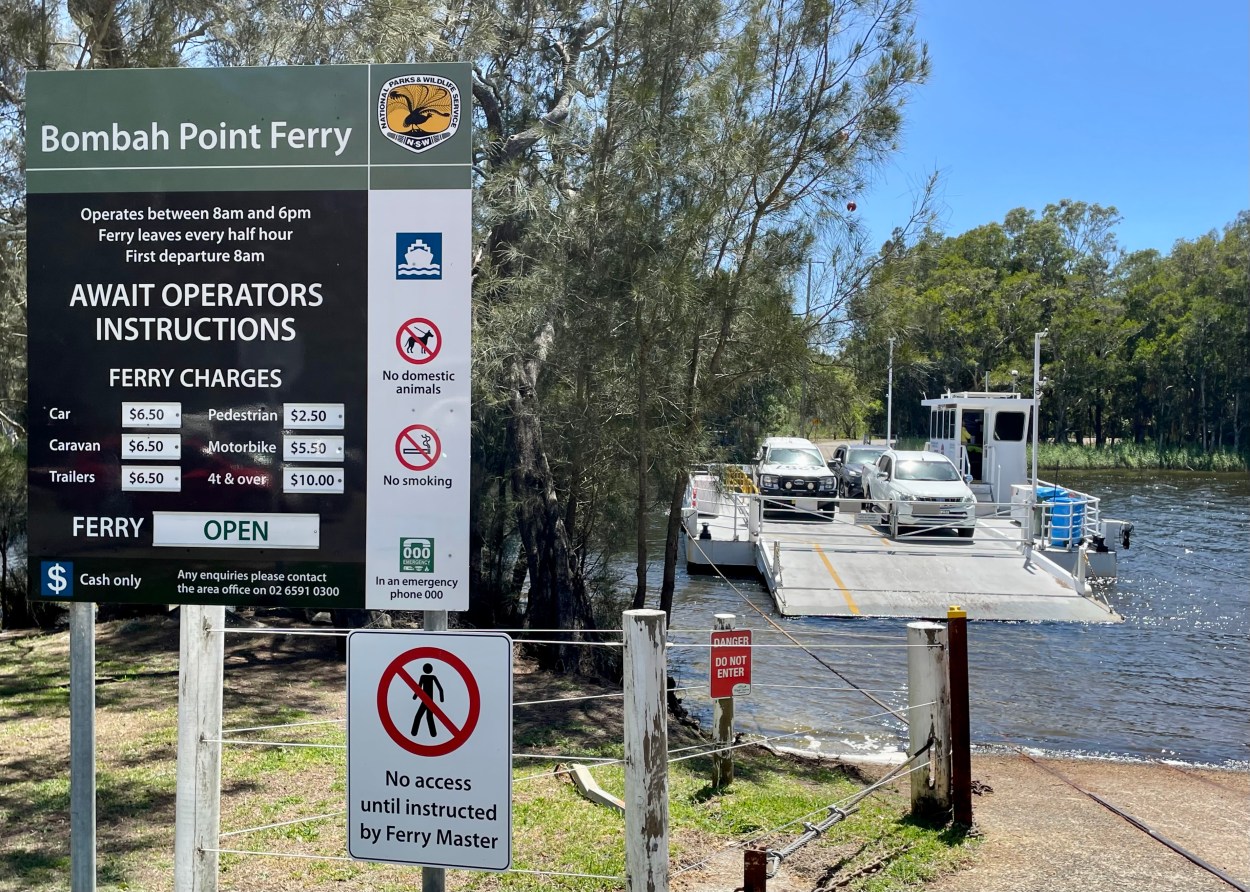
Waiting to catch the ferry across the Myall lakes to get to Mungo Brush
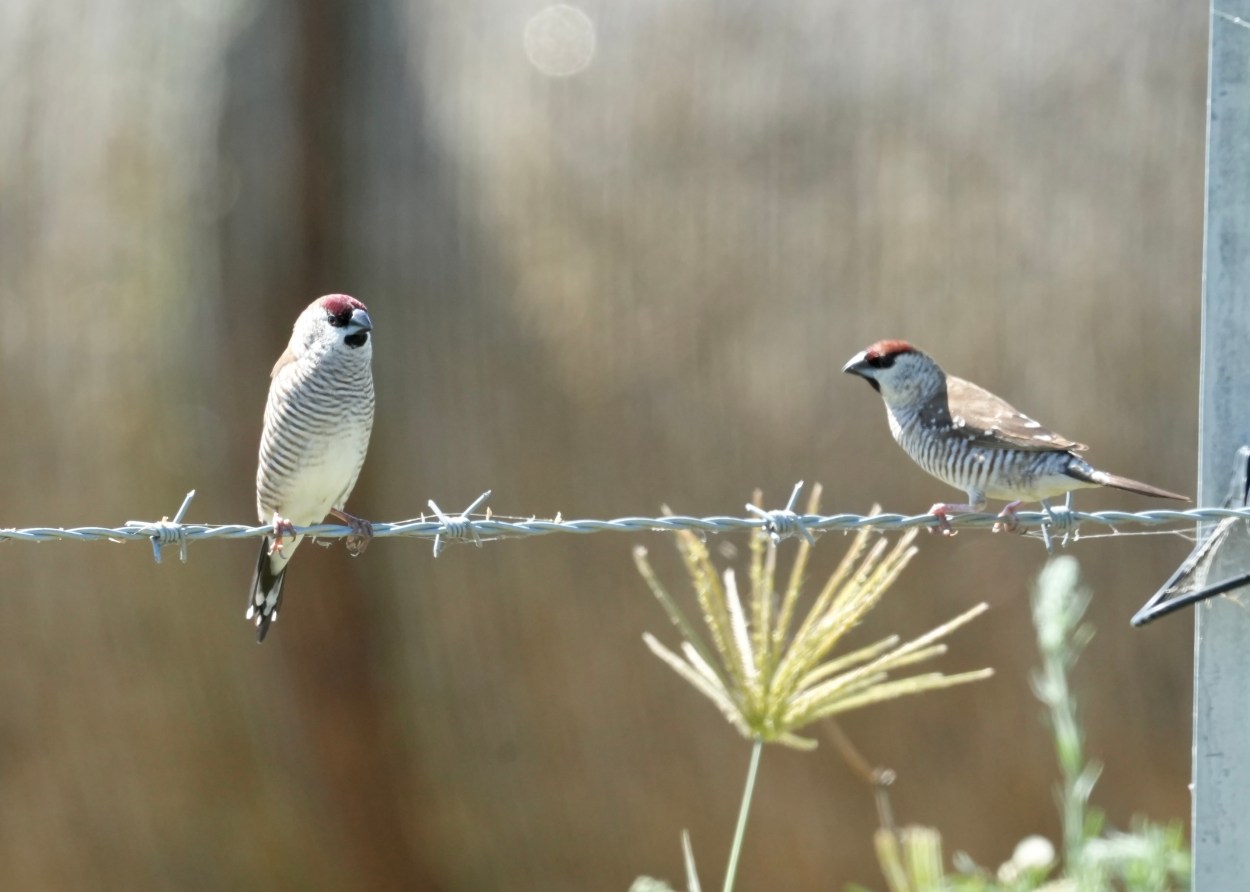
Apart from the Sooty Owl – this is the only photographic record of recent Hunter ticks – Plum-headed Finch at Jerrys Plains
Over the past couple of days we’ve been visiting new locations in search of trip and, perhaps more importantly, Hunter ticks. In the excitement of our Sooty Owl sighting I forgot to mention that our excursion to Lake Macquarie that morning added two much-needed Hunter ticks – Lewin’s Rail and Red-whiskered Bulbul. In the afternoon, following an afternoon browsing the Morpeth antique shops and eating ice cream, we heard and then saw Stubble Quail around Largs, another gap in my list filled. Yesterday the area around Jerrys Plains and Denman turned up trumps when we finally tracked down the recently established colony of Plum-headed Finch. Yengo National Park produce half a dozen more trip ticks this morning – taking our trip list to 239 and my overall Hunter List to 343. Tomorrow’s pelagic has unfortunately been cancelled, with a predicted swell of two and a half metres. That probably means the end of Hunter ticks for this visit – leaving me a few short to reach the Hunter Bird Observers Club ‘350’ badge.
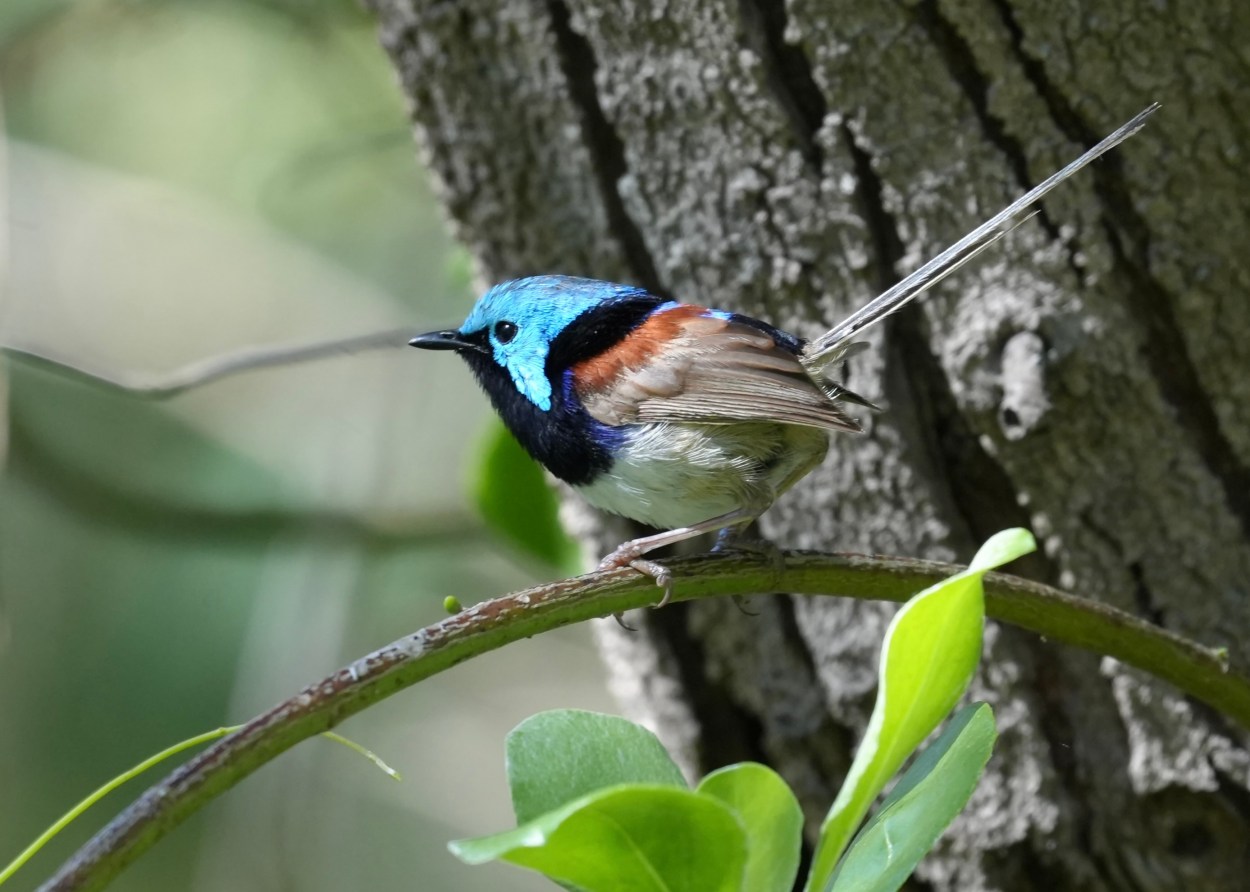
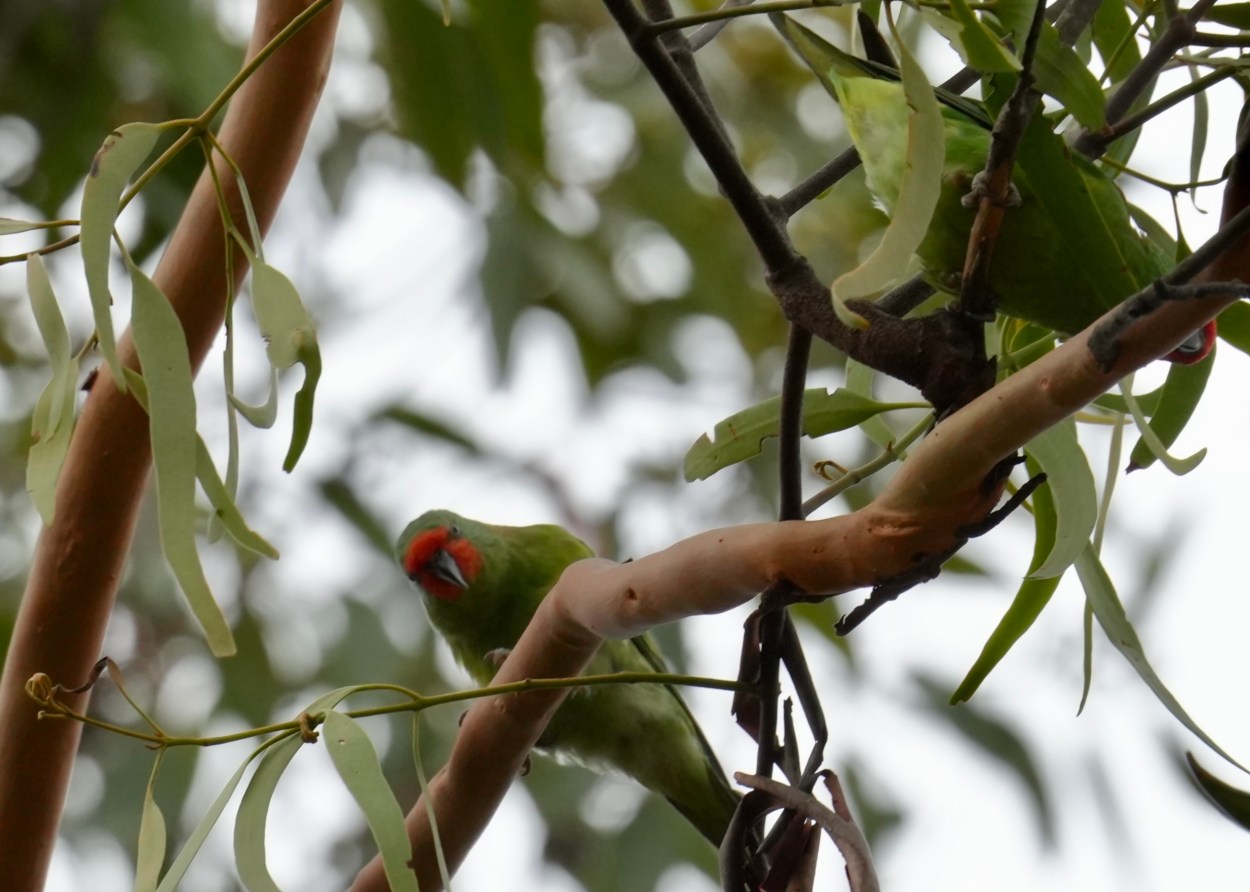
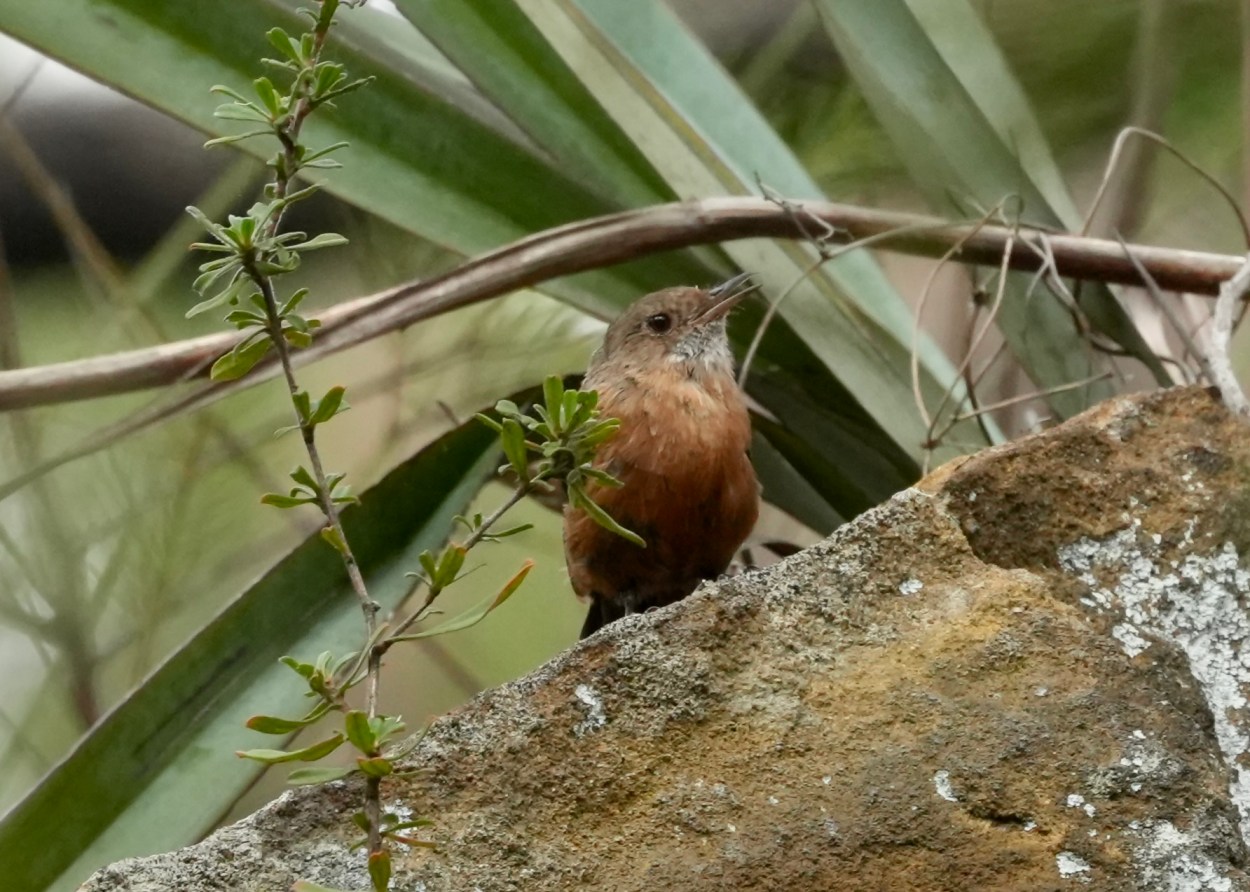
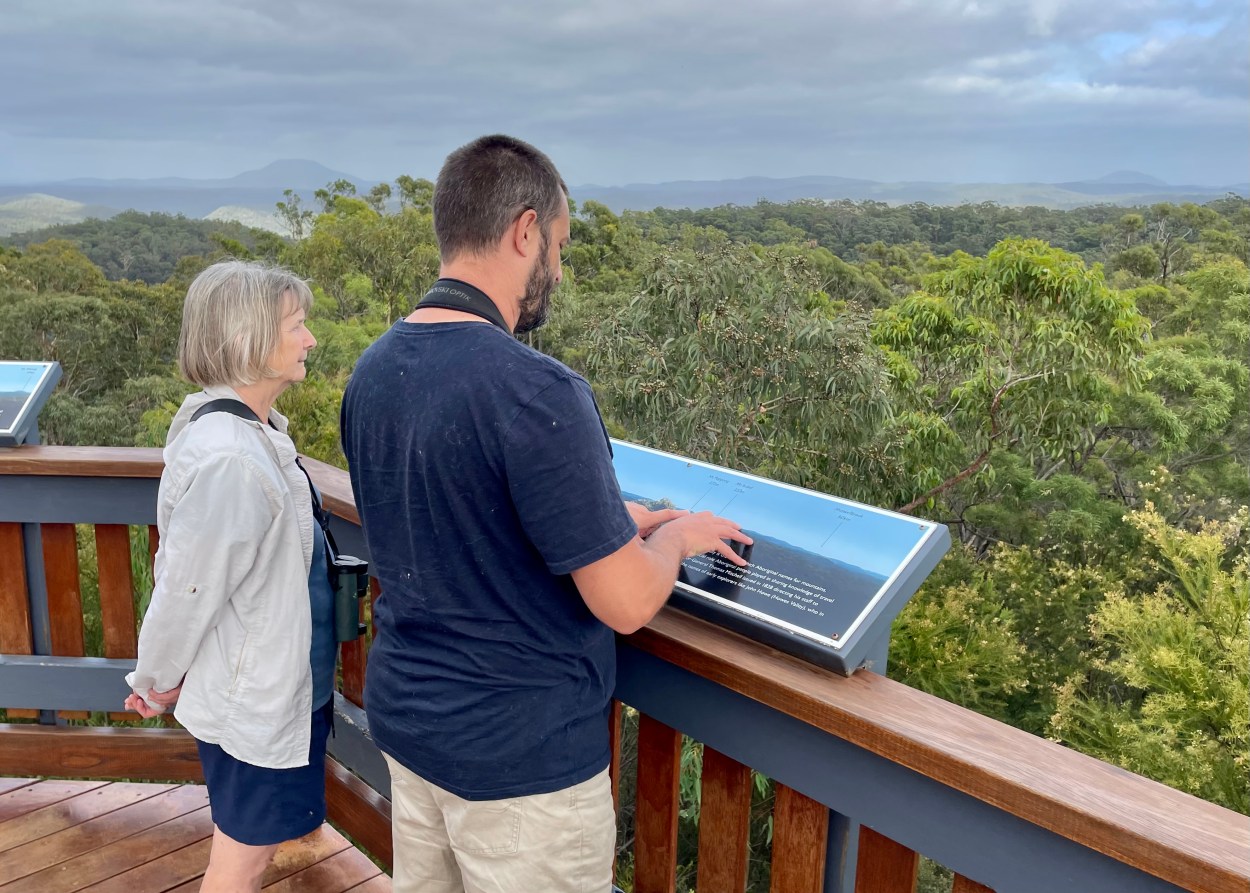
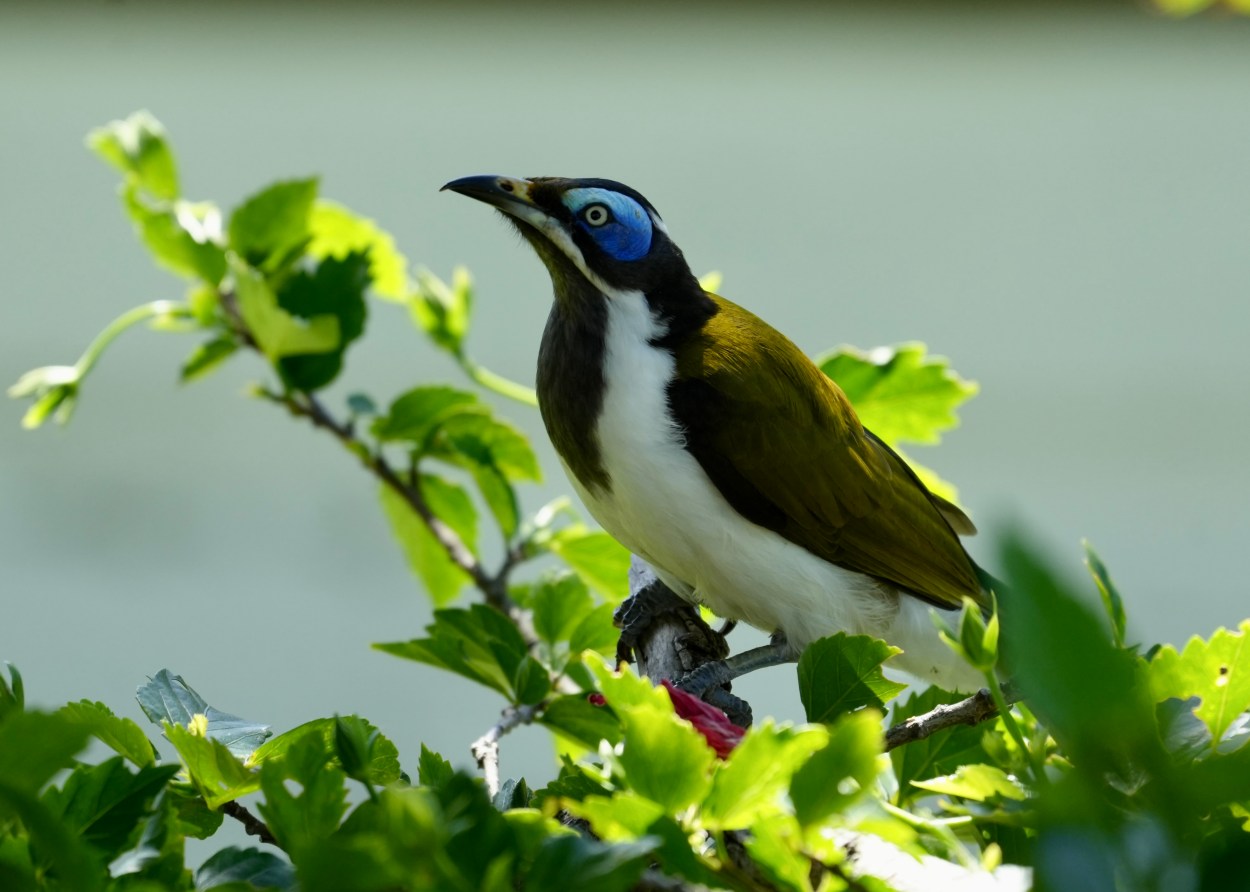
..but here’s a few trip tick pics to make up for it – Variegated Fairy-WrenLittle Lorikeet – more often seen in flight than feeding Rock Warbler – a sandstone specialist seen in Yengo National ParkJane and Dan at the Finchley Track lookout, with the flat-topped Mt Yengo in the background – ‘Ularu of the East’Seen at most locations – including our Wallsend front garden – but still a stunning honeyeater – Blue-facedMorning coffee stop at Laguna
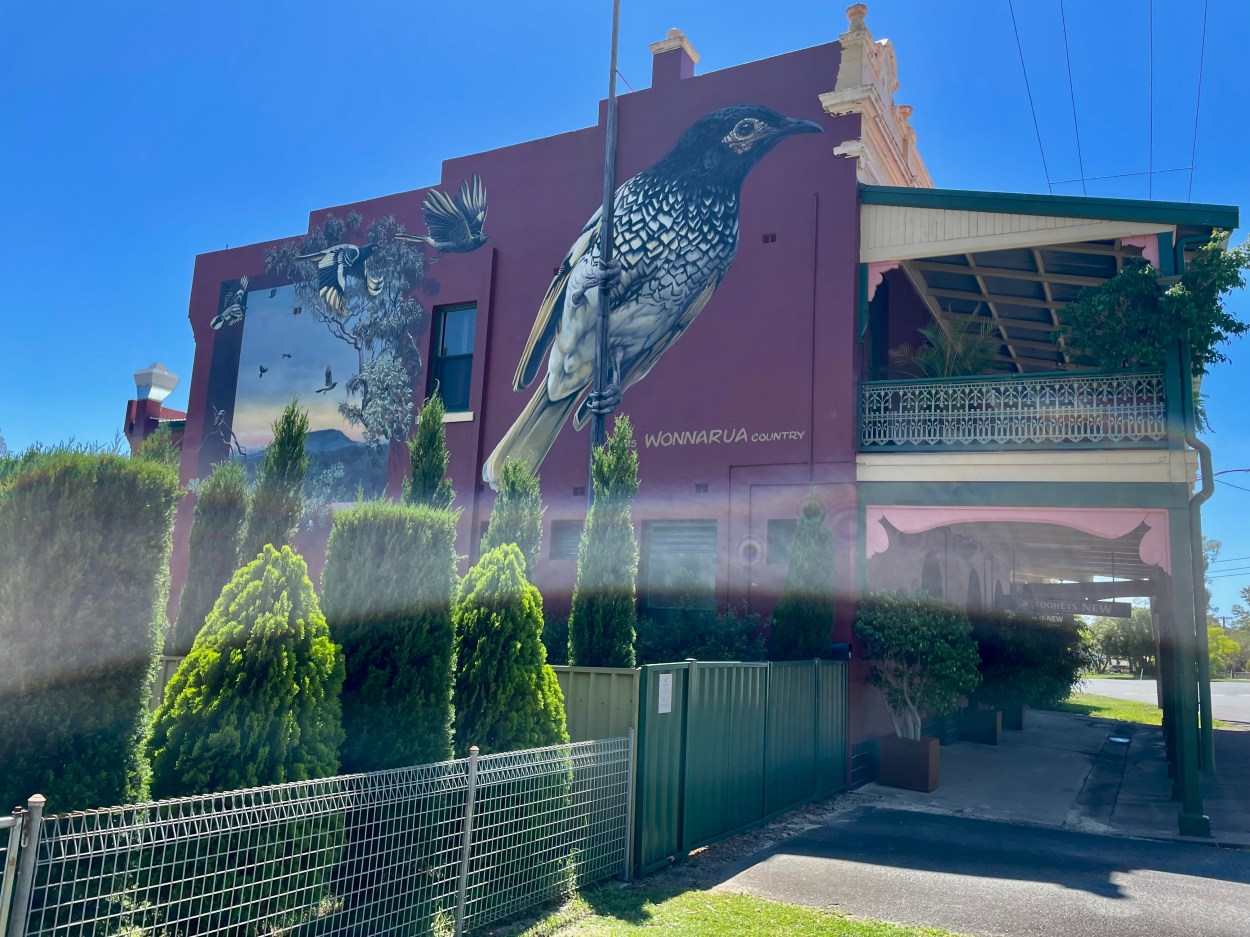
A fabulous wall painting of Regent Honeyeater near Cessnock – raising awareness of the plight of this critically endangered species
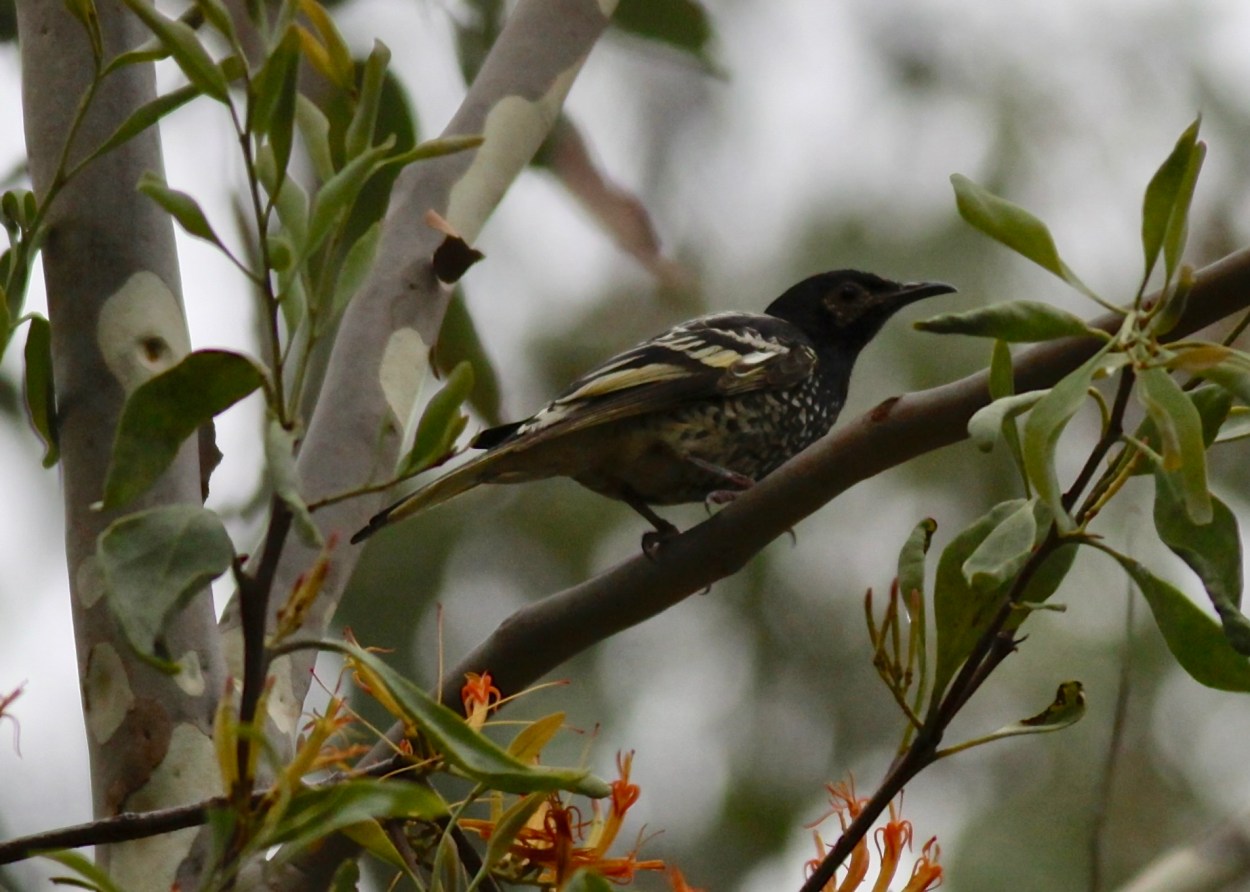
Our friend Mick has arguably the most difficult job in Australian bird conservation – he’s responsible for the BirdLife Regent Honeyeater recovery programme. With just 300 birds left on the planet Regent Honeyeater is one of the most critically endangered species in Australia. Despite a long-standing reintroduction programme their range is contracting and recovery is stalling. Regent Honeyeater once ranged abundantly from Adelaide to south-east Queensland but much of their preferred woodland and forest habitat has been cleared for agriculture over the years. Continuing habitat destruction, including the clearance of nectar-producing trees, and the poor health of many remnant woodlands, as well as competition for nectar from other honeyeater species has increased pressure on the dwindling population, which is now believed to move between widely spaced patches of remnant habitat to survive and breed. We’ve been privileged in the past to experience these birds at one of their strongholds near Newcastle and returned to the area today, not in search of Regents but to see how the habitat is doing under the increased pressure of human activity. The situation isn’t good and although a major planned development of industrial units was stopped a few years ago (see my 2014 post) the whole area remains under threat. It seems incredible that one of the core breeding areas for one of the Continent’s most critically endangered species should suffer such degradation and abuse. We salute Mick & BirdLife Australia for their efforts to help stop another iconic bird species from becoming extinct. Please people give the birds the respect and space they deserve.
Regent Honeyeater in 2012 at HEZ – one of the species core breeding areasThe abuse and degradation of this site is shameful
Thanks to Jonah we have a record shot of Sooty Owl – an Aussie tick after countless attempts over the past two decades
I can’t lie, Australian night birds are a nightmare. For reasons I don’t fully understand, unlike in the UK or USA, nightbirds in Australia (owls, nightjars, frogmouths etc) don’t emerge until it’s pitch black. That means you generally have to locate / identify them on call. Some of the bigger forest owls have huge territories across difficult to access terrain. We’ve done at least one night bird excursion each time we’ve been to Australia – sometimes two or three and almost always come away empty handed. Yesterday, encouraged by the weather (still, warm with a New Moon) and our enthusiastic grandson Jonah, we set off at dusk for a three hour session in the Watagans National Park, west of Newcastle. Our first stop fully met expectations and predictably failed to produce the hoped for Masked Owl. A couple more stops in the forest produced similar results – though we did hear BooBook, the easiest of the owl species to get. We were just about to give up at the next stop when we got a single response call from a Sooty Owl – the titan of tytos! We stood about for another ten minutes, staring into black space and hearing nothing but a few croaking frogs. Then, through my thermal imager, I found it surprisingly close to us, sitting on a horizontal bough. It didn’t like the spot-light and quickly but silently flew away. We all managed brief but acceptable views on the imager screen. Another five minutes of scanning and ‘bingo’ there it was again, watching us from the tree above. This time the light didn’t bother it and we were able to see its impressive features before it flew to another tree and eventually disappeared back into the night. They are battleship grey on the back, paler on the front with a typical tyto heart-shaped face and black eyes. They are approximately twice the body-mass of a Barn Owl. We arrived home before midnight – exhausted but elated. A trip, Hunter and Aussie tick.
Nobbys Point is a notable Newcastle landmark – a lighthouse and breakwater which guards the southern approach to the Hunter. In the right conditions it can be a good place for birding. Unfortunately on our first visit this trip, last Sunday, it poured with rain and we had to retreat. Yesterday the weather was better and we made it to the end of the breakwater before the high tide washed over us. Birding was quiet with only one shore bird – Sooty Oystercatcher – a handful of ‘Wedgies’ (Wedge-tailed Shearwater) and three tern species: Little, Crested and Common. The latter of course looks nothing like the Common Tern we are familiar with in Norfolk, with black bill and dark legs. I did see a presumed ‘Eastern Common Tern’ at Cley back in August 2014. The only other bird of note was a singing Blue-faced Honeyeater in the garden in Wallsend.
A couple of Wedgies off Nobby’s PointSeveral Common Tern off the point – an addition to the trip listThe Cley ‘Eastern’ Common Tern in August 2014, with black legs and bill