Day 4 – Turriff to Cullen Bay

Sheltering from the rain on our run in to Cullen Bay

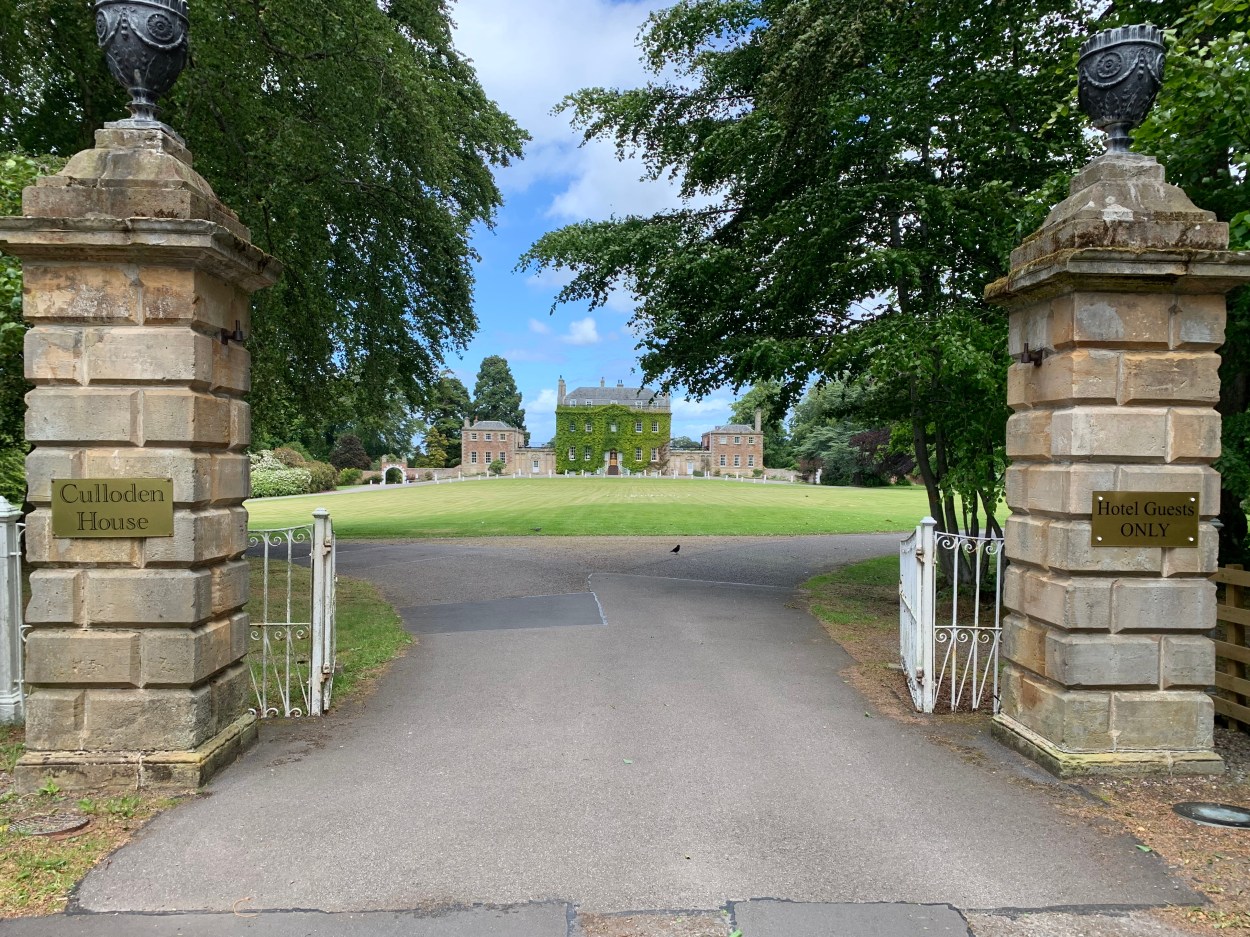
It’s always a good idea to have an ‘easy’ stage after a hard one, so a modest 50 k from our over-night stop in Turriff, north to the coast at Banff and then west towards the Moray Firth, was ideal. A late start was inevitable as Neil attempted to re-book rail tickets from Forres, to beat the strike, Bry and I deciding to play it long and continue as planned – with a buffer of a few days at the end of the trip – when hopefully the trains can get back to normal. Lunch was at the delightful fishing village of Port Soy – well-known to birders for the wintering flock of White-billed Diver. The NCN 1 then heads inland, in a large loop, to rejoin the coast at Cullen Bay. The ride was demanding – more rolling Aberdeenshire hills to contend with and we did get caught in our first heavy downpour – but we arrived in late afternoon sunshine to enjoy a beer in the hotel garden before supper and bed. Only new bird for the trip was a much anticipated Stonechat. Today is a different story…

Day 3 – Aberdeen to Turriff

The housing estates of Aberdeen – brightened by a lovely show of wild flowers

Yesterdays 80+ kilometres stage – the longest of the current trip – was a relentless repechage across the rolling Aberdeenshire countryside. Several early sections were along a disused railway, affording long-distance views to the Cairngorms, way over to the west. Lunch was taken at Tarves before a tough afternoon – punctuated by tea at Maud – brought us to our over-night stop at Turriff. Amidst the ‘blood, sweat and tears’, we did manage to add a couple of birds to the list – a calling Curlew and, at one point, a little ‘hot-spot’ of Corn Bunting. Returning to our digs after super, on the banks of the local burn, a very obliging and unexpected Spotted Flycatcher.

We’ve spent much of yesterday evening and this morning considering the implications for the national rail strike, which looks ever more likely to go ahead now. Being stuck at ‘the top end’ without a means of getting back had us seriously considering aborting the whole thing but, every resourceful and resilient, we may have come up with a Plan B!

Day 2 – Inverbervie to Aberdeen

Another day, another bay – this one is Stonehaven

After a pleasant nights stay and a wholesome Scottish fried breakfast we set off up hill from Inverbervie towards Aberdeen. Because of the new link road the NCN 1 meanders around a bit, but by coffee time we’d reached Stonehaven. The route then follows what Bry called ‘Slug Road’ – not sure if this is because it’s a bit of a slug (which it is) or because it means you go at the pace of a slug – which I did! Either way we eventually made it back to the coast and Aberdeen. A bit of sight-seeing at the mouth of the Dee produced lots of Eider, a small flock of female Goosander and an entertaining pod of Bottle-nosed Dolphin. The only other bird tick was a rather out-of-context Grasshopper Warbler near to our lunch stop. We’re staying in the Mercure Hotel – rather posh by our standards – and tonight eating at an award-winning Indian. I’ll let you know how that goes.

Look carefully and you can see playing Dolphin – Eider in the foreground. Well what do you expect with an iPhone!

Day 1 – Lower Green Hillock to Inverbervie

The Grand Depart

We set off from Bry’s with a respectably early start and cycled for an hour or so before our morning coffee stop. A relaxed start to this first day of the concluding section of the NCN 1, with cloudy but bright weather and a side wind for most of the day. A couple of k further on we joined the NCN 1 proper, a little to the north from where we’d started last time – only heading south. Quiet roads led us to Montrose and our lunchtime stop. We then crossed the picturesque North Esk river before visiting the National Nature Reserve at St Cyrus, where a family party of Peregrine provided a familiar sight. This was quickly followed by the most challenging climb of the day (‘possibly for the whole trip’ says Bry – we’ll see!) and a speedy descent, along the busy A92, into Johnshaven. Our chosen afternoon tea stop, The Hidden Tearoom, is unfortunately closed on Mondays 😦 so we pushed on to our final over-night destination, The Crown Hotel at Inverbervie. The last few miles being along a coastal track affording excellent views of a number of sea and shorebirds – bringing our overall trip list up to 87 species.

The coastal vista from the NCN 1, near Inverbervie

We’re off..

Loch of Kinnordy RSPB reserve

Yesterday, Neil and I took the opportunity of a training ride. In his case, honing his muscular physique after months of relentless and secret training – in my case draining the battery of any residual energy I’d stored up over the preceding weeks! We set off west in a brisk head-wind, had lunch in Kirriemuir and later in the afternoon enjoyed a spot of birding around Loch of Kinnordy – adding ten more species to the bird list. Years ago, when Jane and I were visiting Bry & Ann, on this same loch Jane found and I identified a White-winged Black Tern – pretty rare in Scotland then and still is. I pointed it out to the Warden, explaining the finer identification features, before she ‘laid claim’ to the record! It was ever thus. One thing I’m pretty sure of is that we won’t be seeing WWBT today!

NCN 1 – the final chapter

No wonder Neil looks so relaxed – he’s the one with the electric bike!

The beginning of the end. We’re at the start of the final stage of our NCN (National Cycle Network) 1 sojourn from John O’Groats to Dover – completed in several stages. This last section is from Arbroath to the top end. Neil and I are on the train heading north to meet up with Bryan. In fact we’ve just passed through Berwick-on-Tweed, where our journey began back in 2017. We have a day to get the bikes and our kit sorted before we head off on Monday morning. 400+ miles later we should reach our final destination. The bird list for this trip is already one shy of the half-ton, with the combined trip list sitting at 126. We should add a few more before we finish!

Peaks Pageant

A handsome male Pied Flycatcher – one of the hoped for species

Although birding is not the focus of our current visit to Derbyshire, with such promising countryside on our doorstep, it would be rude not to do some. A trip to Padley Gorge, part of the National Trust Longshaw estate, produced a reasonable selection of the local fauna. An afternoon walk to Chatsworth House was, by contrast, a complete let-down, as they are in the midst of preparing for the Chatsworth International Horse Trials. The whole grounds are a tent city / car park and the magnificent house frontage was spoilt by giant cherry pickers replacing windows. Other birds seen on our various site-seeing excursions have included: Merlin, Wheatear and Raven. In the evening, on the way to the restaurant for the ‘birthday tea’, there were a couple of Swift over the village – my first of the year.

Tree Pipit – an unexpected bonus
Better views of a territorial Grey Wagtail
Tree-creeper at the nest hole

Today it’s raining.

Tres cheers for Spanish restoration

Estany d’Ivars i Vila-sana in it’s hay-dayfortunately, the newly restored lake is now a wildlife haven

A second attempt to find Dupont’s Lark – this time visiting the excellent SEO Birdlife reserve at El Planeron – was only half successful, in that we heard a couple but failed to see anything in less than optimal conditions. After which, on the way home, we took a detour to Estany d’Ivars i Vila-sana. This lake, the largest in Catalonia, is a triumph of Spanish (Catalan) habitat restoration. The lake was historically seasonal but all that changed in the 1860’s with the creation of the Urgell Canal. The associated accumulation of ground water increased the size of the lake to around 135 ha, and it quickly became a centre of social, economic and cultural life for the surrounding villages. However, with the increased demand for irrigation and arable land meant that by 1951 the lake was completely dry, and it remained so for more than fifty years. But, with a community-backed initiative to buy out the 165 settlements and create the right conditions, the restoration of the lake began in earnest in 2002. It took four years for the lake to re-fill and the major expansion of biodiversity which followed. We walked the 6.5k path around the lake, enjoying water-birds, early migrants and resident species. The highlight was superb views of a pair of Penduline Tit nest-building – unfortunately the battery was flat on my camera so no pics! A last sea-watch this evening produced an excellent Black-throated Diver.

There were several pairs of bill-clacking White Stork around the lake
Record shot of this evening’s diver