To Hume’s it may concern

Playing catch-up after posting news of my minor triumph of achieving 300 birds in the UK in 2013!

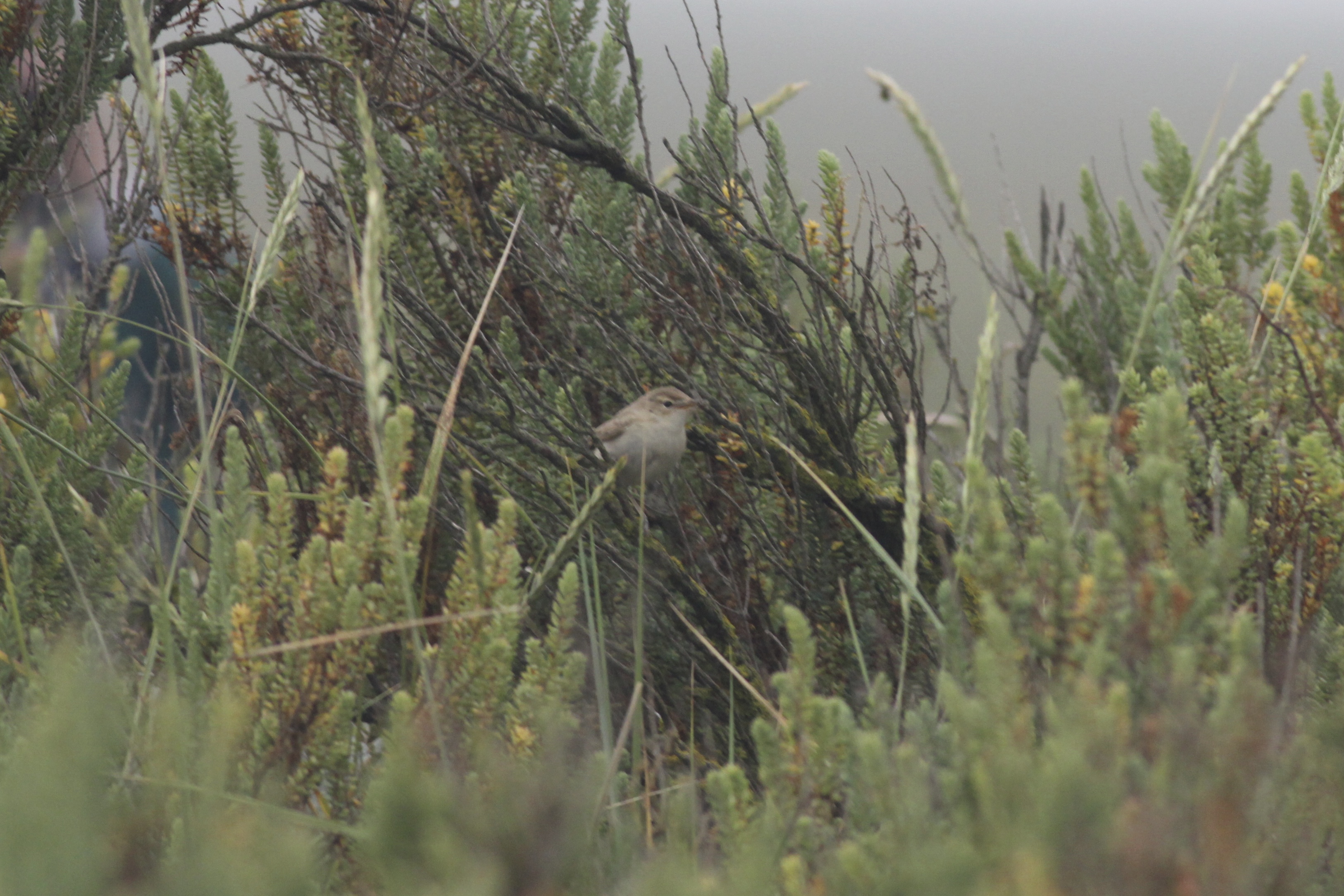
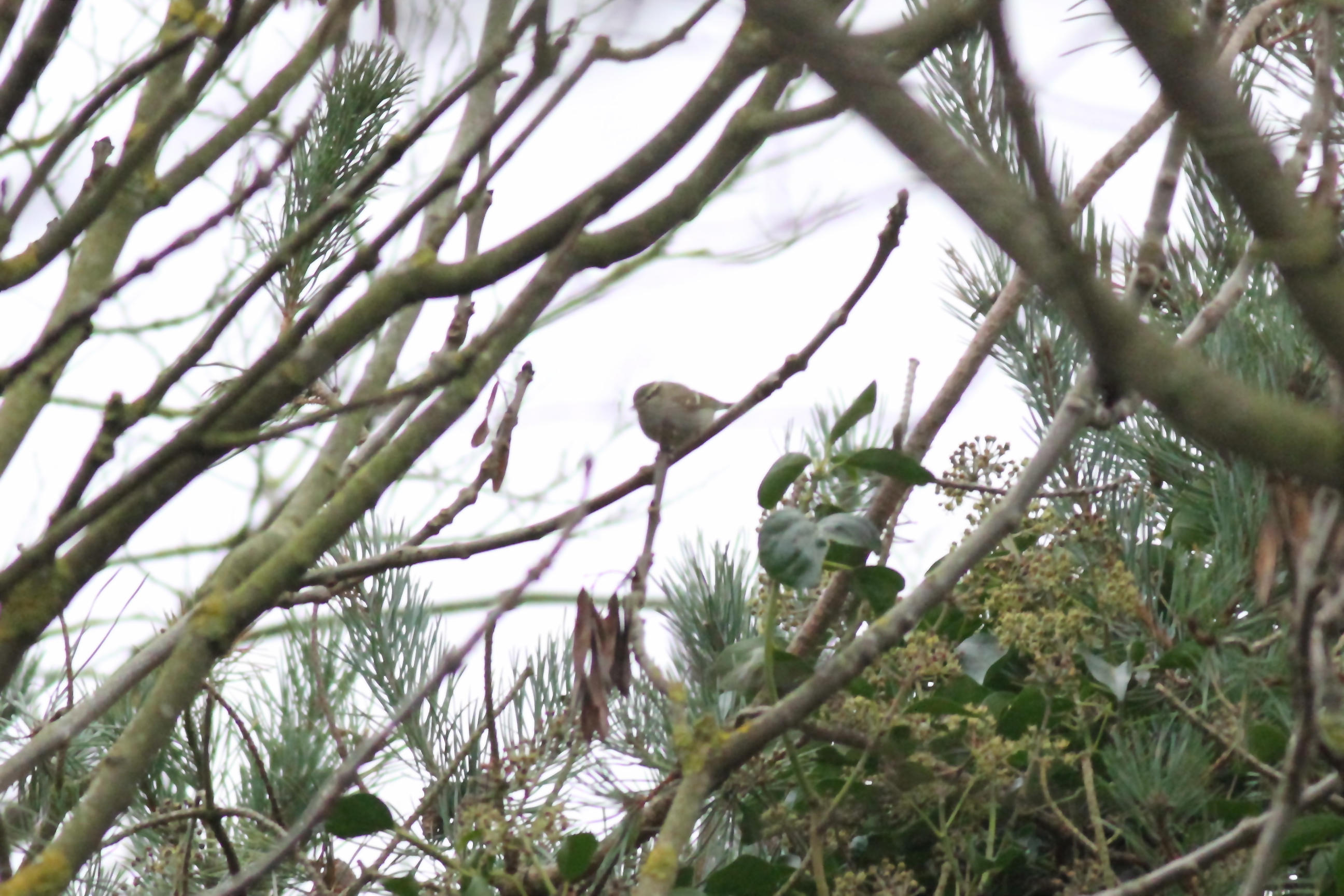
On Tuesday afternoon we took a slight detour on our way back to Peterborough and ended up at Gibraltar Point, where a Hume’s Leaf Warbler had been reported earlier in the week. On the greyest afternoon of the year so far we found ourselves traipsing around the ‘Plantation’ looking for this rare vagrant from Central Asia. To be fair though it was calling pretty frequently but still it did take a while to locate it and even longer to get acceptable views. By the time another contingent arrived from Peterborough the bird had fallen silent – probably gone to roost, and unfortunately they went away empty handed.

IMG_7311

IMG_7333

IMG_7338

Apart from call, this warbler is distinguished from it’s close relative, Yellow-browed Warbler, by duller green upper parts, ‘dirty’ underparts, a less distinct ‘upper’ wing bar and an all dark bill. A ‘tidy’ little bird for my 300th UK ‘tick’ this year.

Amazingly, the last time I was in this plantation was in November 1982 – watching an American Redstart!

301… and still counting!

When Richard Millington published A Twitcher’s Diary in 1981 it took ordinary birders like me completely by surprise. The possibility of seeing 300 species of bird in the UK in a single year was,  until then, an ornithological ‘Boys Own’ fantasy. As Millington asserted in his introduction, to see 200 of our regular breeding or visiting birds in a year is well within the capability of most regular birdwatchers, but to see three hundred requires application, dedication.. and a modicum of luck! The additional one hundred species required being made up of the scarce and rare birds that grace these shores on an infrequent basis – sometimes they are a once in a life-time event. They can turn up at any time, anywhere and may stay for a matter of a few hours or a few days at best.

Screenshot_24_11_2013_15_27

Since 1980 the limits of UK year listing have been tested and broken on many occasions and nowadays those in the premier league of year listing regularly exceed 350 – depending on which list you use of course! – see November’s ‘The Listers Dilemma’ blog. In 2011 the excitement and anguish of year listing gained a much wider public appreciation with the release of the The Big Yearthe Hollywood movie, starring Steve Martin, Jack Black and Owen Wilson.

Until this year my own ‘personal best’ was a rather meagre 254, achieved back in the early eighties, but even that sort of total required a steady effort throughout the year, both on my ‘home patch’ and further afield. To get to the magic 300 you have to dedicate considerably more time and resources to the task, and there’s also significant wear and tear on your emotional/ psychological well-being to contend with as well! I certainly didn’t start off 2013 with the intention of doing ‘a Big Year,’ but as winter turned into spring I’d seen a good proportion of the birds that were available and the challenge/opportunity to beat my previous best year began to take hold. However, by late August I’d already matched that total and, with time on my side, I set my sights on the big target of 300.

We began to focus on seeing any new bird that showed up within striking distance of our home in Norfolk and planned a few longer excursions to collect some of the regional rarities and catch up on those we’d missed earlier in the year. The annual GPOG trip to Cornwall and a late visit to see my brother in Scotland helped boost the list still further. By mid November, the time when  arrivals of scarce and rare birds traditionally slows to a standstill, I’d reached 290 and was within spitting distance of the prize!

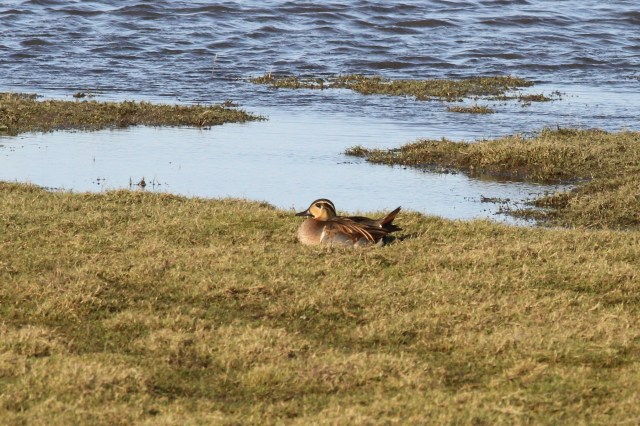
A pre-scheduled trip to the North West, for Jane’s mums 80th birthday, coincided with the arrival of a rare Semipalmated Sandpiper, from North America, at Knott’s End. On our way up we called in at Pennington Flash, one of the few remaining guaranteed locations for the UK’s endangered Willow Tit and during the long wait for the SemiP to show, we added Twite. The return journey, and a rather lengthy detour, brought us Serin at Flamborough. Entertaining friends over the following weekend, we were lucky enough to pass Holt Country Park whilst Parrot Crossbill were on show – 295. Next, a weekend excursion to Hampshire was planned with three new ticks in prospect – frustratingly we came back with just one, Lesser Yellowlegs. In the final week of November a text announced the presence of a very unseasonal juvenile Purple Heron at Holkham, we showed up and ‘ticked up’ – just three to go! On the last day of the month, a 1st winter Iceland Gull, in the roost at Hoveringham sailing pit made it just two more species required. The following morning, after a singularly unsuccessful ‘dry run’ two days before, we managed to find arguably Britain’s rarest resident wild bird – Golden Pheasant, at it’s Norfolk strong-hold. A slight diversion yesterday, on our way back to Peterborough for GPOG Christmas drinks, found us at Gibraltar Point – where the Hume’s Leaf Warbler, a rare vagrant from Central Asia, gave acceptable views and became my 300th species in the UK this year!  And today, just for good measure, we successfully  twitched the Baikal Teal at Southport.

The ‘highs’ and ‘lows’ of 2013:

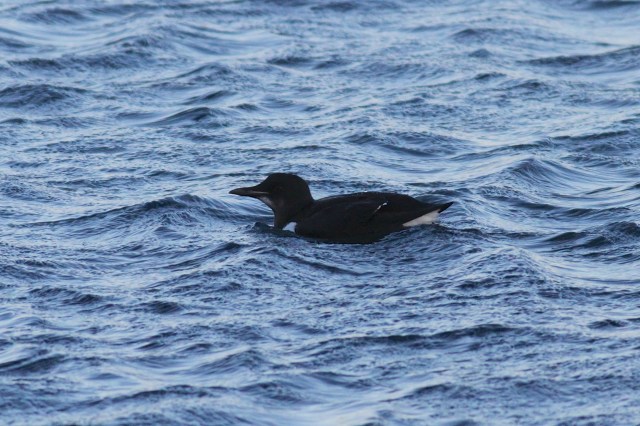
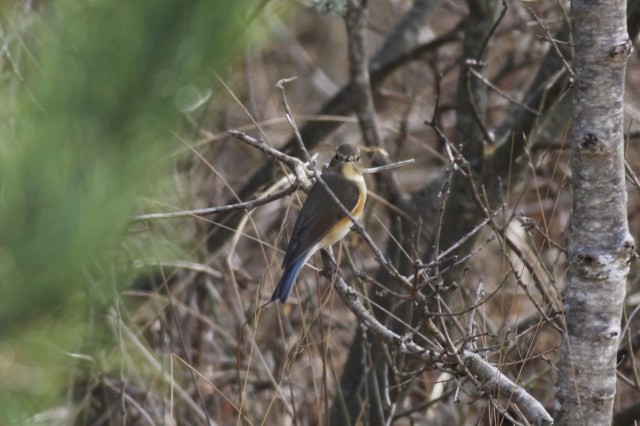
This year’s ‘Lifers’ – Red-flanked Bluetail, Pacific Swift, Bridled Tern, Baikal Teal, Brunnich’s Guillemot & Black-browed Albatross – sadly no photos of the latter though IMG_8837
IMG_9562

IMG_0523

IMG_7355

IMG_7816

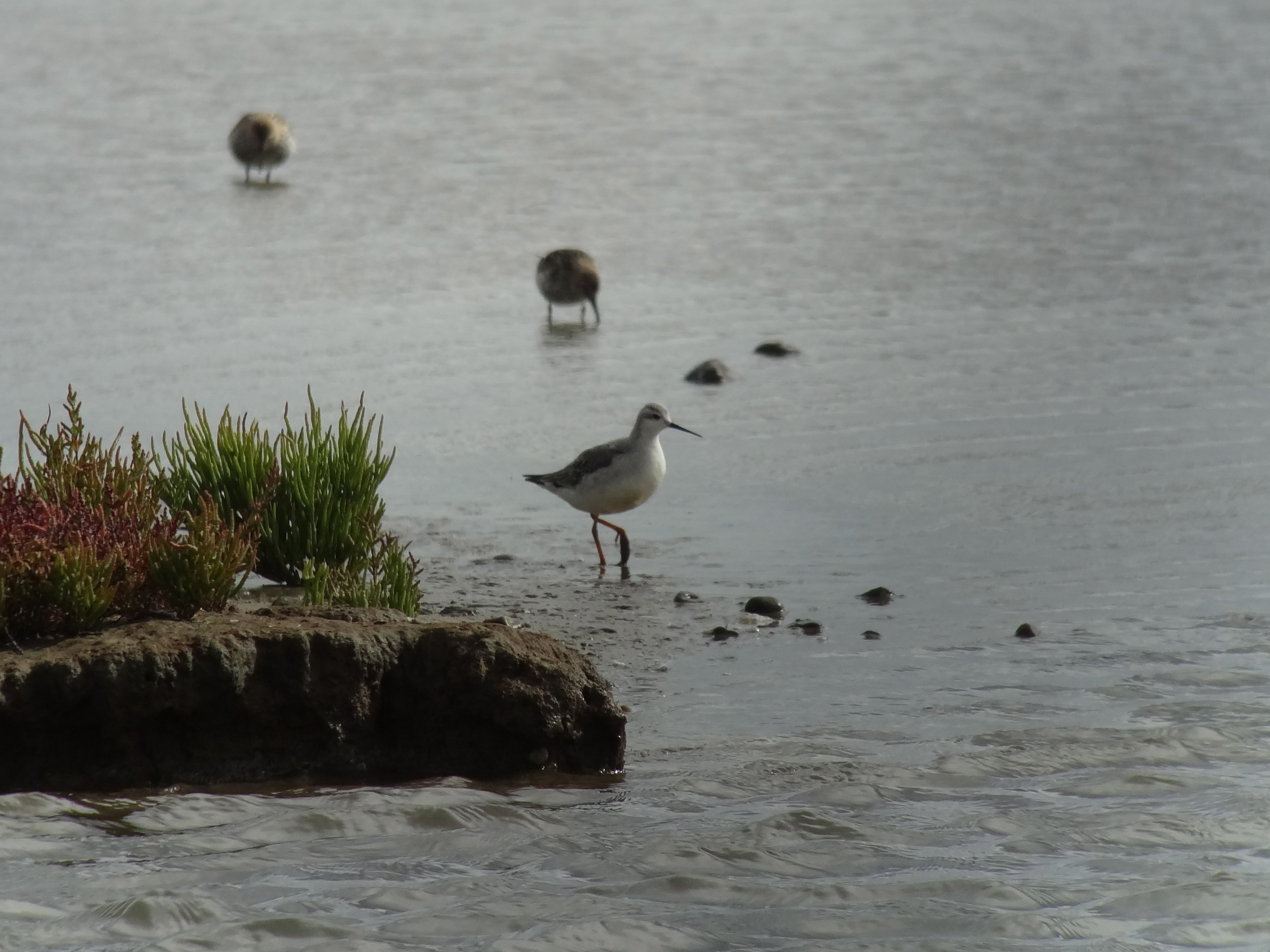
Best ‘self-found/identified’ – Wilson’s Phalarope at Cley in September and Baird’s Sandpiper, at Frampton – originally identified as a White-rumped

DSC04808

DSC03692

Biggest ‘Dip’ – Pied-billed Grebe – 7 hours, over two days, failed to secure the over-wintering individual at Ham Walls.

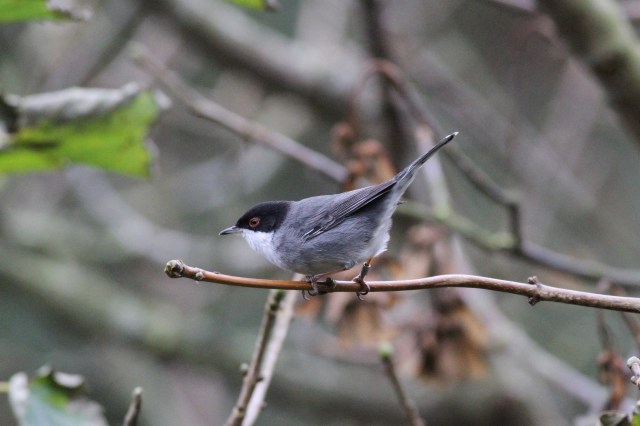
Most surprising – Sardinian Warbler, a rare Mediterranean warbler, seen in November – in Scotland!
IMG_6992

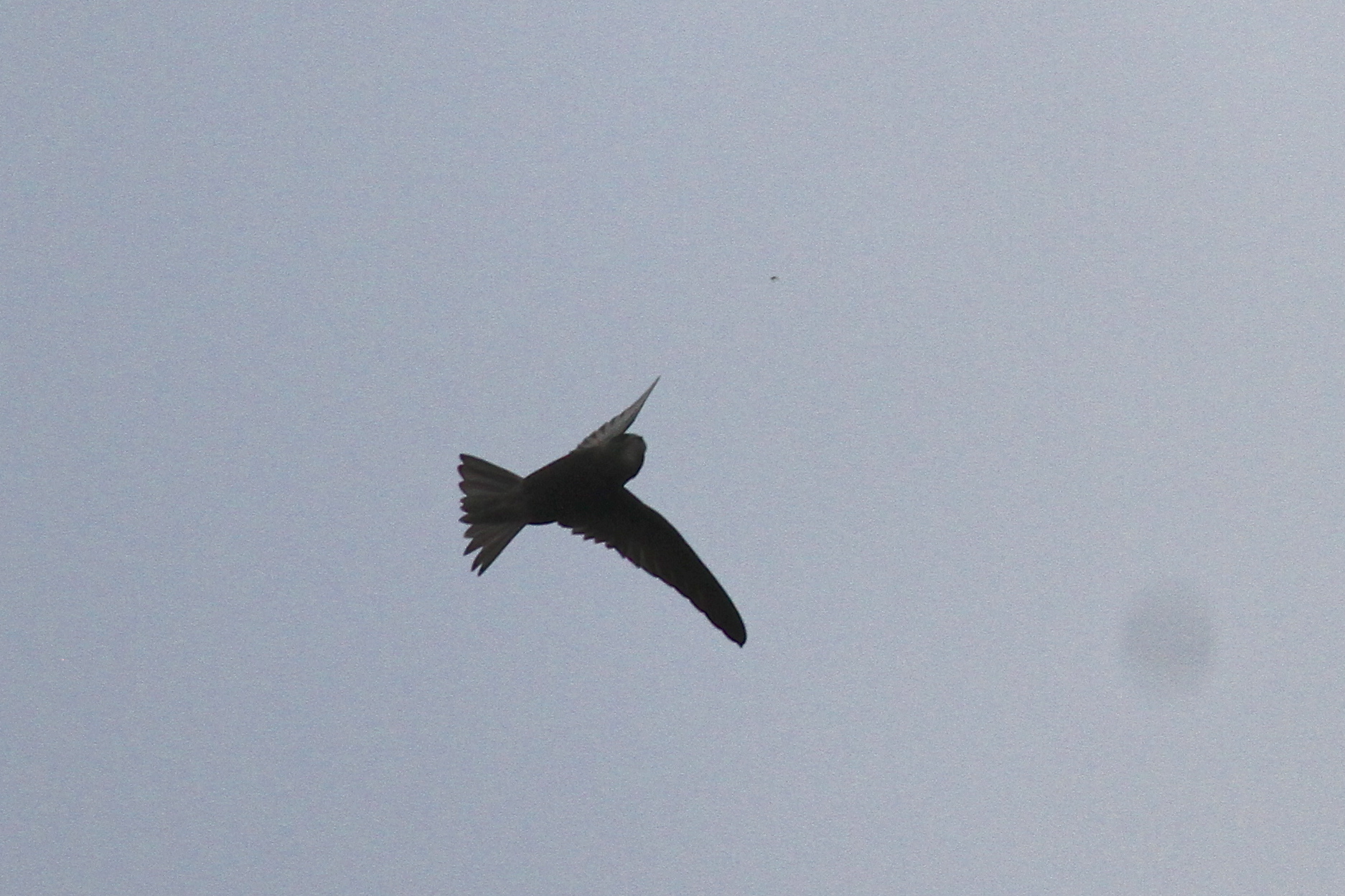
The most demanding: Pallid Swift – gave us the run-around for the best part of three days in October

IMG_6802

The pretty one: Plenty to choose from but this Rosie Starling at Wells in June was a ‘stonker’!

DSC03161

The plain one: Booted Warbler -plain it may have been but a welcome addition to my Norfolk list and just reward for flogging up Blakeney Point and back

IMG_0960

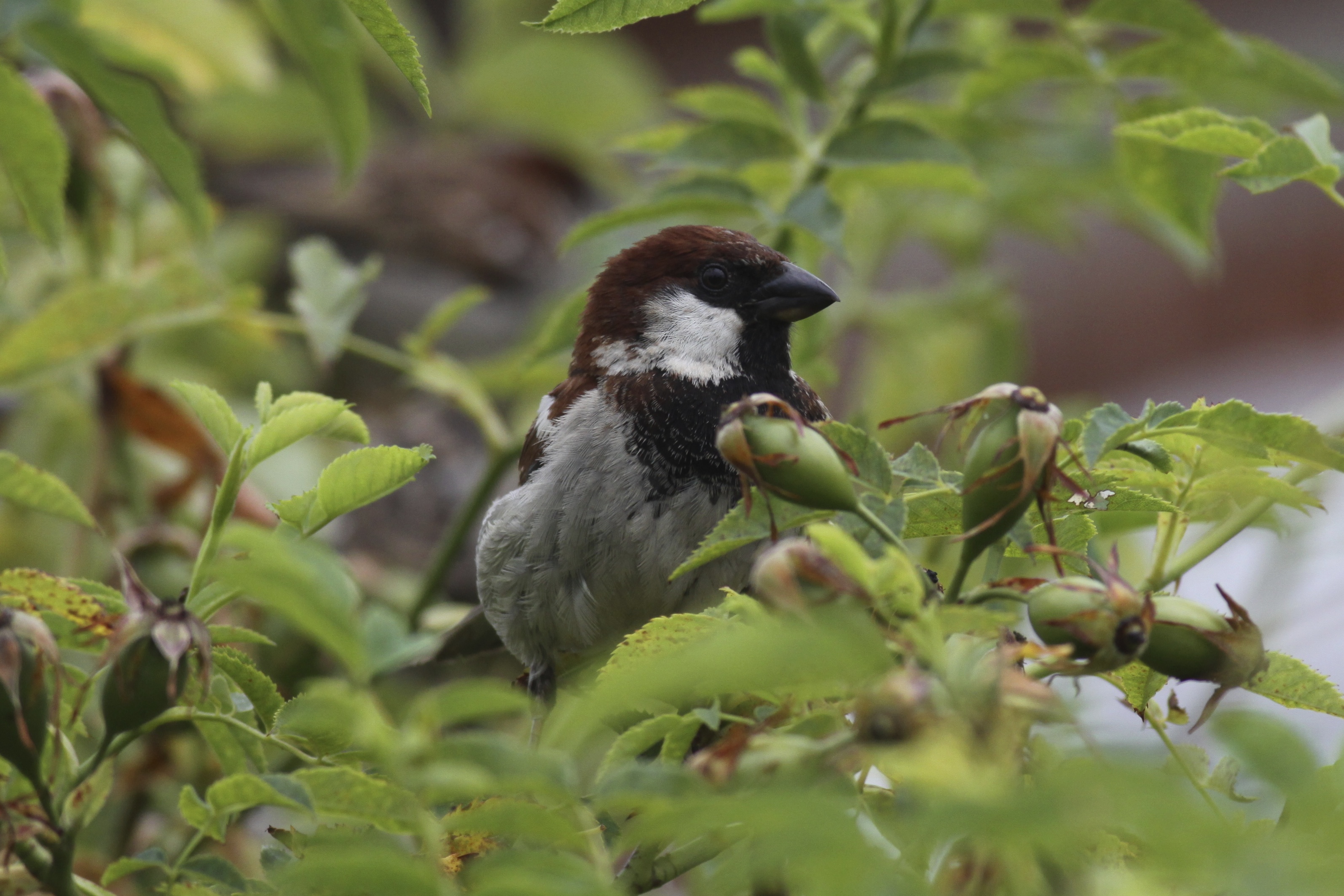
The one that never was: this could have been Britain’s first Italian Sparrow, but sadly no DNA evidence has been forthcoming – it certainly looked like one! ( N.B. not included in the total!)

IMG_0907

The ones that got away: Grey Phalarope, Little Auk, Golden Oriole, Dusky Warbler, Dotterel, Red-breasted Goose, Long-billed Dowitcher, Snow Goose, Rustic Bunting, King Eider, Hoopoe, White-winged Black Tern, Black Guillemot, Siberian Stonechat, Pied Wheatear, Common Rosefinch, etc – need I go on. I suppose there’s still time to pull one or two of these back..!

The List. I shall be including a link  to my complete BOU list of the 300+ birds seen in 2013, at the end of the year.

Finally, as Richard Millington acknowledged in ‘A Twitcher’s Diary’, if it weren’t for the generosity and selflessness of birders everywhere, who find and then post the reports of these scarce/rare birds, ordinary birders like me would certainly not be able to see over 300 species in the UK in a single year – my heartfelt thanks to one and all.
… Britain’s rarest bird?

There are a couple of ‘exotic’ Pheasant species on the British list, in addition to the regular one seen in our countryside – and butcher’s shop windows! They are the rather grandly named Lady Amherst’s Pheasant, believed to have become established as a self-sustaining population in the 1900’s, along the Greensand ridge in Bedfordshire – having been released for shooting on the Woburn estate and Golden Pheasant, favouring pine woods with dense rhododendron under storey, with it’s traditional strongholds in Norfolk, Anglesey and South West Scotland. In recent years the populations of both Lady A’s and Golden are believed to have dwindled to single figures, with perhaps only a couple of ‘tickable’ individuals now surviving in the wild.

We managed to catchup with this male Golden Pheasant at the well known site in North Norfolk this morning. Arguably the rarest wild resident bird in Britain!

IMG_7279

IMG_7281

With two new species added to the year list over the weekend I’m now within dribbling distance of the ultimate prize of 300. What will the next couple of weeks bring and what interesting/rare species will take me to that total? Watch this space…

Icelandic invaders

In the last two weeks a handful of the more diminutive of the ‘white-winged gulls’, Iceland Gull, have started to appear in the evening roosts on inland waters in the Midlands. We went in search of one yesterday at Hoveringham sailing pit in Nottinghamshire, with our birding pals Bob and Sue. It was a beautiful clear, crisp late afternoon when we arrived and the gulls, mostly Black-headed and Common, had already begun to assemble in their hundreds. After an hour or so of scanning the growing number of ‘large gulls’ Bob announced that he had an Iceland in his scope. Sure enough there was a newly arrived  juvenile/1st winter bird – quite pale with a hint of pink at the base of the bill, bathing and preening, towards the far side of the pit.

DSC05782


DSC05819


Seen in the centre of these two rather distant digipics – Iceland Gull, which incidentally breed in Greenland and Canada but not Iceland, like it’s larger cousin Glaucous Gull are easily identified by all white wings and, in young birds, an overall ‘latte’ colouration. They are most safely separated from Glaucous by size, structure and the patterning of pale and dark on the bill.

Another species on the long road to 300!

The Colour Purple

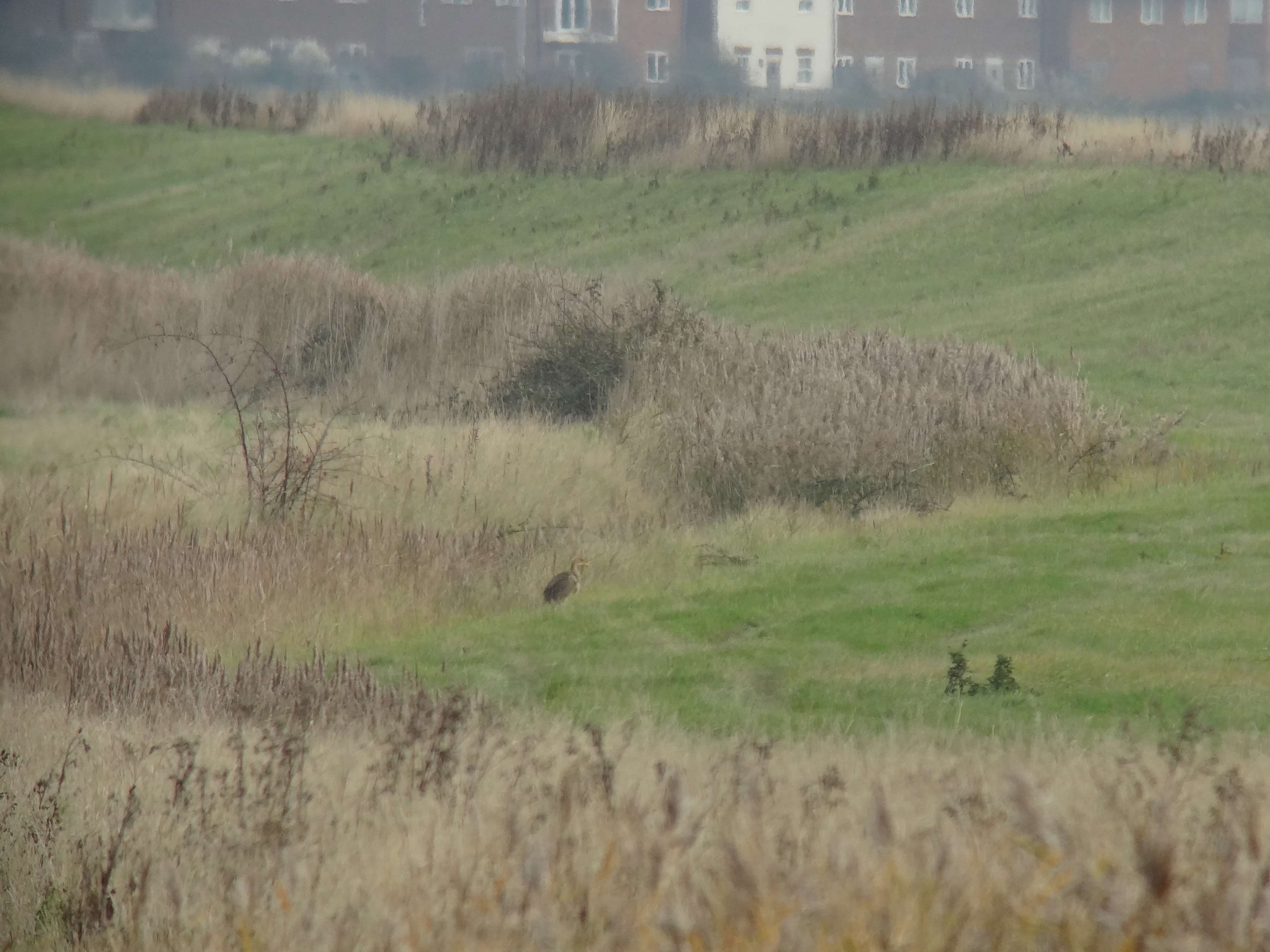
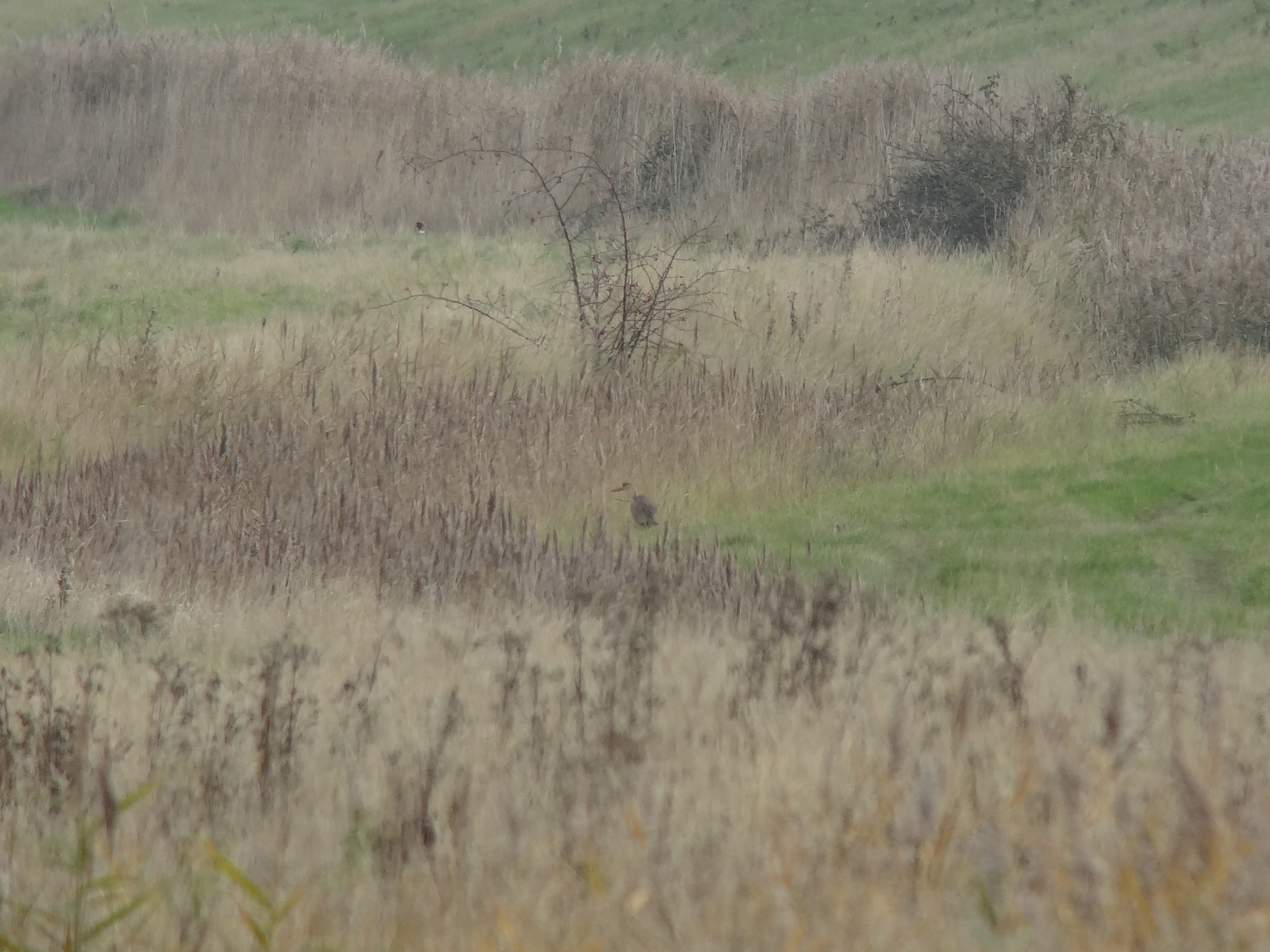
There aren’t too many birds on the British List with the colour purple in their name. Two are incredibly rare Purple Gallinule and Purple Martin. Then there is the more regular Purple Sandpiper – a scarce winter visitor to the rocky coastline of Britain and finally, Purple Heron – rare adult spring over-shooters or post-breeding dispersing juveniles. Today a very late bird was reported as a ‘possible’ over Cley and then later as ‘confirmed’, on the Wells side of the fresh marsh, at Lady Anne’s Drive, Holkham. When we arrived in the car park there was no sign of any birders; we watched the huge flock of Pink-footed Geese for a while, keeping a eye on the sky for a possible fly over, but nothing. Jane then took a stroll towards the pine belt and bumped into RM and a couple watching over the marsh. They had met the two guys who had originally phoned the bird in and shown them the place where it appeared to land – things looked promising. It wasn’t long before another birder spotted a ‘brown heron’ by the edge of a reed-filled dyke about 300m east of us. A few moments of anticipation and then out walked a superb juvenile Purple Heron. Very nice and completely unexpected – still it has been a funny old year!

A few record shots

DSC05769 DSC05728 DSC05756A UK ‘first’ for Jane and another small step closer to the target, morale restored after our recent disappointing weekend.

Legs take me a step nearer

What a difference a week makes; the previous weekend there were three ticks available in Hampshire, all within spitting distance of Lymington. As we were entertaining Emma and Amber in Norfolk and Jane was with her sister in York, mid-week, we couldn’t get away until last Friday afternoon. Bed & breakfast at the rather ordinary Bosun’s Chair and we were set for a day ‘ticking up’, albeit that only one of our target birds had been reported during the week… there’s nothing wrong with a bit of ornithological optimism! We had the Lesser Yellowlegs safely under our belts by 9.30, leaving us the rest of the day to concentrate on the long-staying Red-breasted Goose and Long-billed Dowitcher. Suffice it to say that neither deemed to show to us and I have to console myself with one tick and another small step towards the ‘big 300’. The RBG did put in a brief appearance, late morning, but we failed to connect. Still, we did have a nice days birding which included several Spotted Redshank, Pintail and Slavonian Grebe – all species we’d have been very pleased to add to the list, earlier in the year.

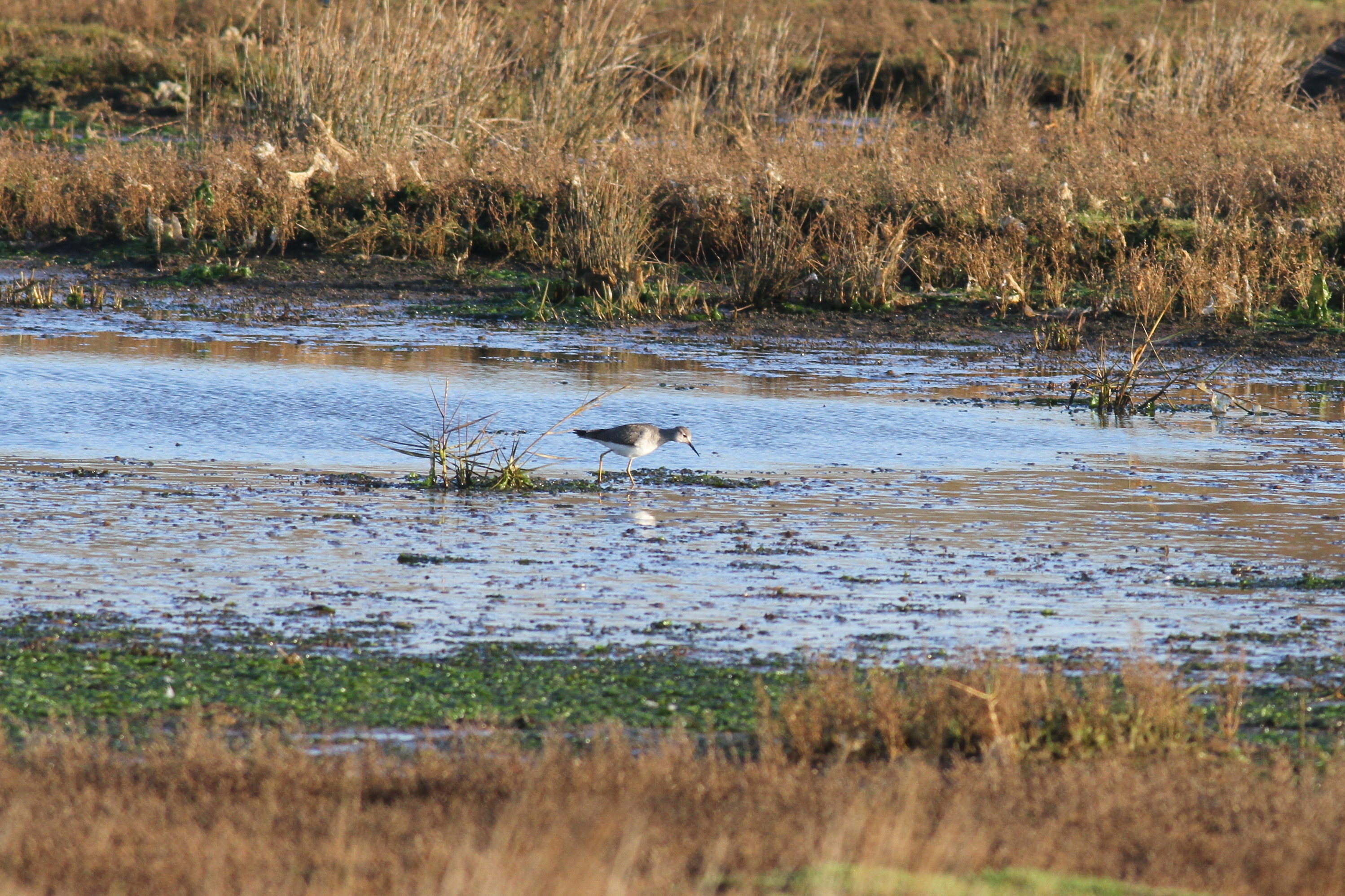
Distant digipics of the Lesser Yellowlegs, a rare wader from North America, which occasionally over-winter in Britain

IMG_7239

IMG_7230

With only five full weeks of 2013 left,  I’m now becoming increasingly doubtful about this 300 thing happening… this is the emotional roller coaster of big year listing. Oh well, he says through slightly gritted teeth! 

Postcript: speaking of birds that are always nice to see, I snapped these  Common Crane on my way back to Peterborough on Friday. They were in their regular wintering spot at Guyhirn, south of the A47, opposite the Chill Out Cafe.

IMG_7222

The Listers Dilemma

You’d think that making a list of the different birds you see in a year would be a simple matter, wouldn’t you? First find your bird and, if it looks different from stuff you’ve seen before, put it on your list – job done! Well, in the majority of cases it is as simple as that but for a small group of species sometimes the differences aren’t that great and, as a consequence, their identity is in a perpetual state of flux. This is the vexed world of ‘lumping’ and ‘splitting’, where minor differences are deemed, by the ornithological powers that be, to be either significant enough to split them off into a separate species or insufficiently different and they lump them into a single species. As birders get better at field identification and the science around DNA develops, so the process of adding and subtracting continues and the list of birds you can or can’t count changes!  As there are generally a number of different ‘birding authorities’, there are numerous versions of the list. The list you choose to use is probably a reflection of whether you are a birding ‘radical’ or a ‘conservative’ –  if you like to win, you’ll choose the most liberal list, which has the greatest potential for building a bigger score! The birding organisation in this country with perhaps the greatest authority is the British Ornithological Union (BOU) and it’s they who decide how big or small the UK list should be. It’s their list that I use – even when it hurts! And boy did it hurt yesterday, when finally I tracked down a Black Brant, that has been in the Cley area for the past few weeks. Black Brant is the American version of our Brent Goose – subtly different in appearance but not yet deemed by the BOU to be a separate species – so not a ‘tick’. Ironically the liberal birding lobby advocate that Brent Goose is split into four separate species! Depending on how the next few weeks go and my pursuit of the magic 300, I might have to re-evaluate my position!

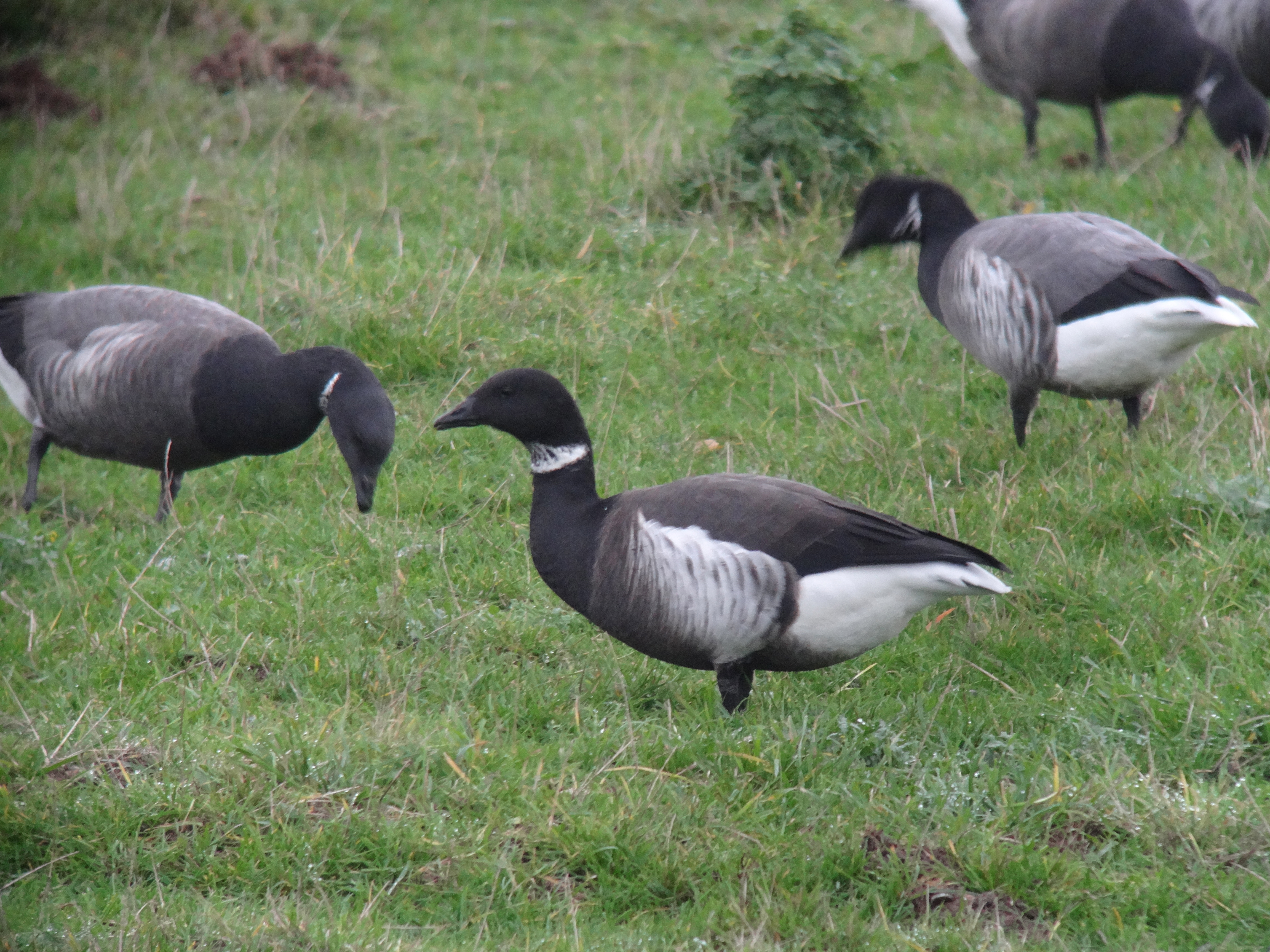
But for now the different, but not yet recognised as a separate species, Black Brant:

DSC05625

As can been seen in these digipics, Black Brant are darker on the back and belly than the accompanying Brent geese, of the dark bellied race, bernicla. (which breed in Russia), they have distinctive white ‘flames’ on their flanks and the white ‘necklace’ is broad, joining in the front.

DSC05628

DSC05634

The pale bellied race, horta (Svalbard & Greenland) generally winter on the west coast – we saw one in Cornwall recently. Less than a handful of Black Brant arrive to winter in the UK each year.

Last of the ‘Big Five’

It’s Wednesday and we’re heading up north for Jane’s mum’s 80th birthday celebration, when the text came through about the relocation of yesterday’s Semipalmated Sandpiper, at Pilling Lane Ends, on the southern edge of Morecambe Bay. We’re only an hour away and by the time the car is bouncing down the rutted track that leads to the sea wall and we see the small group of birders, huddled against the wind staring out across the bay, I’m feeling uncharacteristically optimistic. This turns out to be misplaced anticipation, as the bird had flown off almost as soon as the news was put out and hadn’t been seen since! As the small crowd began to disperse, in the aftermath of the adrenalin-filled moments of success, we scanned the truly vast expanse of mud which stretched to the horizon – pockets of waders, mostly Redshank and smaller Dunlin, with which our target was apparently associating, could barely be made out on the rapidly receding tide-line. Semipalmated Sandpiper is one of the ‘peeps’ from North America and the rarest of the ‘big five’ that most regularly grace these shores – the others, which we’ve already seen this year being White-rumped, Baird’s, Buff-breasted and Pectoral. We spend the next half hour peering through scopes to see if we can find any smaller birds in these random flocks – more through hope than expectation. A couple of winter plumage Sanderling get the pulse racing but, even at that distance, we can just make out enough detail to ‘eliminate them from our enquiries’. News of a flock of wintering Twite, further up the Esplanade, is a welcome distraction and we wander off to enjoy their ‘Mexican wave’ feeding antics. By now it’s lunch time so we decide to head into Knotts End for some ‘snap’ and resume our search, where the bird was originally discovered.

 After lunch, fortified against the elements, we continue the near impossible search for a wader, little bigger than a sparrow, lost in several square miles of Morecambe’s mudflats. There was nothing of interest from the Esplanade so we decide to return to Cocker’s Dyke, where the bird was seen earlier. We arrive to be greeted by the frustrating news that, whilst we were enjoying bacon balm cake and chicken & mushroom pudding, the bird had put in another brief appearance! We were pointed in the direction of a flock of Dunlin, pin-heads in the glittering afternoon sun – ‘we think the bird’s in there somewhere’. For the next half-hour or so we watch small flocks of Dunlin fly along the coast, occasionally coming closer to wash and preen in the fresh water of the outflow stream. Hope again began to subside and collective attention was beginning to wane, when I saw another smallish flock arrive to bathe. A quick sweep through revealed the presence of a small ‘peep’ at the right hand end of the flock. It’s overall busy ‘jizz’, long winged, dark capped with pale ‘super’ before the eye, uniform back and white bellied appearance strongly suggested that this was our bird! The general consensus was in agreement with my id and I attempted to secure a few digipics which might help clinch it. In absolute truth, at such a distance, it was difficult to be conclusive but I was lucky to secure enough photographic evidence to put the matter safely to bed. See below:

DSC05575

Even at this distance the overall longish primaries, uniformed back, white underparts, dark-capped head with white ‘super’ and short black bill give confidence to the id of Semipalmated Sandpiper. There is even the hint of the palmations ( webbing between the toes) on the birds raised left leg.

DSC05571

Part of a flock of fifty Twite feeding in a ‘Mexican Wave’ manner

DSC05561

1st winter Ross’s Goose at Marshside NR

DSC05593

With an hour or so of day light left and buoyed by our success, we made a mad dash to Marshside NR at Southport, where we caught up with the first winter Ross’s Goose. Although we missed out on the freshly reported American Wigeon at the same location, it was still a great end to a memorable days birding in the North West. As I inch ever closer to the ultimate target I’m finally beginning to believe that 300 for the year might just be possible!

That’s enough Grousing

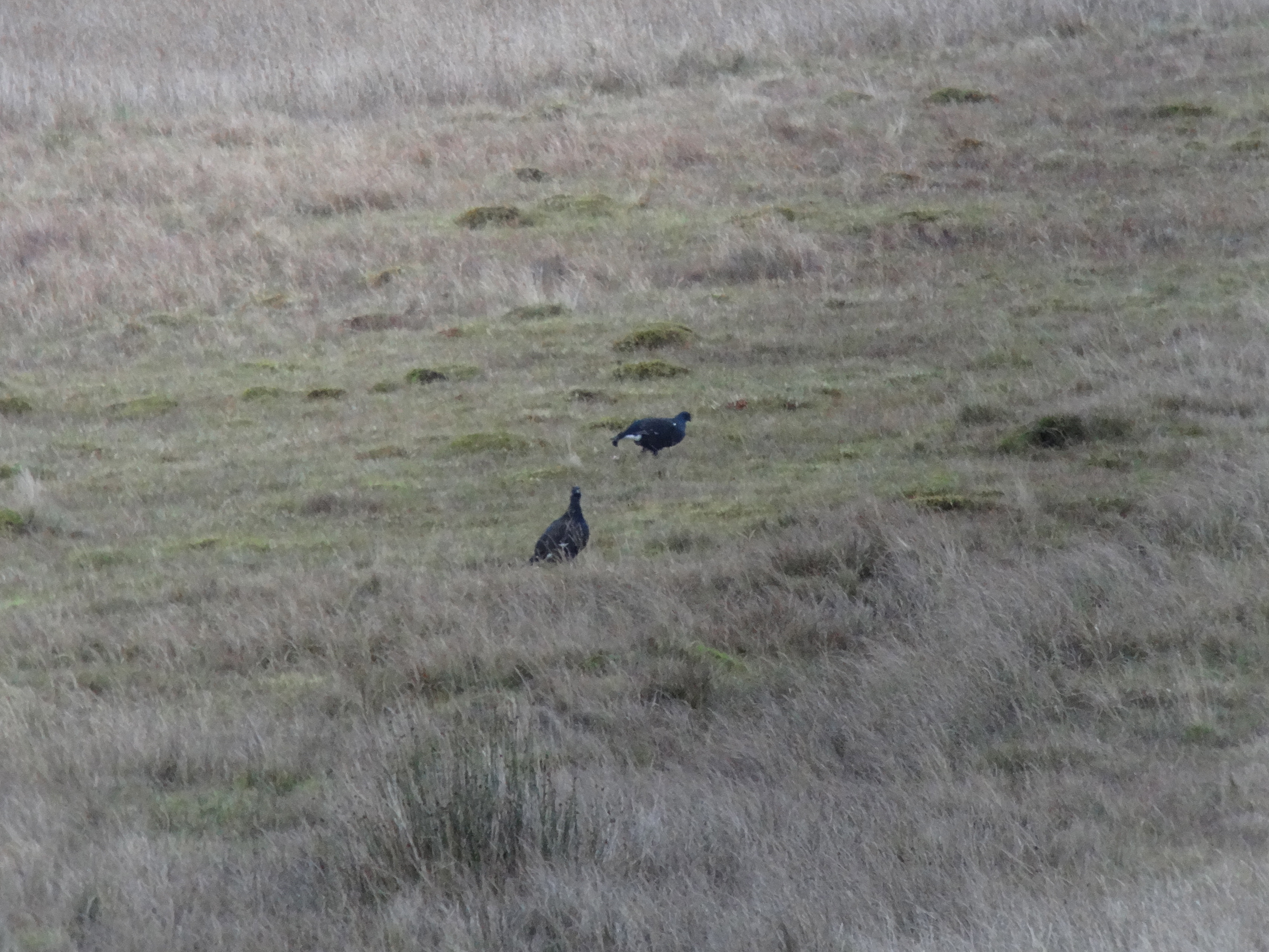
After several previous failed attempts in the High Pennines,and more recently in the Scottish Highlands, we were delighted to finally catch up with this iconic, but rapidly disappearing, moorland species – Black Grouse, in a remote corner of County Durham. We saw seven males and a single female – digiscoped from a respectable distance, to avoid any disturbance, and in poor late afternoon light:

DSC05442


DSC05450

‘I see you baby, shakin that ass’!

DSC05452

Northern (high) Lights

For our recent three nights stay in the Scottish Highlands we based ourselves in Aberlour, at the very acceptable Mash Tun pub – relatively convenient for accessing the Caledonian forests, mountain areas of Cairngorm and the coastal belt of the Moray Firth. We used Gordon Hamlett, our  former Peterborough birding colleague’s, excellent guide to Best Birdwatching Sites in the Scottish Highlands – published by Buckingham Press and currently undergoing a major revision, some prior experience of the region and a couple of tips provided by friends and locals, as a basis for finding our targets. 

Bird-finding in this region is never easy – hundreds of square miles of countryside with a relatively modest and thinly spread bird population means you generally have to work hard for your birds. Add to the mix that we visited in November, when their are no summer visitors, few migrants and only a handful of winter residents and you’ll appreciate why our list of ‘trophies’ was a relatively modest one. Nonetheless we did find a few ‘year ticks’ and enjoyed some nice long winter walks!

The woods around Grantown on Spey are well known for holding  a respectable number of the areas prime species, so not surprisingly this was our starting point – it was a place to which we returned again and again! – read on for details. On our first visit we walked miles, encountered few birds but did eventually see Crested Tit – easy to locate on call and a single Scottish Crossbill. Hours spent in the woods around Loch Garten failed to produce anything extra as did a stint in the main car park at Cairngorm, which was experiencing a bit of a ‘white out’ at the time. A few winter plumage Red Grouse here did get our hearts racing for a while though. The day ended with walks around a couple more damp, dark woods.

Day two started with more woodlands, included a trip up the majestic Findhorn Valley – where we did see Golden Eagle hunting Red Grouse and finished on the Black Isle, looking for ducks. At Udale Bay we managed to find the American Wigeon, amongst 5000 ordinary Wigeon, at the high tide roost and further round the coast 400 Scaup – a bird we rarely see in England and certainly not in any numbers.

The final day was our best. Following up a tip from a local birder, we again went to the Anagach Woods around Grantown and after a long and squelchy walk we finally connected with two male Capercaillie – a bit like Pheasants on steroids, fantastic! Our return journey took us over the pass at Glen Shee, a well known spot for Ptarmigan. An hour or so spent staring at the snowy hillside had produced nothing when eventually Jane spotted a distant bird above the ski station – in near full winter plumage, it blended perfectly with the surrounding landscape. A speculative stop at Loch of Lintrathen provided a wealth of wildfowl, which were obviously unusually restless  – not surprising, as minutes after arriving in the hide, an immature White-tailed Sea Eagle did a menacing fly-by. A methodical search through the 350 or so Pink Feet produced our final trip tick in the form of a single Tiaga Bean Goose.

Given the short days, weather and woodland nature of much of our birding, no pictures I’m afraid of some of the key species.. but to make up for it, some fantastic landscapes – here, Loch Garten on a still winters day

DSC05359

First encounter with a Scottish speciality, Hooded Crow, which rarely stray south of the Great Glen fault-line

IMG_7061

Part of a flock of 400 plus Scaup, in the Moray Firth, just off Jemimaville

IMG_7068

By the time I’d got my camera out this Capercaillie was nearly across the river and out of sight. This was our sixth attempt, covering four different locations, to find this classic Highland species

IMG_7088

A winter plumage Red Grouse doing a passable impression of Ptarmigan – it didn’t fool us though (not for long that is!)

IMG_7171

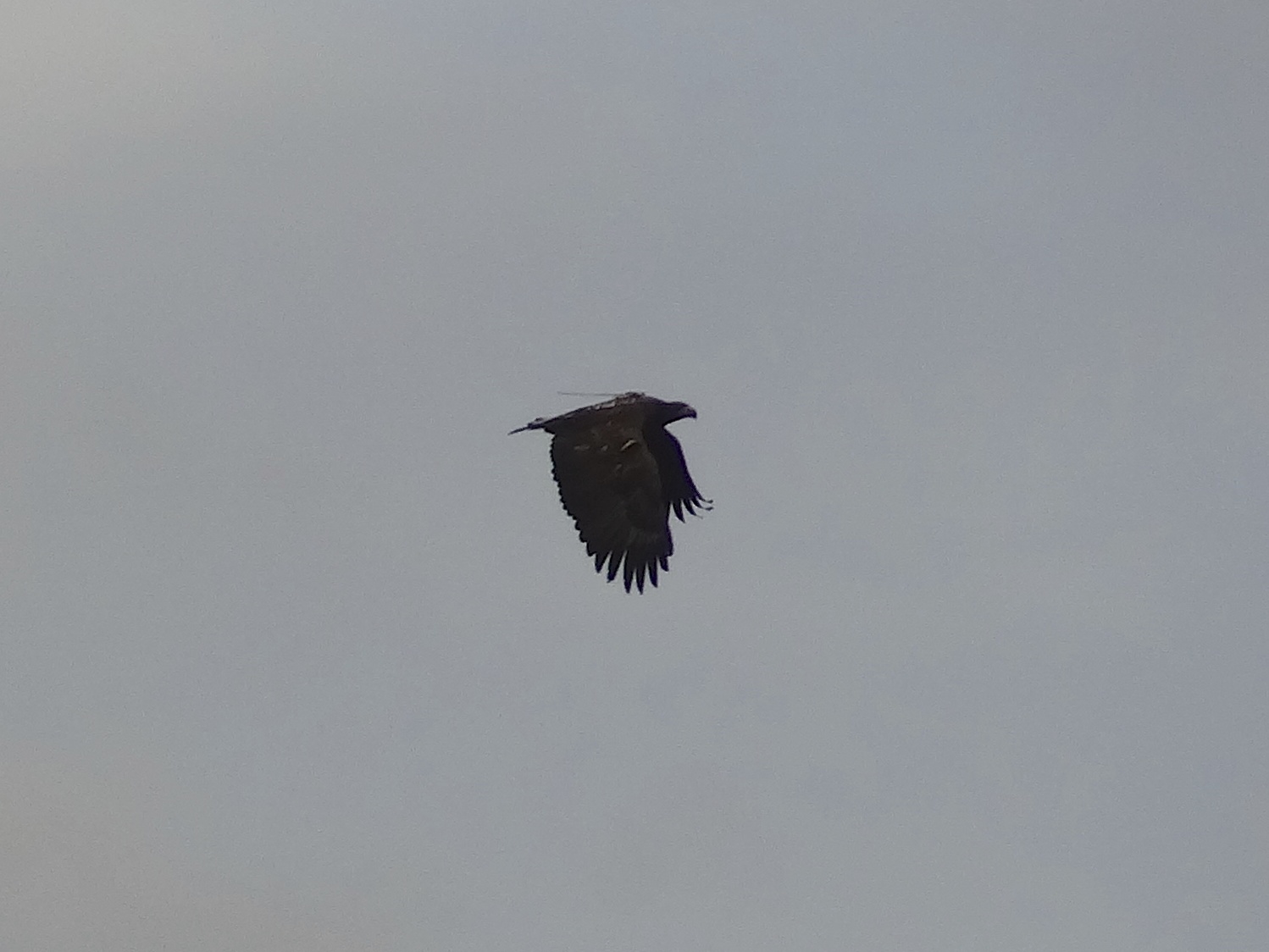
A young White-tailed Sea Eagle doing a ‘fly-by’ at Loch of Lintrathen

DSC05397

Final tick of the trip, a Taiga Bean Goose, found amongst hundreds of Pink Feet. It’s the one in the centre of the shot – slightly bigger, long necked with extensive orange on the bill and orange legs

DSC05424

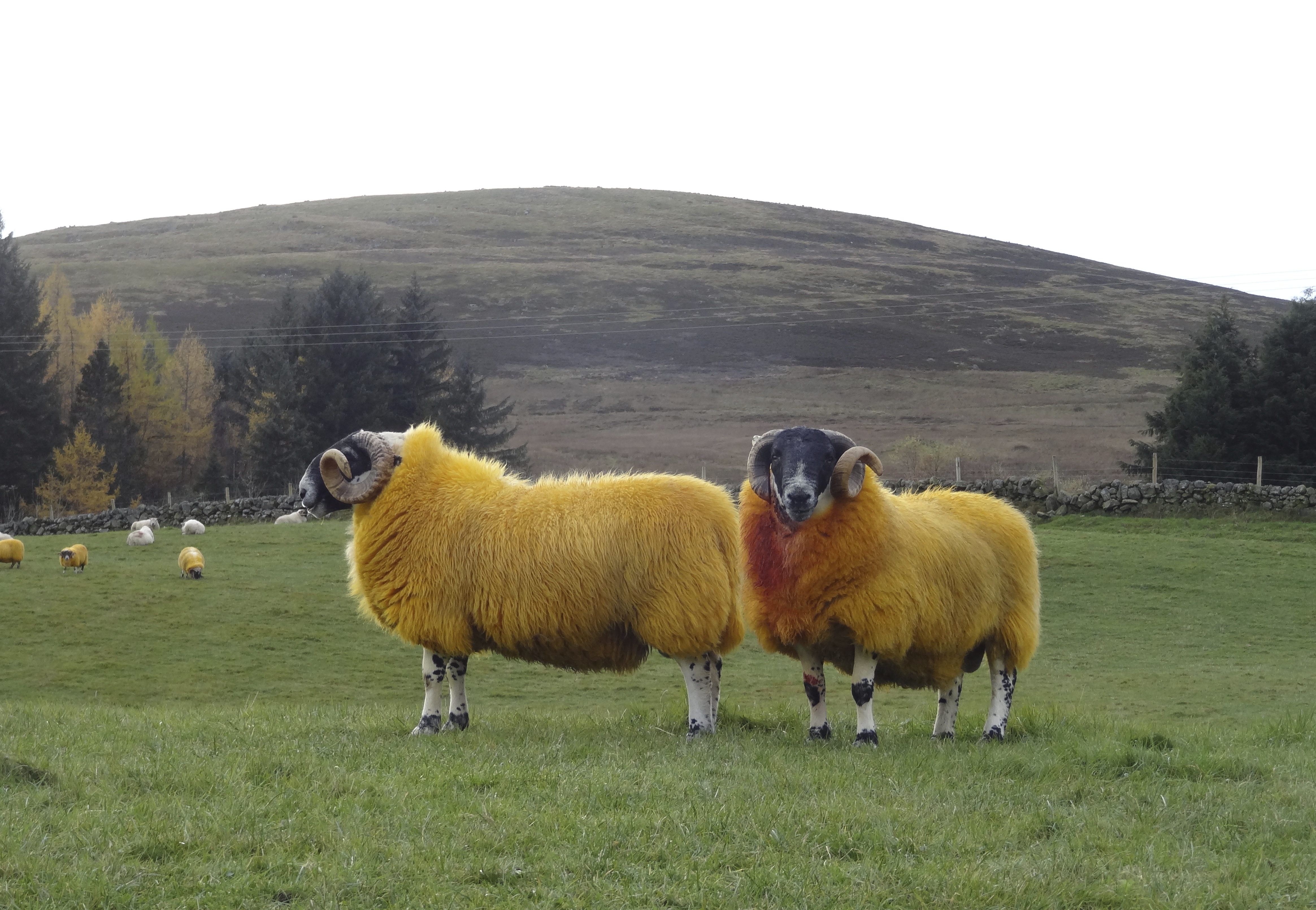
This wasn’t just a birding trip – rare mammals are always of interest. Here, a chance encounter with a rare group of Speyside Yellow Sheep!

DSC05388