The Colour Purple

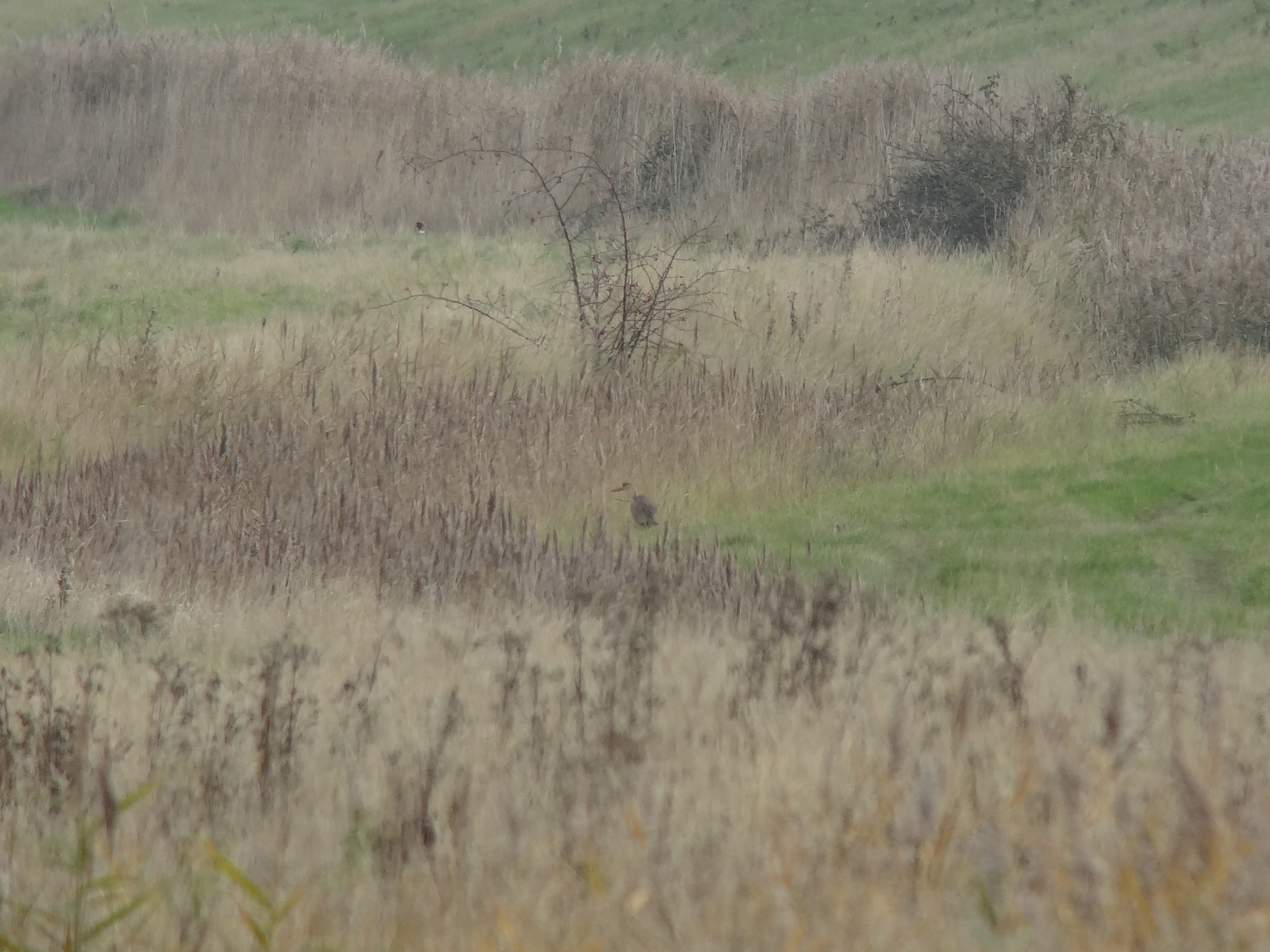
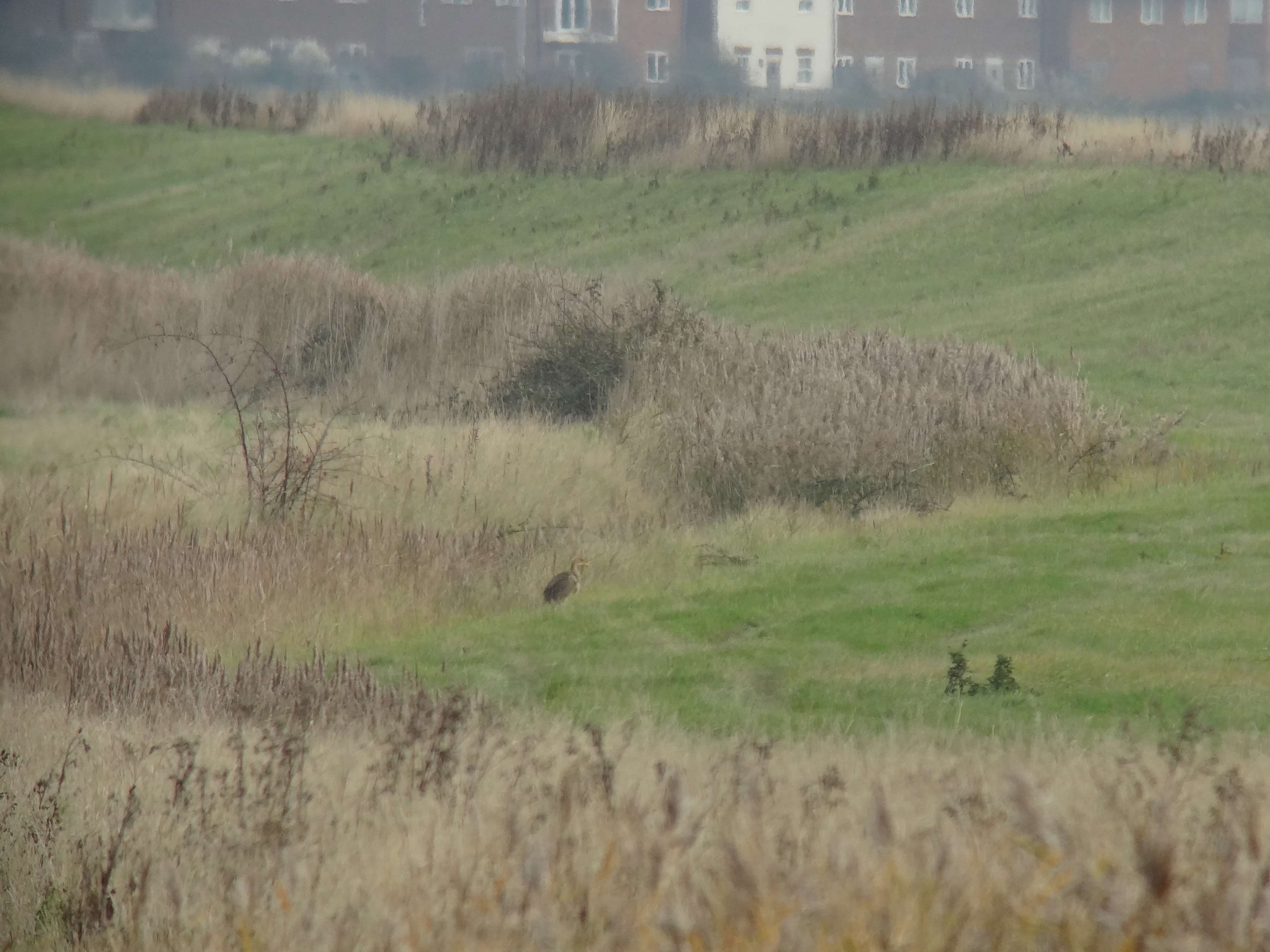
There aren’t too many birds on the British List with the colour purple in their name. Two are incredibly rare Purple Gallinule and Purple Martin. Then there is the more regular Purple Sandpiper – a scarce winter visitor to the rocky coastline of Britain and finally, Purple Heron – rare adult spring over-shooters or post-breeding dispersing juveniles. Today a very late bird was reported as a ‘possible’ over Cley and then later as ‘confirmed’, on the Wells side of the fresh marsh, at Lady Anne’s Drive, Holkham. When we arrived in the car park there was no sign of any birders; we watched the huge flock of Pink-footed Geese for a while, keeping a eye on the sky for a possible fly over, but nothing. Jane then took a stroll towards the pine belt and bumped into RM and a couple watching over the marsh. They had met the two guys who had originally phoned the bird in and shown them the place where it appeared to land – things looked promising. It wasn’t long before another birder spotted a ‘brown heron’ by the edge of a reed-filled dyke about 300m east of us. A few moments of anticipation and then out walked a superb juvenile Purple Heron. Very nice and completely unexpected – still it has been a funny old year!

A few record shots

DSC05769 DSC05728 DSC05756A UK ‘first’ for Jane and another small step closer to the target, morale restored after our recent disappointing weekend.

Legs take me a step nearer

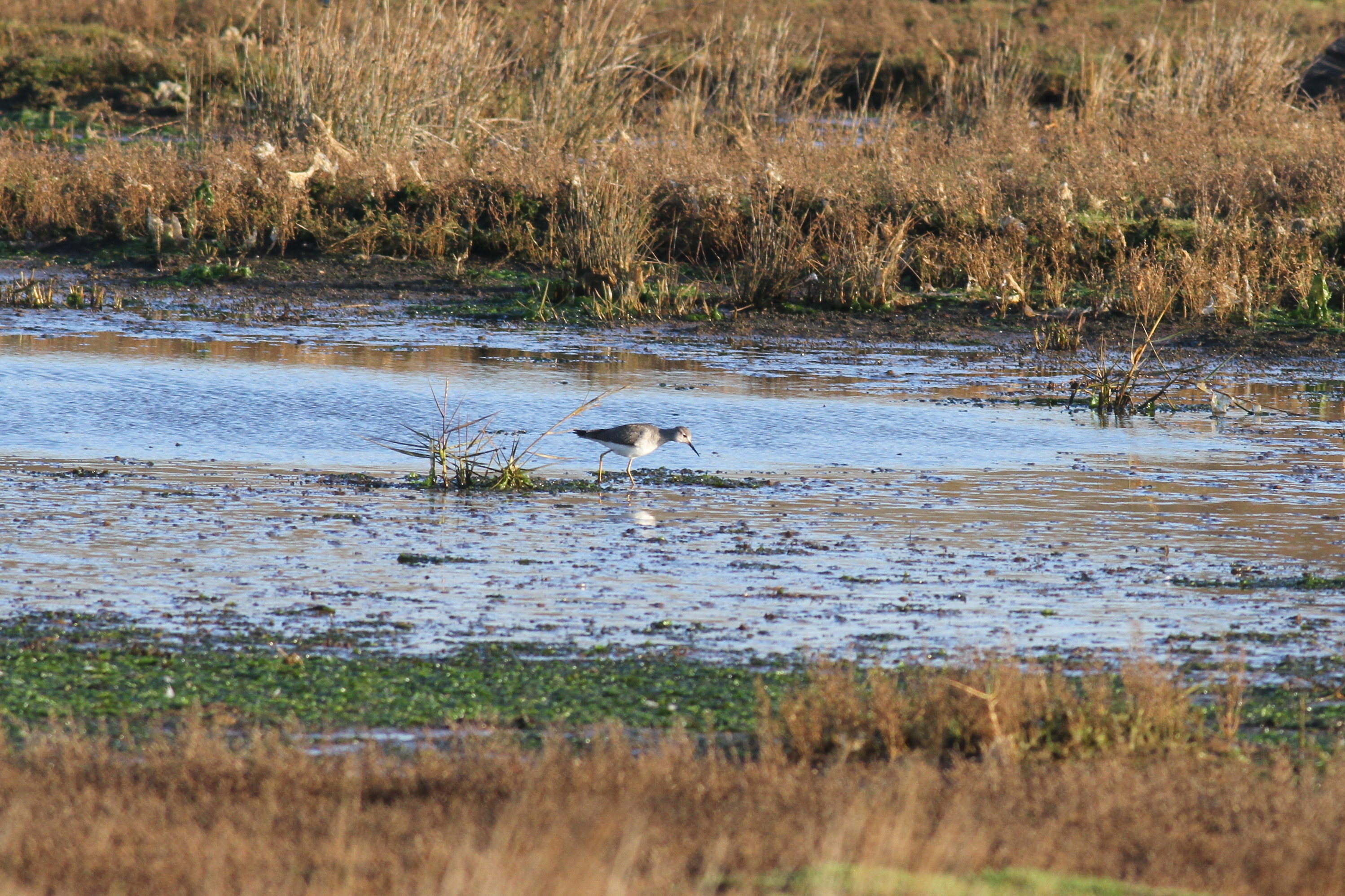
What a difference a week makes; the previous weekend there were three ticks available in Hampshire, all within spitting distance of Lymington. As we were entertaining Emma and Amber in Norfolk and Jane was with her sister in York, mid-week, we couldn’t get away until last Friday afternoon. Bed & breakfast at the rather ordinary Bosun’s Chair and we were set for a day ‘ticking up’, albeit that only one of our target birds had been reported during the week… there’s nothing wrong with a bit of ornithological optimism! We had the Lesser Yellowlegs safely under our belts by 9.30, leaving us the rest of the day to concentrate on the long-staying Red-breasted Goose and Long-billed Dowitcher. Suffice it to say that neither deemed to show to us and I have to console myself with one tick and another small step towards the ‘big 300’. The RBG did put in a brief appearance, late morning, but we failed to connect. Still, we did have a nice days birding which included several Spotted Redshank, Pintail and Slavonian Grebe – all species we’d have been very pleased to add to the list, earlier in the year.

Distant digipics of the Lesser Yellowlegs, a rare wader from North America, which occasionally over-winter in Britain

IMG_7239

IMG_7230

With only five full weeks of 2013 left,  I’m now becoming increasingly doubtful about this 300 thing happening… this is the emotional roller coaster of big year listing. Oh well, he says through slightly gritted teeth! 

Postcript: speaking of birds that are always nice to see, I snapped these  Common Crane on my way back to Peterborough on Friday. They were in their regular wintering spot at Guyhirn, south of the A47, opposite the Chill Out Cafe.

IMG_7222

The Listers Dilemma

You’d think that making a list of the different birds you see in a year would be a simple matter, wouldn’t you? First find your bird and, if it looks different from stuff you’ve seen before, put it on your list – job done! Well, in the majority of cases it is as simple as that but for a small group of species sometimes the differences aren’t that great and, as a consequence, their identity is in a perpetual state of flux. This is the vexed world of ‘lumping’ and ‘splitting’, where minor differences are deemed, by the ornithological powers that be, to be either significant enough to split them off into a separate species or insufficiently different and they lump them into a single species. As birders get better at field identification and the science around DNA develops, so the process of adding and subtracting continues and the list of birds you can or can’t count changes!  As there are generally a number of different ‘birding authorities’, there are numerous versions of the list. The list you choose to use is probably a reflection of whether you are a birding ‘radical’ or a ‘conservative’ –  if you like to win, you’ll choose the most liberal list, which has the greatest potential for building a bigger score! The birding organisation in this country with perhaps the greatest authority is the British Ornithological Union (BOU) and it’s they who decide how big or small the UK list should be. It’s their list that I use – even when it hurts! And boy did it hurt yesterday, when finally I tracked down a Black Brant, that has been in the Cley area for the past few weeks. Black Brant is the American version of our Brent Goose – subtly different in appearance but not yet deemed by the BOU to be a separate species – so not a ‘tick’. Ironically the liberal birding lobby advocate that Brent Goose is split into four separate species! Depending on how the next few weeks go and my pursuit of the magic 300, I might have to re-evaluate my position!

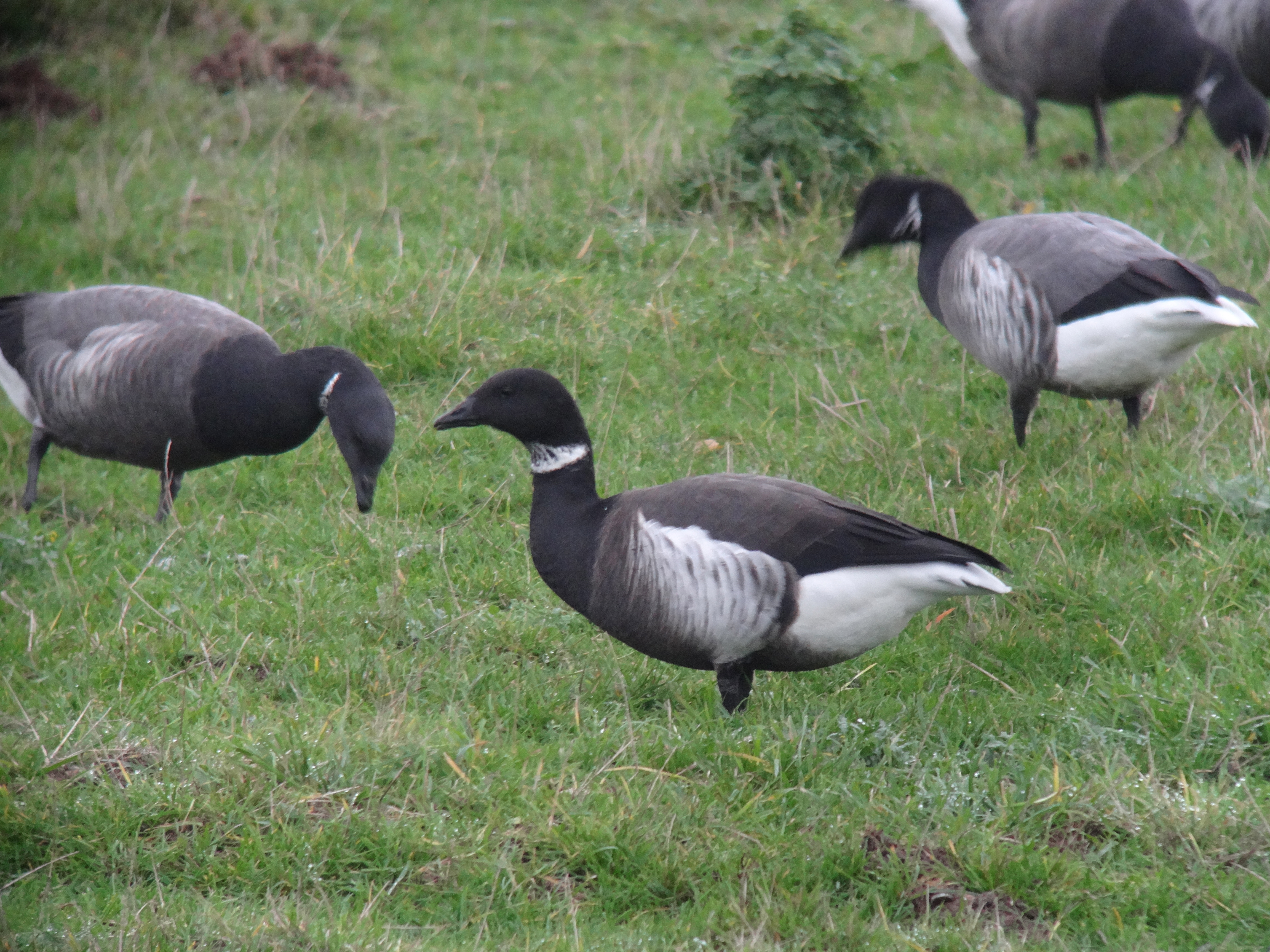
But for now the different, but not yet recognised as a separate species, Black Brant:

DSC05625

As can been seen in these digipics, Black Brant are darker on the back and belly than the accompanying Brent geese, of the dark bellied race, bernicla. (which breed in Russia), they have distinctive white ‘flames’ on their flanks and the white ‘necklace’ is broad, joining in the front.

DSC05628

DSC05634

The pale bellied race, horta (Svalbard & Greenland) generally winter on the west coast – we saw one in Cornwall recently. Less than a handful of Black Brant arrive to winter in the UK each year.

Last of the ‘Big Five’

It’s Wednesday and we’re heading up north for Jane’s mum’s 80th birthday celebration, when the text came through about the relocation of yesterday’s Semipalmated Sandpiper, at Pilling Lane Ends, on the southern edge of Morecambe Bay. We’re only an hour away and by the time the car is bouncing down the rutted track that leads to the sea wall and we see the small group of birders, huddled against the wind staring out across the bay, I’m feeling uncharacteristically optimistic. This turns out to be misplaced anticipation, as the bird had flown off almost as soon as the news was put out and hadn’t been seen since! As the small crowd began to disperse, in the aftermath of the adrenalin-filled moments of success, we scanned the truly vast expanse of mud which stretched to the horizon – pockets of waders, mostly Redshank and smaller Dunlin, with which our target was apparently associating, could barely be made out on the rapidly receding tide-line. Semipalmated Sandpiper is one of the ‘peeps’ from North America and the rarest of the ‘big five’ that most regularly grace these shores – the others, which we’ve already seen this year being White-rumped, Baird’s, Buff-breasted and Pectoral. We spend the next half hour peering through scopes to see if we can find any smaller birds in these random flocks – more through hope than expectation. A couple of winter plumage Sanderling get the pulse racing but, even at that distance, we can just make out enough detail to ‘eliminate them from our enquiries’. News of a flock of wintering Twite, further up the Esplanade, is a welcome distraction and we wander off to enjoy their ‘Mexican wave’ feeding antics. By now it’s lunch time so we decide to head into Knotts End for some ‘snap’ and resume our search, where the bird was originally discovered.

 After lunch, fortified against the elements, we continue the near impossible search for a wader, little bigger than a sparrow, lost in several square miles of Morecambe’s mudflats. There was nothing of interest from the Esplanade so we decide to return to Cocker’s Dyke, where the bird was seen earlier. We arrive to be greeted by the frustrating news that, whilst we were enjoying bacon balm cake and chicken & mushroom pudding, the bird had put in another brief appearance! We were pointed in the direction of a flock of Dunlin, pin-heads in the glittering afternoon sun – ‘we think the bird’s in there somewhere’. For the next half-hour or so we watch small flocks of Dunlin fly along the coast, occasionally coming closer to wash and preen in the fresh water of the outflow stream. Hope again began to subside and collective attention was beginning to wane, when I saw another smallish flock arrive to bathe. A quick sweep through revealed the presence of a small ‘peep’ at the right hand end of the flock. It’s overall busy ‘jizz’, long winged, dark capped with pale ‘super’ before the eye, uniform back and white bellied appearance strongly suggested that this was our bird! The general consensus was in agreement with my id and I attempted to secure a few digipics which might help clinch it. In absolute truth, at such a distance, it was difficult to be conclusive but I was lucky to secure enough photographic evidence to put the matter safely to bed. See below:

DSC05575

Even at this distance the overall longish primaries, uniformed back, white underparts, dark-capped head with white ‘super’ and short black bill give confidence to the id of Semipalmated Sandpiper. There is even the hint of the palmations ( webbing between the toes) on the birds raised left leg.

DSC05571

Part of a flock of fifty Twite feeding in a ‘Mexican Wave’ manner

DSC05561

1st winter Ross’s Goose at Marshside NR

DSC05593

With an hour or so of day light left and buoyed by our success, we made a mad dash to Marshside NR at Southport, where we caught up with the first winter Ross’s Goose. Although we missed out on the freshly reported American Wigeon at the same location, it was still a great end to a memorable days birding in the North West. As I inch ever closer to the ultimate target I’m finally beginning to believe that 300 for the year might just be possible!

That’s enough Grousing

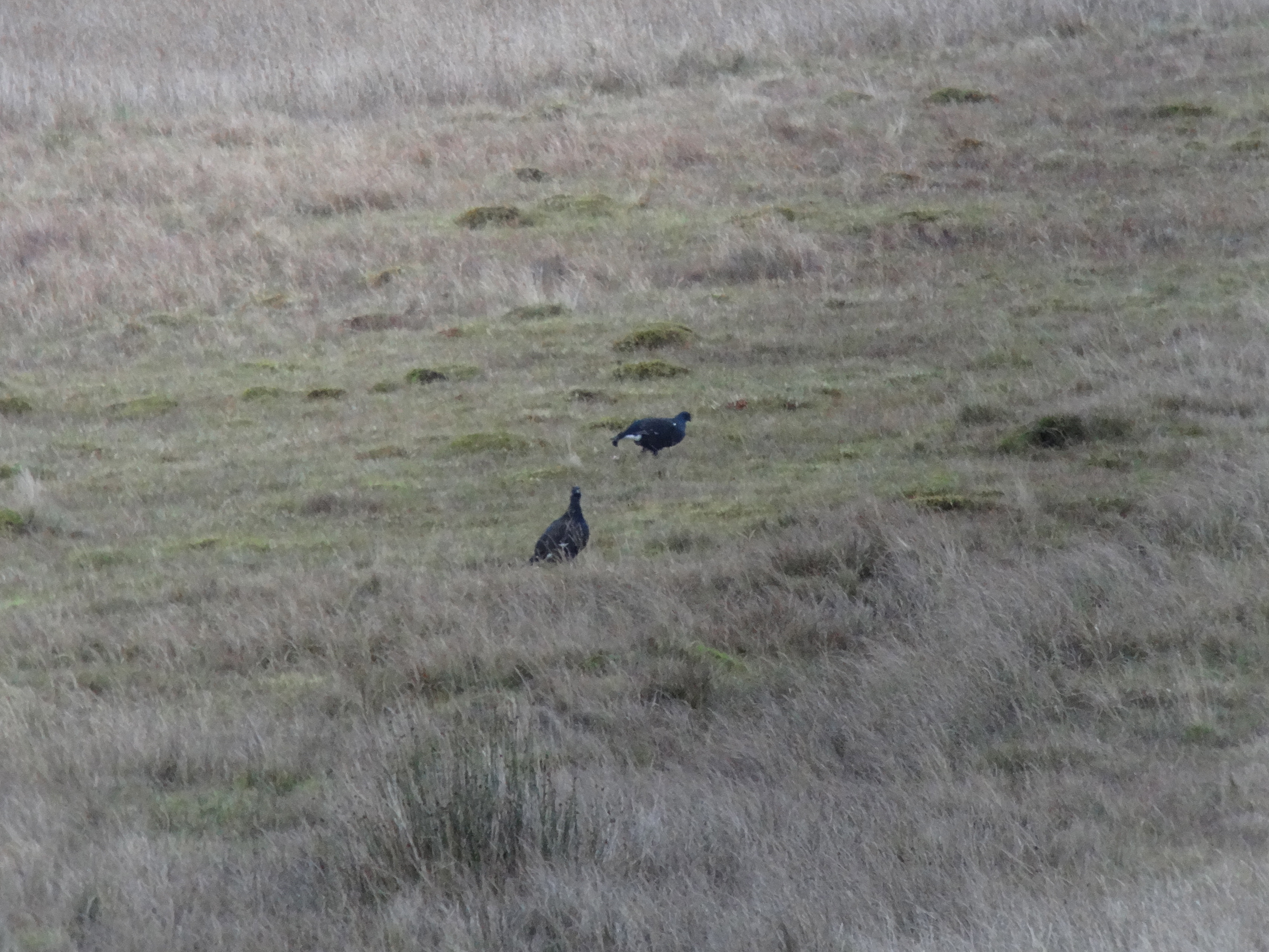
After several previous failed attempts in the High Pennines,and more recently in the Scottish Highlands, we were delighted to finally catch up with this iconic, but rapidly disappearing, moorland species – Black Grouse, in a remote corner of County Durham. We saw seven males and a single female – digiscoped from a respectable distance, to avoid any disturbance, and in poor late afternoon light:

DSC05442


DSC05450

‘I see you baby, shakin that ass’!

DSC05452

Northern (high) Lights

For our recent three nights stay in the Scottish Highlands we based ourselves in Aberlour, at the very acceptable Mash Tun pub – relatively convenient for accessing the Caledonian forests, mountain areas of Cairngorm and the coastal belt of the Moray Firth. We used Gordon Hamlett, our  former Peterborough birding colleague’s, excellent guide to Best Birdwatching Sites in the Scottish Highlands – published by Buckingham Press and currently undergoing a major revision, some prior experience of the region and a couple of tips provided by friends and locals, as a basis for finding our targets. 

Bird-finding in this region is never easy – hundreds of square miles of countryside with a relatively modest and thinly spread bird population means you generally have to work hard for your birds. Add to the mix that we visited in November, when their are no summer visitors, few migrants and only a handful of winter residents and you’ll appreciate why our list of ‘trophies’ was a relatively modest one. Nonetheless we did find a few ‘year ticks’ and enjoyed some nice long winter walks!

The woods around Grantown on Spey are well known for holding  a respectable number of the areas prime species, so not surprisingly this was our starting point – it was a place to which we returned again and again! – read on for details. On our first visit we walked miles, encountered few birds but did eventually see Crested Tit – easy to locate on call and a single Scottish Crossbill. Hours spent in the woods around Loch Garten failed to produce anything extra as did a stint in the main car park at Cairngorm, which was experiencing a bit of a ‘white out’ at the time. A few winter plumage Red Grouse here did get our hearts racing for a while though. The day ended with walks around a couple more damp, dark woods.

Day two started with more woodlands, included a trip up the majestic Findhorn Valley – where we did see Golden Eagle hunting Red Grouse and finished on the Black Isle, looking for ducks. At Udale Bay we managed to find the American Wigeon, amongst 5000 ordinary Wigeon, at the high tide roost and further round the coast 400 Scaup – a bird we rarely see in England and certainly not in any numbers.

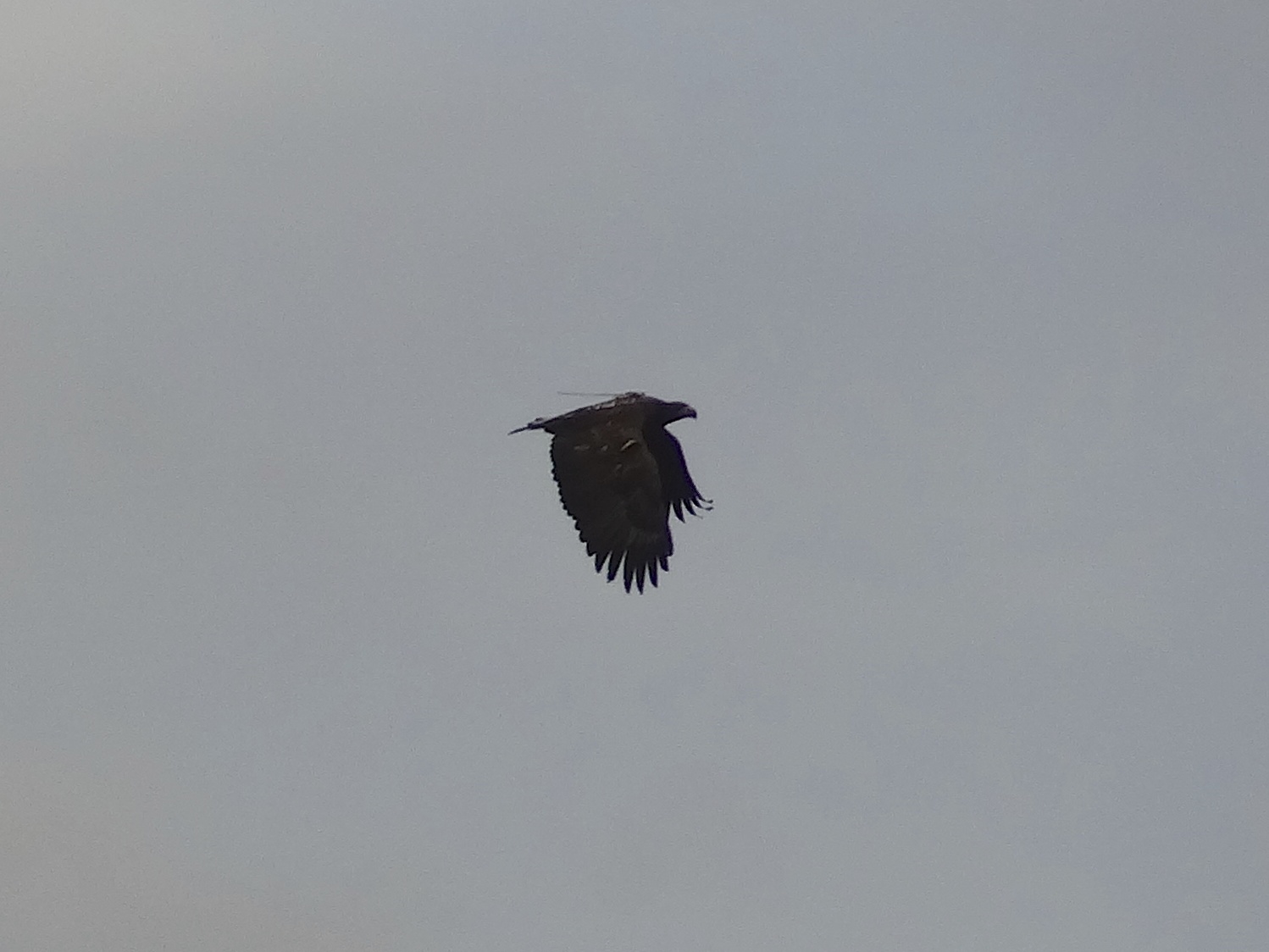
The final day was our best. Following up a tip from a local birder, we again went to the Anagach Woods around Grantown and after a long and squelchy walk we finally connected with two male Capercaillie – a bit like Pheasants on steroids, fantastic! Our return journey took us over the pass at Glen Shee, a well known spot for Ptarmigan. An hour or so spent staring at the snowy hillside had produced nothing when eventually Jane spotted a distant bird above the ski station – in near full winter plumage, it blended perfectly with the surrounding landscape. A speculative stop at Loch of Lintrathen provided a wealth of wildfowl, which were obviously unusually restless  – not surprising, as minutes after arriving in the hide, an immature White-tailed Sea Eagle did a menacing fly-by. A methodical search through the 350 or so Pink Feet produced our final trip tick in the form of a single Tiaga Bean Goose.

Given the short days, weather and woodland nature of much of our birding, no pictures I’m afraid of some of the key species.. but to make up for it, some fantastic landscapes – here, Loch Garten on a still winters day

DSC05359

First encounter with a Scottish speciality, Hooded Crow, which rarely stray south of the Great Glen fault-line

IMG_7061

Part of a flock of 400 plus Scaup, in the Moray Firth, just off Jemimaville

IMG_7068

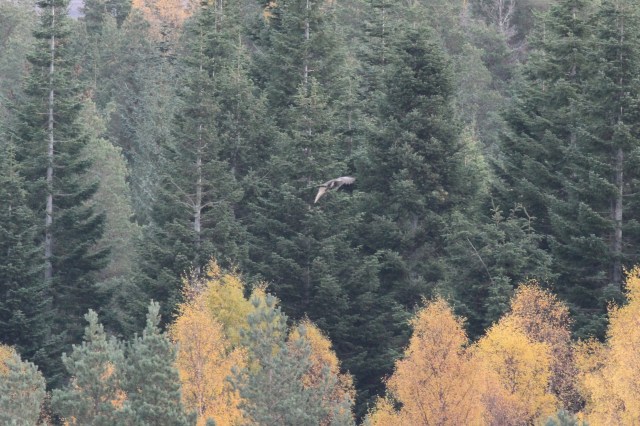
By the time I’d got my camera out this Capercaillie was nearly across the river and out of sight. This was our sixth attempt, covering four different locations, to find this classic Highland species
IMG_7088

A winter plumage Red Grouse doing a passable impression of Ptarmigan – it didn’t fool us though (not for long that is!)

IMG_7171

A young White-tailed Sea Eagle doing a ‘fly-by’ at Loch of Lintrathen

DSC05397

Final tick of the trip, a Taiga Bean Goose, found amongst hundreds of Pink Feet. It’s the one in the centre of the shot – slightly bigger, long necked with extensive orange on the bill and orange legs

DSC05424

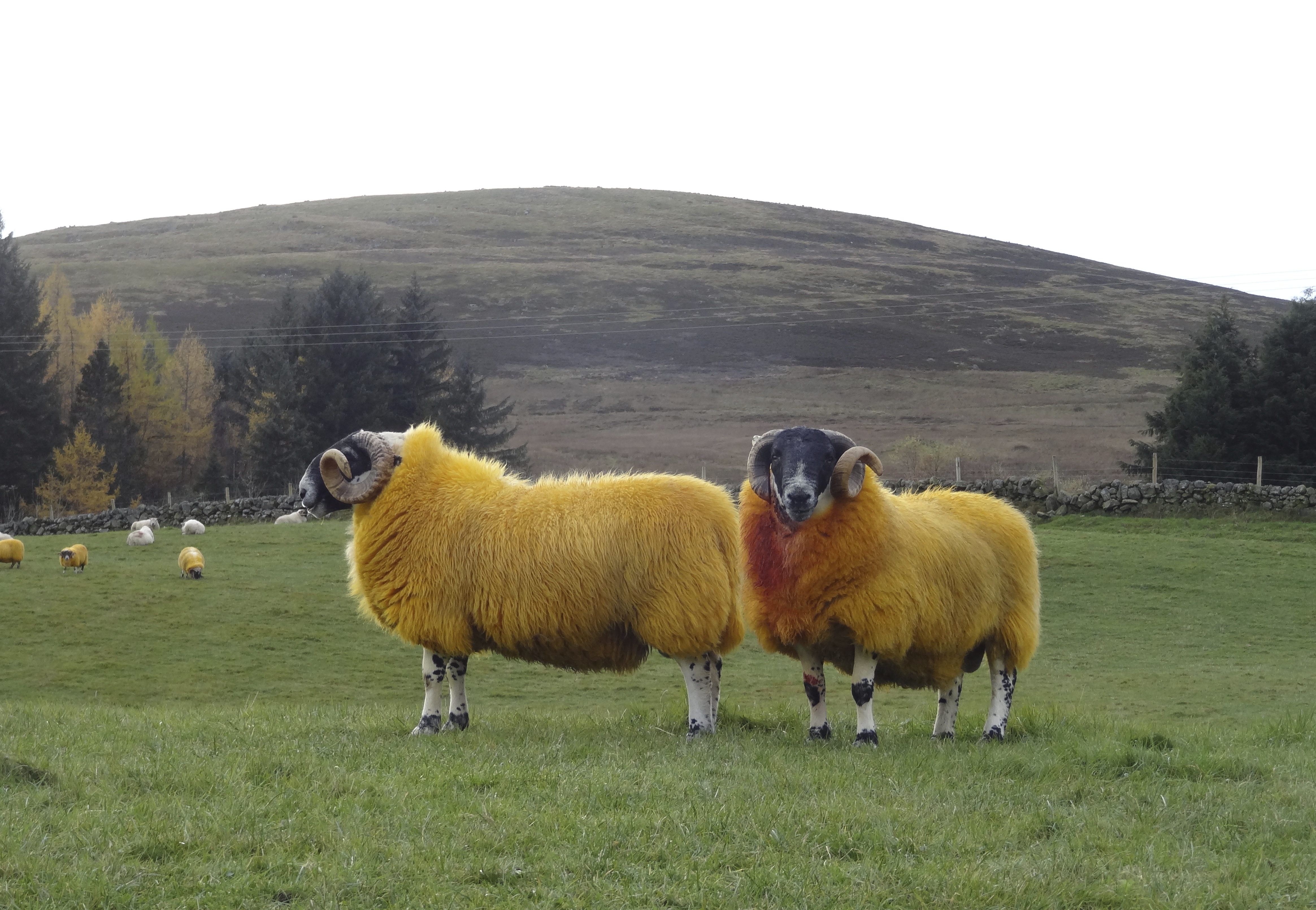
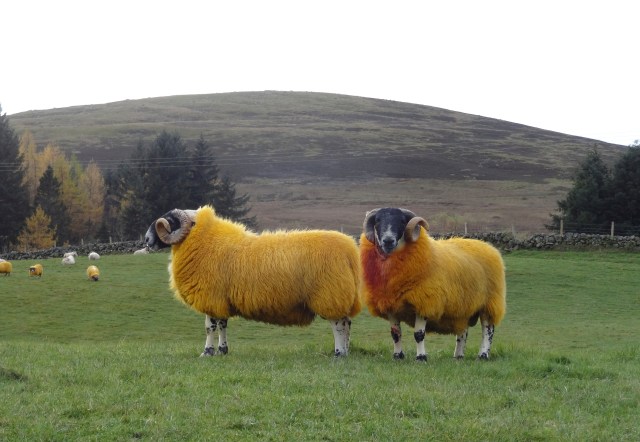
This wasn’t just a birding trip – rare mammals are always of interest. Here, a chance encounter with a rare group of Speyside Yellow Sheep!
DSC05388

Beauty in the Borders

We’ve come north to visit my brother in Scotland and hopefully, by finding a few of the Caledonian specialities, give a lift to my ailing year list. It’s always an uphill struggle to boost the list once the clocks go back – the birds seem to dry up with the arrival of the shorter days and the energy begins to drain out of even the most committed year lister. We took it easy on the drive up stopping over night at the excellent Bailiffgate B&B in Alnwick  – great room, nice hosts and a breakfast cooked to perfection! There was nothing much around in the North East, just a Snow Bunting, Northern Wheatear and Shore Lark all near the Old Cemetery in Hartlepool, so our efforts focused on attempting to relocate the long-staying, though elusive, Sardinian Warbler at Mire Loch near St Abb’s Head.

It’s quite a walk from the car park to the loch and it took us sometime to find the boardwalk, where the bird has been occasionally but consistently reported, 60 – 100m beyond it. We spent the first three quarters of an hour scouring the gorse covered hillside until Jane, attending to a call of nature, cried out that she’d seen the bird! By the time I’d found her the thing had slipped away, a frantic search of the immediate area revealed nothing and a black cloud began to descend. I tried to banish the ‘dark damon of dipping’, which had commenced a silent vigil in my head, and regain my optimistic composure. The bird’s been here a long time ‘right’, Jane’s just seen it ( aargh!) ‘right’, it can’t have gone far… ‘right’? I calm down a little and commence a systematic search of the immediate area. Ignoring the dense gorse – the sort of place a Sardinian could hide for weeks, I enter a small clump of near leaf-less Sycamores, bent over by the prevailing winds. A movement down the slope catches my eye and there in front of me, fly-catching in the lower branches, is a beautiful adult male Sardinian Warbler! These birds are difficult to see even in the southern Mediterranean, where they are the default passerine species, so to be able to watch it flitting around in the open was a real unexpected pleasure. It even paused occasionally to allow a quick snap or two:

IMG_6988

This bird was caught and ringed in the spring then promptly went missing. Several months later it was rediscovered amazingly – and it’s still here… in November!

IMG_6992

A very nice late addition to the year list.

Shore start

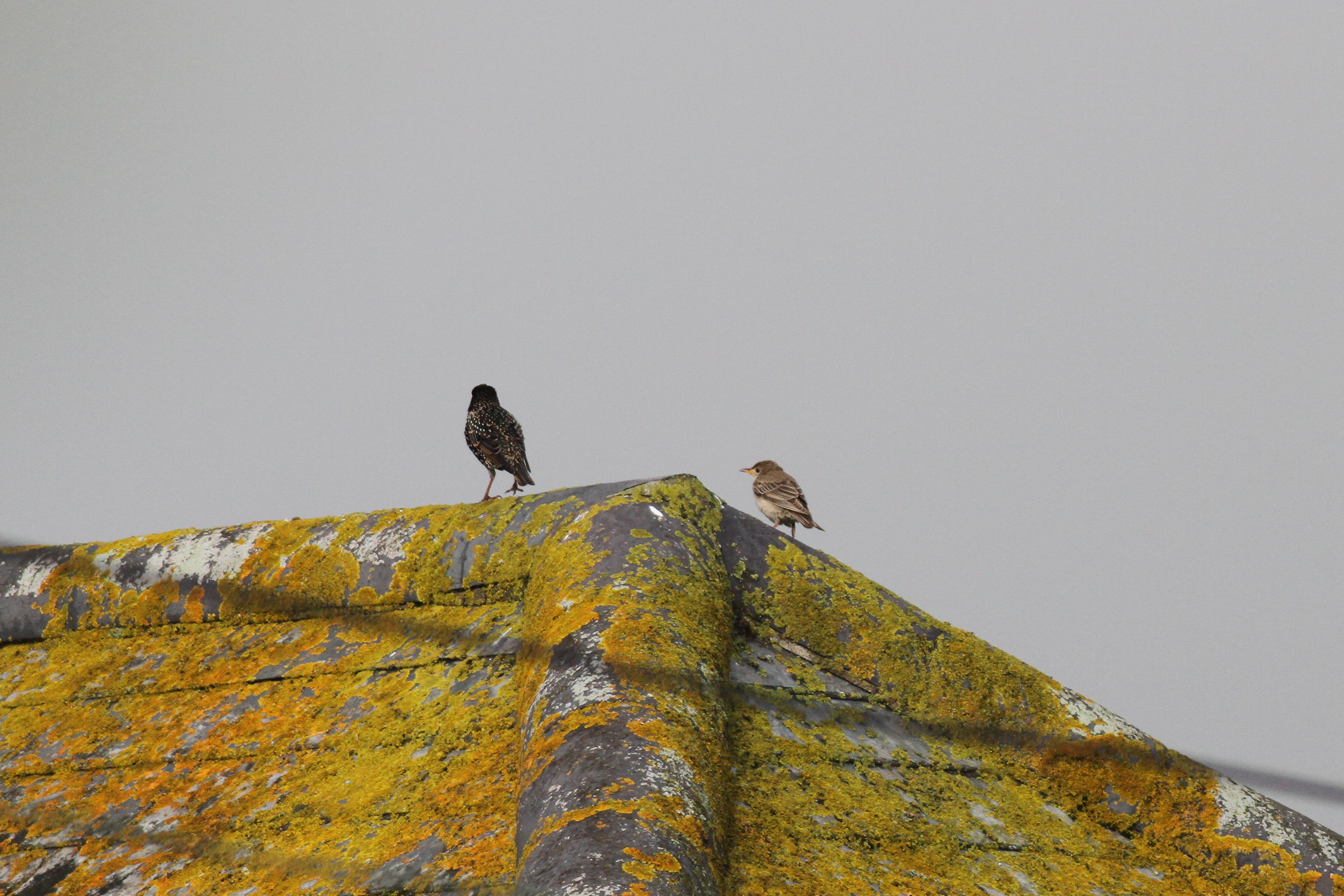
Having spent the best part of a day and a half chasing the Pallid Swift we decided that today we’d take it easy. After a relaxed breakfast we headed down to Winterton, hopefully for me to add Shore Lark to my year list – Jane having already seen them a few days before. We stopped off at the bushes below the Hermanus restaurant to check for the reported Pallas’s Warbler but there was no immediate sign so we continued to the beach in search of our quarry. A single adult winter bird, there had been three earlier in the week, was quickly located feeding at the base of the dunes. We watched it for ten minutes or so before heading back to the Hermanus, where the Pallas’s was showing occasionally. Having got rather ‘thin’ views we returned to the car and set off to our next stop at the beach car park in Caister-on-sea, where the juvenile Rosie Starling was seen almost immediately, first on the roof of a nearby cottage and then feeding on the grass by the side of the car. We then followed the coast road north as far as Happisburgh, where we stopped for Sunday lunch, at the excellent Hill House pub, before  continuing northward. A couple of texts alerted us first to a possible Pacific Swift and then a possible Black-browed Albatross at Hopton, both heading north – so we decided to stop off at the beach car park at Walcott in the vague hope of seeing either bird fly by! Nothing doing, except a number of cheeky Turnstone on the sea wall, so we pressed on towards Trimmingham to see if we could perhaps connect with the Pallid Swift, which was still around. There were a few cars in the lay-by but no birders so we pressed on to the cliffs at Cromer, where the birds had been seen on the three previous late afternoons. News of a Richard’s Pipit at Cley was enough to lure Jane away but I decided to stick it out. After an hour or so of getting blown about and seeing nothing our interest was rekindled by a telephone call to one of the guys standing with me, saying that a Black-browed Albatross had just flown past Overstrand, two miles down the coast! We stared out to sea and after a couple of minutes I became aware of a large black and white, long winged, bird wheeling and ‘towering’ above the horizon – not a gull nor a Gannet, I felt pretty confident that this was our bird. I got the guys on it as it started powering away to the north but less than great views were had before it was finally lost from sight. Unfortunately, Jane returned from a fruitless trip to Cley just at that moment – she felt sick… and so did I!!
A very nice Shore Lark to get the day off to a great start

IMG_6899 IMG_6903

A second ‘Pink Stink’ in as many weeks

IMG_6911

IMG_6948

One of those cheeky Turnstones

DSC05328

And to finish with Horsey wind pump, against a threatening sky… aaah!

DSC05316


Poscript: Apparently the Albatross was seen a little further round the coast from West Runton, but not from Sheringham, before it obviously disappeared to the north.

Pallid performance

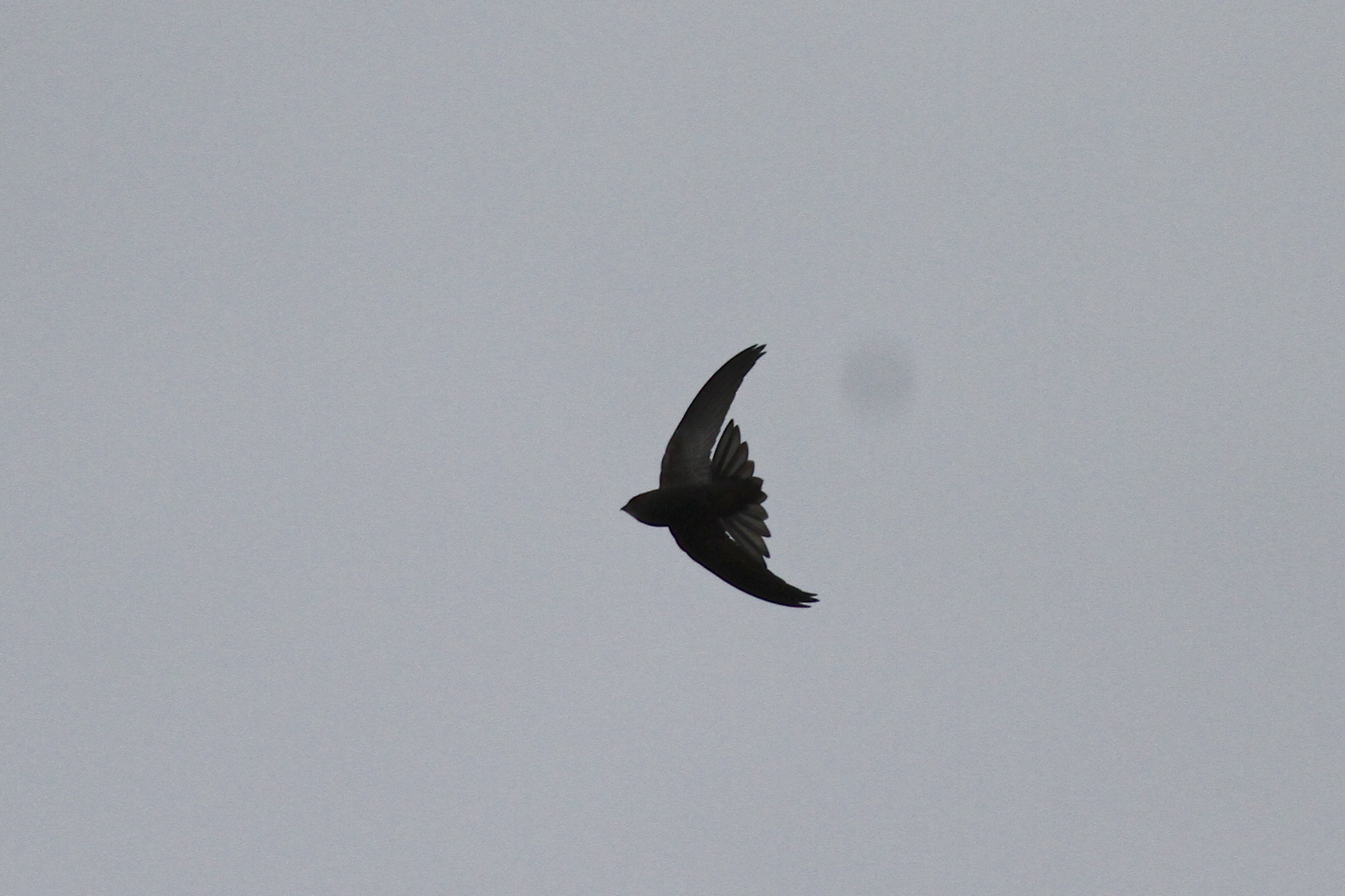
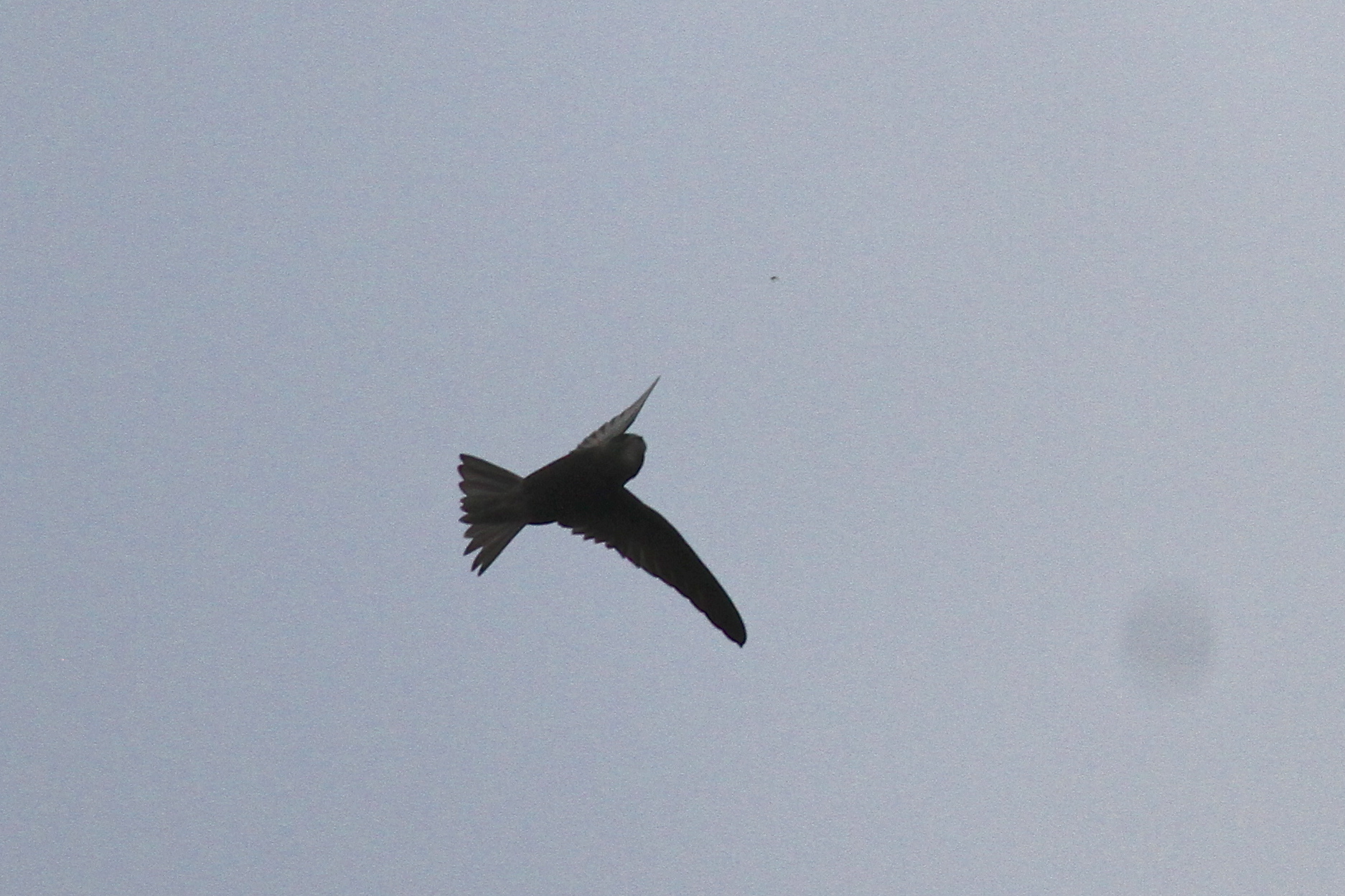
The first report of a Pallid Swift in our part of Norfolk came a few days ago when a bird was seen at Cley and various points along the coast to Cromer. Then, on Thursday when I was tied up at an all day conference in Cambridge, Tim a local birder texted to say that he and Dawn had found possibly the same bird at Felbrigg Hall – practically our ‘back garden’! Yesterday we got up early to get to Felbrigg, where we spent a couple of fruitless hours looking for the bird.  In the afternoon I had to go to Norwich and by the time I’d finished my various meetings it was beginning to get too late for birding…or so we thought! We decided against a shopping trip to Morrison’s and went straight home. Shortly after dark the message came through that the Pallid had been showing well, ‘late afternoon’ between the supermarket and the pier, and had possibly gone to roost on Cromer church – grrnash! Up early this morning to go and stare at Cromer church tower for an hour or so… nothing. Back for breakfast and a report that there were now two birds over the cliffs at Trimmingham. Off we go, only to  be told when we get there that the birds had flown off a couple of minutes before… double bother! A pager message came through that a bird was showing above the wood we could see in the distance… but we couldn’t see the bird. Then another message to say it was seen heading east towards Cromer. Off we go to Cromer sea-front, see nothing but bump into three lads who are pleased to show us their photos of Pallid Swift taken a little earlier at the lighthouse – triple bother! Back for lunch and await further news. None is forthcoming so we go back to Felbrigg. No luck there either but a further text to say that a Pallid Swift is back, somewhere between Trimmingham and Sidestrand. Off we go again, arrive at a likely spot, hoof it to the coast, where a lone birder points to a dot in the sky… that’s the bird! We hoof it back to the car and drive to the village where, thankfully and not before time, the Pallid Swift performs dutifully above us for ten minutes or more.

And the moral of this tale… twitching swifts can seriously damage your (mental) health!

IMG_6861

IMG_6807

IMG_6752

IMG_6802

A few rather poor images of a very welcome addition to the year list!

Turns out that there were indeed two birds, a ‘pale’ bird, which came from Cromer and the west and a darker bird from the east. They both met up briefly over the coast at Trimmingham, mid morning!

GPOG Cornwall 2013

Last week we set off on the regular GPOG (Greater Peterborough Ornithological Group – a rather grand title for a bunch of birding & drinking mates, loosely based in the Peterborough area!) birding excursion to Cornwall. Twelve of us left Market Deeping on Wednesday night, returning late on Sunday. The timing of the trip is intended to maximise our chances of finding rare birds in the valleys of west Cornwall but it’s fair to say that we’ve enjoyed mixed fortunes over the 15 or so years we’ve been going! Star birds in the past have included Aquatic, Bonelli’s, Radde’s, Melodious and Greenish Warbler, Red-eyed Vireo, King Eider, Black Duck, Lesser Scaup, Buff-breasted, Baird’s and White-rumped Sandpiper, Long-billed Dowitcher, Cory’s Shearwater, Sora Rail and a host of other ‘goodies’, but this year, it’s fair to say, there were much leaner pickings on offer. Our modest total of 114 birds included Chough, Snow and Cirl Bunting, Rosie Starling, Yellow-browed Warbler, Firecrest, Richard’s Pipit, Whooper Swan and Glossy Ibis – still a reasonable haul at a time when rarities nationally were in a bit of an uncharacteristic lull. The trip did produce a couple of ‘lifers’ for members of the group and the beer, food and hospitality at the Bucket of Blood (our alternative ‘club hut’) were exceptional – so all things consider, a good time was had by all!

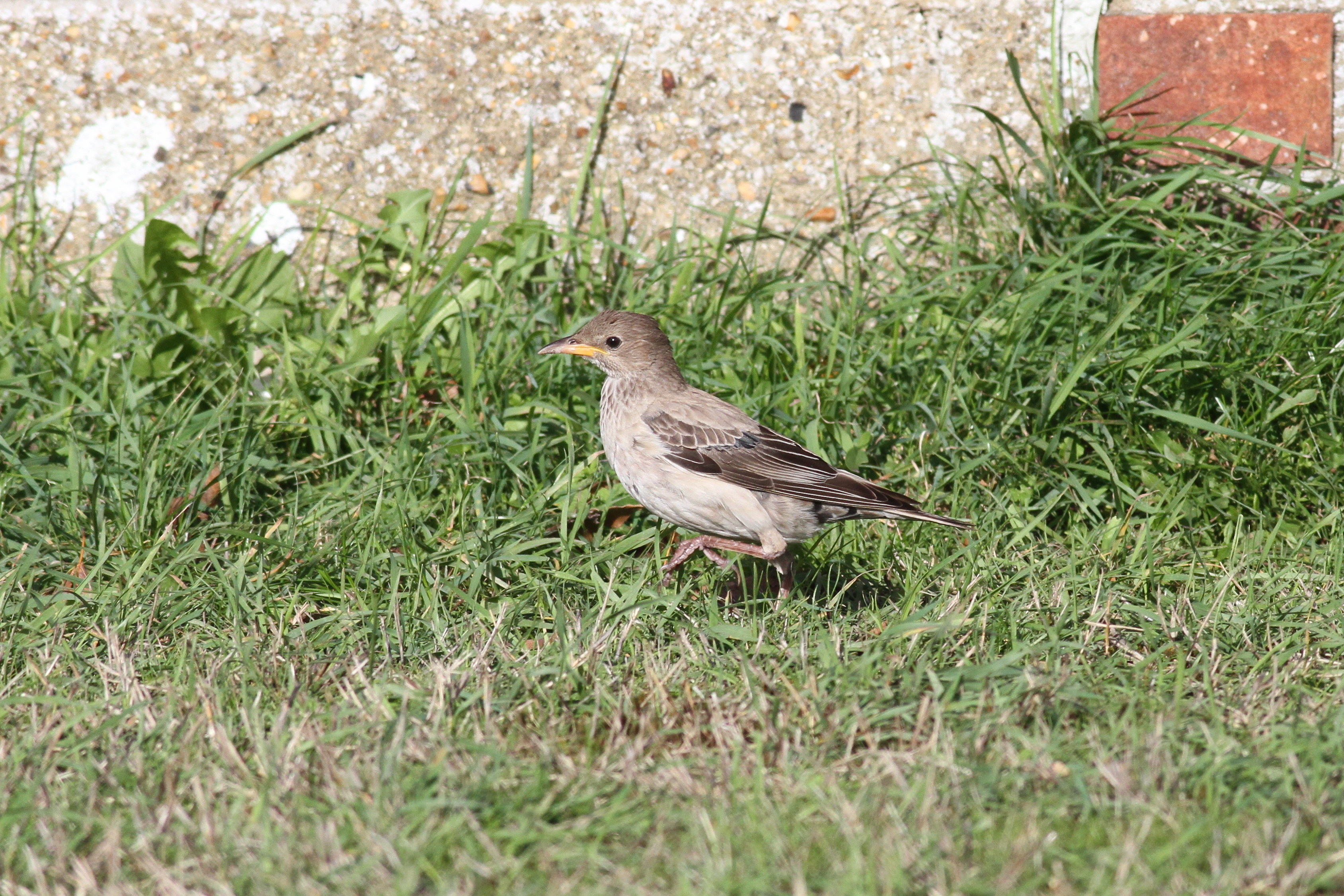
The first of our star attractions, a juvenile Rosie Starling. We’ve managed to find these birds on almost every trip we’ve done to Cornwall. This one was in the car park of Morrison’s at Marazion. Compare the rather drab plumage of this bird with that of a breeding adult, featured on this blog  in June –‘Rose coloured spectacle’

IMG_6339

One of our target birds for this trip was Chough. We had expected to scour the Lizard peninsular to find them but they gave themselves up relatively easily in the Cot Valley. This was one of at least seven, roosting in a quarry.

IMG_6354

Mediterranean Gull were reasonably easy, with up to a dozen on the Hayle estuary and others dotted around the coast. This adult was at Sennen.

IMG_6520

Talking of coastal birds, Rock Pipit are always nice to see – just a pity that it’s distant cousin, the Richard’s Pipit, didn’t give itself up as easily!

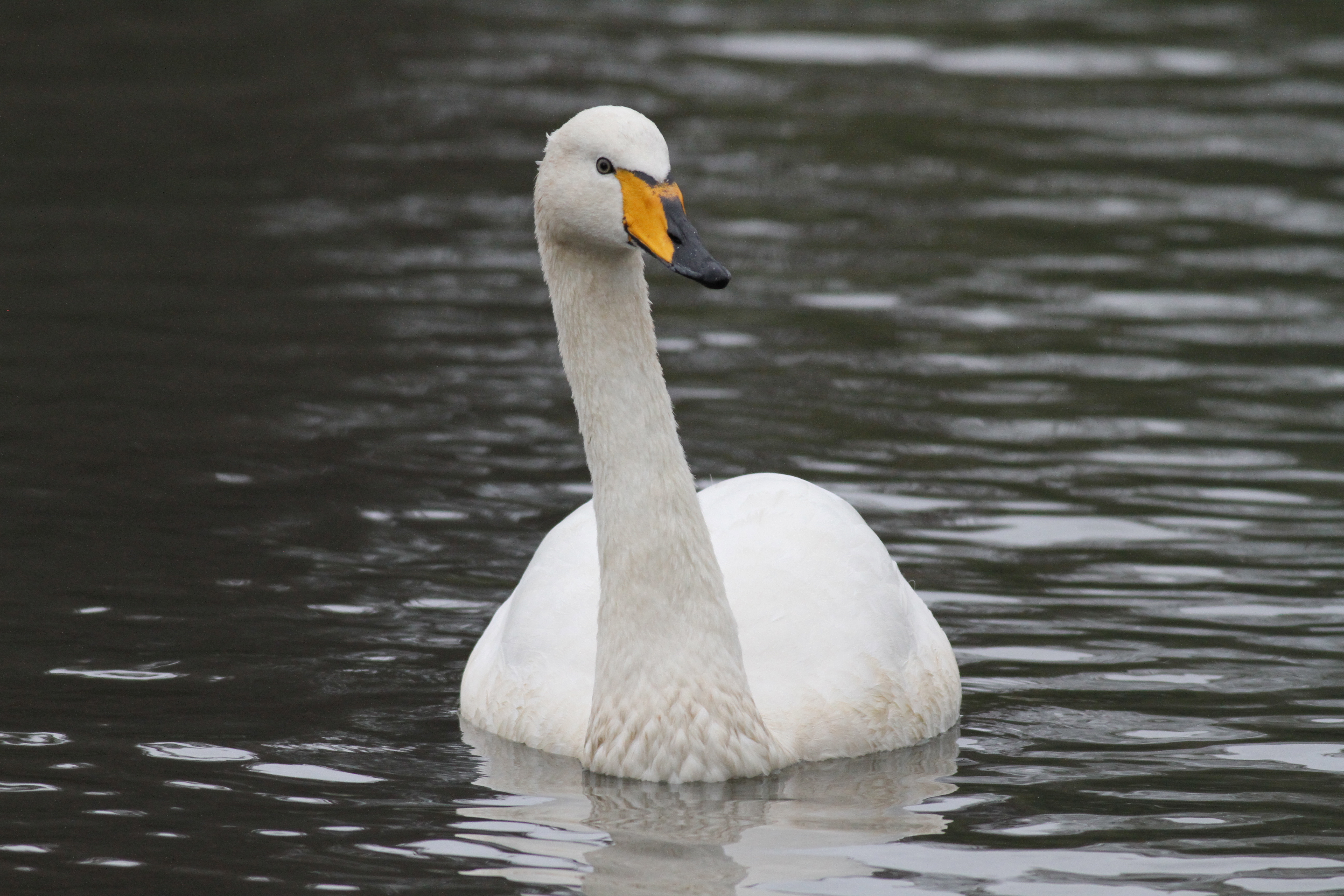
IMG_6503This Whooper Swan was a surprise find on Helston park lake –  no rings, honest Guv! A rare Cornish bird and a ‘grip-back’ for yours truly

IMG_6495

A stop-off at Labrador Bay in Devon produced the goods with this fine male Cirl Bunting, appearing in the hedge between heavy rain showers

IMG_6632

There’s been an increasing trend of autumn ‘invasions’ of Glossy Ibis – we caught up with a couple of this years wanderers at Ham Walls, Somerset on our return journey. Who knows, perhaps these birds will linger on to breed and add to the incredibly impressive list of rare breeding herons on the Avalon Marshes!

DSC05210

These ‘bl**dy clickers’ can never get close enough… can they Will?

DSC05200

But to be fair, this was a very approachable Snow Bunting!

IMG_6584

All in all, a pretty good trip with some very nice birds, but I guess Parula Warbler in the Cot Valley will have to wait for another year….!