Jack in the bag

After several days of routine domestic tasks, including painting the outside windows using a ladder (I must be mad…!) we decided to have a day out, birdwatching. Starting at Holkham pines, we went in pursuit of Yellow-browed Warbler which had, so far, eluded us, despite there being hundreds of this extreme long-distant migrant in the country over the past week. Nothing on the walk down, nothing around Washington hide and nothing in the tit flock at Meals House… until that is Jane noticed a warbler fly into a nearby Sycamore tree – a couple of brief but distinctive calls and the bird was ‘in the bag’! We did see the bird a couple more times, as well as a late Willow Warbler, a flock of Common Crossbill and Siskin, before heading off to Titchwell. There was nothing particularly gripping on the board when we got there, so we set off for what turned out to be a really enjoyable afternoon’s general birding. The tally of ‘interesting’ species included Little Stint, Curlew Sandpiper, Spotted Redshank, Greenshank, Hobby and, just before we headed for home, a very obliging, if somewhat distant, Jack Snipe  – with Common Snipe for useful comparison, on the new scrape called Patsy’s Pool.

One of at least three, winter plumage, Spotted Redshank

DSC05032

Greenshank

DSC05016

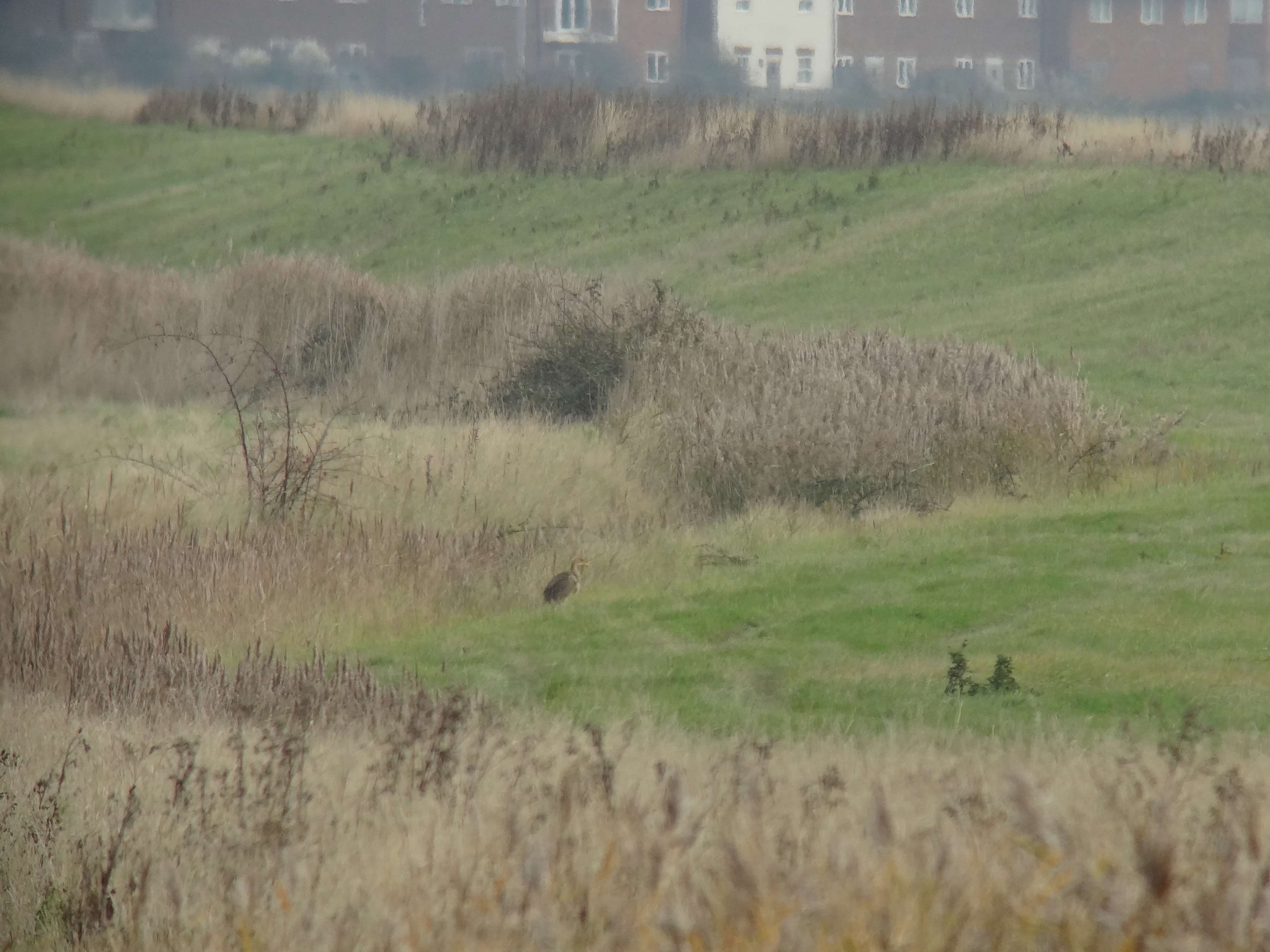
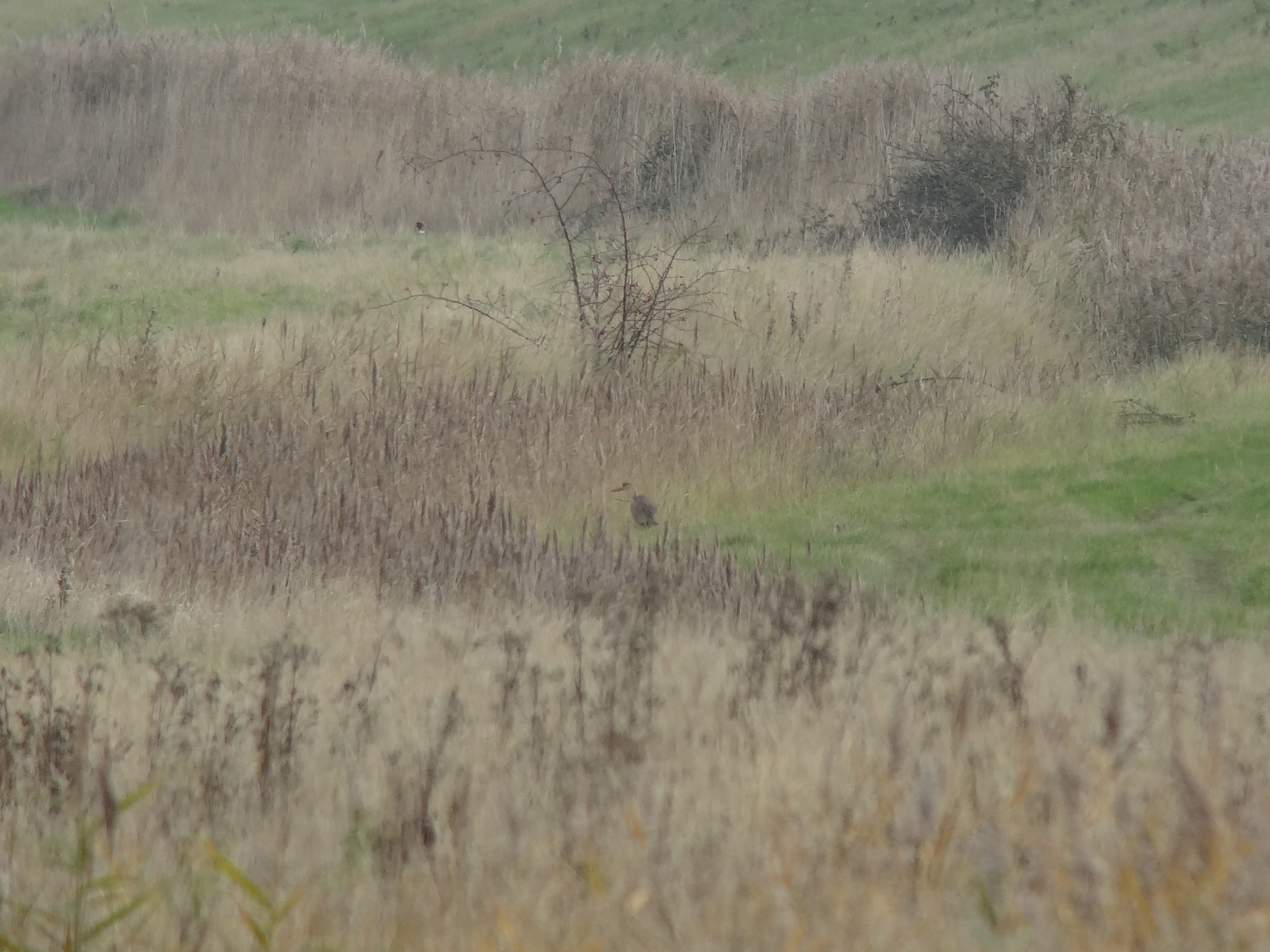
Jack Snipe, back left against the vegetation, with Common Snipe, front right (behind the Teal), for comparison

DSC05066

Jack Snipe is noticeably smaller/stockier than Common Snipe, with a short thick based bill and shorter legs, more of a dark chocolate colouration on the back with broad gold ‘braces’, streaking rather than barring on the breast and no pale central crown stripe. Jack Snipe also exhibit a ‘bobbing-like’ action, whilst feeding.

DSC05068

Lesser is More…

September 1989 Rudston, East Yorkshire, I saw my first Lesser Grey Shrike, yesterday near Leiston, Suffolk, I see my second.

Having done a few jobs around the house/allotment in the morning, by lunchtime I was beginning to get restless. The weather hasn’t been great for ‘small bird’ migration so far this September but a few things have started to arrive here in East Anglia, like the Lesser Grey Shrike which turned up last Sunday. With nothing better (more interesting ) to do I decide to have a go for it.

Although it’s no great distance from Cromer to Leiston, it’s a slow drive across Norwich and through the lanes of Suffolk, so it was half past three when I got to the site. The first guy I see coming the other way is looking grumpy – not a good sign! Apparently the bird was seen a couple of hours ago but ‘it flew off high over the woods’ and nothing since. Is it just me or is there a rising trend of premature pessimism amongst birders these days – how often do you see on BirdGuides a ‘sad face’ report and then, ten minutes later, such and such a bird is ‘back in is usual spot and showing well‘! Is it that we invest so much emotional energy in seeing rare/scarce birds that we have to psychologically brace ourselves against disappointment or is it just that those who witness these supposedly ‘last sightings’ want to rub it in the faces of the poor unfortunates who arrive too late? Either way my spirits drop a little but I carry on looking. Nothing for ten minutes, just a lot of empty fence posts, where this rare bird from the south and east of Europe once was – images of the numerous photos of the bird, posted on various websites, beginning to pop into my brain to tease me. A guy in his forties walks by, cheerfully enquiring if we’ve seen the bird, and he tells us about an Arctic Skua on the nearby beach at Sizewell.

Then the shout goes up – the bird is back, a little further up the track. We hurry to the spot and there is the shrike, sat atop a hawthorn bush, catching insects…pheew! The same guy then casually remarks that his first Lesser Grey was in the late eighties, somewhere near Spurn – there is a sudden connection between us. Same bird, same experience… just a quarter of a century separating the two. What happened to the two and a half decades that have gone by between these two events – and why do birders measure their lives out in this way – by the birds they’ve seen? I’ve no idea, but ‘first’ or ‘second’, it was a lovely bird to see….. and more than just a bird!

Lesser Grey Shrike, with Sizewell B nuclear power station in the background

IMG_6018

DSC04882…Meat Feast!

DSC04914

Post Script:  As I write this post, three large skeins of Pink-footed Geese have flown over – watch out, winter’s coming!

Honeymoon Special

Jane and I were married at the end of September, nearly 36 years ago. We were students at the time so I borrowed my Dad’s car and we stay for a few nights in a B&B in Northumberland for our honeymoon. On our first proper day together we went to visit Lindisfarne and passing Newton Pools, a shallow rain-filled depression in a field, (not sure if they are even there anymore ) we came across a first winter Wilson’s Phalarope! Now Jane wasn’t much of a birder at the time but even she could appreciate the simple, elegant beauty of this transatlantic vagrant.

Fast forward to this morning. Monday is my ‘duty day’ at Cley NWT. I’d checked the wader scrapes from the hides – no sign of the reported Pectoral Sandpiper from earlier and nothing much of note either. I took a brisk stroll down East Bank, the wind was strong from the west and keeping everything down. On approaching Arnold’s Marsh there was a small group of bird watchers looking closely at something. ‘Something of interest?’ I asked – ‘there’s an odd looking bird in the vegetation by the edge of the water’ came the reply. A quick look with my bins and I could tell this was something interesting! I dismissed the suggestion that it could be a Marsh Sandpiper and focused on the Phalarope family – silvery grey upper parts with brown scalloping at the rear, long black needle-like bill, dark eye mask, a whitish supercilium and… bright yellow legs!  Hold on – that’s Wilson’s – oh heck, I thought!! I concentrated for the next few seconds on getting some digiscope grab shots before the bird rather inconveniently flew off west along the shingle ridge, showing a neat square white rump as it did so. I raced down to North hide whilst trying to contact Cley NWT Centre on the radio – no luck and no mobile phone signal either! On entering the hide I asked, breathlessly, if anyone had seen any interesting waders – ‘no’ came the reply. A brief scan around with the scope and I relocated the bird at the far end of the scrape. It eventually came closer for a brief while before heading off again, over the Eye field, towards Blakeney. I managed to get a weak mobile signal by the beach car park and put in a call to Mark Golley, who luckily was at home in Cley. Using his considerable local knowledge he went off to Bishop’s hide and relocated the bird some time later. The bird stayed on Pat’s for most of the afternoon.

DSC04808 DSC04809 DSC04864

I’ve seen a couple of spring birds in the intervening years but this is the only ‘first winter’ I’ve seen since our honeymoon special!

Pectoral display

Having spent most of the day blogging our recent Spanish birding break, including details of the yet to be conclusively identified ‘orange billed’ terns, we finally managed to get out birding at tea-time. We arrived at Titchwell in rather poor light and quickly ascertained the rough location of the two remaining Pectoral Sandpipers. A walk down to Parrinder Hide and there they were, some distance away on a grassy island. Always nice to see this most numerous of American waders in Britain, better still to see two.

Record digipics

DSC04750


DSC04753

Having had our fill of the Pecs we decided to continue down to the beach before it got too dark. There was nothing much on the sea of interest, just a couple of Great Crested Grebes and a juvenile Arctic Skua, then a delightful Purple Sandpiper flew straight towards us in ‘the bunker’ and pretty much landed at our feet!

Taken on my Sony compact

DSC04785


Triumph at Trafalgar

We’ve just returned from a short birding break to the Cadiz region of Spain, including the area around Cape Trafalgar – scene of a previous great victory, by a former Norfolk resident! We flew with Ryanair from Stansted to Jerez, got the hire car from the very reasonable and efficient Gold Cars and stayed for five nights at the excellent Las Magaritas hostel in Terifa. Our trip was timed primarily for raptor migration – actually the weather this year wasn’t particularly conducive to large raptor movement, but we did catch up with most of the local specialities as well as visiting a couple of new birding sites. We bumped into John Cantelo, local British birder and blogger, at La Janda who kindly provided up to date information on what was around – well worth visiting his website if you are planning a trip to the region. Highlights from a bird list of over 160 included, Rufous Bush Robin, Black Stork, Calandra Lark, Black-winged Kite, Olivaceous Warbler, Red-necked Nightjar, White-headed Duck, Collared Pratincole…oh and that Tern – read on for details! We were also lucky enough to be in Tarifa for Feria and the fascinating procession of the Vergen de la Luz.

First up, although the weather wasn’t conducive to large raptor movement, there was plenty of ‘visible migration’ going on – the main species involved being  Honey Buzzard, Booted Eagle and Black Kite with smaller numbers of Montagu’s Harrier, Short-toed Eagle, Sparrowhawk, Egyptian Vulture and Red Kite. This adult Short-toed Eagle came closer than most. For more raptor photos see my Terrific Tarifa post, April 2012.

IMG_5744

There was also a strong passage of White Stork – this being a small part of one of the migrating flocks

IMG_5520

There were plenty of interesting ‘small birds’ to keep up our interest, this male Black-eared Wheatear for instance

IMG_5496

or this Melodious Warbler, near Banalup

IMG_5809

and this Short-toed Lark on the beach at Los Lances

IMG_5614

Now, turning to the ‘Bird on a wire’ section – first, Zitting Cisticola

IMG_5668

A male Lesser Kestrel on the road to Sanctuario de la Luz – look closely and you can just see the definitive id feature of white ‘toe-nails’!

IMG_5632

Juvenile Woodchat Shrike

IMG_5639

and a ‘bonus bird’, in the cattle compound at Los Lances, Rufous Bush Robin

IMG_5562

The wetlands of La Janda, just inland from Tarifa, are always good value – this Black Stork dropped in whilst we were searching through the waders on one of the flooded rice fields

IMG_5685

This juvenile Collared Pratincole was also close by

IMG_5869

Not the Little Swift at Chipiona we were hoping for but a free-flying Peach-faced Lovebird (not yet on the Spanish list though I’m afraid!)

IMG_5896

Finally, that  tern or terns I was telling you about. Having visited the beach at Tarifa more times than I care to remember, including at least six times on this trip, looking for Lesser Crested Tern, a speculative visit to the beach at La Reyerta, around lunchtime on 11th, finally turned up trumps…. well sort of!! Two ‘orange billed’ terns, an adult and a first winter bird (yellow legs) where ‘loafing’, along with a few hundred mixed terns and gulls, at the mouth the Guadalquivir. Good candidates for Lesser’s perhaps…. but as Elegant Tern, which are pretty similar, have bred recently in Spain, they can’t be ruled out. For additional photos, see ‘La Reyerta orange billed tern gallery’ on this blog.

Authoritative sources in Spain now say that these birds are the male and youngster of a pair which bred in Albufera de Valencia, this year and which have been roaming the Cadiz area for a number of weeks. The male was first ringed in Marismas del Odiel, Huelva (SW Spain) on 8 October 2002 as a Lesser Crested Tern, but when it was re-trapped in 2006, it’s  identity was questioned, DNA was taken and the identity awaits confirmation – though is leaning towards Elegant. The mother was an Elegant Tern and therefore the youngster is considered by most to be genetically pure enough to ‘tick’ as Elegant…which indeed I intend to do! This ‘orange billed’ tern id quest has been a bit of a mind-bender…I hope it’s a while before I see another one!

The birds in question…..

IMG_5924


IMG_5966


IMG_5974


Fantastic birds – a real and unexpected triumph!

Post Script:  The Tarifa Feria or fair, combined with the procession of the Vergen de la Luz was a real added bonus.

DSC04607

DSC04626

DSC04638

Weybourne Wag tale

We were at Blickling Hall, enjoying some family time with Noah our fifth grandson, when the news came through of a Citrine Wagtail at Burnham Overy. There had been a report of a probable at Kelling earlier in the the day but that was followed by a ‘negative’ update at lunchtime and, in the event, the Burnham bird only stayed for thirty five minutes before departing.  … oh well not today I guess. Then at tea time the news came through of another (or probably the same) bird at Weybourne camp – just along the coast from Kelling. We were in the car park in fifteen minutes and told that the bird was still showing about 400m away. A 1st winter bird, feeding with Pied Wagtails but rather  flighty and, being on the private campsite, only viewable from the beach path. We did eventually get reasonable views, as it moved up and down to feed, calling frequently in flight – rather reminiscent of Yellow Wagtail.

The essential id features are just about visible in these digiscope ‘grab shots’:  double broad white wing bar, long tail, a yellowish ‘super’ joining pale lores and looping behind the eye around the ear coverts and all dark bill.

IMG_5266

IMG_5255

IMG_5273

A ‘bonus bird’ which brings me equal with my previous, rather modest, best Year List total of 254…  benefits of retirement and residing in Norfolk. 

Back on the bike – more historic churches

Last Friday I decided it was about time I stopped using my ‘falling off a ladder incident’ of a couple of months ago as an excuse for not getting on my bike and doing a few more of Norfolk’s historic churches! The weather was set to be warm, possibly in the high twenties, and there was a moderate easterly wind. I chose an inland route, hopefully to provide more shelter, and modified the itinerary to finish the ride close to a station on the lovely Bittern Line, which would take me back to Cromer, leaving only a short ride home. It was great to be back in the saddle, visiting some hidden ecclesiastical gems and exploring more of the counties byways. I was slightly disappointed to find a number of the churches locked, I don’t know if this is because of a different Deanery ‘policy’ or not, but it was in marked contrast to my last couple of trips in the Holt deanery, when all of the churches were unlocked. I also missed my old cycling companion and brother Bry, who has been with me on most of the previous excursions, but who is currently laid up following a hip replacement – I hope it’s not too long before we can be pedaling the lanes of Norfolk together again! Jane joined me for a pleasant lunch at the locally renowned, Recruiting Sergeant, at Horstead.

The Route: including the return ride from Cromer station, close on 70k

Screenshot_27_08_2013_20_28

The Churches:

St Batholomew  Hanworth,  St Andrew Gunton, St Botolph Banningham, St Peter & St Paul Tuttington, St Mary Burgh next Aylsham, St Michael Oxnead, St Peter Brampton, St Andrew Buxton, St Margaret Stratton Strawless, All Saints Hainford old church, All Saints Horstead, St John the Baptist Coltishall, St Andrew Lamas, All Saints Scottow, All Saints Skeyton, St Michael Swanton Abbott, St Botolph Westwick, St Batholomew Sloley, St Mary Worstead.

As on previous occasions, for more detail of the churches, do visit the excellent Churches of Norfolk website.

The photos:

St Batholomew, Hanworth

St Batholomew Hanworth

Interesting architectural drawing of St Batholomews

St Batholomew Hanworth 2

St Andrew’s, in the grounds of Gunton Park, designed by the great Robert Adam – thought to be his only Norfolk church

St Andrew Gunton

St Botolph, Banningham

St Botolph Banningham

Medieval wall painting, depicting St George and the dragon – predates the installation of the clerestory windows

St Botolph Banningham

St Peter and St Paul, Tuttington – the only round tower of the day

St Peter & St Paul Tuttington

Burgh next Aylsham – St Mary’s, on the banks of the river Bure

St Mary Burgh next Aylsham

The restored church of St Michael,  Oxnead

St Michael Oxnead

St Peter Brampton

St Peter Brampton

St Margaret Stratton Strawless

St Margaret Stratton Strawless

… and this one makes 20!

St Margaret Stratton Strawless (2)

St Andrew Lamas, another church on the banks of the Bure

St Andrew Lamas

Detail of the organ,  All Saints Scottow

All Saints Scottow

Detail of the unusual exterior stone work, depicting the ‘Sacred heart and Crown of thorns’ – St Botolph, Westwick

St Botoloph Westwick

St Bartholomew Sloley

St Bartholomew Sloley

The magnificent church of St Mary Worstead

St Mary Worstead

Details of the painted rood screen

St Mary Worstead 2

Hip, Hip, Hippo hurray!

The weather today looked promising for birding – moderate winds from the north and east, rain on and off all day and poor visibility. We started off sea-watching at Sheringham – nothing spectacular but a reasonable passage of Skuas, mostly Arctic with a possible Long-tailed, plenty of terns, ducks, Gannet, a Guillemot and a handful of Kittiwake. Then, as there was a brief dry spell late morning, a return trip to the Italian Sparrow which, unlike  yesterday performed very well. After lunch we headed towards Cley to find Pied Flycatcher which Bob & Sue needed for a year tick. They’d already been a steady trickle of scarce birds reports from along the Norfolk coast and then it came… ‘Booted Warbler at Blakeney Point’! We stopped off at Cley NWT to see the Pied Fly outside Daukes hide and then headed off for the beach carpark and the start of the three mile yomp up the Point.  News came through that there was also an Icterine Warbler and a Wryneck  on route, providing an additional impetus! The Icterine gave itself up pretty easily at Halfway House (unlike the bird we’d been for in the spring), a fleeting view of a Wryneck, more Pied Fly, Whinchat and we were there, staking out the Booted Warbler Hippolais caligata – a rare visitor from the eastern Russian steppes and our third Hippo species of the year! The bird obliged, with a modest amount of encouragement from the assembled crowd, by flying and perching amongst the suaeda. On the return walk we got great views of two Wryneck, more Pied Fly, Wheatear, two Spoonbill and Yellow Wagtail.  A really great day.

I know we shouldn’t get excited about this bird… but I can’t help it!

IMG_0916

Icterine Warbler

IMG_0940

One of a number of Pied Flycatchers along the Point

IMG_0950

…the ‘prize’, Booted Warbler – a Norfolk tick for me

IMG_0960

One of several Wryneck

IMG_0981 

The Italian Job – now with additional photos!

Over last weekend the news began to emerge of a possible ‘first for Britain’, in the form of an Italian Sparrow, a stable hybrid between Spanish and House Sparrow and found mainly, as the names suggests, in Italy and believed by some to be a separate species. The bird had been present at Hungry Hill, Northrepps for a few days, apparently breeding with a House Sparrow. I saw the bird on Monday evening, when it was singing, displaying and visiting the nest site. Tonight it proved to be much harder to pin down, probably because the young fledged yesterday and have presumably dispersed. The bird did however come to bread briefly, which was kindly put out by Carl the very obliging finder. To my eye, the bird is a dead ringer for the image of Italian Sparrow in the new Collins and the numerous photos on the internet, save for one small detail – it lacks any apparent white  ‘eyebrow’, although on it’s left side it did have a couple of tiny feathers, which hinted at that feature. Apparently it all hangs on the DNA analysis, so we’ll have to wait and see. An interesting bird, whatever it’s pedigree/origins:

IMG_0840

IMG_0842

IMG_0845

No one has yet commented on its song which, according to Collins, is inseperable from House, but which to my untutored ear sounded noticeably sharper, sweeter, slightly more melodic?

Extra photos taken on Saturday 24th August:

IMG_0881

IMG_0898

IMG_0907


IMG_0916