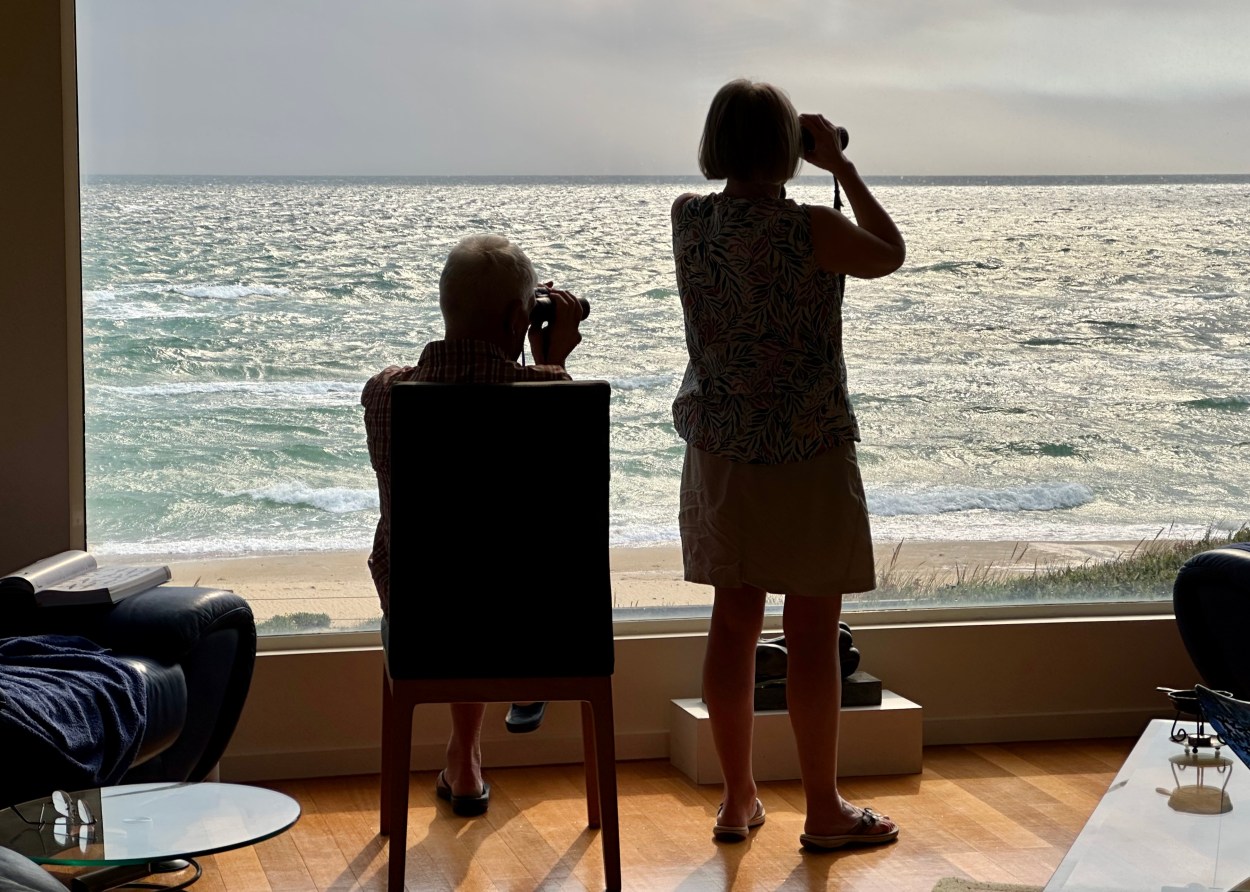
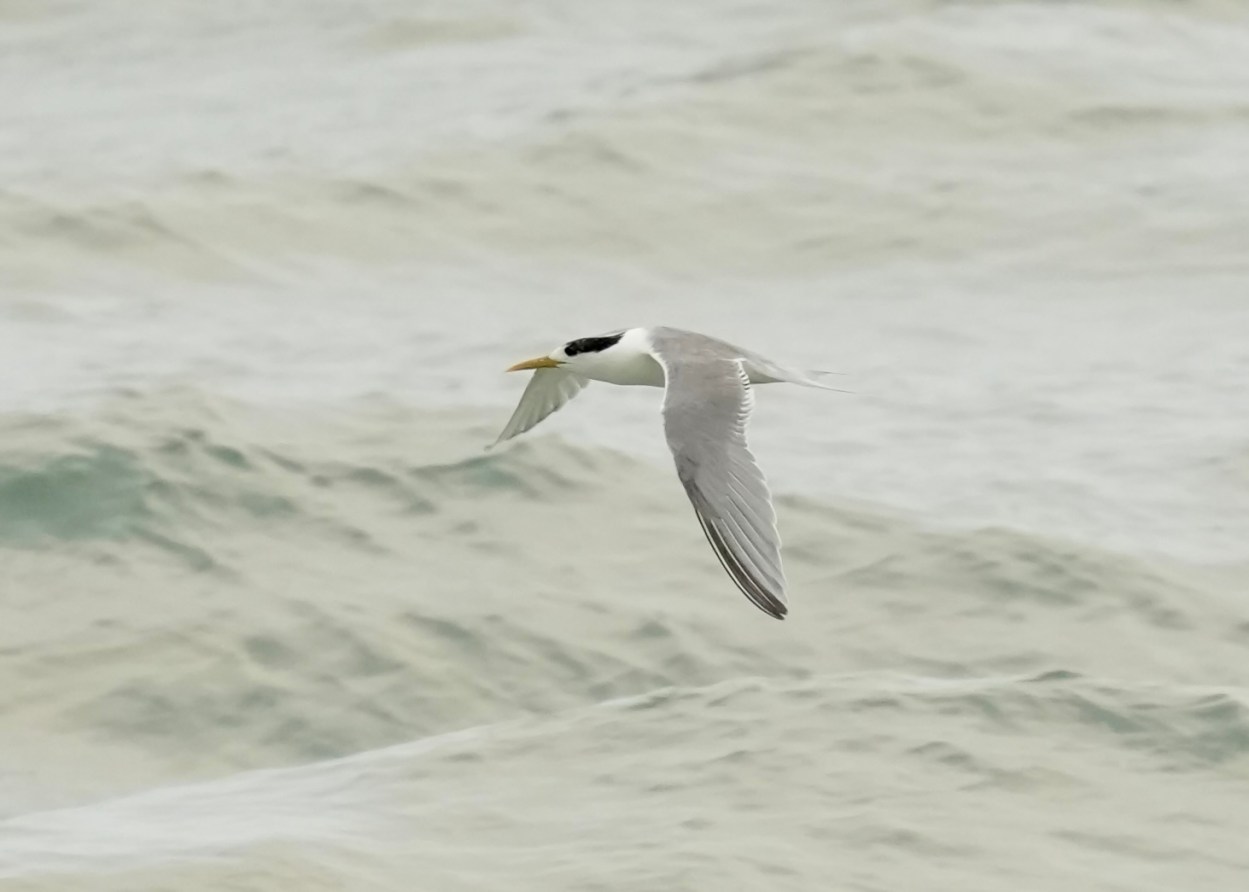
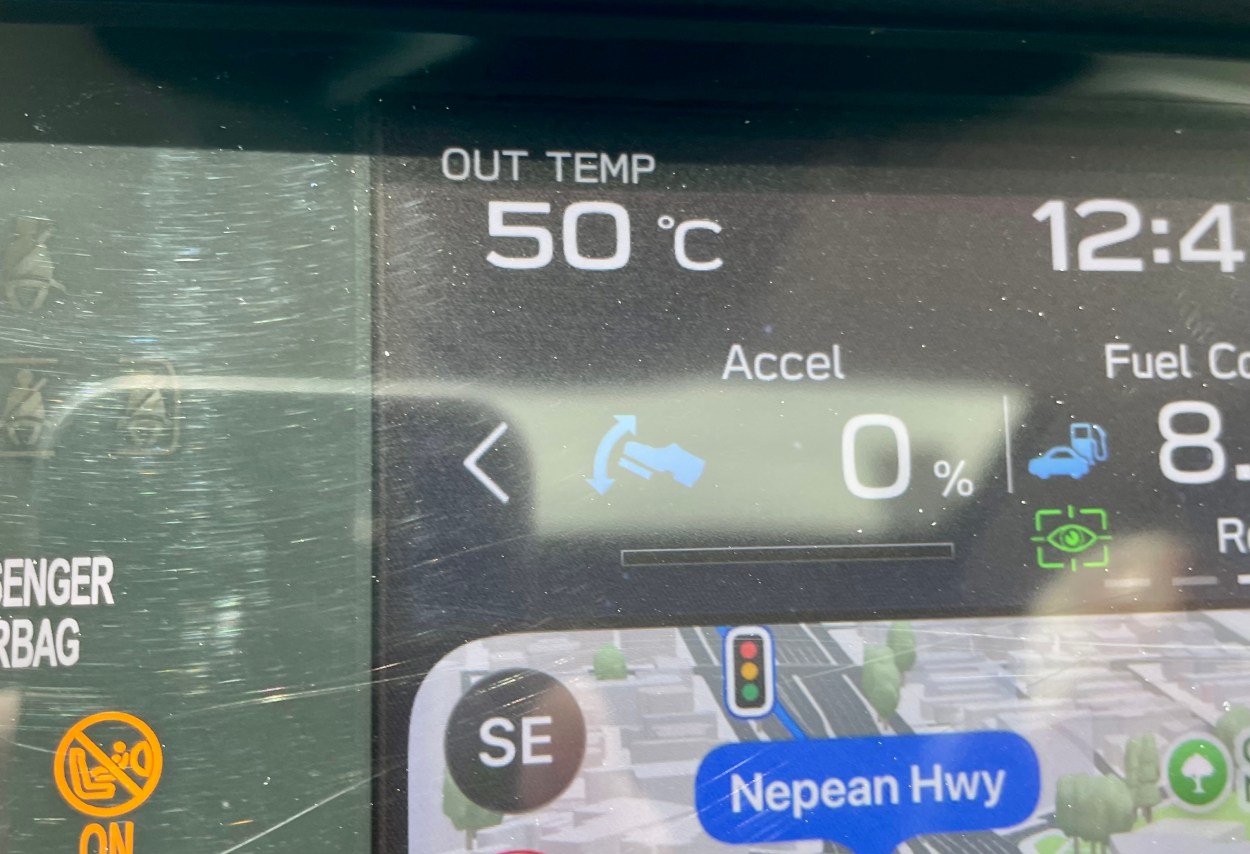
We finally arrived at Rob & Gi’s place in Melbourne at lunch-time yesterday (Friday) having set off from home in Cromer two days earlier. A long train journey followed by a four hour checking-in and two flights, including a six hour lay-over at Singapore, and we made it.. well almost! We were just heading for the exit at Melbourne airport when I realised I’d lost something – my wallet. Fortunately during the packing process I’d replaced the battery in my Apple tag so, via the airport WiFi, I was able to see it still sitting on the plane. It was quickly retrieved by very friendly and efficient Qantas staff. By the time we eventually got in the car the heat-wave was peaking – the outside thermometer reading 50 degrees on the drive home. A leisurely afternoon & evening was spent catching-up and watching the birds in the bay, including: Australasian Gannet, Short-tailed Shearwater, Crested Tern and the ubiquitous Silver Gull. The evening concluded with a spectacular sound & light show thunderstorm. Although this is strictly a family holiday the birding starts in earnest today!
Crested Tern patrolling the foreshoreThe car thermometer reaches 50 degrees on the way from the airport
Night time view from our La Pena patio, across Tarifa town to Morocco
Regular readers of this blog will remember that at about this time last year we were heading off to Spain for our traditional week watching autumn migration in Andalusia. That was before I was turned back from boarding the aircraft because of the ‘ten year rule’. In my naivety I’d assumed that with nearly eight months left to run on my passport I’d be free to travel, but that was before the EU bureaucrats got busy. Anyway to cut a long story short we ended up in Turkey – https://trevorontour.me/2024/08/28/unexpected-change-of-birding-destination/ Last week, equipped with my new passport, we ventured forth to take advantage of the accommodation booking of an apartment in the hills above La Pena, very kindly deferred by the owners from last year. The place was lovely, with stunning views across Tarifa and the Straits of Gibraltar to Morocco, and convenient for most of the regularly visited sites of Cadiz province. We’d already spent a couple of nights at our favourite rural hotel – ‘the Old Pig Farm’ – near Grazalema seeing plenty of birds that pass through this stunning mountain national park.
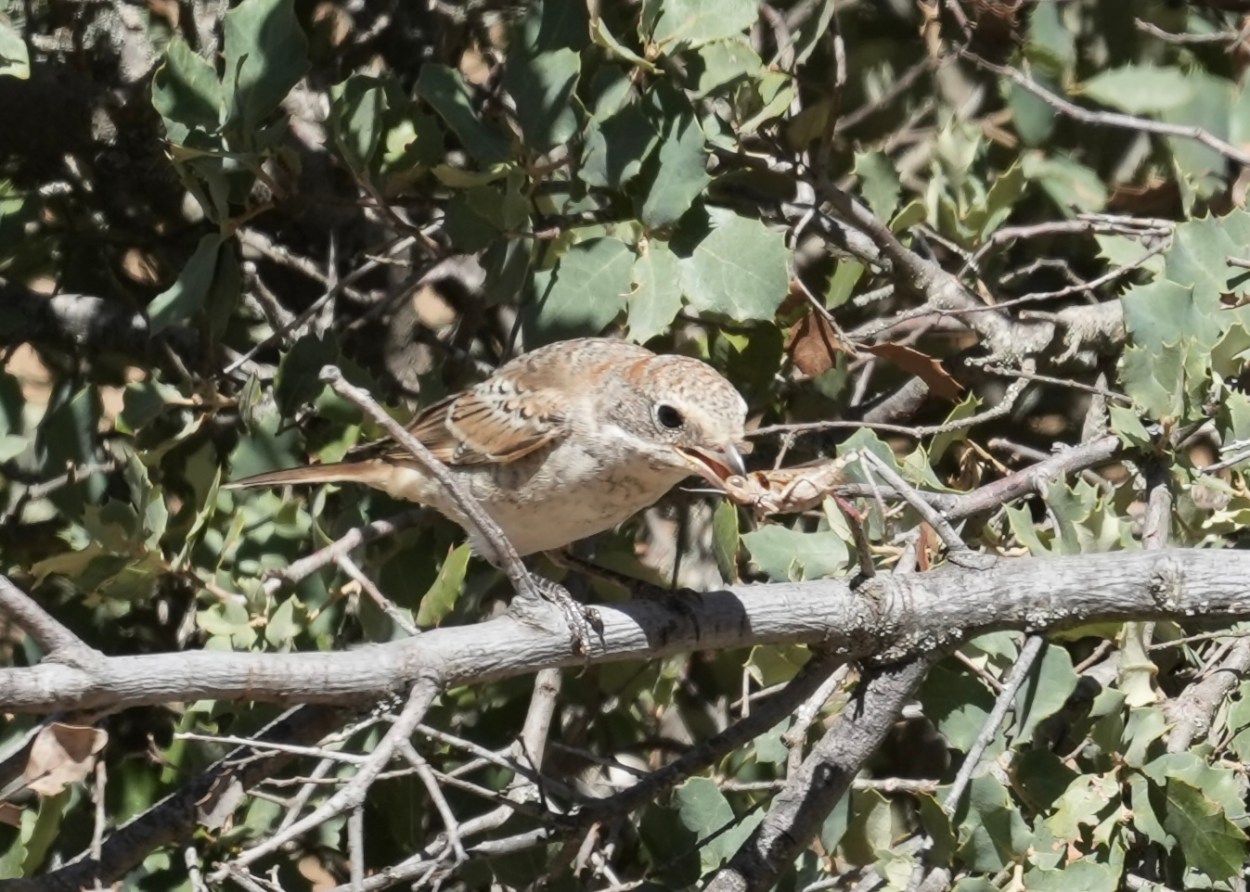
Our favourite accommodation in Grazalema – El HorcajoRock Sparrow enjoying a drink in Llanos de LibarAnd Woodchat Shrike enjoying a grasshopper snack at the same locationView of the track up Llanos de Libar
During the week we visited most of the regular birding sites in Cadiz Province including: La Janda, Bolonia & Barbate, Laguna Medina and sites along the Guadalquivir. Generally it was tough going with small migrants in short supply and the raptors we did see were usually very high up. We finished the week with a trip list of 146 – down on previous years – but we did manage to tick-off most of the ‘celebrity’ species including: Bald Ibis, Ruppell’s Vulture and Elegant Tern. We concluded our stay with a bit of local tourism enjoying the spectacle that is the festival of Romeria Virgin de la Luz.
Bald Ibis from the local reintroduction – never easy to track down but this pair were by the road to TarifaWe had to wait a couple of hours at Barbate before the Elegant Tern finally put in an appearanceAnother wait – this time for the Ruppell’s Vulture to decide to leave it’s cliff-side roost for a fly aroundRaptor passage got better as the week went on – mostly Honey Buzzard & Booted Eagle– mixed with a few White Stork – 530 in this flock (spot the lone Spoonbill!)The arrival of the Virgin through the old town gate – four hours after leaving her mountain sanctuary Accompanied by hundreds of Vaquero, dressed in their Sunday best
Another great week in Andalusia. After more than 25 years of visiting this southern province I’m still excited by the birdlife, scenery and culture.
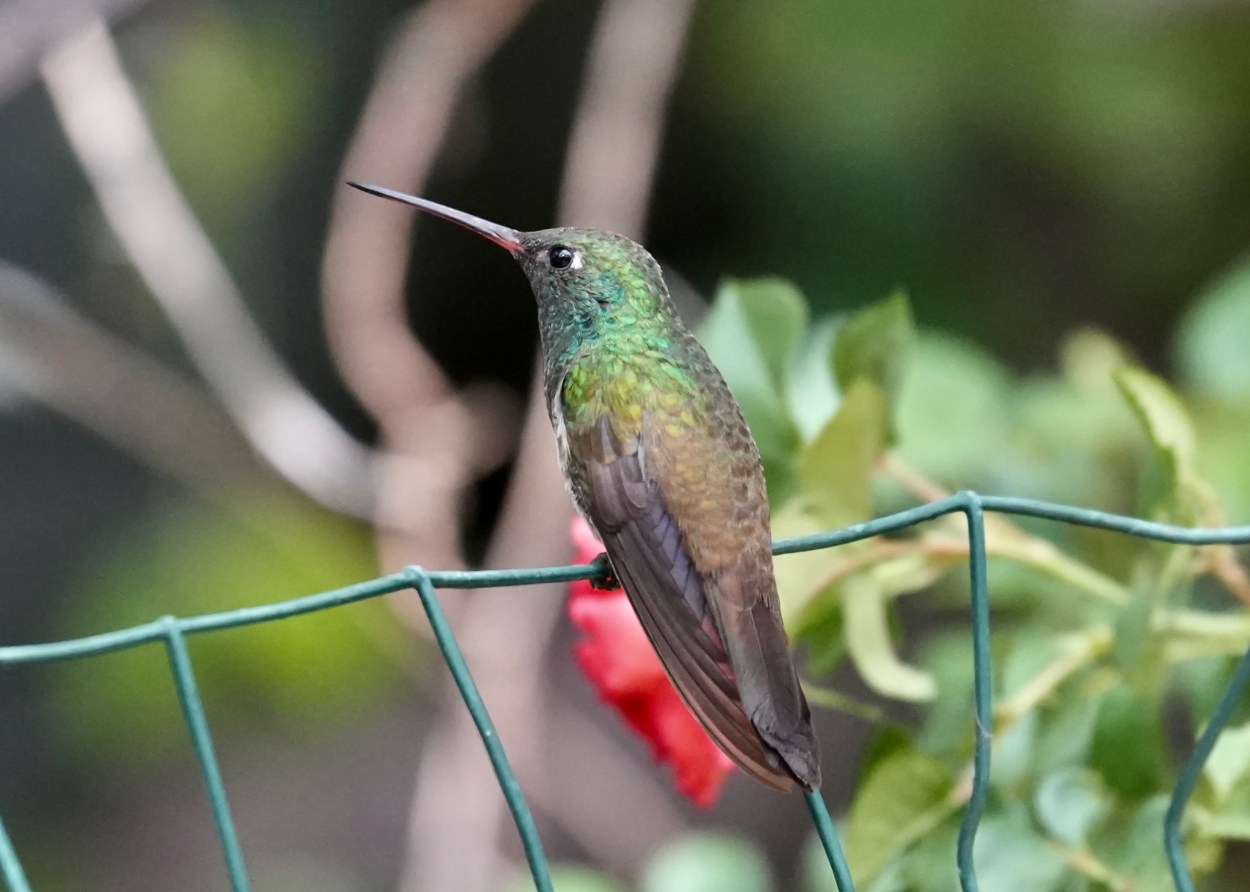
Berylline Hummingbird – one of a dozen new birds on our recent Tex-Az trip
We arrived back at Heathrow early yesterday morning and were home by noon. After unpacking and sorting out the things that happen when you are away for a month we finally turned in at 9.00pm. We awoke this morning at 10.00! Looking back over our GABRaT lV / Neil’s Big Birthday Bash / Tex-Az trip it turned out pretty well. Despite a very average Spring migration along the coast (universal agreement from those birders we talked to) caused by continuous gentle south-easterlies and a lack of bad weather to ground migrants we did see a lot of good birds – our provisional final tally of 373 far exceeding our pre-trip target and, after week one on the Gulf coast, our real-time expectations. After our early success of twitching the Siberian (Amur) Stonechat at Anahuac on day three we did miss a few ‘sitters’ but still managed to add a dozen new birds to our all time USA list: Siberian Stonechat, Berylline & Costa’s Hummingbird, Botteri’s, Five-stripped & Rufous-winged Sparrows, White-rumped Sandpiper (mad that I’d see a good few in the UK before I finally catch-up with them in America!) Whiskered Screech Owl, Sulphur-bellied & Dusky-capped Flycatchers, Montezuma Quail (only heard previously) and the comparatively recent split of Chihuahuan Meadowlark. I’ll take that…
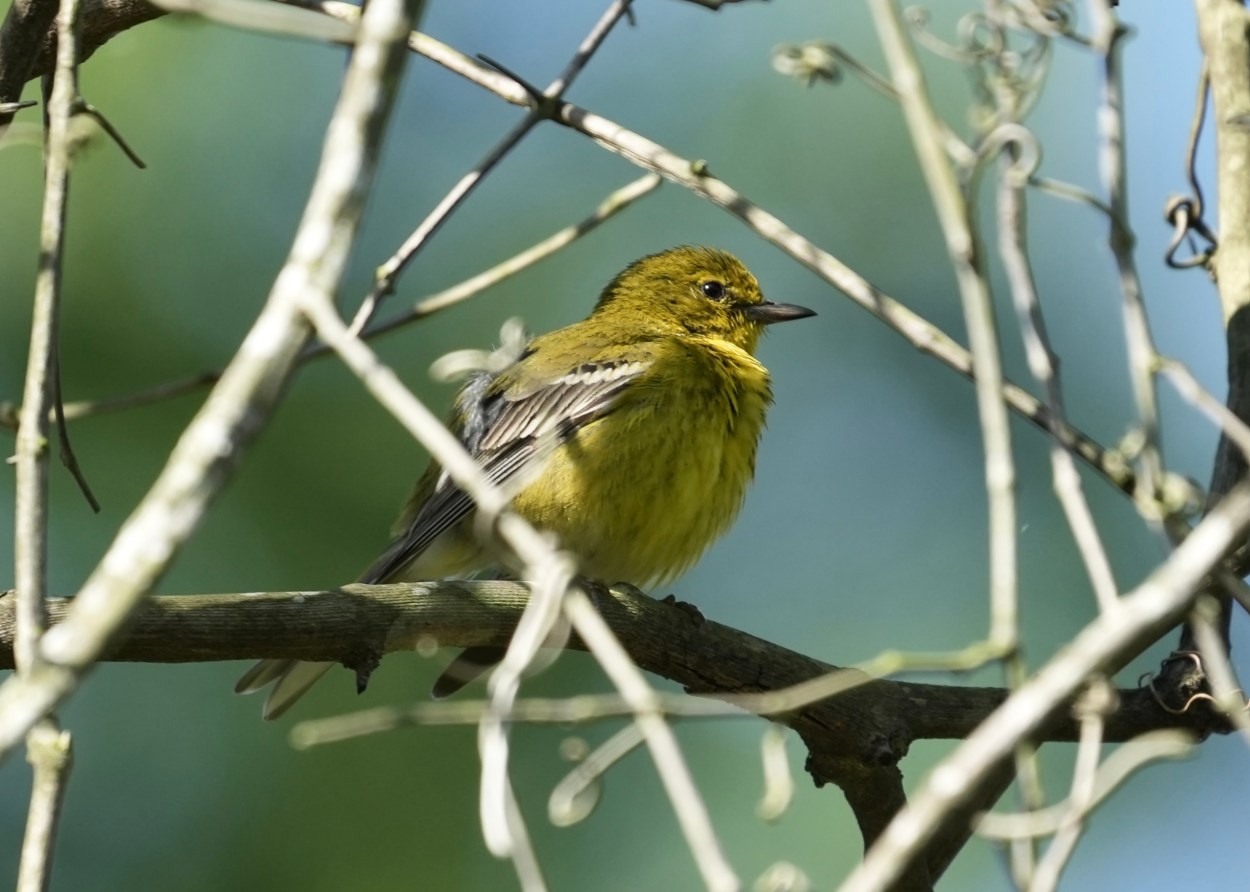
Pine Warbler – seen in the carpark of W.G. Jones State Forest – first of six trip ticks of the day
WG scores a magnificent six! We’re sitting in departures at Houston International having stopped off on the way from our hotel to do a spot of last minute birding. We called in at W.G. Jones State Forest reserve with one very particular target in mind – Red-cockaded Woodpecker – a rare ‘pecker with a patchy distribution across the south-eastern states. Pine Warbler were seen immediately on arrival in the carpark and then again on the woodland trails. Our first tick of the day – swiftly followed by Eastern Bluebird. Woodpeckers starting to put in an appearance – first Red-bellied, then Red-headed, followed by Pileated, the latter two being trip ticks. Brown-headed Nuthatch was seen high up in the pine trees – another trip tick. We’d returned from our trail walk still searching for our target bird when Nicola helpfully bumped into a member of staff on her way to the loo. He provided invaluable information about where we might look. The Red-cockade population is in trouble and they’re doing everything they can to halt the population decline, including embedding nesting-boxes in live trees and managing a release programme of young birds brought in from neighbouring states. One of the fascinating attributes of this bird is the trick of drilling holes in trees below the nesting cavity to create a ring of sap which protects against snakes climbing up the tree to steal the eggs! All we needed to do was find the trees with nest-boxes and sap running down the trunk! A stake-out of suitable trees quickly produced the goods – Jane seeing a bird fly in and begin drumming on a nearby tree. Target bird in the bag. Our 373’rd species of the trip and our sixth of the day. Another great GABRaT trip – great birds, great company and a host of memories… See you next time.
Pileated Woodpecker – the biggest of the three new ‘peckersseen during our morning sessionThe super-scarce Red-cockaded Woodpecker – our last bird of our amazing Tex-Az birding experience
Hudsonian Godwit, at Katy rice fields – one of several new species added to our trip list today
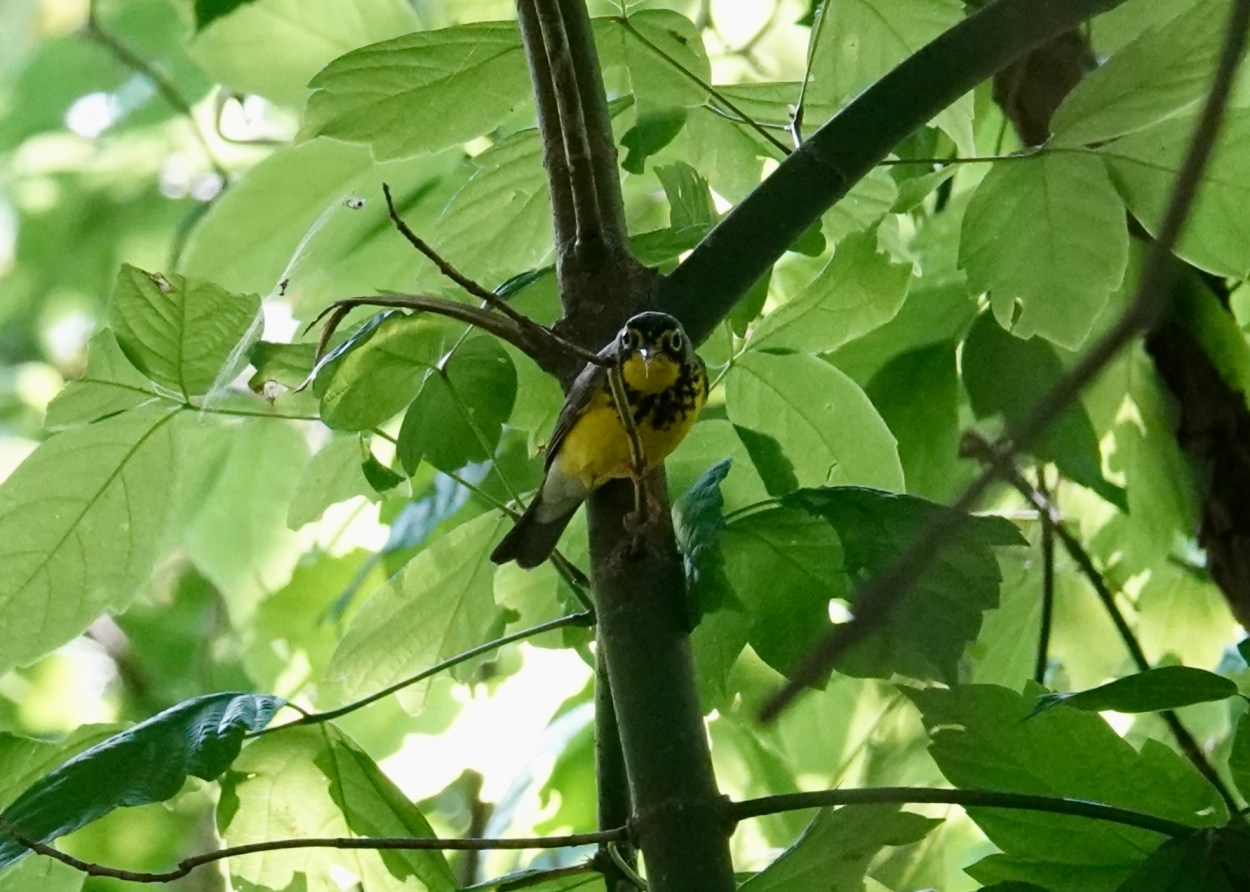
Today was our last full days birding of the trip. We started our more leisurely day back at the Attwater reserve, driving the loop a couple of times and walking the riparian woodland trail. No ‘chickens’ but we did manage to add a couple more ticks to the list – Red-bellied Woodpecker and Red-shouldered Hawk – before returning to the motel for a late breakfast. Next stop was the rice fields around Katy, as we slowly headed into the western suburbs of Houston. We had to drive around a bit to find the wettest spots but it was worth it in the end – a nice variety of waders including: a dozen White-rumped Sandpiper (they’ve become ‘London buses’), a flock of 40 Stilt Sandpiper – not seen since leaving the Gulf coast and, best of all, eight Hudsonian Godwit – another trip tick. We finished our day in another excellent birding spot, Cullinan Park Conservancy. The property was originally part of Stephen F. Austin’s ‘Old Three Hundred’ land grants and includes bottomland forests and forested wetlands – with an extensive and rich bird list. The first species seen was the rather pre-historic-looking Limpkin. We also caught up with Downy Woodpecker and Great Crested Flycatcher – more late additions to the list – before our final good bird of the day, a spanking Canada Warbler, which Neil found near the water drip. The least said about our celebratory meal out at Cracker Barrel – a nostalgic return for Nicola – the better. We ordered four meals – over an hour later only three had arrived (we never did get the fourth) – and I had to go next door to get a takeaway burger. Should be renamed Crapper Barrel! Not enough to take the edge off a great last day’s birding though – taking our trip total to 367, with the possibility of one or two more as we bird our way to the airport.
The rather pre-historic-looking Limpkin, seen on arrival at Cullinan Park – an excellent urban reserveNot sure why it’s taken us so long to connect with Great Crested Flycatcher – ‘the big guy’One of two new woodpeckers for the list – this is Red-belliedFinal new bird for the day – an excellent find by Neil – a Canada Warbler. Photo courtesy of Jane
Better views of yesterdays addition to our US list – White-rumped Sandpiper at the Junction poo ponds
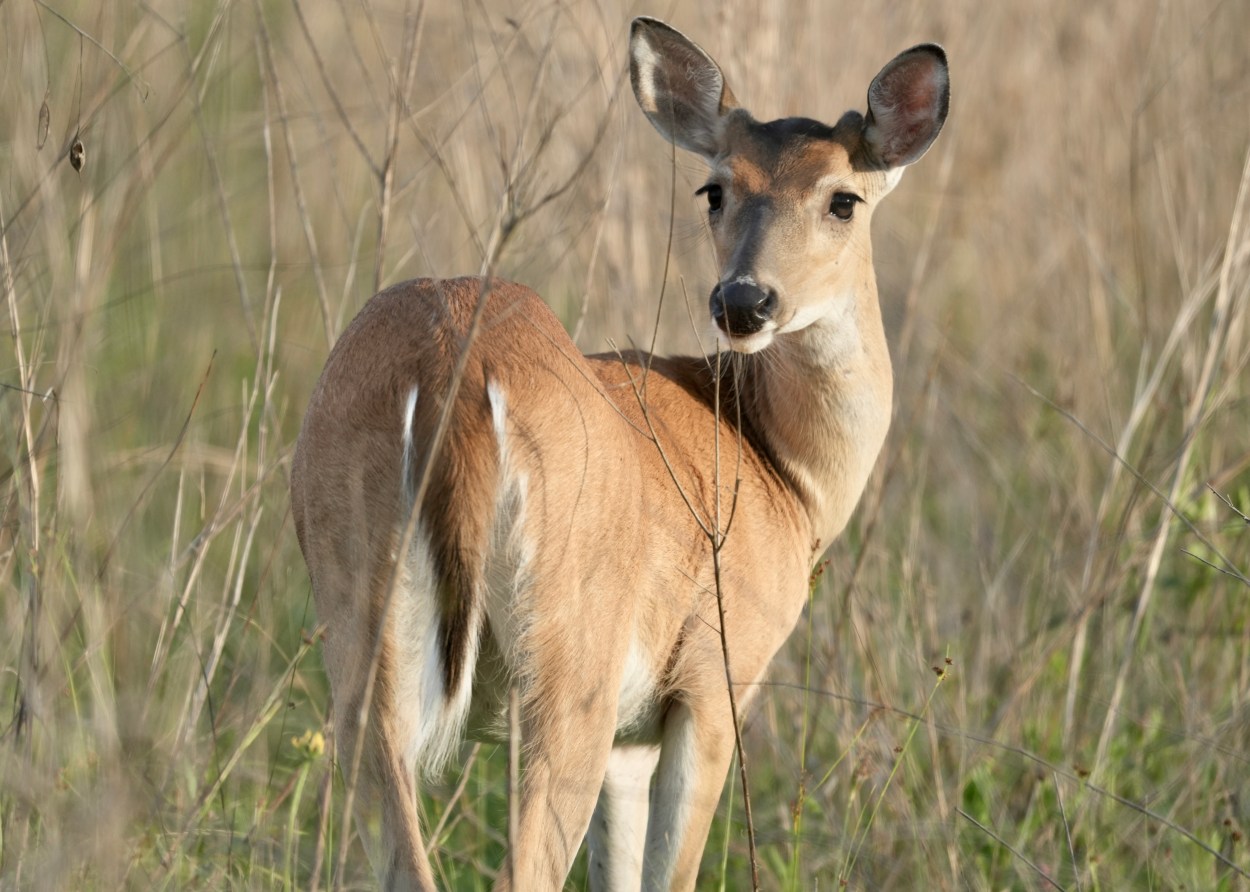
It was Global Birding Big Day today so we had a tricky balance to strike between sites visited and time spent on the road, travelling another 250 miles east towards Houston. We started at South Llano at dawn seeing most of the stuff we’d seen the previous afternoon, but we did managed to see our two target birds – Black-capped Vireo (again) and Golden-cheeked Warbler, a specialist Edwards Plateau breeder. The latter a list addition – yet again preventing a ‘dot day’. It was then back to our motel to pack up before heading west, via the Junction poo ponds. A nice selection of waders there but fewer ducks and no Black Tern from the previous day. We broke our journey at an urban park in San Antonio – Crescent Bend Nature Park – where we had a reasonable selection of birds despite the time of day. We hadn’t reckoned on an hours delay to check in to our hotel at Sealy – some dispute between them and Booking.com – so by the time we got out again we could only managed a couple of hours at our final spot of the day, the Attwater Prairie Chicken National Wildlife Refuge. A few additions to the Global Birding day list – total over 80 species – but alas no chickens. Not that we were really expecting to see these super rare birds at this time of the year – but you’ve got to try! It was dark when we finally got back to the hotel.
Grab shot of the aptly named Golden-cheeked Warbler in South LlanoThe ethics committee is still out on Muscovy Duck, seen at Crescent Bend – it looked pretty wild to meSome sort of deer – seen at Attwater at dusk – bringing our Global Birding Big Day to a close
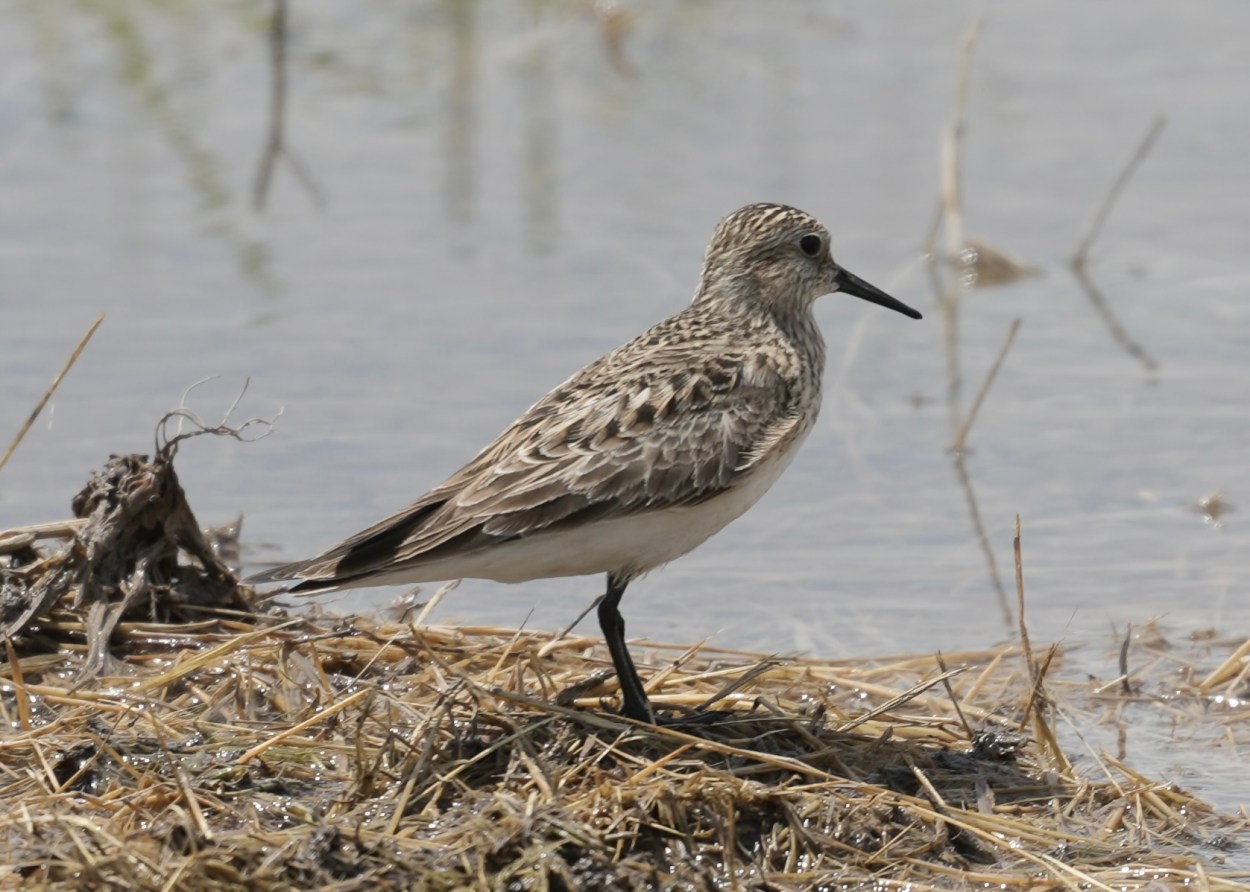
Baird’s Sandpiper prevents it being a ‘dot day’. Remarkably we find a second bird on a puddle just behind our motel in Junction!
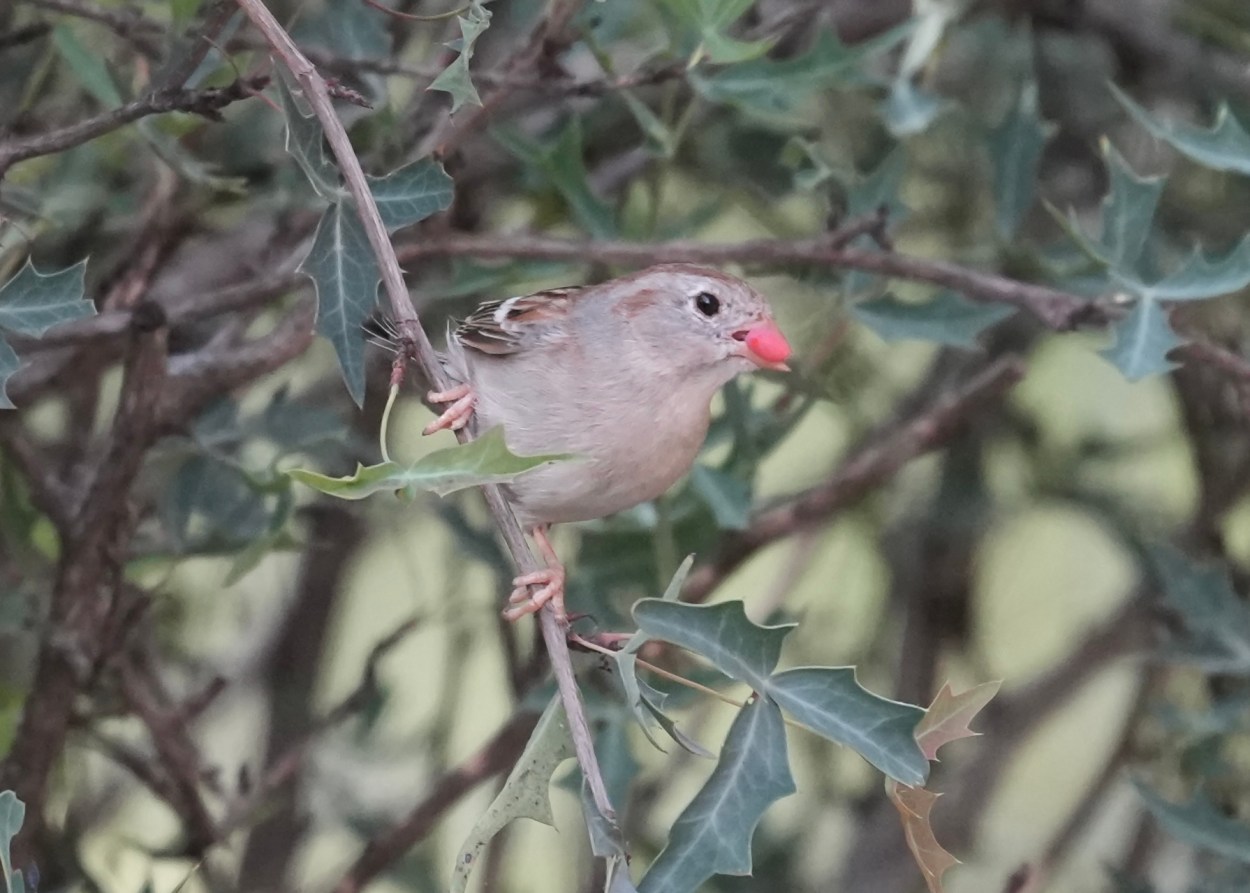
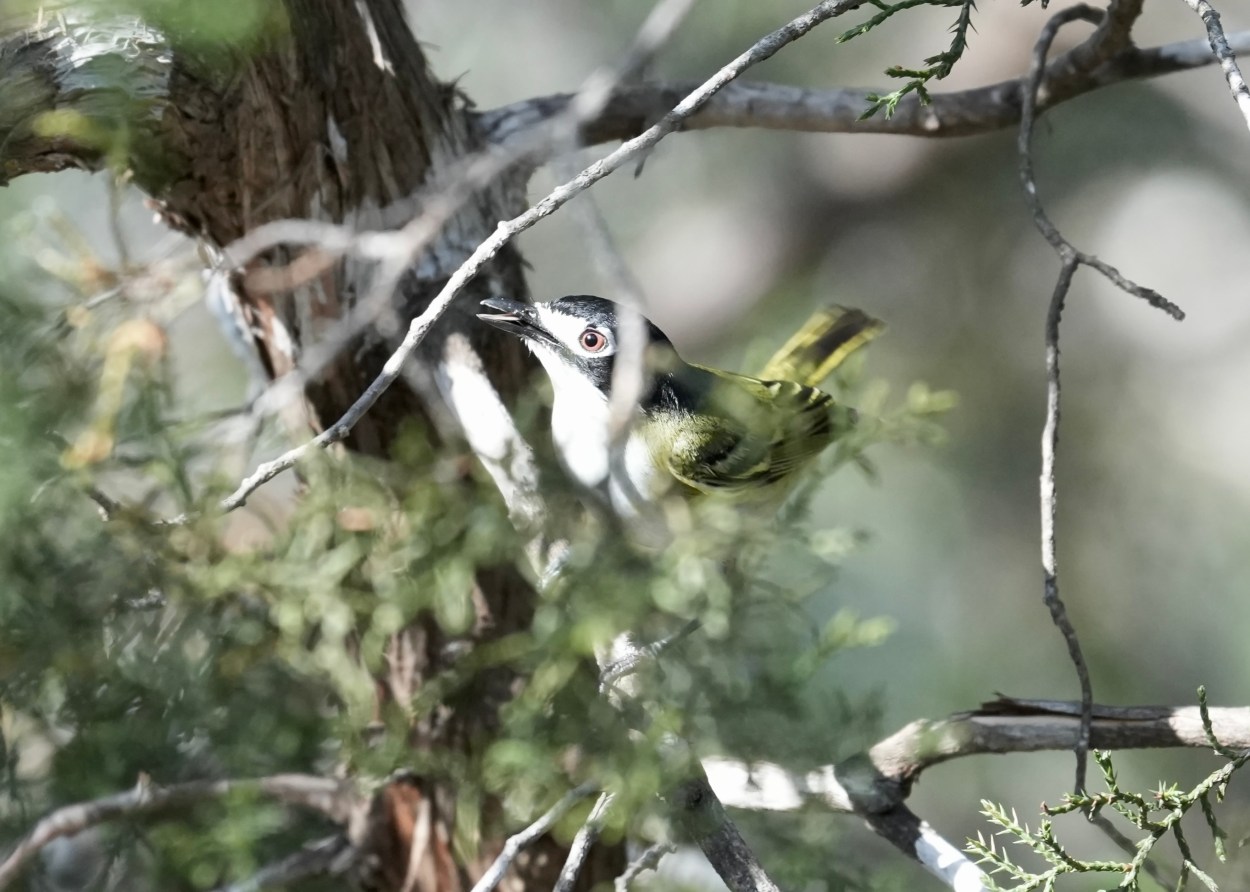
We’ve traveled over four hundred miles further east to Junction, at the centre of the Edwards Plateau. After an early start we broke our journey at Fort Stockton and had an early lunch at the water treatment settling ponds. Our target bird was Baird’s Sandpiper – one had been reported the previous day. A wrong turn on the edge of town took us to a flooded pit where practically the only bird was the Baird’s – temporarily relocated from the nearby poo pond. Not a dot day and a much-needed tick – our 350th of the trip! You need a bit of luck every once in awhile. We continued to Junction, our overnight stop, and a late afternoon session at South Llano River State Park. Here there were two crucial target birds and a small cast of potential additional ticks. We signed in and did a tour of the four feeding areas / bird hides. Field Sparrow and Carolina Chickadee were added to the list as we made our way around. A guy at the last hide told us he’d had a Black-capped Vireo at the first hide, just after we’d left. We returned for another visit to be rewarded by brief but adequate views of this dazzling bird. Reviewing photos of our earlier visit to the Junction poo ponds, on the edge of town, confirmed our initial identification of White-rumped Sandpiper – not only another trip tick but an addition to our US list! Five news birds for the day.
Another new sandpiper – this time White-rumped – at the Junction poo ponds. A US tick for usField Sparrow – one of four trip ticks at South Llano River SP in the afternoonRecord shot of the star bird – Black-capped Vireo
Bendire’s Thrasher– at the historic cemetery in Willcox – another Arizona / New Mexico speciality
Today was a travelling day, from our base in Green Valley to our overnight stop at El Paso, a distance of around 330 miles – most of which was across the deserts of New Mexico. We did manage one birding stop, at the poo ponds at Willcox, which provided three new birds for the trip: Red-necked Phalarope, Cinnamon Teal and Bendire’s Thrasher. After arriving at our hotel in the late afternoon we had an abortive visit to a site close to the Rio Grande and the Mexican border but the access had been closed. We are now just one species short of our trip target, but still a long way to get back to Houston – 750 miles. Our route takes us away from the desert and up onto the Edwards Plateau, with the prospect of some very interesting birding still to come.
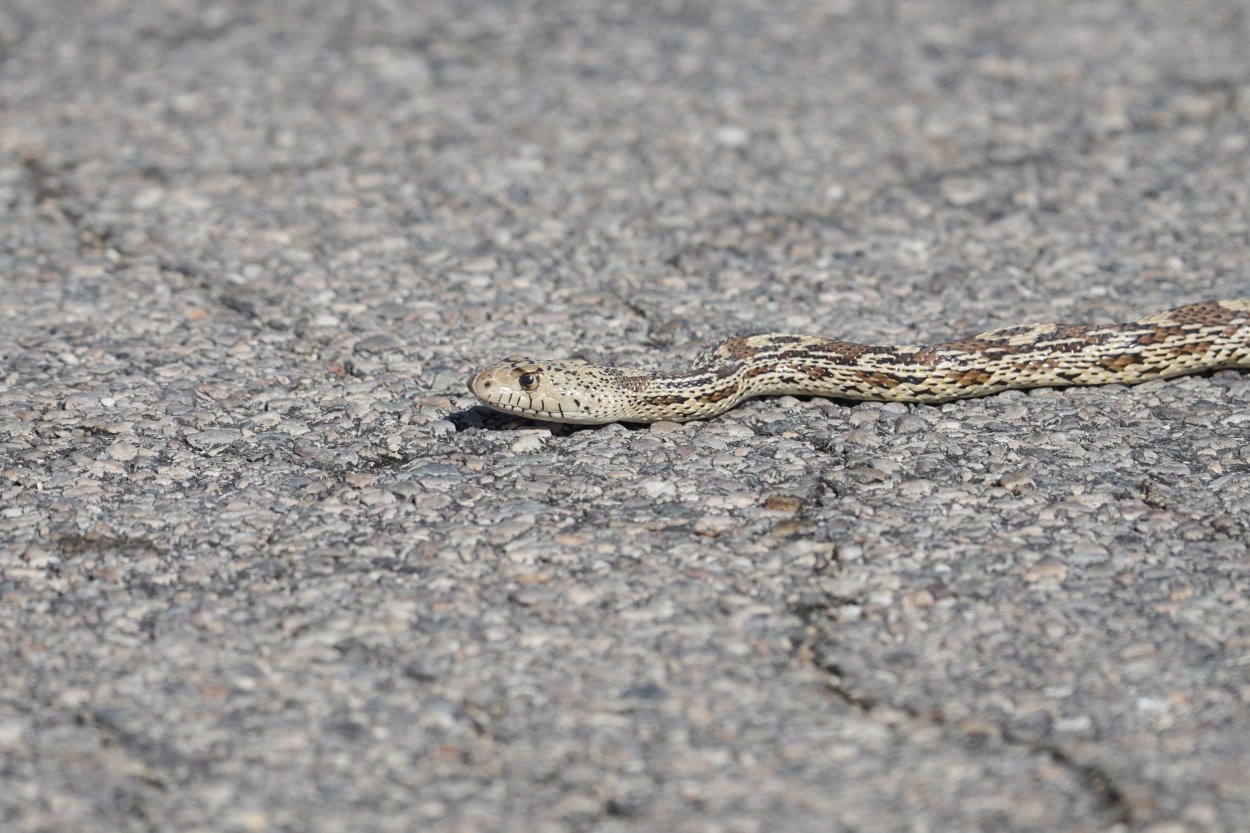
A rather cool snake on the track to the poo ponds – apparently a King Snake – non-venomous Another look at Chihuahuan Meadowlark
Black-tailed Gnatcatcher – one of our morning target species
Our last day in southern Arizona before we head east through the Texas highlands, Houston and home. We spent the day around Green Valley starting early in Montosa Canyon, following up on a recent sighting of Five-stripped Sparrow – another of those species which just has a toehold in south-east Arizona. We arrived at ‘Km 1’ and set ourselves up, slowly scanning the surrounding rocky hillsides. A distant Rock Wren, calling from a pinnacle high up on the slopes, and a few bush birds in the closer scrub. Then a stocky bird flew into a dead bush on the opposite side of the track – a dark sparrow with an interesting head pattern. It dropped to the ground just a few feet in front of us before flying deeper into cover. Alas too close and quick for a photo. Our target bird preventing a dot day. After a late breakfast we set off to explore Box Canyon – a new location for us. Again, another nice selection of bush birds including the target of Black-tailed Gnatcatcher and, around the dam another, more obliging Thick-billed Kingbird. We headed for lunch and an afternoon siesta but not before dropping in on the local water treatment plant. Here the settling ponds produced another couple of trip ticks – Green-winged Teal and American Wigeon, in amongst the Coot and Ruddy Duck. A late afternoon session in Madera Canyon allowed us to finally get Broad-tailed Hummingbird – a grip-back from Neil – who’d seen one earlier. The evening nightbird stake-outs produced much the same as the previous night but we did manage to see Whiskered Screech Owl in the hole and hear Mexican Whip-poor-will. We now need just a handful of species to meet our trip target of 350 – it could be touch and go.
Better views of Thick-billed Kingbird – another south Arizona specialityA view up the incredible Madera Canyon from the Procter Road trial Our ‘grip-back’ Broad-tailed Hummingbirdon the feeders at Santa Rita
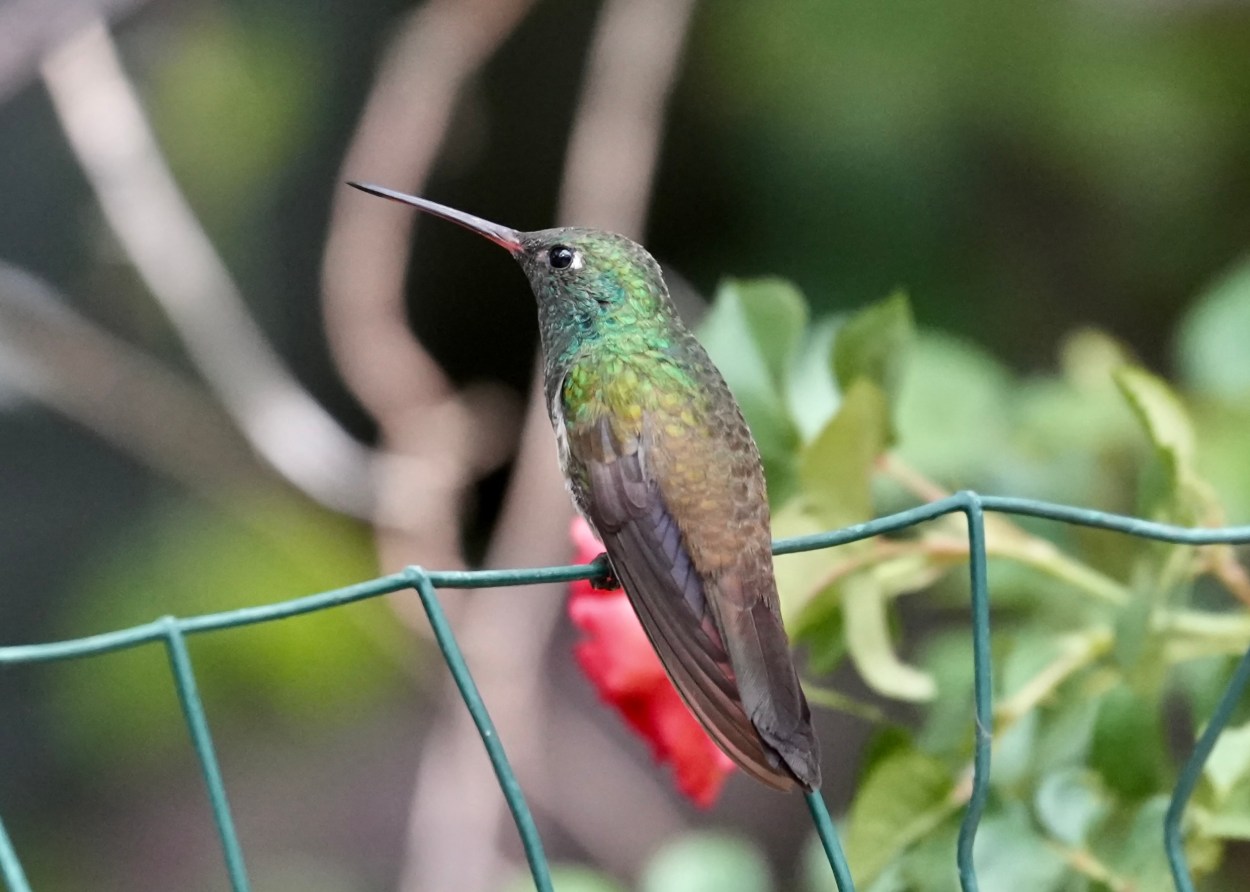
Berylline Hummingbird – a rare visitor from West Mexico – and a US tick
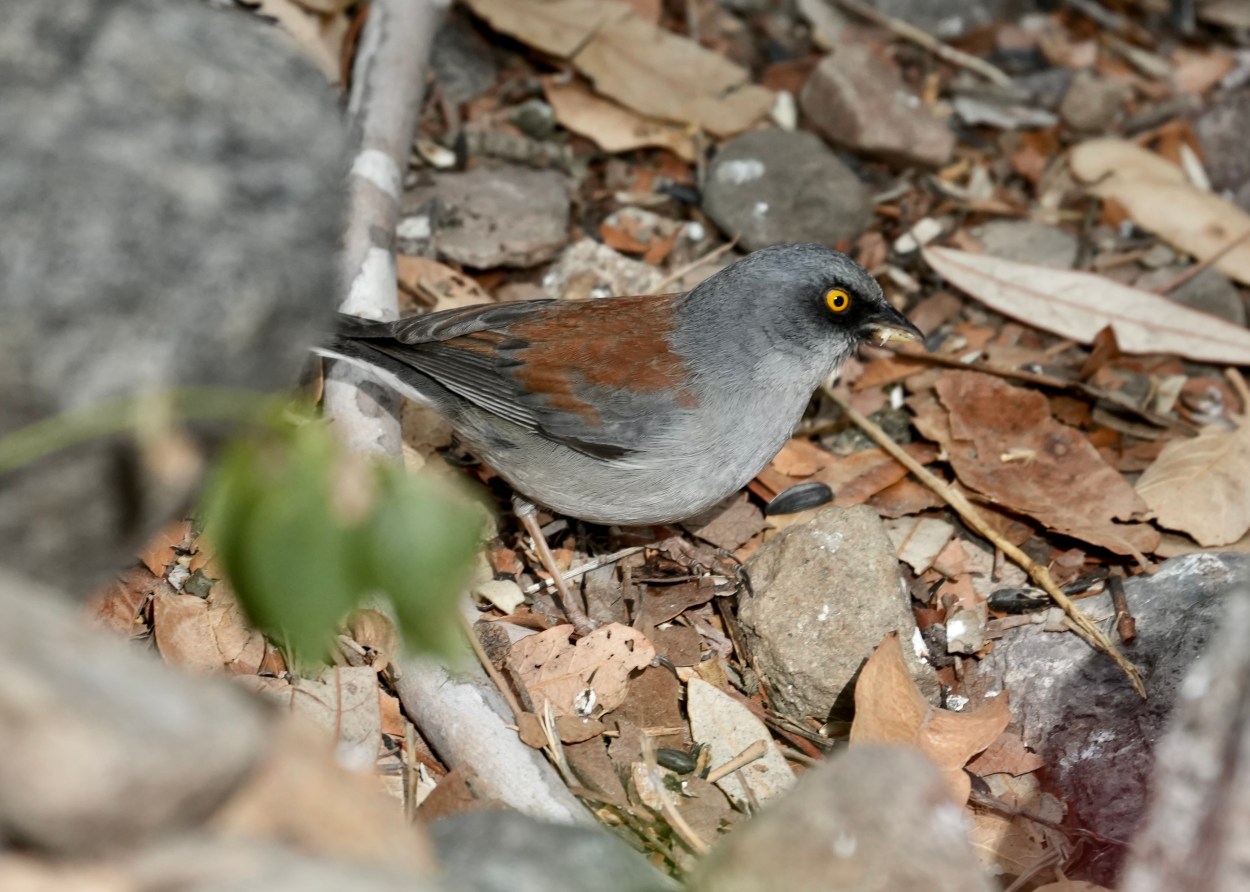
After more than three weeks of travelling we’ve reached the most westerly point on our Tex-Az birding trip itinerary. Green Valley is a convenient location for accessing the western canyons of Madera, Montosa and Box. Our day started at Paton – nothing new but some nice early morning birding anyway. We then drove through the outskirts of the border town of Nogales to reach a stretch of the Juan Bautista De Anza trail which, in the past, has provided some special birds – but not on this occasion. It wasn’t until Amado water treatment plant that we added our first tick of the day – a lone Ring-billed Duck, amidst the flock of Black-bellied whistlers. After a brief recce of Montosa Canyon – a new location for us, we had lunch and checked in at the Comfort Inn, our base for the next couple of nights. We then headed out to Madera Canyon for an afternoon and evening birding session. One of our target birds was Berylline Hummingbird, which had been reported from Madera Kubo B&B. We arrived just as the bird was spotted visiting the feeders. It obligingly hung about for us to obtain photos. A US tick for us. We also added Yellow-eyed Junco as a trip tick. We did a bit more general birding – killing time before dusk. At the top carpark we heard Whiskered Screech Owl calling and saw our first Lesser Nighthawk emerging. Later, at the Amphitheatre, we added Western Screech Owl and Northern Pygmy Owl. Our total for the trip is now around 340 – just ten more species to reach our ambitious trip target.
Yellow-eyed Junco another trip tick at Madera Kubo B&BOur day-time birding was book-ended by the delightful Hermit Warbler – seen at Paton and Madera













 Trevor On Tour