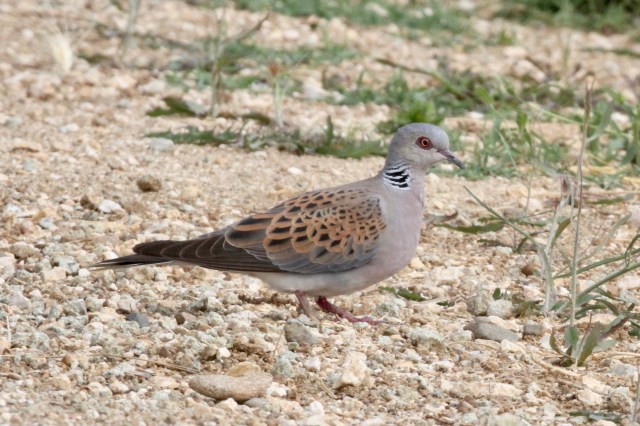
Splendid Resplendent!

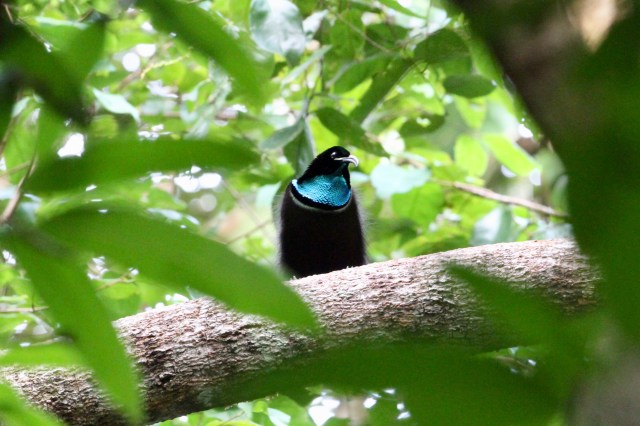
I couldn’t resist the temptation, whilst the WiFi lasts out, to post todays top bird – Resplendent Quetzal! A pair, located on farmland 10k from the lodge, with the aid of Michael, our local guide. Words cannot capture the sheer splendour of the male. An overdue Costa Rica ‘tick’, after Bob and I missed out on our 2011 visit.


Costa Rica Update

We’ve already reached the half-way point in our Costa Rica adventure but, unfortunately, the WiFi hasn’t been good enough to post any news until now. We’re currently staying at the excellent Paraiso Quetzal Lodge, along Route 2 mountain road, at kilometre 70. The birding has been fabulous so far and today we’re off in pursuit of the holy grail of Costa Rican birding –  Resplendent Quetzal!

We left Gatwick last Thursday, having stayed over-night at the very convenient Bloc Hotel, situated inside the Terminal Two building. We flew direct with British Airways and, having arrived at San Jose and collected our 4WD from Thrifty, made our way to our first stop at Posada Andrea Christina Bed & Breakfast in Sarapiqui, close to the Salverde National Park. This is an excellent location for a general introduction to birding in Costa Rica, as well as home to the threatened Great Green Macaw. Alex, the proprietor, is an excellent and knowledgable host – breakfast on the terrace, over-looking the bird-feeders, with Three-toed Sloth hanging in the trees above, a memorable experience. Chalet Orosi, in the town of the same name, was our next destination, with the fabulous Tapanti National Park on the doorstep. The chalet providing a very homely base – Silvia an attentive hostess, with plenty of bird-life in the gardens to keep you amused. On our first day around the park it rained non-stop but we still managed to see plenty of birds during a prolonged coffee/lunch-stop at Kiri Lodge. Next week we head further south to the Panama border and then back north along the Pacific coast.

Here’s just a taste of Costa Rican birding, but more photos will have to wait until we’re back in the UK.

Slaty-tailed Trogon 


Broadland Bounty

img_2820

Adult Iceland, accompanied by a couple of Mediterranean Gull – Mautby 

I took a short trip outside the Bird Club boundary yesterday afternoon, in an attempt to add a couple of Norfolk year ticks to my list. At Mautby the Hooded Crow was elusive (luckily I had seen it well a few weeks previous) but the adult Iceland Gull did show itself eventually, albeit rather briefly. At Filby Broad the Red-necked Grebe was just about as far away as it was possible to get. I got equally distant views of a two Cranes at Brograve Levels, but at least they’re a pretty big target to search for. Walcot produced the usual collection of winter gulls, including a couple of colour-ringed individuals.

Colour-ringed Herring Gull, Walcot

img_2849

Dusky Maiden

img_2753

Female Dusky Thrush, Derbyshire – first 2017 tick

The first winter female Dusky Thrush at Beeley, Derbyshire, was my first British ‘tick’ of 2017 today – a long over-due twitch at that. It’s been one of those birds that, when it arrived, I couldn’t spare the time to go for it, but then as the weeks have gone by and it was still being reported, I worried that it would do a flit moments before I got there! Anyway I did decide to go and it, obligingly, decided to hang around. Giving reasonable but rather distant views. A lovely bird all the same, as was the superb ‘bonus bird’, in the shape of an immature White-billed Diver, on the River Witham, Lincolnshire, on the way home!

Immature White-billed Diver, Lincolnshire

img_2773

Chile 2016 – Postscript

Mention Chile to any self-respecting birder and it will immediately conjure up images of that most wonderful and mythical species Diademed Sandpiper-Plover. Although relatively well distributed along the length of the Andes they are a ‘near threatened’ species, which lives and breeds in inaccessible Andean bogs above 6000ft – the wintering location of the southern breeding population is still an ornithological mystery. Although it is a ‘must see’ species for any visiting birder, our 2016 itinerary prevented us visiting the most well-known and accessible site at El Yeso ( still by no means ‘a walk in the park’ expedition, believe me!) so it was not a bird ‘on our radar’. However, on one of our visits to the altiplano, I saw a piece of habitat which looked potentially suitable for this species and we stopped to have a look. It wasn’t long before we’d seen a bird fly up from the bog and land, close by, on the rocky hillside. On obtaining reasonable views the identification was confirmed – Diademed Sandpiper Plover!! Although relatively confiding, this species is potentially vulnerable to disturbance – we left the site immediately and the location therefore will remain ‘undisclosed’.

The mythical, the sensational  – Diademed Sandpiper-Plover

img_0150

Patagonia and Tierra del Fuego – Chile 2016

img_1529

Darwin’s Rhea, one of the few birds which thrive on the Patagonian grasslands around the Magellan Straits

Having said our farewells to Joe & Gabi in Santiago, we caught the early flight down to Punta Arenas, picked up our hire car, and commenced the long journey through Patagonia steppe, following the shores of the Magellan Straits, to catch the ferry at Punta Delgado, bound for Tierra del Fuego. Twice before I’d been this close to reaching that ‘mythical isle’ but failed to make it both times. On the first occasion we ran out of time on a family holiday, having already visited the stunning national park of Torres del Paine – it’s easy to underestimate the travelling times and distances in this part of the world. On the second occasion, we were actually on the Argentine side – staying at Ushuaia, but on the day we were due to make the trip north, the mountain pass was blocked with snow – follow this link for the full story. This then was third time lucky!

Boat on the shores of the Magellan Straits, looking towards Tierra del Fuego (photo courtesy of Jane Williams)

dsc03261

Not surprisingly, there are very few birds in the wind-swept featureless grassland of Patagonia, but what there is, is truly stunning. On the approach road to Pali-Aike, a small volcanic national park on the Argentine border, we found a handful of the regions specialities – including Black-throated Finch, Least Seedsnipe and Tawny-throated & Rufous-chested Dotterel. After a rather choppy crossing (we didn’t realise until sometime later that all the ferries to TdelF were cancelled shortly after ours, for 24 hours, due to bad weather conditions!) we made our way to Cerro Sombrero and our most expensive hotel of the trip – mostly a gas-workers dormitory with a few, slightly upgraded rooms for tourists. Still, pleasant and friendly enough, and in the right location for the following days excursion to find the King Penguin colony at Bahia Inutil. That evening was spent at the lovely Yendegaia House – where David Couve, our host, provided excellent birding information and advice, allowing us to track down the icon Magellanic Plover before nightfall. Our last day on Tierra del Fuego was spent on the long return drive back to the ferry and along the shores of the Magellan Straits to Punta Arenas, stopping at various locations on route. The following day we spent a couple of frustrating hours in the Magallanes Forest NP, near Punta Arenas, in a failed pursuit of Magellanic Woodpecker – oh well there is always another time, before flying back to Santiago in preparation for our return to the UK.
The vast, windswept, grasslands of Patagonia – home to very few birds! (photo courtesy of Neil Parker)

dsc09507

But what birds there are, are pretty special – including this Black-throated Finch

img_1595

or these Least Seedsnipe – little bigger than a sparrow!

img_1632

There are two Dotterel of the region, this is Rufous-chested

img_1792

and this one is Tawny-throated – struggling to stay upright in the fierce Patagonian winds

img_1690

Tierra del Fuego – Spanish for ‘Land of Fire’, so named because of the many bonfires lit by the indigenous peoples and observed by the early European settlers, is an archipelago, covering 18,500 sq miles, at the southern tip of South America. It consists of the main island – Isla Grande, shared between Argentina and Chile, together with the many smaller islands, south of the Beagle Channel, reaching about 55 deg latitude. The earliest known human settlement on Tierra del Fuego dates to around 8,000 B.C.. Europeans first explored the islands during Ferdinand Magellan’s expedition of 1520. Settlement by those of European descent and the great displacement of the native populations did not begin until the second half of the 19th century, at the height of the Patagonian sheep farming boom and the local gold rush. Following contact with Europeans, the native Selk’nam or Ona and the Yaghan – a nomadic, canoe-dwelling people, populations were greatly reduced, through unequal conflict and persecution, by infectious diseases to which the indigenous people had no immunity, and by mass transfer to the Salesian mission of Dawson Island.

Yaghan people, 1883

800px-ushuaia-yamana7

Julius Popper, during a manhunt of the Ona people. In the late 19th century estancieros and gold prospectors launched a campaign of extermination against the indigenous peoples popper_en_caceria

But, despite this despicable and tragic chapter in the history of global exploration, Tierra del Fuego remains a fascinating land, which still holds many avian treasures, including this beautiful and scarce Chocolate-vented Tyrant

img_2253

Black-faced Ibis

img_0730

and, Two-banded Plover

img_1821

One of our principal targets on TdelF was this species, King Penguin – seen at the only ‘mainland colony’ in South America. The population at Penguino Rey NP, has gradually increased over the past decade, is now approaching a hundred birds

img_1853

On our return journey around the Bahia Inutil, to Porvenir we encountered several Chilean Skua

img_1967

and these Southern Giant Petrel – identifiable by the greenish, not reddish, tips to their bills

img_2364

Having dropped off our bags at Yendegaia House and been given helpful directions by our host, we were off in pursuit of our next  target – this time the mythical Magellanic Plover, which has it’s main centre of population on Tierra del Fuego. It’s expertly camouflaged body being completely betrayed by its punk pink legs! Just a fantastic bird and the raison d’être for our visit

img_2068

The following day we retraced our steps back to Punta Arenas, collecting a few more species on the way. This was the range-restricted Short-billed Miner

img_2130

One of the most conspicuous species of the Patagonian grassland was Cinereous Harrier

img_0701

From the ferry we saw very little but I did manage to catch up with this group of Magellanic Penguin

img_2287

Our interest extended beyond birds of course, including this handsome and obliging Cupeo Fox

img_1920

and this charming and aptly named Big Hairy Armadillo

img_1733

Once back on the main land we added a few more wildfowl to the list, including the two species of Steamer Duck, the first is Flying

img_2229

and these are Flightless – the shape, structure and bill colour being the distinguishing features

img_2428

Two more geese were also notched up, including Kelp – only the males are white, females are black

img_2348

and the rarest of them all, Ruddy-headed Goose – last seen on the Falklands in 2012. Click this link to read about the increasingly dismal prospects for this, now globally threatened, species

img_2453

That pretty much brings the final leg of our Chile 2016 adventure to a close. Some great birding in a fabulous country. This is not a destination for ‘big listers’ but what there is here is a diversity of scenery and habitats which it would be hard to beat anywhere else in the world. Friendly and helpful people, good infrastructure and a place where you can find your own stuff – and push the boundaries of existing knowledge. I can’t wait to return…


Pacific Pelagic, Chile 2016

img_1360

Northern Royal Albatross – the star bird of the pelagic

We were fortunate that, when we were putting our draft itinerary together, it coincided with one of the scheduled pelagic boat trips out of Quintero, organised by Rodrigo Reyes of Birdwatching Chile. We’d been on one previously during our 2012 world tour and we were keen to repeat the experience. However, on the day, which was moderately calm and foggy, the birding was good, but not quite to the standard of a few years ago. We did however see three species of albatross, two large petrels, two shearwaters, a Giant Petrel, a diving petrel, Wilson’s Petrel, Peruvian Pelican and Booby, Magellanic Penguin, Chilean Skua, Inca and South American Tern and a few other ‘bits and bobs’!

Jane and Neil prior to departure, both with with a slight anxious smile!

img_2145

There were plenty of both Peruvian Gannet and Peruvian Booby, just off-shore

img_1140

and various Cormorant species – this one is Guanay

img_1417

Further out there was a steady passage of Peruvian Diving Petrel, but they never came close to the boat

img_1407

Once we got to the shelf and started chumming the more oceanic species began to arrive. This is White-chinned Petrel

img_1297

A brief appearance from a Northern Giant Petrel, separated from it’s southern counter-part by the reddish, rather than greenish tip to it’s bill, was a welcome visitor

img_1247

We’d already seen Salvin’s and Black-browed Albatross on the way out to the shelf

img_1232

img_1336

But the arrival of a Northern Royal Albatross was ‘icing on the cake’! Seen here with her Salvin’s ‘wing man’ 

img_1340

Last bird species of interest, Pink-footed Shearwater – a Chilean breeding endemic

img_1235

These South American Sea Lion looked comfortable on our return through the harbour. This was after we’d been boarded by Chilean Customs officials!

img_1428


Andes to the Pacific – Chile 2016

img_9529

The iconic Andean Condor, the largest flying bird in the world, by combined measurement of weight and wingspan. We saw ten together around El Colorado

Having arrived back in Santiago from our Atacama experience, we spent the next six days exploring the central belt, from the Andes to the Pacific ocean. This region is rich in bird-life and home to many of Chile’s endemics. The first couple of nights were spent in one of Refugios Rukara Rayen’s comfortable cabanas at Olmue, on the doorstep of the national park of La Campana. Unfortunately, close proximity didn’t translate into admittance, at least on our first attempt, due to a public workers strike. This frustrating set-back forced us to go exploring and led to the discovery of the excellent Embalse Llilliu, where we came across plenty of interesting stuff. The following day we did manage a crafty squiz around the park, courtesy of the kind ranger who had promised us the day before that the park would be ‘open tomorrow’. We only had time to reach the ‘band-stand’ and back but it was long enough to nail our principle target, White-throated Tapaculo. The rest of that day was spent birding the coast, from Algarrabo to the mouth of the mighty Maipo river. A night in a rather average cabana in the hills above San Antonio, was followed by a visit to the excellent private nature reserve of Tricao, before heading north to Quintero and the quaint cabanas at Rocas del Pirata, with breath-taking views out over the Pacific. A day birding the sites north of Quintero, including the infamous Sulphurico Acido plant laguna – a few kilometres north of the town, La Laguna estuary and Penguin Rock at Cachagua, was an excellent warm-up for the much anticipated pelagic out of Quintero, the following morning. In the event, not quite as good as last time, but an outstanding birding experience nonetheless, with three species of albatross, two large petrels, Northern Giant petrel, plenty of close Wilson’s petrel, Magellanic Penguin, a couple of shearwater species and a plentiful supporting cast to keep us amused. Our final morning in the central region was again spent in the Andes above Santiago, revisiting the ski resort of Farallones and the Valle Nervado, before a leisurely farewell family BBQ at Las Condes.

Black-winged Ground-Dove, the ‘default’ dove sp. of the Andes

img_9589

Grey-headed Sierra Finch, regular on the scrubby slopes of the lower Andes 

img_1460

Another common bird of the Andean slopes, White-browed Ground-Tyrant

img_1511

Not so common or easy to catch up with, the imposing Magellanic Horned Owl

img_9585

Forced, by the closure of La Campana NP through strike action, to look elsewhere, the reservoir above Llilliu produced some excellent alternative birding

img_2137

From the common but stunning Chiloe Wigeon

img_0346

to the rather understated Pied-billed Grebe

img_0994

and this Red-gartered Coot, the common coot species of Central and Southern regions

img_1006

The prize for our persistence at La Campana was White-throated Tapaculo, a Chilean endemic and a Chile ‘tick’ for me 

img_0541

Other birds in the park included Dark-bellied Cinclodes, the commonest of the family in Central and Southern regions

img_0881

and Chilean Mockingbird, another Chilean endemic

img_0532

There are several excellent wetlands and river estuaries in the Central belt – good for ducks, coot and waders. Here is Neil on the swing-bridge at the Tricao private nature reserve (photo courtesy of Jane Williams)

dsc03016

This handsome pair of Cinnamon Teal were also at Tricao

img_0791

Collared Plover, an uncommon river island breeder. These were at La Laguna

img_0984

and White-backed Stilt, at Lago Peñuelas NP

img_0911

There were some superb birds along the coast, between Algarrobo and the Maipo delta – this is Snowy Plover

img_0575

and the Americas version of Little Egret – Snowy Egret, with Brown-headed Gull and American Oystercatcher in the background

img_0633

Hudsonian Whimbrel – common on the coast in Chile. Previously seen in Cornwall this autumn! Follow this link for details 

img_0640

A nice group of Surf Bird, which winter along the coast of South America but breed in the Alaskan tundra

img_0918

Black Skimmer and Franklin’s Gull, on the estuary at Concon

img_1072

A lovely larid – Grey Gull

img_0590

Blackish Oystercatcher

img_1059

To conclude this section, another Chilean endemic – this is Seaside Cinclodes

img_0944

My next ‘Chile 2016’ blog will feature some of the birds seen on the pelagic out of Quintero.