Doi Ang Khang

IMG_3949

View of the border post, on the Myanmar side

We’ve just spent the last couple of days at Doi Ang Khang, in the north west corner of Thailand, on the Myanmar border. Whilst the birding has been great, the weather has been somewhat thermally challenging. The hotel we were staying in served ‘breakfast on the terrace’, which I guess in ordinary circumstances would be idyllic but, at 4 deg C. as it has been, was more like boot camp! By the time you got back to your table from the buffet, your food and drinks were stone cold. It was misty with a slight drizzle yesterday morning, which meant we couldn’t even enjoy the stunning views! Supper though has been enjoyed sitting in front of a roaring log fire.

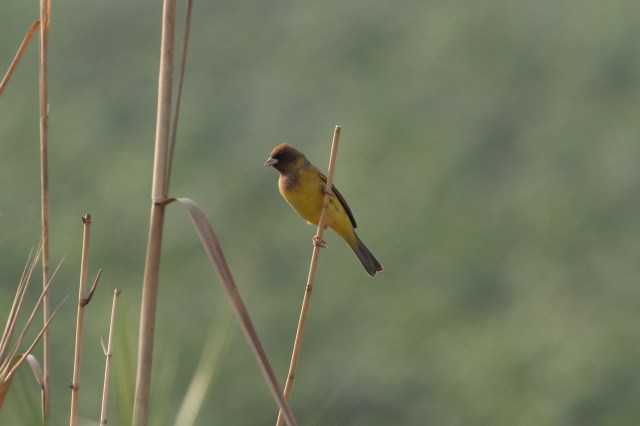
We had some fabulous birds to make up for it though but unfortunately I’m currently experiencing difficulties uploading photos so you’ll have to use your imagination…

Today we’ve driven east to the shores of Chiang Saen lake, with plenty of good birds on route.

Doi Chiang Doa

DSC00781

 Wat Tham Pha Plong,  just a stroll from Malee’s front door. Photo by Jane Williams

We’ve just spent three nights at Malee’s Nature Lovers Bungalows, situated at the entrance to the Doi Chiang Doa National Park, where the food and hospitality has been excellent. Unfortunately we’ve had a couple of setbacks to our itinerary, including having to taking Bob to Chiang Mai yesterday for an emergency dental appointment to have a nasty abscess dealt with. I’m pleased to say that he’s now on the mend. Today was a ‘before dawn’ start to ensure we arrived at the top of the mountain by day-break, but despite doing so, the birding proved to be rather under-whelming. However, one of our two ‘birds of the day’ came almost on arrival at the top, in the shape of a superb Black-tailed Crake. Our other best bird came at the very end of the day, just as it was getting dark – a splendid Spot-bellied Eagle-Owl, at the entrance to Wat Tham Pha Plong.

The generally elusive Black-tailed Crake

IMG_3697

Record shot of Spot-bellied Eagle-owl

IMG_3783

Doi Inthanon Photo Gallery

We’ve spent the past couple of days birding in the national park of Doi Inthanon, at the top of Thailand’s highest mountain – formerly known as Doi Luang, ‘Big mountain’, reaching a height of 2565m. Much of the park is pristine rainforest which supports a range of birds, unique to this part of Thailand. Breakfast on the terrace at Mr Daeng’s has been enjoyed at temperatures as low as 7 degrees – struggling to reach the mid-twenties in the middle of the day. We’ve seen some lovely birds but given the nature of the habitat – the best of which is a dark, dank forest bowl, accessed by a circular boardwalk, close to the summit, photography has proved to be challenging! Here is a selection of the more reasonable ones.

Large Niltava, male

IMG_2855

Long-tailed Minivet

IMG_3340

Yellow-cheeked Tit

IMG_2869

and the much rarer Yellow-bellied Flowerpecker

IMG_3190

There are a number of Sunbirds at Doi Inthanon, Two of which were absolutely stunning, Mrs Gould’s and the scarcer Green-tailed

IMG_2916

IMG_3196

A good number of Thai passerine families seem to have blue and orange as their main colours – making identification for the novice something of a challenge. This one, seen at the very summit of the mountain, is Snowy-browed Flycatcher

IMG_3226

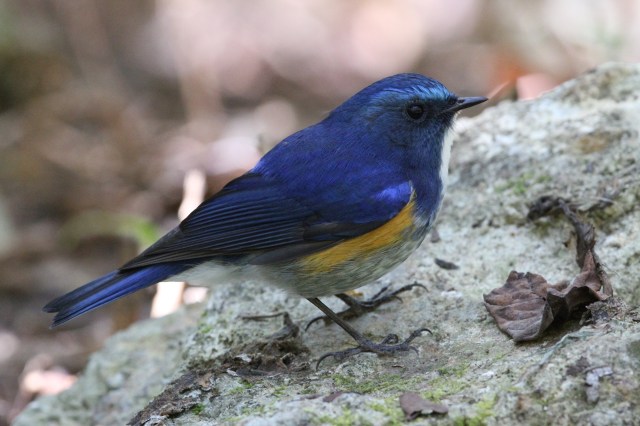
This, rare Blue-fronted Redstart was one of our ‘celebrity’ birds

IMG_3036

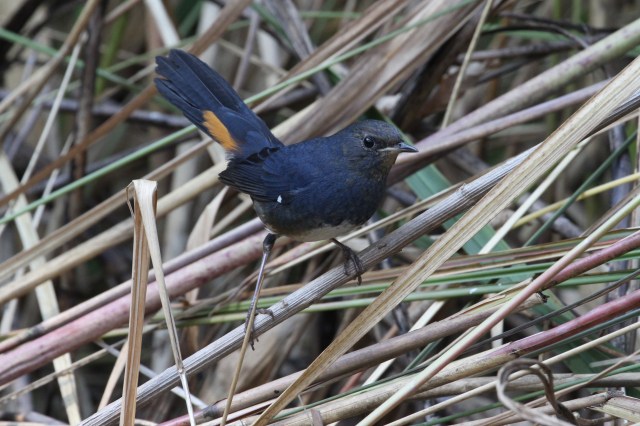
This bird, White-browed Shortwing, lives in the deepest, darkest parts of the forest – record shot, taken at 1/4 sec at 6400 ISO!

IMG_3245

Another skulker was this Hill Prinia

IMG_2934

Some birds however did put on a show, this Banded Bay Cuckoo was in the car park at Mr Daeng’s

IMG_2952

One of our favourites was Bar-throated (Chestnut Tailed) Minla

IMG_3198 

Mae Ping ‘peckers’

Yesterday we drove north from our overnight stay at Li to Doi Inthanon, and our accommodation at the internationally renown ‘Mr Daeng’s’. The morning was spent in the woodlands of the Mae Ping National Park in a rather unproductive search for some of the areas specialities – mostly Woodpeckers. In a four hour search we only saw Grey-capped Pygmy and heard a couple of other species. Highlight of the mornings birding was this Ultramarine Flycatcher, a bit of a ‘belter’.

IMG_2772

Bueng Borapet – Baer’s Pochard

IMG_2543

Male Baer’s Pochard, Bueng Borapet, Thailand

It’s our first full day in Thailand and we spent the morning at Bueng Borapet – Thailand’s largest fresh water lake and swamp, looking for one of the world’s rarest duck. In a four hour boat trip around the lake we managed to locate just one male of this critically endanger species, which breeds, in small numbers, in eastern Russia and northern China. Numbers of this Aythay have declined dramatically in the past two decades and during a recent survey of it’s traditional wintering grounds, less than a hundred birds were found. This truly amazing sighting gets our Thailand trip off to a flying start!

Flight shot of Baer’s Pochard (foreground) showing under-wing detail, in comparison with the similar Ferruginous Duck 

IMG_2646

Australian Wildlife Miscellany

Over the past few weeks we’ve seen a nice mixture of Australian wildlife. Here are a few photos of some of the stuff we’ve seen on our travels in New South Wales and Victoria, starting with the mammals..

Tasmanian Pademelon

IMG_1931

Echidna

IMG_1982

Bennett’s Wallaby – white form

IMG_1663

One of the undoubted highlights was to come across a Platypus, swimming in a Tasmanian mountain stream, in the middle of the day! Unfortunately I wasn’t able to obtain anything other than a poor grab shot..

IMG_1936

We only came across a couple of snakes, unfortunately. This is Lowland Copperhead – described in the text as ‘extremely venomous’!

IMG_1856

Some of the fabulous birdlife, which probably didn’t get the attention it deserved whilst in the pursuit of my 500th species for Australia. This is the very eye-catching New Holland Honeyeater

IMG_1562

Hooded Plover, a rarity – only found on the remote beaches of Victoria and Tasmania 

IMG_1793

This wasn’t a ‘parrot trip’ – so this Blue-winged was a welcome bonus

IMG_1891

Pink Robin, a bird of the dense rainforest

IMG_1962

and to finish, a nice male Satin Flycatcher. Reasonably common but stunning nonetheless

IMG_2203

We’re finishing our four week family holiday in Australia with a trip-list of just short of 260 species, including 15 Australian ‘Life ticks’. This is a great country for wildlife in general and birds in particular. What makes it particularly special is that practically everyone you meet is keen to share their knowledge – without their kind assistance I certainly wouldn’t have reached 500 species on this trip. With grateful thanks.. we’ll be back for more!

Next post will be from Thailand.

Van Diemen’s Endemic Clean-up

Last week we took a family holiday on Bruny Island, Tasmania. Interspersed with doing all the usual touristy things with the grand-kids, we were also in pursuit of the island state’s endemics. Traditionally, there were twelve resident endemic species: Tasmanian Native-hen, Green Rosella, Forty-spotted Pardalote, Scrubtit, Tasmanian Scrubwren, Tasmanian Thornbill, Yellow Wattlebird, Yellow-throated Honeyeater, Strong-billed Honeyeater, Black-headed Honeyeater, Dusky Robin and Black Currawong, which, together with a recent addition, Morepork – a split from Southern Boobook and two breeding endemics, Swift and Orange-bellied Parrot, formed our targets. In the six days we were on Bruny Island we cleaned-up on all but the Orange-bellied – which fortunately we’d seen previously on their wintering grounds in southern Victoria. Now sadly critically endangered and on the brink of extinction.

Easiest to see by far was the Native-hen, common in most pastures near water

IMG_1737

Yellow-throated Honeyeater were readily located by their vocal habits

IMG_1650

In the tree at the bottom of our holiday accommodation garden was a family party of Dusky Robin

IMG_1477

Green Rosella were also regular over the garden

IMG_1624

In the nearby adjacent woodland were Black-headed Honeyeater and Yellow Wattlebird

IMG_1834

IMG_1628

A trip to the coastal woodlands around Adventure Bay produced Tasmanian Thornbill and Strong-billed Honeyeater

IMG_1731

IMG_1500 Forty-spotted Pardalote is regarded as one of the trickier species to find – it’s certainly one of the rarest. We eventually found a small group high up in the White Gums, in McCracken’s Gully. Record shot only

IMG_1873

An expedition up into the rainforest was required for our next two targets – Tasmanian Scrubwren and the similar looking, but rather more elusive, Scrubtit

IMG_2044

IMG_2117

Amazingly, the last of the traditional twelve to fall was the Black Currawong

IMG_2011

Morepork, the recent split from Southern Boobook, was found whilst attempting to relocate a Masked Owl, seen a few nights earlier. This, a screen shot of the back of my camera, texted by Dan to his mates in Newcastle, moments after our ‘tick-up’! 

photo (1)

As if this ‘tick-fest’ wasn’t enough, we also saw several Tassie sub-species, which are potential splits for the future, including Masked Owl (not photographed) Brown Quail and Grey Shrike-thrush

IMG_2171 (1)

IMG_2181

All this ticking-up has taken me well over the 500 target for my Australian List!

We’re now on Wilson’s Prom with my brother for a few days R&R before heading off to Thailand, to join up with Neil and Bob & Sue, for what I hope will be an intensive and rewarding tour of the top sites in the north of the country.


500th Aussie tick

IMG_1731

Tasmanian Thornbill – my 500th Australian bird species!

Yesterday I ‘ticked up’ my 500th bird species for Australia! We’re down on Tasmania attempting to see all the island’s endemics – my 500th happened to be one of the more uninspiring of them! Tasmanian Thornbill is similar to the more common and widespread Brown Thornbill, only rather more range-restricted. This reasonably modest total has been accumulated over a number of family holidays, but including visits to most of the geographic regions of the country, with the exception of the north west corner – which we’re saving for a future visit. Most of our trips have been in the Australian summer months.

Great Ocean Road

DSC00316

The Great Ocean Road and the ‘Twelve Apostles’ – photo by Jane

On the last morning of our road trip from Newcastle to Melbourne we drove along the wonderfully scenic Great Ocean Road – looking for the range-restricted Rufous Bristlebird!

IMG_1458 (1)

The target species – safely ‘under the belt’!

IMG_1439

Singing Honeyeater –  was a surprising find along the coastal strip

DSC00340

Koala – just chilling! Found in eucalypts near our morning coffee stop. Photo by Jane

We’re off to Tasmania first thing tomorrow, so I fear it may be a week before we’re back in internet range. It’ll be a mixture of sight-seeing, beach  and hunting down Tasmania’s thirteen endemic bird species. Watch this space…