Duck or Grouse

We’ve  just finished a week-long birding trip to North East Scotland and the Highlands, stopping in Upper Teesdale & Forfar on the way up and Mussleburgh & Flamborough on the return leg, with ‘base camp’ at Aviemore. We had fabulous weather throughout with clear skies and warm days. We managed to see all of the regular specialities, together with a few ‘celebrities’. It’s difficult to pick out the highlights but duck and grouse species must be at the top of the list. We amassed a grand total species list of 160.

Top of the pops was this female Harlequin Duck at Sputie Burn. Not as glamorous as the male we missed in Aberdeen but a very nice bird in a fabulous location.

IMG_8071

A spectacular male King Eider on the Ythan estuary – seen on our second visit

IMG_8218

American Wigeon, at Holywell Pond, added interest on our homeward journey

IMG_8265

Red Grouse, most common of the scarce ‘game birds’

IMG_8106

Not seen in Scotland, Black Grouse – upper Teesdale

IMG_7491

Capercaillie, seen on previous trips but not quite as well as this time!

DSC00589

Ptarmigan on the slopes of Cairngorm

DSC00648

Other birds of interest included, Greenland White-front, Udale Bay

IMG_8073

Juvenile Iceland Gull, Arbroath harbour. I’m still trying to obtain ringing details – if anyone knows of a good website for non-European colour ringing schemes, please do let me know

IMG_7611

Flock of Long-tailed Duck, Ythan estuary

IMG_7807

Black-throated Diver, undisclosed site

IMG_8165

Golden & White-tailed Eagle together, Findhorn valley

IMG_7974

One of several Osprey seen – this one was at Loch of Kinnordy

IMG_7686

Iconic Caledonian species – Crested Tit

IMG_7888

Last of the interesting birds on our way home. One of two Blue-headed Wagtail, Flamborough

IMG_8302

Moorcock..

IMG_7554

One of fifteen males – traditional lekking site, Teesdale

We’re on our way up to Scotland, so tonight we called in at the traditional Black Grouse lekking site in Teesdale. No sooner had we entered ‘the drop zone’ when we saw three males feeding in a field close to the road. Scanning around we eventually found three more in the adjacent field. We decided to press on to the lek site proper – cresting the hill, we looked down into the valley to see at least nine more males ‘strutting their stuff’. We only saw a couple of females further up the valley, apparently completely unimpressed with what the ‘fellas’ were up to. In total we saw an incredible 15 males and 2 females – just fabulous!

Traditional Black Grouse lek – Teesdale

IMG_7506

What is this Aythya?.. now with Postscript

IMG_7126

Aythya hybrid – Felbrigg Lake

I’ve seen this duck at Felbrigg Lake a couple of times over the last few weeks but never really looked at it! Yesterday, probably because it was rather foggy, the Tufted Duck flock was closer to the edge than usual, allowing better views and a few rather grainy shots. In the back of my mind I knew there was something odd about it but I’d written it off as a first winter male Tufted. Yesterday it clicked, surely this is one of those notorious Aythya hybrids – but which one? Looking at various plates in my admittedly rather limited bird book library I’m inclined to think that it could be a Tufted Duck x Ring-necked Duck, but I’d welcome a more expert view if anyone would care to comment.

A couple more shots:

IMG_7131

IMG_7128

Postscript:

I’ve had a couple of comments back with the helpful suggestion that this bird could in fact be Tufted x Ferruginous. That would certainly explain the dusky flanks, this far into the breeding season ( although there is the curious white edging to the upper flanks, reminiscent of Ring-necked ) and the suggestion of a white ‘rear-end’. Also the very pale eye and the absence of any white ring around the base of the bill. Seen in slightly better light this morning, there are definite chestnut tones to the breast, which would also fit with Ferruginous parentage. Here are a couple more shots to ponder:

IMG_7260

IMG_7279

IMG_7267

Heading Home

Yesterday we went to Kelling Heath, combining steam trains for the grand kids with a bit of birding for the grown ups. We managed to connect with both trains and birds I’m pleased to say, including a pair of Stonechat. Up in the clear blue sky there were plenty of Common Buzzard circling over head. A single bird slowly making it’s way east, between the coast and the heath, caught my attention, the profile seemed a little different somehow- longer in the tail and a more prominent pale head, paler underneath but with noticeable dark belly and carpal patches. Occasionally I thought I could see a pale upper tail, but mostly I was viewing from below. When I did get a chance to down load my photos, I was certain that my provisional identification of Rough-legged Buzzard was right. I guess this would be one of our wintering juveniles finally heading home.

IMG_6976


The whistleri conundrum

Yesterday, whilst on duty at Cley NWT, I was walking along East Bank towards the car park when I noticed a pipit fly up from the grass at the edge of the drain and drop down a short distance away. Knowing that there’d been a report of a Water Pipit on the Serpentine a couple of days before I was keen to see the bird at close quarters. When I did eventually locate it, at medium range, I was somewhat surprised to find that I was looking at a pipit sp with obvious apricot underparts! However, it was quickly apparent that this wasn’t the hoped for Water Pipit but a probable aberrant Meadow Pipit. Despite at times looking rather reminiscent of a Red-throated Pipit, apart from it’s distinctive coloured underparts, all other id features conformed to Meadow Pipit – with olive tones on it’s back and head, weak but defined streaking on the flanks and pinkish/yellow legs. The bird didn’t call whilst I was watching but  it was heard to do so later in the morning – giving confirmation of it’s id as Meadow Pipit.

I remained curious about the bird and mentioned it to Steve Gantlett and Carl Chapman – who saw the bird shortly after me. Steve very kindly alerted me to an article by Richard Porter in Birding World, in which he recounts a similar encounter with a pipit on Blakeney Point in March 2004. The question examined in the article is whether or not such ‘orange breasted’ Meadow Pipits are possibly of the Irish or western Scottish race whistleri? Due to the general variation of plumage in Meadow Pipits, shifting taxonomy and the apparent infrequency of records of ‘orange breasted’ pipits, the question of the origins of such birds goes largely unresolved.

For a more coherent account of the issues raised by ‘orange breasted’ pipits read Birding World  2005 (18: 169-172) and watch out for much better photos of the Cley bird on Carl’s blog. I leave you with these cautionary words from Richard Porter:

This short contribution may encourage a greater awareness of the whistleri conundrum. Suffice to say that some Meadow Pipits in the west of their range and elsewhere can be decidedly orange-buff below, and sometimes they have greatly reduced streaking on the under-parts. Perhaps the birds addressed in this note are extreme forms of whistleri, or maybe they are simply individuals showing erythrism (excess red pigmentation), but what is equally important from a birding point of view is the fact that such birds can resemble Red-throated Pipit (or indeed superficially, Water Pipit! TW) Unless looked at carefully, they can be a pitfall for the unwary.

In the mean time you’ll have to put up with my rather inferior grab shots!

DSC00420

DSC00432

DSC00406

‘orange bellied’ Meadow Pipit – Cley NWT, 30th March 2015 

RND is AOK

This afternoon, on our second attempt, we were successful in tracking down the adult male Ring-necked Duck at Hardley Staithe. Despite the ferocious winds and lashing rain, we located the RNG on the more distant angler’s pond, in the company of Pochard and Tufted Duck. Managed to hold the ‘scope steady enough to see the salient  features and take a few grab-shots of this increasingly scarce American vagrant. A Norfolk ‘tick’ for me.

IMG_6827

  Ring-necked Duck, Hardley Staithe – 29th March 2015


A few days birding

We’ve had our good friends Neil & Eunice here for a few days birding. Despite the rather unfavourable weather forecast we managed to get out every day and catch up with most of the local ‘celebrities’/ long-staying visitors. The highlights of which included: Black Redstart, Mandarin Duck, Woodlark, Dartford Warbler, Iceland Gull, Garganey, Snow Bunting, Rough-legged Buzzard, Richard’s Pipit and these beauties:

Shore Lark, Blakeney Point

IMG_6780

Garganey, Weybourne beach pool

IMG_6456

Black Redstart, Felbrigg Hall

IMG_6649

Distant Rough-legged Buzzard over Holkham dunes, digiscoped  from the A149

DSC00370

Dartford Warbler, North Norfolk heath

IMG_6591

Woodlark, North Norfolk heath

IMG_6786

Richard’s Pipit, Breydon Water

IMG_6615

Snow Bunting, Weybourne

IMG_6480

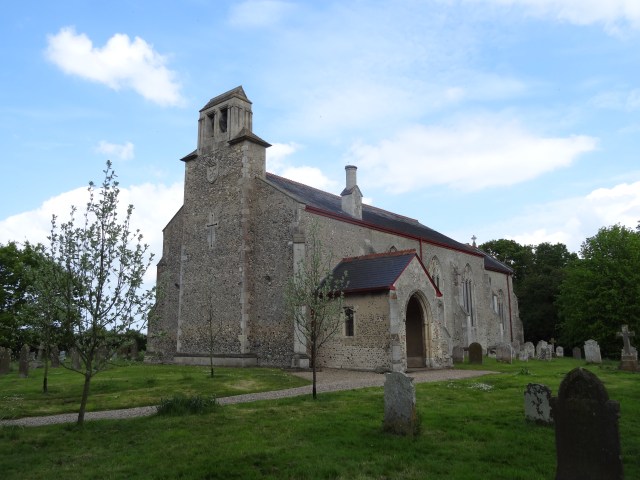
Historic Churches of Norfolk – route 12

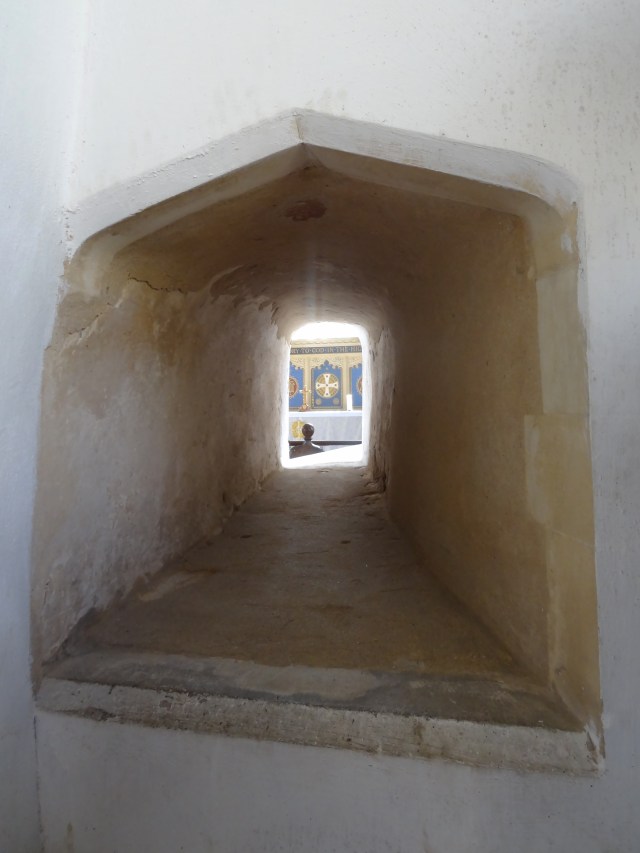
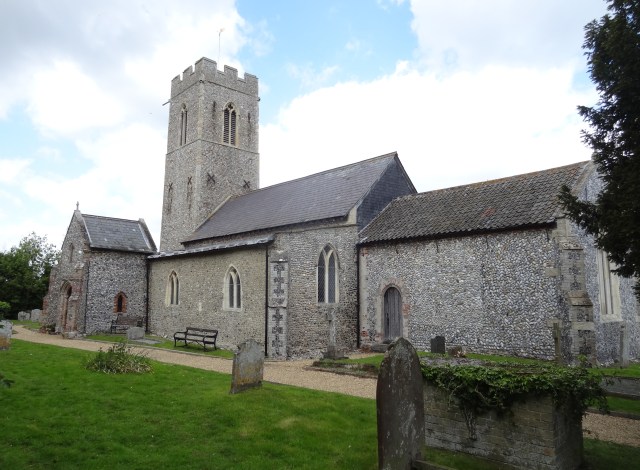
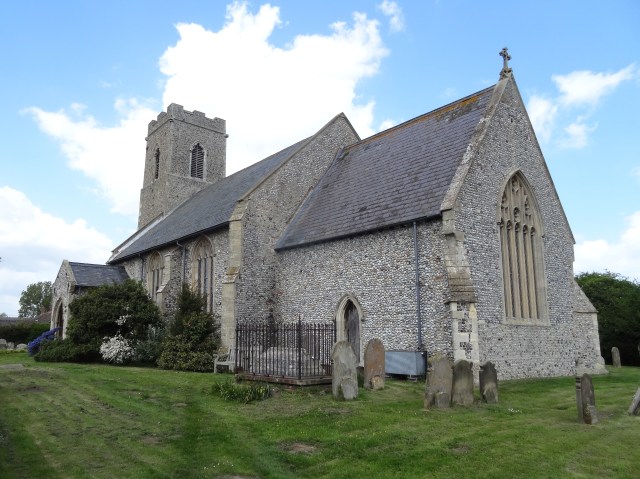
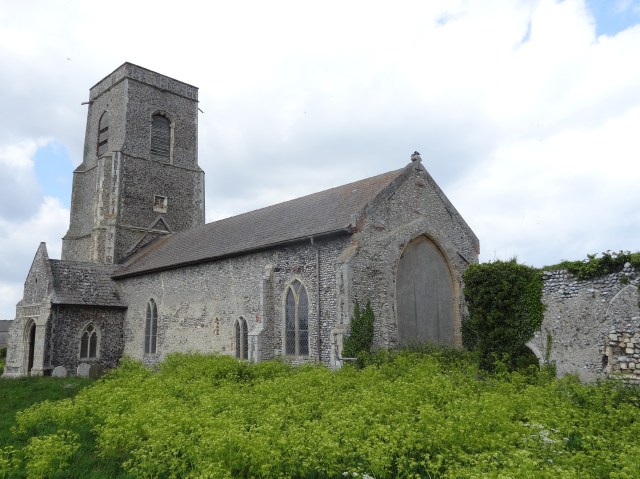
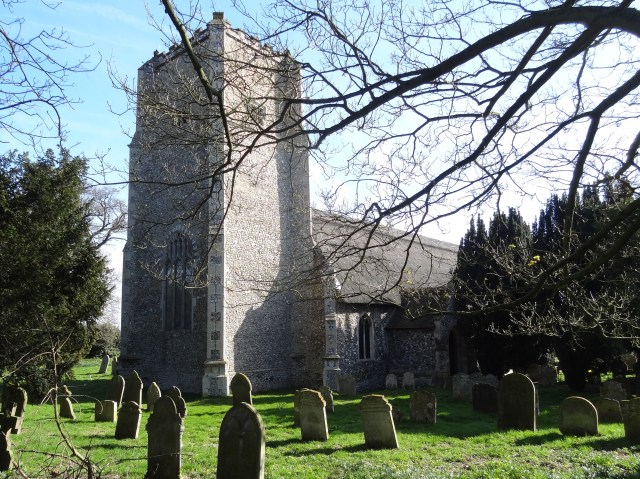
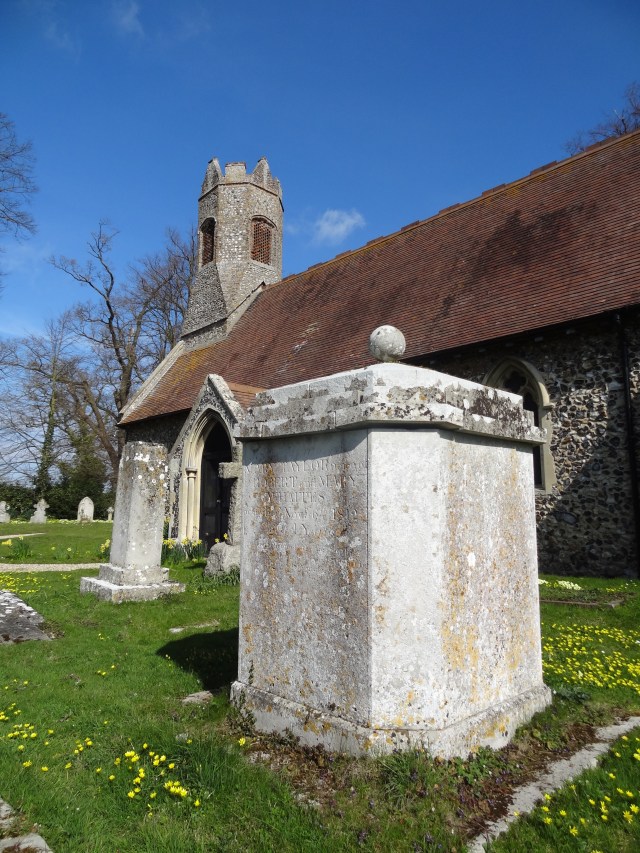
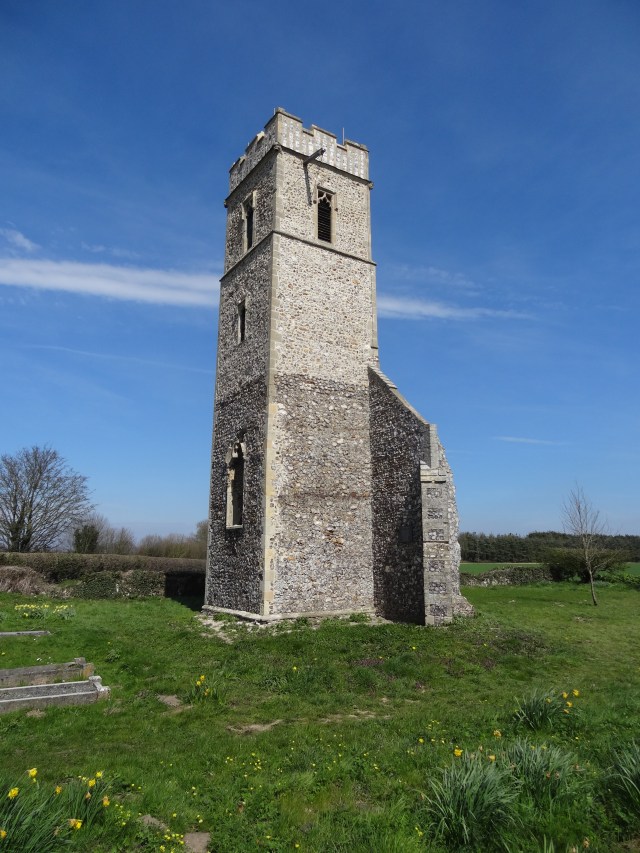
Last Thursday I resumed my on-going project to cycle to and photograph all of the historic churches of Norfolk. We couldn’t have picked a much colder, more overcast, day with a stiff north wind. I was accompanied by my friend Helen (she of the Walking Tours of Norwich City Churches fame). We cycled over 50k and did 19 churches, all in the area, east of Norwich, between the A47 and the river Yare. The day ended badly for me when I realised that I’d lost my phone, somewhere on route. I retraced my steps nearly back to our lunch stop, missed my return train to Norwich and incurred significant unwelcome extra miles – and all to no avail. Lets hope that the rest of this seasons cycle rides go better! Still we did see some very nice churches –  unfortunately many of which, in this particular part of the county, are locked.

The Route 

UK_runners__walkers_and_cyclists_-_map_your_routes

The Churches

St Andrew Thorpe St Andrew, All Saints Postwick, St Lawrence Brundall, St Andrew Blofield, St Michael Braydeston, St Peter Strumpshaw, St Nicholas Buckenham, St Mary Hassingham, St Margaret Cantley, St Botolph Limpenhoe, St John the Baptist Reedham, All Saints Freethorpe, St Andrew Wickhampton, St Peter & St Paul Tunstall, St Peter & St Paul Halvergate, St Mary Moulton St Mary, All Saints Beighton, St Edmund South Burlingham and St Peter Lingwood.

The Photos

St Andrew, Thorpe St Andrew

P1060594

All Saints, Postwick

Postwick All Saints

St Lawrence, Brundall

P1060603

Stained glass detail

Brundall St Laurence

St Andrew, Blofield

P1060611

Font, depicting the life of Christ – unique in Norfolk

P1060612

The ‘Red Cross’ window

Blofield St Andrew & St Peter


St Michael, Braydeston

P1060623

St Peter, Strumpshaw

P1060628

St Nicholas, Buckenham

Buckenham St Nicholas

Simple, slightly ‘decaying’ interior

P1060636

St Mary, Hassingham

Hassingham St Mary

St Margaret, Cantley

Cantley St Margaret

St Botolph, Limpenhoe

P1060648

St John the Baptist, Reedham

P1060650

All Saints, Freethorpe

P1060655

St Andrew, Wickhampton

Wickhampton St Andrew 2

Details of 14th century wall paintings =- amongst the best in England

P1060667

Wickhampton St Andrew

St Peter & St Paul, Tunstall

Tunstall St Peter & St Paul

Face in the wall

P1060675

St Peter & St Paul, Halvergate

P1060677

St Mary, Moulton St Mary

Moulton St Mary St Mary


14th century wall paintings depicting the Seven Works of Mercy

Moulton St Mary St Mary

All Saints, Beighton

Beighton All Saints

St Edmund, South Burlingham

South Burlingham St Edmund

Fine interior with early painted pulpit, wall painting and rood screen

P1060708

Elephant & Castle bench end

South Burlingham St Edmund 2

St Peter, Lingwood

Lingwood St Peter

Snow Patrol

We did an extra day’s volunteering at Cley NWT today, to help with their Members Weekend pre-view of the new Simon Aspinall Centre. It was overcast and drizzling most of the day with a bitter northerly wind, making it feel like the depths of winter again. Not surprisingly then that the birding highlight of the day was a small flock of winter visitors – Snow Bunting.

P1060752

It all Adders up

Spent yesterday afternoon on a north Norfolk Heath. Having visited on three previous occasions this year without success, I was delighted to find a pair of Dartford Warbler, nest building. Not unusually, they were in the company of a male Stonechat. A little further along the track were a pair of Woodlark. Across the road, at the base of a sunny bank, we were treated to a mesmerising display of basking Adders. The milky cast to their eyes being an indication, apparently, that they are about to slough their skins.

IMG_6326