No, not an exclusive brand of local tobacco nor the other thing you might be thinking of – but a fine example of this rare Norfolk Phalacrocorax!

Shag, adult non-breeder – Wells Harbour 24th January 2015
No, not an exclusive brand of local tobacco nor the other thing you might be thinking of – but a fine example of this rare Norfolk Phalacrocorax!
Shag, adult non-breeder – Wells Harbour 24th January 2015
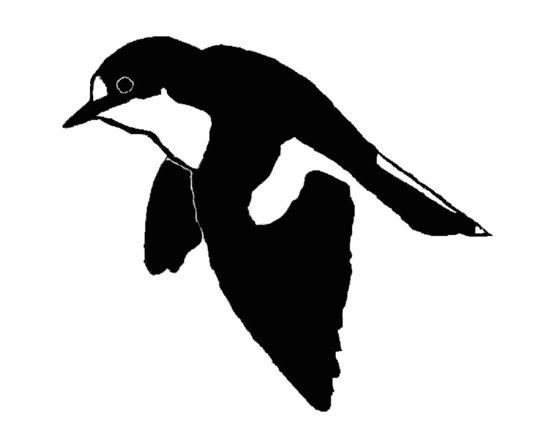
If you’re viewing this blog, chances are that you’ve got an interest in the birds of Norfolk – in which case you might like to know about the creation of a brand new Bird Club, here in this bird-rich corner of of the county!
The North East Norfolk Bird Club (NENBC), serving the birding communities of Melton, Briston, Holt, Sheringham, Cromer, North Walsham and Aylsham, contains within its designated recording area some of the county’s premier birding locations, together with acres of under-watched or undiscovered habitat and has played host to over 350 species. With a full programme of indoor meetings, outdoor bird walks and other social events, our aim is to bring together those people with a love and concern for birds in our area, to share knowledge and information, encourage participation in exploring our rich wildlife heritage and promote awareness of our threatened natural environment. We aim to be a sociable, inclusive and informative club, which plays a vital role in the local birding community.
If you are interested in becoming part of Norfolk’s newest birding initiative, visit our website for details or come along to our inaugural Indoor Meeting with Moss Taylor – ‘father of Sheringham birding’, with a string of rarities to his name.
Can’t believe it’s close on a month since we returned from our two week package holiday in Goa. This post catches up on the last couple of days birding back at the coast, as well as filling in some of the gaps from earlier in the holiday. Once back at the Marinha Dourada we made full use of our guide Rayman (govekar.rama@gmail.com 9922271840) who certainly knew all the sites and was able to find some great birds for us.
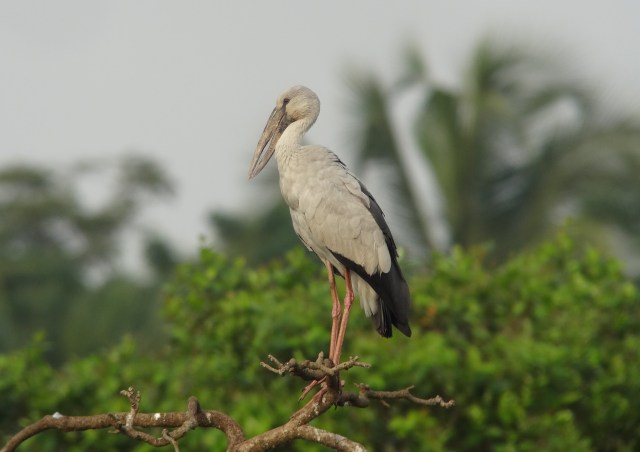
First up, Asian Openbill
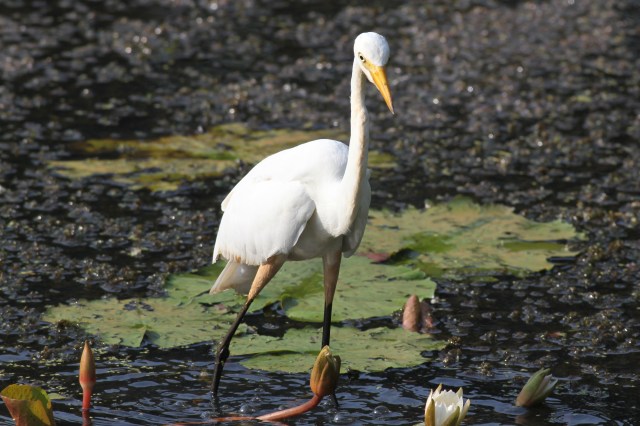
Intermediate Egret
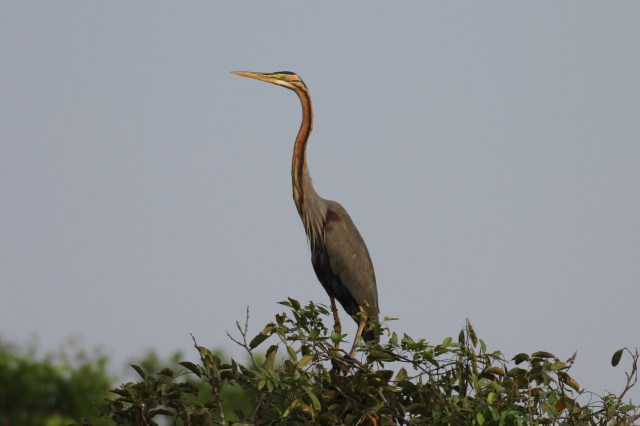
Purple Heron
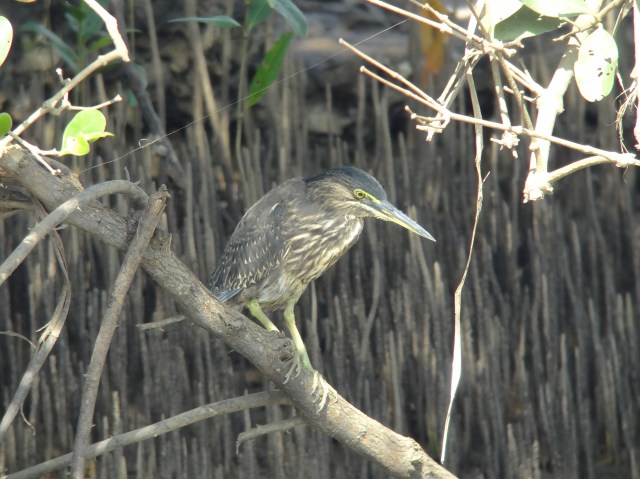
Striated Heron
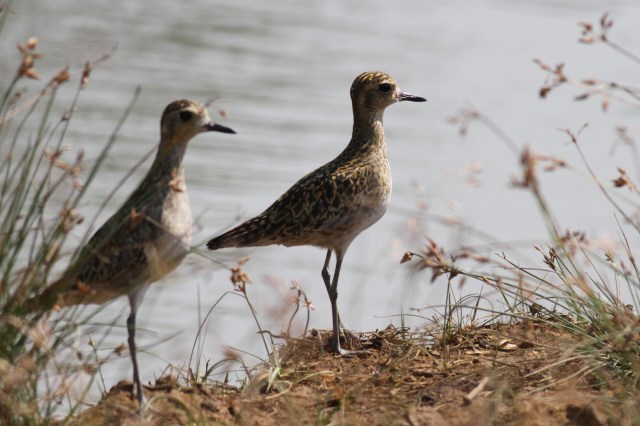
Pacific Golden Plover
Great Knot, with Greater & Lesser Sand Plover

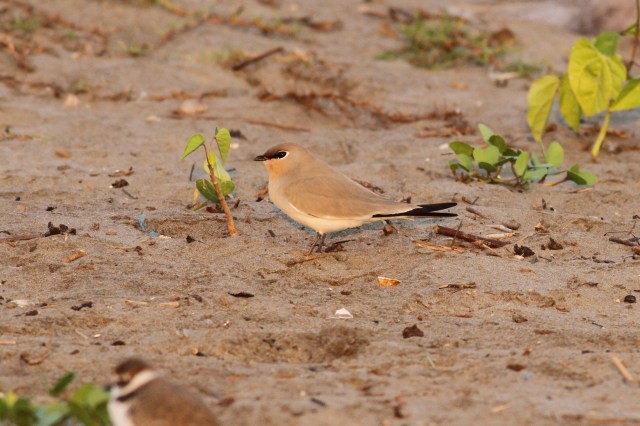
The gorgeous Small Pratincole
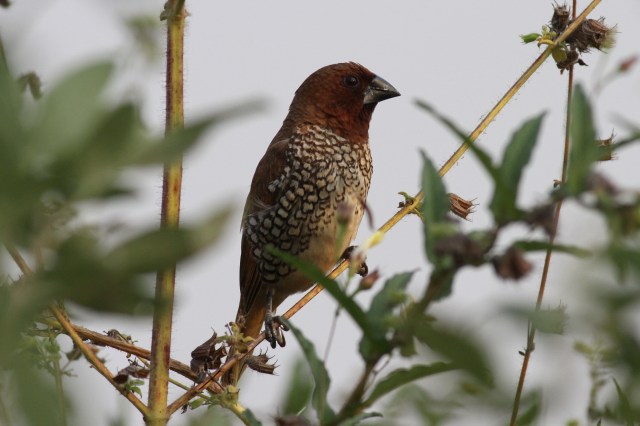
Scaly-breasted Munia
Siberian Stonechat

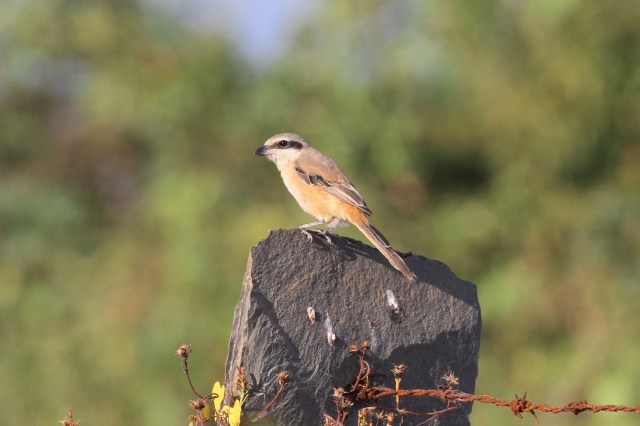
Long-tailed Shrike
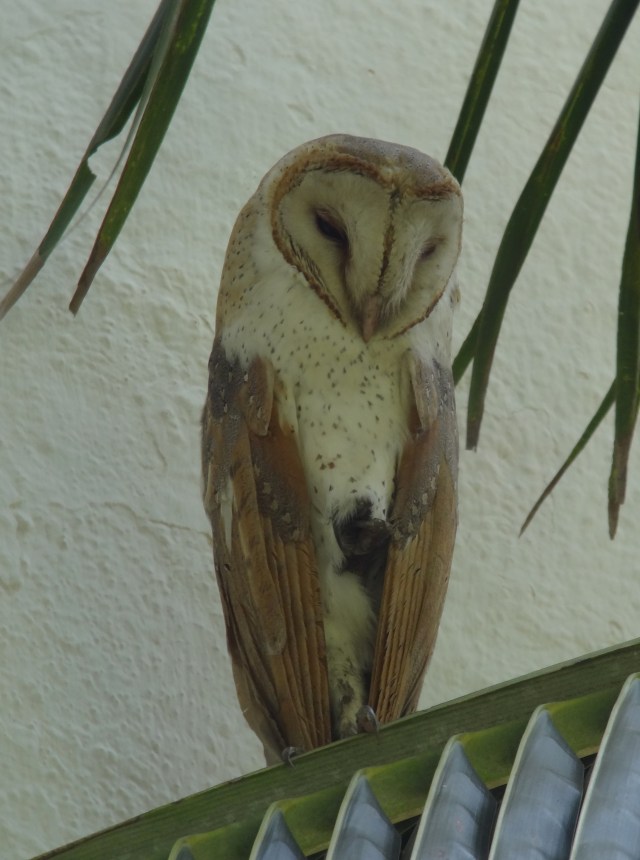
Barn Owl, roosting just above our favourite hotel bar!
Indian Peafowl, easy enough to see in the distance, but surprisingly difficult to photograph

White-bellied Sea Eagle on an early morning ‘fly by’

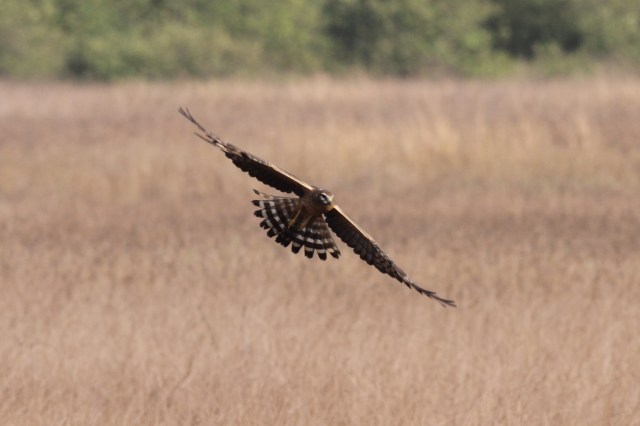
Female Pallid Harrier
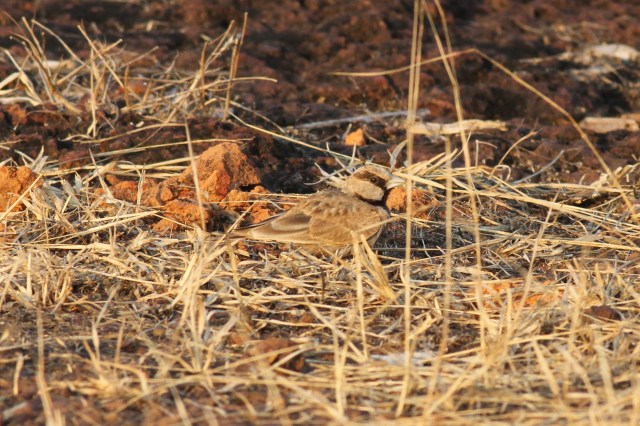
Finally, a couple of species seen on a bit of waste ground close to Panjim City – Desert Wheatear

and to close, the superbly cryptic Ashy-crowned Sparrow Lark, contender for ‘bird of the trip’

Blue-eared Kingfisher, Tambdi Surla, 30th November 2014
As part of our Goa package holiday we spent three nights and four days at Backwoods Camp, in the company of our main guide Pramod and, for part of our last full day at the camp, Leio. The camp is set in the hills, amongst sub-tropic deciduous rainforest, about two hours from the coast. Accommodation is in basic individual chalets and the regular, ample and appetising meals are served in the communal dining and general ‘chill-out’ area in the main house. The camp and kitchen staff couldn’t have been more pleasant or helpful. In all, we added around forty five new species at Backwoods, many of which were scarce or ‘difficult to get’ birds. The whole package – accommodation, meals & drinks, guiding and transport, came to around £120 per person, providing excellent value and a welcome break to coastal birding. For anyone contemplating a birding package holiday to Goa, a trip up to Backwoods is a must – details are available on their website or visit their regular stand at the annual Rutland Water BirdFair.
A few of the many superb species seen in this idyllic birding location, including:
Puff-throated Babbler

Orange-headed Thrush

Purple Sunbird

Western Crowned Warbler

Red-headed Bunting
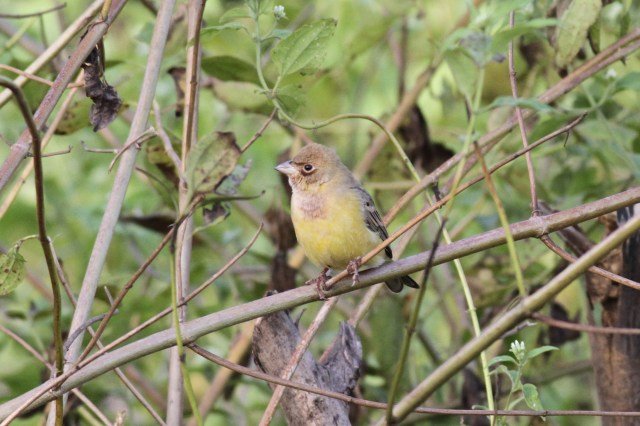
Rufous-bellied Eagle

A nice trio of Green Bee-eater, Chestnut-shouldered Petronia and, in the middle, Grey-necked Bunting

White-bellied Woodpecker, at dusk

Heart-spotted or heart-stopping Woodpecker

Citrine Wagtail – one of two found by us on the trip
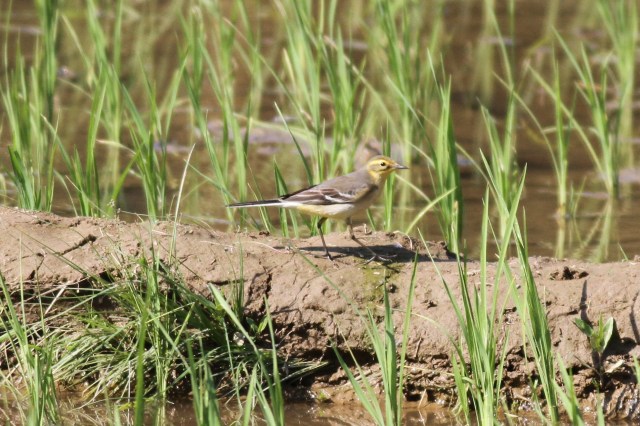
Malabar Grey Hornbill

A roosting pair of rare Sri Lanka Frogmouth

and lastly, the iconic but hard to find, Indian Pitta – this bird roosted behind our chalet!

More photos to come in my Goa gallery.
We’ve been in Goa for a week now, staying at the Marinha Dourada hotel near Arpora, and spent most of our time walking to and birding the local sites. We’ve also had a couple of trips out to location less than twenty miles away. Our days start at dawn, around 6.30, when we have our most productive birding seasons before a late breakfast. Then it’s ‘chill time’ over lunch with a beer, raptor watching, and then back out for our late afternoon session until dark, early supper and bed! So far we’ve seen over one hundred and seventy species, many of them ‘world ticks’, with quite a bit of overlap with Thailand, Australia and Britain – the majority being ’self-found’. Tomorrow we go up to Backwoods Camp for some intensive guided jungle birding. Here’s a small selection of the more interesting local birds.
Common Iora

Green Bee-eater

Chestnut-tailed Starling

Indian Roller

Crimson-backed Sunbird

Wire-tailed Swallow

Stork-billed Kingfisher

Brahminy Kite

Red-wattled Lapwing
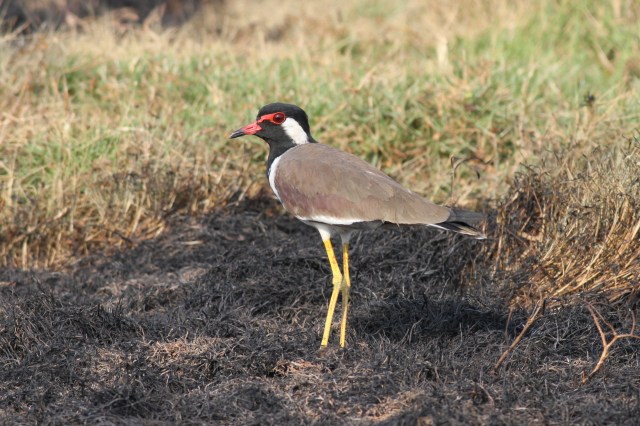
Lesser Goldenback

Small Minivet

Jerdon’s Leafbird

Jungle Owlet
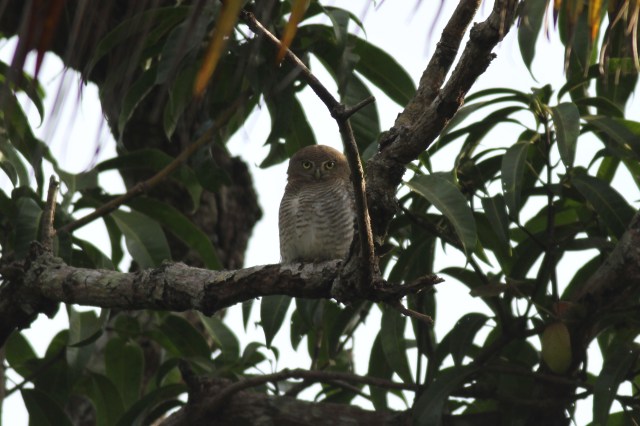
Oriental Honey Buzzard

Slightly further afield: Bay-backed Shrike

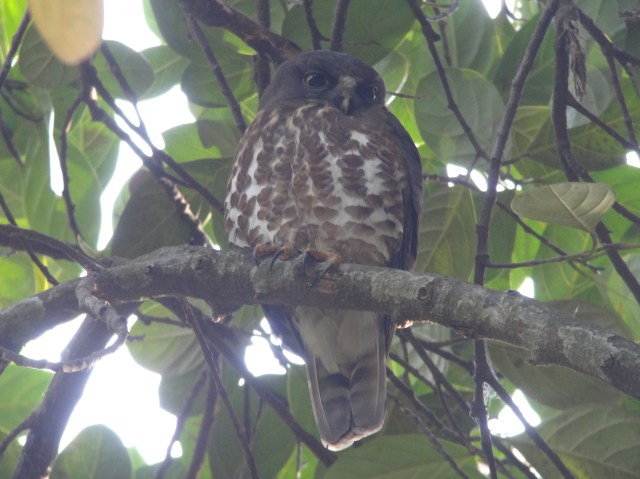
Brown Hawk Owl
Woolly-necked Stork

Pied Kingfisher

and finally, the hard to see Watercock

Hopefully, a further report from Goa on our return from Backwoods.
Tree Sparrows are now virtually absent from east Norfolk and have suffered a massive general decline across the whole county over the past two decades. With nothing better to do and needing it for my Norfolk Year List we set off on Sunday, in the pouring rain, to search for them. I’d been given a possible location to the west of our place, in a rural village which appears to have largely missed-out on the agricultural revolution – winding lanes with lots of small fields bordered by overgrown hedgerows. It didn’t take us long before we bumped into a very friendly resident who, on hearing of our quest, announced that he had Tree Sparrows on the feeders in his garden and that we were welcome to look! Sure enough, half a dozen birds were buzzing in and out of the nearby hedge and on to his feeders. They didn’t seem to mind the weather but it sure hampered the photography!

Tree Sparrow, at an undisclosed mid-Norfolk location, 16th November 2014

Pod of Pilot Whale passing Cley East Bank, 10th November 2014
Monday is my ‘duty day’ at Cley NWT. I’d checked out the birds on Pat’s Pool and taken a slow walk down East Bank. I was just returning from looking at the female Long-tailed Duck at the back of Arnold’s when I met Steve & Sue. Whilst Steve and I were talking about the Desert Wheatear ‘fest’ at the weekend, Sue was looking out to sea when see noticed a group of large cetaceans moving east. Steve quickly identified them as Pilot Whale and we counted at least fifteen travelling in a pod about two thirds the way out towards the wind farm. They spent the afternoon gradually making their way past Salthouse, and Weybourne arriving at Sheringham by about 4.40 – their numbers increasing to 28 at the last count.
Apparently this is the first record of live Pilot Whale off Norfolk – all seven previous records have been of dead beached individuals, the last of which was in 1992. So forgive the rather poor quality digipics but they do capture a small piece of Norfolk cetacean history!


For more and better photos click here to view Steve’s website and for more background see Carl’s, Letter from Norfolk.
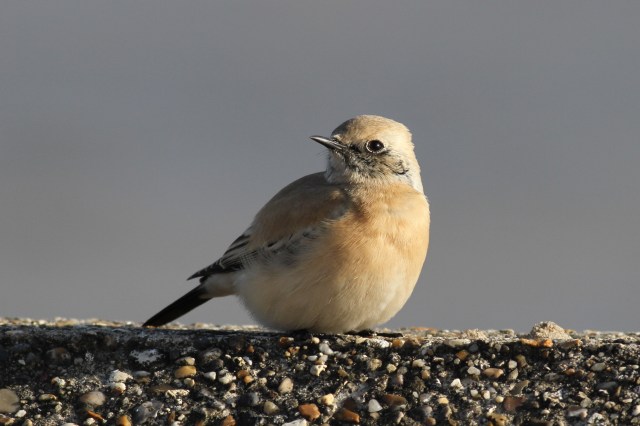
Male Desert Wheatear, Lowestoft, 8th November 2014
Two days ago a male Desert Wheatear turned up in Lowestoft – just over the border, in Suffolk. Then yesterday a female was present on the sea front in Gorleston, NORFOLK. A leisurely breakfast this morning and ‘bingo’, the pager rings out that the bird is still present – we pack up and head off. Half way there another message comes through that the bird has flown north across the river and has been lost to view, in a huge fenced-off area of the docks. By the time we arrive, the scent has gone well and truly cold – oh well. We decide to go and look at the bird in the neighbouring county anyway, which is said to be ‘showing well’ – this proved to be something of an understatement! Enticed, no doubt, by the regular supply of meal worms this handsome winter male sat, unperturbed on the sea wall, surrounded by an army of admirers. We’d just about had our fill when the news percolated through that the Norfolk bird had relocated back to the beach at Gorleston. Off we go again and this time, success – a nice female, nestling in the shelter of the sea wall! Two Desert Wheatear in one morning – one of which was a Norfolk Year Tick, not a bad little outing.
First a few more photos of the Suffolk male


‘What are you guys all looking at?’

Now for the equally lovely NORFOLK female
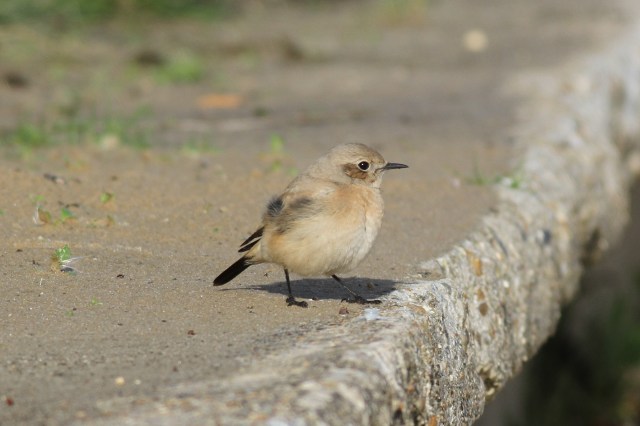
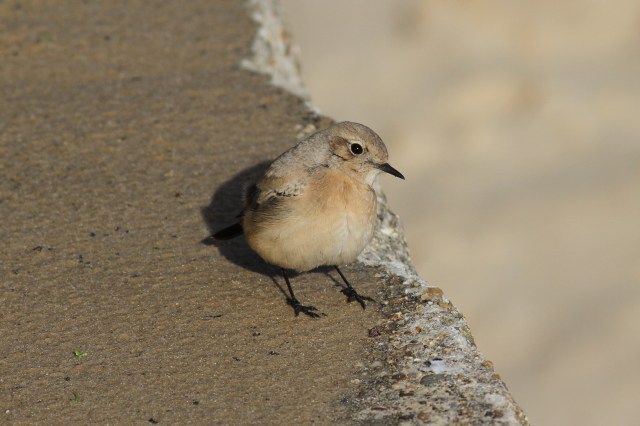
Finally, a grab shot showing the all dark tail in flight

By Sunday there had been a significant change in the weather – rain and strong winds, so we limited our ride to a 20 mile circuit around Bawdeswell. We did manage to take in nine churches though.
The Route

The Churches
All Saints Bawdeswell, St Peter Billingford, St Mary North Elmham, St Swithun Bintree, St Nicholas Twyford, All Saints Wood Norton, Church of the Holy Innocents Foulsham, St Andrew Themelthorpe and St Thomas Foxley
The Photos
All Saints, Bawdeswell was completely rebuilt after a British Mosquito plane crashed into the original, returning from a bombing raid in WW11

The plaque which commemorates the tragic event

St Peter, Billingford – one of a handful of Norfolk churches with an octagonal tower – our second of the weekend

The most notable feature inside is the 16th century giant latten lectern, from the same foundry as the one in St Marks, Venice

St Mary the Virgin, North Elmham – features in Simon Jenkins’ England’s 1000 Best Churches

The lofty interior

Medieval wall painting fragment

The noteworthy St Cecilia painted screen

Detail of the fine carved Tudor pews
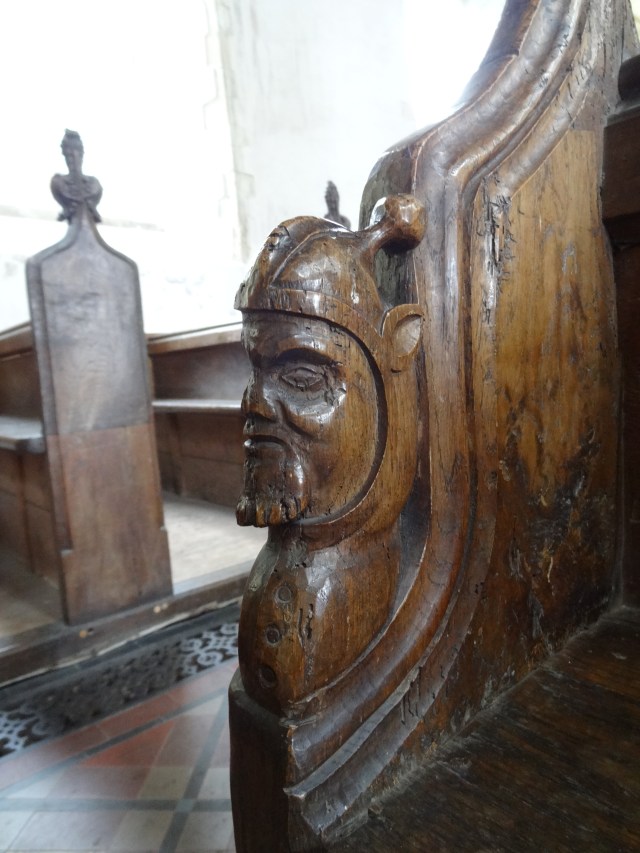
St Swithun, Bintree

The hidden away little church of St Nicholas, Twyford

All Saints, Wood Norton

Details of medieval stained glass fragments

Church of the Holy Innocents, Foulsham

Unfortunately my camera battery gave up at this point but happily Bry had his phone with him to record the final two churches of the weekend!
St. Andrew, Themelthorpe

St Thomas, Foxley

Taking advantage of the recent unseasonably warm weather, spent the weekend catching up on a few more historic churches. On Saturday brother Bryan – veteran of the memorable ‘Four Countries End to End’ ride in 2012 and I did a nice circular route, starting and finishing at Morston. We cycled just over 60 km and took in 22 parish churches plus a host of other ‘religious establishments’ which cluster around the Walsinghams.
The Route

The Churches
All Saints Morston, St Andrew & St Mary Langham, St Margaret Saxlingham, St Andrew Field Dalling, All Saints Bale, St Martin Hindringham, St Andrew Thursford, All Saints Kettlestone, St Andrew Little Snoring, St Mary Great Snoring, All Saints East Barsham, Assumption West Barsham, All Saints North Barsham, St Giles Houghton St Giles, St Mary Little Walsingham, St Peter Great Walsingham, All Saints Wighton, All Saints & St Mary Magdalene Warham, St Mary Binham, All Saints Cockthorpe and St John the Baptist Stiffkey. In addition we visited the ‘Slipper Chapel’ & Chapel of the Holy Spirit Houghton St Giles, the old Friary, Anglican Shrine, Chapel of the Annunciation, Holy Souls, St Seraphim (orthodox) Little Walsingham and Holy Annunciation (orthodox) Great Walsingham – quite a day!
The Photos
All Saints, Morston – early morning

St Andrew & St Mary, Langham
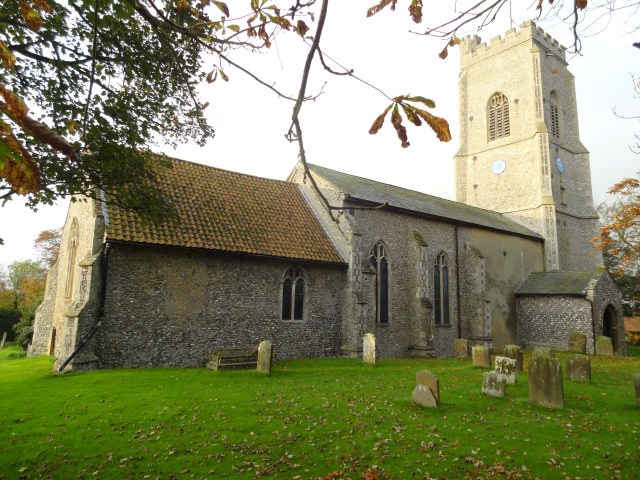
St Margaret, Saxlingham

St Andrew, Field Dalling

Interior window detail

All Saints, Bale
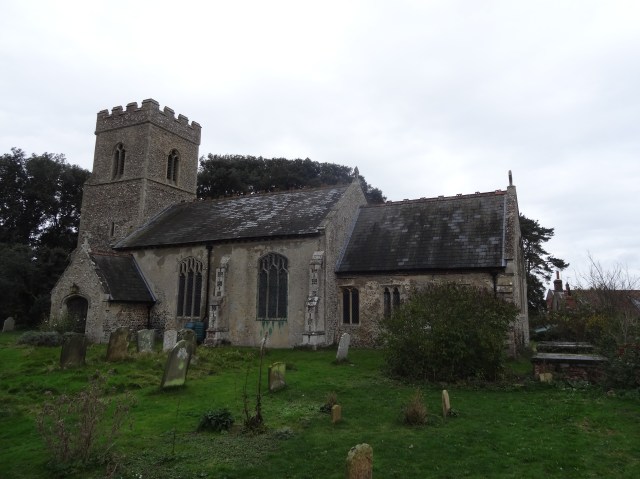
St Martin, Hindringham
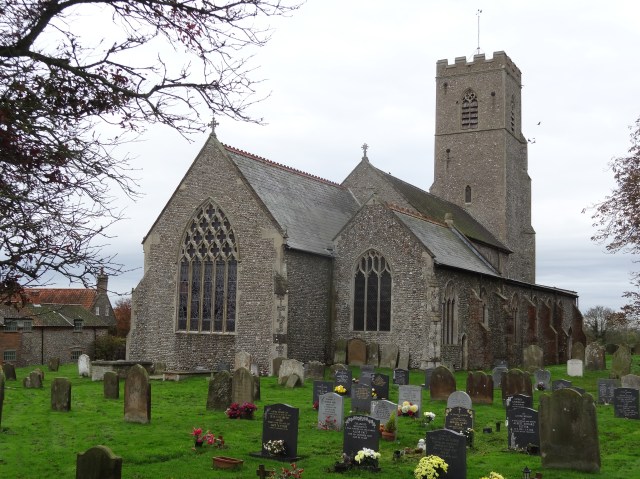
Interior, showing the off-set ‘weeping’ chancel
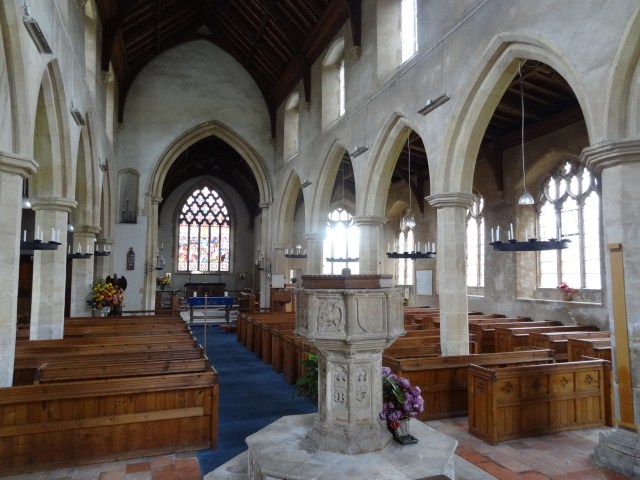
Window detail
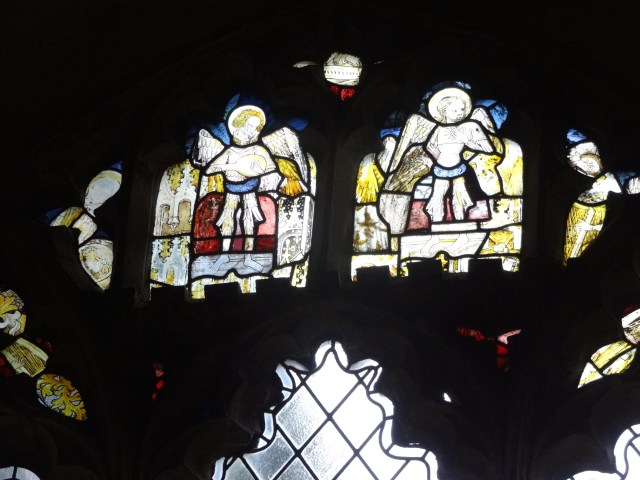
All Saints, Thursford – more an estate than parish church, with Victorian ‘gothic’ much in evidence

All Saints, Kettlestone (Ketestuna in the Doomsday book) – with a fine octagonal tower

An interesting plaque

St Andrew, Little Snoring – with unusual detached round tower with tiled roof

Royal Arms of James II

St Mary, Great Snoring

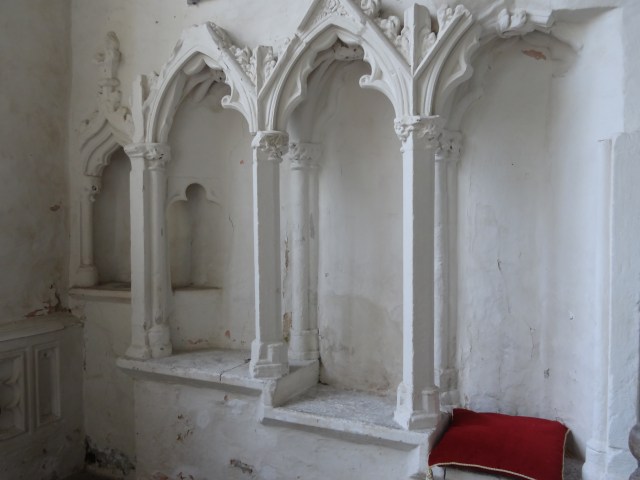
Inside – detail of the ornate but slightly dilapidated sedilia
Lovely stained glass
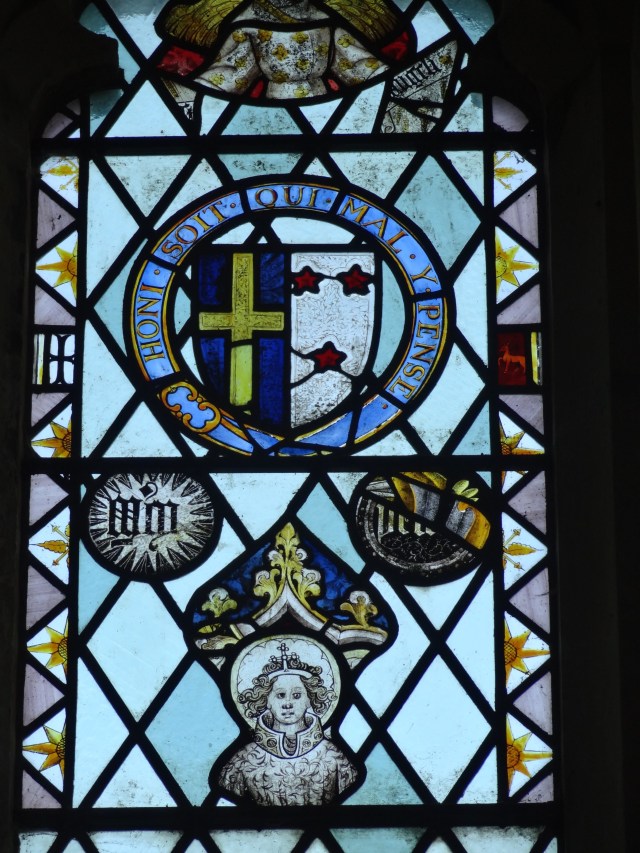
A cluster of three small churches in the Barshams

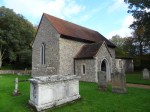

St Giles, Houghton St Giles
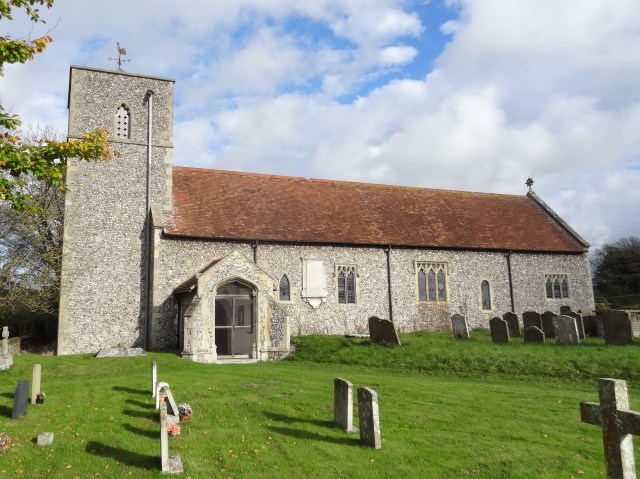
Superb 15th century rood screen

St Mary, Little Walsham – almost completely rebuilt after a devastating fire in 1961

The light & airy interior

St Peter, Great Walsingham

The lovely interior with a feast of 15th century pews – complete with tracery, poppy heads and carved figures

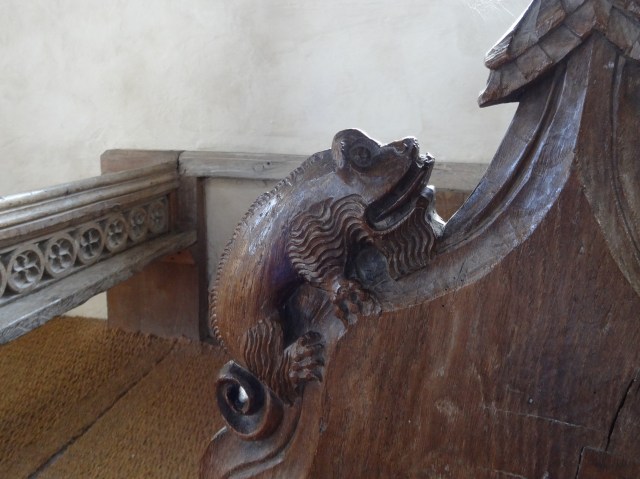
and some interesting stained glass

All Saints, Wighton – the tower collapsed in a winter storm in 1965 and was rebuilt with the help of a Canadian benefactor
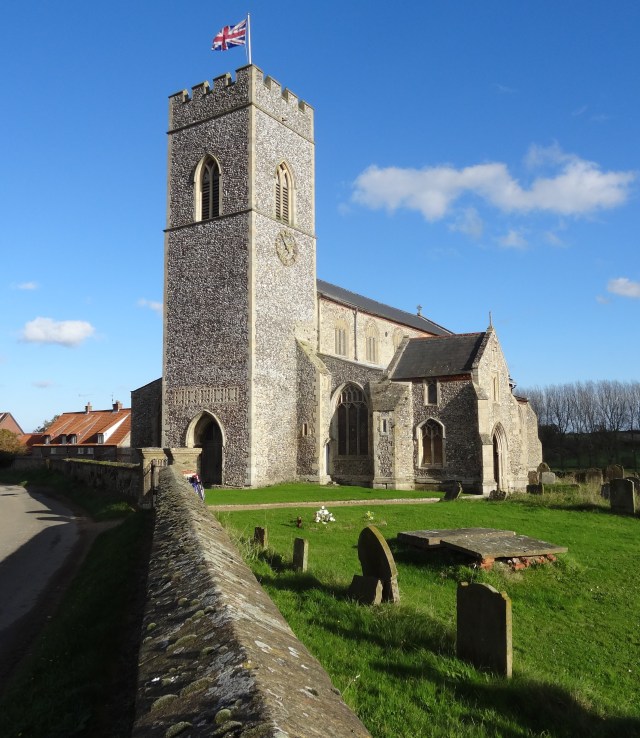
Another light, bright interior with an unusual high-level east window

Detail of a Victorian stained glass window – one in a series depicting various saints

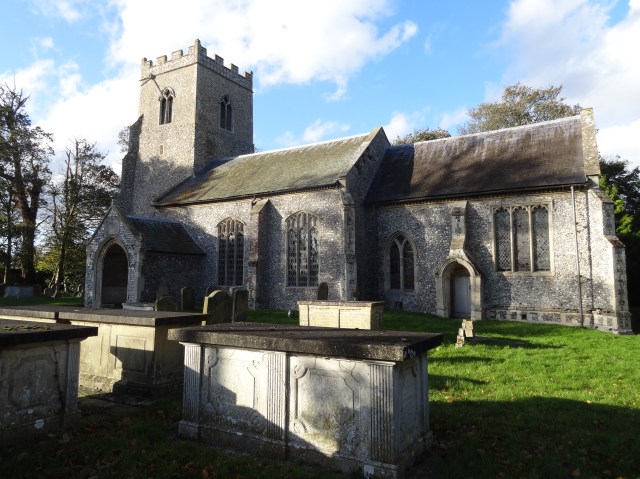
The two parish churches of Warham – All Saints and St Mary Magdalene, just half a mile apart

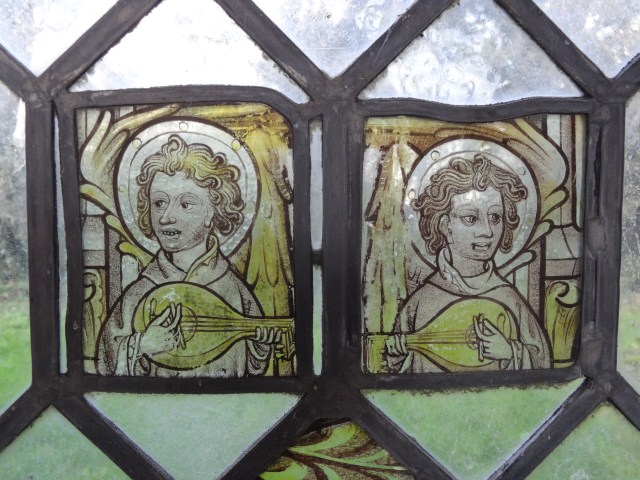
More exquisite medieval glass

The priory church of St Mary, Binham

All Saints, Cockthorpe – unfortunately undergoing major repairs and covered, in parts, with scaffolding

Last church of a long but fascinating day in the company of some fine historic architecture – oh and my brother of course!
St John the Baptist, Stiffkey

Details of the rood screen

Last word, on our final church, must go to Simon Knott whose commentary on Stiffkey contains the following:
‘Stiffkey is most famous, of course, for Harold Davidson, the Rector of Stiffkey from 1906 to 1932, who was defrocked by the Bishop of Norwich on account of the rather glamorous low-life company he kept. Nicknamed ‘Little Jimmy’ as he was only five feet tall, he became a national celebrity. He moved on from wandering in ‘a confused state’ around the back streets of Soho, and exhibited himself in a barrel in Blackpool, before an ill-judged career move into lion-taming resulted in him having his head bitten off. In Skegness, of all places’.
Regular blog posts about wildlife & conservation in and around Cromer
Discover the birds of Hampton, Peterborough
Documenting the bird life in Hethersett (Norfolk UK)
...an eclectic mix of travel photos with a birding theme, home and away.
...an eclectic mix of travel photos with a birding theme, home and away.
...an eclectic mix of travel photos with a birding theme, home and away.
...an eclectic mix of travel photos with a birding theme, home and away.
 Trevor On Tour