RBF.. a nice welcome home

IMG_7315

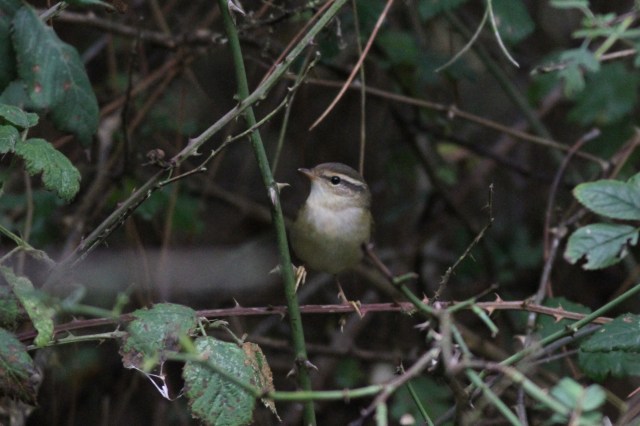
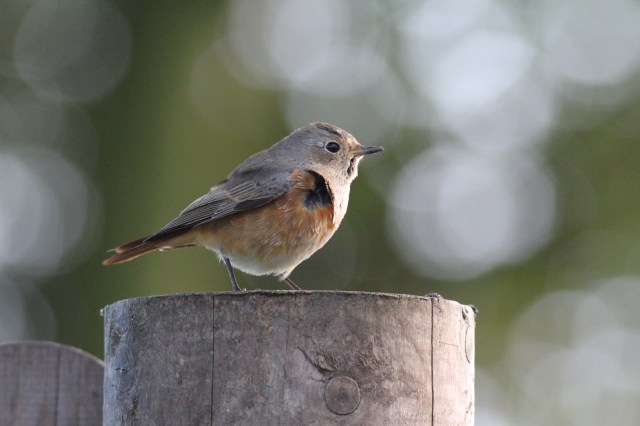
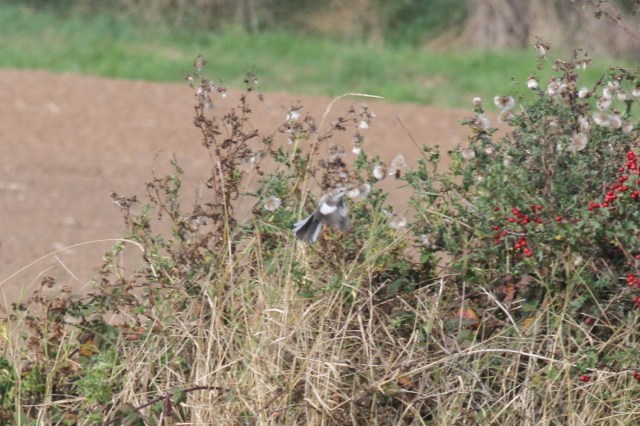
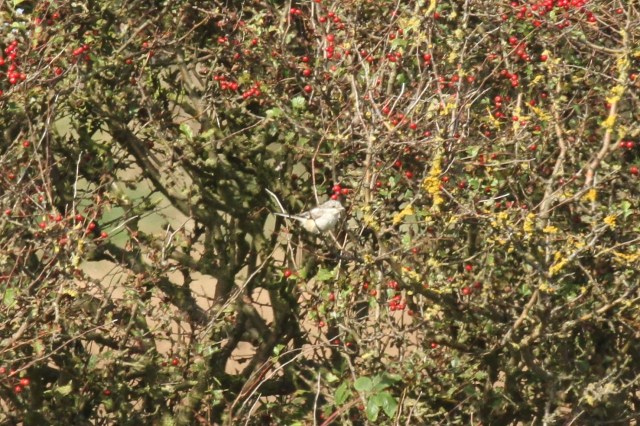
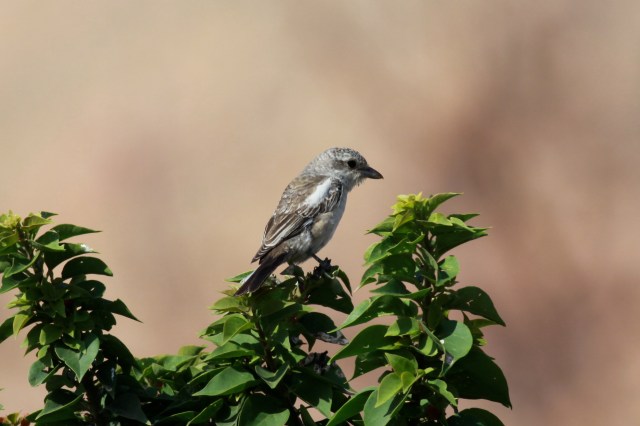
Red-breasted Flycatcher, East Runton, 14th September 2014

Having spent most of last week in Peterborough I was relieved to find, on our return this afternoon, that there were still a few drift migrants around in Norfolk. There also appeared to be a few things just arriving, including a Red-breasted Flycatcher, just down the road from us, at East Runton. I turned up at the spot and, unusually for me just lately, the bird was ‘on show’. Probably a young bird, lacking any trace of red in it’s throat – nice to see all the same.
IMG_7299 IMG_7321

Migrants arrive in Norfolk

IMG_7229

Wryneck, East Bank – Cley NWT, 5th September 2014

Encouraged by recent reports from Blakeney Point, I decided to spend yesterday morning doing the walk. Early Wheatear activity around The Marrams gave reason to be optimistic but by the time I’d reached Halfway House I was beginning to worry. There was a small group of Whinchat, including a very pale individual, at The Hood and four Redstart, including a male, at Long Hills. On the Point itself there were single Pied & Spotted Flycatchers, Reed, Garden and Willow Warblers more Whinchat and a couple of Chiffchaff  – though, sadly, nothing more exciting. Fortunately for me the Wryneck on East Bank, Cley NWT was still present in the afternoon.

Several Whinchat were at The Hood, including this rather pale looking adult

IMG_7079

Male Redstart – one of a total of five

IMG_7108

Willow warbler

IMG_7115

Spotted Flycatcher at the Plantation

IMG_7128

Pied Flycatcher

IMG_7120

Meanwhile – back at Cley, a rather obliging Wryneck on the path at East Bank.

IMG_7252

ECT etc.

DSC08386

Eastern Common Tern (possible), Arnold’s Marsh, Cley NWT, 29th August 2014

Thanks to Steve and Richard at Cley I can now confirm that my possible possible is indeed a definite possible!

There’s been an odd Tern knocking about along the North Norfolk coast recently – thought to be a Common Tern of the race longipennis or Eastern Common Tern – ECT for short. It’s been regularly seen in the high-tide roost at Scolt Head island and previously but briefly at Cley.

Last Friday afternoon I went looking for a reported Black Tern on Arnold’s Marsh, Cley NWT. There were plenty of Sandwich Tern in the roost, with a few Common Tern but the Black Tern, I was informed by the assembled small group of birders, had just flown back out to sea. As I scanned the flock I became aware of a rather odd looking bird roosting on a small spit in the middle of the marsh. I was sufficiently intrigued by it to attempt to take a couple of digipics. The bird in question was being touted as a probable Arctic Tern but to my eye, although it did look short legged, it was too dark in it’s upper parts and the breast looked rather smokey – contrasting with it’s white cheeks and throat. The group dispersed and I decided to get a better look from the shingle ridge. I quickly relocated the bird but this time it was mostly side on and the detail of the breast was obscured. However, the all dark cap – lacking any white forehead, mid grey upper parts, all white tail stopping short of the primaries and – most intriguingly, an all black bill and dark legs were clearly visible. I managed a few grab shots before the bird took to the air and departed over the ridge to the sea. As it did so, however, it showed a clean upper wing with no signs of the characteristic primary wedge of regular Common Tern. Certain that it wasn’t an Arctic, I returned home without a new Tern tick for the year – oh well!

Over the weekend Steve Gantlett posted pictures of the possible ECT at Scolt Head on his blog and I became immediately suspicious that it was one and the same bird. I sent Steve and Richard Millington copies of my photos and I’m pleased to report that they quickly confirmed the id – my possible possible has become a definite possible!

More digipics showing, in the first shot (the bird just to the left of the samphire) the smokey breast contrasting with white cheeks and throat

DSC08354

and in the second, the plain mid-grey upper wing, lacking the usual primary wedge

DSC08387

Just got to wait now until they decide to split it!

Pink and Purple – Top the Bill

IMG_7016

Purple Sandpiper, Sheringham beach, 31st August 2014

Today was spent in the company of Bob & Sue, our long-time birding buddies, attempting to replicate our achievements over the bank holiday, when we amassed a total of 104 species in Norfolk in a single day. We got off to a reasonable start by seeing forty different birds in the Felbrigg estate before breakfast! Yesterday most of the scarce birding action was on the coast, at Winterton dunes – birds included Greenish Warbler, Wryneck, Red-backed Shrike, Pied Flycatcher and Redstart. Suffice it to say that this morning we managed to see none of the aforementioned! A short coffee break, back at base, and on to Cley NWT – from here on the birding got better and better. From Dauke’s hide we saw a good selection of waders including five Little Stint, adult moulting Curlew Sandpiper, Greenshank and Green Sandpiper. Down at the beach, more Curlew Sandpipers, Wheatear, Spoonbill and, out at sea, Great and Arctic Skua, Guillemot and Black Tern – up to nine, including the four roosting on Arnold’s.

However, the best was still to come. A late afternoon return visit to the play-park at Weybourne to look for the reported Rose-coloured Starling was quickly rewarded when the adult ‘Pink Stink’ flew straight across the park and on to a nearby TV ariel! On to Sheringham for a final sea watch. With absolute 100% visibility and only a weak on-shore breeze the prospects were poor but the day ended in style with a rather unseasonal and very approachable Purple Sandpiper feeding unconcerned amongst the holiday makers!

Some photos:

IMG_6978

IMG_6967

IMG_6962

IMG_7013

IMG_6989

IMG_6998

Ninety odd birds, some of real quality, made for another great Norfolk birding day out.

Bonxie on the beach

IMG_6896

Great Skua (Bonxie), Salthouse, 29th August 2014

I was  just on my way over to Peterborough when the pager announced that there was a Great Skua on the sea pool at Salthouse. Although I’ve done the odd bit of sea watching this autumn I’d not yet caught up with this – the largest species of Skua in the Western Paleartic, so the minor detour seemed worth the gamble. As I drove down Beach Road I could see a couple of guys looking east through scopes. I parked up and scanned the pool – nothing. Then there it was, a rather pale and slightly dishevelled adult Bonxie, sat on the shingle ridge. This very approachable individual gave prolonged views before finally flying off towards Cley, chasing a gull. It was reported later in the morning flying over North Scrape.

A couple more shots of this interesting and approachable bird:

IMG_6886 IMG_6905 IMG_6910 IMG_6911

Bank Holiday Hundred

IMG_6780

Migrant Wheatear, Gun Hill, Norfolk, 24th August, 2014

Yesterday Jake and I had a day out birding. As things have been a bit quiet of late on the Norfolk birding front, we decided to set ourselves the challenge of seeing a hundred different species during the day. We started at Titchwell, where the highlights were Spoonbill, Peregrine, Spotted Redshank, Arctic Skua, Whinchat, Common Swift and Eider. Next stop was Choseley Barns where we added Corn Bunting and Yellowhammer, then on to Gun Hill for a long flog round in search of migrants – nothing particularly special but we did see a couple of Wheatear, several Lesser Whitethroat, Garden Warbler and a Whimbrel.  A brief stop-off at Holkham Hall provided Nuthatch, Goldcrest and, rather surprisingly, Marsh Tit. Our final stop was Cley NWT, where we added Little Ringed Plover, Wigeon, Greenshank and Yellow Wagtail – making a grand total of 104. Not bad for a rather unpromising late summer birding Bank Holiday!

There were plenty of common waders along the coast, including Dunlin

IMG_6756

This was my first autumn flock of Golden Plover for the year

IMG_6762

Kestrel, feeding on a rabbit carcass, Gun Hill

IMG_6784

One of several Lesser Whitethroat seen

IMG_6769

Reed Warbler, in the legendary apple tree at Gun hill

IMG_6787

As autumn draws ever closer here’s hoping for additional quality as well as quantity!

‘Weird Wader’ (with update)

Following a busy weekend participating in the Three Peaks Challenge, which incidentally the guys managed to complete in 23 hours and 24 minutes despite the appalling weather, it was ‘business as usual’ for my ‘duty day’ at Cley NWT on Monday. Nothing particularly stunning, but eighteen species of wader on Simmonds Scrape during the morning was pretty good. Here are a couple of digiscope record shots, from the last couple of weeks, to make up for the lack of posts – partly due to continuing internet difficulties:

Grey Plover in near summer plumage

DSC08247

Juvenile Little Stint – Simmonds Scrape

DSC08169

DSC08193

Seen the previous week on Sea Pool – Curlew Sandpiper

DSC08162

Finally an odd looking Dunlin seen on Simmond’s Scrape this week, with noticeably (symmetrical) apricot-coloured flank patches. Couldn’t decide at first if this bird was stained in some way, had been colour-marked at some point or was just an aberrant individual – interesting all the same. Grateful for any comments.

DSC08266

DSC08253

Update: The bird was still present on 25th., although the flank coloration appears to be fading, presumably as it’s moult progresses

DSC08294 DSC08297 DSC08311

Hopefully, with working internet and autumn approaching, we should be back on track with more regular posts.


Three Peaks Challenge

P1040211

Ben Nevis – first climb of the amazing Three Peaks Challenge

This coming weekend we’re doing the Three Peaks challenge – climbing the three tallest mountains in Scotland, England & Wales, all in 24 hours! Well, when I say ‘we’ I mean three of our sons Matt, Josh and Jake, with their cousin Jack – in aid of a truly worthy charity, Marie Curie. My small part in this heroic venture is to act as driver, cook, first aider and general dog’s body! The itinerary goes roughly like this:

Friday night, drive to our Lancashire ‘base camp’. Saturday 10.00 am depart for Scotland, arriving at Fort William for around 4.30 pm. Ascent of the first peak, Ben Nevis, 4409ft, begins at five in the evening – they should be safely off the mountain by night-fall. Over-night drive to Wasdale Head, in the Lake District, ready for the climb of Scafell Pike, 3209ft, starting at 4.00am. Five hours later we should be on the road heading for Llanberis and the final ascent –  Snowdon, 3560ft,. If all goes to plan they should be up and back in four hours, inside the time limit of 24 hours!

Please do visit their giving site at http://www.sponsorme.co.uk/joshwilliams/3-brothers,-3-peaks,-24-hours!.aspx and support this noble cause.

TalkTalk -walk, walk!

After ten days of no internet, we finally got our service restored at lunchtime today. How have we become so dependant on  something we understand so little about (I’m speaking for myself here of course) and have even less control over?? It’s a long story, which I won’t bore you with, but it was only when we demanded the code to change provider that TalkTalk finally got their act together, stopped blaming everyone else and fixed the problem – in two hours!

Anyway, enough of the whinging, here is a catch-up blog of birding stuff over the past week. On Friday we called in at Titchwell in the hope of ‘ticking up’ the Spotted Crake that had been there for several days and which was showing well, if only occasionally. It was the usual story, we arrived about ten minutes after it had been seen, I glimpsed the bird very briefly heading into the reeds and then it was two hours before the thing showed itself again! After a much appreciated late lunch we headed towards Cley/Salthouse, where a Purple Heron had been reported earlier in the day. We dropped into the NWT Centre to ask for an update and were told that it was last reported in a ditch, south of Arnold’s Marsh. We parked up and yomped down East Bank, where the couple of birders present said they hadn’t seen it. I turned and looked over towards the coast road to see a group of distant birders looking intently through their scopes at something in the vicinity of Pope’s Marsh! I’d just started yomping back towards the road again when the bird obligingly flew up, across the marsh, along the single bank and dropped down in the reed bed between North Scrape and Pat’s Pool. Brief, but very acceptable views of a quite rufous looking juvenile.

Spotted Crake, heads for cover

IMG_6661

‘ Excuse me Ma’am, have you seen the Purple Heron?’ – ‘Yes, it’s behind you..!’

DSC08146


Corncrake capers

DSC08077

Young Corncrake, Nene Washes RSPB, 23rd July, 2014

Last Wednesday we were up early to get to the RSPB Nene Washes reserve for 8.00 – we’d been asked to join in the first of this years Corncrake trapping sessions, providing data on the ongoing reintroduction scheme there. After an initial briefing we set off in a line beating a 300m strip of wet meadow, deep in the heart of the reserve. It took us a couple of hours, slowly pushing the birds – at least that’s the idea, towards a line of nets and traps. We didn’t see anything during the drive, except I found an Elephant Hawk Moth caterpillar, until we got to the very end – then in the last 30m several birds hurled themselves into the traps. We caught five birds in all, two retraps, two un-rung juveniles and a chick. A pretty good catch!

The happy bunch of beaters

DSC07973

Getting to grips with the first ‘catch of the day’

DSC07996

Processing begins

DSC08000

Re-trap, one of two dozen males on the reserve this year

DSC08001

Ringing one of this year’s juveniles

DSC08065

DNA swab

DSC08016

What a cute little black chick

DSC08035 DSC08040

The moment of freedom

DSC08104

and talking about ‘cute’ – the Elephant Hawk Moth caterpillar

DSC07981 DSC07976