Australian Big Year Lister ‘tick’

john_weigel_-_Google_Search

John Weigel, Australian champion Big Year lister

Yesterday morning – early of course – we assembled in MacDonald’s car park for another expedition into Hexham Swamp. The cause of this latest visit, Australia’s 8th Buff-breasted Sandpiper, observed there on Saturday by a couple of lucky birders. Several car-loads of Australia’s elite twitchers were assembled, including John Weigel who, in 2012, set a new national Big Year record of 745, eclipsing former record holder Sean Dooley’s total of 720 – this achievement being immortalised in his highly readable account, The Big Twitch. With just a year off, John is back on the trail, seeking to break the 750 barrier for the total number of species seen in Australia in a single year – he must be insane! Our modest efforts last year to see over 300 in the UK in a single year seemed demanding enough ( see ‘301 – and still counting’ December blog ) but the challenges of an Australian Big Year record breaking attempt are truly herculean!

‘Bottom line’ however was that the Buff-breast wasn’t seen, by John, us or anyone else for that matter! I did manage to rack-up a couple of Aussie ticks though, in the shape of Pectoral and Wood Sandpiper.

Wood Sandpiper – a scarce summer visitor to NSW

IMG_9926

Pectoral Sandpiper, defending it’s territory from a Sharpie.

IMG_9940

A couple of shots of Grey-tailed Tattler, in the roost at Stockton

IMG_9998 IMG_0001

 Our return visit to  Stockton sand-spit, later in the afternoon, added another couple of species to the trip list, which currently stands at 228 – just another 522 to go then!!


Looking for Albert

Yesterday morning, on our way back south to Newcastle, we went looking for Albert – well his Lyrebird actually. The pristine mountain rain forests around Tamborine, are a good place for this shy and elusive species – so after another 4.30am start ( well more like 3.30, courtesy of the previous occupant of our motel room who had kindly set the alarm for us!) we were in position at the start of the Witches Falls trail for dawn. Right on cue an Albert’s Lyrebird began calling deep in the wooded valley below us. It was nearly an hour before we finally found it, sat high up in a tree and occasionally uttering it’s curious mix of whistles, tweets and gronks. Photography in rainforests at dawn is never an easy matter so, with this particularly elusive subject, I was tolerably pleased with the outcome:

IMG_9870 IMG_9849


IMG_9864

We also managed to add another rainforest ‘tick’, in the shape of Pale Yellow Robin and a trip tick -Wompoo Fruit-Dove. Not a bad return for our efforts.

We’re back in Newcastle this afternoon and awaiting the arrival, at the end of the week, of Joe & Gabi and Rob & Gi for a big Australia Day get together.

Mangrove Miscellany

Burrum Heads, where our rather splendid holiday house is located, sits at the mouth of the Burrum river with it’s shoreline edged with mangrove. This unique environment has it’s own particular bird life and over the past week we’ve managed to find most of it.

The Burrum estuary, with watchful Brahminy Kite

IMG_9669

The mangrove

IMG_7347

First of the mangrove specialities – Mangrove Gerygone

IMG_9721

Mangrove Honeyeater

IMG_9639

Fairy Gerygone – not exclusively a mangrove dweller

IMG_9753

Shining Flycatcher on the other hand certainly is. This elusive female was no compensation for the ‘eye-balling’ views we had of a male on the very day I forgot to put a card in my camera!

IMG_9732

Little Shrike-thrush – another elusive species

IMG_9591

Not a mangrove dweller particularly but Red-backed Fairy-Wren is always nice to see

IMG_9619

Finally, Dollar Bird, a summer migrant which is well distributed – we just happened to see this one near the mangrove!

IMG_9676

Three ‘life’ ticks in the mangrove – rather more mosquito bites!

BBBQ – right on cue

Inskip Point, Queensland, is apparently the place to ‘tick up’ the elusive and very restricted Black-breasted Button-Quail (BBBQ). As luck would have it, by the time we’d finished visiting Jane’s aunty & uncle and taken the kids to see the interesting Historical and Gold Mining museum in Gympie, we had just enough time to drive to the Point in search of the little critter. ‘Just go to the car park and walk to the Fraser Island jetty’ was the advice we’d been given – which we duly followed. Nothing on the track out to the jetty but then, on the return leg I flushed a quail sp. off the track and into the undergrowth. Convinced that this was our target, and despite the ravenous mosquitos, we search about until we’d all seen the female BBBQ well. Unfortunately the same could not be said for the photos, here is the best of a bad lot:

IMG_9609


BBBQ safely UTB!

Family Reunion

Jane has an Uncle John and Aunty Lillian living in Australia – John is her Dad’s brother. She last saw them around the time of our wedding in 1977! Realising that they were just down the road from our holiday house – well by Australian standards that is, we decided to call in on them this morning. We found them in good health and enjoyed a leisurely catch-up. They even got to see their great, great nephews! There was the inevitable emotional parting…

DSC06289 DSC06290 DSC06292

Visit to Lady Musgrave

Another 4.00 am start, followed by a three hour drive, got us to the quayside at Town of 1770 ready for our holiday highlight – a day cruise to Lady Musgrave Island, the most accessible point of the Great Barrier Reef to this part of Queensland. Although we were advised by the ship’s captain that sea-sick pills were a ‘must’ for the mornings voyage, and OK it was a bit choppy in places (well most of the places actually!) the two hour crossing and occasional sea watch passed quickly and without gastric incident!. Whilst a good number of our fellow passengers were recovering on board or on the pontoon, moored in the coral cay lagoon, we were part of the first group to visit the 35 acre Lady Musgrave Island – breeding ground of a huge number and variety of sea birds. After a truly ample lunch, snorkelling was the main activity – along with more bird watching. We were back on the mainland by five and home for supper and bed by 9.00pm. Not surprisingly the day list was pretty short, but made up for by the sheer volume of birds and their close proximity. A handsome total of five ‘lifers’ and seven Australia ticks.

Brown Booby, seen on the approach to Lady Musgrave Island and fishing in the Cay lagoon

IMG_9410

Black Noddy, nesting in their thousands on LMI

IMG_9382

Not surprisingly tern species were much in evidence – in this small group, Crested, Bridled, Black-naped and Roseate

IMG_9401

Bridled Tern – having seen the UK, Farne Islands, bird last year it was good to catch up again with this species breeding the other side of the world

IMG_9357

A new species for me – Black-naped Tern

IMG_9393

Flight shot of Crested Tern – but I’m still searching for Lesser Crested!

IMG_9432

Amongst the non-tern species, this Eastern Reef Heron

IMG_9362

Greater Frigate Bird

IMG_9336

and Wandering Tattler

IMG_9367

After lunch, a spot of snorkelling. Preparing to take the plunge

DSC06263

Dan with a slightly reluctant Solomon, Morgan with Jonah and ‘Grandma’ watching over Samuel

DSC06268

Farewell to Lady Musgrave, a most generous host, providing a really enjoyable day out for all the family with a handful of new birds thrown in – how good is that?

Night terrors

Unlike  UK ‘night birds’ – owls and nightjars, which come out at dawn and dusk, these species in Australia are strictly nocturnal. So after several fruitless night walks, yesterday we managed to catch up with two night time ‘ticks’, Australian Owlet Nightjar and Southern Boobook. The price we paid for this success however was to be eaten alive by mosquitos – despite wearing long pants, sweaters, hats and being dosed with liberal quantities of repellent! Under these rather testing circumstances it’s not surprising that the photos are rather poor – just about good enough to get an overall impression of the birds.

Australian Owlet Nightjar, just about twenty centimetres long – half of which is made up for by it’s tail. A common and well distributed  species but, lacking an ‘eye shine’, very difficult to see in heavily forested areas.

IMG_9089


The Southern Boobook was a slightly easier quarry, with a bright orange eye shine and readily responding to play-back

IMG_9114

Two down and about another half dozen to go, with more ‘night terrors’ to face in the process – better send for another tub of bite cream I guess!

Ash Island does the Double

A couple of recent excursions to local birding hot spots have paid dividends, particularly Ash Island, which has produced two Aussie ticks for me – White-winged Black Tern and King Quail, in as many days. Other interest has come in the form of Black-necked Stork at Pambalong Reserve and at Bunnings ‘scrape’ (the equivalent to a B&Q carpark in England!) another tick in the shape of an Eastern Yellow Wagtail – with a supporting cast of eleven Australian Painted Snipe! These ‘celebrity’ birds, together with a heap of the more common local stuff, have nudged the list to over 150 already!

First up, a Sharp-tailed Sandpiper – the ‘default’ wader species on Ash Island and adjacent Hexham Swamp

IMG_8574

Black-necked Stork, a scarce visitor/possible occasional breeder in the lower Hunter. We found this immature bird at Pambalong

IMG_8776

First of the two Ash Island ticks –  one of four White-winged Black Tern, photographed here with Welcome Swallow.

IMG_8725

The search is on for the second, which required a 4.30am start, a ‘planet earth’ tick – King Quail! Pictured here, at one of NSW’s biggest recent twitches – from left to right Steve & Mick Roderick, Dan and me – Jane taking the photo

DSC01063

.. and here’s the prize, an amazing shot taken by Mick, of a two second show as this ‘micro’ Quail flew to cover!

King_Quail_images_-_trevorjwilliams55_gmail_com_-_Gmail

More ‘celebrity birds’ – this one, a self found Eastern Yellow Wagtail at Bunnings Scrape. This species was only recently discovered  wintering, in single figure numbers, in the Ash Island/Hexham Swamp area, so to find one away from the regular location was a real bonus

IMG_8822

Mick kindly turned up at Bunnings to confirm the identification of the Wagtail and promptly found a group of Australian Painted Snipe! This photo features four of the total of eleven seen

IMG_8854

To conclude this ‘birds of the lower Hunter’ blog, some of the more regular species…

Nobby’s Noddy

DSC06165

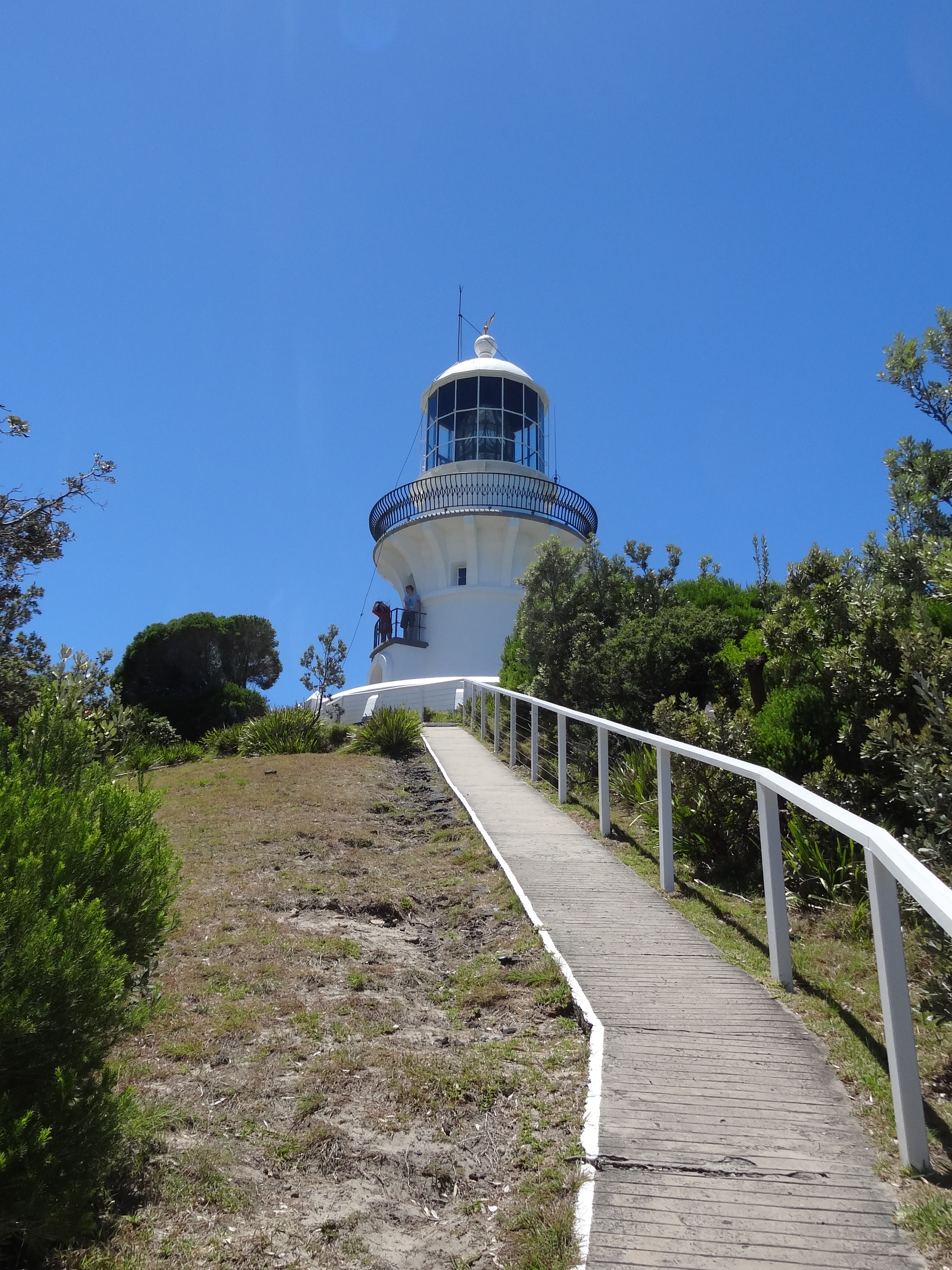
The Light House, Nobby’s Head, Newcastle

Saturday, and we move out of the Old Brush to a hotel in Charlestown – nearer to Dan, Morgan and the kids, and with a few more creature comforts. In the afternoon we enjoy a family outing to see the sights of Newcastle’s water-front, treat ourselves to ice cream and, by some complete fluke, collect our first Australian ‘tick’ of the trip! Casually looking out to sea, Jane spots a largish brown sea bird off shore. Dan confirms that it’s a Wedge-tailed Shearwater and then, scanning further out to sea, sees another interesting pelagic species – a probable Noddy, blogging over the rocks, just off of Nobby’s  Lighthouse. We quickly clean the kids up, collect optics from the car and head off up the Point. Sure enough, with the aid of a telescope, we are able to confirm the identification features of Common Noody – a rare summer visitor to Newcastle and a ‘planet earth tick’ for Jane and I. We continue to the end of the breakwater to enjoy the spectacle of an Australian Fur Seal, swimming about to the delight of the small assembled crowd.

The gorgeous ‘tribe’ of grand kids – Jonah, Samuel & Solomon, enjoying an ice cream!

Distant shots of Common Noddy, blogging off Nobby’s Head, Newcastle

DSC00763

DSC00775

and Australian Fur Seal, courtesy of Jane.

DSC00797

A lovely family afternoon and a completely unexpected ‘life tick’ into the bargain.

Back to Old Brush

DSC06147

After a long but trouble-free flight from the UK we arrived back at the Old Brush, a delightfully tranquil retreat, half and hour from Newcastle and Dan, Morgan and the kids. A great place to recover, get over the jet lag and relearn the basics of Australian birding.

The cabin:

DSC06163

DSC06162

DSC06157

DSC06158

The grounds;

DSC06149

IMG_8069

IMG_8060

DSC06144

The birds: Dusky Moorhen

IMG_8158

White-headed Pigeon

IMG_8220

Eastern Yellow Robin, courtesy of Jane Williams

DSC00520

Australia Brush Turkey

IMG_8258

Yellow-throated Scrubwren

IMG_8311

… and finally, if you’ve got an itch you just have to scratch it!

DSC06141