Tex-Az – Day Twenty Three

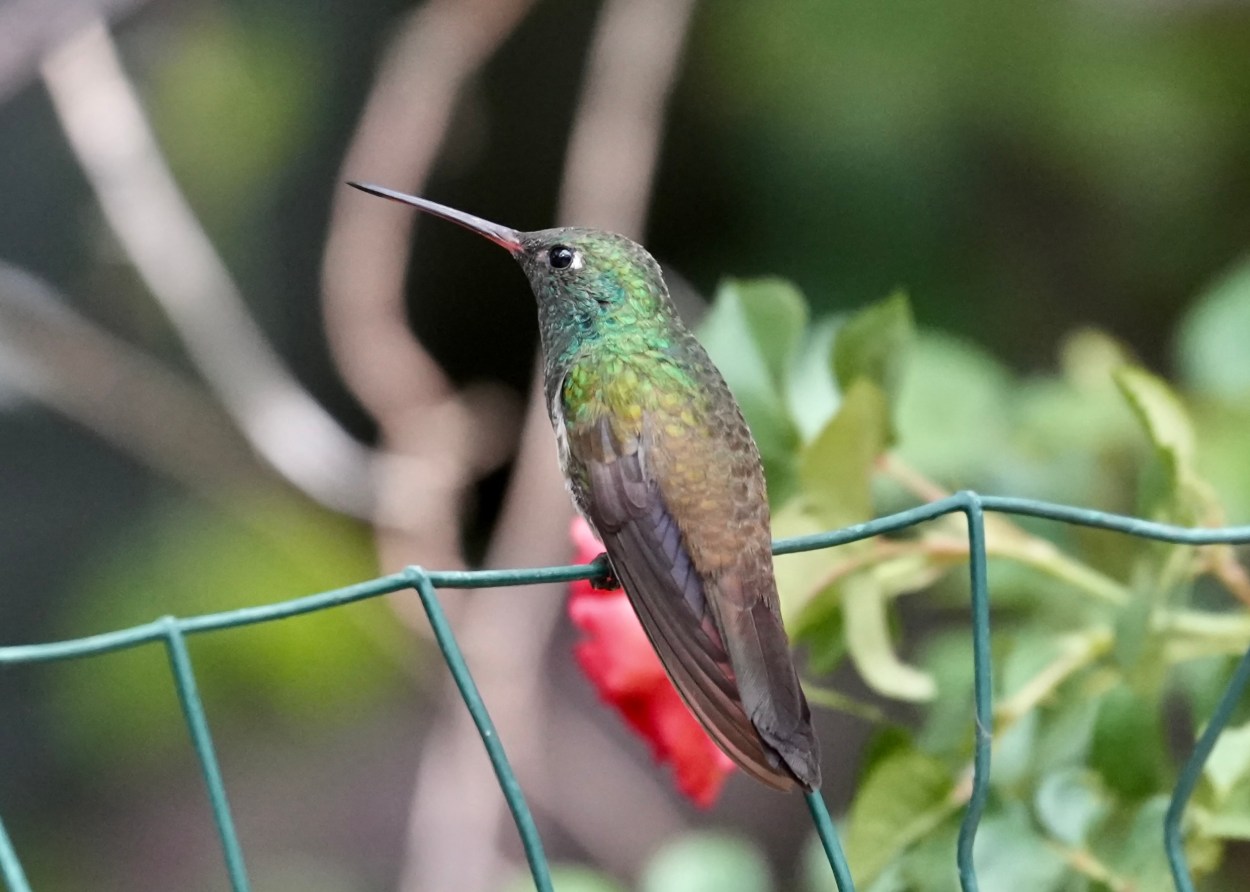
Berylline Hummingbird – a rare visitor from West Mexico – and a US tick

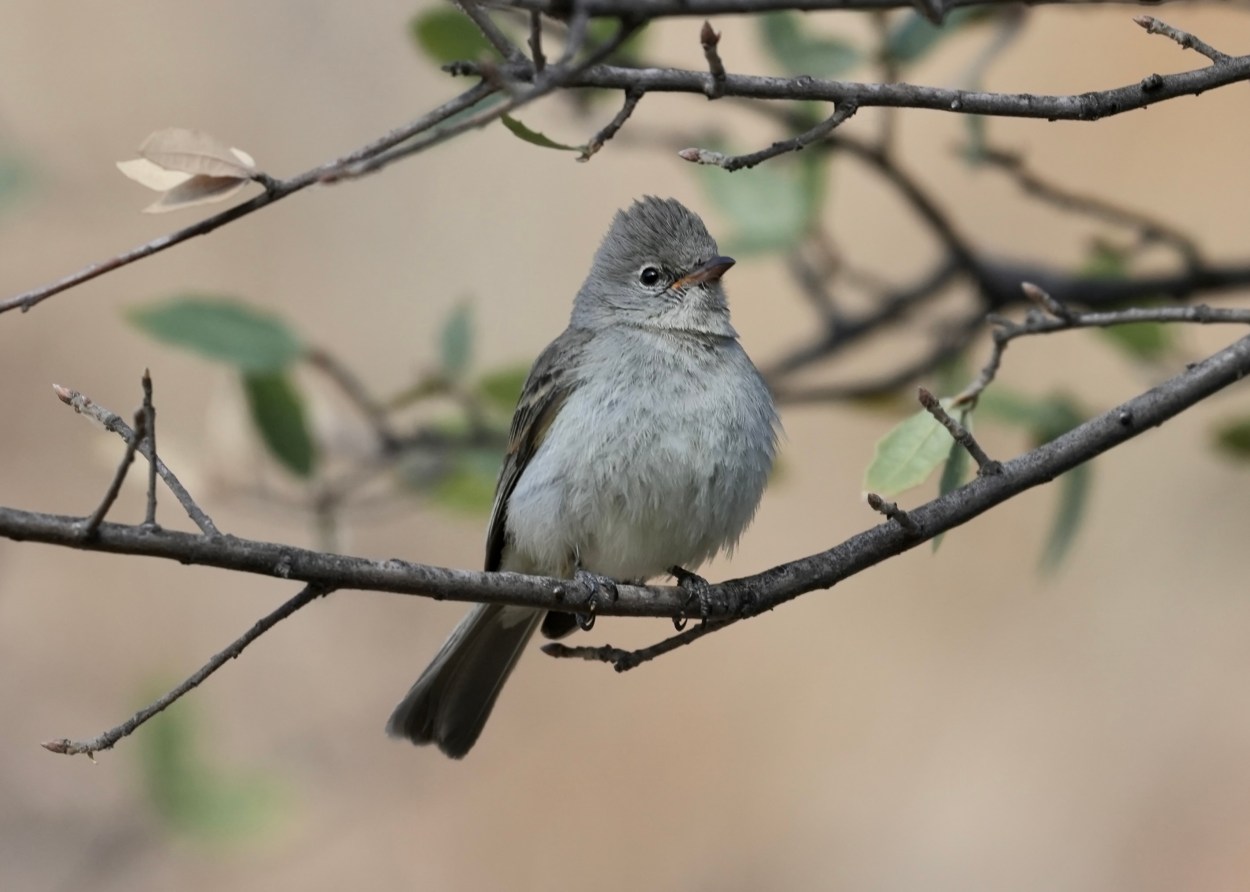
After more than three weeks of travelling we’ve reached the most westerly point on our Tex-Az birding trip itinerary. Green Valley is a convenient location for accessing the western canyons of Madera, Montosa and Box. Our day started at Paton – nothing new but some nice early morning birding anyway. We then drove through the outskirts of the border town of Nogales to reach a stretch of the Juan Bautista De Anza trail which, in the past, has provided some special birds – but not on this occasion. It wasn’t until Amado water treatment plant that we added our first tick of the day – a lone Ring-billed Duck, amidst the flock of Black-bellied whistlers. After a brief recce of Montosa Canyon – a new location for us, we had lunch and checked in at the Comfort Inn, our base for the next couple of nights. We then headed out to Madera Canyon for an afternoon and evening birding session. One of our target birds was Berylline Hummingbird, which had been reported from Madera Kubo B&B. We arrived just as the bird was spotted visiting the feeders. It obligingly hung about for us to obtain photos. A US tick for us. We also added Yellow-eyed Junco as a trip tick. We did a bit more general birding – killing time before dusk. At the top carpark we heard Whiskered Screech Owl calling and saw our first Lesser Nighthawk emerging. Later, at the Amphitheatre, we added Western Screech Owl and Northern Pygmy Owl. Our total for the trip is now around 340 – just ten more species to reach our ambitious trip target.
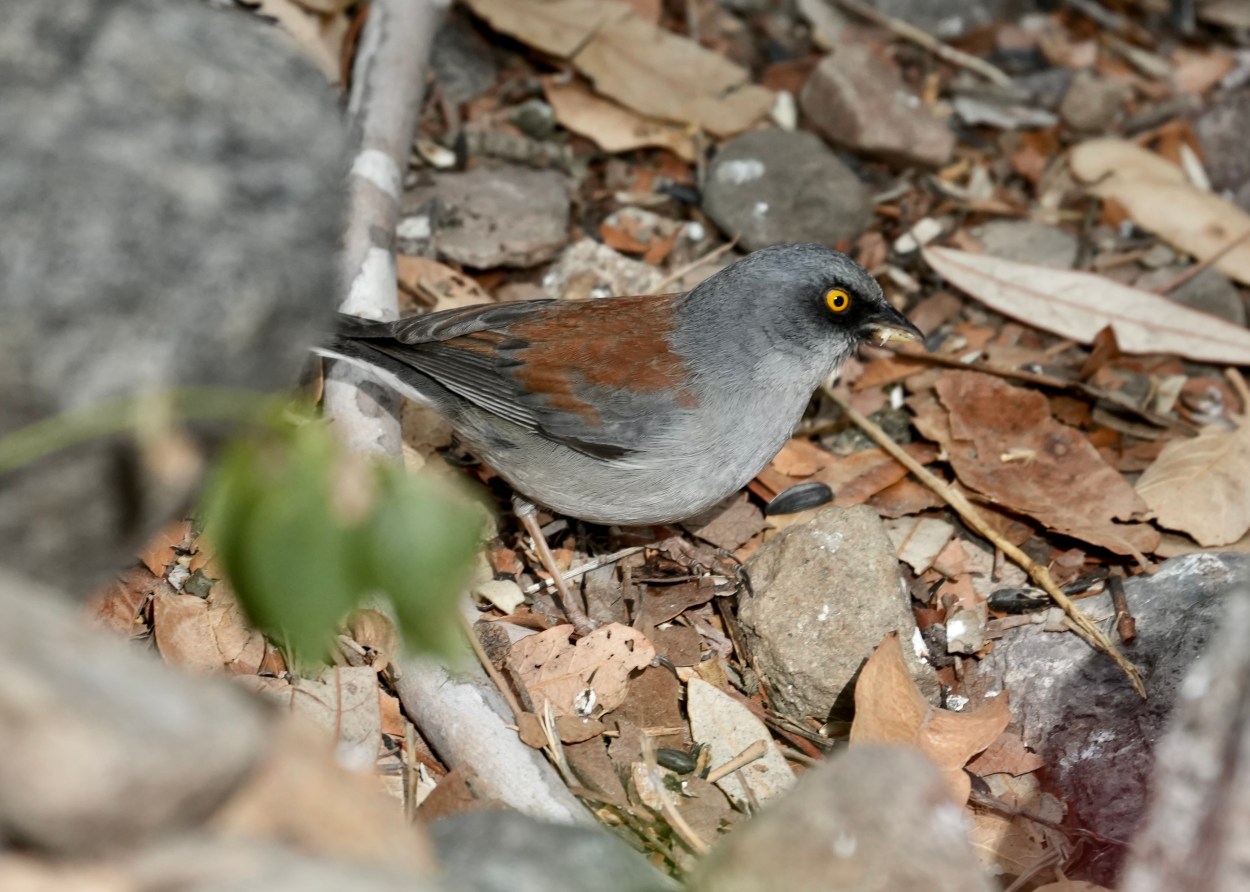
Yellow-eyed Junco another trip tick at Madera Kubo B&B
Our day-time birding was book-ended by the delightful Hermit Warbler – seen at Paton and Madera

Tex-Az – Day Twenty Two

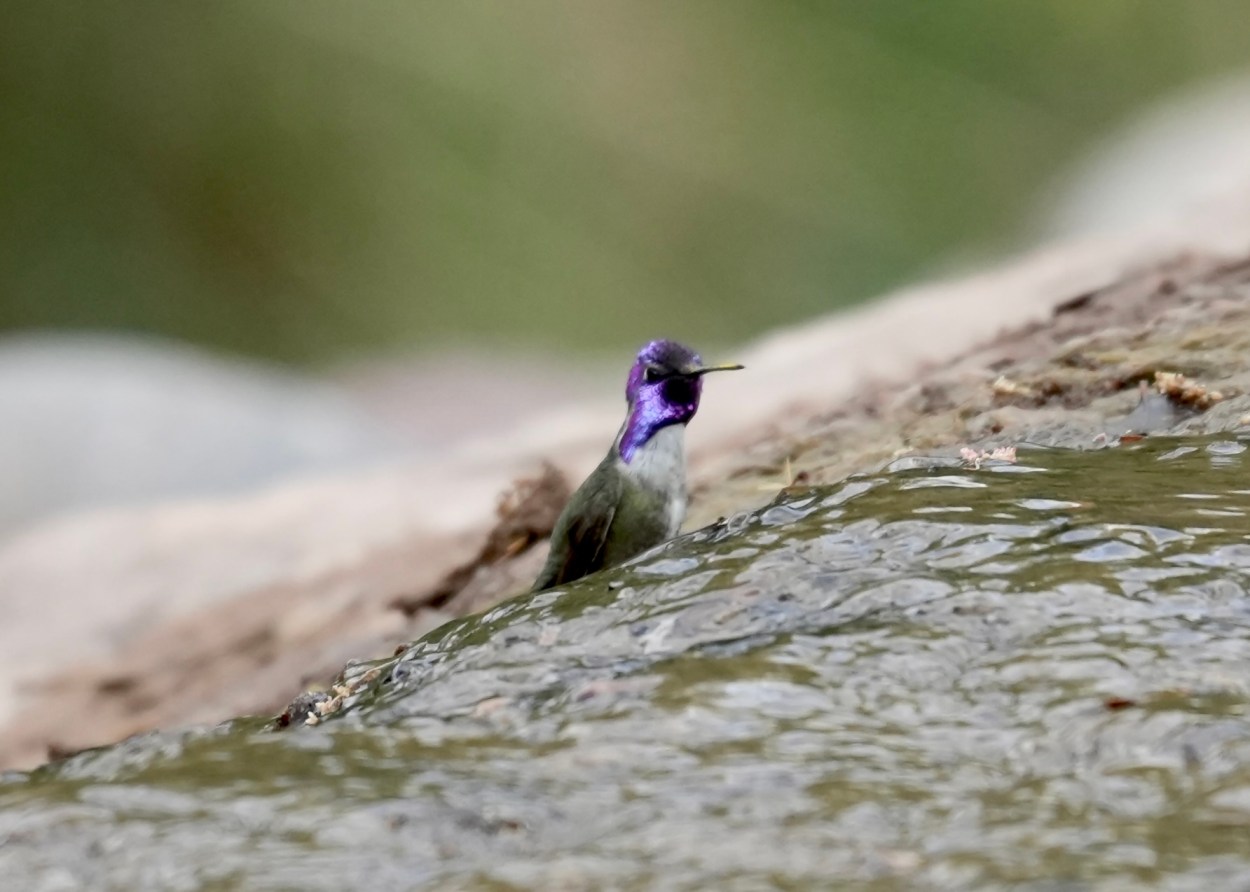
Record shot of Costa’s Hummingbird – first new bird for the day. Seen in nearly freezing conditions

We’re staying in an AirBnB on the edge of Patagonia, which is in a very birdy part of South East Arizona. Today we spent the day visiting several sites within ten miles of the town, starting at dawn with the excellent Harshaw Road. Despite the temperature – just 41 deg f. when we set off – we’d added three new trip ticks before breakfast: Costa’s Humming Bird, Vaux’s Swift and Phainopepla. Next was the hummingbird centre, followed by the famous roadside rest area along the H82, which provided us with our second swift species of the day (and trip) White-throated. Next was Patagonia Lake State Park, where Western Grebe near the dam was another new bird. After our afternoon siesta we returned to Paton for a final session where we continued to miss Broad-tail hummer and Mourning Warbler but did finally catch-up with Tropical Kingbird, which arrived in the car park just as we were leaving. On our way home – just five minutes through the town – we stopped at the Mississippi Kite stake-out. It wasn’t there but a kettle of 70+ Turkey Vulture caught my attention. A lone Cooper’s Hawk was the only different bird until, high in the sky above them, I spotted a Golden Eagle. Our last addition to the list for the day. We’re now on 333 and trying to chase down a few more species to get to my ambitious target of 350!

Phainopepla – once we’d seen our first we saw plenty
Same was true for this guy – Beardless Tyrannulet. They seem to be everywhere nowadays
Townsend Warbler, seen at the Mourning Warbler stake-out at Paton – which never showed
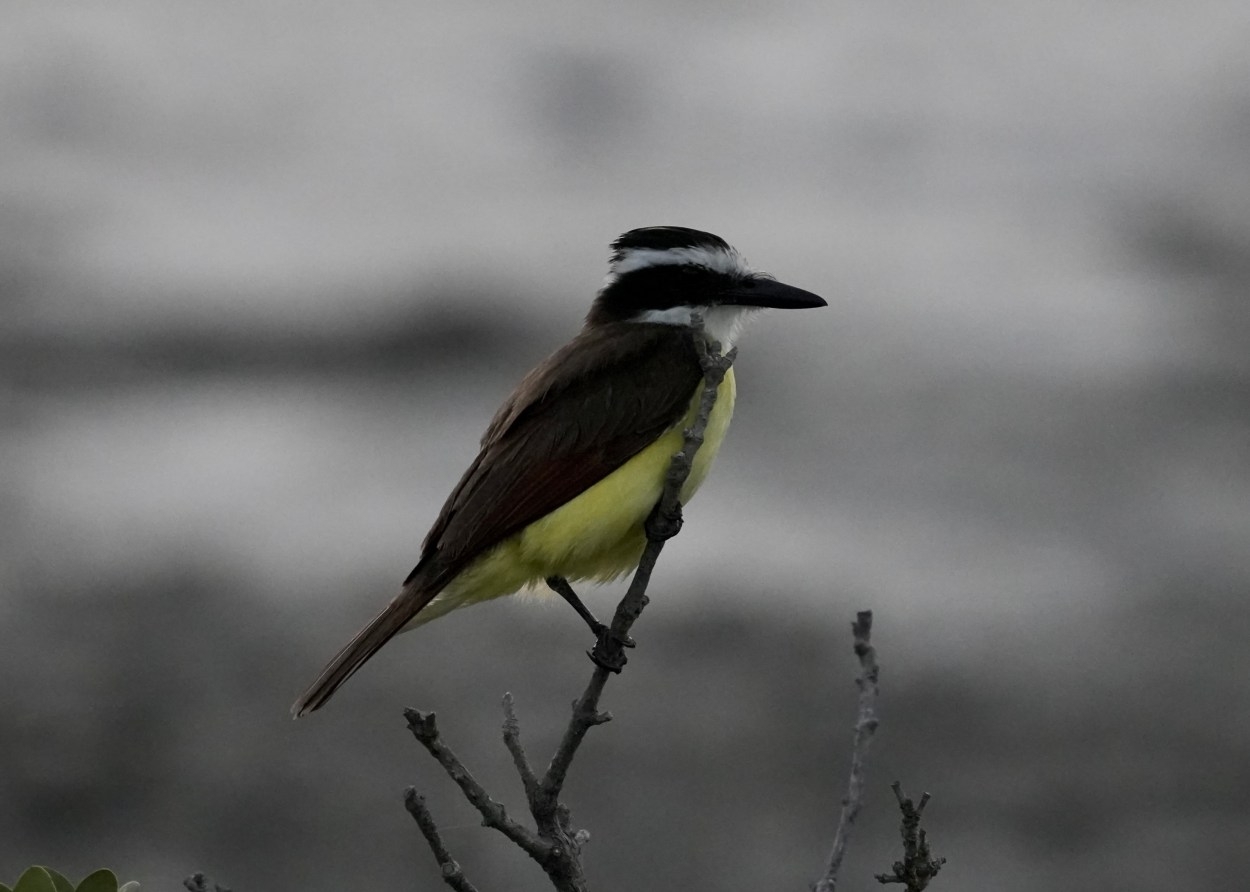
Tropical Kingbird which obligingly turned up in the car-park just as we were leaving
Last bird of the day – Golden Eagle – seen was looking through a kettle of Turkey Vultures

Tex -Az – Day Seventeen

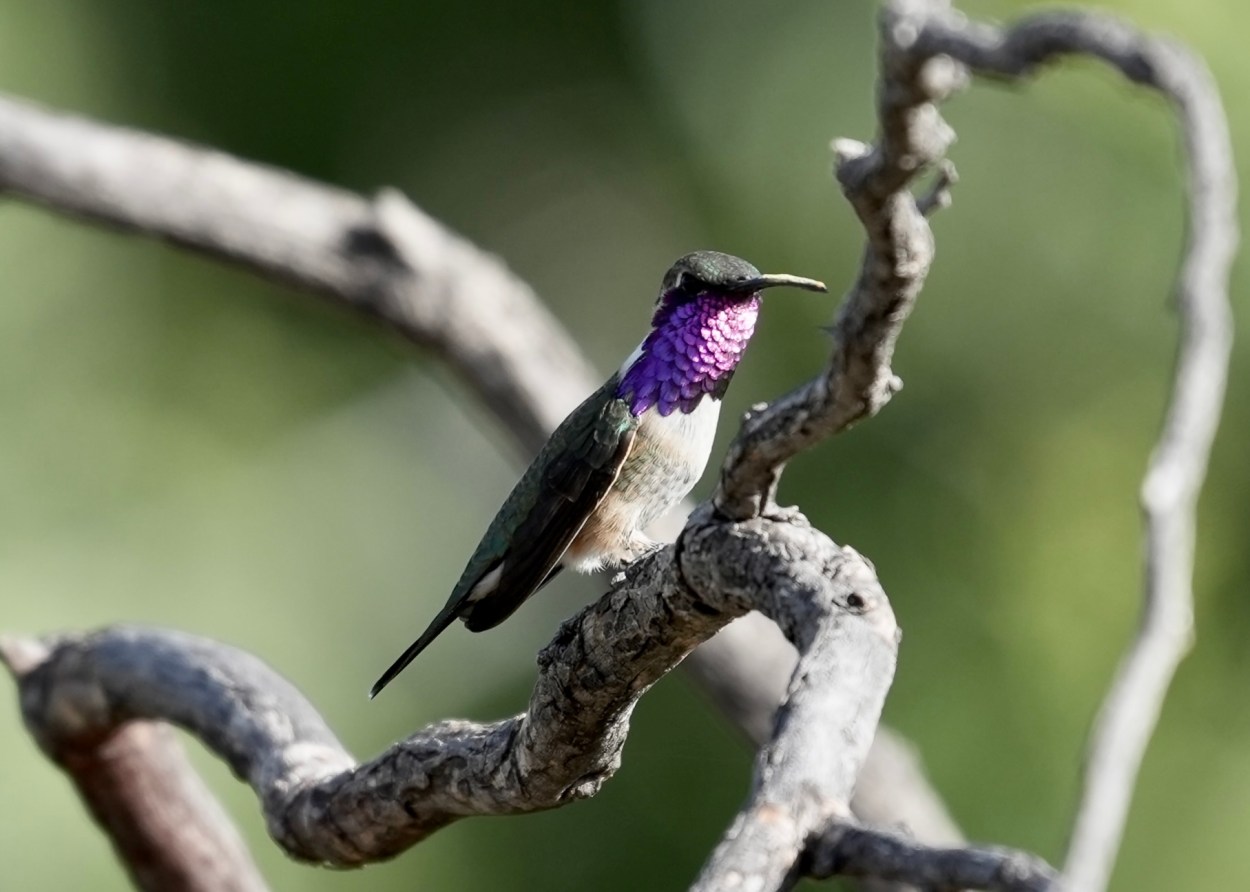
Our target bird at Christmas Mountain – Lucifer Sheartail

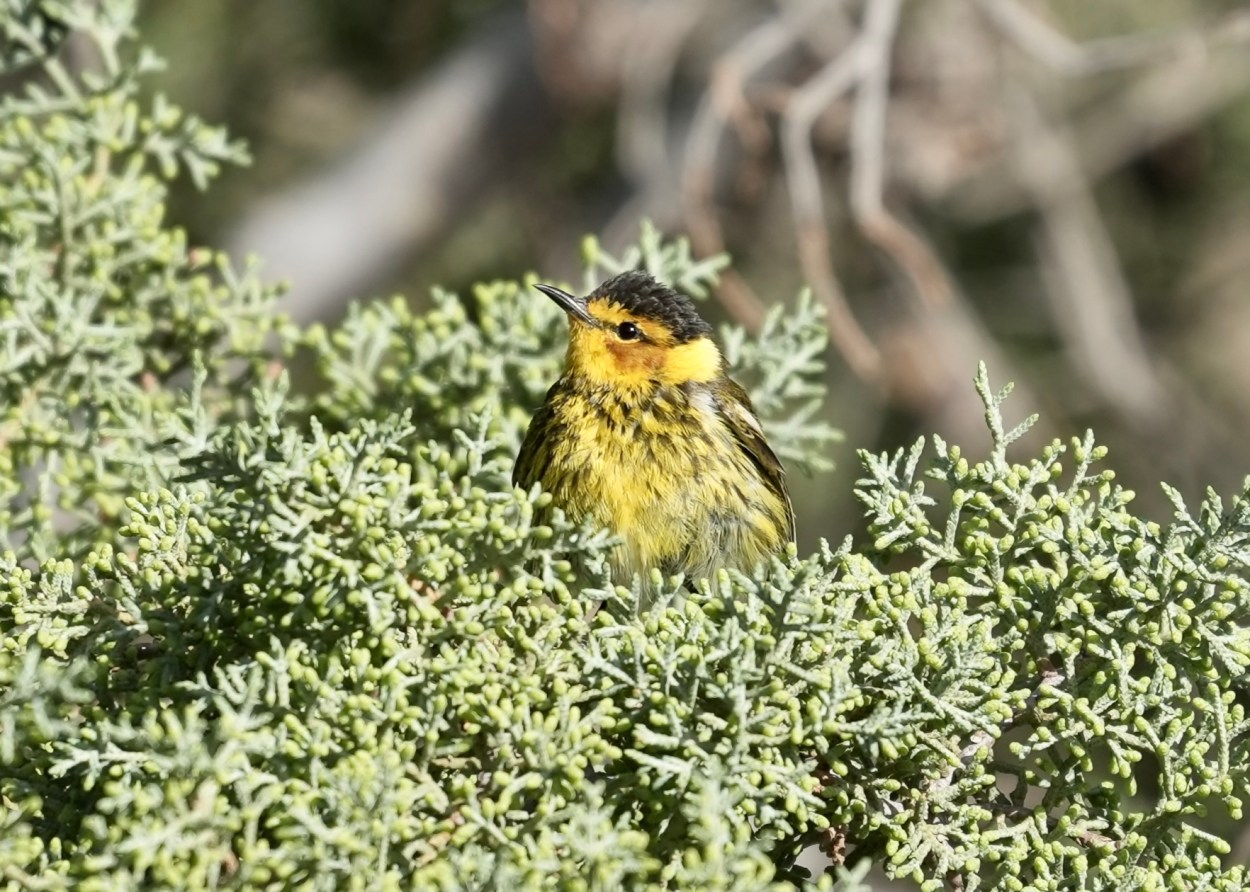
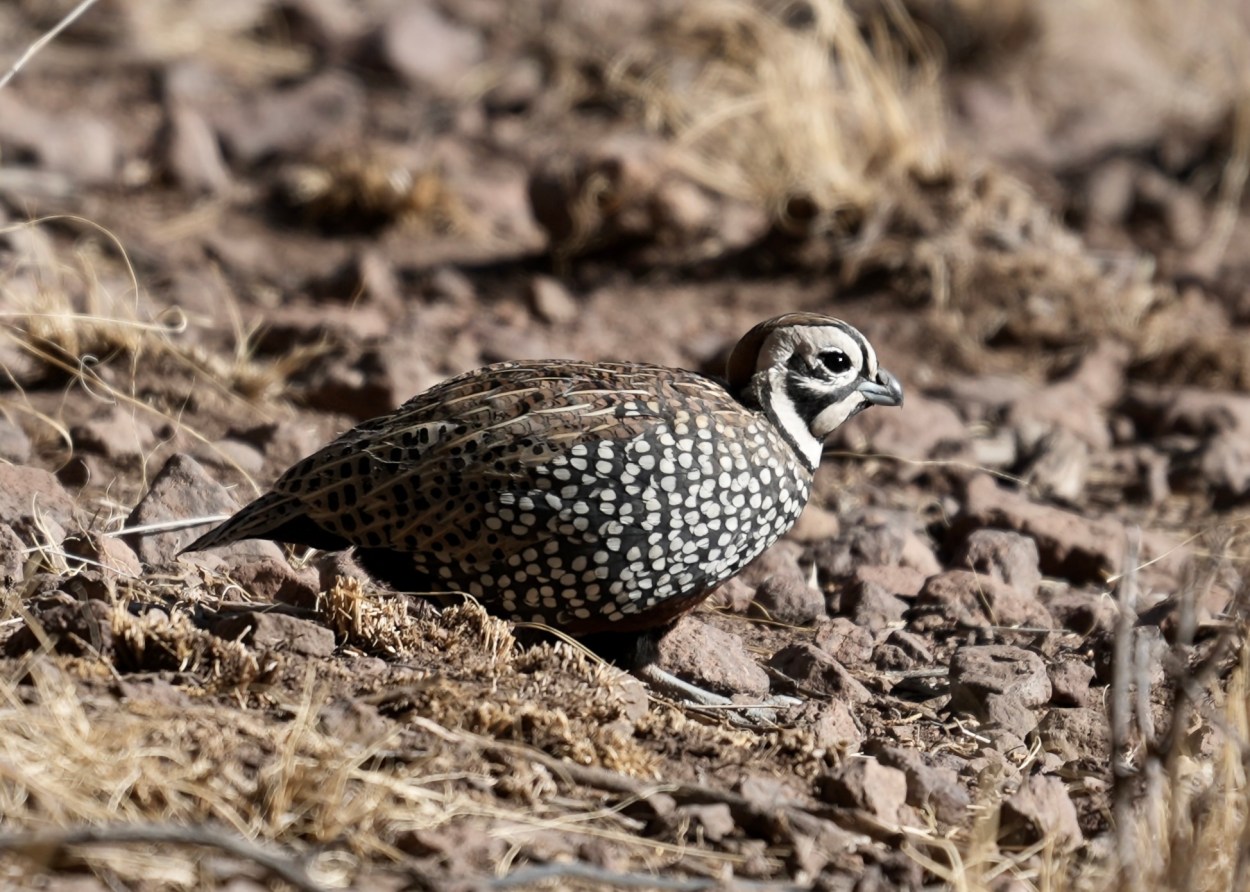
There are good days and bad in birding. Yesterday was bad – well in terms of seeing our target birds that is. Today was good. We continue to steadily make our way west towards Arizona. We left our overnight accommodation at Study Butte after a makeshift breakfast and arrived at Carolyn Olh-Johnson’s oasis reserve at just after eight. It’s a small property, lost in the Christmas Mountains, where she started creating her fabulous sanctuary in 1996. Access is by invitation and is located at the end of a rough track ten miles from the highway. It’s perhaps the most reliable spot in America to see Lucifer Sheartail – or hummingbird as it was formally known. We spent three hours there watching a constantly changing cast of species. We saw over 40 including our target bird and two warblers that were rare for the site. Cape May – only seen once before – and Black-throated Grey, with less than a handful of records. An extraordinary experience. We then headed for Alpine where lunch at MacDonalds was accompanied by an overhead Zone-tailed Hawk chased by an American Kestrel. Johnsons Pools (no relation as far as I’m aware) is another birding oasis only this time in the suburbs. Still, some excellent birding including Northern Waterthrush – our first since we left the Gulf – and Western Tanager. A brief stop at the lakeside pull-off north of the town produced Green Kingfisher, Mexican Duck and Gadwall before we arrived at our overnight stop of Fort Davis. A quick visit to the Davis Mountains State Park interpretation centre produce good intel on our next target and a second shot at Elf Owl. The Montezuma Quail duly obliged at the look-out blind before supper as did the Elf Owl after. A captivating display of nighthawk on the road home rounded off a very productive and satisfying day. The rollercoaster that is birding – I love it!
The redoubtable Carolyn Ohl-Johnson with the gang
Cape May Warbler – only the second record since 1996 at Christmas Mountain
Montezuma Quail – our target bird in the Davis Mountain – only previously heard

Tex-Az – Day Twelve

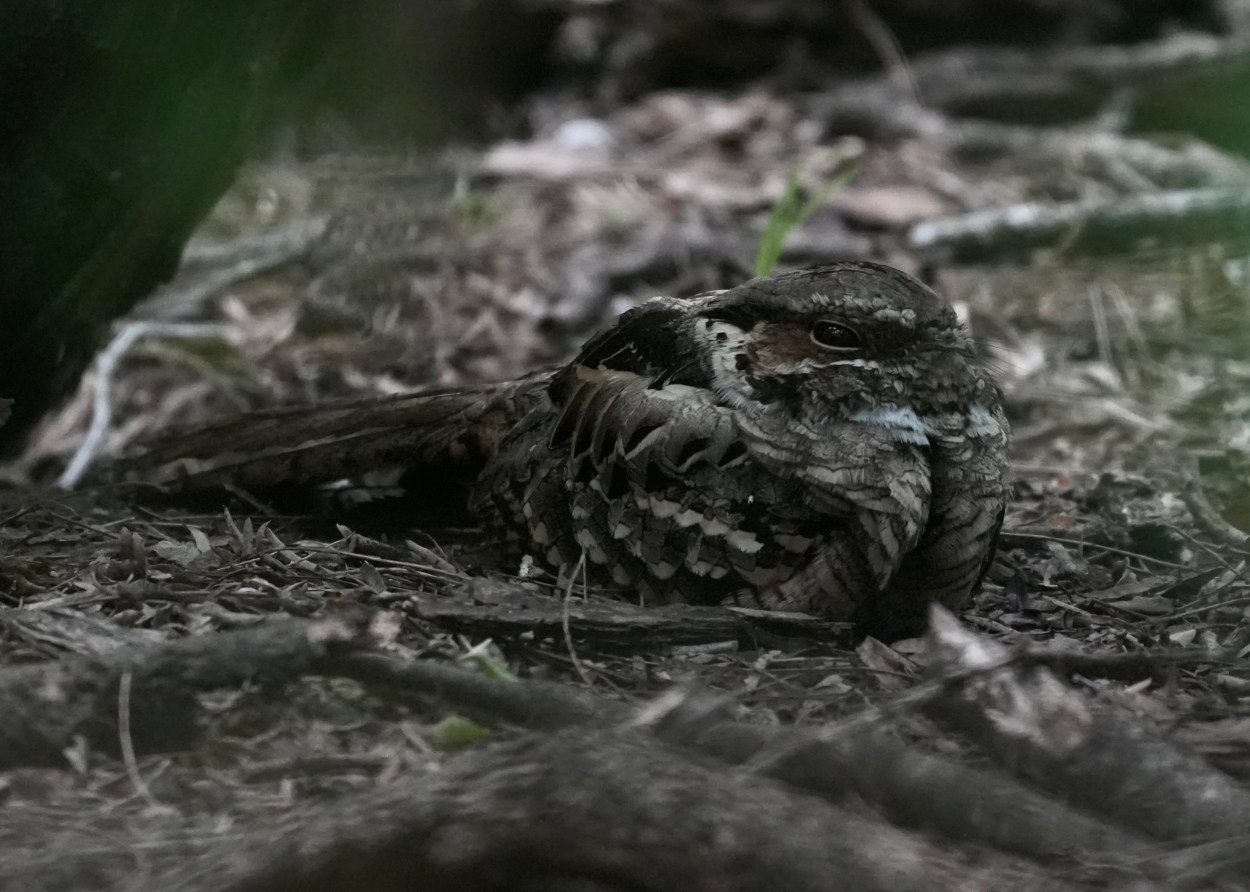
One of three roosting Pauraque found at Estro Llano SP

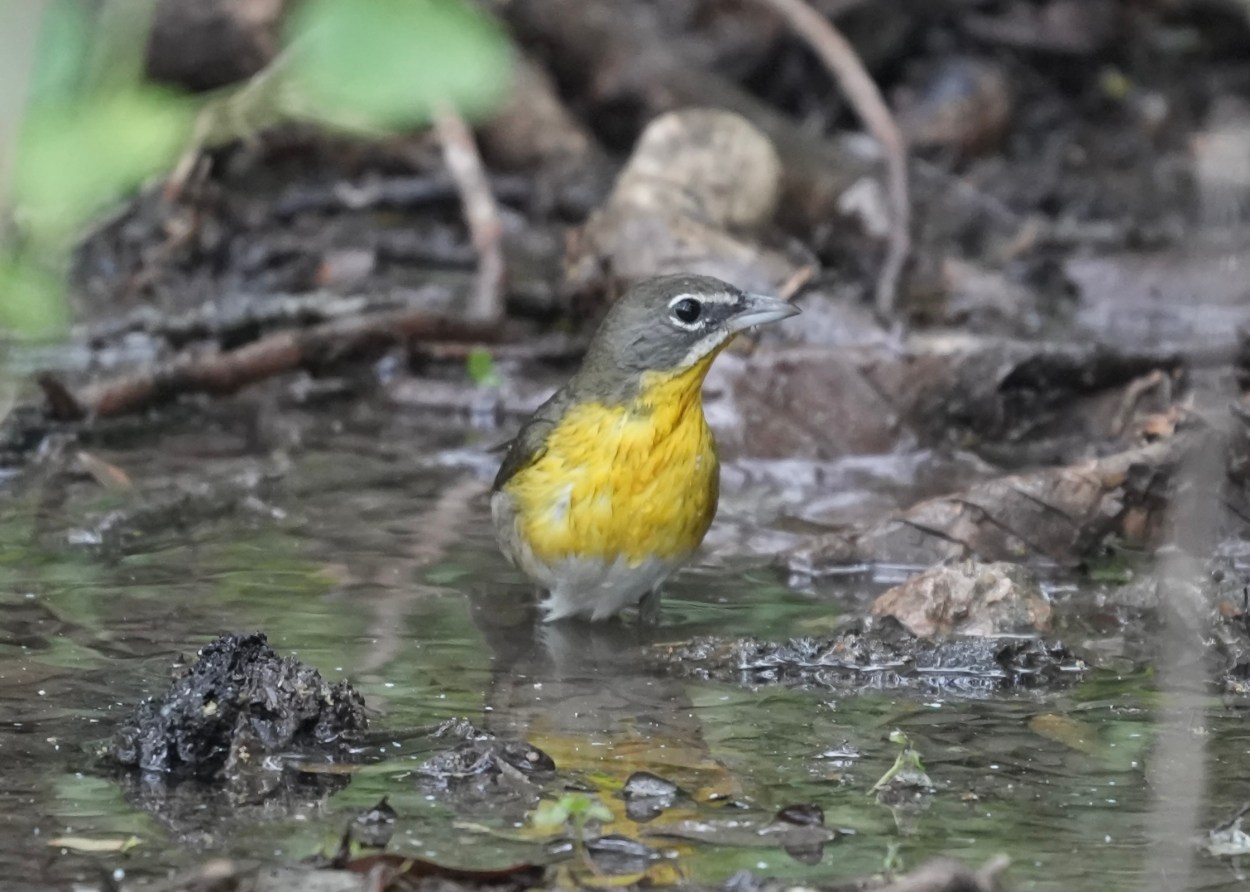
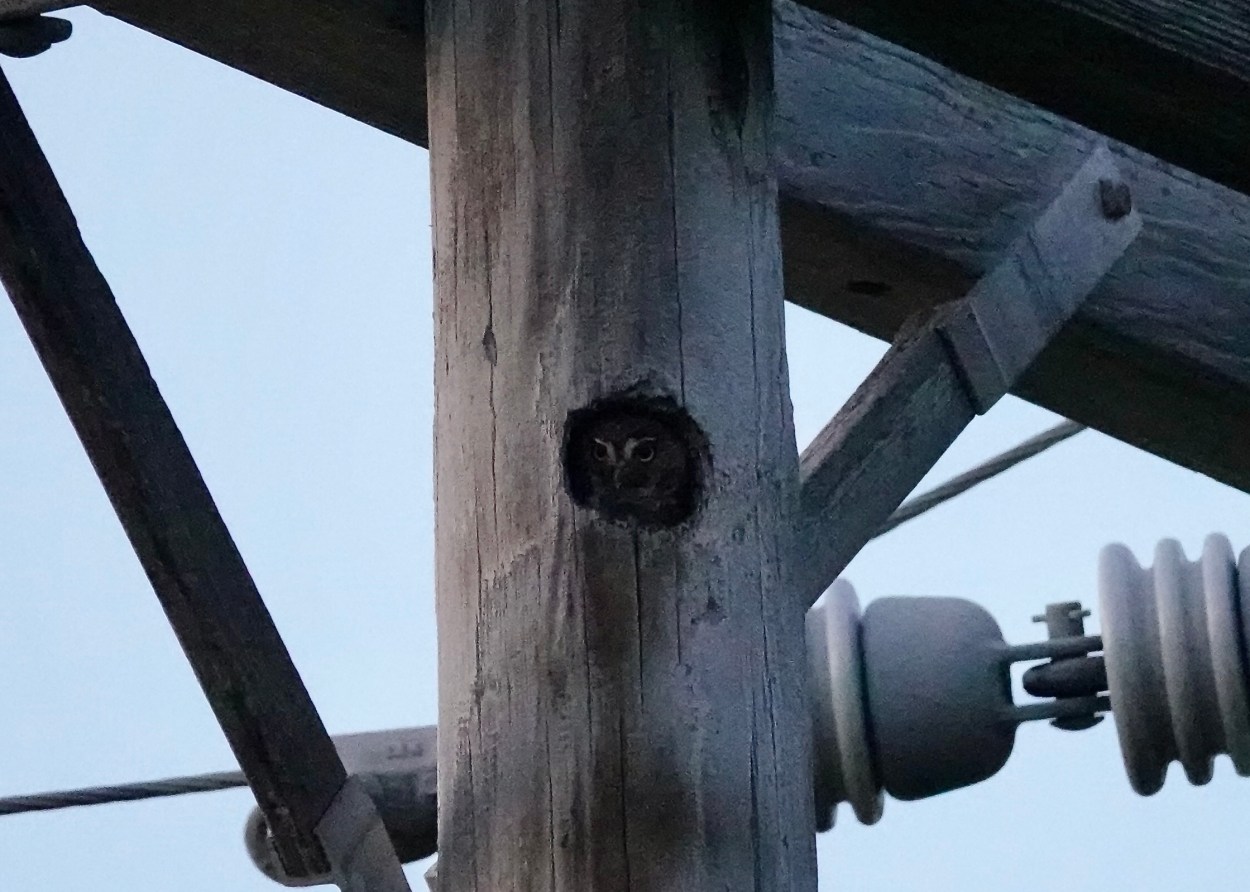
Our day began and ended with nightbirds. After breakfast we headed back to Estro Llano after a tip-off about roosting Pauraque. We did the ‘tropical area’ outside the gate first, looking for warblers and checking out a couple of possible nest sites for owls – nothing doing. Once inside we headed for Alligator Lake where, after a bit of searching, Neil found first one and then another roosting bird. The Yellow-breasted Chat bathing at the water drip was a bonus. Another abortive visit to another turf farm for a dip on Buff-breasted Sandpiper – rapidly becoming my bogey bird for America – was followed by a brief visit to Anzalduas Park, another of those public parks along the Rio which is beyond the wall. Here a lone Frankin’s Gull was a welcome addition to the list. The rest of the afternoon was spent at Bentsen State Park which, although rather quiet, produced a ‘grip back’ of displaying Turkey and better views of Buff-bellied Hummingbird. We headed back to our hotel for a bit of R&R and supper before venturing out again for the Elf Owl stake-out at the entrance to Bentsen SP. Amazingly it’s the same hole in an electricity pole (the one with the transformer attached) where we saw Elf Owl in 2018. We arrived in good time – the mosquitos weren’t too bad – before the bird popped up at the appointed time of ten past eight. It bobbed back down again, putting in one more final appearance before flying off into the night sky. Two great night birds book-ending our day.

Yellow-breasted Chat takes a bath at the Estro Llano drip
Displaying Wild Turkey – Bentsen SP
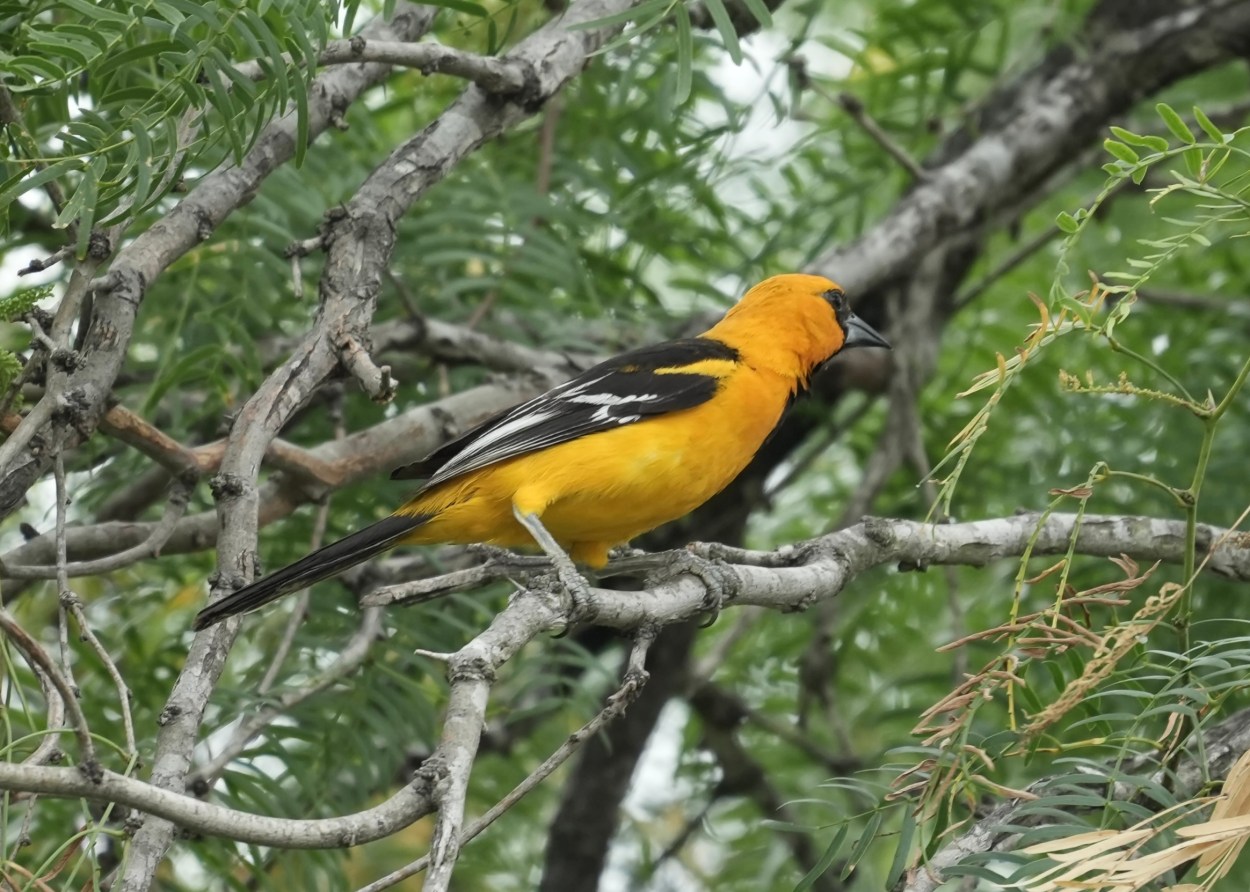
Altimira Oriole – Bentsen SP
Buff-bellied Hummingbird at the feeders in Bentsen SP

Last bird of the day – the adorable Elf Owl at the entrance to Bentsen SP – photo courtesy of Jane

Tex-Az – Day Ten

The ‘new’ reserve of Bahia Grande

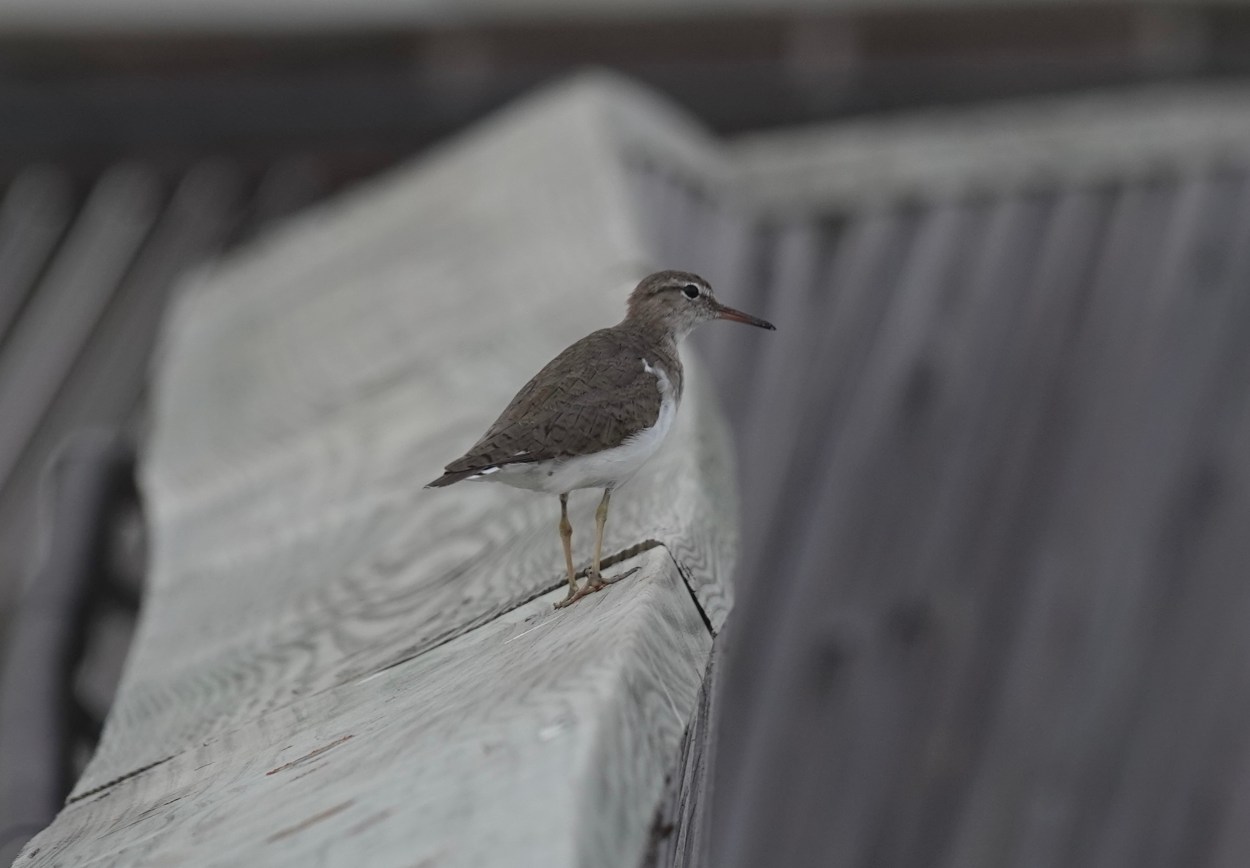
A tale of two sparrows. Today we left South Padre Island, our home for the previous three days, and headed south-west towards the Rio Grande. Our first unscheduled stop was at the recently created South Texas Ecotourism Centre – a huge restoration project of the Bahia Grande. Lots of good stuff including a slightly odd looking Spotted Sandpiper in winter plumage and a Common Yellowthroat. But perhaps the best wildlife action was the ‘rattler’ which Nicola came across in the car park! We then headed for Palo Alto where in 1846 a battle between the US and Mexico redefined the border between the two countries. In the leaflet describing the events it says ‘The US fought for the Rio Grande because of “manifest destiny” – the idea that the US had the right to expand its borders and spread democracy across North America. Northern Mexico was in the way…. Palo Alto serves as a reminder of the ongoing, complicated relationship between the two countries.’ Ring any bells? Anyway I digress. This unique landscape is also home to two range-restricted sparrows. Botteri’s, which only has a toe-hold in the Lower Rio Grande valley and south-east Arizona, and Cassin’s with a slightly bigger range, reaching into New Mexico, Colorado and Oklahoma. They look rather similar. We saw them both well, within ten minutes walk of the visitors centre. We spent the afternoon at Estro Llano State Park – looking for and finding Grove-billed Ani. We also came across five Wilson’s Phalarope in a melee of shorebirds. As we were leaving the reserve a superb male Blackburnian Warbler appeared in the trees above us. The major upset of the day, which I only discovered when I came to download my photos, was that the camera had been on the wrong setting all day and I had no recognisable images 😦 – fortunately Jane did, so these are all courtesy of her.

Wildlife high-light at South Texas Ecotourism Centre was this rattlesnake – found by Nicola
A rare sparrow indeed (and a US tick for me) – Botteri’s with a long bill and unmarked throat and breast
Cassin’s Sparrow – showing distinct black throat lines and clean white edges to tertials and coverts
A superb male Blackburnian Warbler outside Estro Llano SP
Spotted Sandpiper in winter plumage – doing a Common Sandpiper impersonation

Tex-Az – Day Nine

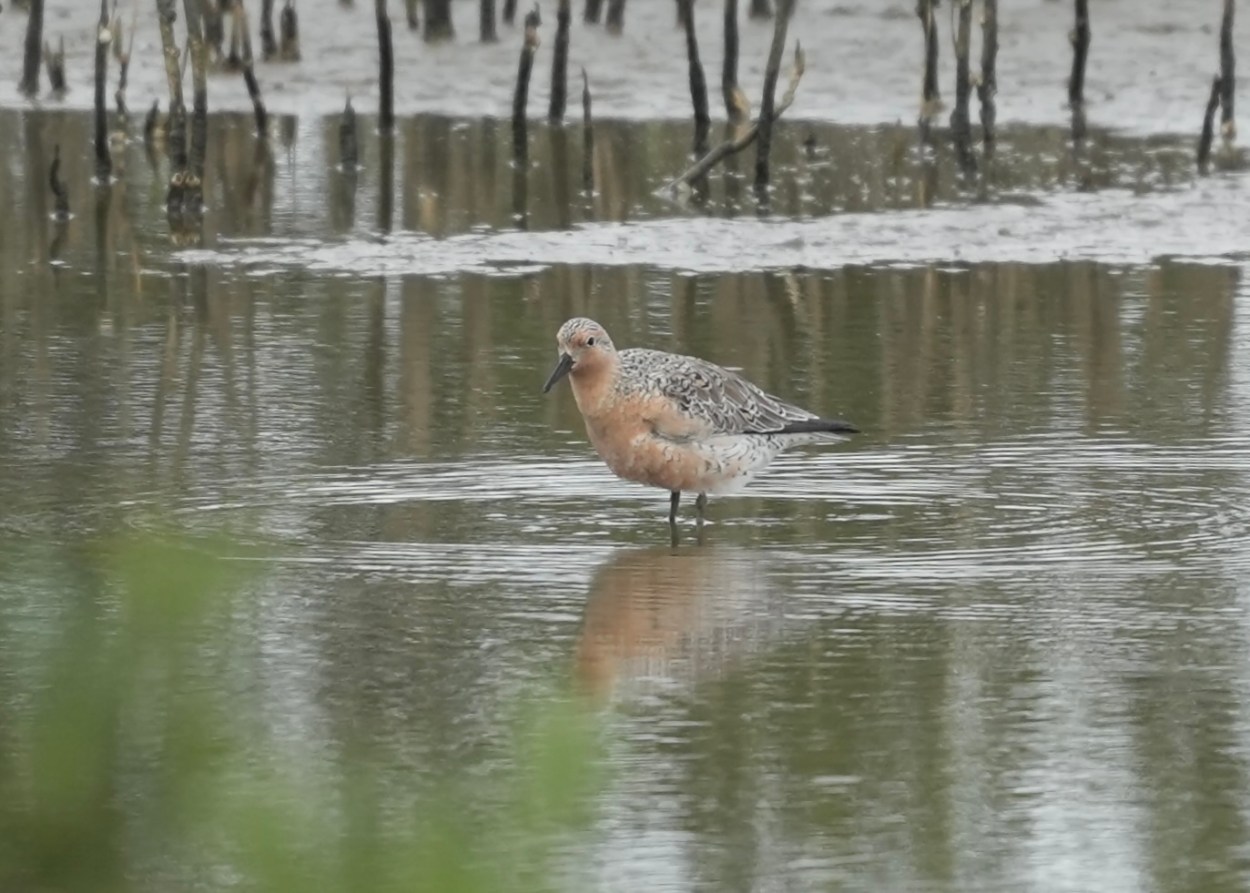
Red Knot prevents it being a ‘dot day’. Surprisingly this was also one of the very last ticks we got on our original GABRaT tripwe’ve never found them easy

Today it was a case of ‘rinse and repeat’, visiting the Convention Centre and the Sheepshead St lots in rotation, from dawn till dusk. After lunch we did venture down to a ‘park’ at the southern tip of the island but, despite being an ebirder hot-spot, it also turned out to be an RV park. We had to pay$12 for the privilege to park and we saw no birds of note! The weather has been hot with clear skies and a gentle south-easterly breeze – fabulous for the Easter weekend holiday makers but dire for bird migration. Every species has been hard won. We did find two trip ticks at the Convention Centre – Red Knot and Chipping Sparrow – which saved it being an early ‘dot day’ but otherwise it was tough going. This was really our last chance to catch up with small bird migration across the Gulf – we should see some raptor movement as we move further up the valley but otherwise we’re now mostly looking for scarce breeding species and southern over-shoots. Still we have managed to rack-up 23 warbler species and amassed a trip list of over 200 in just a week – so all is good. We move forward with optimism.

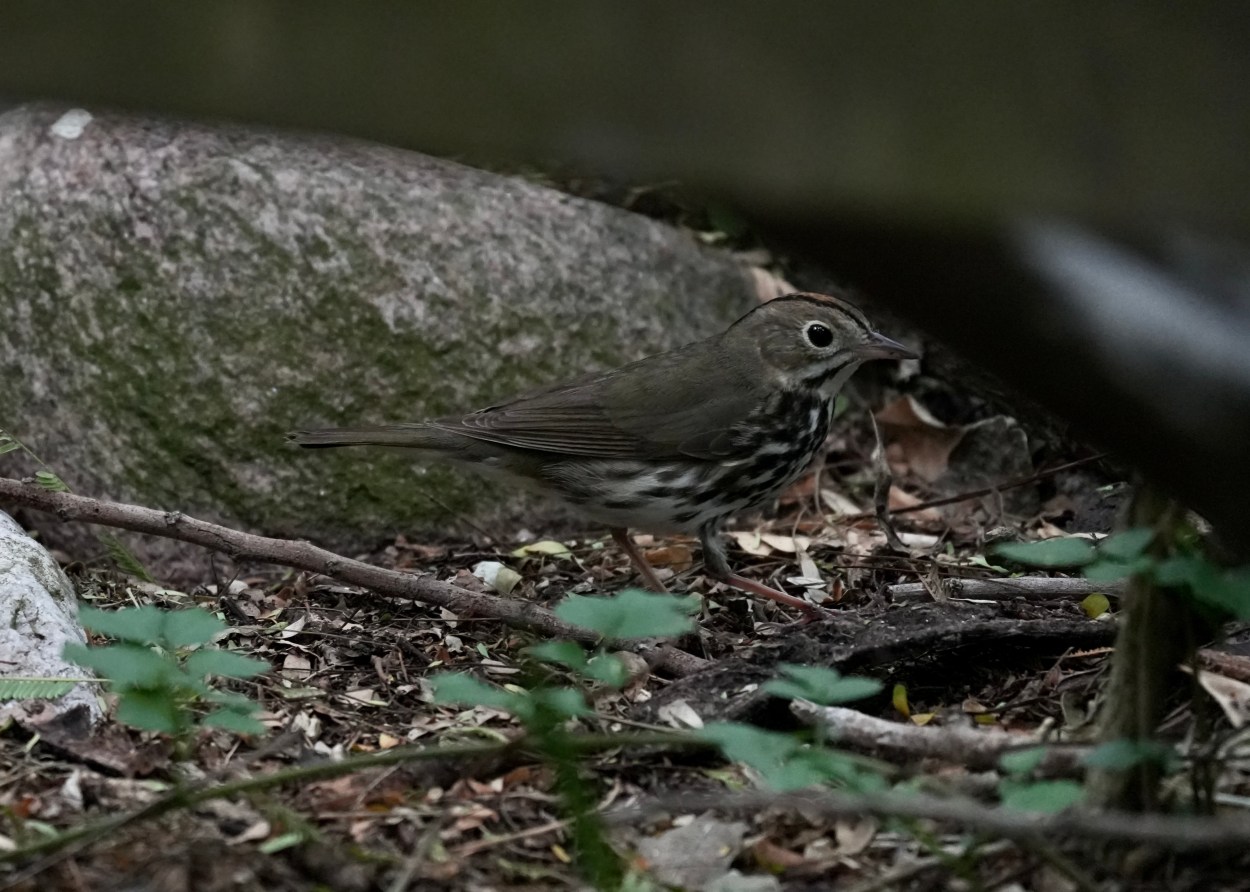
This Ovenbird showed briefly but well around the drip at the Convention Centre
Kiskadee, again at the Convention Centre. I don’t remember seeing them on South Padre before

Perhaps the most interesting bird we found was what I take to be a non-breeding – 2CY – Least Tern amongst the flock of 30 or so migrating birds on the mudflats next to the Convention Centre (inset)

Tex-Az – Day Eight

Best of the warblers at Sheepshead Street was MacGillivary’s – a tricky bird to pin down

We spent the entire day, seven ’til seven, birding two locations on South Padre Island, just three miles apart – the Convention Centre and the lots on Sheepshead Street. Although the effects of the rain from the previous day had worn off and there were clearly few birds about, nevertheless, we were still entertained for twelve hours birding, with just a lunch break in the middle. We opened the account with a Veery at the Convention Centre drinking pool – well actually I missed it and only managed a ‘grip back’ late in the day – our third thrush species of the trip. Clapper Rail and Sora from the board-walk and several ‘bush birds’ around the Centre. It was then off to ‘the lots’, a series of connected undeveloped building lots which have been saved for nature amongst the urban sprawl. MacGillivary’s Warbler and Inca Dove were early additions along with a good spread of other migrants. We then shuttled between these sites until our final ‘sun-downer’ visit to the Centre for a fine display of nighthawks – difficult to be sure but we think both Common and Lesser were on show. A great day of leisurely birding with some nice birds and equally nice birders.

Early morning feed by this Clapper Rail – we had several more sightings through the day
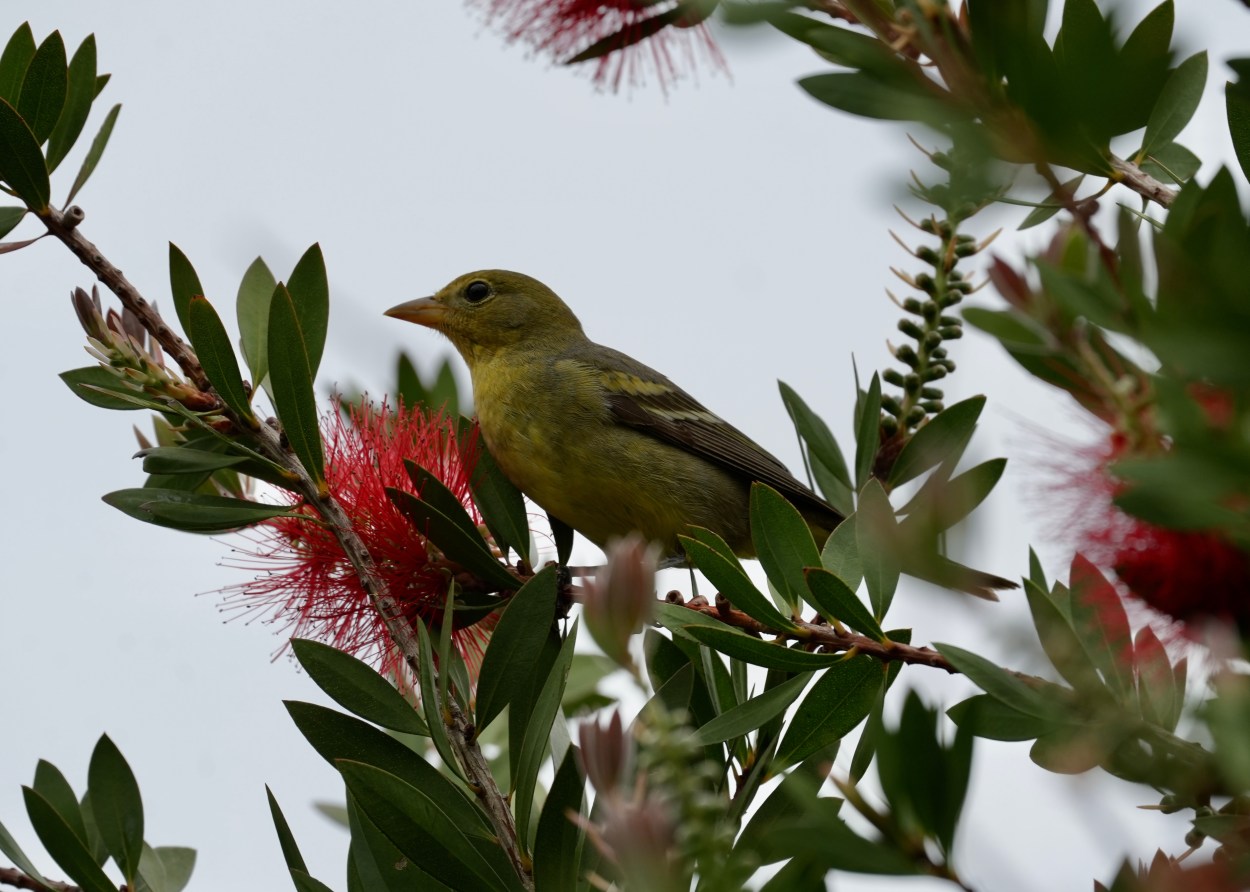
This Western Tanager was a nice turn-up at the Convention Centre
We’ve only connected with Ruby-throated Hummingbird so far – plenty more to come I’m sure
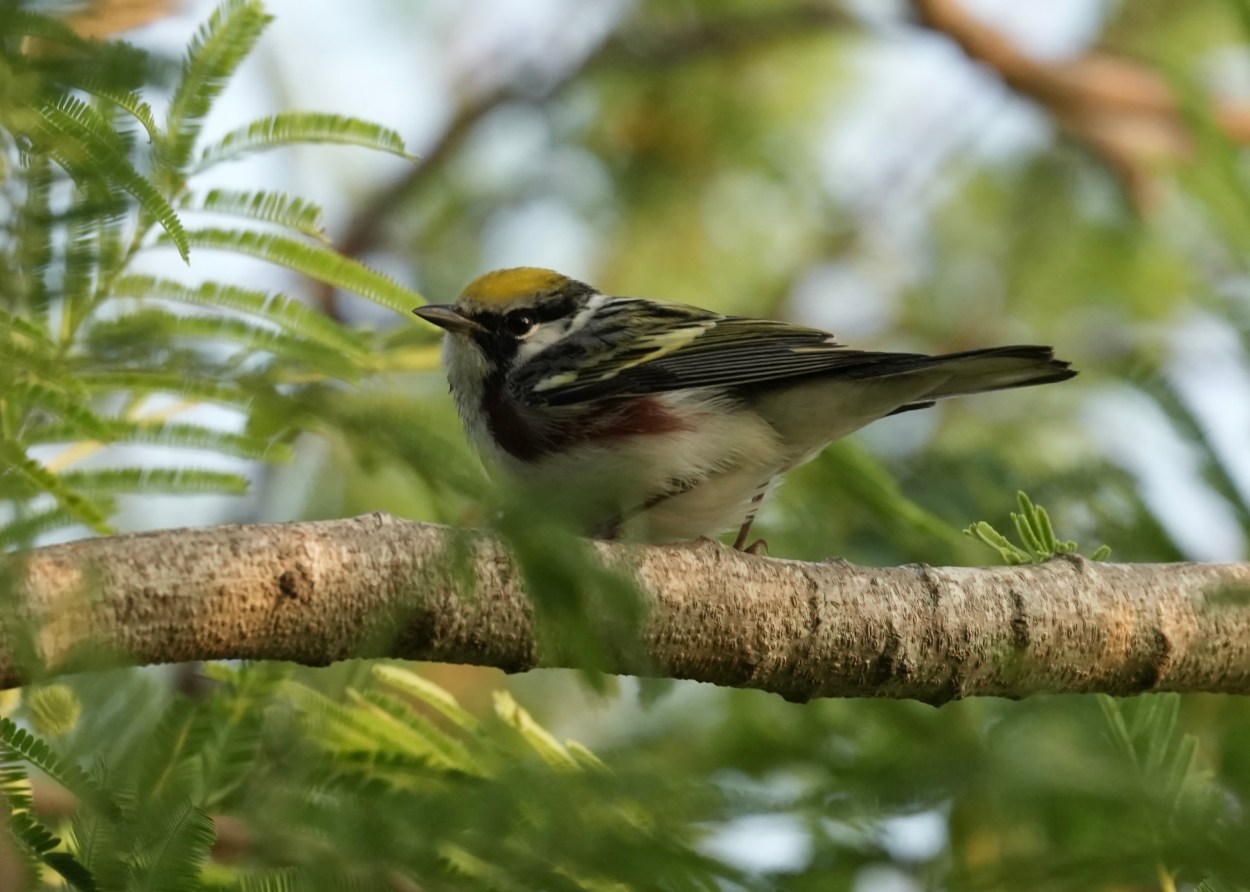
Chestnut-sided Warbler took some finding as it flitted through the canopy
Lesser Nighthawk put on quite a display at dusk
Veery – the start of a great days birding on South Padre Island – photo courtesy of Jane

Tex-Az – Day Three

Amur Stonechat at Anahuac NWR (Jocelyn Nungaray NWR) – a first for the Lower 48 States – incredible

Last chance saloon. On December 19th 2024 two birders doing the Christmas Count on Anahuac NWR (now Jocelyn Nungaray NWR) found a bird they couldn’t identify. After much investigation they concluded it was a stonechat. A Swedish expert finally nailing it as Amur. The first record in the lower 48 States. It took weeks for the Friends of Anahuac to negotiate access to this section of the reserve, mostly used for hunting. Jake spotted the news a few weeks ago and we began planning our itinerary around it. Trips to see the bird, running three times a week, were announced a few days before and were taken up quicker than a Taylor Swift concert. Just before we departed from Cromer I managed to get us booked on the last trip ever – but would the bird hang around? We arrived at the meeting point for a 10.00 start to be told that the 8.00 o’clock group had seen the bird but distantly. After an over-zealous safety briefing we walked the 1000 yds to the spot. The three volunteer observers on site said they’d last seen the bird fly off over the trees 15 minutes previous. We stood around enthusiastically scanning the fields for awhile. No sign. Energy levels began to dwindle and, as at all twitches, people began to chat. In the end far more chat that looking. We were due to leave the site, to be clear of the property, by 12.00 when ‘she’ obligingly flew in, and did what any self-respecting stonechat should do – sat atop the vegetation spotting prey. What a relief. An incredible bird and the first new addition to our USA list!

The rest of our day was spent doing the Shoveler Loop including the hot-spots of the Willows and Wood Lot trails. We amassed a good list of waders and wildfowl and a good variety of warblers – better than at High Island.

Prothonotary Warbler – in The Willows – one of about ten seen in the afternoon
Stilt Sandpiper around the Shoveler Loop
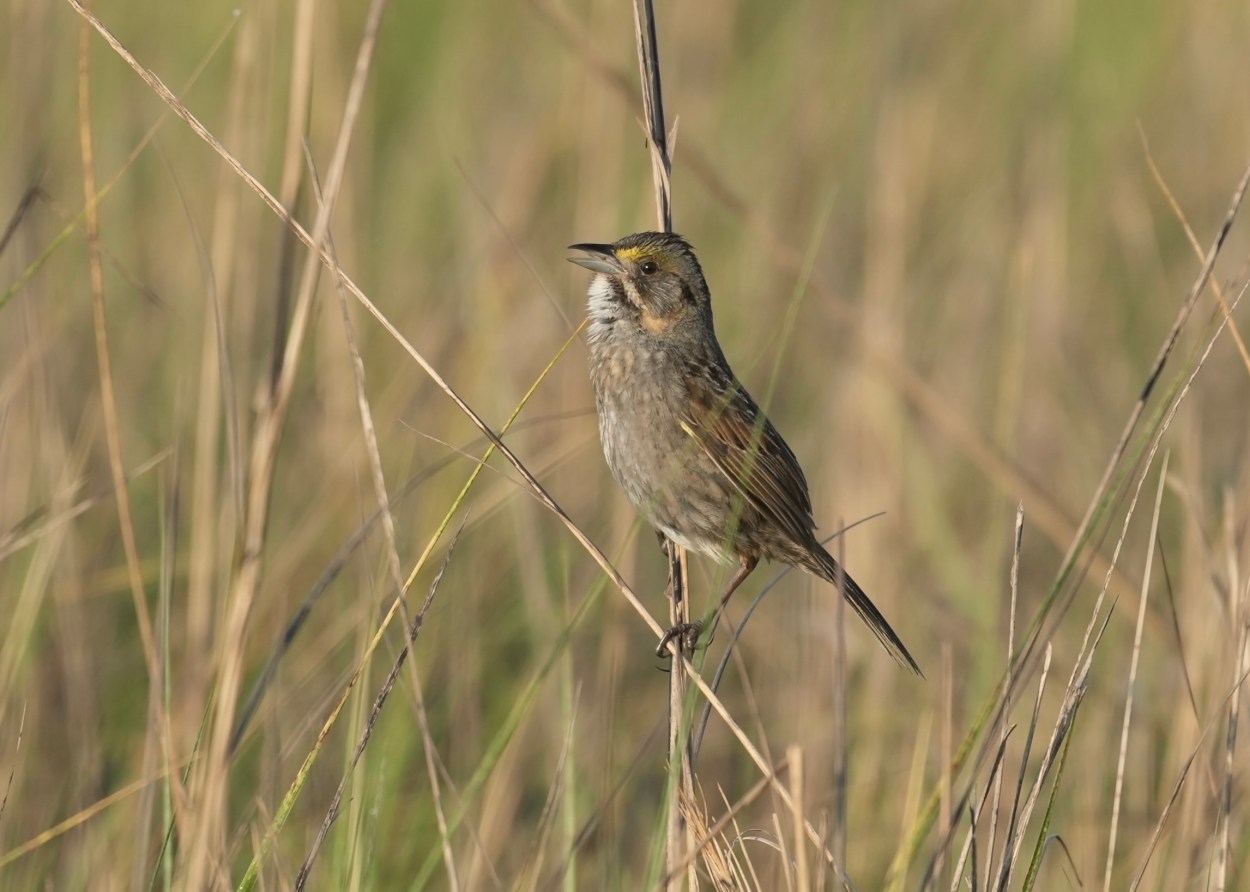
Our day started at Tuna Road – a well known stake-out for Sea-side Sparrow

Arran adventure

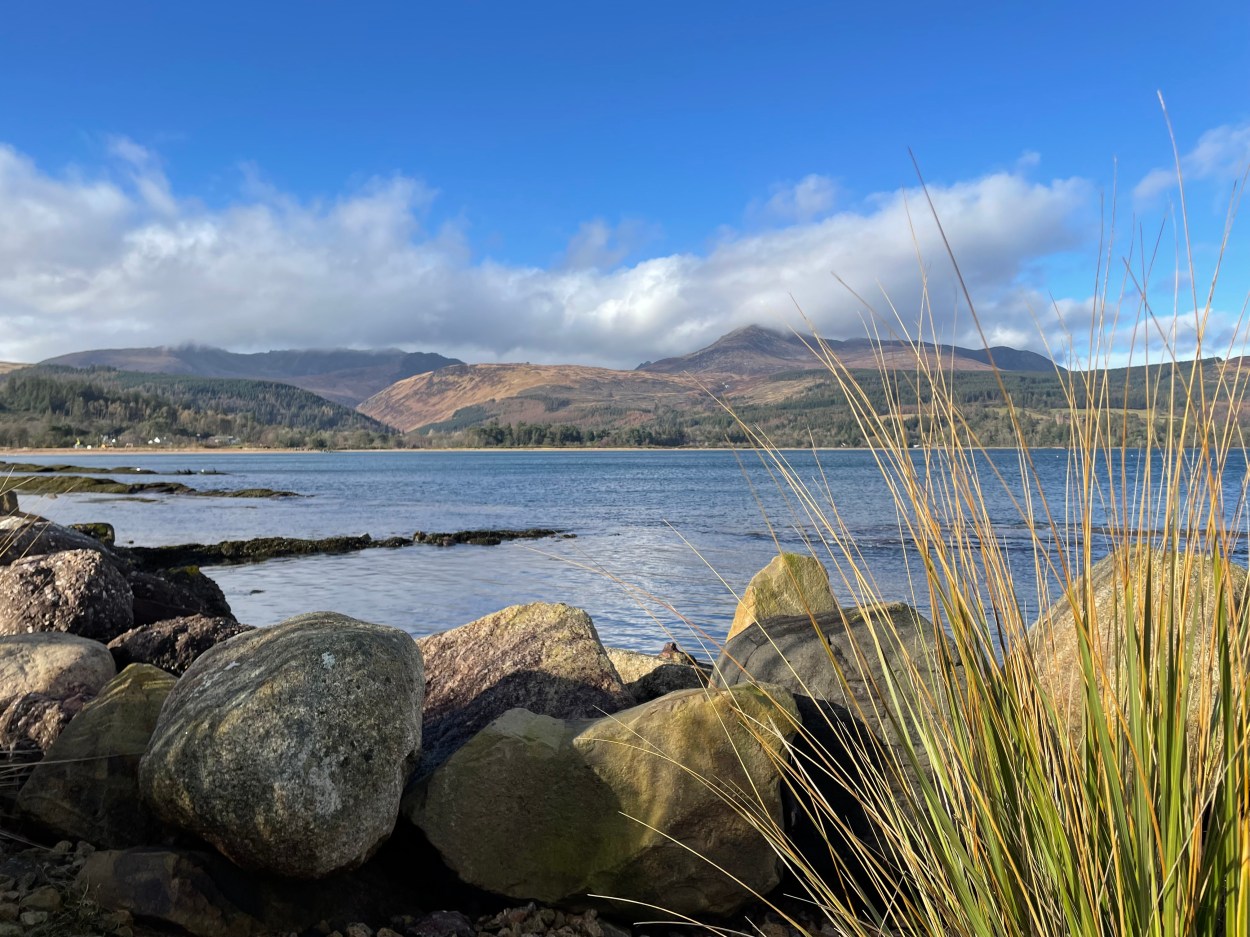
Looking across Brodick Bay to Goat Fell, Isle of Arran

We spent the half-term week with Josh, Al and the girls on the Isle of Arran – they’re planning to relocate to the island in the coming months. As you might expect for mid-February the weather was mixed, with mainly strong winds and heavy showers (a bit of snow on the tops) but we did get the odd sunny spell.

As a teenager and then later, when Mum and Dad lived on Benbecular, I’ve visited a good number of the Scottish islands but never Arran, which is often described as ‘Scotland in miniature’. The seventh largest of the Scottish islands, it cover 167 sq miles, has a perimeter road of approx 90k and reaches the highest point at Goat Fell of 2,867 feet. There are just under 5000 residents but being close to the Scottish mainland, with generally a good ferry service, receives over half a million visitors annually.

Before I went I checked out Arran Birding and made contact with local birder Jim, who was very welcoming and helpful. We spent the week sight-seeing, house hunting, entertaining our grand-daughters .. and birding! Over the five full days we were actually on the island we managed to find 70 species which, in Jim’s words, ‘.. you have done exceptionally well for a first visit in February.’  Here are a few of our highlights:

First morning exploring the beach in Lamlash – a surprise Whooper Swan
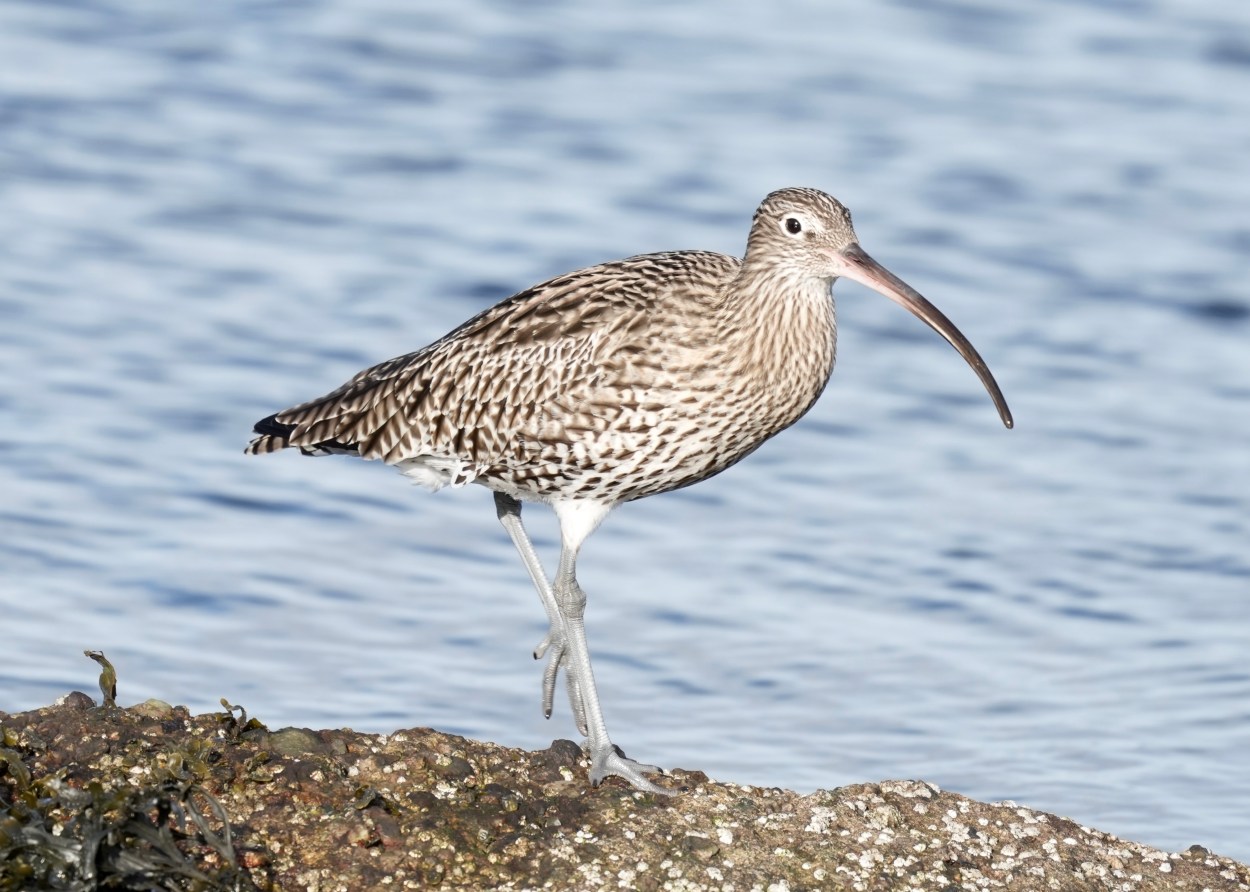
There was a reasonable assortment of shorebirds immediately opposite our Airbnb – including Curlew
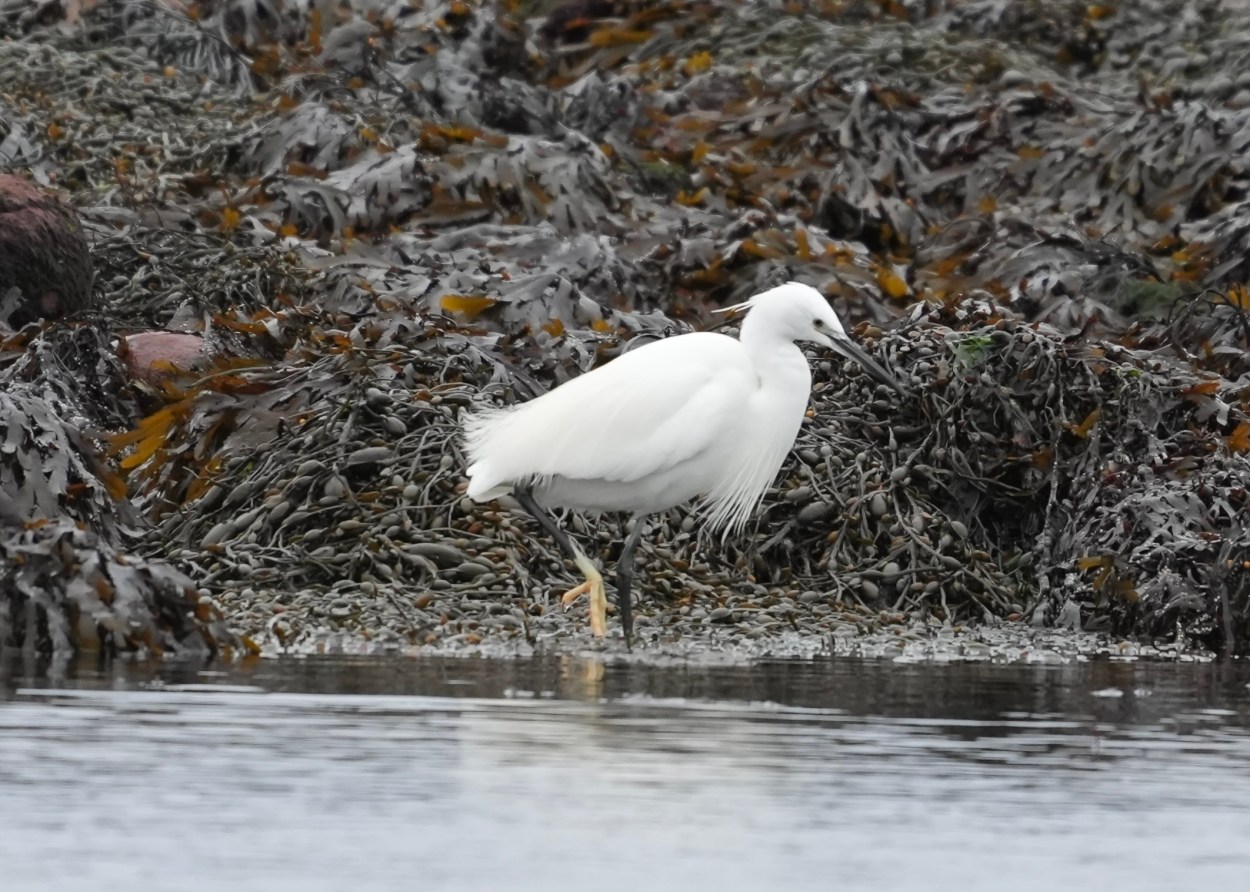
Another early surprise was Little Egret – which have arrived on Arran in recent years but spread quickly
We saw a good variety of ducks – Red-breasted Merganser being the most common
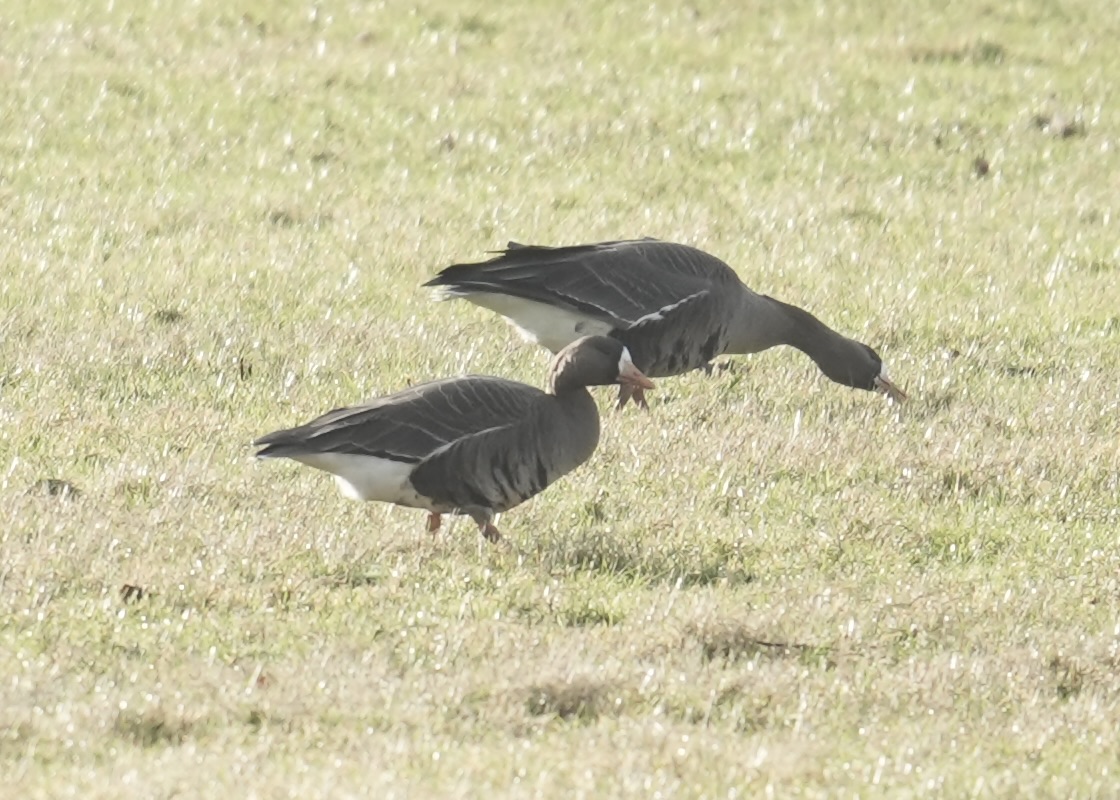
Best of the wildfowl were five Greenland White-fronts which we found at Shiskine
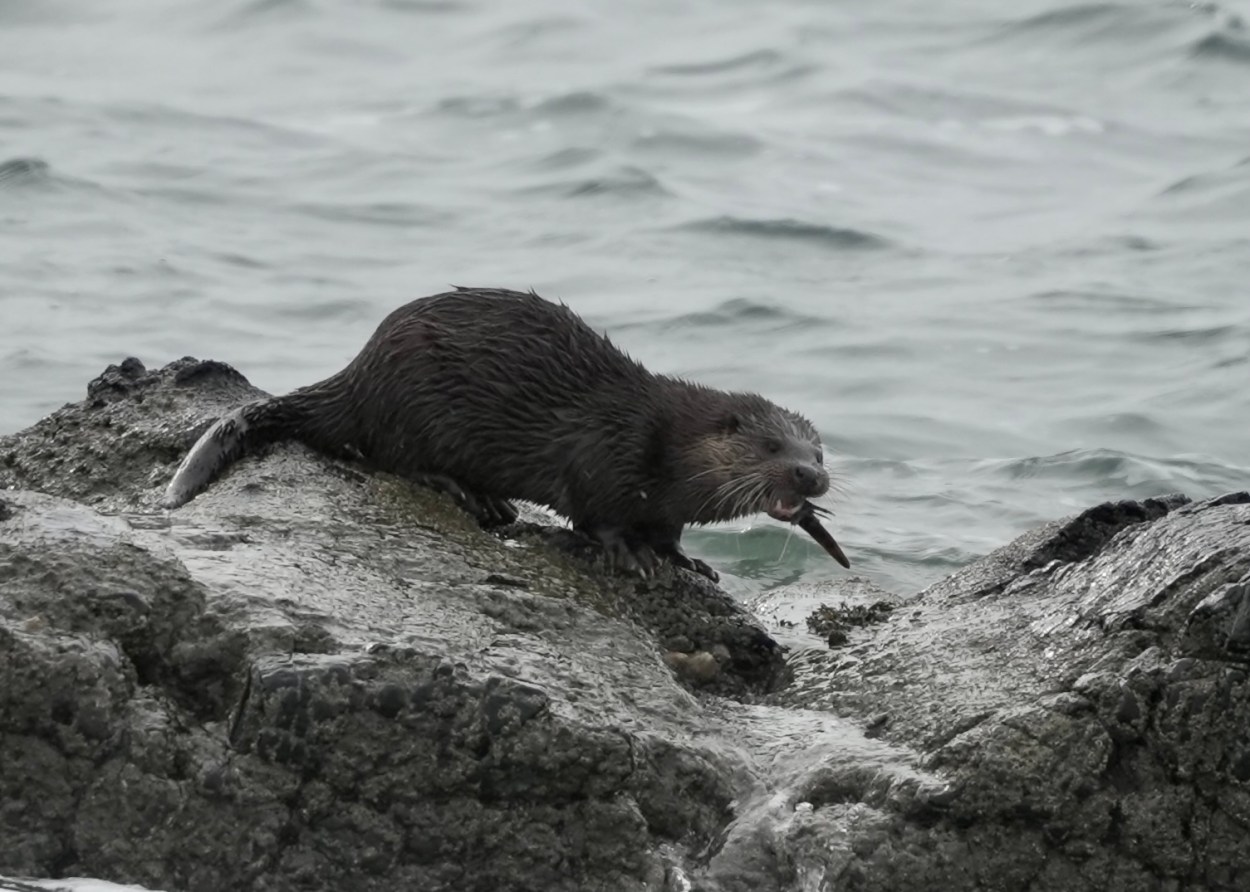
Other wildlife highlights included this Otter, watched whilst we ate our sandwiches in the golf club car park
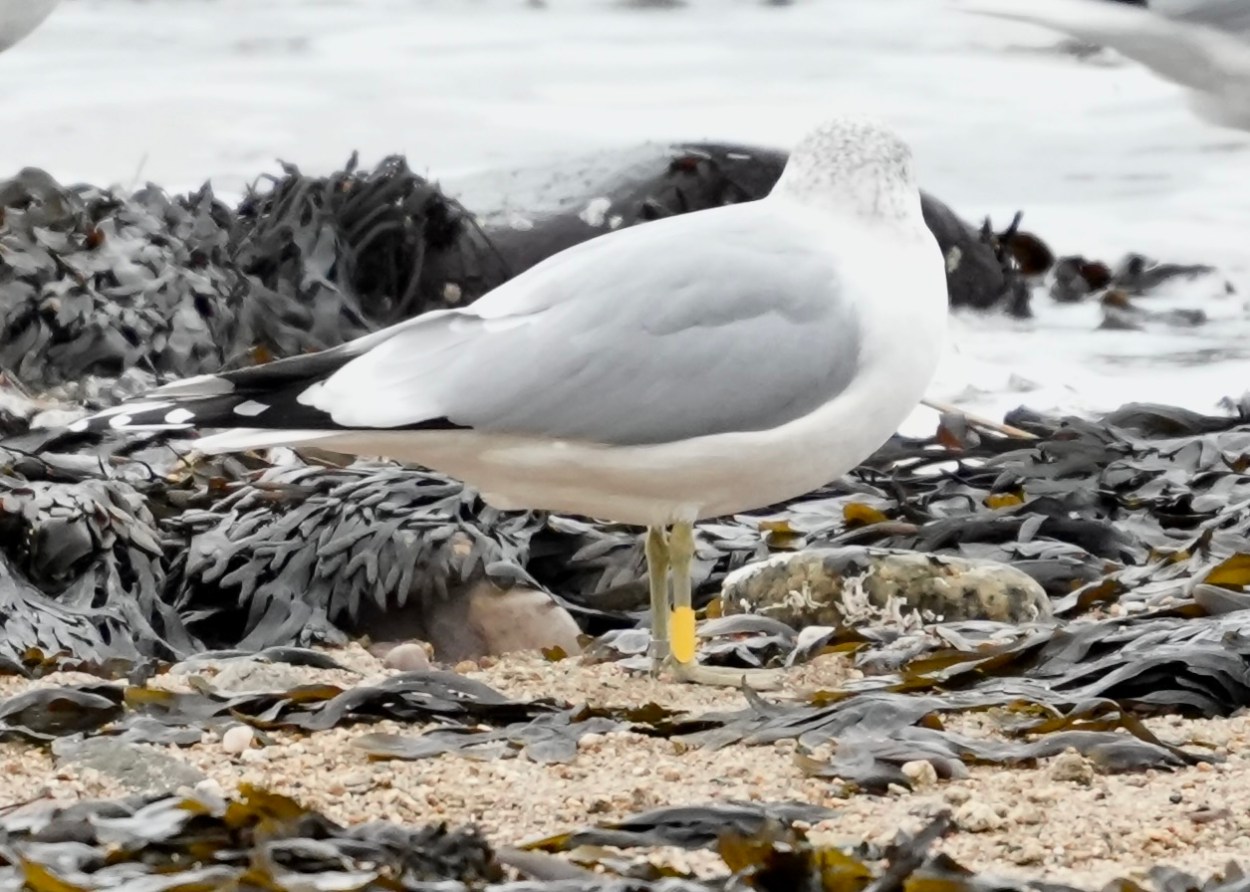
There were plenty of gulls to scrutinise – this Common Gull was wearing a non-standard colour-ring – Jim is helping to track it down
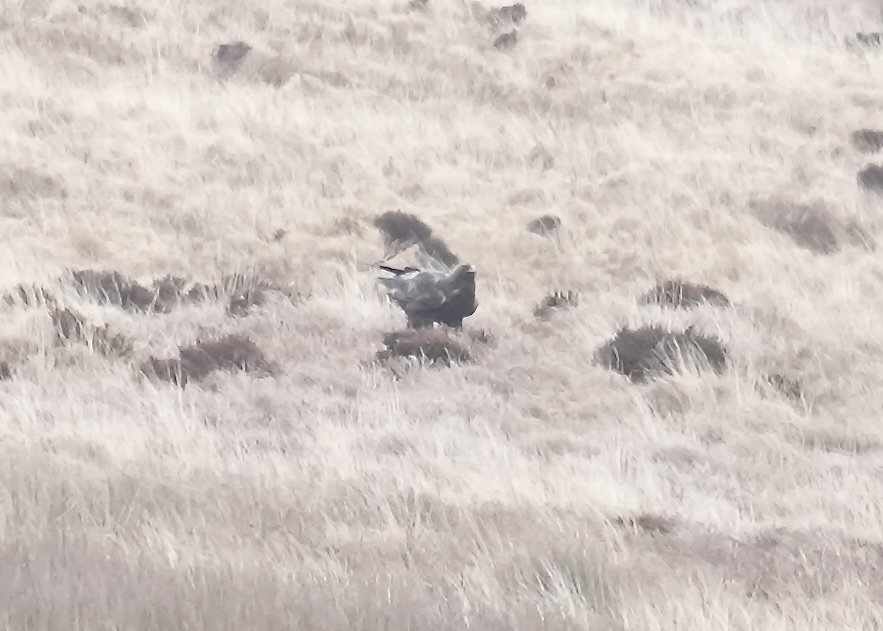
Arran is home to some very special birds – including Golden Eagle. We eventually found a pair in the northern ‘highlands’
Out with the family, including brother Bryan, on Sannox beach, with Goat Fell in the background

Assuming their house sale / purchase goes through OK, doubtless we’ll be spending more time on the lovely island of Arran in the future.

Shetland scoter surprise

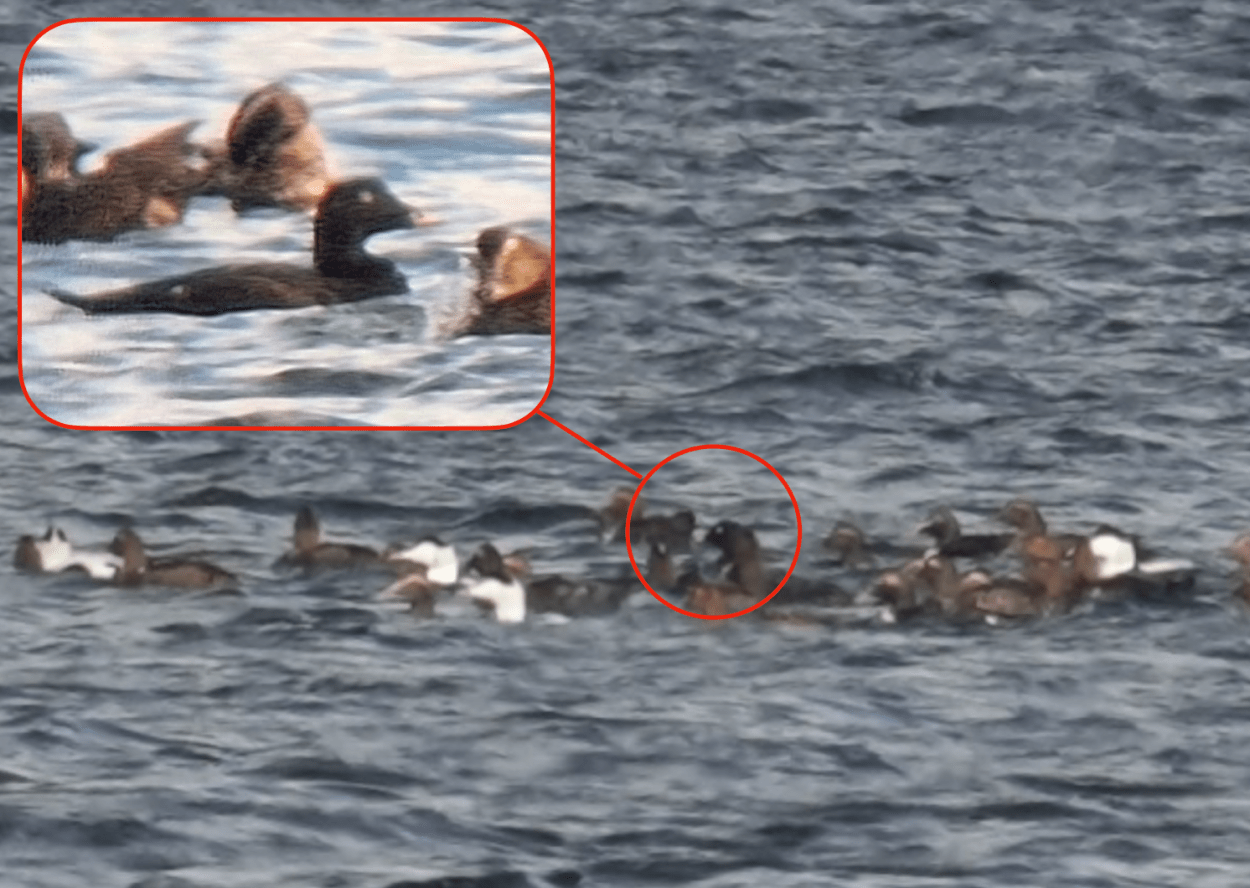
White-winged Scoter, Wadbister Voe – discovered hours before we were due to board the boat. Main photo is mine – inset courtesy of the finders

Our birding week on Shetland was gradually grinding to a halt by Friday – our last day on the islands before catching the overnight ferry to Aberdeen. The winds continued to come from the north and there were persistent pulses of heavy rain. We started the day back on Mossy Hill – no sign of the Lapland Bunting but we did find a few Snow Bunting. A tour of the western side of Mainland produced very little, except a nice coffee and cake stop at The Cornerstone cafe in Scalloway. We were heading towards Lerwick for an afternoon of sight-seeing when the mega alert sounded – ‘White-winged Scoter – Wadbister Voe’! We were only just down the road so it would have been rude not to go for it. We pulled up on the quayside and started scanning the Eider flock. A solitary scoter was occasionally visible as it worked its way through the ribbon of birds. This was the bird – apparently present for the past two weeks, but (understandably) identified as a Velvet Scoter. It took closer views and a good deal of experience by AR & LMCJ to re-make it into the much rarer American version. We boarded the boat very happy birders, after a week of some excellent birds, a list of 120 species and a much hoped for ‘lifer’! We will be back.