Historic Churches of Norfolk – route 12

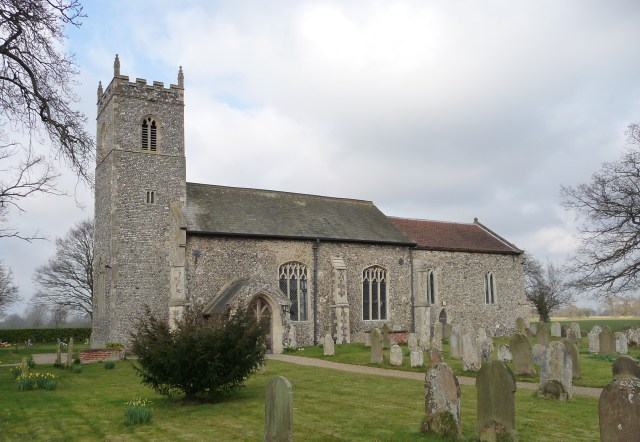
Last Thursday I resumed my on-going project to cycle to and photograph all of the historic churches of Norfolk. We couldn’t have picked a much colder, more overcast, day with a stiff north wind. I was accompanied by my friend Helen (she of the Walking Tours of Norwich City Churches fame). We cycled over 50k and did 19 churches, all in the area, east of Norwich, between the A47 and the river Yare. The day ended badly for me when I realised that I’d lost my phone, somewhere on route. I retraced my steps nearly back to our lunch stop, missed my return train to Norwich and incurred significant unwelcome extra miles – and all to no avail. Lets hope that the rest of this seasons cycle rides go better! Still we did see some very nice churches –  unfortunately many of which, in this particular part of the county, are locked.

The Route 
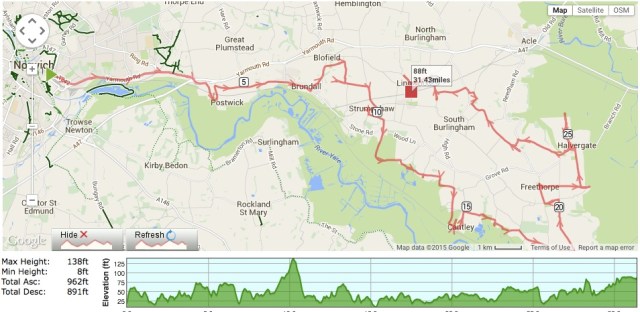
UK_runners__walkers_and_cyclists_-_map_your_routes

The Churches

St Andrew Thorpe St Andrew, All Saints Postwick, St Lawrence Brundall, St Andrew Blofield, St Michael Braydeston, St Peter Strumpshaw, St Nicholas Buckenham, St Mary Hassingham, St Margaret Cantley, St Botolph Limpenhoe, St John the Baptist Reedham, All Saints Freethorpe, St Andrew Wickhampton, St Peter & St Paul Tunstall, St Peter & St Paul Halvergate, St Mary Moulton St Mary, All Saints Beighton, St Edmund South Burlingham and St Peter Lingwood.

The Photos

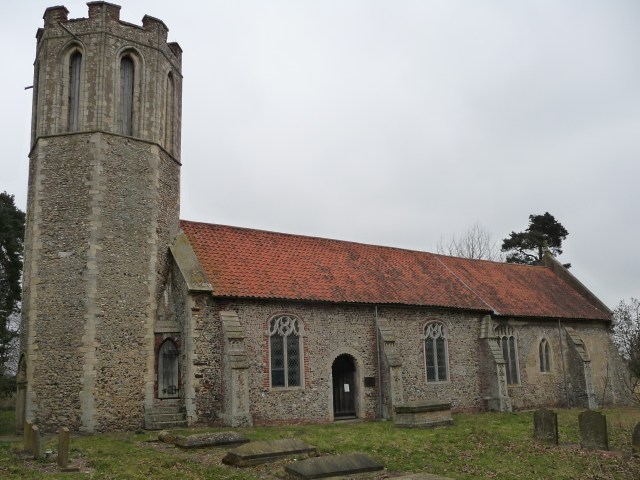
St Andrew, Thorpe St Andrew

P1060594

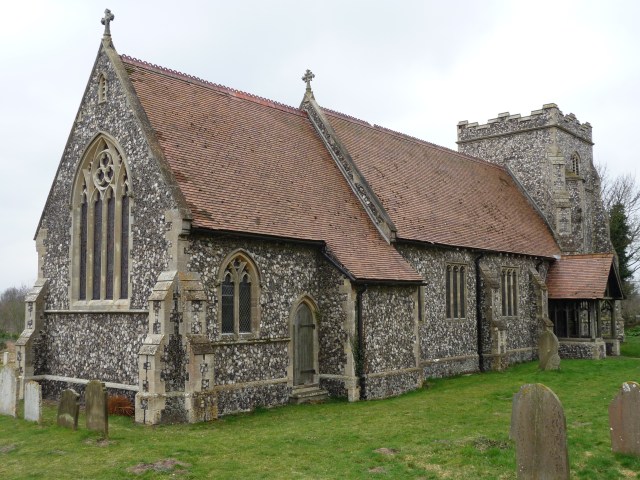
All Saints, Postwick

Postwick All Saints

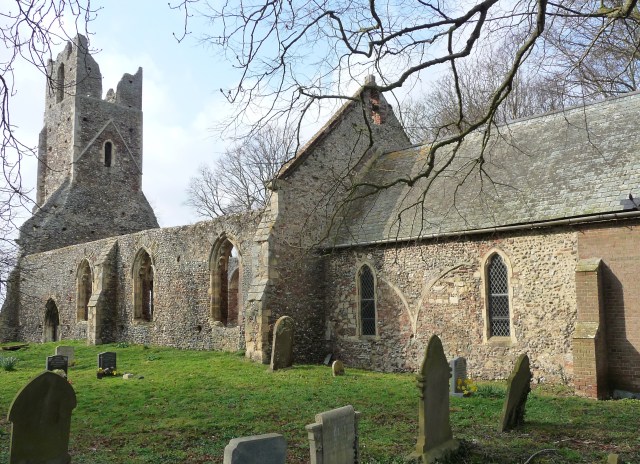
St Lawrence, Brundall

P1060603

Stained glass detail

Brundall St Laurence

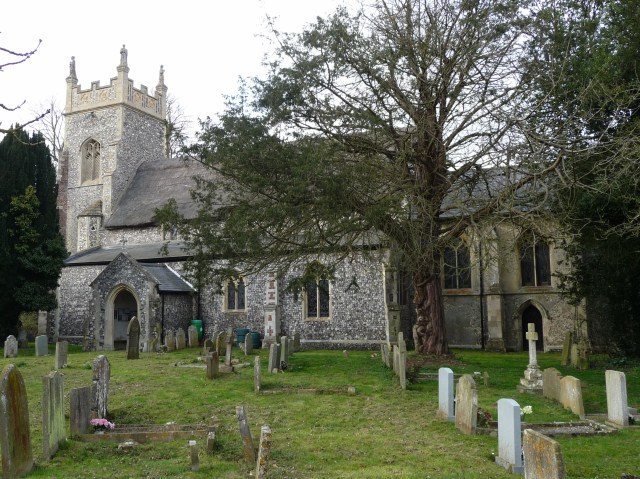
St Andrew, Blofield

P1060611

Font, depicting the life of Christ – unique in Norfolk
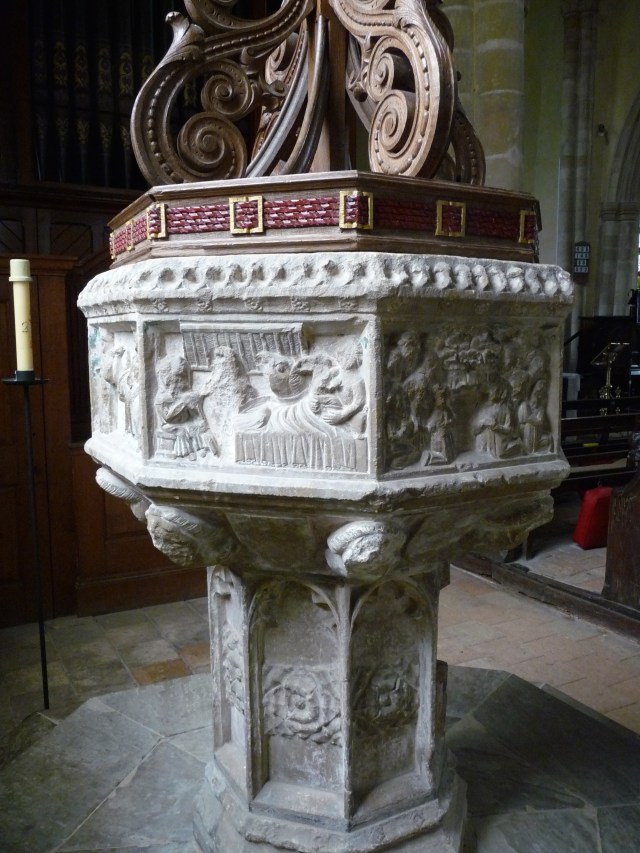
P1060612

The ‘Red Cross’ window

Blofield St Andrew & St Peter


St Michael, Braydeston

P1060623

St Peter, Strumpshaw

P1060628

St Nicholas, Buckenham

Buckenham St Nicholas

Simple, slightly ‘decaying’ interior

P1060636

St Mary, Hassingham

Hassingham St Mary

St Margaret, Cantley

Cantley St Margaret

St Botolph, Limpenhoe

P1060648

St John the Baptist, Reedham

P1060650

All Saints, Freethorpe

P1060655

St Andrew, Wickhampton

Wickhampton St Andrew 2

Details of 14th century wall paintings =- amongst the best in England

P1060667

Wickhampton St Andrew

St Peter & St Paul, Tunstall

Tunstall St Peter & St Paul

Face in the wall

P1060675

St Peter & St Paul, Halvergate

P1060677

St Mary, Moulton St Mary

Moulton St Mary St Mary


14th century wall paintings depicting the Seven Works of Mercy

Moulton St Mary St Mary

All Saints, Beighton

Beighton All Saints

St Edmund, South Burlingham

South Burlingham St Edmund

Fine interior with early painted pulpit, wall painting and rood screen

P1060708

Elephant & Castle bench end

South Burlingham St Edmund 2

St Peter, Lingwood

Lingwood St Peter

Snow Patrol

We did an extra day’s volunteering at Cley NWT today, to help with their Members Weekend pre-view of the new Simon Aspinall Centre. It was overcast and drizzling most of the day with a bitter northerly wind, making it feel like the depths of winter again. Not surprisingly then that the birding highlight of the day was a small flock of winter visitors – Snow Bunting.

P1060752

It all Adders up

Spent yesterday afternoon on a north Norfolk Heath. Having visited on three previous occasions this year without success, I was delighted to find a pair of Dartford Warbler, nest building. Not unusually, they were in the company of a male Stonechat. A little further along the track were a pair of Woodlark. Across the road, at the base of a sunny bank, we were treated to a mesmerising display of basking Adders. The milky cast to their eyes being an indication, apparently, that they are about to slough their skins.

IMG_6326

Flying Barn Door

IMG_6106

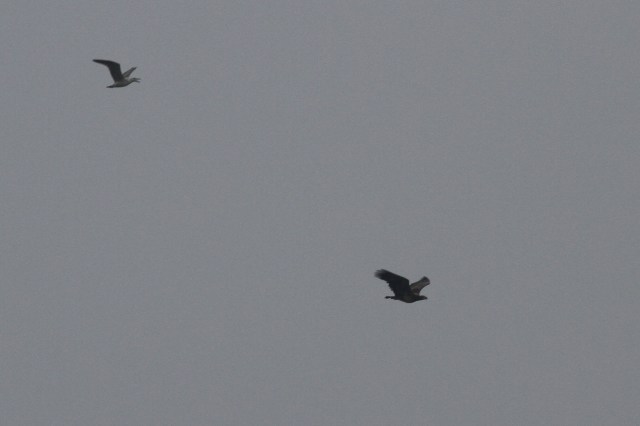
Second winter White-tailed Eagle, Weybourne, 16th March 2015

Yesterday a White-tailed Eagle was tracked from it’s overnight roost in Essex, across Suffolk, through central Norfolk to Warham Greens on the Norfolk coast, where it presumably roosted. This morning it continued it’s journey east along the coast, being first spotted over Cley NWT at 7.50am. We caught up with it, sitting on the shingle ridge, close to Kelling Quag, as seen from Warborough Hill. It was eventually flushed by a dog walker, took off and headed towards Weybourne, where we were able to intercept it and get it on our newly created NENBC list! It continued along the coast to Cromer, where it headed inland. It was last reported from Hickling, mid-morning. A second winter bird, this was my fourth in the county. White-tailed Eagle, commonly dubbed the ‘Flying Barn Door’ are, as the name implies, truly enormous. However, it’s not the overall scale and power of the bird that gets me so much as the size of it’s massive beak! Here are a few more snaps, taken at various locations:

First seen from Warborough Hill, sitting on the shingle ridge, at a distance of over a kilometre

IMG_6057

Heading east towards Weybourne

IMG_6068

Being mobbed by a young Great Black-backed Gull

IMG_6091

Flying east,off-shore, Weybourne beach

IMG_6093

IMG_6101


Little Gull – big impression

IMG_5902

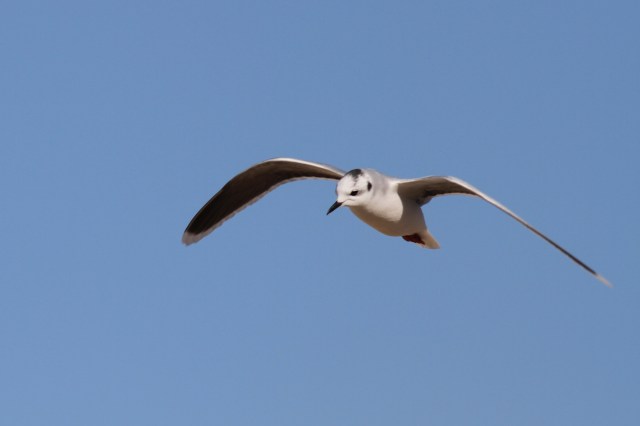
Adult Little Gull, in winter plumage – 11th March 2015

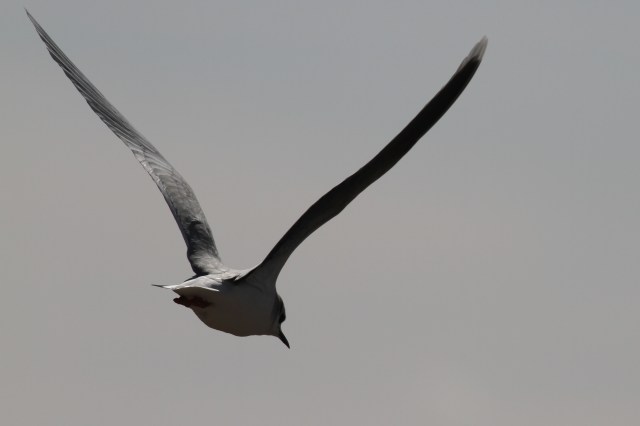
Decided this morning to have a look for the over-wintering Little Gull, which has been hanging around Happisburgh. Parked the car at Cart Gap and enjoyed an invigorating walk along the cliff-top path towards the lighthouse. The Little Gull was hunkered down with a handful of other gulls on the ploughed field before the village. After a while it went airborne and gave some incredible views as it scoured the area for prey items.

IMG_5848

IMG_5862

IMG_5900

IMG_5895

IMG_5875


Bunting Hunting

IMG_5722

Lapland Bunting, Weybourne – 10th March 2015

Following several reports on the NENBC website of Lapland Bunting, on the cliff tops at Webourne, I was up early this morning to go ‘bunting hunting’! Starting at the coastguard cottages, I walked slowly east along the edge of the newly drilled field. I hadn’t gone more than fifty yards when a fabulous male, near summer plumage, Snow Bunting flew down on to the field – great views but too far away to photograph. Several Skylark, Meadow Pipit and Linnet kept dropping on to the bare earth in the near distance, keeping me on my toes, but no sign of Lapland Bunting by the end of the first field. However, half way along the next, two darker looking birds flew up and then briefly dropped down close to where I was stood. A number of birds, including Skylark just to add to the confusion, then flew up, with several birds flying east and four heading across the field, in the direction of coastguard cottages. They landed someway into the field but I could immediately see they were Lapland Bunting – three female types and a winter plumage male, beginning to darken around the chest. Slightly distant for good photos but very nice nonetheless.

A few more shots:

IMG_5708 IMG_5706 IMG_5730


Iceland Gull at Weybourne

Following my post on 4th February, concerning the arrival of Iceland Gulls at Sheringham, an Iceland Gull – thought to be one of that original influx, has been following the plough, on fields east of Weybourne over the past few days. Variously described as ‘juvenile’, ‘immature’ and ‘2nd winter’ on the Bird Information services, yesterday morning I went in search of it. The bird was seen on arrival, sitting in the middle of the field, unperturbed by the tractor going to and fro across the field. At a distance the bird looked very pale on the head and breast with more pale coffee coloration on the back and wing coverts. The bill was described by other observers as ‘all dark’. Discounting, for now, the possibility of a second bird causing confusion, the age of this individual is rather baffling to me and, possibly, to others? To me the Weybourne bird looks most like the ‘1st winter’ bird I saw a month ago, albeit with slightly paler body parts – which I assume could be caused by the progress of moult into summer plumage. But, unless it’s a trick of the light, the bill coloration is puzzling – certainly yesterday’s bird doesn’t show the striking bi-coloured bill of either of the previous Sheringham birds – looking rather dark uniform in colour with an indistinct pinkish ‘bridge’. Could the bill of this bird have darkened or is it possibly another, third/fourth individual I ask?

IMG_5429

IMG_5438

IMG_5442


For far better photos of this bird, visit Steve Gantlett’s, Cley Birds website.


First Signs of Spring

IMG_5401

Peacock, Waverney Forest, 27th February 2015

Snapped this Peacock in the Waverney Forest yesterday lunchtime – first butterfly of the year and an encouraging sign that spring is nearly sprung! The day was spent reconnoitring for the next NENBC outdoor meeting on 8th March. Common Crane, heard but not seen, at Cockshoot Broad was the highlight – they were later reported flying high west over Norwich.

Sumer Is Icumen In

The lure of a male Garganey at Cley NWT this afternoon was too much to resist. After all it was my first summer migrant of 2015!

Apologies, therefore, for the quality of the photos which were taken at a distance and in appalling light:

IMG_5049 IMG_5054

The other interesting duck on Simmond’s Scrape this afternoon was the American Wigeon ‘hybrid’, centre front of the group:

IMG_5014

Icelandic Intrigue – now with Post Script

Yesterday a ‘2nd winter’ Iceland Gull was reported at Sheringham around lunchtime, along with a juvenile Glaucous Gull. I was in Norwich when the message came through, so by the time I managed to get there it was about two in the afternoon. The Glaucous was reported as being somewhere east of the shelter but there was no sign of the Iceland. I wandered down to the promenade and almost immediately saw a ‘white winger’ on the beach just west of the shelter. As I approached I could see that it was an Iceland, but a rather darker bird than I’d been expecting. The bill was pink with a blackish tip, the head and breast off-white with a dark smudge in front of the eye but the back and mantle were coffee coloured, with extensive mid-brown feather fringing. Primaries where white with indistinct greyish tips, the tail was coffee with darker feather centres. During the evening a pager message announced the presence of a ‘juvenile‘ Iceland present at Sheringham during the afternoon. Intrigued by the differing accounts of the bird (birds) I returned this morning to see if I could get better views. Again, almost immediately on arrival, an obviously pale Iceland was feeding just off-shore by the shelter. This bird was a more typical 2nd winter bird with a pale greyish mantle and off-white tail. Moss Taylor, who was the original finder, confirmed that this was the same bird as he’d seen yesterday. Looking at the photos it seems probable that there are two, possibly three birds in the area (assuming that the reported juvenile was a different bird).

Post Script: Reports during the day suggest that there are indeed three Iceland Gulls currently in the Cley/Weybourne/Sheringham area but the spectre of ‘possible hybrids’ has reared it’s ugly head!

Yesterday’s bird:

Iceland Gull

Iceland Gull

and today’s individual:

IMG_4814 IMG_4793

A closer look at their respective tail patterns is, in my view, pretty compelling:

Iceland Gull IMG_4798

Post Post Script: Managed to catch up with one of the juvenile Glaucous Gulls at Salthouse this morning

IMG_4917