Thomas Hardy Trail, part 1 – Life & Times

DSC08658

Portrait of Thomas Hardy, born 1840 – died 1928

We’ve come down to Dorset for a few days with my brother Robin – over from Australia, to do the Thomas Hardy Trail. Staying at the wonderfully atmospheric Old Post Office in Lower Bockhampton – which features explicitly in a couple of his poems, is opposite the old primary school which the young Hardy attended – just a short walk from his birthplace, close to Dorchester – Hardy’s Casterbridge and central for most of the important location throughout his life and, consequently, many of the places on which he based his novels and poems. We (well actually Jane and Robin!) have drawn heavily on the many available sources to create the itinerary, but we’ve found The Landscape of Thomas Hardy by Denys Kay-Robinson to be amongst the most useful. The majority of locations we’ve visited are to be found in the delightful county of Dorset but we have wandered more widely around ‘outer Wessex’ in our quest of discovery.
This blog is divided into two parts, the first covers most of the places significant in Hardy’s own life, the second, details the actual locations – about which there is a whole library of material and much debate, believed to have been used by Hardy as the backdrop to his novels and poems.

Lower Bockhampton, location of the Old Post Office

DSC08619

The Old Post Office, Lower Brockhampton
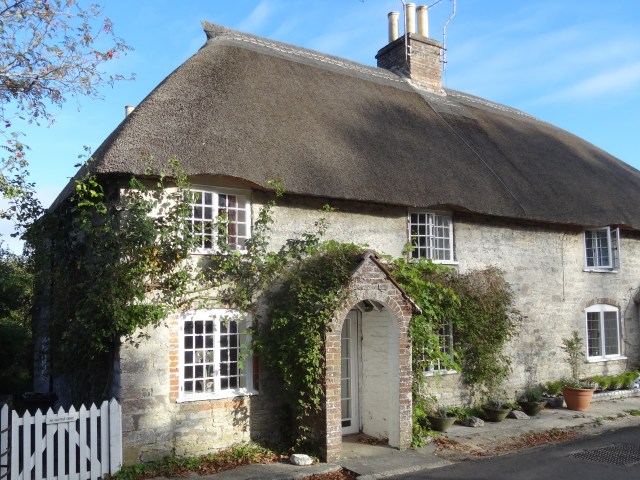
DSC08975

The porch of the old village school where Thomas Hardy was a pupil

DSC08677

The water meads across which TH would have walked on his way to and from school (courtesy of RW)

_DSC0863-Edit

Thomas Hardy’s house in Upper Bockhampton, now in the care of the National Trust

DSC08657

The interior of the cottage, with Jemima his mother’s chair and his father’s violins

DSC08659

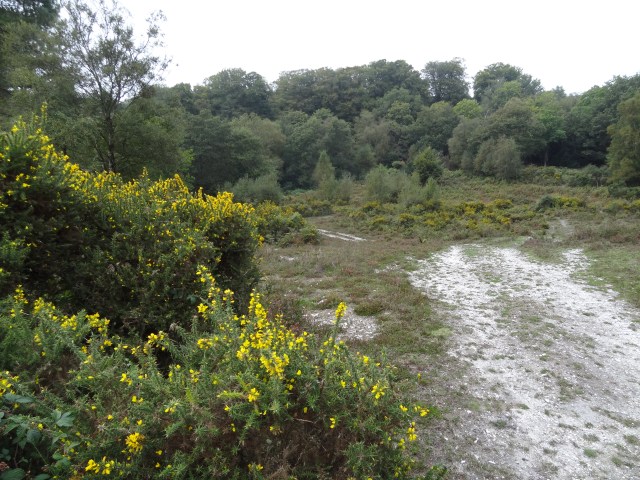
At the back of the cottage, Hardy’s Egdon Heath – location for much of the action in Return of the Native
DSC08675

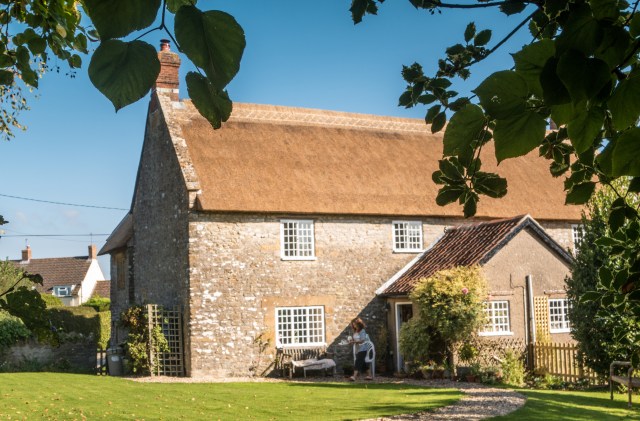
Jemima’s parents cottage in Melbury Osmond
_DSC0772

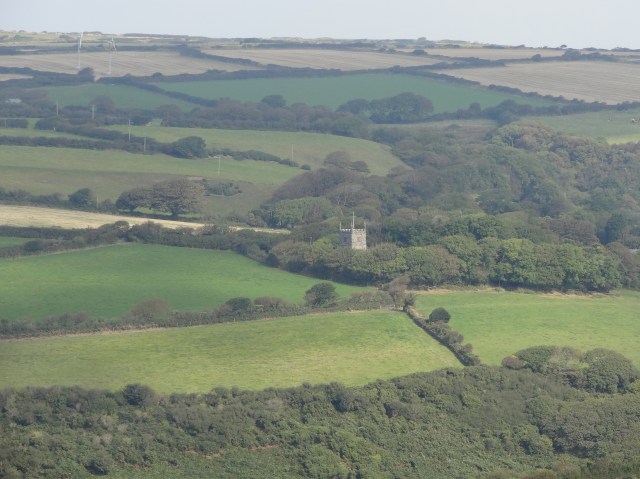
As a young architect, Hardy travelled to the remote church of St Juliot, Boscastle
DSC08763

Here, at the Rectory (now a B&B), he met Emma and fell in love. He married her more than a decade later
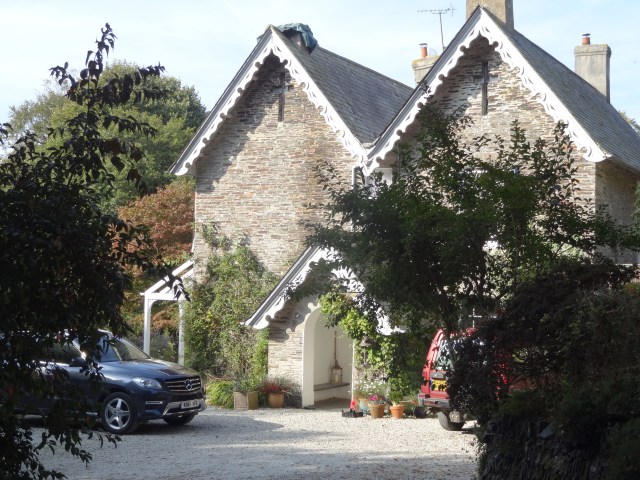
DSC08756

Hardy was responsible for supervising a major restoration of the church

DSC08747 DSC08752

The house in which Hardy lived briefly in Swanage, best observed from Sentry Road
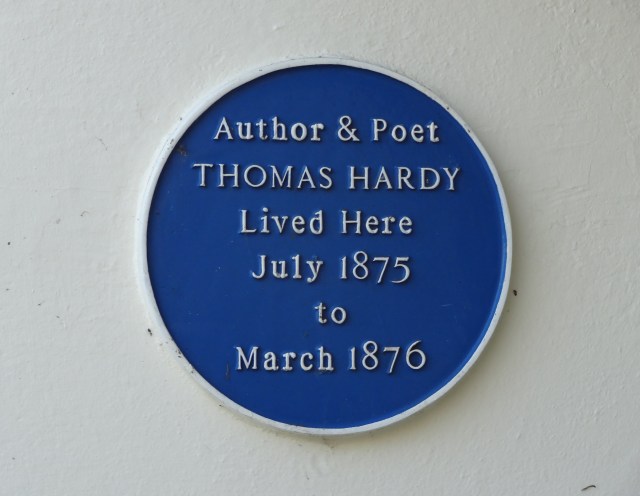
DSC08942 DSC08944

Their first home together was on the banks of the Stour, at Sturminster Newton
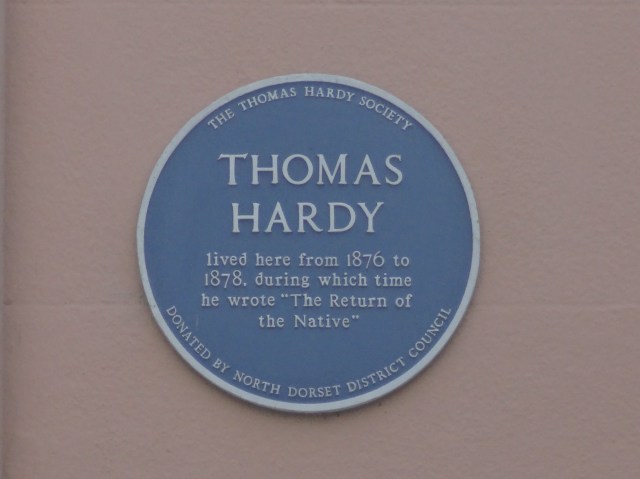
DSC08806 DSC08805

The mill on the river which featured in his poetry

DSC08808

Max Gate in Dorchester, designed by TH and built by his father, where he lived for over forty years – first with Emma and later with Florence, his second wife. Now in the care of the National Trust (photo courtesy of RW)
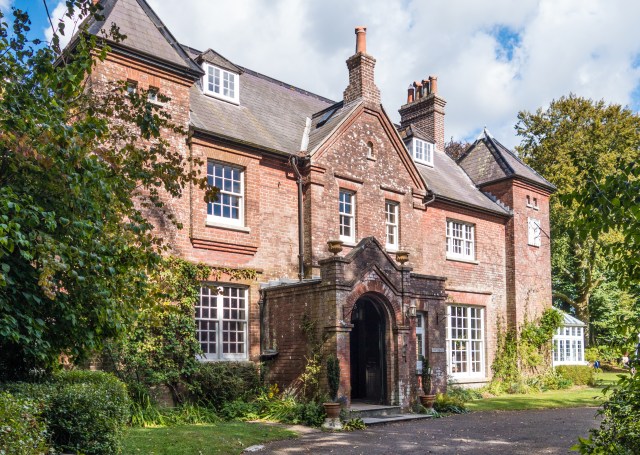
_DSC1115 DSC08899

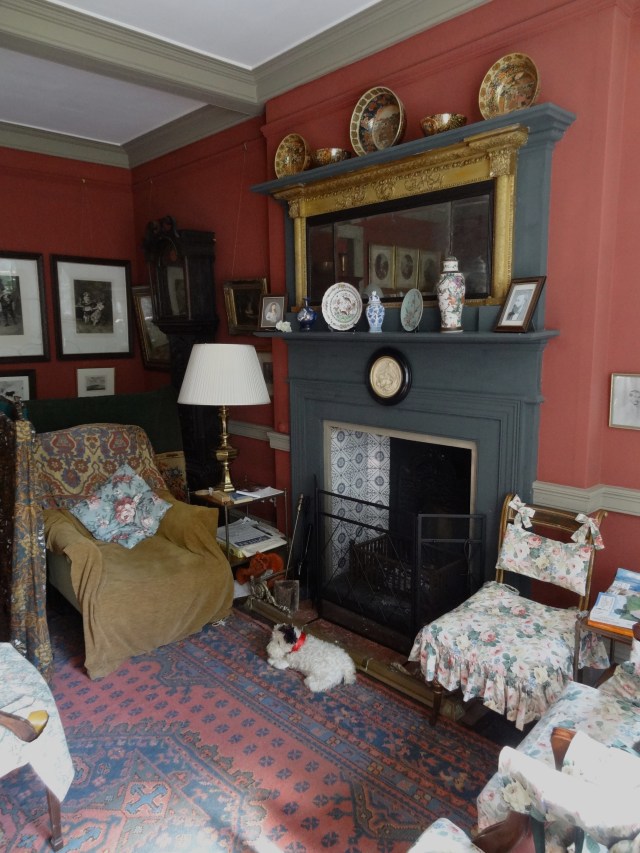
The Hardy’s reconstructed sitting room – all of the original furniture & fittings having been sold off after his death
DSC08903

Details of Emma’s upstairs accommodation

DSC08912

The contents of Hardy’s study – removed from Max Gate, on his instruction, and relocated to the town museum after his death (photo courtesy of RW)

_DSC0645-Edit

Thomas Hardy’s grave in Stinsford churchyard – his heart is buried here whilst his ashes rest in Poet’s Corner, Westminster Abbey. He lies in the company of both Emma & Florence

DSC08626

Part 2 will feature the settings for most of his major works…


No Holds Barred

IMG_7567

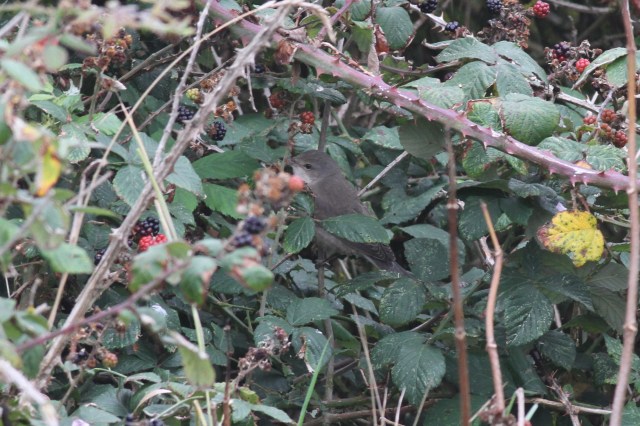
Barred Warbler, Gramborough Hill, 17th September 2014 

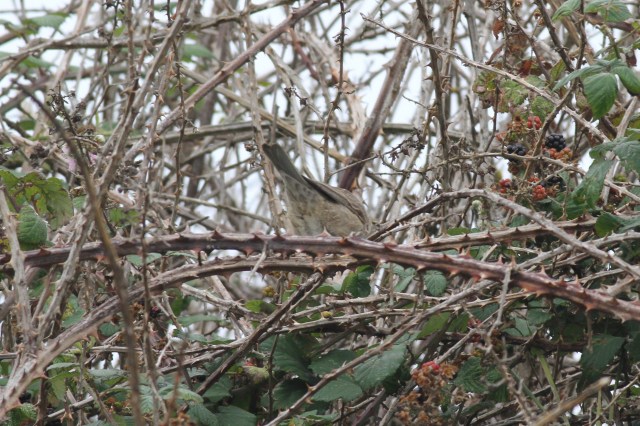
You’re lucky to get good views of Barred Warbler. Usually all you get are fleeting views of a variety of body-parts, as this scarce eastern autumn migrant creeps through the brambles. The bird today at Gramborough Hill was something of an exception. If it hadn’t have been for the leaden grey skies and persistent gentle misting sea fret, the views would have been pretty exceptional! A typically plain looking juvenile bird which did show some pale feather fringing to the coverts, tertials and primaries and was quite strongly barred on the under-tail with a marked two-tone pink and grey bill. It’s been years since I saw one as well as this.

Some more photos of this obliging bird:

Now this is the sort of view that would typically be classed as ‘showing well’

IMG_7462

But this is more like it..

IMG_7497 IMG_7527IMG_7577

Finally, a nice shot of the under tail barring

IMG_7583

Another day at the ‘office’

IMG_7436

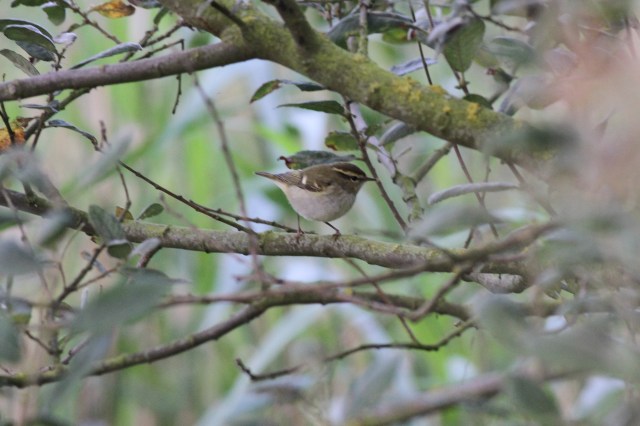
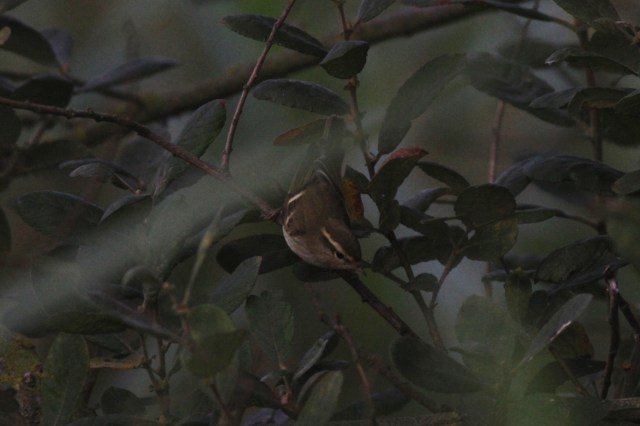
Yellow-browed Warbler, Salthouse, 15th September 2014

Monday is ‘duty day’ at Cley NWT and there was plenty to keep us entertained today. Up to six juvenile Curlew Sandpipers, three Common Sandpipers, Whinchat, lots of Wheatear, a nice flock of Pintail, a rather showy Cetti’s Warbler, 3 Hobby, a couple of Water Rail and, after ‘work’, a superb Yellow-browed Warbler – just up the road, at Salthouse.

One of three Common Sandpipers on Pat’s Pool

DSC08547

There were over a dozen Wheatear on the fields along Beach Road

DSC08566

This little chap nearly sat on my boot!

DSC08574

To finish with, a few more pics of that delightful long-distant migrant, which breeds east of the Ural mountains and should be wintering in South East Asia – Yellow-browed Warbler

IMG_7430

IMG_7414

IMG_7405

RBF.. a nice welcome home

IMG_7315

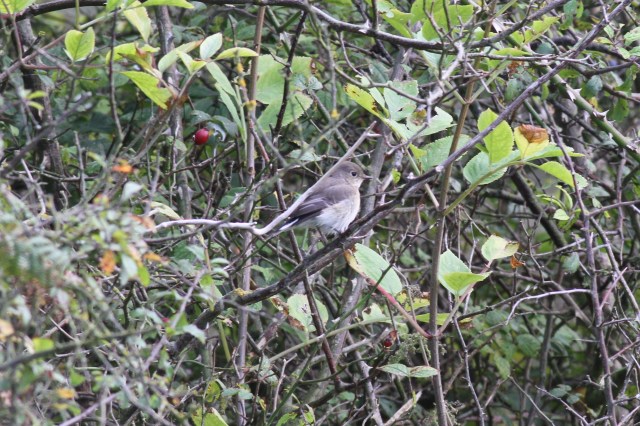
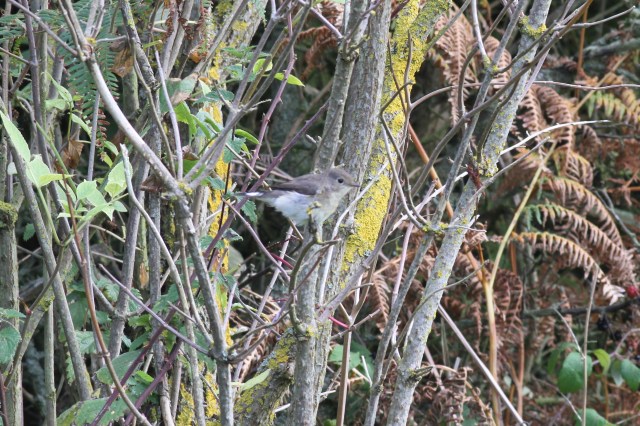
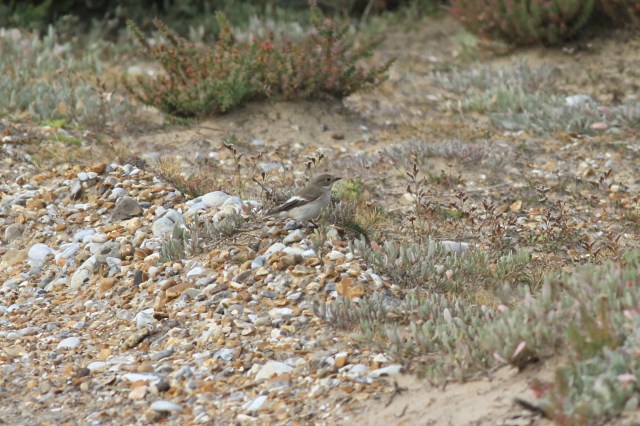
Red-breasted Flycatcher, East Runton, 14th September 2014

Having spent most of last week in Peterborough I was relieved to find, on our return this afternoon, that there were still a few drift migrants around in Norfolk. There also appeared to be a few things just arriving, including a Red-breasted Flycatcher, just down the road from us, at East Runton. I turned up at the spot and, unusually for me just lately, the bird was ‘on show’. Probably a young bird, lacking any trace of red in it’s throat – nice to see all the same.

IMG_7299 IMG_7321

Migrants arrive in Norfolk

IMG_7229

Wryneck, East Bank – Cley NWT, 5th September 2014

Encouraged by recent reports from Blakeney Point, I decided to spend yesterday morning doing the walk. Early Wheatear activity around The Marrams gave reason to be optimistic but by the time I’d reached Halfway House I was beginning to worry. There was a small group of Whinchat, including a very pale individual, at The Hood and four Redstart, including a male, at Long Hills. On the Point itself there were single Pied & Spotted Flycatchers, Reed, Garden and Willow Warblers more Whinchat and a couple of Chiffchaff  – though, sadly, nothing more exciting. Fortunately for me the Wryneck on East Bank, Cley NWT was still present in the afternoon.

Several Whinchat were at The Hood, including this rather pale looking adult

IMG_7079

Male Redstart – one of a total of five

IMG_7108

Willow warbler

IMG_7115

Spotted Flycatcher at the Plantation

IMG_7128

Pied Flycatcher

IMG_7120

Meanwhile – back at Cley, a rather obliging Wryneck on the path at East Bank.

IMG_7252

ECT etc.

DSC08386

Eastern Common Tern (possible), Arnold’s Marsh, Cley NWT, 29th August 2014

Thanks to Steve and Richard at Cley I can now confirm that my possible possible is indeed a definite possible!

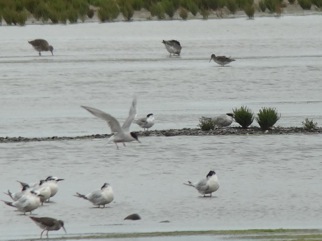
There’s been an odd Tern knocking about along the North Norfolk coast recently – thought to be a Common Tern of the race longipennis or Eastern Common Tern – ECT for short. It’s been regularly seen in the high-tide roost at Scolt Head island and previously but briefly at Cley.

Last Friday afternoon I went looking for a reported Black Tern on Arnold’s Marsh, Cley NWT. There were plenty of Sandwich Tern in the roost, with a few Common Tern but the Black Tern, I was informed by the assembled small group of birders, had just flown back out to sea. As I scanned the flock I became aware of a rather odd looking bird roosting on a small spit in the middle of the marsh. I was sufficiently intrigued by it to attempt to take a couple of digipics. The bird in question was being touted as a probable Arctic Tern but to my eye, although it did look short legged, it was too dark in it’s upper parts and the breast looked rather smokey – contrasting with it’s white cheeks and throat. The group dispersed and I decided to get a better look from the shingle ridge. I quickly relocated the bird but this time it was mostly side on and the detail of the breast was obscured. However, the all dark cap – lacking any white forehead, mid grey upper parts, all white tail stopping short of the primaries and – most intriguingly, an all black bill and dark legs were clearly visible. I managed a few grab shots before the bird took to the air and departed over the ridge to the sea. As it did so, however, it showed a clean upper wing with no signs of the characteristic primary wedge of regular Common Tern. Certain that it wasn’t an Arctic, I returned home without a new Tern tick for the year – oh well!

Over the weekend Steve Gantlett posted pictures of the possible ECT at Scolt Head on his blog and I became immediately suspicious that it was one and the same bird. I sent Steve and Richard Millington copies of my photos and I’m pleased to report that they quickly confirmed the id – my possible possible has become a definite possible!

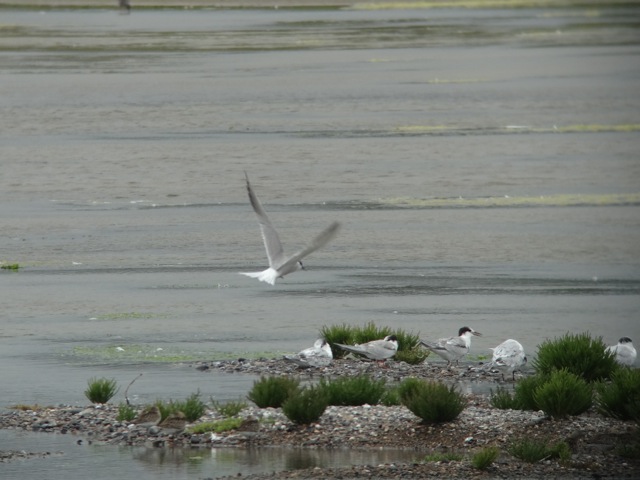
More digipics showing, in the first shot (the bird just to the left of the samphire) the smokey breast contrasting with white cheeks and throat

DSC08354

and in the second, the plain mid-grey upper wing, lacking the usual primary wedge

DSC08387

Just got to wait now until they decide to split it!

Pink and Purple – Top the Bill

IMG_7016

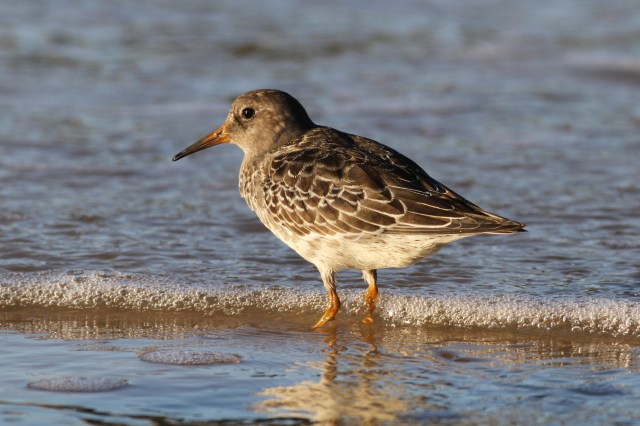
Purple Sandpiper, Sheringham beach, 31st August 2014

Today was spent in the company of Bob & Sue, our long-time birding buddies, attempting to replicate our achievements over the bank holiday, when we amassed a total of 104 species in Norfolk in a single day. We got off to a reasonable start by seeing forty different birds in the Felbrigg estate before breakfast! Yesterday most of the scarce birding action was on the coast, at Winterton dunes – birds included Greenish Warbler, Wryneck, Red-backed Shrike, Pied Flycatcher and Redstart. Suffice it to say that this morning we managed to see none of the aforementioned! A short coffee break, back at base, and on to Cley NWT – from here on the birding got better and better. From Dauke’s hide we saw a good selection of waders including five Little Stint, adult moulting Curlew Sandpiper, Greenshank and Green Sandpiper. Down at the beach, more Curlew Sandpipers, Wheatear, Spoonbill and, out at sea, Great and Arctic Skua, Guillemot and Black Tern – up to nine, including the four roosting on Arnold’s.

However, the best was still to come. A late afternoon return visit to the play-park at Weybourne to look for the reported Rose-coloured Starling was quickly rewarded when the adult ‘Pink Stink’ flew straight across the park and on to a nearby TV ariel! On to Sheringham for a final sea watch. With absolute 100% visibility and only a weak on-shore breeze the prospects were poor but the day ended in style with a rather unseasonal and very approachable Purple Sandpiper feeding unconcerned amongst the holiday makers!

Some photos:

IMG_6978

IMG_6967

IMG_6962

IMG_7013

IMG_6989

IMG_6998

Ninety odd birds, some of real quality, made for another great Norfolk birding day out.

Bonxie on the beach

IMG_6896

Great Skua (Bonxie), Salthouse, 29th August 2014

I was  just on my way over to Peterborough when the pager announced that there was a Great Skua on the sea pool at Salthouse. Although I’ve done the odd bit of sea watching this autumn I’d not yet caught up with this – the largest species of Skua in the Western Paleartic, so the minor detour seemed worth the gamble. As I drove down Beach Road I could see a couple of guys looking east through scopes. I parked up and scanned the pool – nothing. Then there it was, a rather pale and slightly dishevelled adult Bonxie, sat on the shingle ridge. This very approachable individual gave prolonged views before finally flying off towards Cley, chasing a gull. It was reported later in the morning flying over North Scrape.

A couple more shots of this interesting and approachable bird:

IMG_6886 IMG_6905 IMG_6910 IMG_6911

Bank Holiday Hundred

IMG_6780

Migrant Wheatear, Gun Hill, Norfolk, 24th August, 2014

Yesterday Jake and I had a day out birding. As things have been a bit quiet of late on the Norfolk birding front, we decided to set ourselves the challenge of seeing a hundred different species during the day. We started at Titchwell, where the highlights were Spoonbill, Peregrine, Spotted Redshank, Arctic Skua, Whinchat, Common Swift and Eider. Next stop was Choseley Barns where we added Corn Bunting and Yellowhammer, then on to Gun Hill for a long flog round in search of migrants – nothing particularly special but we did see a couple of Wheatear, several Lesser Whitethroat, Garden Warbler and a Whimbrel.  A brief stop-off at Holkham Hall provided Nuthatch, Goldcrest and, rather surprisingly, Marsh Tit. Our final stop was Cley NWT, where we added Little Ringed Plover, Wigeon, Greenshank and Yellow Wagtail – making a grand total of 104. Not bad for a rather unpromising late summer birding Bank Holiday!

There were plenty of common waders along the coast, including Dunlin

IMG_6756

This was my first autumn flock of Golden Plover for the year

IMG_6762

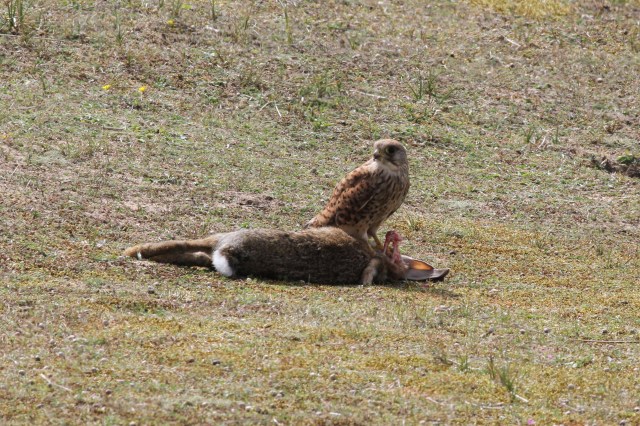
Kestrel, feeding on a rabbit carcass, Gun Hill

IMG_6784

One of several Lesser Whitethroat seen

IMG_6769

Reed Warbler, in the legendary apple tree at Gun hill

IMG_6787

As autumn draws ever closer here’s hoping for additional quality as well as quantity!

‘Weird Wader’ (with update)

Following a busy weekend participating in the Three Peaks Challenge, which incidentally the guys managed to complete in 23 hours and 24 minutes despite the appalling weather, it was ‘business as usual’ for my ‘duty day’ at Cley NWT on Monday. Nothing particularly stunning, but eighteen species of wader on Simmonds Scrape during the morning was pretty good. Here are a couple of digiscope record shots, from the last couple of weeks, to make up for the lack of posts – partly due to continuing internet difficulties:

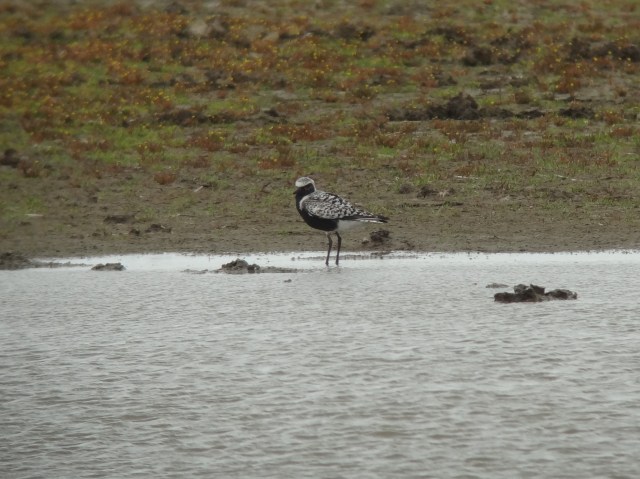
Grey Plover in near summer plumage

DSC08247

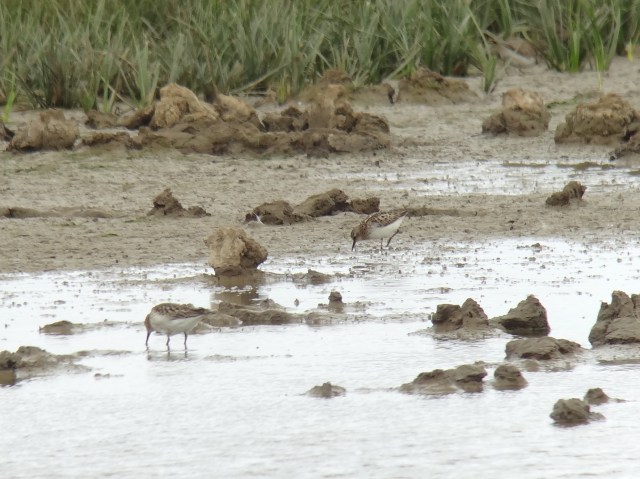
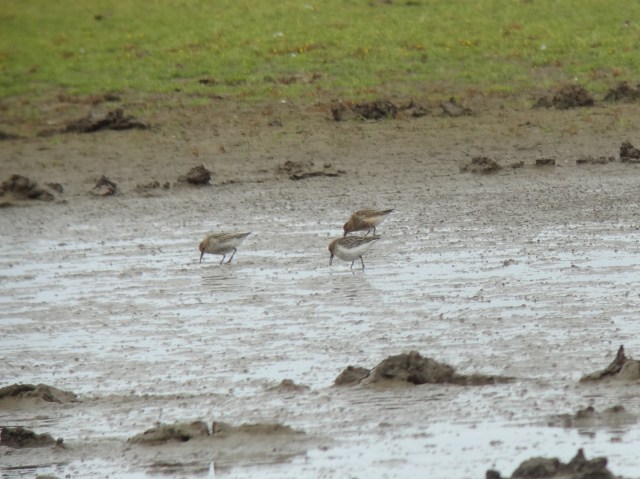
Juvenile Little Stint – Simmonds Scrape

DSC08169

DSC08193

Seen the previous week on Sea Pool – Curlew Sandpiper

DSC08162

Finally an odd looking Dunlin seen on Simmond’s Scrape this week, with noticeably (symmetrical) apricot-coloured flank patches. Couldn’t decide at first if this bird was stained in some way, had been colour-marked at some point or was just an aberrant individual – interesting all the same. Grateful for any comments.

DSC08266

DSC08253

Update: The bird was still present on 25th., although the flank coloration appears to be fading, presumably as it’s moult progresses

DSC08294 DSC08297 DSC08311

Hopefully, with working internet and autumn approaching, we should be back on track with more regular posts.