What is this Aythya?.. now with Postscript

IMG_7126

Aythya hybrid – Felbrigg Lake

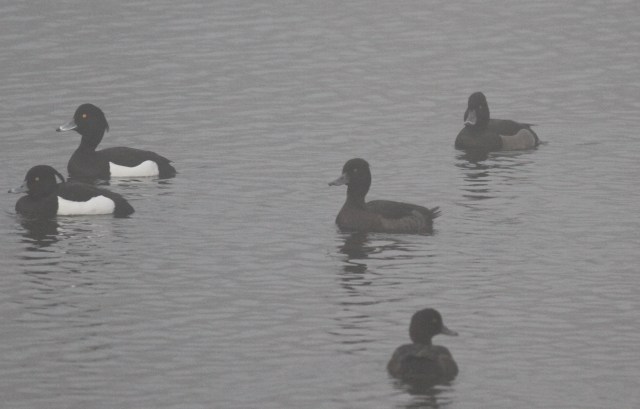
I’ve seen this duck at Felbrigg Lake a couple of times over the last few weeks but never really looked at it! Yesterday, probably because it was rather foggy, the Tufted Duck flock was closer to the edge than usual, allowing better views and a few rather grainy shots. In the back of my mind I knew there was something odd about it but I’d written it off as a first winter male Tufted. Yesterday it clicked, surely this is one of those notorious Aythya hybrids – but which one? Looking at various plates in my admittedly rather limited bird book library I’m inclined to think that it could be a Tufted Duck x Ring-necked Duck, but I’d welcome a more expert view if anyone would care to comment.

A couple more shots:
IMG_7131

IMG_7128

Postscript:

I’ve had a couple of comments back with the helpful suggestion that this bird could in fact be Tufted x Ferruginous. That would certainly explain the dusky flanks, this far into the breeding season ( although there is the curious white edging to the upper flanks, reminiscent of Ring-necked ) and the suggestion of a white ‘rear-end’. Also the very pale eye and the absence of any white ring around the base of the bill. Seen in slightly better light this morning, there are definite chestnut tones to the breast, which would also fit with Ferruginous parentage. Here are a couple more shots to ponder:
IMG_7260

IMG_7279

IMG_7267

Heading Home

Yesterday we went to Kelling Heath, combining steam trains for the grand kids with a bit of birding for the grown ups. We managed to connect with both trains and birds I’m pleased to say, including a pair of Stonechat. Up in the clear blue sky there were plenty of Common Buzzard circling over head. A single bird slowly making it’s way east, between the coast and the heath, caught my attention, the profile seemed a little different somehow- longer in the tail and a more prominent pale head, paler underneath but with noticeable dark belly and carpal patches. Occasionally I thought I could see a pale upper tail, but mostly I was viewing from below. When I did get a chance to down load my photos, I was certain that my provisional identification of Rough-legged Buzzard was right. I guess this would be one of our wintering juveniles finally heading home.

IMG_6976


The whistleri conundrum

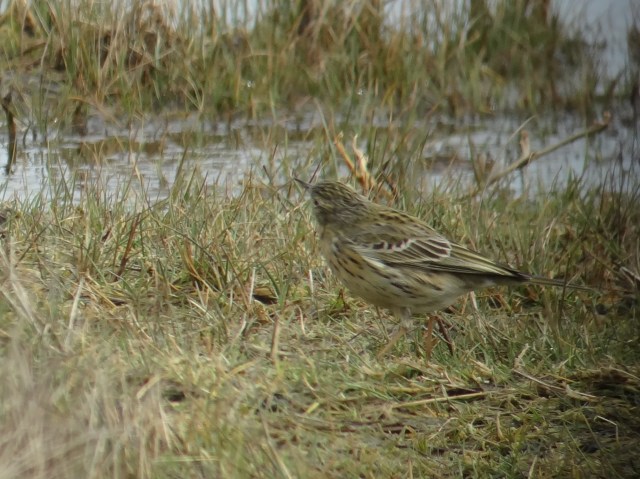
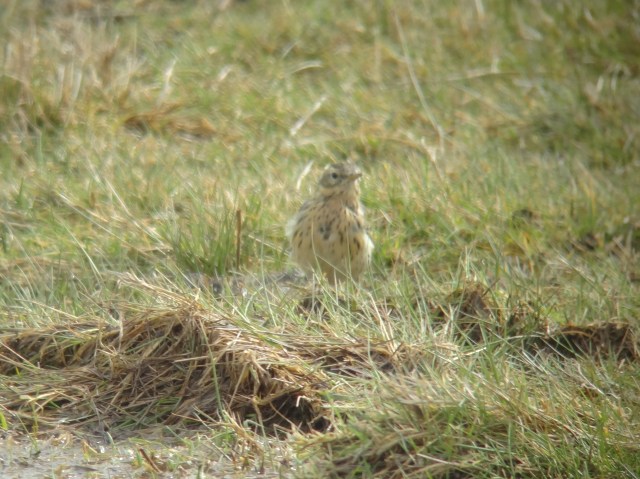
Yesterday, whilst on duty at Cley NWT, I was walking along East Bank towards the car park when I noticed a pipit fly up from the grass at the edge of the drain and drop down a short distance away. Knowing that there’d been a report of a Water Pipit on the Serpentine a couple of days before I was keen to see the bird at close quarters. When I did eventually locate it, at medium range, I was somewhat surprised to find that I was looking at a pipit sp with obvious apricot underparts! However, it was quickly apparent that this wasn’t the hoped for Water Pipit but a probable aberrant Meadow Pipit. Despite at times looking rather reminiscent of a Red-throated Pipit, apart from it’s distinctive coloured underparts, all other id features conformed to Meadow Pipit – with olive tones on it’s back and head, weak but defined streaking on the flanks and pinkish/yellow legs. The bird didn’t call whilst I was watching but  it was heard to do so later in the morning – giving confirmation of it’s id as Meadow Pipit.

I remained curious about the bird and mentioned it to Steve Gantlett and Carl Chapman – who saw the bird shortly after me. Steve very kindly alerted me to an article by Richard Porter in Birding World, in which he recounts a similar encounter with a pipit on Blakeney Point in March 2004. The question examined in the article is whether or not such ‘orange breasted’ Meadow Pipits are possibly of the Irish or western Scottish race whistleri? Due to the general variation of plumage in Meadow Pipits, shifting taxonomy and the apparent infrequency of records of ‘orange breasted’ pipits, the question of the origins of such birds goes largely unresolved.

For a more coherent account of the issues raised by ‘orange breasted’ pipits read Birding World  2005 (18: 169-172) and watch out for much better photos of the Cley bird on Carl’s blog. I leave you with these cautionary words from Richard Porter:

This short contribution may encourage a greater awareness of the whistleri conundrum. Suffice to say that some Meadow Pipits in the west of their range and elsewhere can be decidedly orange-buff below, and sometimes they have greatly reduced streaking on the under-parts. Perhaps the birds addressed in this note are extreme forms of whistleri, or maybe they are simply individuals showing erythrism (excess red pigmentation), but what is equally important from a birding point of view is the fact that such birds can resemble Red-throated Pipit (or indeed superficially, Water Pipit! TW) Unless looked at carefully, they can be a pitfall for the unwary.

In the mean time you’ll have to put up with my rather inferior grab shots!

DSC00420

DSC00432

DSC00406

‘orange bellied’ Meadow Pipit – Cley NWT, 30th March 2015 

RND is AOK

This afternoon, on our second attempt, we were successful in tracking down the adult male Ring-necked Duck at Hardley Staithe. Despite the ferocious winds and lashing rain, we located the RNG on the more distant angler’s pond, in the company of Pochard and Tufted Duck. Managed to hold the ‘scope steady enough to see the salient  features and take a few grab-shots of this increasingly scarce American vagrant. A Norfolk ‘tick’ for me.

IMG_6827

  Ring-necked Duck, Hardley Staithe – 29th March 2015


A few days birding

We’ve had our good friends Neil & Eunice here for a few days birding. Despite the rather unfavourable weather forecast we managed to get out every day and catch up with most of the local ‘celebrities’/ long-staying visitors. The highlights of which included: Black Redstart, Mandarin Duck, Woodlark, Dartford Warbler, Iceland Gull, Garganey, Snow Bunting, Rough-legged Buzzard, Richard’s Pipit and these beauties:

Shore Lark, Blakeney Point

IMG_6780

Garganey, Weybourne beach pool

IMG_6456

Black Redstart, Felbrigg Hall

IMG_6649

Distant Rough-legged Buzzard over Holkham dunes, digiscoped  from the A149

DSC00370

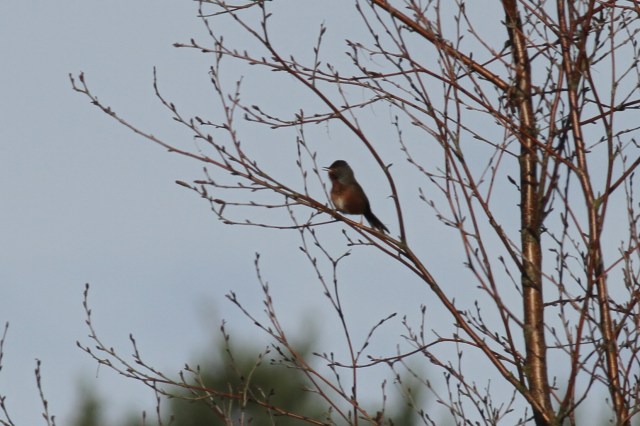
Dartford Warbler, North Norfolk heath

IMG_6591

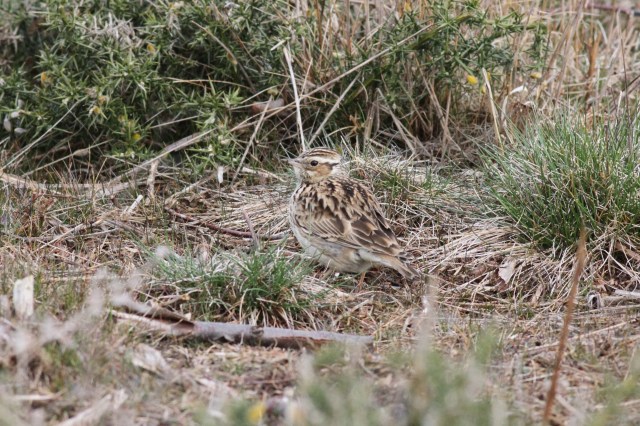
Woodlark, North Norfolk heath

IMG_6786

Richard’s Pipit, Breydon Water

IMG_6615

Snow Bunting, Weybourne

IMG_6480

Snow Patrol

We did an extra day’s volunteering at Cley NWT today, to help with their Members Weekend pre-view of the new Simon Aspinall Centre. It was overcast and drizzling most of the day with a bitter northerly wind, making it feel like the depths of winter again. Not surprisingly then that the birding highlight of the day was a small flock of winter visitors – Snow Bunting.

P1060752

It all Adders up

Spent yesterday afternoon on a north Norfolk Heath. Having visited on three previous occasions this year without success, I was delighted to find a pair of Dartford Warbler, nest building. Not unusually, they were in the company of a male Stonechat. A little further along the track were a pair of Woodlark. Across the road, at the base of a sunny bank, we were treated to a mesmerising display of basking Adders. The milky cast to their eyes being an indication, apparently, that they are about to slough their skins.

IMG_6326

Flying Barn Door

IMG_6106

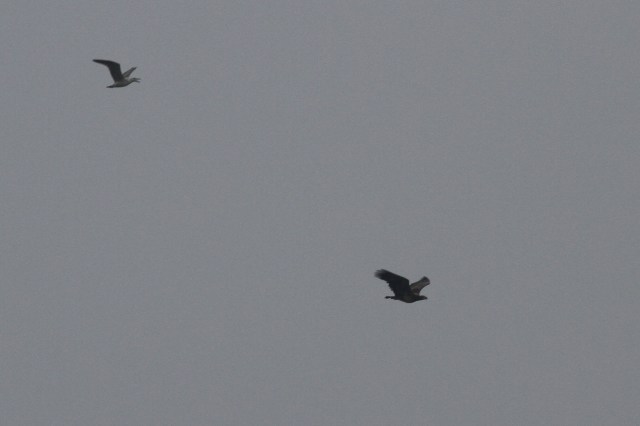
Second winter White-tailed Eagle, Weybourne, 16th March 2015

Yesterday a White-tailed Eagle was tracked from it’s overnight roost in Essex, across Suffolk, through central Norfolk to Warham Greens on the Norfolk coast, where it presumably roosted. This morning it continued it’s journey east along the coast, being first spotted over Cley NWT at 7.50am. We caught up with it, sitting on the shingle ridge, close to Kelling Quag, as seen from Warborough Hill. It was eventually flushed by a dog walker, took off and headed towards Weybourne, where we were able to intercept it and get it on our newly created NENBC list! It continued along the coast to Cromer, where it headed inland. It was last reported from Hickling, mid-morning. A second winter bird, this was my fourth in the county. White-tailed Eagle, commonly dubbed the ‘Flying Barn Door’ are, as the name implies, truly enormous. However, it’s not the overall scale and power of the bird that gets me so much as the size of it’s massive beak! Here are a few more snaps, taken at various locations:

First seen from Warborough Hill, sitting on the shingle ridge, at a distance of over a kilometre

IMG_6057

Heading east towards Weybourne

IMG_6068

Being mobbed by a young Great Black-backed Gull

IMG_6091

Flying east,off-shore, Weybourne beach

IMG_6093

IMG_6101


Little Gull – big impression

IMG_5902

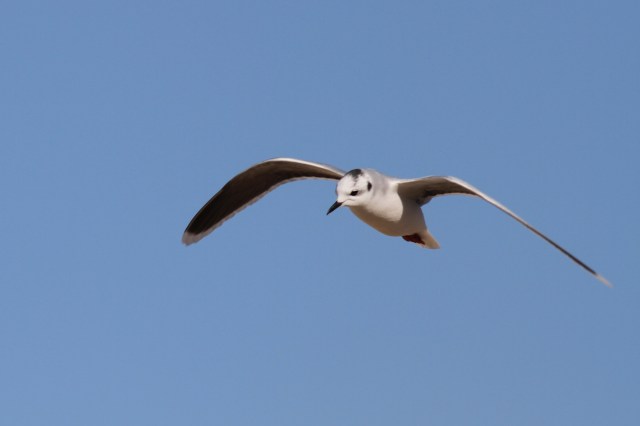
Adult Little Gull, in winter plumage – 11th March 2015

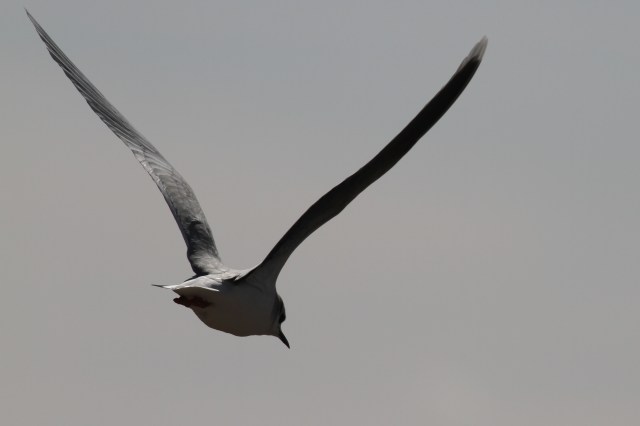
Decided this morning to have a look for the over-wintering Little Gull, which has been hanging around Happisburgh. Parked the car at Cart Gap and enjoyed an invigorating walk along the cliff-top path towards the lighthouse. The Little Gull was hunkered down with a handful of other gulls on the ploughed field before the village. After a while it went airborne and gave some incredible views as it scoured the area for prey items.

IMG_5848

IMG_5862

IMG_5900

IMG_5895

IMG_5875


Bunting Hunting

IMG_5722

Lapland Bunting, Weybourne – 10th March 2015

Following several reports on the NENBC website of Lapland Bunting, on the cliff tops at Webourne, I was up early this morning to go ‘bunting hunting’! Starting at the coastguard cottages, I walked slowly east along the edge of the newly drilled field. I hadn’t gone more than fifty yards when a fabulous male, near summer plumage, Snow Bunting flew down on to the field – great views but too far away to photograph. Several Skylark, Meadow Pipit and Linnet kept dropping on to the bare earth in the near distance, keeping me on my toes, but no sign of Lapland Bunting by the end of the first field. However, half way along the next, two darker looking birds flew up and then briefly dropped down close to where I was stood. A number of birds, including Skylark just to add to the confusion, then flew up, with several birds flying east and four heading across the field, in the direction of coastguard cottages. They landed someway into the field but I could immediately see they were Lapland Bunting – three female types and a winter plumage male, beginning to darken around the chest. Slightly distant for good photos but very nice nonetheless.

A few more shots:

IMG_5708 IMG_5706 IMG_5730