Iceland Gull at Weybourne

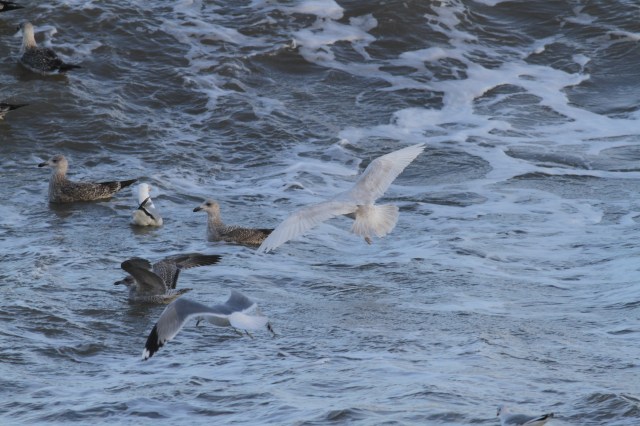
Following my post on 4th February, concerning the arrival of Iceland Gulls at Sheringham, an Iceland Gull – thought to be one of that original influx, has been following the plough, on fields east of Weybourne over the past few days. Variously described as ‘juvenile’, ‘immature’ and ‘2nd winter’ on the Bird Information services, yesterday morning I went in search of it. The bird was seen on arrival, sitting in the middle of the field, unperturbed by the tractor going to and fro across the field. At a distance the bird looked very pale on the head and breast with more pale coffee coloration on the back and wing coverts. The bill was described by other observers as ‘all dark’. Discounting, for now, the possibility of a second bird causing confusion, the age of this individual is rather baffling to me and, possibly, to others? To me the Weybourne bird looks most like the ‘1st winter’ bird I saw a month ago, albeit with slightly paler body parts – which I assume could be caused by the progress of moult into summer plumage. But, unless it’s a trick of the light, the bill coloration is puzzling – certainly yesterday’s bird doesn’t show the striking bi-coloured bill of either of the previous Sheringham birds – looking rather dark uniform in colour with an indistinct pinkish ‘bridge’. Could the bill of this bird have darkened or is it possibly another, third/fourth individual I ask?

IMG_5429

IMG_5438

IMG_5442


For far better photos of this bird, visit Steve Gantlett’s, Cley Birds website.


First Signs of Spring

IMG_5401

Peacock, Waverney Forest, 27th February 2015

Snapped this Peacock in the Waverney Forest yesterday lunchtime – first butterfly of the year and an encouraging sign that spring is nearly sprung! The day was spent reconnoitring for the next NENBC outdoor meeting on 8th March. Common Crane, heard but not seen, at Cockshoot Broad was the highlight – they were later reported flying high west over Norwich.

Sumer Is Icumen In

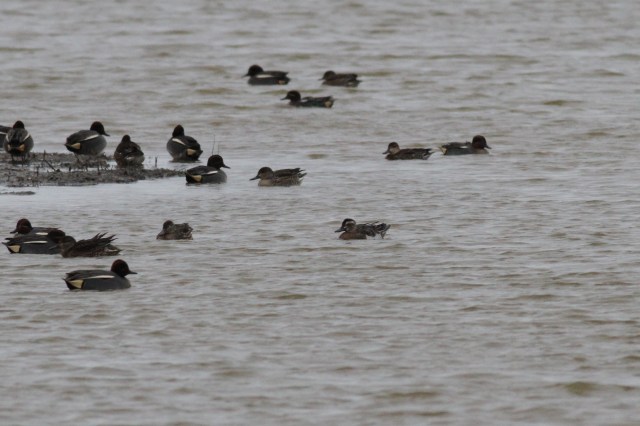
The lure of a male Garganey at Cley NWT this afternoon was too much to resist. After all it was my first summer migrant of 2015!

Apologies, therefore, for the quality of the photos which were taken at a distance and in appalling light:

IMG_5049 IMG_5054

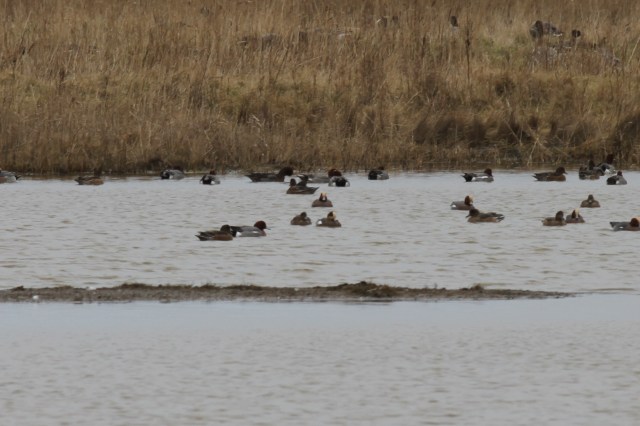
The other interesting duck on Simmond’s Scrape this afternoon was the American Wigeon ‘hybrid’, centre front of the group:

IMG_5014

Icelandic Intrigue – now with Post Script

Yesterday a ‘2nd winter’ Iceland Gull was reported at Sheringham around lunchtime, along with a juvenile Glaucous Gull. I was in Norwich when the message came through, so by the time I managed to get there it was about two in the afternoon. The Glaucous was reported as being somewhere east of the shelter but there was no sign of the Iceland. I wandered down to the promenade and almost immediately saw a ‘white winger’ on the beach just west of the shelter. As I approached I could see that it was an Iceland, but a rather darker bird than I’d been expecting. The bill was pink with a blackish tip, the head and breast off-white with a dark smudge in front of the eye but the back and mantle were coffee coloured, with extensive mid-brown feather fringing. Primaries where white with indistinct greyish tips, the tail was coffee with darker feather centres. During the evening a pager message announced the presence of a ‘juvenile‘ Iceland present at Sheringham during the afternoon. Intrigued by the differing accounts of the bird (birds) I returned this morning to see if I could get better views. Again, almost immediately on arrival, an obviously pale Iceland was feeding just off-shore by the shelter. This bird was a more typical 2nd winter bird with a pale greyish mantle and off-white tail. Moss Taylor, who was the original finder, confirmed that this was the same bird as he’d seen yesterday. Looking at the photos it seems probable that there are two, possibly three birds in the area (assuming that the reported juvenile was a different bird).

Post Script: Reports during the day suggest that there are indeed three Iceland Gulls currently in the Cley/Weybourne/Sheringham area but the spectre of ‘possible hybrids’ has reared it’s ugly head!

Yesterday’s bird:

Iceland Gull

Iceland Gull

and today’s individual:

IMG_4814 IMG_4793

A closer look at their respective tail patterns is, in my view, pretty compelling:

Iceland Gull IMG_4798

Post Post Script: Managed to catch up with one of the juvenile Glaucous Gulls at Salthouse this morning

IMG_4917

Just Gorgeous!

IMG_4535

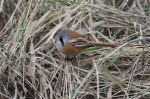
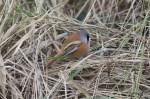
Bearded Tit have been showing incredibly well recently along East Bank, Cley NWT. Here’s a selection of todays efforts:

New Bird Club for Norfolk

Inbox__2296_messages_

If you’re viewing this blog, chances are that you’ve got an interest in the birds of Norfolk – in which case you might like to know about the creation of a brand new Bird Club, here in this bird-rich corner of of the county!
The North East Norfolk Bird Club (NENBC), serving the birding communities of Melton, Briston, Holt, Sheringham, Cromer, North Walsham and Aylsham, contains within its designated recording area some of the county’s premier birding locations, together with acres of under-watched or undiscovered habitat and has played host to over 350 species. With a full programme of indoor meetings, outdoor bird walks and other social events, our aim is to bring together those people with a love and concern for birds in our area, to share knowledge and information, encourage participation in exploring our rich wildlife heritage and promote awareness of our threatened natural environment. We aim to be a sociable, inclusive and informative club, which plays a vital role in the local birding community.
If you are interested in becoming part of Norfolk’s newest birding initiative, visit our website for details or come along to our inaugural Indoor Meeting with Moss Taylor – ‘father of Sheringham birding’, with a string of rarities to his name.

Goa Gallery

Can’t believe it’s close on a month since we returned from our two week package holiday in Goa. This post catches up on the last couple of days birding back at the coast, as well as filling in some of the gaps from earlier in the holiday. Once back at the Marinha Dourada we made full use of our guide Rayman (govekar.rama@gmail.com 9922271840) who certainly knew all the sites and was able to find some great birds for us.

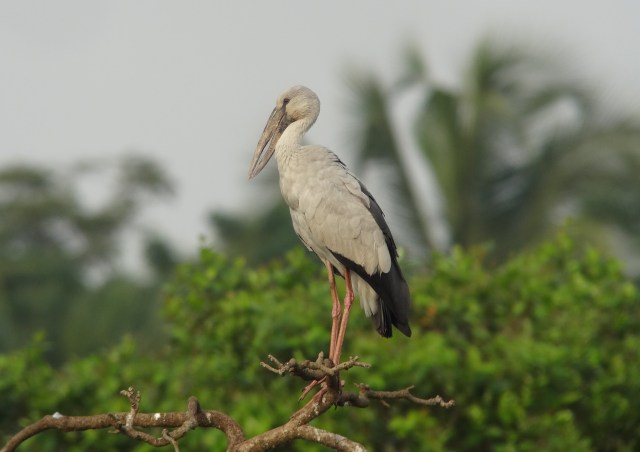
First up, Asian Openbill

Asian Openbill 2

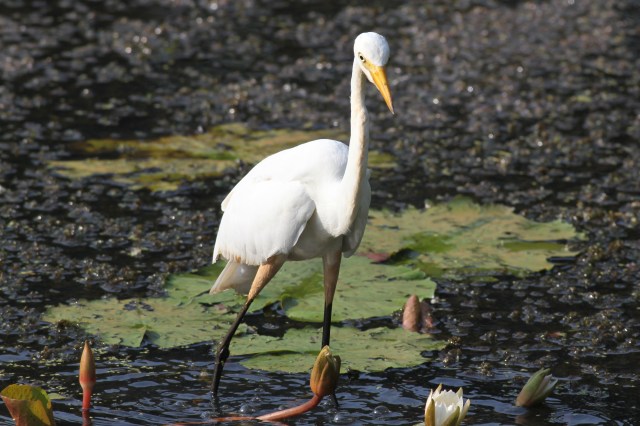
Intermediate Egret

Intermediate Egret

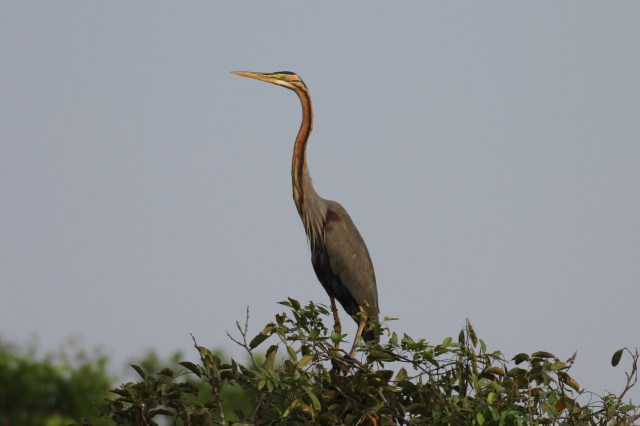
Purple Heron

Purple Heron

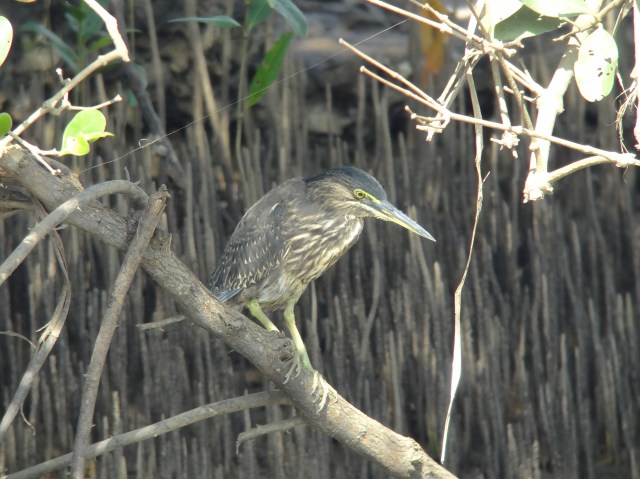
Striated Heron

DSC00031

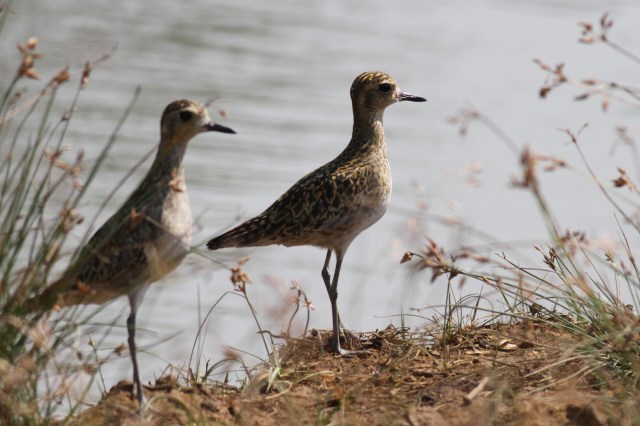
Pacific Golden Plover

Pacific Golden Plover

Great Knot, with Greater & Lesser Sand Plover

IMG_1078

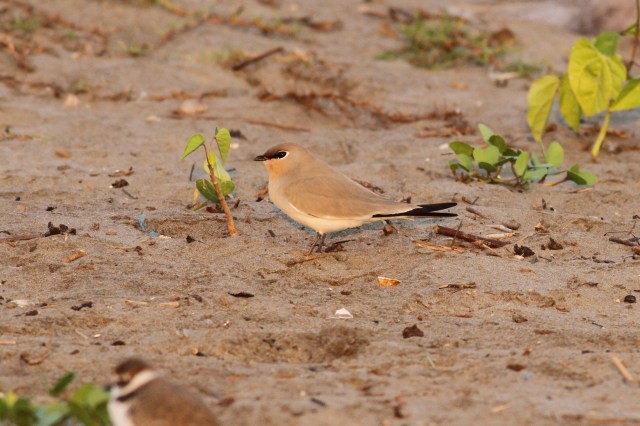
The gorgeous Small Pratincole

IMG_1128

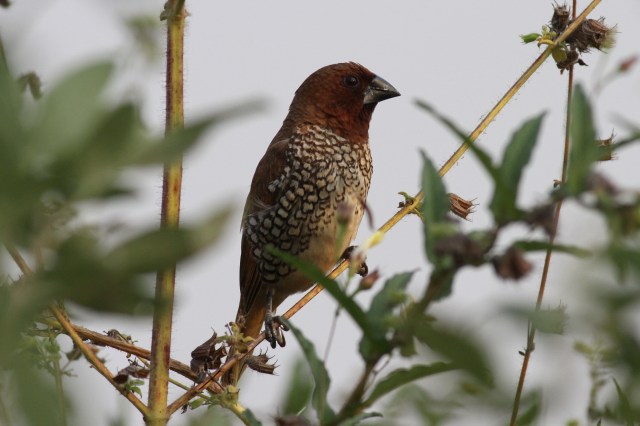
Scaly-breasted Munia

IMG_0016

Siberian Stonechat

Siberian Stonechat

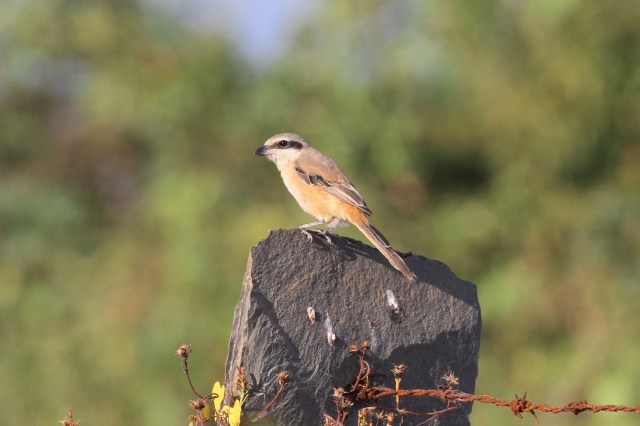
Long-tailed Shrike

Long-tailed Shrike 2

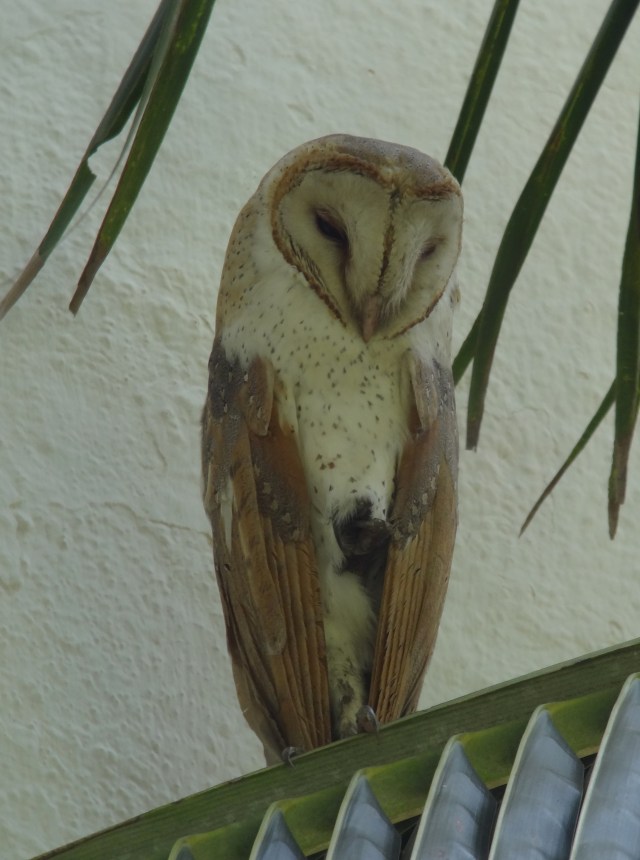
Barn Owl, roosting just above our favourite hotel bar!

Barn Owl

Indian Peafowl, easy enough to see in the distance, but surprisingly difficult to photograph

Indian Peafowl

White-bellied Sea Eagle on an early morning ‘fly by’

White-bellied Sea Eagle

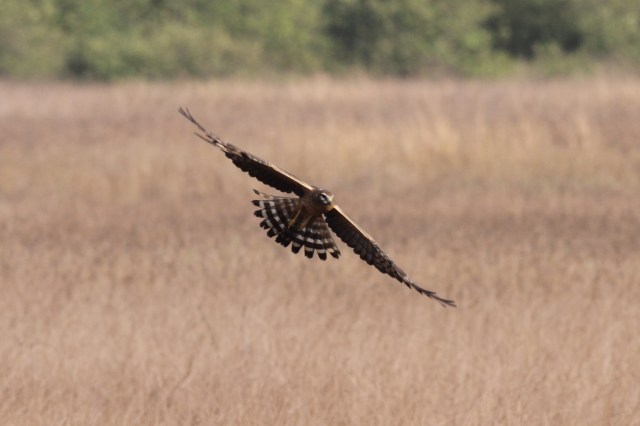
Female Pallid Harrier

Pallid Harrier

Finally, a couple of species seen on a bit of waste ground close to Panjim City – Desert Wheatear

IMG_2760

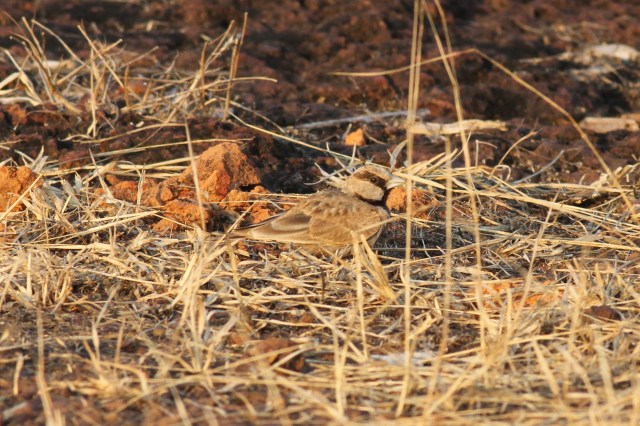
and to close, the superbly cryptic Ashy-crowned Sparrow Lark, contender for ‘bird of the trip’

Ashy-crowned Sparrow Lark

Back from Backwoods

IMG_1454

Blue-eared Kingfisher, Tambdi Surla, 30th November 2014

As part of our Goa package holiday we spent three nights and four days at Backwoods Camp, in the company of our main guide Pramod and, for part of our last full day at the camp, Leio. The camp is set in the hills, amongst sub-tropic deciduous rainforest, about two hours from the coast. Accommodation is in basic individual chalets and the regular, ample and appetising meals are served in the communal dining and general ‘chill-out’ area in the main house. The camp and kitchen staff couldn’t have been more pleasant or helpful. In all, we added around forty five new species at Backwoods, many of which were scarce or ‘difficult to get’ birds. The whole package – accommodation, meals & drinks, guiding and transport, came to around £120 per person, providing excellent value and a welcome break to coastal birding. For anyone contemplating a birding package holiday to Goa, a trip up to Backwoods is a must – details are available on their website or visit their regular stand at the annual Rutland Water BirdFair.
A few of the many superb species seen in this idyllic birding location, including:

Puff-throated Babbler

IMG_1985

Orange-headed Thrush

IMG_1269

Purple Sunbird

IMG_1885

Western Crowned Warbler

IMG_1952

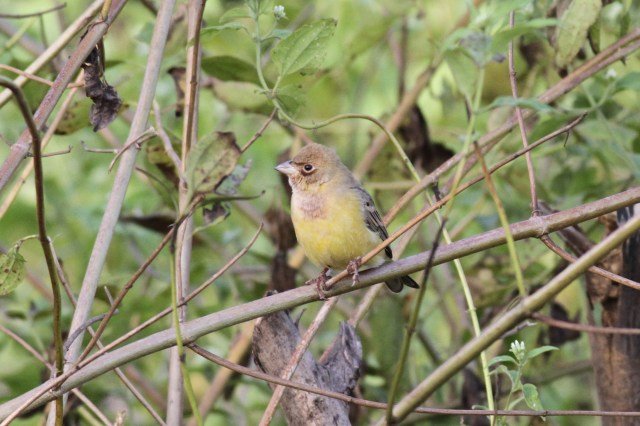
Red-headed Bunting

IMG_1864

Rufous-bellied Eagle

IMG_1715

A nice trio of Green Bee-eater, Chestnut-shouldered Petronia and, in the middle, Grey-necked Bunting

IMG_1584

White-bellied Woodpecker, at dusk

IMG_1758

Heart-spotted or heart-stopping Woodpecker

IMG_2164

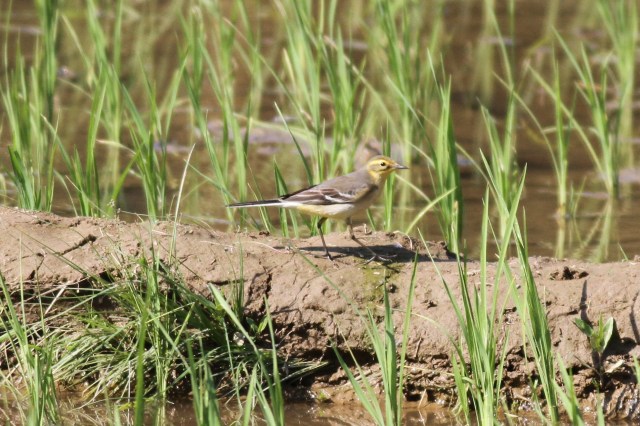
Citrine Wagtail – one of two found by us on the trip

IMG_2108

Malabar Grey Hornbill

IMG_2280

A roosting pair of rare Sri Lanka Frogmouth

IMG_1274

and lastly, the iconic but hard to find, Indian Pitta – this bird roosted behind our chalet!

IMG_2197

More photos to come in my Goa gallery.

Greetings from Goa

We’ve been in Goa for a week now, staying at the Marinha Dourada hotel near Arpora, and spent most of our time walking to and birding the local sites. We’ve also had a couple of trips out to location less than twenty miles away. Our days start at dawn, around 6.30, when we have our most productive birding seasons before a late breakfast. Then it’s ‘chill time’ over lunch with a beer, raptor watching, and then back out for our late afternoon session until dark, early supper and bed! So far we’ve seen over one hundred and seventy species, many of them ‘world ticks’, with quite a bit of overlap with Thailand, Australia and Britain – the majority being ’self-found’. Tomorrow we go up to Backwoods Camp for some intensive guided jungle birding. Here’s a small selection of the more interesting local birds.

Common Iora

IMG_0669

Green Bee-eater

IMG_0024

Chestnut-tailed Starling

IMG_9986

Indian Roller

IMG_9906

Crimson-backed Sunbird

IMG_0155

Wire-tailed Swallow

IMG_9552

Stork-billed Kingfisher

DSC00056

Brahminy Kite

IMG_9667

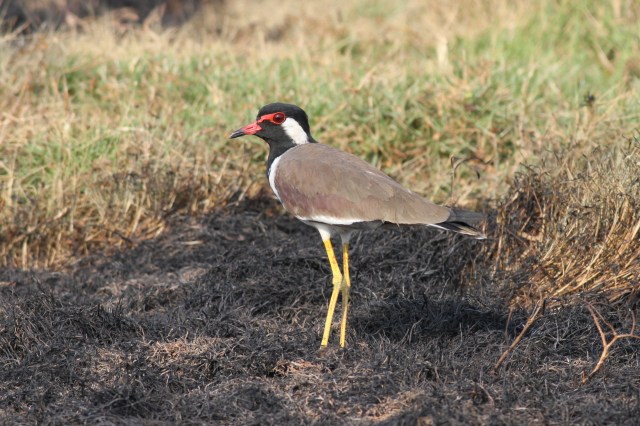
Red-wattled Lapwing

IMG_9584

Lesser Goldenback

IMG_9785

Small Minivet

IMG_0561

Jerdon’s Leafbird

IMG_0968

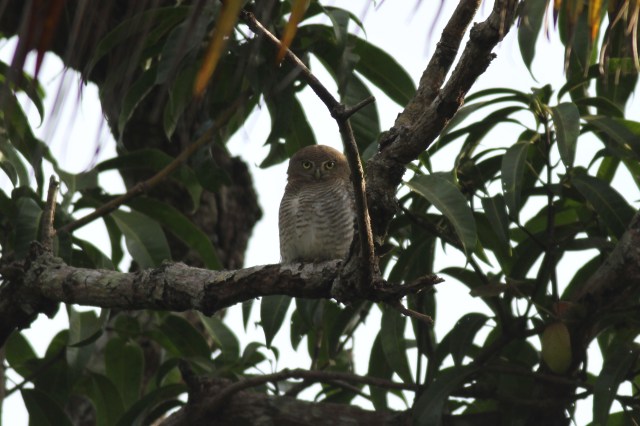
Jungle Owlet

IMG_0574

Oriental Honey Buzzard

IMG_0583

Slightly further afield: Bay-backed Shrike

IMG_0393

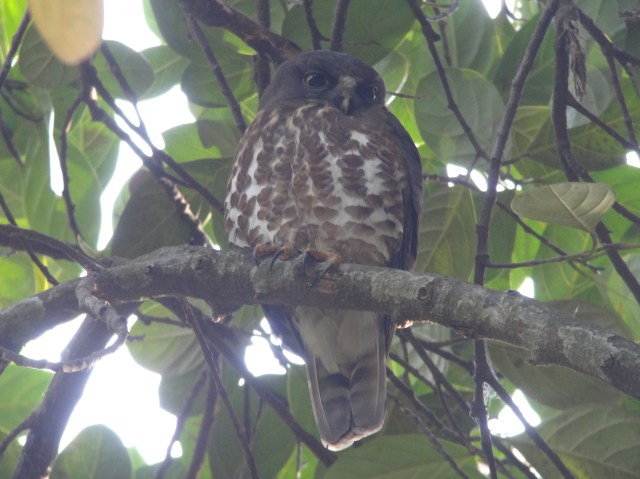
Brown Hawk Owl

DSC00125

Woolly-necked Stork

IMG_0759

Pied Kingfisher

IMG_0820

and finally, the hard to see Watercock

IMG_0894

Hopefully, a further report from Goa on our return from Backwoods.