Hip, Hip, Hippo hurray!

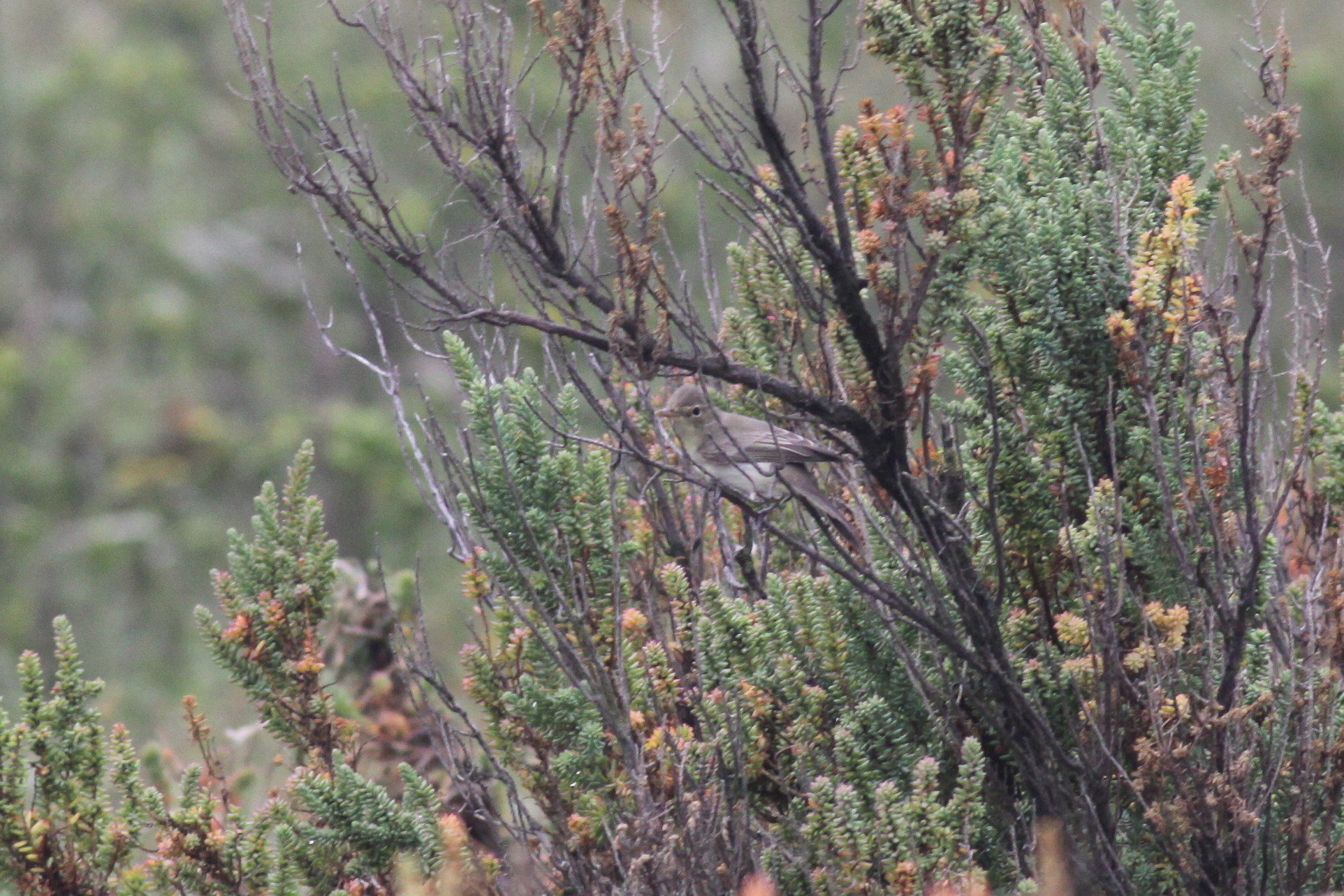
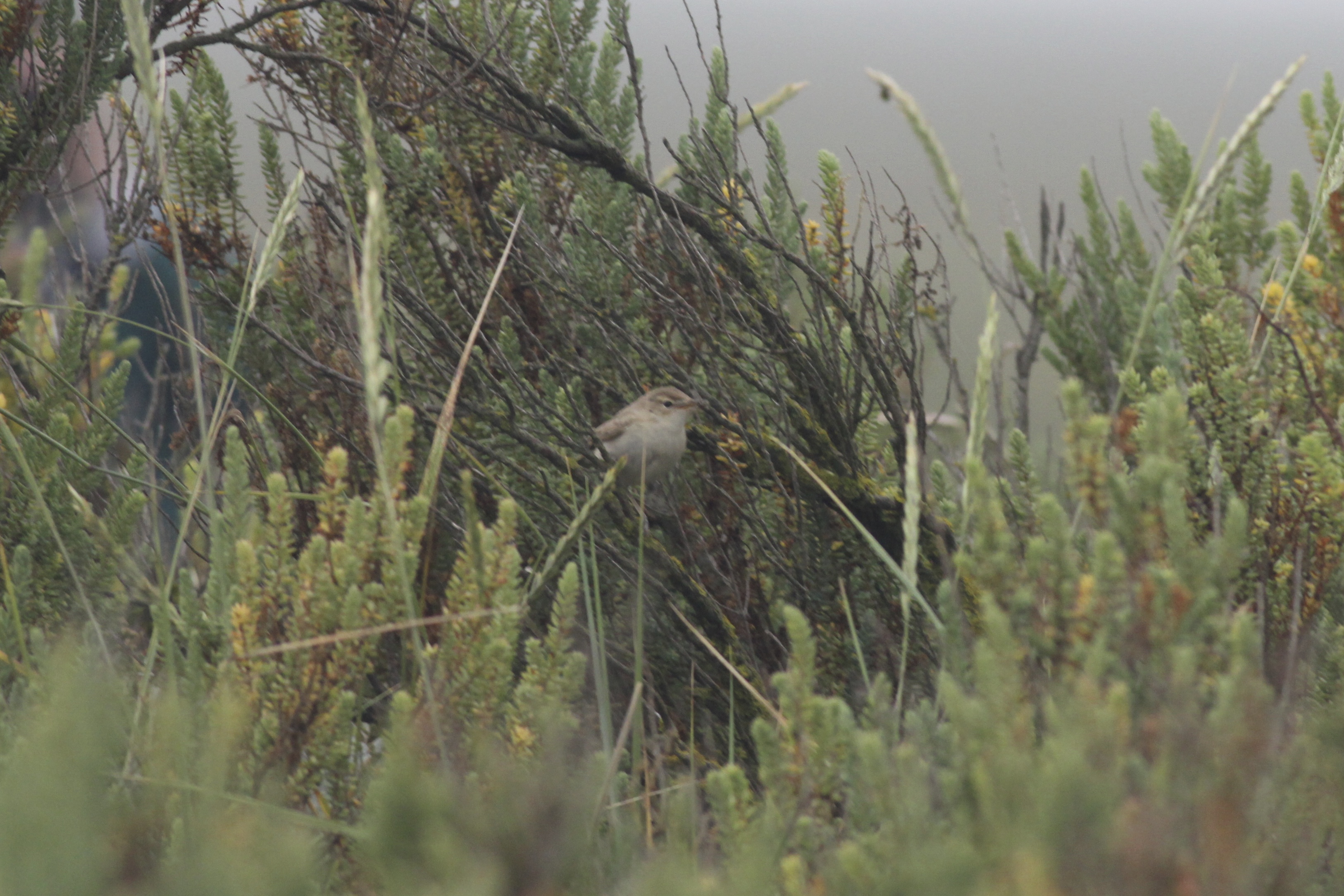
The weather today looked promising for birding – moderate winds from the north and east, rain on and off all day and poor visibility. We started off sea-watching at Sheringham – nothing spectacular but a reasonable passage of Skuas, mostly Arctic with a possible Long-tailed, plenty of terns, ducks, Gannet, a Guillemot and a handful of Kittiwake. Then, as there was a brief dry spell late morning, a return trip to the Italian Sparrow which, unlike  yesterday performed very well. After lunch we headed towards Cley to find Pied Flycatcher which Bob & Sue needed for a year tick. They’d already been a steady trickle of scarce birds reports from along the Norfolk coast and then it came… ‘Booted Warbler at Blakeney Point’! We stopped off at Cley NWT to see the Pied Fly outside Daukes hide and then headed off for the beach carpark and the start of the three mile yomp up the Point.  News came through that there was also an Icterine Warbler and a Wryneck  on route, providing an additional impetus! The Icterine gave itself up pretty easily at Halfway House (unlike the bird we’d been for in the spring), a fleeting view of a Wryneck, more Pied Fly, Whinchat and we were there, staking out the Booted Warbler Hippolais caligata – a rare visitor from the eastern Russian steppes and our third Hippo species of the year! The bird obliged, with a modest amount of encouragement from the assembled crowd, by flying and perching amongst the suaeda. On the return walk we got great views of two Wryneck, more Pied Fly, Wheatear, two Spoonbill and Yellow Wagtail.  A really great day.

I know we shouldn’t get excited about this bird… but I can’t help it!
IMG_0916

Icterine Warbler

IMG_0940

One of a number of Pied Flycatchers along the Point

IMG_0950

…the ‘prize’, Booted Warbler – a Norfolk tick for me
IMG_0960

One of several Wryneck

IMG_0981 

The Italian Job – now with additional photos!

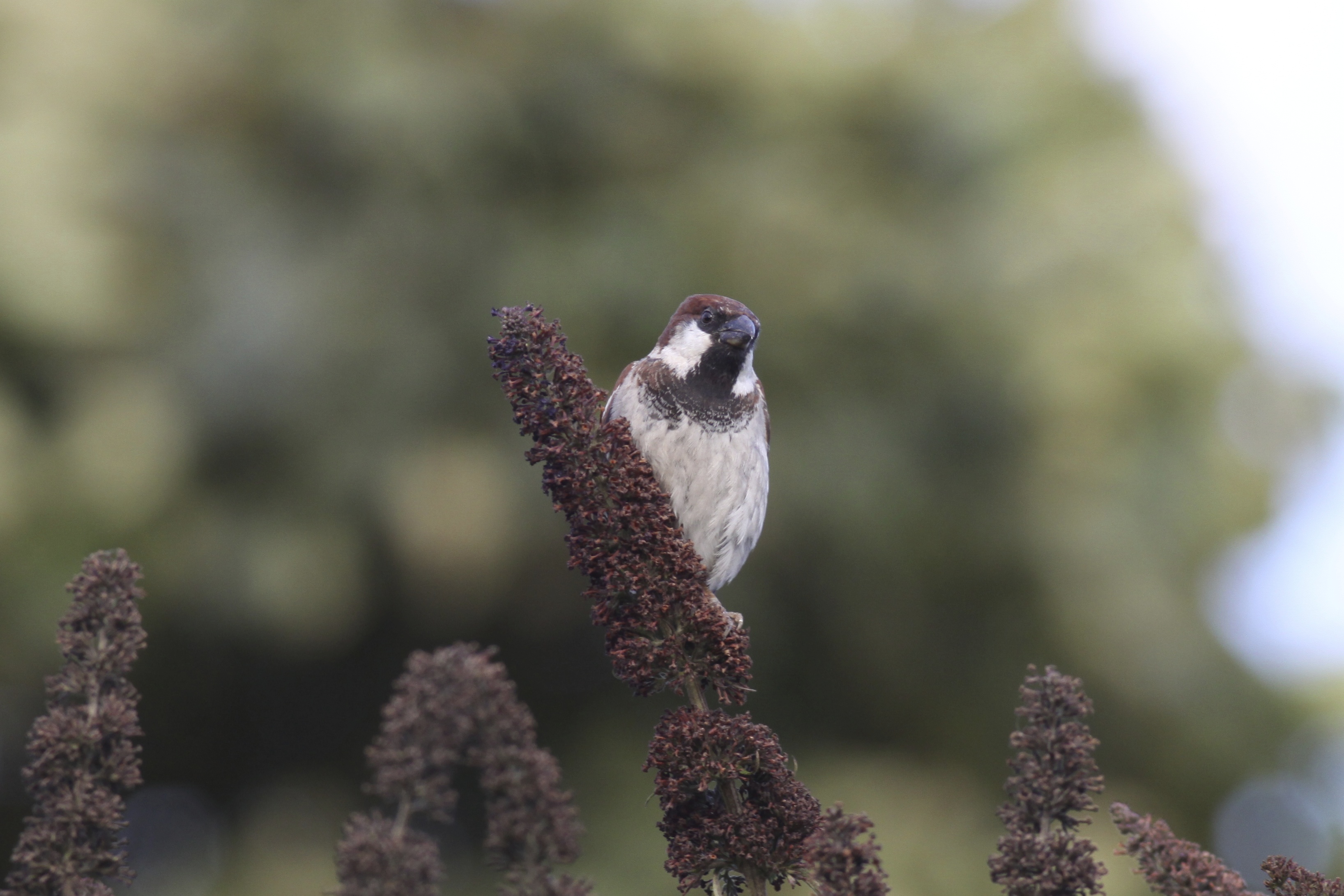
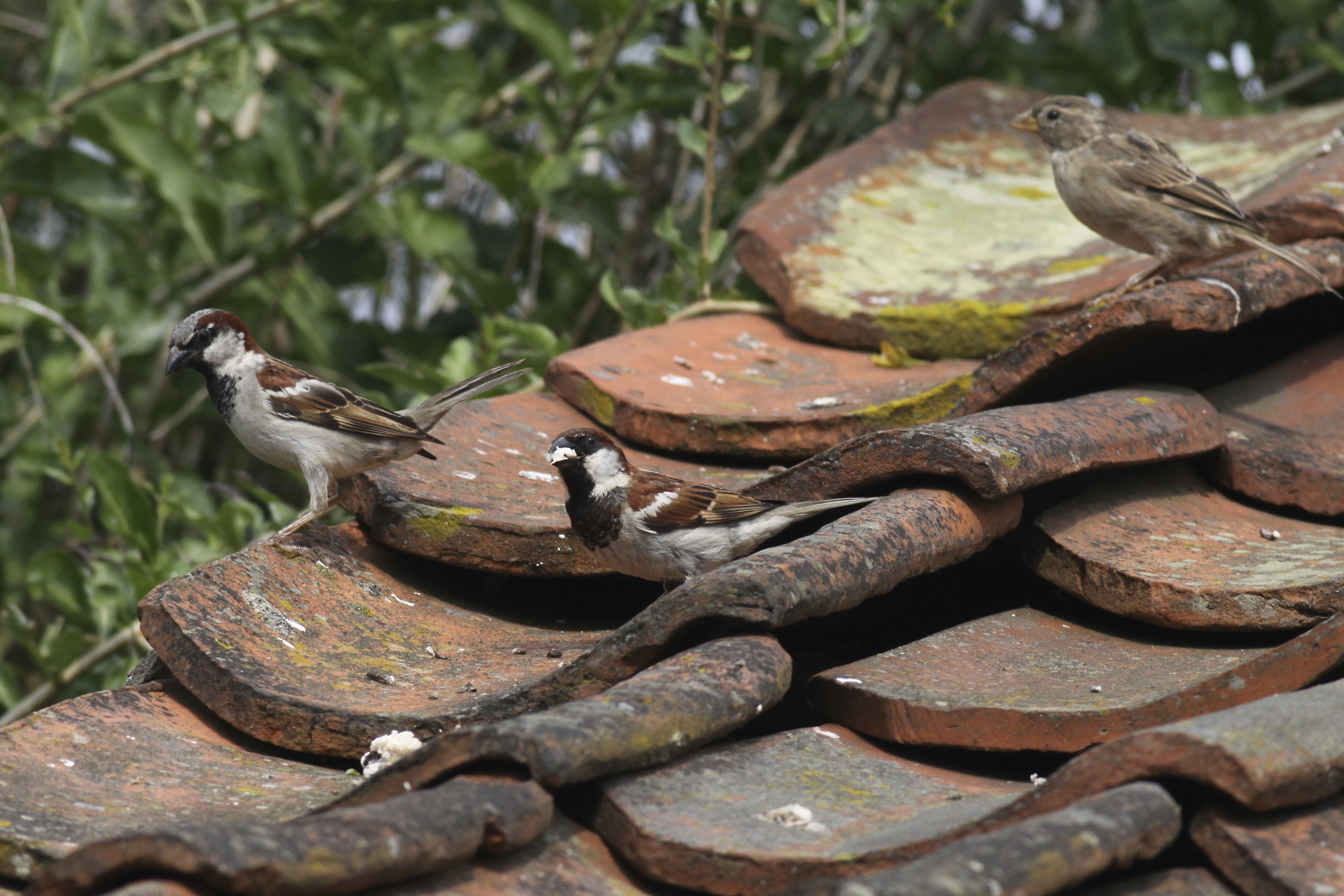
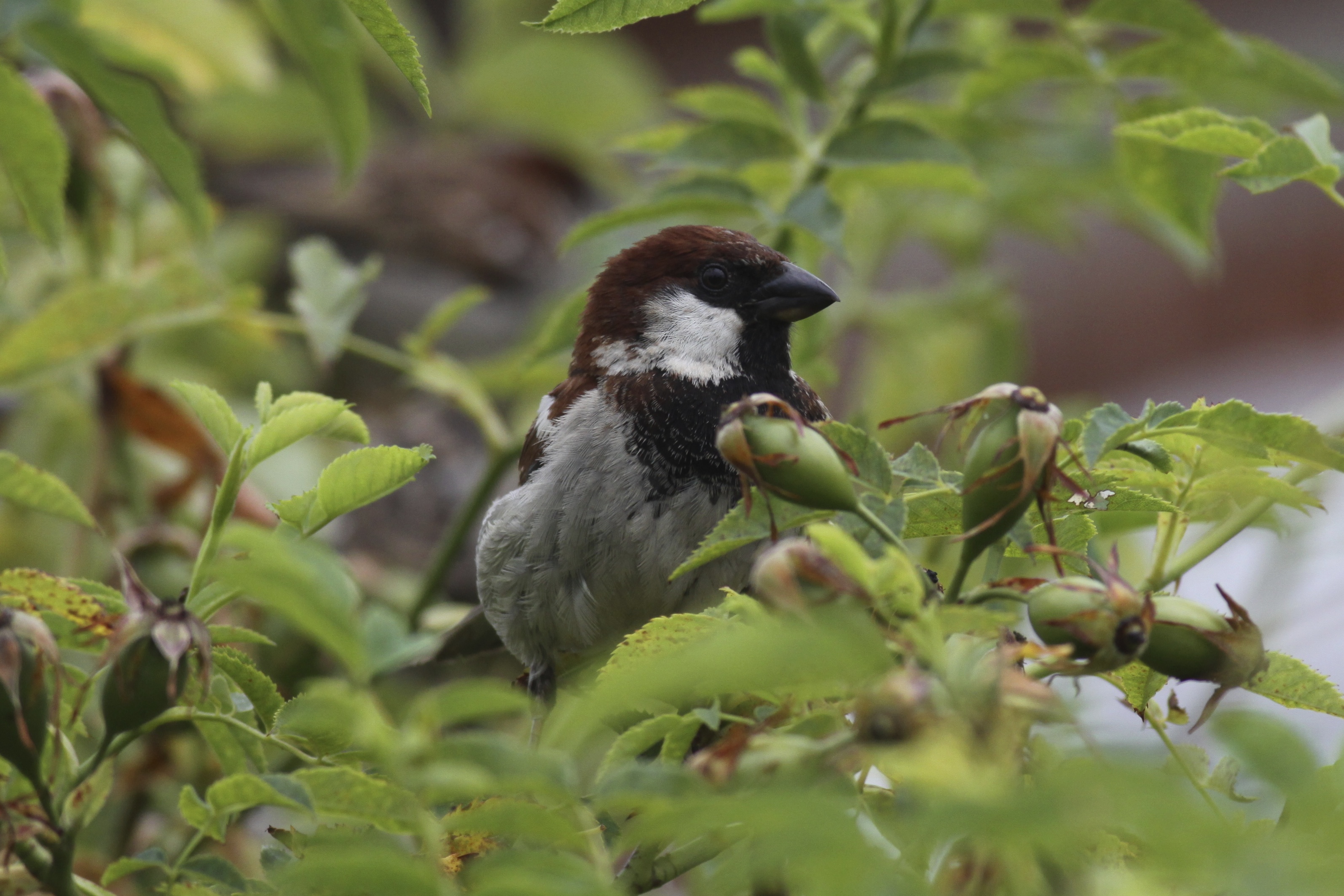
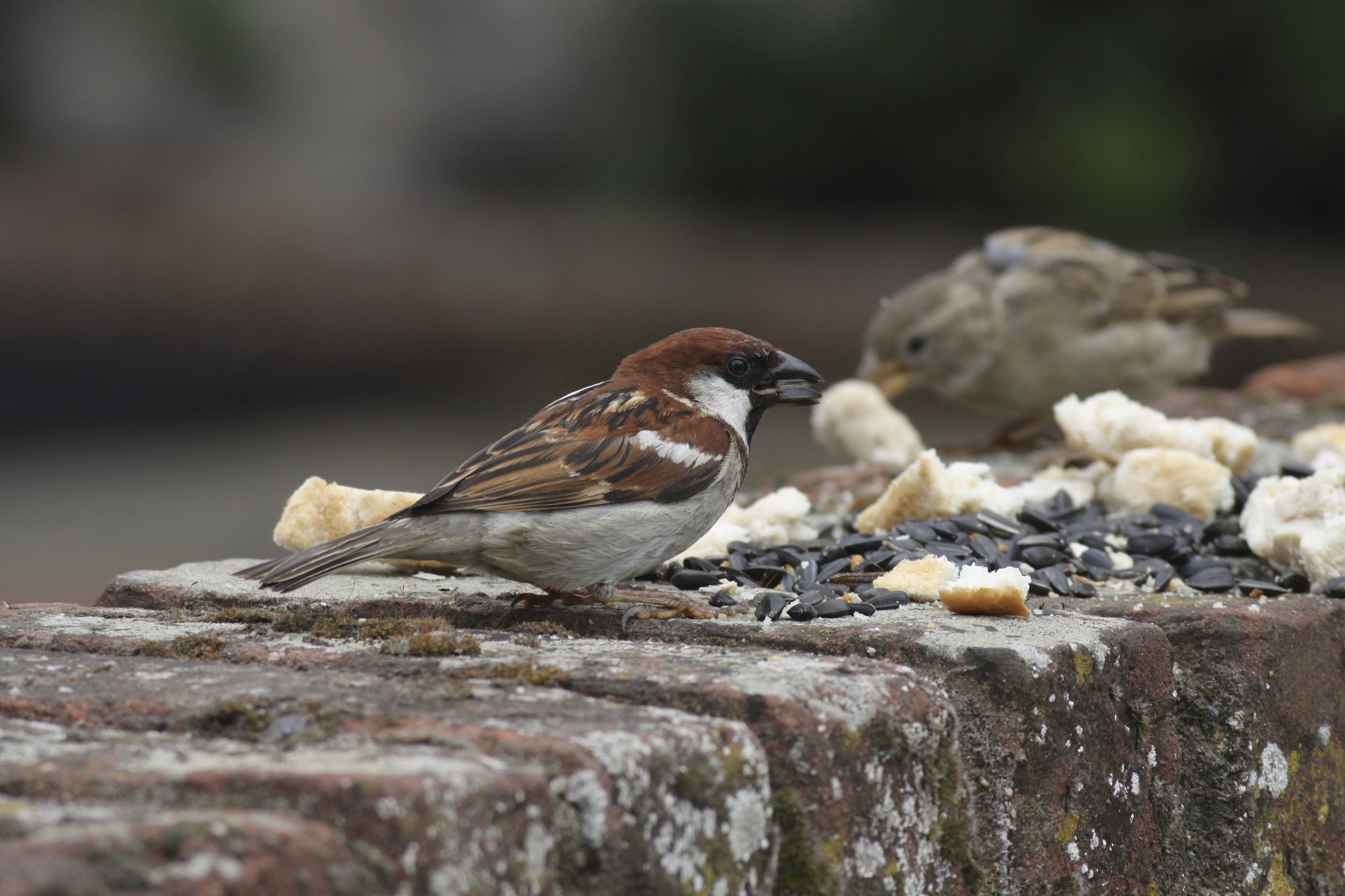
Over last weekend the news began to emerge of a possible ‘first for Britain’, in the form of an Italian Sparrow, a stable hybrid between Spanish and House Sparrow and found mainly, as the names suggests, in Italy and believed by some to be a separate species. The bird had been present at Hungry Hill, Northrepps for a few days, apparently breeding with a House Sparrow. I saw the bird on Monday evening, when it was singing, displaying and visiting the nest site. Tonight it proved to be much harder to pin down, probably because the young fledged yesterday and have presumably dispersed. The bird did however come to bread briefly, which was kindly put out by Carl the very obliging finder. To my eye, the bird is a dead ringer for the image of Italian Sparrow in the new Collins and the numerous photos on the internet, save for one small detail – it lacks any apparent white  ‘eyebrow’, although on it’s left side it did have a couple of tiny feathers, which hinted at that feature. Apparently it all hangs on the DNA analysis, so we’ll have to wait and see. An interesting bird, whatever it’s pedigree/origins:

IMG_0840

IMG_0842

IMG_0845

No one has yet commented on its song which, according to Collins, is inseperable from House, but which to my untutored ear sounded noticeably sharper, sweeter, slightly more melodic?

Extra photos taken on Saturday 24th August:

IMG_0881

IMG_0898

IMG_0907


IMG_0916

Betjeman postscript

Recently, on a trip to the capital to see the fascinating  Vermeer and Music exhibition at the National, we took the opportunity to seek out the Betjeman’s house in Chelsea, where the family moved to from No. 31, West Hill (covered in our ‘Metro-land and beyond – on the Betjeman Trail ‘ back in March), whilst John was away at the Dragon School. In Summond by Bells,  John gives the address as ‘Church Street’ but we could only find Old Church Street, which runs between Fulham Road and the Thames. Assuming this to be the same street, there is a small house at number 53, potentially fitting his description of ‘poky, dark and cramped’ and which is within a short walk, via Lawrence Street and Upper Cheyne Row, from Cheyne Gardens and the house of his school boy chum, Ronnie Wright. The house is empty and rather unloved at present and we were surprised not to find a ‘blue plaque’, marking the spot. If anyone reading this blog knows better the location of the Chelsea house, please do leave a comment at the end.

“53, Church Street. Yes, the slummy end”

DSC04307

“I’d slam behind me our green garden door….

And hare to Cheyne Gardens… by Lawrence Street

DSC04313

…and Upper Cheyne Row’ ( the same sign that John must have often past )…

DSC04316 (1)

…Safe to the tall red house of Ronnie Wright”

DSC04317

But don’t think that this trip was all art and literature, not a bit of it – we had to have lunch in St James’s Park to make sure Jane could add Ring-necked Parakeet to her Year List!

DSC04297

Catching up with cachinnans

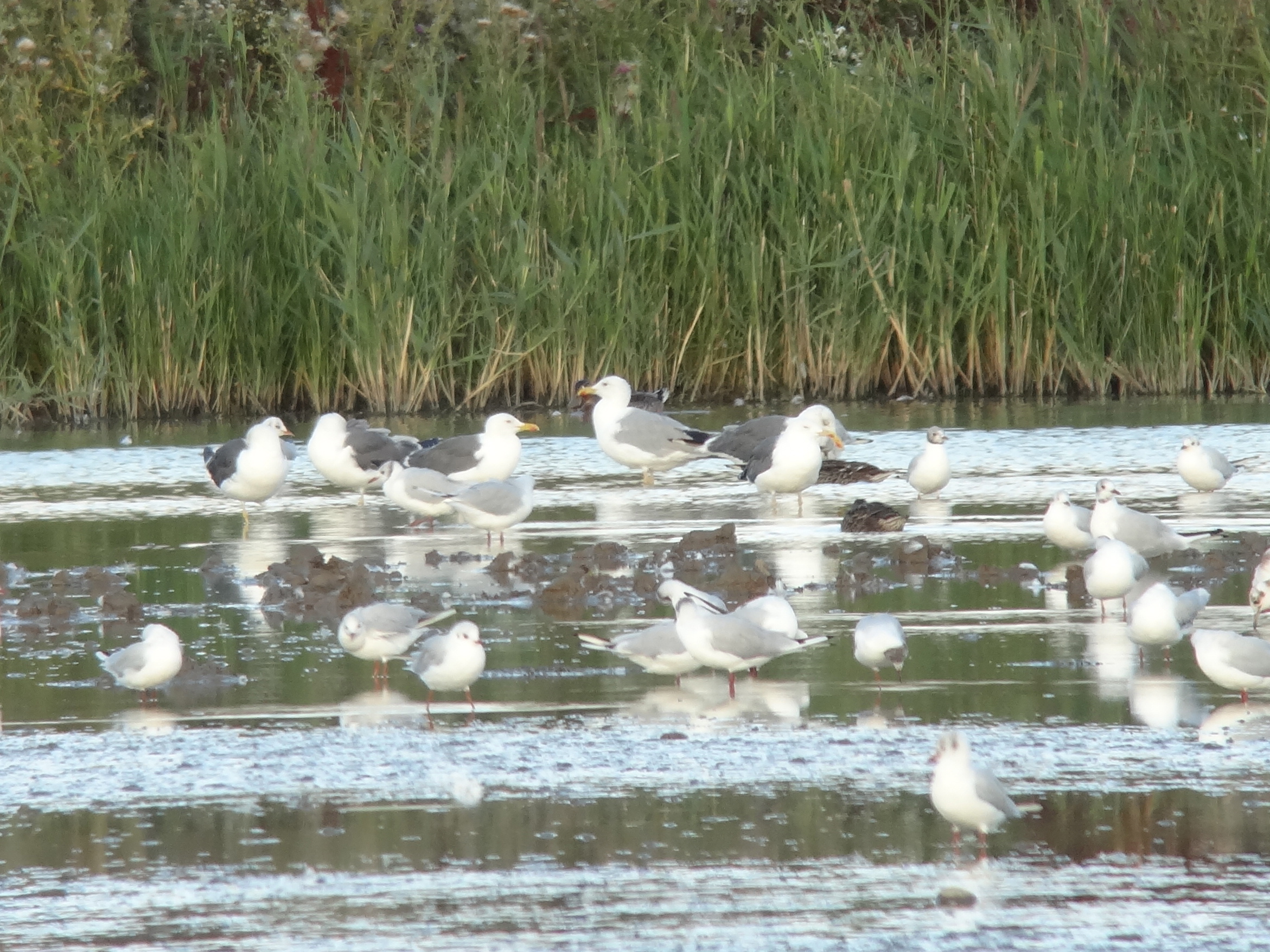
Tonight we were ‘third time lucky’ when we finally caught up with Caspian Gull, Larus cachinnans, at Cley NWT. An adult summer bird was found in the pre-roost gull flock, on Pat’s Pool at around 19.00. It was in the company of about fifty other large gulls, mostly Lesser black-backed but there were a few Herring and up to four Yellow-legged. Caspian Gull, a fairly recent split from Yellow-legged Gull, breeds in Eastern Europe and Central Asia and show up in Britain, mostly in the summer/early autumn. They can be quite difficult to separate from Yellow-legged but they have a peculiar ‘jizz’ – pulled out legs, neck and rear end, a wedge-shaped forehead, long parallel bill with small red spot, a mid-grey back lacking the bluish tinge of Yellow-legged and long white ‘tongues’ on the outer primaries – most have dark eyes.  A couple of digipic record shots:

The Caspian Gull is centre, back of the picture

DSC04250

and again, centre, back – the bird is facing left

DSC04234

One of a number of adult Yellow-legged Gulls present, providing useful comparison

DSC04177

Second helpings

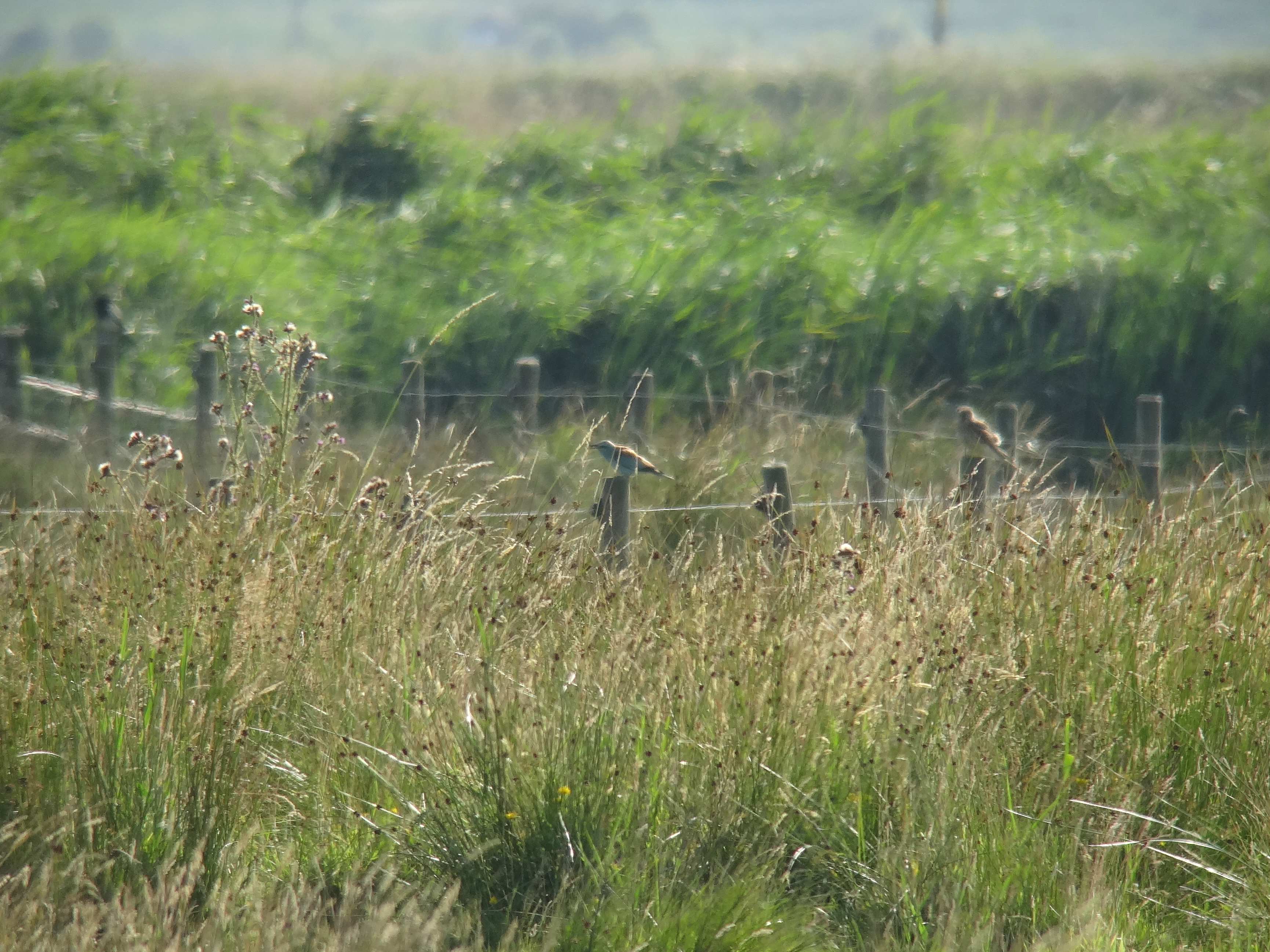
Last Sunday afternoon a Roller was found at Horsey, possibly the same individual seen earlier at Holt in June or, more unlikely, another bird. Anyway, hoping for better photos than I managed last time, we set off on Thursday afternoon to find it. The good news was that it was still frequenting the coastal meadows at the end of the Nelson’s track, the bad news was that it was a ‘million miles’ away in strong heat haze…oh well! The resulting photos:

DSC03969

and a shot showing the turquoise under-wing

DSC03981

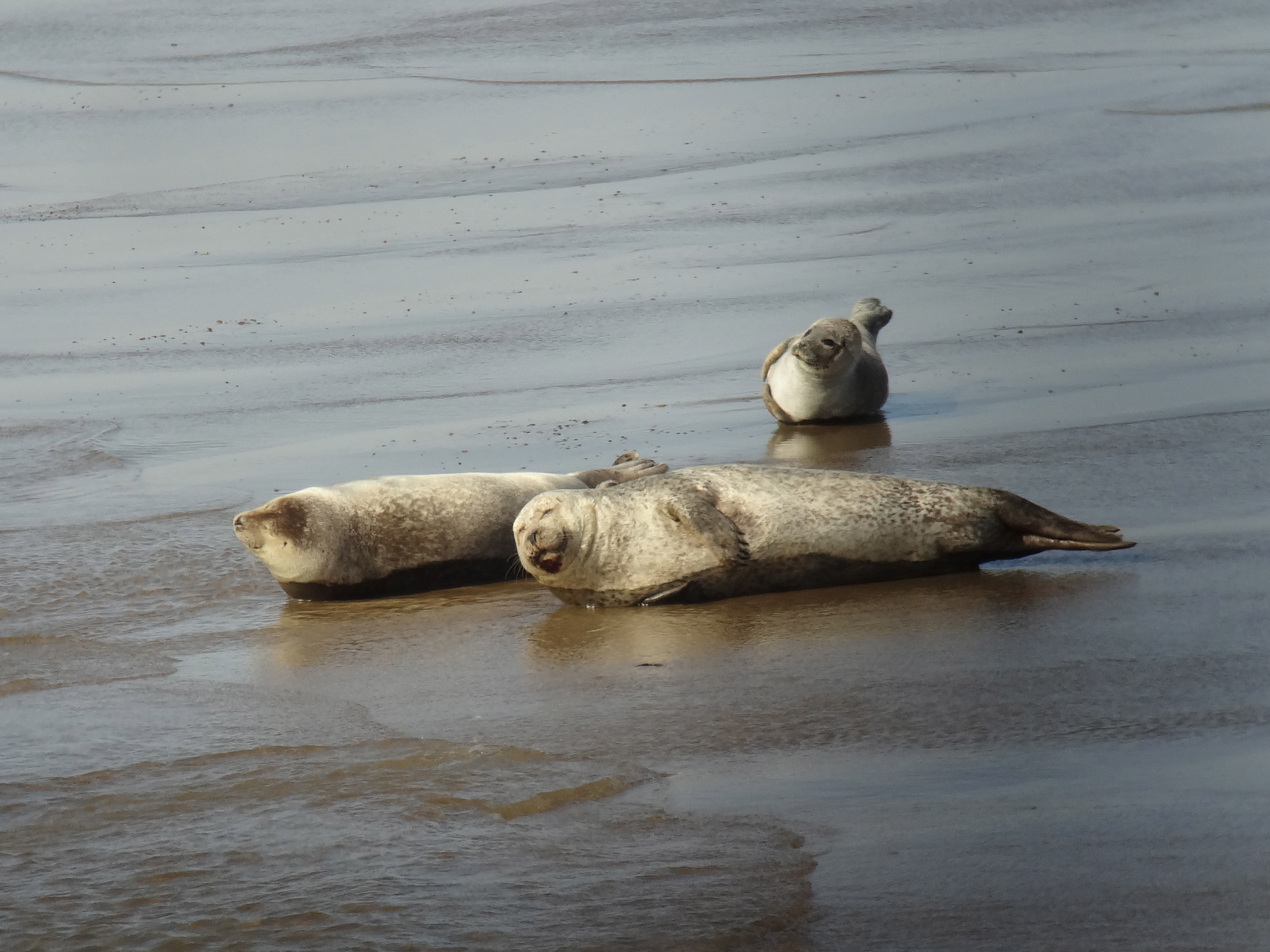
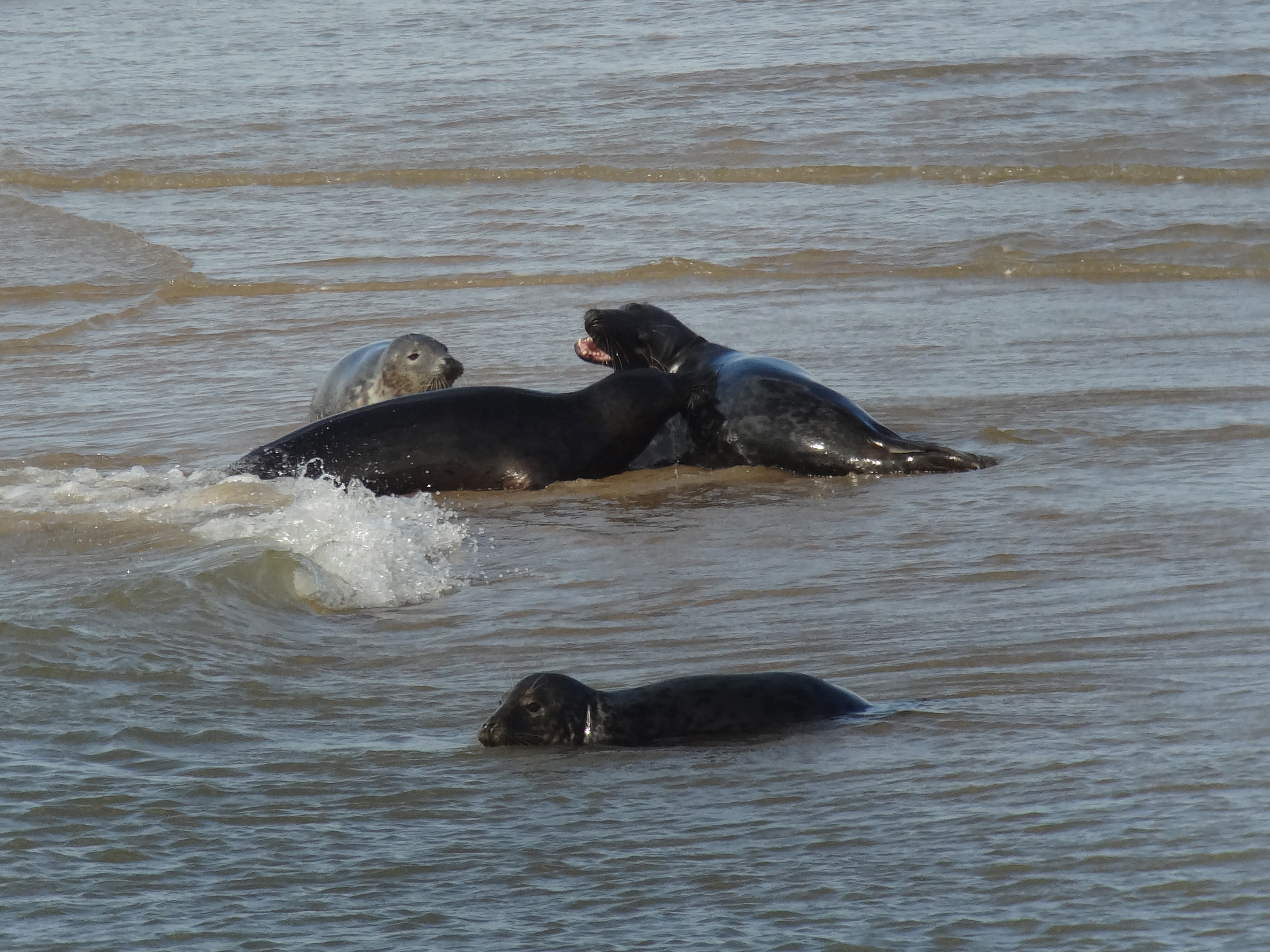
Just over the dunes there was a small group of Atlantic Grey Seals hauled up on the beach

DSC03984

DSC03991

Breaking News... Birdguides has just published their weekly review, including another digipic of mine, the third in as many weeks! Photos of the three species concerned, Two-barred Crossbill, Baird’s Sandpiper and Blue-winged Teal, are all featured in this blog.

Two more towards target

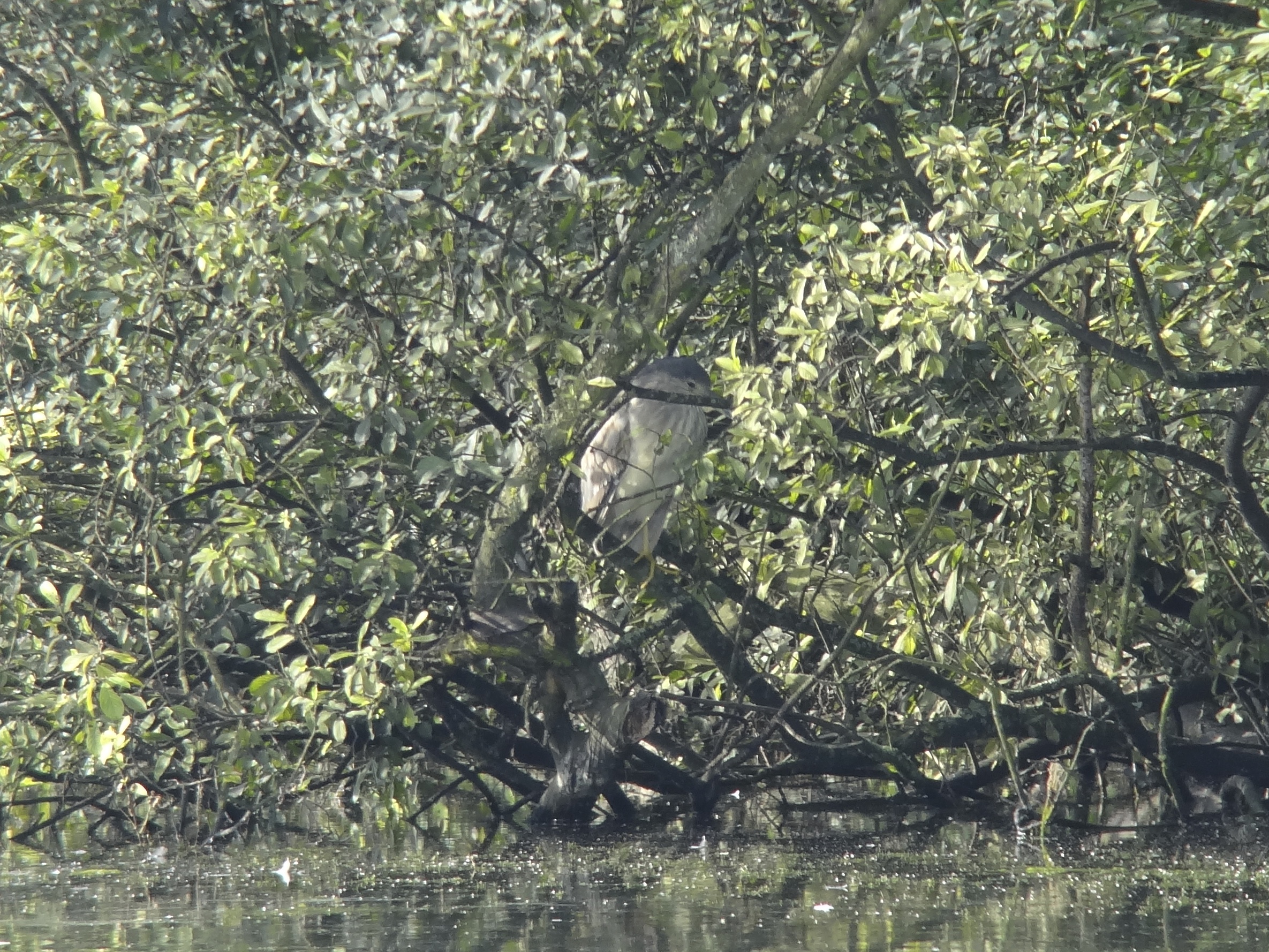
This morning we ventured into nearby Leicestershire to see a Night Heron which has been frequenting Thornton Reservoir for the past few days. We did manage to find the bird but unfortunately it was roosting up on the far bank, so views were ‘acceptable’ rather than ‘exceptional’. Night Heron are scarce visitors to our shores but respectably common, in suitable wetland habitat, across mainland Europe. The diffuse brown streaking on the neck and a few white tips to the coverts age the bird as ‘first summer’. DSC03842

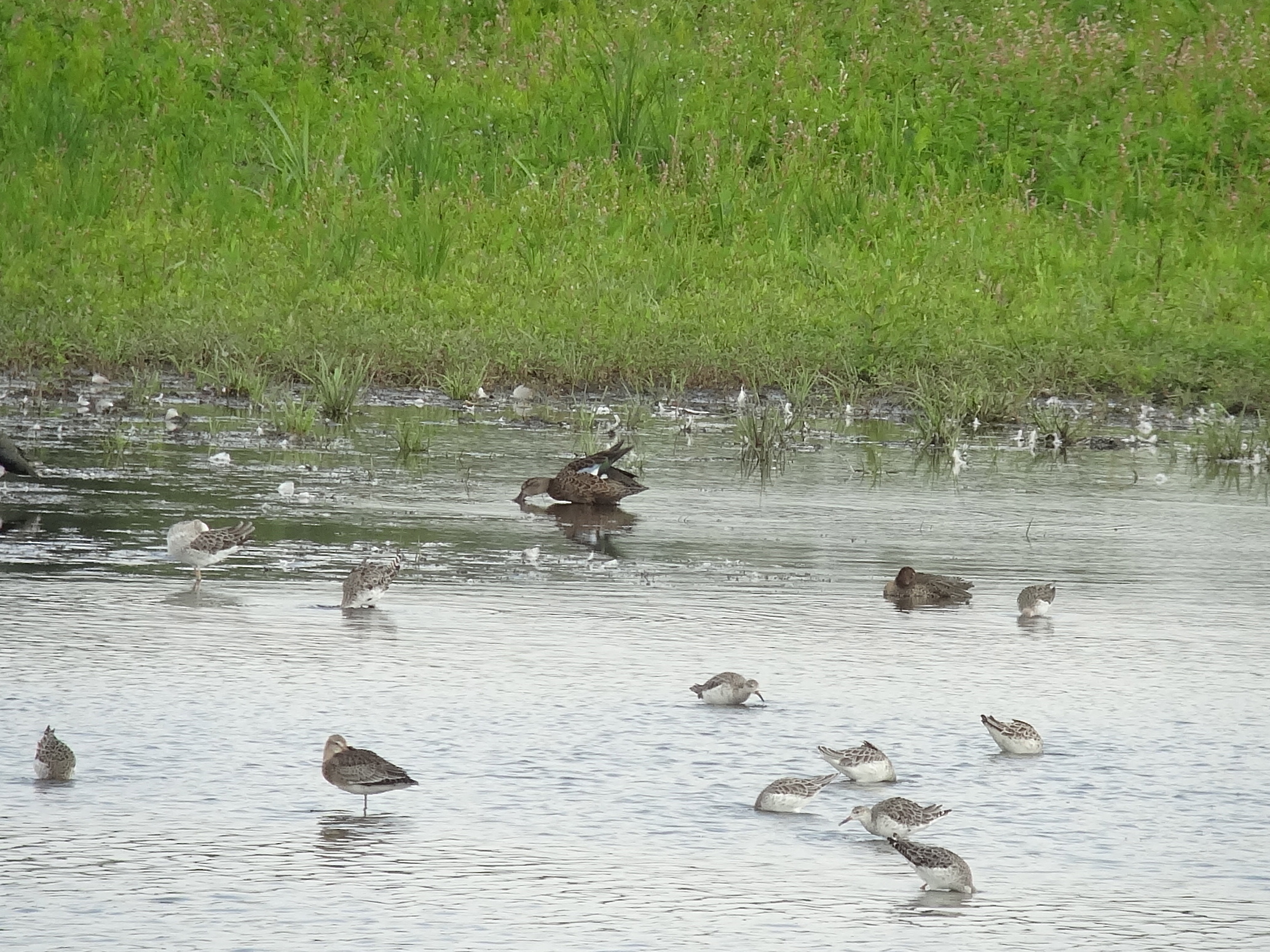
On our way back to the cottage this afternoon we called in at the Ouse Washes RSPB reserve for a second go at seeing the eclipse drake Blue-winged Teal, which we’d spent a wet evening on Monday missing. Today it was much easier as the bird had just been re-found, after a four hour absence, as we entered Stockdales hide. Although always distant, the bird did actively feed and preen, allowing reasonable views of the important identification features, including the powder blue forewing, the darkish cap with weak supercilium, pale loral spot and dull yellow legs. Blue-winged Teal are rare visitors from North America which often show up in Britain during the summer – and therefore in eclipse. What would I give to see an adult in fresh breeding plumage!

DSC03917

DSC03866

Now that’s more like it… only these were taken in Texas, in April, 2009!

IMG_3383

Anyway, two more nice birds to add to the ever-increasing Year List.

Sandpiper shenanigans

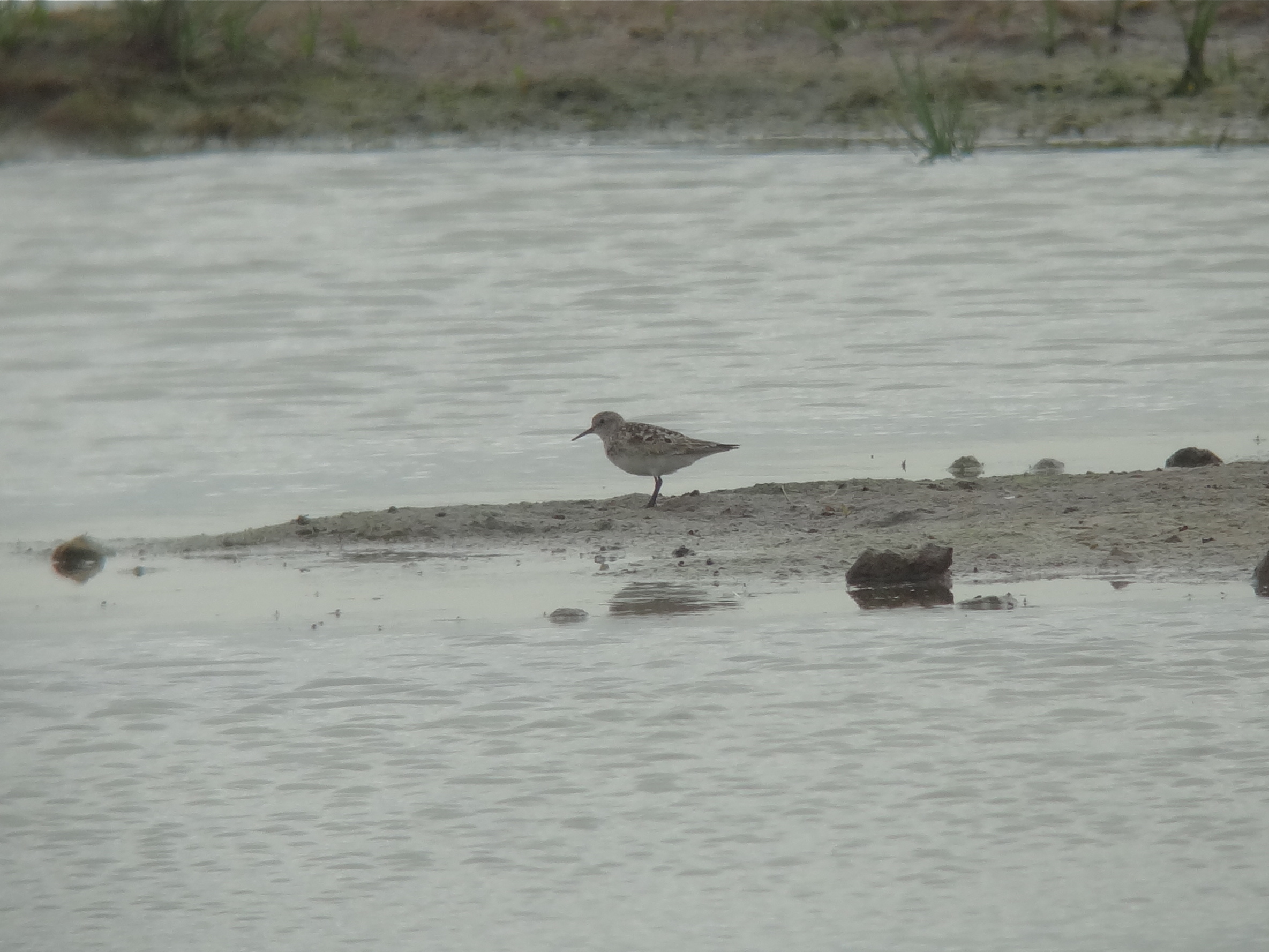
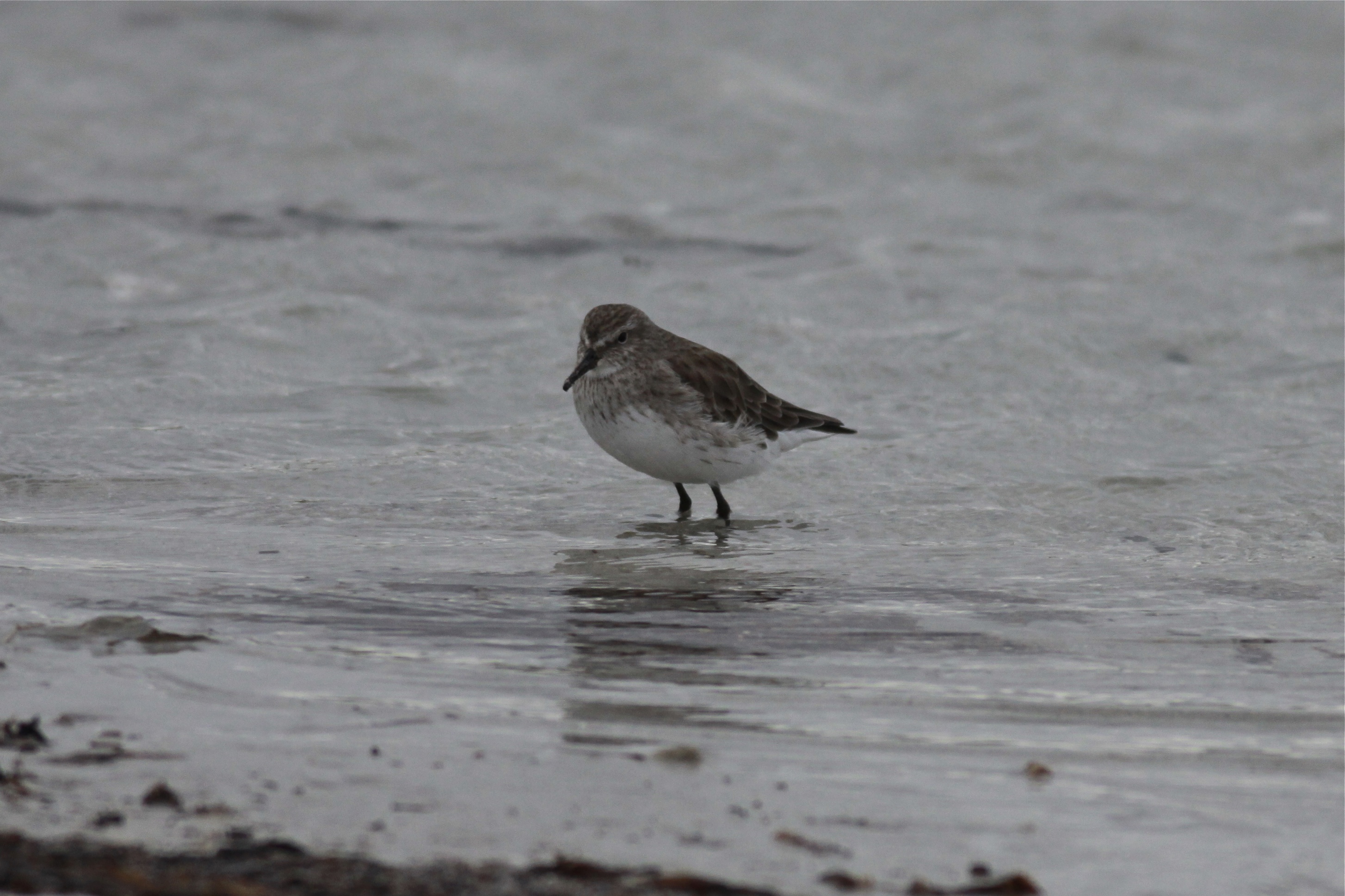
We were in Downham Market yesterday when the text came through saying that a  White-rumped Sandpiper was still present, on the reed-bed at Frampton Marsh RSPB, for it’s second day. We finished off our business, bought some lunch at Tesco and headed towards Boston. We reached the reserve by about 12.00 and bumped into a local Peterborough birder in the car park, who said that the sandpiper was still showing on the reed-bed lagoon, from the path by the Visitor’s Centre. We followed his directions but could see nothing out of the ordinary on the lagoon. There were a couple of other birdwatchers wandering around but no one was on the bird. We decided to walk to the hide overlooking the lagoon but, as we got to the track to 360 hide, I noticed a small ‘peep’ feeding in amongst the Godwits, on the other lagoon. Relocating to the hide, we initially lost sight of the bird and no one in the hide was apparently looking at anything interesting.  Jane returned to the original spot to try to get a fix on the bird’s location, whilst I continued searching. Eventually I found it ‘tucked up’ on a nearby sand spit, alerted others to it’s whereabouts and, assuming it was the White-rumped Sandpiper, began to ‘grill’ it. Other birdwatchers confirmed that this was indeed the same bird that they had been watching earlier but as I studied the bird I became increasingly uncomfortable with it’s identification. It was particularly well marked on it’s back, with a few very noticeable white edged black scapular feathers (subsequently helping to confirm that pictures taken of the ‘White-rumped’ the day before were indeed this same bird), the whole structure of the bird was attenuated towards the rear end, there was a distinct buff pectoral band, the weak supercilium joined with a pale area above the bill – which was all black and thin and the bird’s appearance from head-on was of a low, squat, ‘bread-roll’ shape – all features suggesting Baird’s Sandpiper.  However, as it preened, it did show clean white feathering along the flanks, giving the impression of a possible white rump. We continued to study the bird and I took some grab-shots through the scope. It eventually walked out of view – with everyone except me being convinced that this was indeed a White-rumped. We quickly relocated the bird from the track and watched until it eventually flew – and guess what, no white rump, instead the bird showed a thick dark central tail stripe running up over it’s rump! As we headed towards the centre to inform the staff  another text came through saying that the bird had been re-identified as Baird’s, by Josh Jones at Birdguides, from photos sent in the night before. Well done and very brave Josh! We alerted the guy in the centre who quickly telephoned the warden, John Badley. On his arrival we explained what had happened, I showed him my photos and we began searching for the bird again on reed-bed lagoon, where the bird had flown to. The bird was relocated and although distant, John was sure this was the same bird that had been present since Tuesday evening. During the afternoon a growing crowd watched the bird until finally any doubts as to it’s id were dismissed when it eventually flew, revealing it’s dark rump – pheew!!  Digipics of the Baird’s Sandpiper:

DSC03685 DSC03687 DSC03695 DSC03692 DSC03680

This was a ‘First’ for Frampton and only the fifth for Lincolnshire.

Postscript: For an interesting comparison, here are a couple of photos of White-rumped Sandpiper I took in the Falklands last year – see ‘Falklands foray…Feb 2012.

IMG_8557

IMG_9503…and as a ‘fail-safe’ id feature, the white rump!IMG_9485

Not one Two-barred but two!

Having seen the male Two-barred Crossbill at Cley over the weekend we thought we’d better go and find Common Crossbill for the year list! We’d just got to the level crossing on Kelling Heath when we heard and saw a couple of Crossbill fly from the pine belt, by the cottage, away over the heath. A couple of birders then informed us that there’d been a juvenile Two-barred in the area since this morning and that could have been it flying away! We hung around for a bit and then a group of about eight Common Crossbill arrived. Careful scanning revealed that the TBCB was not amongst them. We then had a stroll over the heath to see if we could relocate the flock, but again no luck. Standing back at the original site, talking to a local photographer, I noticed a bird fly into the nearby pines – a quick look and ‘yes’ it was the juvenile Two-barred Crossbill! As it sat, high in the pine tree, it gave a very distinctive ‘toy trumpet-like’ call. It flew to nearby power lines and was watched, somewhat in silhouette, for a further five minutes before flying back towards the pine belt. On reaching the pines, there were four Common Crossbill sat out but no sign of the Two-barred – finally the flock departed and there were five birds present, so I guess our bird was somewhere amongst them! Very nice to catch up with another of the current influx and manage a quick ‘grab shot’ or two.

IMG_0571


Two-barred or not to barred…

At 14.22 a text came through to say that there was a male Two-barred Crossbill on the beach, east of the car park at Cley. Knowing that this wasn’t a bird that was going to hang around in this location I said ‘lets go’ – Jane on the other hand was insistent that we wait until she’d finished preparing a huge batch of courgette chutney! Ten minutes later and we’re on the way along the coast road to Cley NWT following someone who, very correctly, sticks to every speed limit! We swing into the beach car park, say ‘Hi’ to Mark G, standing by the pill box, and he says ‘you need to be down there by the fence’. A knot of birders is straining to see over/through the fence to a patch of thistles in which the bird is supposedly residing. Seconds later it pops up on a thistle-head, close to the fence and I get a chance to take in this ‘tango orange’ male, with it’s distinctive white wing bars and tertial tips. A few seconds later and it’s off, flying across the Eye field towards the hides and beyond, to Cley village. No pictures of my own I’m afraid but here is a great shot, courtesy of Mark Golley:

Screenshot_21_07_2013_08_57

This was the first Two-barred Crossbill in the ‘Cley square’ for over forty years – a Norfolk tick for me and a ‘lifer’ for Jane – pheew that was close!