UnBridled Joy… and relief! (now with postscript)

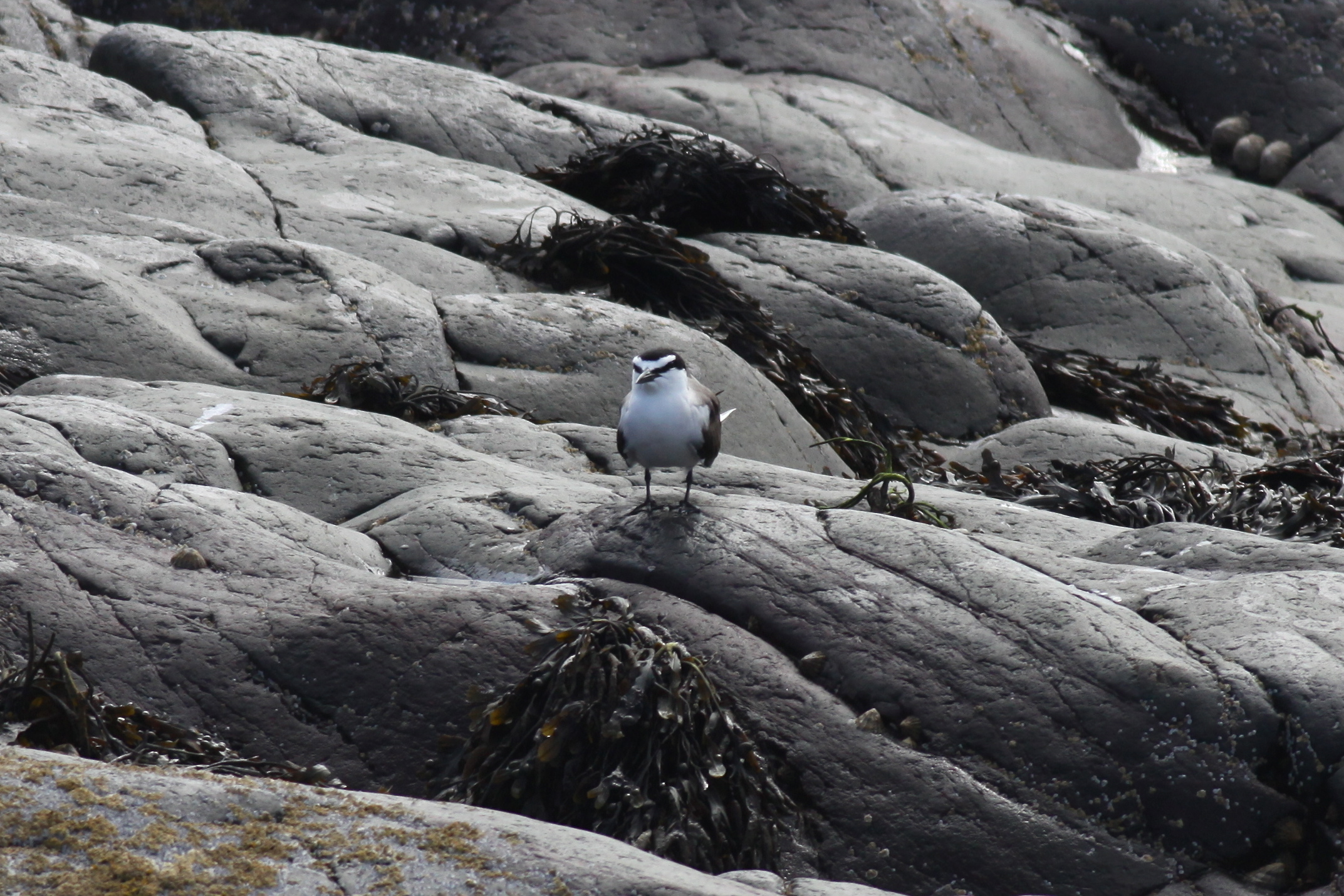
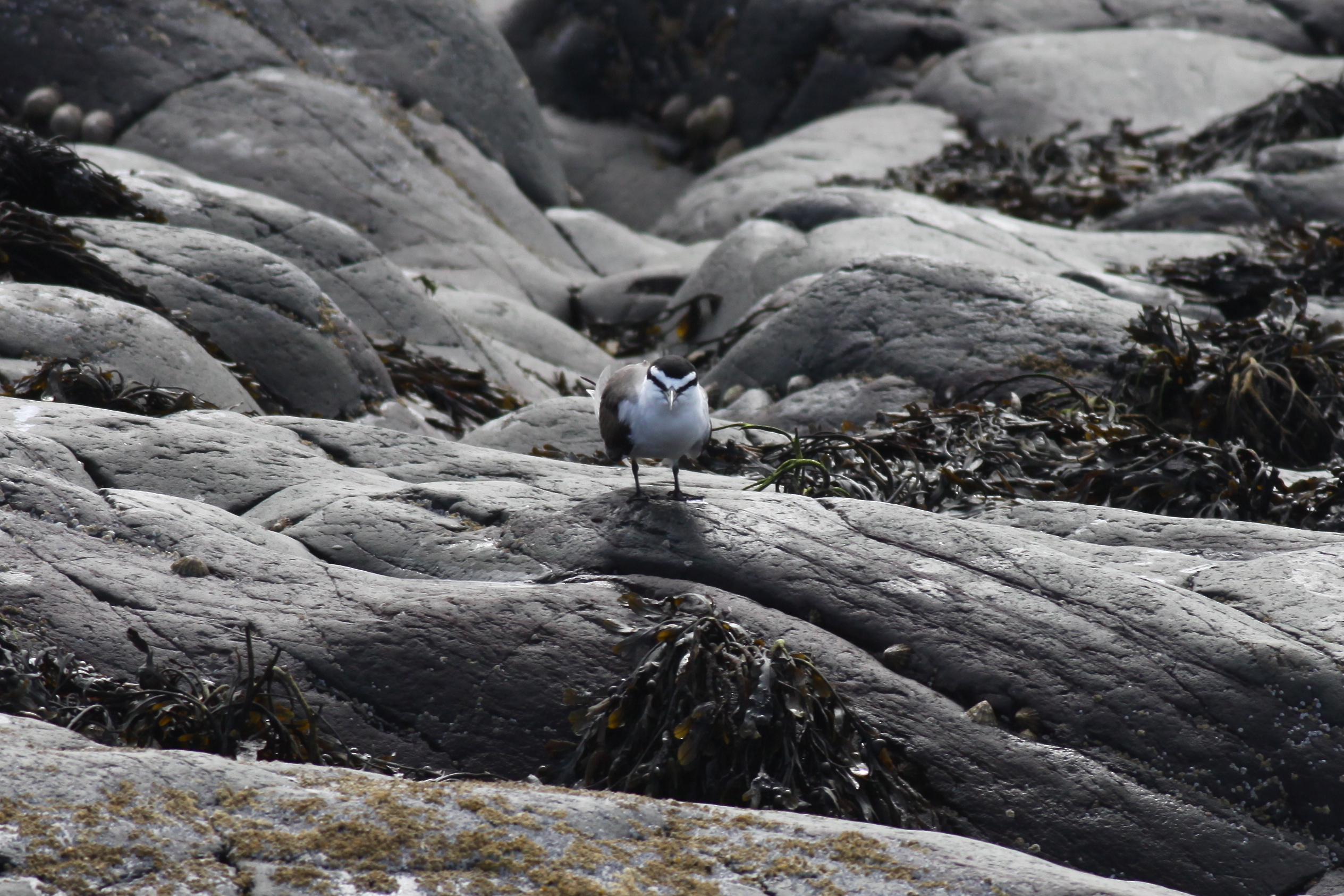
This summer has been exceptional for the number of rare birds in Britain, one of which is Bridled Tern – a species from as far afield as the Red Sea and Caribbean. With less than thirty previous records and the last long stayers being in the mid 90’s, this was a ‘must get’ species. Unfortunately for us, when it first turned up on 1st July on the remote Farne Islands, we were busy all week and the following week we were off to France to watch Le Tour. During that first week it settled to something of a routine, regularly coming to roost during the afternoon and evening, when there were plenty of eager boatman willing to ferry the throngs of twitchers out to the islands to see it. By the 5th it had become much less predictable and began visiting a number of mainland sites between  Northumberland and Teeside. On the morning of 10th it was reported flying south past Flamborough Head, Yorkshire –  it looked like it had disappeared for good. Then to most peoples surprise and our considerable relief it reappeared on Inner Farne to roost on the evening of 13th. We were again busy over the weekend and I had commitments on Monday and Tuesday. With an emergency dental appointment on Wednesday morning, we decided to go for the bird straight after. It’s a five hour continuous drive to Seahouses, where the boats leave, and with any luck we’d be there for mid afternoon, in time to get out to the islands to see it. We phoned the boat people on route to be given the devastating news that the last scheduled sailing was at 12.15 and there was no prospect therefore of seeing the bird that day, it’s fifth consecutive day of settled behaviour! We had no choice but to schedule our visit for the following day and hope against hope that it would hang around for another day! We’d intended to use our trip north to visit Jane’s family in Lancashire in any case, so we reversed our itinerary and decided to return to Rutland Water, to see if the Pacific Golden Plover was around and also to try for the Bonaparte’s Gull at Heysham. We scored on both – seeing our birding pals, Bob & Sue, in the process and spending a very pleasant evening, courtesy of Jo and George (thanks a lot folks!) Yesterday morning we set off early on a lovely drive through the high Pennines, collecting Red Grouse on the way, to reach Seahouses in good time for the crossing to Inner Farne. Fortunately for us, the Tern was back at the roost by late morning – unfortunately we had to join one of the regular tourist excursions which goes around all the other islands before finally landing for an hour on Inner Farne! Anxiety levels rose throughout the afternoon, despite the truly excellent views of the local marine life and the seafaring tales of the captain. Finally we landed and after several tense minutes of scanning the Tern flock  there it was, the fantastic Bridled Tern – ‘planet earth’ tick and a real beauty! After ten minutes or so it went airborne, pursuing a Sandwich Tern high into the Northumbrian skies and we were left to clear up on a couple of other Tern species which had so far eluded us. We’d boarded the boat ready for the return sailing to Seahouses, when a fellow birder saw the bird on the nearby rocks. We were able, curtesy of the obliging captain, to cruise slowly by it on our way home and obtain much better/sustained views.

A nice flight shot of Bridled Tern, with Sandwich Tern for comparison IMG_0379

A couple of shots taken from the boat as it departed back to Seahouses IMG_0561 IMG_0541 IMG_0528 IMG_0523 The ‘supporting cast’ for this trip was outstanding. First off was the rather distant but full summer plumage Pacific Golden Plover, at Rutland Water, seen here looking right on the closer bund, with a couple of Lapwing DSC03394

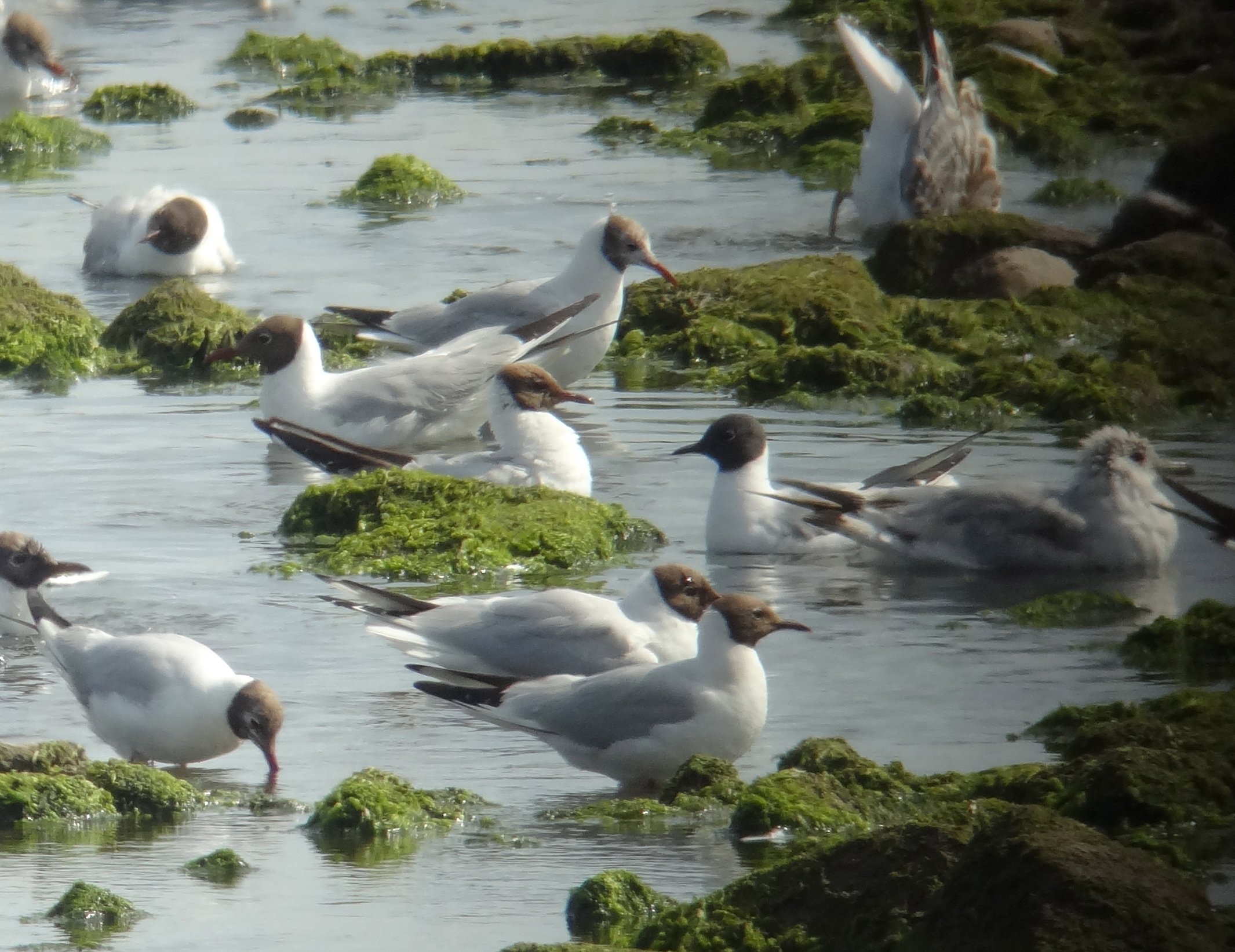
At Heysham, we managed to relocate the adult Bonaparte’s Gull – a scarce North American visitor, amongst hundreds of Black-headed Gulls, on the rocks at Red Nab. It’s the one in the centre of the shot, looking left! DSC03433 This picture shows most of the essential identification features; smaller, slimmer structure than Black-headed, a black hood, delicate black beak and pinky orange legs DSC03453 ‘Famous’ they maybe but increasingly difficult to find on the heather moorlands of northern England – Red Grouse. Britain’s only ‘endemic’. DSC03464 The top bird is an adult Roseate Tern, a very scarce summer breeding species. Note the long blackish bill, long tail- streamers and pale grey back. It’s also ringed! IMG_0436 Third new Tern species for the day – Arctic IMG_0456
A big thank you to the ‘Angel of the North’ for bringing us luck and allowing us to see the lovely Bridled Tern on our first attempt…we know of  birders who have tried and failed on three or more visits! DSC03469 Postscript: For fun I thought I’d add a couple of photos of the other ‘black and white’ Tern, on the British list, for comparison. These ‘digipics’ of a Sooty Tern were taken in the early days of digiscoping, on Anglesey in 2005 Sooty Tern 5 Sooty Tern 1

This bird first arrived on Anglesey on 7th July and spent the next 5 weeks commuting across the Irish Sea, visiting various locations along the Dublin coastline, proving at times to be as difficult to see as the Bridled Tern. Now thankfully both are safely UTB and ‘on the list’!
What an afternoon…!

Chris Froome has just won the 15th stage of the centenary Tour de France, on the summit of the monstrous Mont Ventoux, after the longest stage in the Tour and on Bastille Day – consolidating his lead in the Maillot Jaune and taking the polka dot King of the Mountains jersey for good measure. It doesn’t get much better!

Well it does actually – I’ve just registered my 10,000th view of my blog. Not quite the same magnitude of achievement I grant you but I’m pleased!  A big thank you to you all, old friends and new. T

Tour de Force

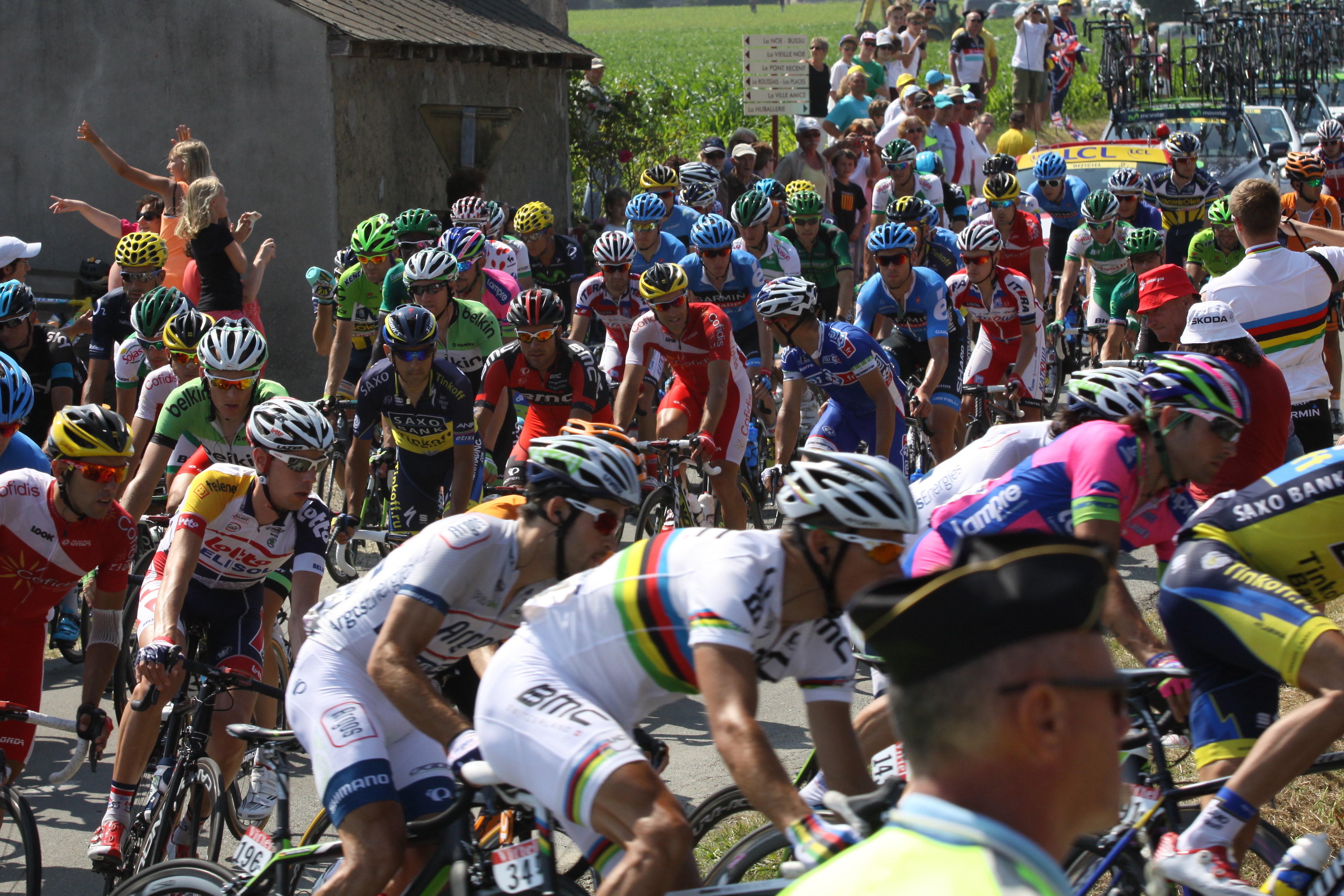
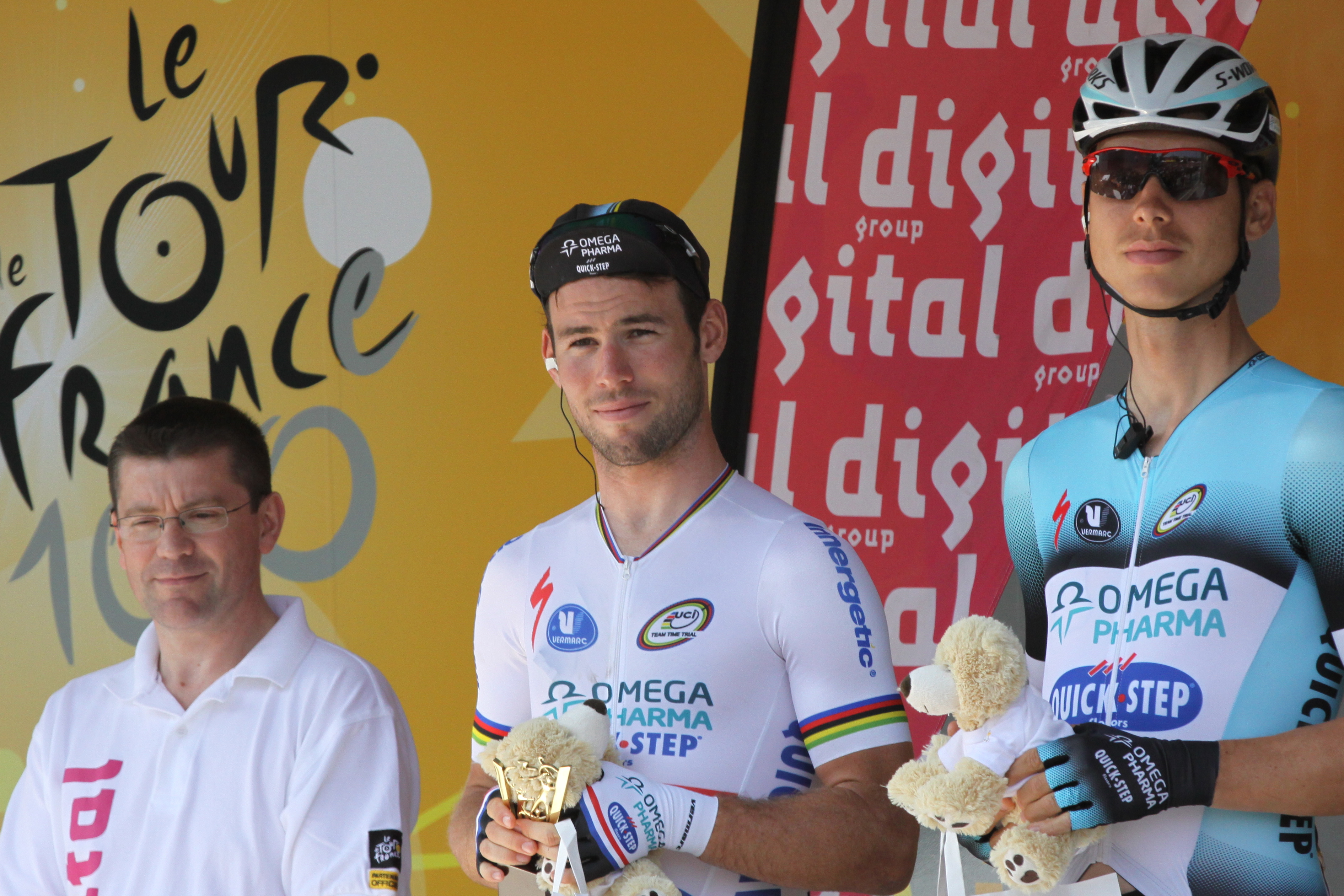
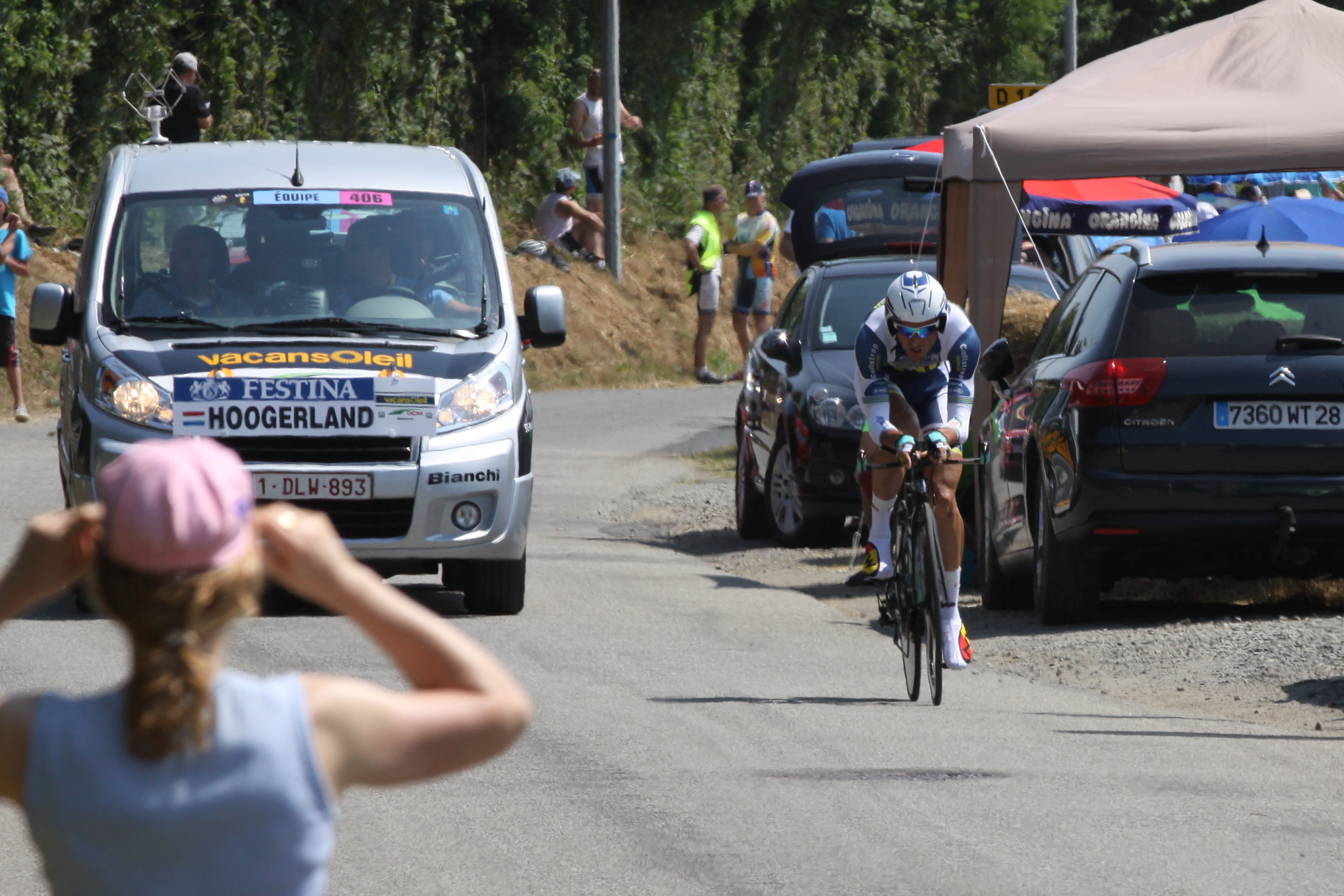
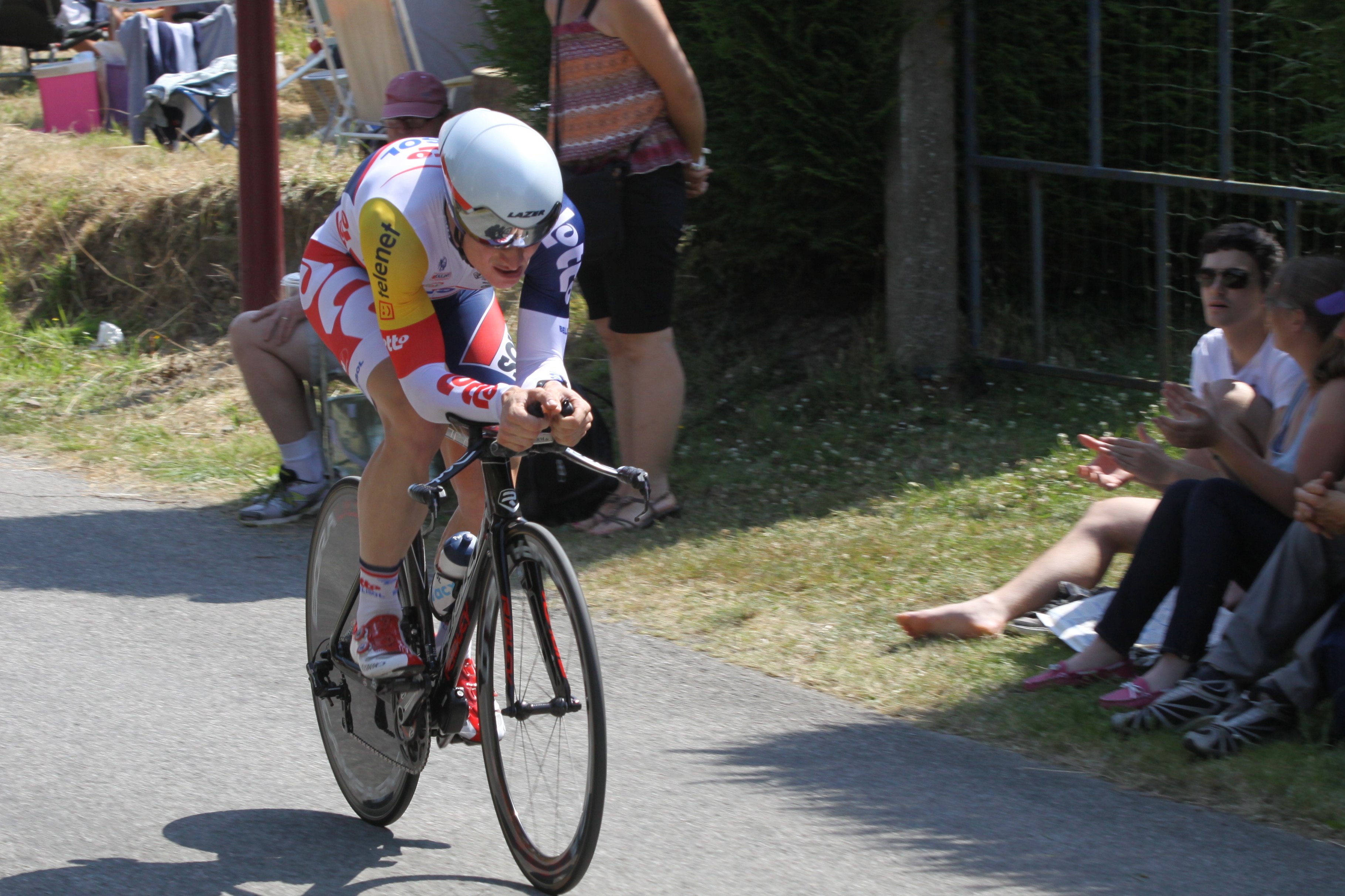
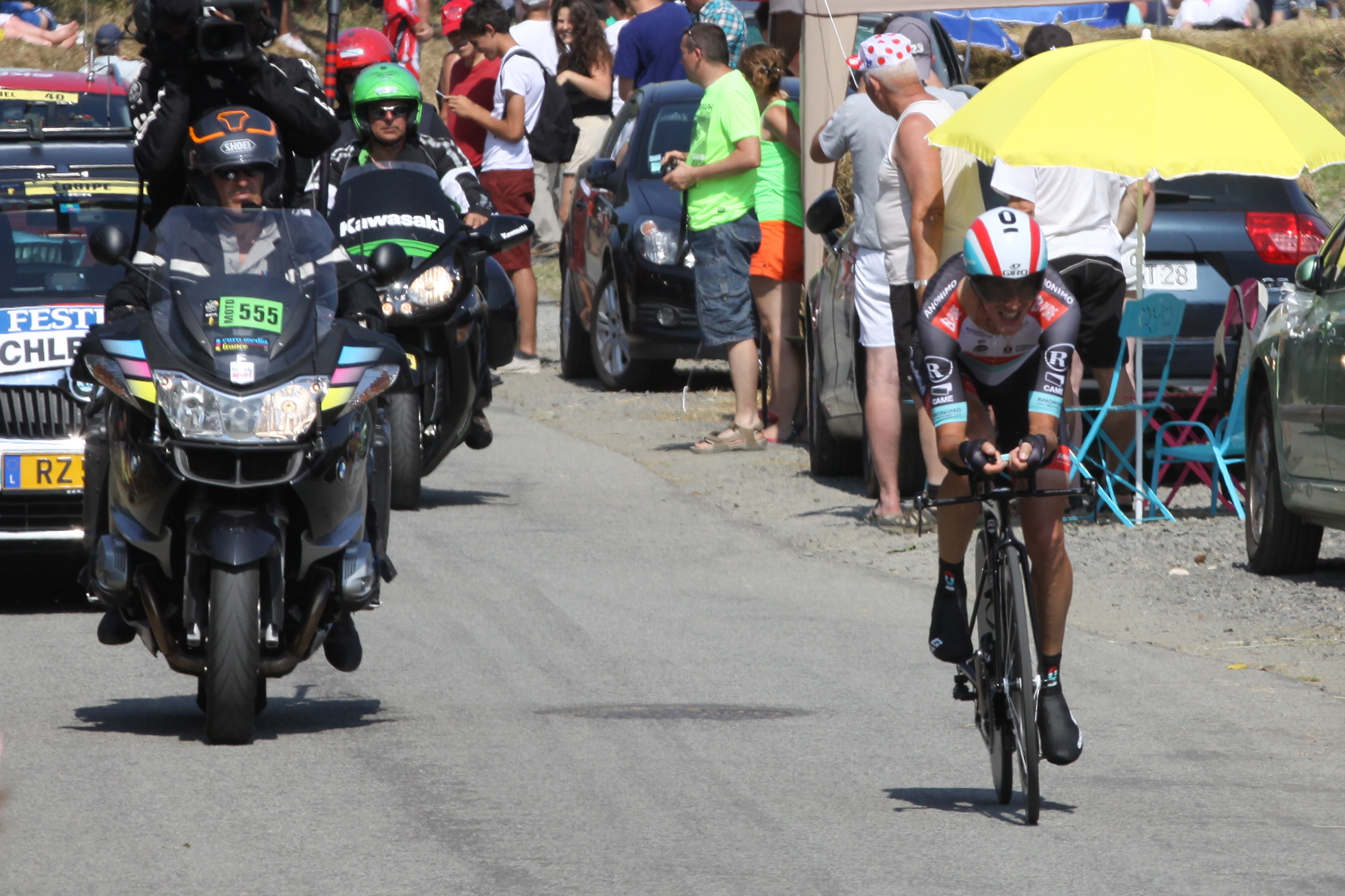
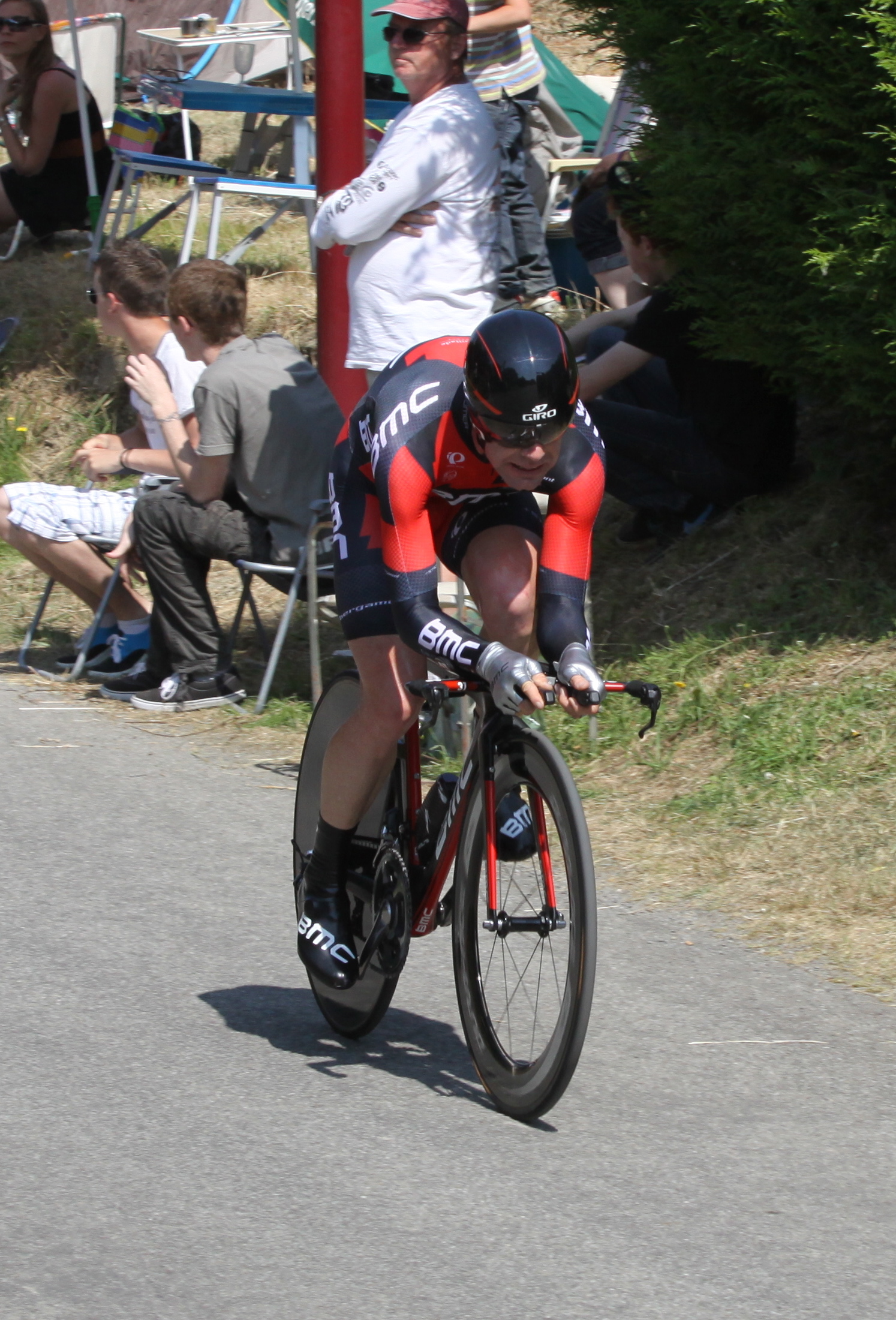
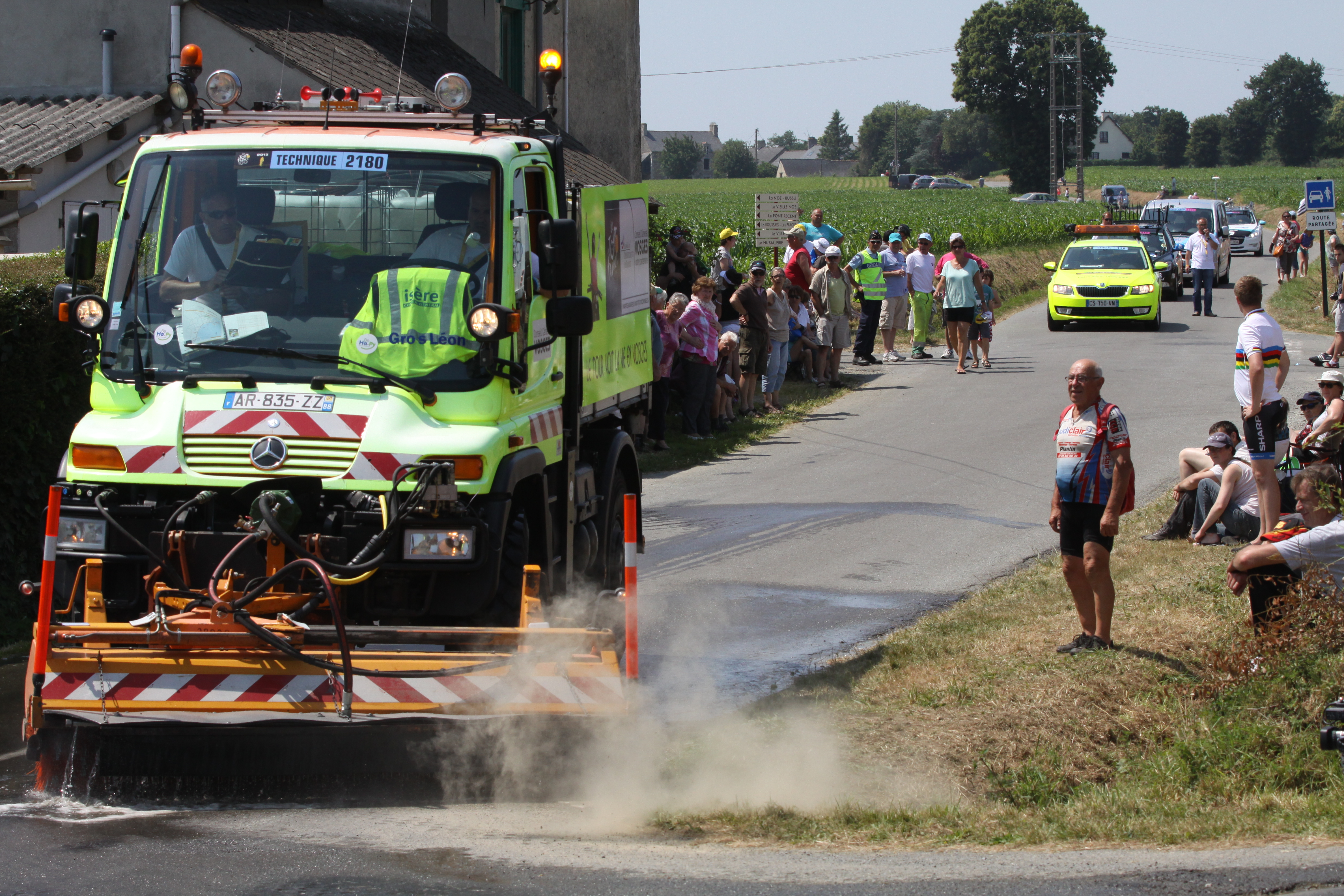
Yesterday, in the small hours of the morning, we got back from a mini break to France, having watched three stages of this year’s centenary Tour de France. We stayed at the excellent camp site of Le Bois Coudrais, near Combourg and saw Stage ten, with it’s sprint finish at St. Malo, the individual time-trial from Avranches to Mont St. Michel and the ‘signing in’, prior to the stage from Fougeres to Tours. As always the atmosphere was electrifying but with the added edge of British interest in Chris Froome, riding in yellow, and seeking to become only the second Brit to win the Tour and Mark Cavendish adding to his already impressive list of existing stage wins to assure him of his place in British cycling history as the most prolific stage winner of all time. There were also plenty of ‘up close and personal’ encounters with many of cycling’s international elite.

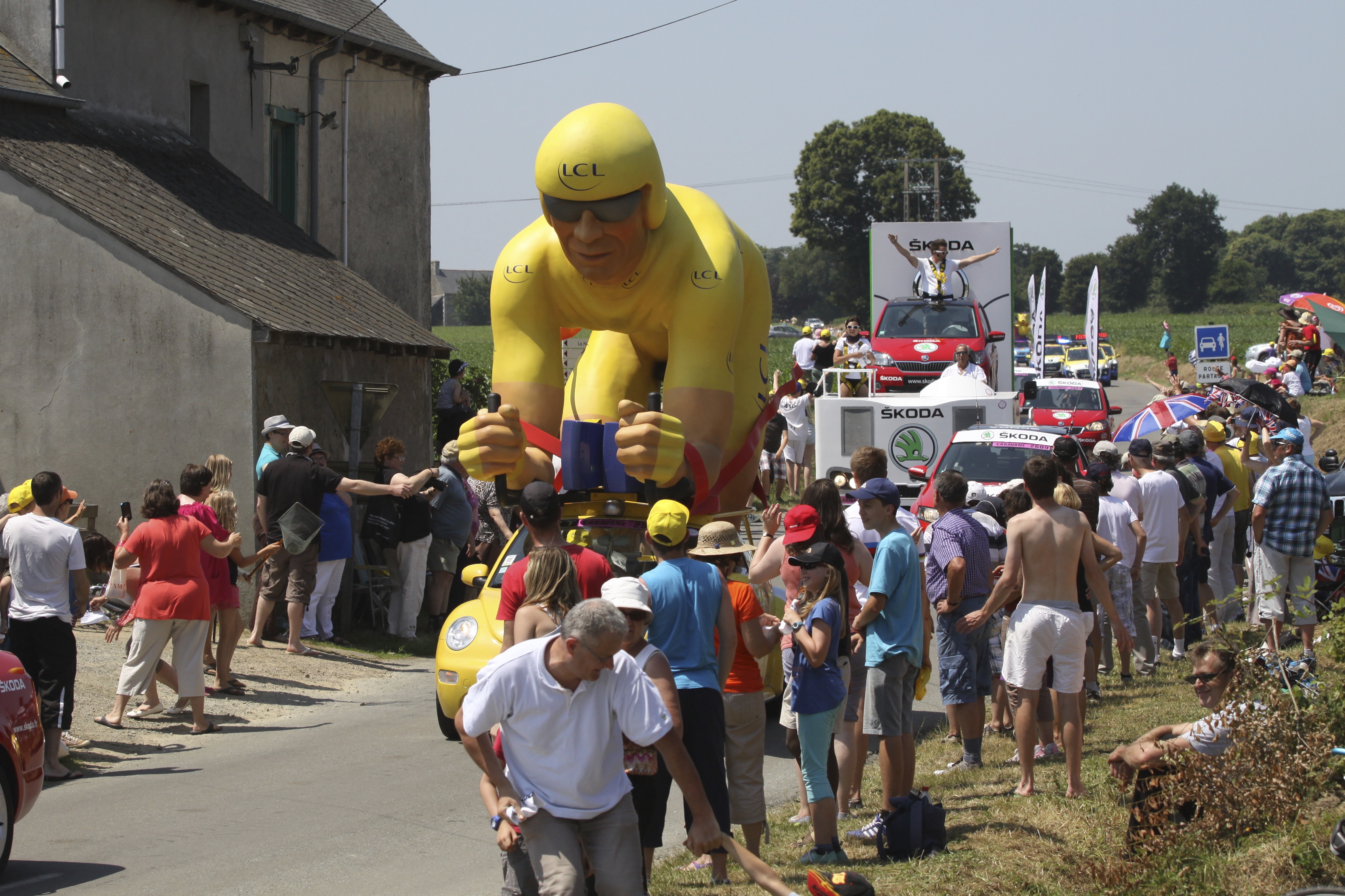
The ‘caravan’, announcing the arrival of the riders

IMG_9799

A break away of five riders on Stage 10, sixty kilometres before the finish

IMG_9822

The chasing peleton, just two minutes behind the leading group

IMG_9839

The Top Men at the front of the peleton, including Chris Froome in the ‘Maillot Jaune’, Peter Sagan in the Green Jersey, Mark Cavendish, Cadel Evans, Andy Schleck and Andre Greipel

IMG_9852

Smile for the camera

IMG_9986

Chris Froome and Richie Porte on a pre-race reconnoitre of the 33km time trial course

IMG_9910

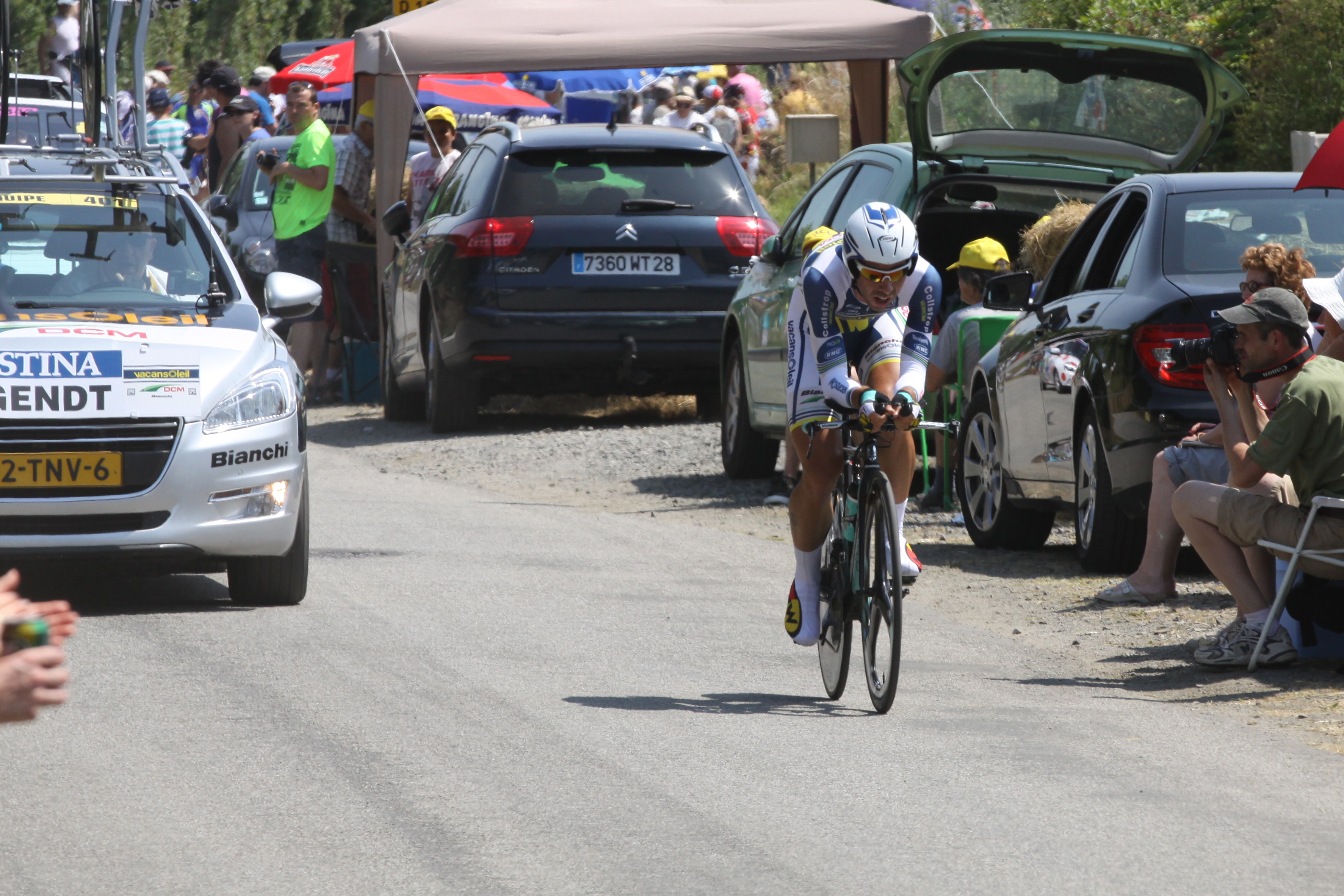
Third place on the podium, Thomas De Gendt

IMG_9951

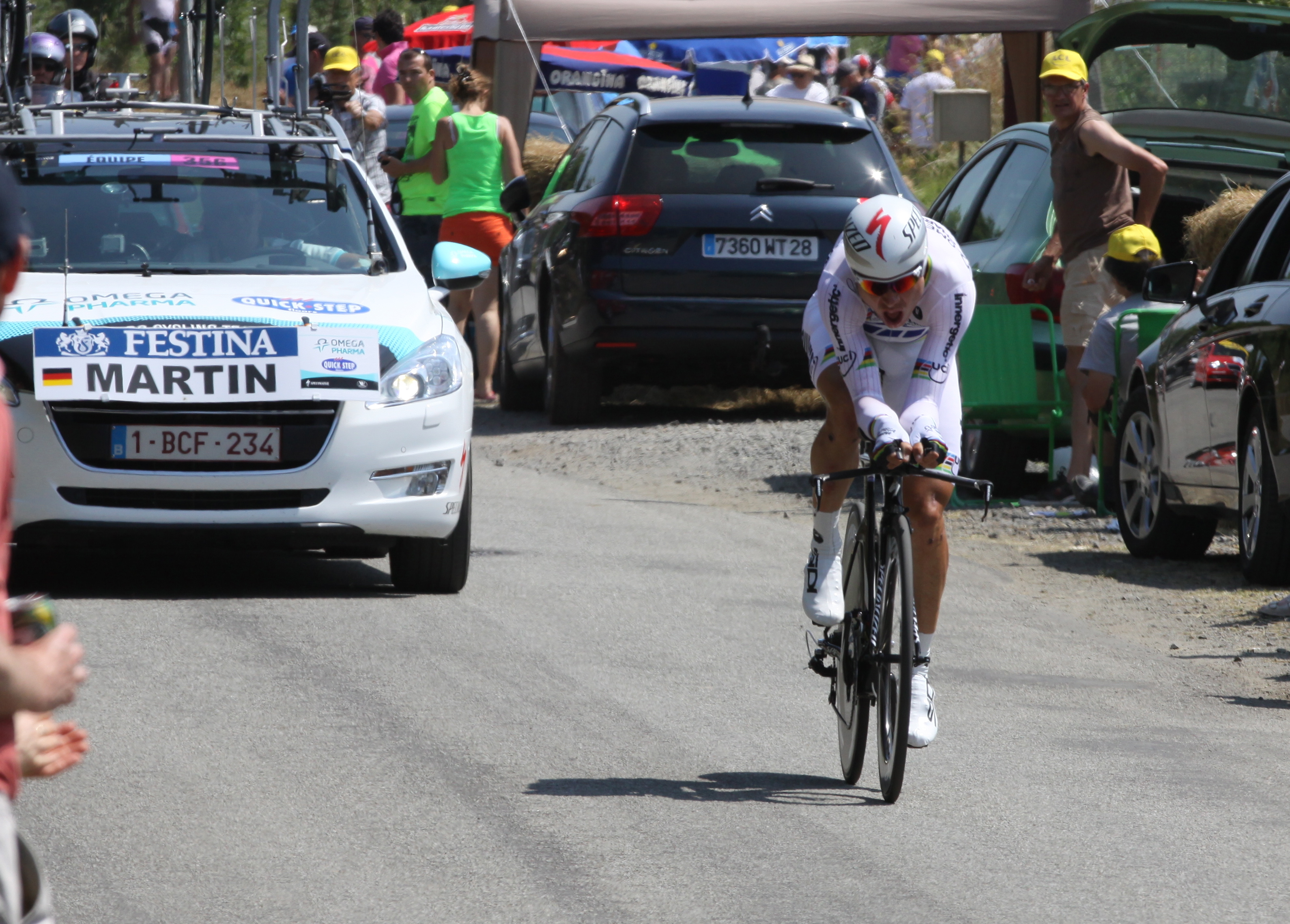
Overall winner, by eleven seconds, Germany’s Tony Martin

IMG_9954

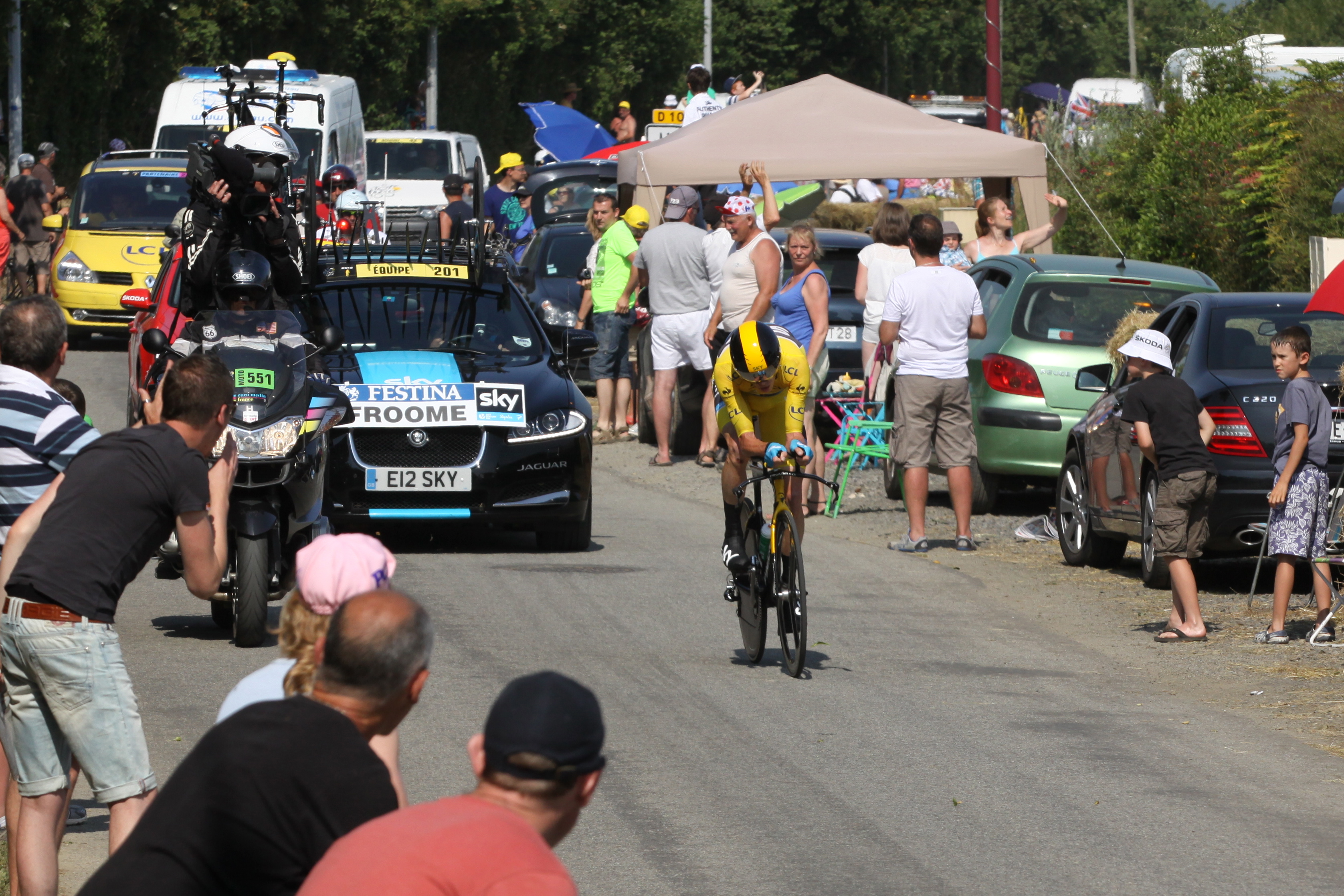
and in second place and overall race leader, Chris Froome

IMG_0104

The ‘signing in’ at Fougeres – King of the Mountains, Pierre Rolland

IMG_0114

Master Kittel, with three stage wins already to his name , and that incredible hair!

IMG_0126

Former Tour winner and current possible threat to Froome, Alberto Contador

IMG_0169

The ‘Manx Missile’, Mark Cavendish

IMG_0135

Maillot Jaune, and hopefully 2013 Tour de France winner, Chris Froome

IMG_0166

More photos to follow in my Tour de France 2013 Gallery.

Rarity Round-up

Over the past week or so there have been a number of scarce/rare birds in the region, which we’ve been able to catch up with. First was the singing Melodious Warbler in a pine plantation near Retford. ‘Melody’ Warbler, rather inappropriately nick named, since their song is a rather excitable nasal scratchy tune, are quite a rare bird in the east of Britain, being more typically an overshooting western Mediterranean migrant to Devon & Cornwall. The bird, still present this morning and singing for it’s tenth day, was easy to locate but much less easy to see (let alone photograph!)

IMG_9678

DSC03261

This was our second ‘Hippo’ (Hippolais family of Warblers) of the year and a UK ‘Lifer’ for Jane.

Yesterday we revisited old haunts and birding colleagues (- hello again Frank!) to see a really nice and reasonably close Surf Scoter in Filey Bay, on the Yorkshire Coast. A typical mid-summer species, but one usually found much further north, off the Scottish coast. It was in the company of half a dozen Common Scoter and is easily picked out (even at relatively long distances or poor weather conditions) by the rather ‘clown-like’ white, yellow and red beak and head markings.

DSC03274

DSC03299

It’s been more than a decade since we last saw this species as part of our legendary ‘Duck trilogy’ trip to Scotland, to visit my brother. Then it was Surf Scoter, Black Duck and King Eider – now that was a trip to remember!

The last of this weeks unusual species was a moulting Ring-Necked Duck – a North American species, at Catterick racecourse. Once we’d found the fishing lake, in the middle of the course, it was a reasonably straightforward matter to study the dozen or so Tufties (Tufted Duck) to spot the odd one out. Since there is a strong resemblance to it’s English cousin, care is needed with the relevant features – domed head peaked at the rear with no sign of a tuft, brownish tones to the otherwise greyish flanks and a white sub-terminal ring around the beak.

DSC03335

DSC03353

Ring-necked Duck are an ‘ornamental’ species sometimes kept here in captivity, but genuine vagrants do regularly occur in the UK … and this was definitely one of those!!

Rose-coloured Spectacle

This mornings delight was a fabulous adult Rose-coloured Starling, sometimes rather unflatteringly referred to as ‘Pink Stink’, feeding on fat-balls in a tiny garden, just off the quay at Wells-next-the-Sea. Rose-coloured Starling is an eastern European/Asian species which occasionally over-shoot on spring migration or else find their way to UK shores as dispersing juveniles, in late summer or autumn. The juveniles are much less eye-catching – basically a pale sandy version of our regular Starlings. But today’s bird was in as near full breeding plumage as you can get, and ‘boy was it a belter’…..

IMG_9627 DSC03167 DSC03161

The lovely ‘Rose of (Tralee) Wells-next the-Sea!

Roller coaster day….

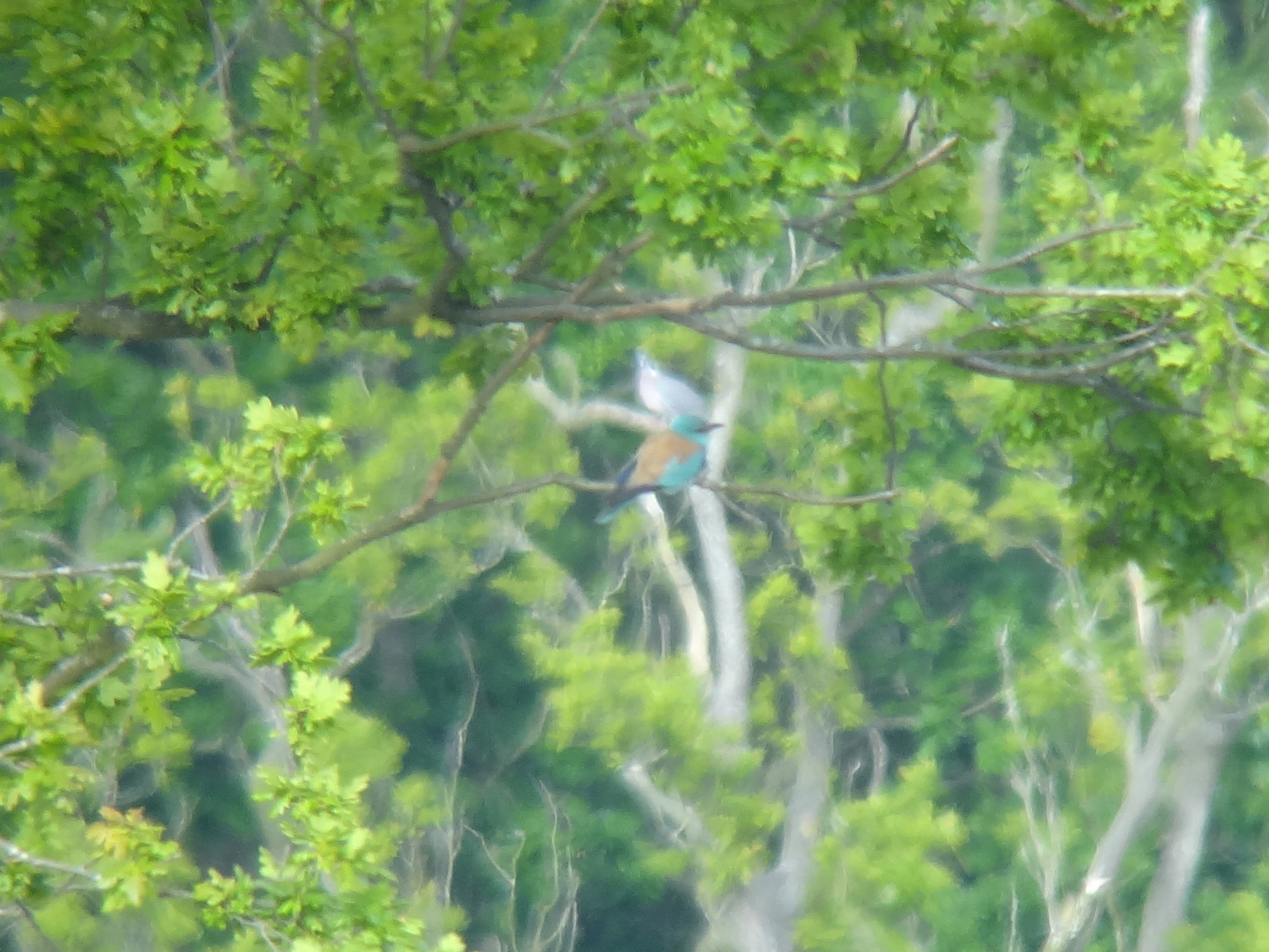
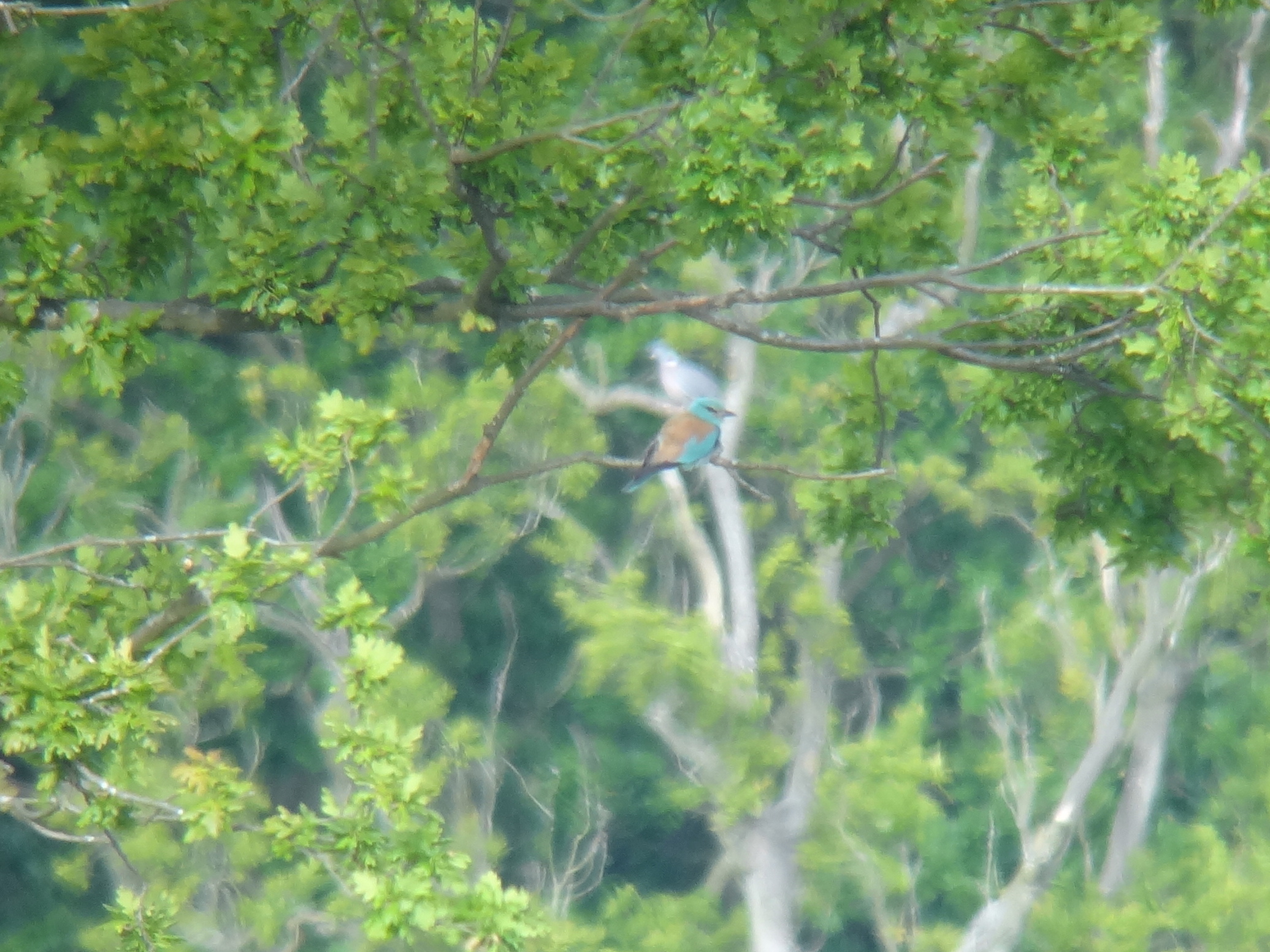
No sooner had we got back from seeing Pacific Swift in Suffolk – a ‘Lifer’ in case you were wondering, than a tentative report of a Roller, five miles down the road, came over the airwaves! Tea was put on hold and we headed in the Holt direction, to the Lowes nature reserve. First news was that the bird had disappeared, in a southerly direction, possibly to where it had first been located. We hung about on the ridge waiting for news until a group to the east of us started gesticulating – we rapidly relocated to where the bird was showing well, if a little distant, in a birch tree. We watched it for about half an hour, feeding and flying from tree to tree, before heading back for a late tea.

The bird….

DSC03104 DSC03099 DSC03102

A Norfolk ‘tick’ and a truly fabulous end to a very special ‘Fathers Day’ (thanks Matt!)


Terrific Pacific

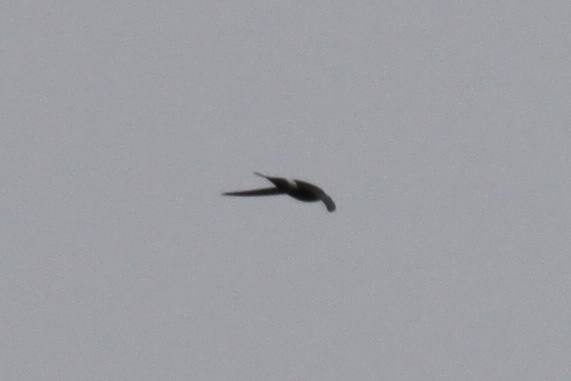
For the last couple of weeks a very rare Swift – I mean a ‘mega’ Pacific Swift, has been touring the English east coast from Suffolk to Yorkshire. Pacific Swift, which breeds from central Siberia east to the Pacific, has only been recorded in the UK on a handful of occassions. Last Wednesday morning the bird flew past Spurn Point, heading south, and was seen at Saltfleetby, Lincs., later  that afternoon. Yesterday it reappeared at Trimley marshes in Suffolk. Much against the odds it was still there this morning so we went for it. After an anxious two and a half mile hike from the car to the SWT reserve and an hours wait, the bird finally obliged with a reasonably close fly past over the lagoons and then away high over Felixstowe docks and out across the river towards Essex.

A small part of the crowd, gathered in anticipation

IMG_9519

Pacific Swift (left) and, for helpful comparison, Common Swift

IMG_9560

Although a rather poor record shot, this photo shows the essential features: white rump, elongated forked tail, longer wings and slightly projecting head profile

IMG_9562

Side view of the white rump patch

IMG_9568

A very nice Fathers Day present – thank you!

Bluethroat – more like blue knees!

This morning we tried for the reported singing Bluethroat along the East Bank at Cley. In our haste I forgot that I was wearing shorts and ‘boy’ did I pay the price during our two and a half hour vigil! There was a noticeable sea fret when we arrived at Walsey Hills and a stiffish breeze was blowing from the north as we walked along the bank. Apparently the bird had been showing five minutes before we arrived, so we were feeling lucky. An hour and a half later, not a peep from the bird and I was getting decidedly chilled. Jane had opted for an ill-timed walk back to the visitors centre for a comfort break when first the Ruddy Shelduck, which has been frequenting these parts for a couple of weeks, put in an appearance quickly followed by the Bluethroat – which sang briefly from a distant elder bush. Jane was, by this time, ambling back down the bank but alas the bird had disappeared into thick cover by the time she reached me! We gave it another hour but again there was no sign. The afternoon was spent in the garden until the Bluethroat was again reported. Twenty minutes later and this time success – a UK ‘lifer’ for Jane.

The picture is a poor record shot, due to distance, heat haze and the setting sun, but it is just about recognisable as a Bluethroat, of the Central and Southern European White- spotted race:

DSC03069

Return of an old friend….

On Saturday I had a fleeting view of an old friend, as they chased a moth across the drive, in front of our house. Yesterday we had a better view and this morning, not one, not two but an incredible THREE! Ever since we’ve lived here we’ve been priviledged to have a pair of Spotted Flycatcher breeding in or around our garden. They usual arrive in the first week of May, have two broods and are gone by late August. We’d nearly given up hope this year – partly because it’s nearly the end of May but also the number of reports of this species, arriving in Britain this year, have been few and far between. Anyway they’re back and I hope they settle down to another successful breeding season:

IMG_9392


Post Script: 1st June, a thousand Spotted Flycatchers were reported today at Portland, in Dorset – so that’s where they all were!