Looking for Tree Sparrows

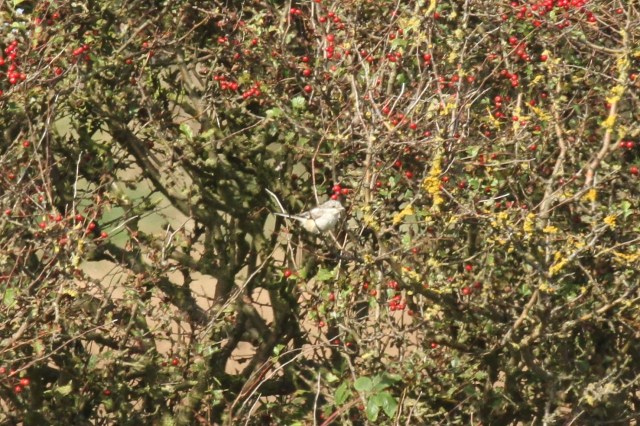
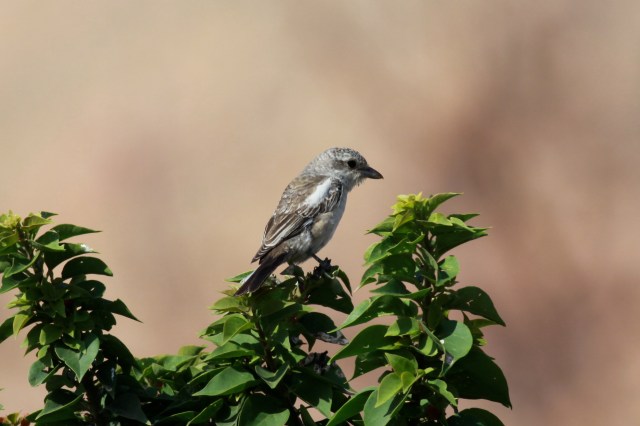
Tree Sparrows are now virtually absent from east Norfolk and have suffered a massive general decline across the whole county over the past two decades. With nothing better to do and needing it for my Norfolk Year List we set off on Sunday, in the pouring rain, to search for them. I’d been given a possible location to the west of our place, in a rural village which appears to have largely missed-out on the agricultural revolution – winding lanes with lots of small fields bordered by overgrown hedgerows. It didn’t take us long before we bumped into a very friendly resident who, on hearing of our quest, announced that he had Tree Sparrows on the feeders in his garden and that we were welcome to look! Sure enough, half a dozen birds were buzzing in and out of the nearby hedge and on to his feeders. They didn’t seem to mind the weather but it sure hampered the photography!

IMG_9178

Tree Sparrow, at an undisclosed mid-Norfolk location, 16th November 2014

Pilot pod passing

DSC09770

Pod of Pilot Whale passing Cley East Bank, 10th November 2014 

Monday is my ‘duty day’ at Cley NWT. I’d checked out the birds on Pat’s Pool and taken a slow walk down East Bank. I was just returning from looking at the female Long-tailed Duck at the back of Arnold’s when I met Steve & Sue. Whilst Steve and I were talking about the Desert Wheatear ‘fest’ at the weekend, Sue was looking out to sea when see noticed a group of large cetaceans moving east. Steve quickly identified them as Pilot Whale and we counted at least fifteen travelling in a pod about two thirds the way out towards the wind farm. They spent the afternoon gradually making their way past Salthouse, and Weybourne arriving at Sheringham by about 4.40 – their numbers increasing to 28 at the last count.

Apparently this is the first record of live Pilot Whale off Norfolk – all seven previous records have been of dead beached individuals, the last of which was in 1992.  So forgive the rather poor quality digipics but they do capture a small piece of Norfolk cetacean history!

DSC09785 DSC09755 DSC09731

For more and better photos click here to view Steve’s website  and for more background see Carl’s, Letter from Norfolk.

Birding Desert

IMG_8886

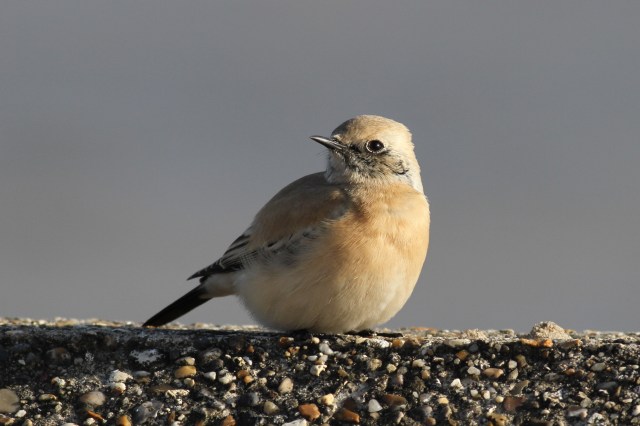
Male Desert Wheatear, Lowestoft, 8th November 2014

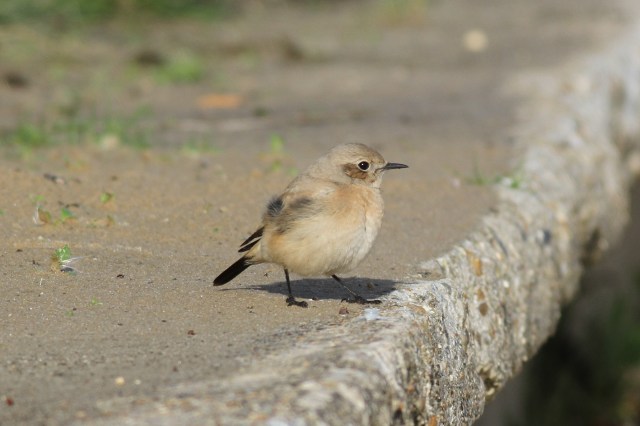
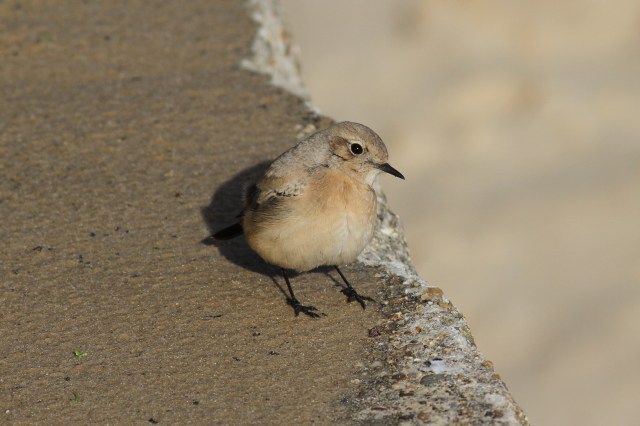
Two days ago a male Desert Wheatear turned up in Lowestoft – just over the border, in Suffolk. Then yesterday a female was present on the sea front in Gorleston, NORFOLK. A leisurely breakfast this morning and ‘bingo’, the pager rings out that the bird is still present – we pack up and head off. Half way there another message comes through that the bird has flown north across the river and has been lost to view, in a huge fenced-off area of the docks. By the time we arrive, the scent has gone well and truly cold – oh well. We decide to go and look at the bird in the neighbouring county anyway, which is said to be ‘showing well’ – this proved to be something of an understatement! Enticed, no doubt, by the regular supply of meal worms this handsome winter male sat, unperturbed on the sea wall, surrounded by an army of admirers. We’d just about had our fill when the news percolated through that the Norfolk bird had relocated back to the beach at Gorleston. Off we go again and this time, success – a nice female, nestling in the shelter of the sea wall! Two Desert Wheatear in one morning – one of which was a Norfolk Year Tick, not a bad little outing.

First a few more photos of the Suffolk male

IMG_8881 IMG_8904 DSC09682DSC09685

‘What are you guys all looking at?’

DSC03566

Now for the equally lovely NORFOLK female

IMG_8954

IMG_8939

Finally, a grab shot showing the all dark tail in flight

IMG_8958

Surf – aced

Lately I’ve been having a pretty good run of ‘Norfolk ticks’ – yesterday it was the turn of Surf Scoter to get added. As has been the way of things recently I was out of the county when it first showed up but fortunately it decided to stick around, with a couple of Velvet Scoter, off-shore in Holkham bay. My timing wasn’t great, arriving three hours after the morning high tide, so the bird was very distant but, on the plus side, it was bright sunshine which meant that it’s distinctive black and white headed pattern and garish beak stood out well against the dark sea. No photo opportunities I’m afraid, unlike last years bird in Yorkshire, which was by comparison close.

It’s out there somewhere – honest!

IMG_8575

Last year’s bird at Filey, on the Big Year – see Rarity Round-up, June 2013, for more

DSC03274

Also saw my first Snow Bunting of the autumn, by way of a bonus.

Same old, same old..

I went out this morning to look for the Pallas’s Warbler at Snipes Marsh Cley NWT. It was seen first thing and again, fleetingly, mid-morning but hadn’t showed itself by the time I gave up and went for lunch. Another day, another dip – same old, same old.. There was a nice Long-eared Owl and a Yellow-browed Warbler in near-by Walsey Hills though and the Grey Phalarope was on the pool at Eye Field – but skulking in the reeds when I went to see it.

First, a terrible digipic of probably the same Grey Phalarope, when it first appeared last Monday at Cley NWT, on Simmond’s Scrape, in the middle of a deluge

DSC09234

and now, todays offering, Yellow-browed Warbler and Long-eared Owl, both in Walsey Hills

IMG_8530

IMG_8567

Same old, same old they maybe but – ‘you gotta luv em!’

Shrikey

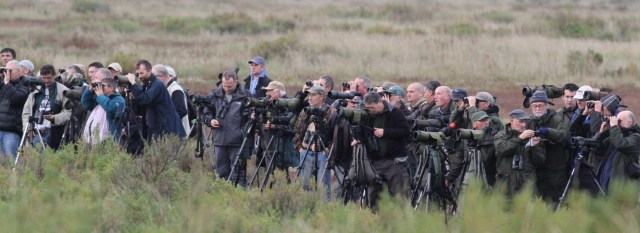
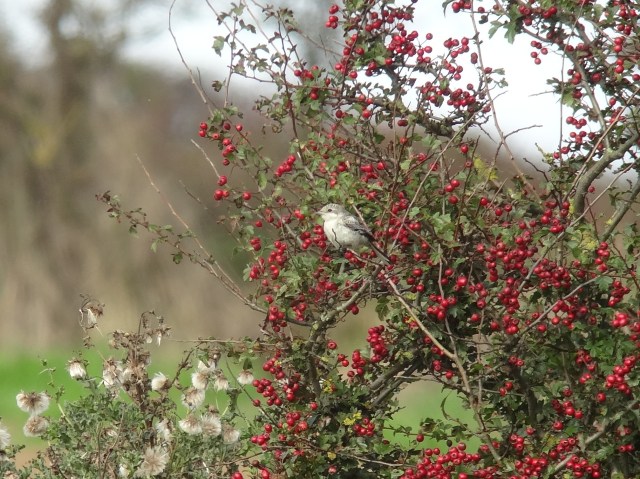
After another frustrating afternoon in Wells Woods dipping on OBP and Pallas’s Warbler I responded, with little hesitation, to a pager message announcing the presence of an Isabelline Shrike, just up the road at Warham Greens. For once I was at the front of  ‘the pack’, parked up at Stiffkey and headed west along the track towards the ‘whirligig’. There were a couple of dozen birders looking randomly in the hedgerows where the bird was last reported but no one was on the bird. More birders were arriving by the minute but, with ‘no further sighting’, this was beginning to have a bad feeling to it. As the light was starting to fade I looked back to see a small crowd looking intently in our direction from across the marsh. As we started nonchalantly walking in their direction (there’d already been a few false ‘gallops’) the pager announced that the bird was showing. The pace quickened considerably until the growing crowd was lined up peering intently into a hawthorn bush, where it had just been seen. A brief view of the bird as it flew to a nearby bare Elder bush, followed by a couple of partially obscured views of it apparently eating a blackberry and that was it – show over! Still, another much needed Norfolk ‘tick’, third or fourth Shrike species (depending on whose list you use) in as many days and a satisfying end to an otherwise ‘damp squib’ of a day. Alas, no photo of the bird, but here is the obligatory crowd scene – spot the ‘celebrity’ birders!

IMG_8450


Plugging a gap

IMG_8389

Radde’s Warbler, Wells Woods, 14th October 2014

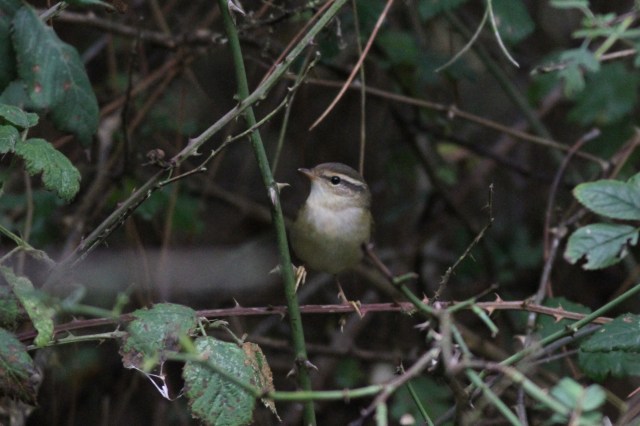
Yesterday’s weather brought some good stuff to the Norfolk coast, including several Radde’s Warblers – a glaring omission from my county list! So when there’d been a couple of confirmatory messages about a bird in Wells Woods we set off in pursuit of this rare Siberian species, which should be on the way to it’s wintering quarters in South East Asia. For a generally skulking species, this particular individual showed pretty well. Unfortunately the same could not be said for the Olive-backed Pipit or Red-flanked Bluetail, which we tried for but dipped. We did see Long-eared Owl, Great Grey Shrike, plenty of Redstart and Brambling by way of consolation however.

A couple more photos of the ‘main attraction’

This is the usual view of Radde’s, skulking in the undergrowth

IMG_8364

And the more unusual sight of Radde’s in the open

IMG_8394

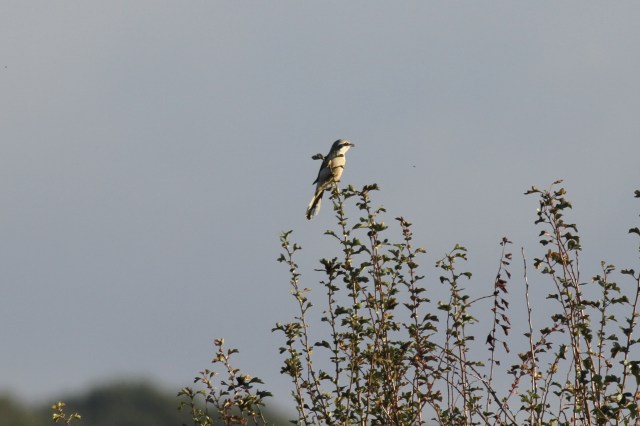
The supporting cast included this Great Grey Shrike, one of a few on the Norfolk coast over the last week

IMG_8416

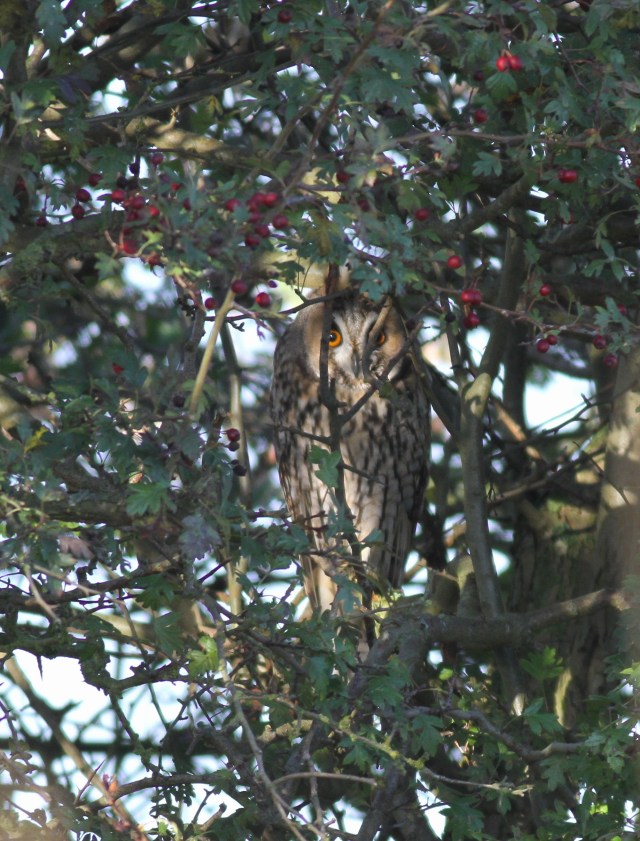
Long-eared Owl, another Norfolk ‘year tick’

IMG_8403

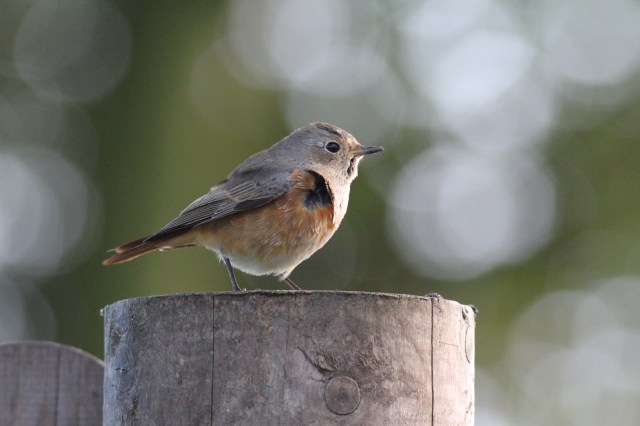
and Redstart, which were in good numbers at several locations

IMG_8432

Another Holiday Hangover

DSC09131

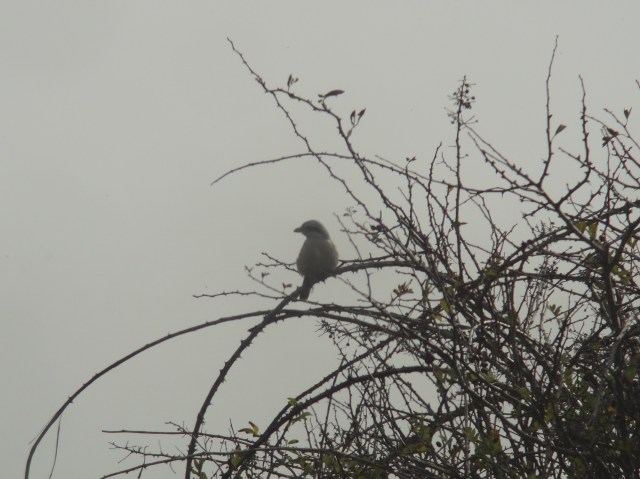
Steppe Grey Shrike, in the mist – Burnham Norton, 12 October 2014

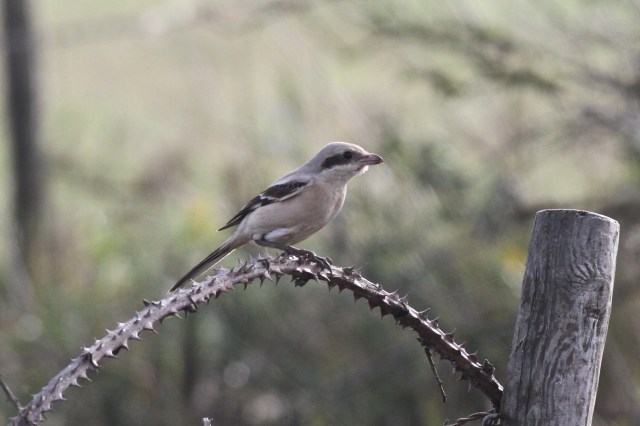
Each time we’ve been away this year, something exciting has turned up in Norfolk. Having just returned from a week’s family holiday on Tenerife, I wasn’t at all sure about our chances of catching up with the Steppe Grey Shrike, which first appeared in Norfolk over a week ago. Then, to add to the general anxiety, there was an early morning ‘negative news’ message before we set off today. Our next obstacle, once we got to Burnham Norton, was the fog – however, we did manage to see the bird, but for the best part of an hour it remained a small, static silhouette in a hawthorn bush! Eventually it did come closer and the sun did manage to break through at about the same time. Good views finally of this ‘first for Norfolk’ and our second rare shrike of the autumn.

The views did improve a little..

DSC09132

Until finally we were close enough to enjoy the finer details of this ‘first for Norfolk’

IMG_8265

IMG_8317

IMG_8295

I understand that the bird has been fed continuously on a diet of meal worms, by the eager photographers. Not quiet the luxurious gastronomic inducement as smoked salmon, offered to the Ivory Gull in Humberside last year (see my post Arctic ‘pigeon’ 29th Dec 2013) but obviously sufficiently enticing to get it to stick around. I guess I should be grateful..

Time Out on Tenerife

IMG_8133

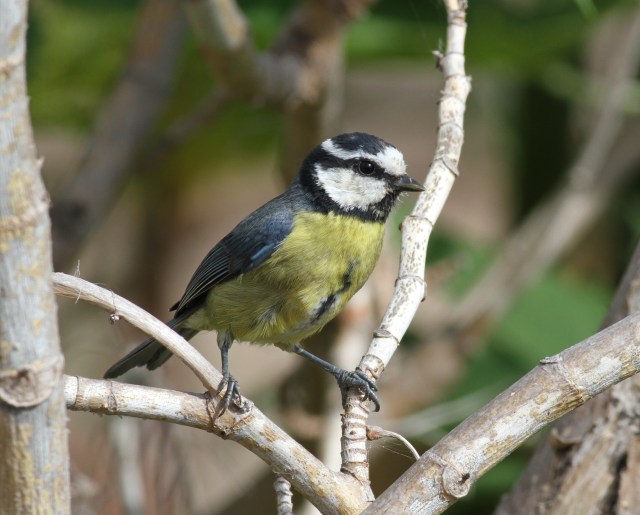
Blue Tit, of the distinctive endemic sub-species Parus caeruleus teneriffae

We’ve just had a weeks family holiday on Tenerife with two of our kids, their partners and two of our grandsons – consequently, opportunities for birding have been limited. In fact most of the birds seen have been from or around our villa at Callao Salvaje. We did manage a trip up to El Teide, including calling in at the play park/picnic site at Las Lajas and a quick excursion to the pools Erjos.

In the brancos, by the side of the villa there was a small irrigation dam, surprisingly with some water still left in it. This proved to be a good area for the regular species like Canary Island Chiffchaff, Blackcap, Blackbird, Spectacled Warbler, Canary, Blue Tit, Berthelot’s Pipit and Common Kestrel but it also attracted Grey Heron, Night Heron – up to four, Little Egret and Grey Wagtail. On the surrounding hillside we saw Peregrine, Southern Grey Shrike and Barbary Partridge. From the pool we had views of the sea and La Gomera. Yellow-legged Gull were the only regular day-time species but we did see Cory’s Shearwater flying over-head at night, an Osprey one evening and Plain Swift, which were a nightly occurrence, with up to 150 seen. We even had a whale species ‘spouting’ off-shore. On our two excursions we managed to add Blue Chaffinch, Great Spotted Woodpecker, Buzzard, Raven, Robin, Mallard, Coot, Moorhen and at the nearby golf course a couple of Greenshank and a Common Sandpiper.

A selection of birds from the local brancos,  female Sardinian Warbler

IMG_7885

Canary Island Chiffchaff, easy to locate, less so to photograph

IMG_8212

Spectacled Warbler,  female

IMG_7962

Berthelot’s Pipit

IMG_8202

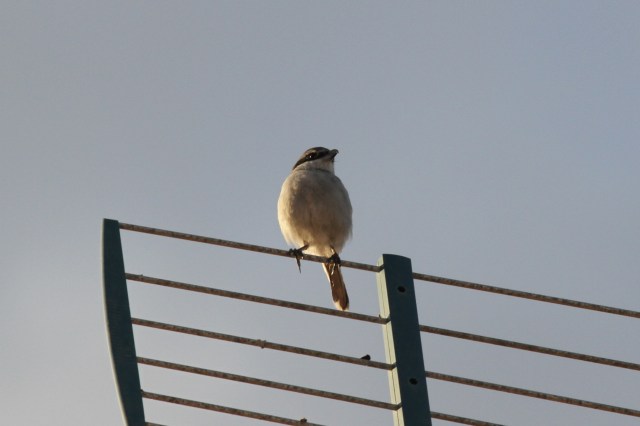
Southern Grey Shrike, of the race koenigi 
IMG_7942

Peregrine Falcon, madens 

IMG_7872


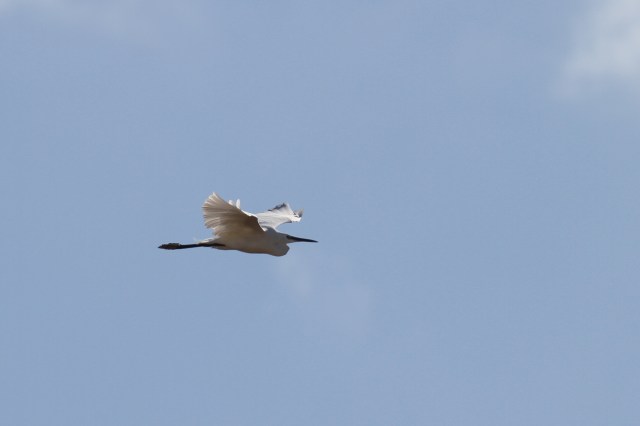
Little Egret

IMG_8158

Black-crowned Night Heron – up to four came into roost each evening
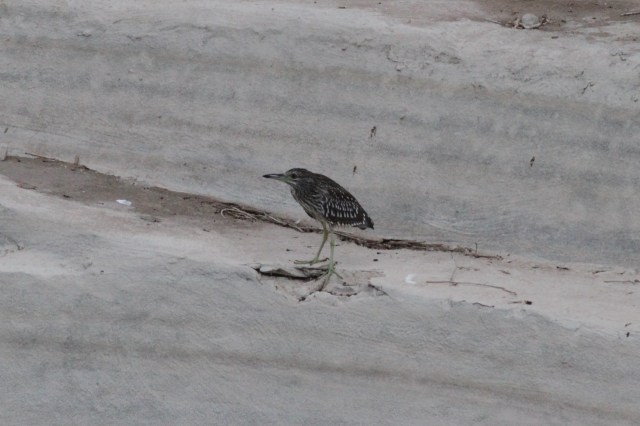
IMG_7823

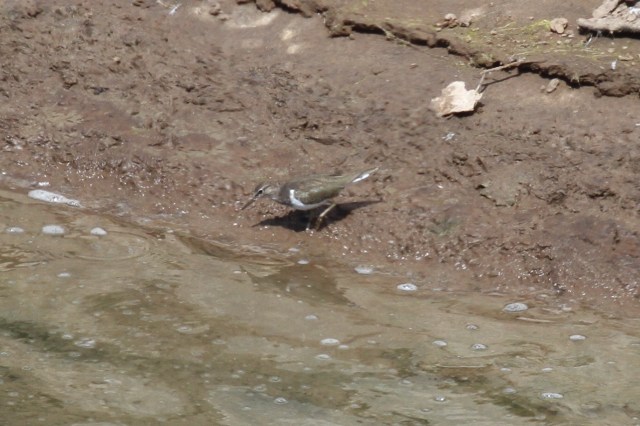
On the nearby golf course reservoir, two Greenshank and a Common Sandpiper
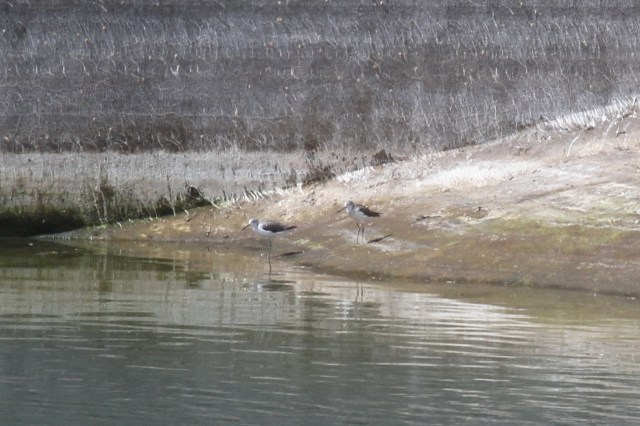
IMG_8086 IMG_8084

At Erjos pools there were plenty of birds but nothing out of the ordinary. Chaffinch, of one of the island races
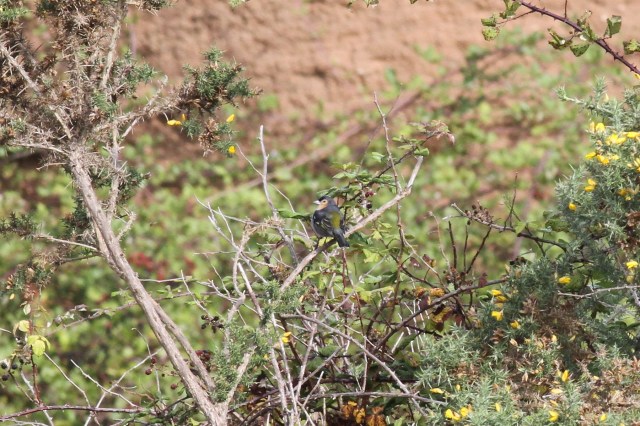
IMG_8091

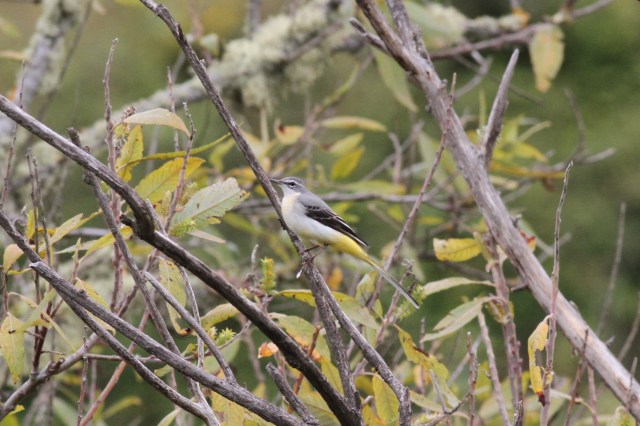
Grey Wagtail – probably canariensis

IMG_8114

The local wildfowl collection – Mallard, of questionable parentage and a Muscovy
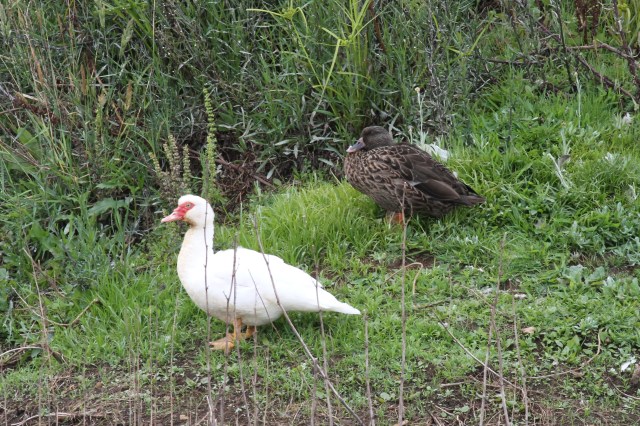
IMG_8095

Robin, of the race superbus – note the ring

IMG_8088

At the popular picnic spot at Las Lajas, plenty of Canary
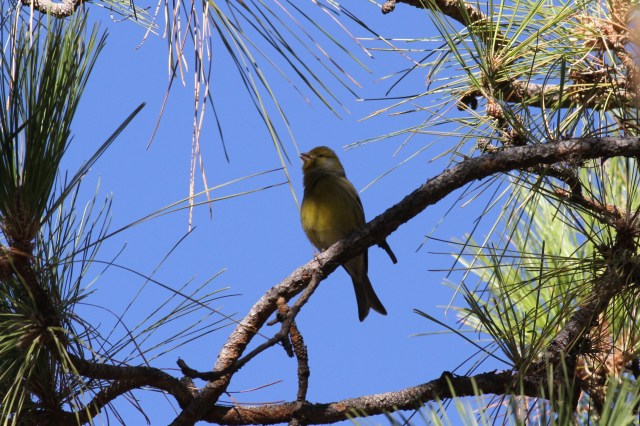
IMG_8053

Great Spotted Woodpecker of the distinctive canariensis race

IMG_8024

Finally, the only really different species – Blue Chaffinch

IMG_8045

All in all, not a bad selection for a non-birding, family holiday on an island, not renown for it’s abundant bird life.

Late Run un-Masked Lifer

DSC09084

1st winter Masked Shrike, Kilnsea, 2nd October 2014

Nearly two weeks ago Britain’s third Masked Shrike (there are a couple of additional records pending), a species of restricted distribution in the eastern Mediterranean, turned up on Spurn. First identified as a Woodchat, it’s true identity was quickly established and it rapidly became one of this autumn’s big twitches – the two previous birds having been in Fife, Scotland a decade ago and a ‘one day wonder’ on Scilly. Unfortunately for us we’d just embarked on a week’s holiday in Dorset and on our return, last weekend, we were busy doing stuff in Norfolk. Today then was our first opportunity to go for the bird and I was extremely relieved when part-way into our four and a half hour drive, the bird was reported as still present in it’s usual hedge!

We parked up and joined a couple of birders in the field from where the Shrike could be observed distantly in the hedge. Over the next hour and a half it did creep nearer but was never close. Great ‘scope views of this first winter bird but no real opportunity to photograph it properly – however that didn’t detract from a cute little bird which was virtually in constant view. A UK ‘lifer’ for me, which repaid the long and anxious wait.

A couple more shots showing the extensive white wing panels/tail sides and the emerging apricot coloured flanks

IMG_7797

IMG_7767

Finally a photo of a similar looking bird, taken in Eygpt, a couple of years ago

IMG_7794


Postcript  The Masked Shrike wasn’t seen again after mid-afternoon and appears now to have gone – how lucky was that!