Chalked Up

IMG_7150

Chalk-hill Blue, Norfolk

I had a spare couple of hours yesterday and, although the weather wasn’t particularly conducive to butterfly hunting, I decided to head down the coast from Cley to the site of an Iron Age Fort and home of one of Norfolk’s scarcer butterflies – Chalk-hill Blue. By the time I arrived the wind had picked up to quite a stiff breeze and the sun was well and truly hidden behind the threatening clouds. Nonetheless, as I dropped down into the moat, I soon disturbed the odd insect, resting down amongst the grass stems. As I slowly made my way to the more sheltered side of the fort their numbers increased, until there was a veritable cloud of the things flying around! My first Chalk-hill Blues in Norfolk, and what a spectacle!

IMG_7140

Keeled Over

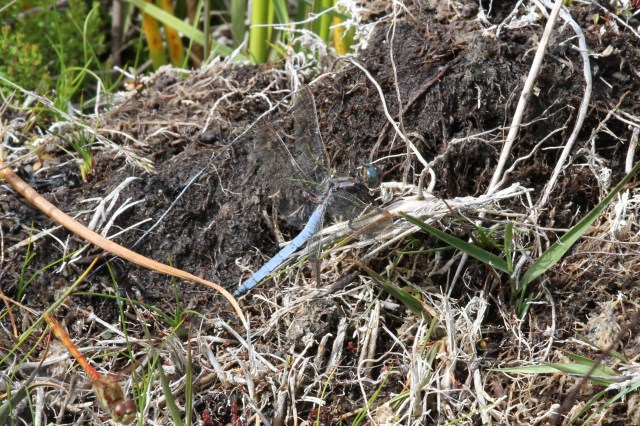
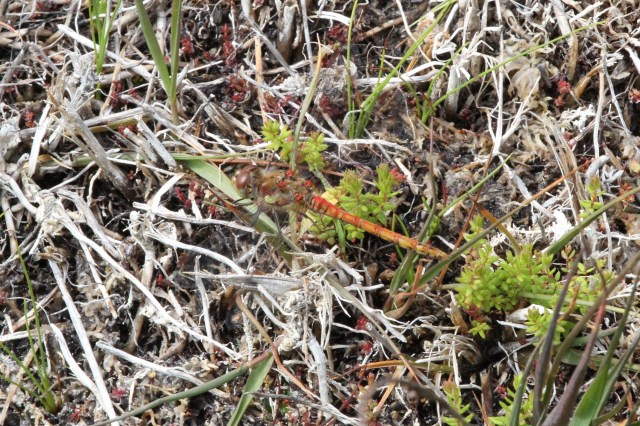
Although it wasn’t ideal ‘dragon hunting’ weather this afternoon, I ventured out on to Beeston Common with Andy, in pursuit of Keeled Skimmer. This is a scarce dragonfly in Norfolk, found only at a handful of sites across the county. We hardly saw an insect for the first three quarters of an hour before finally, in a brief spell of sunshine, Andy spotted first a female and then a resting male. Another female appeared and disappeared almost as quickly. The pair stayed long enough to get reasonable record shots. Towards the end of our afternoon session we saw a very obliging  male Emperor at rest.

Talking to Francis Farrow, volunteer guardian of the Common, he said that the Keeled Skimmer were definitely approaching the end of their season. This was a new dragonfly species for me, so I was pleased to see them before they keeled over!

Male, Keeled Skimmer

IMG_7079

IMG_7081

Female Keeled Skimmer

IMG_7086

Male Emperor

IMG_7094

Stunning Sterna

IMG_6508

Adult Roseate Tern, Arnold’s Marsh, Cley

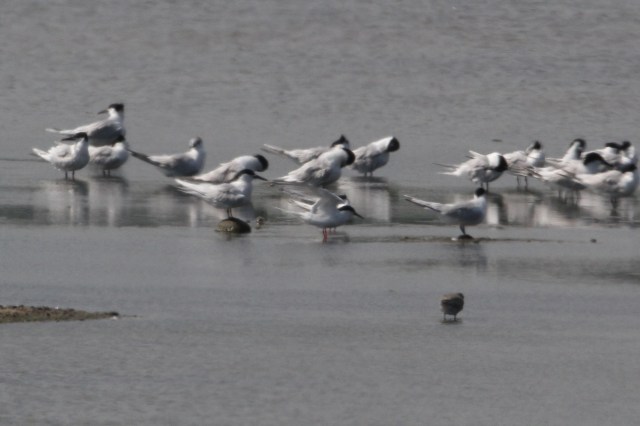
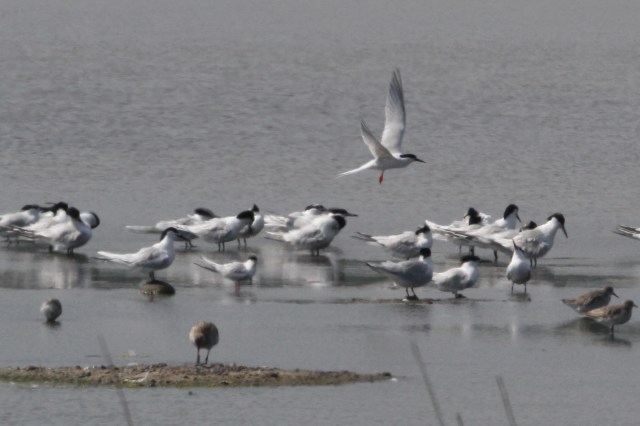
We were pretty quick off the mark yesterday evening when the call came through about a couple of adult Roseate Tern on Arnold’s Marsh, Cley. Unfortunately, by the time we got there, the birds had disappeared and no one else, other than the finders, had seen them either. Oh well! – you win some and you… Anyway, we were on ‘high alert’ this morning in case they were relocated – which they were, at around 10.00. Off we went again but this time, even from East Bank, we could tell by the concentration on the faces of the small assembled crowd, that the birds were still present. Unfortunately, Arnold’s Marsh is never particularly good viewing in the mornings – the birds usually being distant and you are looking into the sun. Any how, there they were, giving reasonable views for fifteen minutes, before they decided to get airborne and disappear across the shingle ridge and out to sea.

A couple more shots, showing the key features: all dark bill, bright red legs, narrow outer primary wedges, pale mantle and long tail-streamers (alas no pinkish tones to the underparts were discernible) – taken into the sun with plenty of heat-haze for good measure:

IMG_6495

IMG_6480

IMG_6504

Pacific Golden Plover

IMG_6423

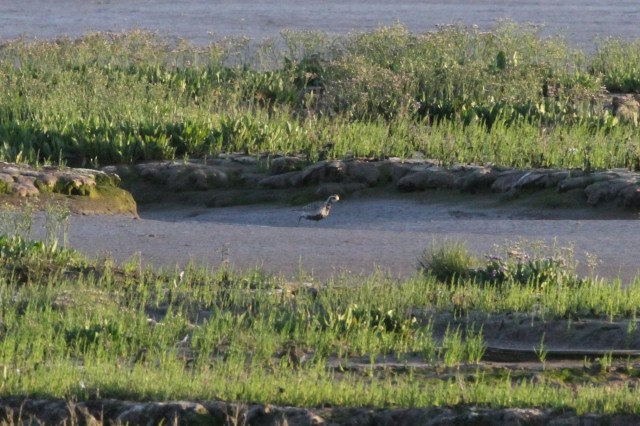
Pacific Golden Plover, Breydon Water, Norfolk

Popped over to Breydon Water yesterday evening to catch up with the Pacific Golden Plover, which has been hanging about there for the past few days. The tide was still out and the setting sun was directly in our eyes but we did eventually manage acceptable views, helped by the fact that there was only the PGP and a pair of Oystercatcher on the entire stretch of saltings! This was my second Pacific Golden Plover in Norfolk, my first being one on Buckenham Marshes, quite a few years ago – which, as I recall, also involved a evening excursion, only that time it was from Peterborough! It’s perhaps a little surprising but I still need it’s American cousin for my Norfolk List.

Post Script: The bird flew off west half an hour after we left and hasn’t been seen so far this morning!

Distant shot, but of the whole bird at least!

IMG_6442

Historic Churches of Norfolk – Route 14

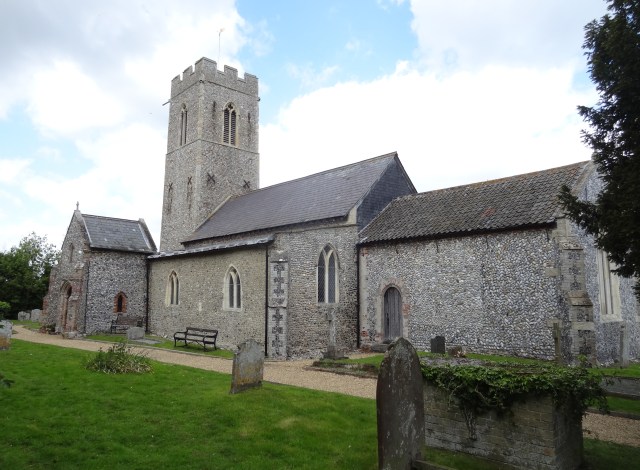
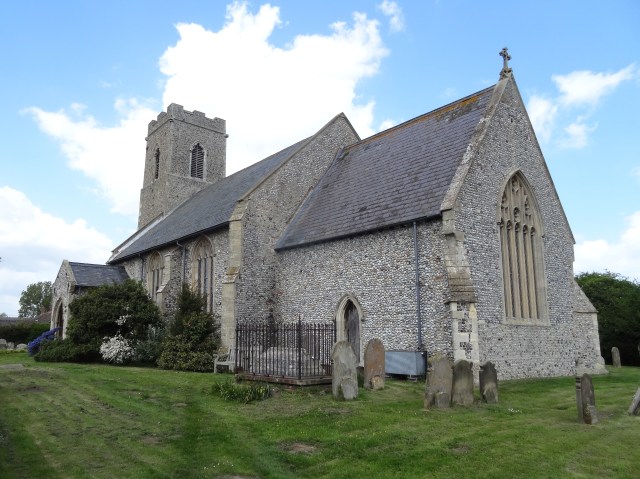
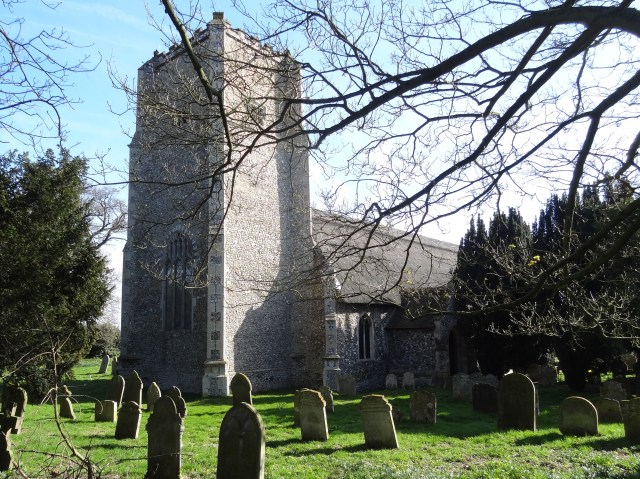
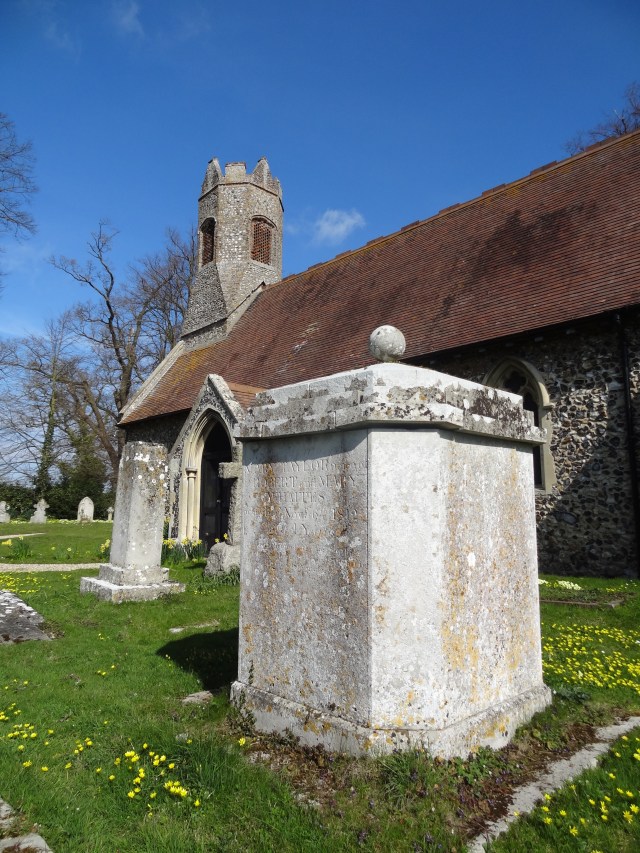
For the May HCN ride I caught the train to Hoveton & Wroxham station where I met Helen. Travelling east, our route took in the churches north of the river Bure, as far as Hickling Broad, then out to the coast to Waxham – lunch was in the cafe at the impressive Waxham Great Barn, returning west, along the B1151 to Stalham and finally to Hoveton, by criss-crossing the A1151. A total distance of 48 miles and 21 churches.

The Route:

UK_runners__walkers_and_cyclists_-_map_your_routes

The Churches:

St John and St Peter Hoveton, St Benedict Horning, St Catherine Ludham, St Peter Bastwick (ruin), St Nicholas Potter Heigham, All Saints Catfield, St Michael Sutton, St Mary Hickling, St Margaret Sea Palling, St John Waxham, Holy Trinity Ingham, St Peter Brumstead, St Mary Stalham, St Peter Smallburgh, St Mary Tunstead, St Lawrence Beeston St Lawrence, St Michael Barton Turf, St Michael Irstead, St Peter Neatishead & St Swithin Ashmanhaugh

The photos:

Hoveton, St John

St John the Baptist Hoveton

The best feature of the church is the stained glass

St John the Baptist Hoveton 2

St Benedict, Horning

St Benedict Horning

St Catherine, Ludham

St Catherine Ludham

The unique rood screen and canvas, rediscovered by the Norfolk Archeological Society in 1879. For the full and fascinating story, read Simon Knott’s account.

DSC00842

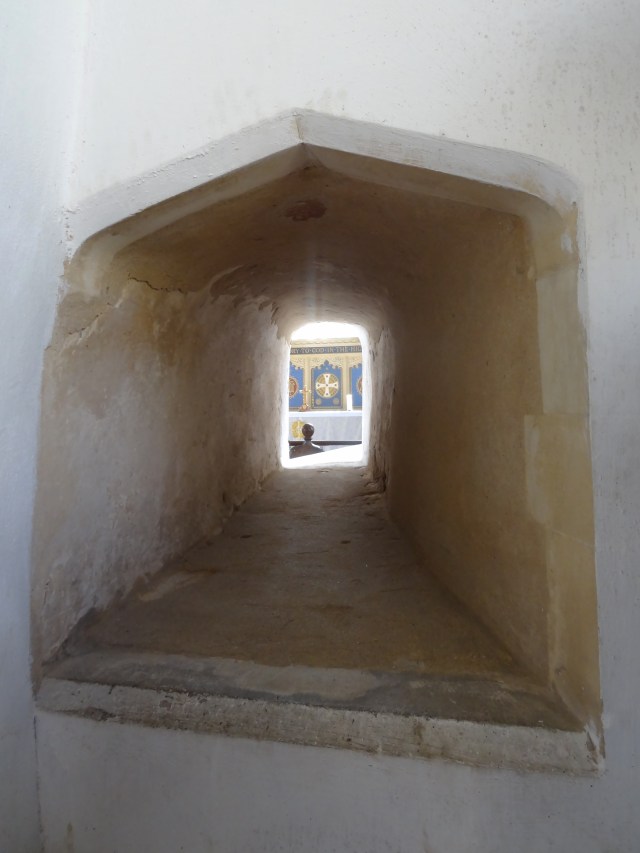
Squint: ‘an opening cut through an internal wall.. (to) synchronise the ceremonies of the Mass’

DSC00845

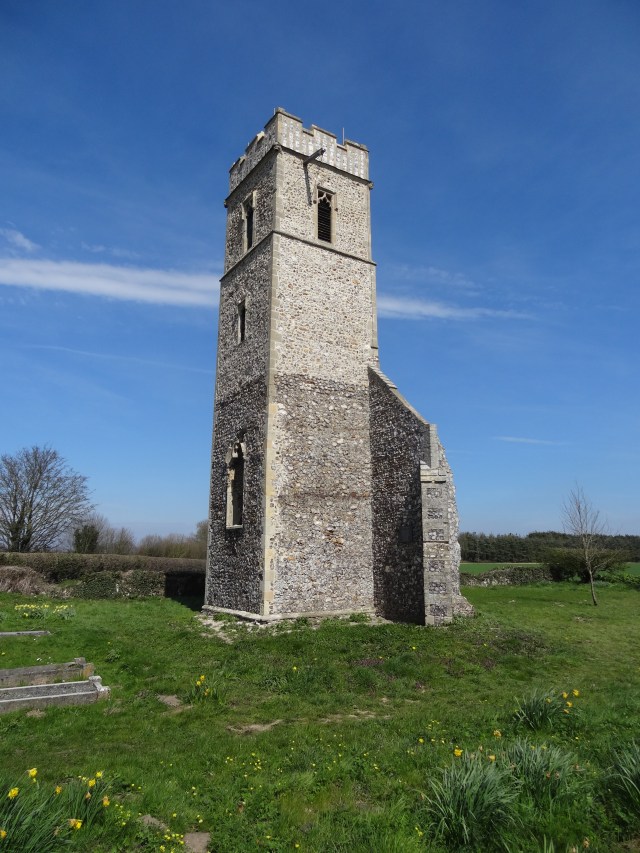
St Peter, Bastwick

DSC00847

St Nicholas, Potter Heigham

St Nicholas Potter Heigham

All Saints, Catfield

All Saints Catfield

Wall painting, depicting the stoning of St Stephen

DSC00863

St Michael, Sutton

St Michael Sutton

St Mary, Hickling

DSC00873

St Margaret, Sea Palling

St Margaret Sea Palling

Detail of stairs to the rood loft and piscina

DSC00878

St John, Waxham

St John Waxham

Holy Trinity, Ingham

Holy Trinity Ingham

St Peter, Brumstead

St Peter Brumstead

St Mary, Stalham

DSC00894

St Peter, Smallburgh

DSC00896

St Mary, Tunstead

StMary the Virgin Tunstead

St Lawrence, Beeston St Lawrence

St Lawrence Beeston St Lawrence

St Michael, Barton Turf

St Michael Barton Turf

Detail of the painted rood screen.. ‘the best I’ve seen in England.’ Simon Knott

DSC00911

and an interesting ‘Conglomeration of medieval glass..’

DSC00912

St Michael, Irstead

St Michael Irstead

St Peter, Neatishead, at Threehammer Common

St Peter Neatishead

St Swithin, Ashmanhaugh

St Swithin Ashmanhaugh

and finally, St Peter, Hoveton

St Peter Hoveton

Ticking up, Home and Away

IMG_0354

Greater Yellowlegs, Titchfield Haven – 14th June 2015

What an unbelievable weekend this has been for rarity hunting. The lure of an Eastern Black-eared Wheatear in the New Forest was too much to resist, particularly with the attraction of a supporting cast of Hudsonian Whimbrel and the long-staying Greater Yellowlegs. In the event, unfortunately, the Wheatear didn’t hang around but the other two did – the former giving acceptable views, the latter exceeding expectations. By early afternoon we were back on home ground and trudging up Blakeney Point in pursuit of two rare warblers. The Paddyfield Warbler had arrived last Thursday but, due to a string of prior commitments, we’d been prevented from going for it – despite it being a ‘first’ for the Cley square and only the fourth Norfolk record. The Blyth’s Reed Warbler, pretty much annual in Norfolk nowadays but something of a ‘bogey bird’ for me, turned up on Saturday evening. Both birds proved to be rather tricky, particularly as the weather began to deteriorate with strong northwesterly winds and increasingly persistent drizzle. Naturally we concentrated on the Paddyfield Warbler but it took well over an hour and a half before we managed acceptable flight and fleeting perched views. Things were brought to an abrupt halt with the news that an adult Laughing Gull (only a handful of Norfolk records) had been seen flying west over Halfway House – just a few hundred yards down the Point. A mad dash up onto the shingle bank delivered the goods as the bird hurtled by! On our somewhat jubilant walk back towards the car park a small crowd was showing intense interest in a patch of suaeda near to Halfway House. It turned out that the Blyth’s Reed Warbler had just been relocated – showing occasionally in flight. Eventually we did see it on the ground and were able to absorb it’s relevant id features. Outcome of our birding adventures – four UK ‘Lifers’, three Norfolk ‘ticks’ and a fun time had by all! The only slight disappointment was that, apart from the ‘Legs’, the birds proved pretty nearly un-photographable – it was one of those occasions when seeing the birds was challenging enough.

Record shot of the Hudsonian Whimbrel – which did give one brief flight view

IMG_0179

The adult Laughing Gull as it hurtled west past The Hood

IMG_0403

Another shot of the long-time omission from my British List – Greater ‘legs’

IMG_0336

Mallorca short break

IMG_9682

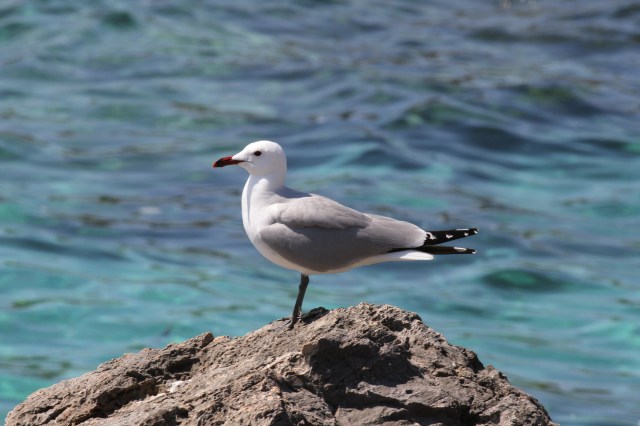
Audouin’s Gull, a very scarce bird in 1982 – now rather common. Still, a truly lovely larid

We’ve just returned from a short break to Mallorca – flying EasyJet from Luton and staying at the Romantic Hotel in Port de Pollenca.

We first went to Mallorca in 1982, when our eldest was just four months old. Then, we stayed at an hotel on the outskirts of Alcudia near (well practically in!) the Albufera marsh. In those days, as I recall, access to this now internationally acclaimed wetland reserve was down a rough track to a mound, made up mostly of builders debris from the burgeoning tourist industry – from where you could overlook a few wader pools and acres of reed bed. How delightfully different things are today where, thanks to the pioneering conservation efforts of ex-pat Eddie Watkins et al, the eastward expansion of the hotels was halted and the whole area transformed into a Mediterranean wildlife haven.

Like many British birders of my generation, Mallorca was my first taste of ‘foreign birding’. Looking back through my old note book of the time, I listed new species seen as follows: Cory’s Shearwater, Little Bittern, Night Heron, Squacco Heron, Purple Heron, Little Egret, Black & Red Kite, Black Vulture, Booted & Bonelli’s Eagle, Eleonora’s Falcon, Montagu’s Harrier, Black-winged Stilt, Collared Pratincole, Slender-billed Gull, Audouin’s Gull, Gull-billed & White-winged Black Tern, Pallid & Alpine Swift, Bee-eater, Short-toed & Thekla Lark, Crag Martin, Tawny Pipit, Rock & Blue Rock Thrush, Fan-tailed Warbler, Moustached Warbler, Great Reed Warbler, Marmora’s Warbler Subalpine Warbler, Sardinian Warbler, Golden Oriole, Woodchat Shrike and Serin – ah those were the days! Whilst, on that occasion, we were there for a fortnight at the end of May – our recent trip consisted of just three and a half days birding, but we still managed to pick up a lot of the same species, albeit that some have been re-named or elevated to full species. Highlights of this trip certainly included good views of Balearic, Moltoni’s and Moustached Warbler, Black and Griffon Vulture, Little Bittern, Red-knobbed Coot, Marbled Duck, Eleonora’s Falcon, Tawny Pipit & Pallid Swift.

In recent years we’ve done most of our European birding in mainland Spain and the eastern Med but this short break reminded us of just how good the Balearic Islands are and, being just a couple of hours flight away, how convenient for a quick getaway. Highly recommended! Here is a selection of some of the birds we saw:

Black Vulture – we saw twelve together, with six Griffon Vulture, feeding on a dead goat near Embalse de Cuber

IMG_0059

Night Heron, Albufereta

IMG_0120

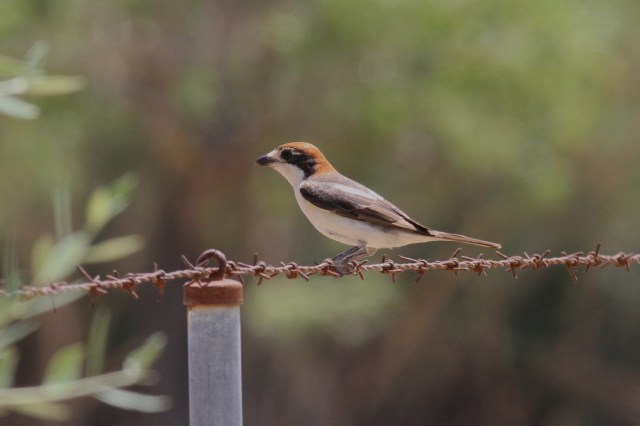
Woodchat Shrike of the badius race, confined to the Balearic Islands – lacking white primary patches
IMG_0090

Red-knobbed Coot, subject of a very successful re-introduction programme on the Albufera

IMG_9751

Marbled Duck – also found on the Albufera, having recently colonised from mainland Spain

IMG_9724

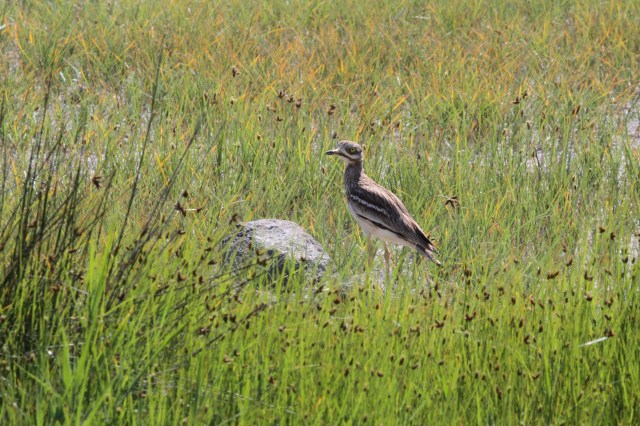
Another regular bird of the Albufera marshes – Stone-Curlew
IMG_9274

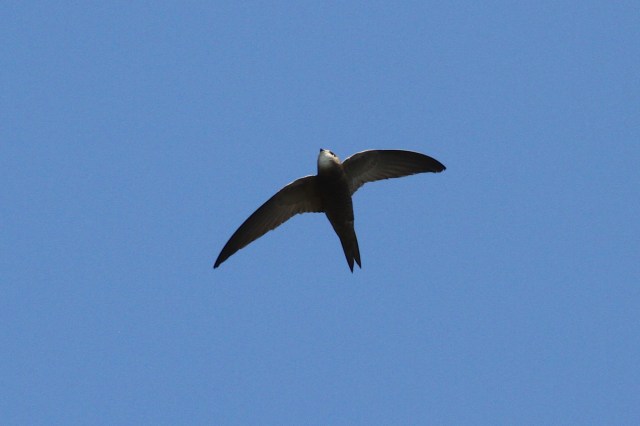
Pallid Swift, seen in small numbers at various locations around the island
IMG_9623

Balearic Warbler – a recent split. Found after many hours of searching coastal scrub locations across the island
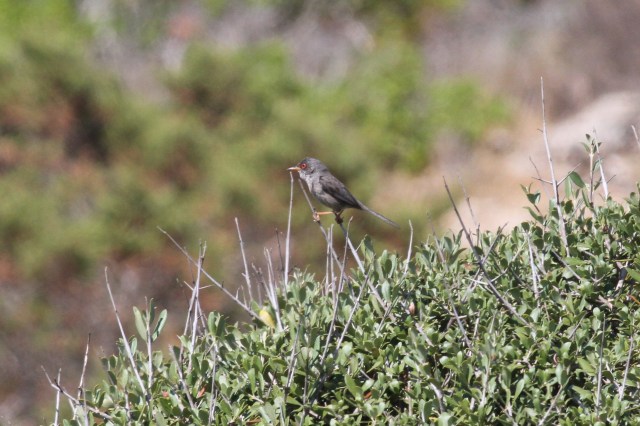
IMG_9636

Tawny Pipit – one of several seen during our stay
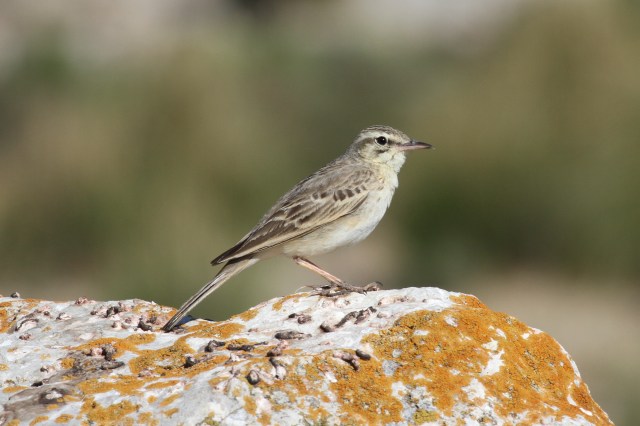
IMG_9870

Another recent warbler split. This one is Moltoni’s – last seen only a few weeks ago on Blakeney Point!
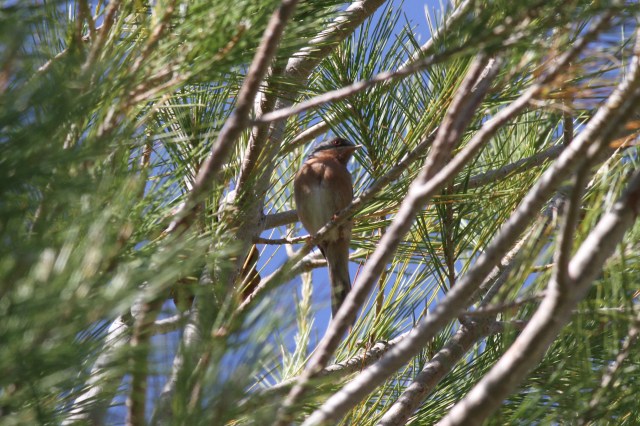
IMG_9973

To finish, a dark phase Eleonora’s Falcon, seen off Cap de Formentor on our last evening
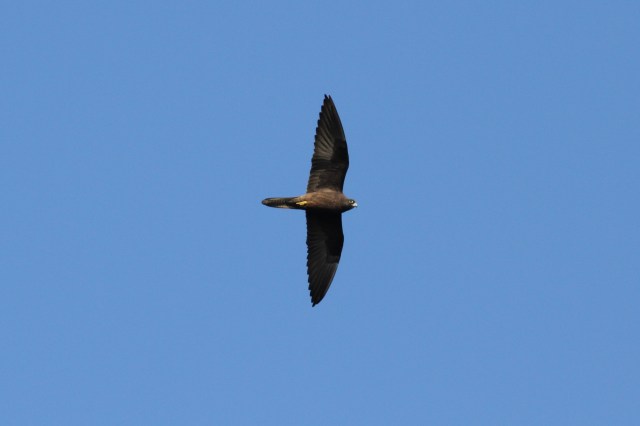
IMG_0145


Cetti’s breaks cover

There’s been a couple of Cetti’s Warbler calling – you can hardly describe their raucous utterances as ‘song’, close to the Cley NWT reserve centre for the past few weeks. As Collins Bird Guide puts it ‘generally keeps concealed in vegetation’, but today one unusually bold individual was surprisingly obliging:

DSC00971

Serpentine Spectacular

IMG_8802

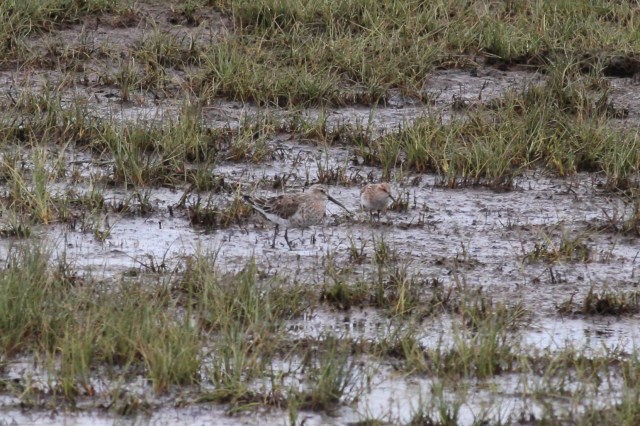
Trio of unusual waders – Little Stint, Pectoral & Curlew Sandpiper, Cley NWT

Last Wednesday the recently rejuvenated Serpentine, Cley NWT, came into it’s own. On the Monday, our duty day, there was a rather obliging Wood Sandpiper, just off of the East Bank. By Wednesday the list of waders had grown to include Little Stint, Curlew Sandpiper, Pectoral Sandpiper and a delightful female Red-necked Phalarope! All credit to Adam and the NWT team for the excellent habitat improvement and management work undertaken there in recent months. The only down side currently is that the birds are often rather distant – roll on the new hide! Tonight’s news is that there is a White-rumped Sandpiper in the same spot!

Wood Sandpiper, photo by Jane Williams

wood sandpiper

Curlew Sandpiper and Little Stint

IMG_8820

Pectoral Sandpiper

IMG_8773

A distant grab shot of Red-necked Phalarope

IMG_8779

and an even more distant White-rumped Sandpiper, taken this evening

DSC00955


List of waders seen personally on Serpentine/Arnolds over the last few weeks:

Oystercatcher, Avocet, Little Ringed Plover, Ringed Plover, Grey Plover, Golden Plover, Lapwing, Knot, Sanderling, Turnstone, Dunlin, Curlew Sandpiper, Little Stint, Wood Sandpiper, Common Sandpiper, Redshank, Spotted Redshank, Black-tailed Godwit, Bar-tailed Godwit, Curlew, Snipe, Red-necked Phalarope, White-rumped Sandpiper, Ruff & Pectoral Sandpiper.


Historic Churches of Norfolk – route 13

A few weeks ago I did another historic churches cycle ride with my friend Helen. On this occasion we polished off the group of churches sandwiched between the A47, to the south, and the river Bure too the north, east of Norwich. The weather was much kinder to us than on our previous outing but one feature which was consistent was the number of locked churches – such a pity. Our circular route started and finished at Hoveton station, lunch was at a nice little roadside cafe in Acle, and we covered just short of 50k. We visited seventeen churches in all.

The route

UK_runners__walkers_and_cyclists_-_map_your_routes

The Churches

St Mary Wroxham, All Saints Salhouse, St Gervase & St Protase Little Plumstead, St Mary Great Plumstead, St Margaret Witton, All Saints Hemblington, St Andrew and St Peter North Burlingham, St Edmund Acle, St Mary Fishley, St Margaret Upton, St Mary and St Lawrence South Walsham, All Saints Panxworth, St Helen Ranworth, St Fabian & St Sebastian Woodbastwick, St Mary Wroxham and St Peter Belaugh

The Photos

St Mary Wroxham

DSC00480

All Saints Salhouse

All Saints Salhouse

The unique dedication of St Gervase & St Protase – Little Plumstead

DSC00488

St Mary the Virgin Great Plumstead

DSC00490

St Margaret Witton

DSC00495

All Saints Hemblington

DSC00498

The best single surviving 14C wall painting of the St Christopher narrative in England

All Saints Hemblington

St Andrew North Burlingham

St Andrew North Burlingham

St Peter North Burlingham

DSC00510

St Edmund Acle

St Edmund Acle 2

Detail of stained glass

St Edmund Acle

St Mary Fishley

St Mary Fishley

St Margaret Upton

St Margaret Upton

Interior detail

DSC00524

South Walsham St Mary

St Mary South Walsham

and St Lawrence

DSC00542

All Saints Panxworth

DSC00543

St Helen Ranworth. Unfortunately the whole of the exterior and some of the interior was covered in scaffolding, so here’s some detail of the lovely painted rood screen

St Helen Ranworth

St Fabian & St Sebastian Woodbastwick

St Fabian & St Sebastian Woodbastwick

and finally St Peter Belaugh, sitting high above the river Bure.

St Peter Belaugh