Day 14 – transition day

IMG_8257

Acorn Woodpecker – outside our cottage, Chisos Mountain Lodge

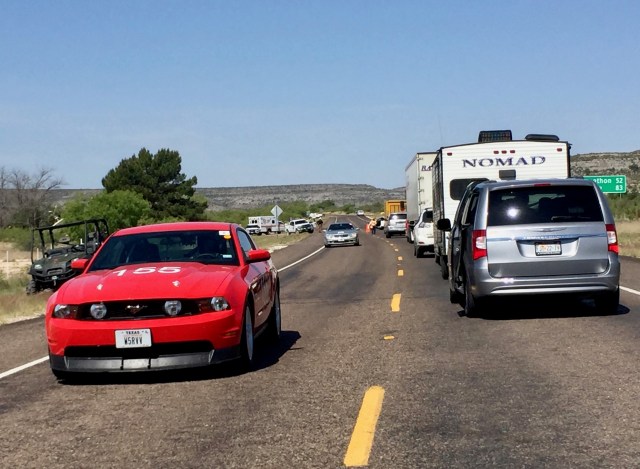
Today we travelled west from Concan on the Edwards Plateau to the Chisos Mountains is the far west of Texas, close to the Mexican border, in a bend of the Rio Grande. Most of the eight hour drive was spent crossing the Chihuahuan Desert. We arrived at Big Bend National Park by mid-afternoon and birded a couple of sites before checking-in to our cottage at the Chisos Mountain Lodges. A bit of local birding then before dinner and turning in for the night, in preparation for our big day in the Chisos Mountains. On our journey over we got held up for twenty minutes whilst they concluded another pre-race heat of the Big Bend Open Road Race between Sanderson to Fort Stockton – apparently one of the most prestigious saloon car time trials in the USA.

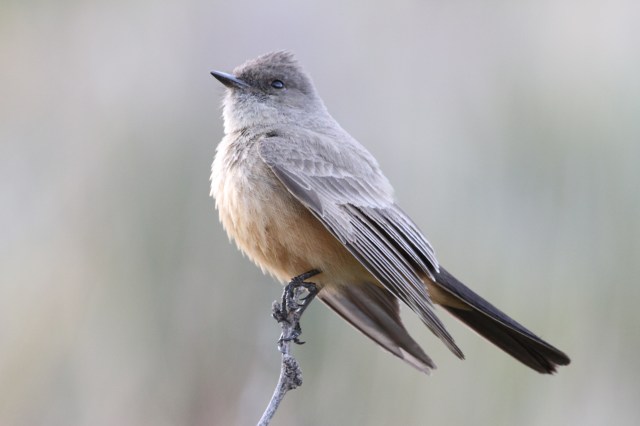
Say’s Phoebe, in the grounds of the Lodge
IMG_8096

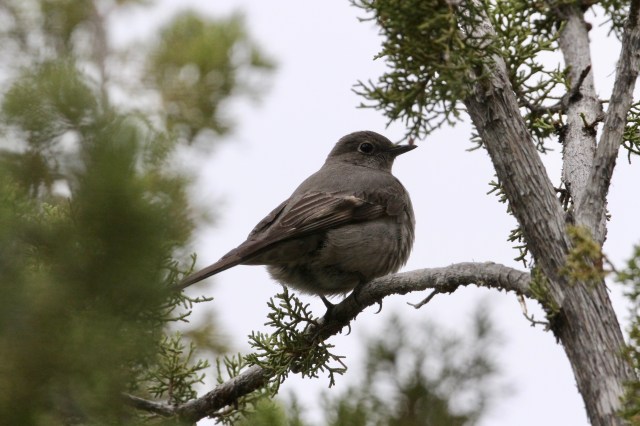
Another speciality of the local area – Townsend’s Solitaire
IMG_8086

One of the 160 competitors, completing a preliminary heat in the Big Bend Open Road Race
IMG_0677

Day 13 – after the storm

P1120382 2

Driving conditions during todays thunderstorm

We had tremendous thunderstorms this afternoon travelling back from Lost Maples State Natural Area, our first birding stop of the day. We had an interesting walk up the canyon but saw nothing different from South Llano. After the rain we did managed to get out around the campsite and had some excellent birding, including three new species. Tomorrow we’re heading 350 miles west to Big Bend and hopefully a hat full of new birds and some pretty special scenery.

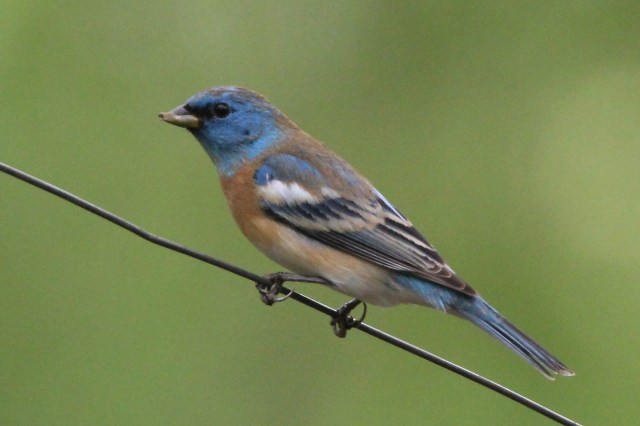
After yesterdays two female Lazuli Bunting, it was good to find a male in our own ‘back yard’ this afternoon

IMG_7366

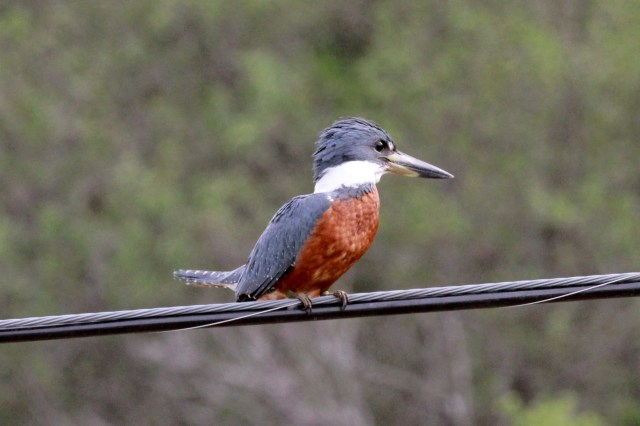
Ringed Kingfisher on the River Frio, behind our cabin (photo courtesy of Jake)

IMG_7199

We seen several species of snake since we started our trip, though we’ve only managed to positively identify Rat Snake and this, possible, Water Moccasin  – one of the more deadly species

IMG_7293

Day 12 – South Llano

IMG_7055

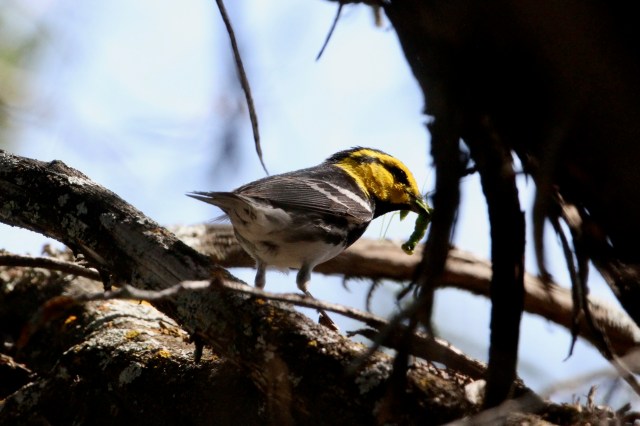
Golden-cheeked Warbler – an endangered species which only breeds in Central Texas

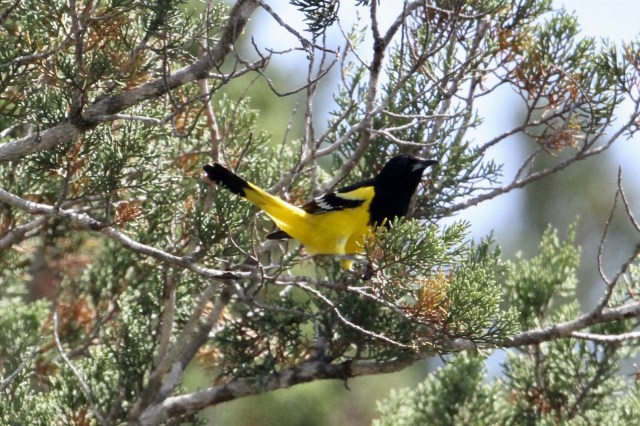
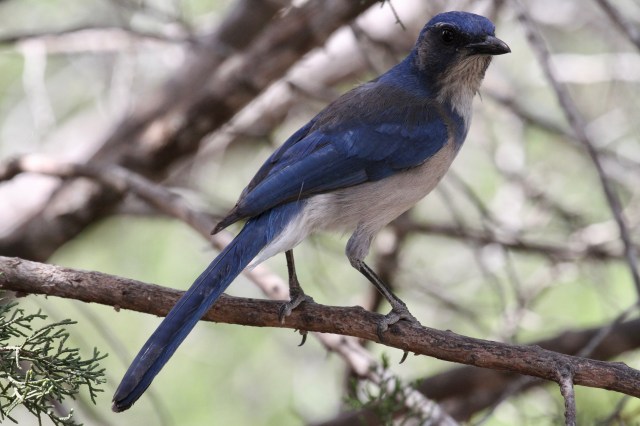
We spent the day, up in the hills eighty miles north of Neal’s Lodge, at the State Park of South Llano River. We walked the trails in the morning – too hot with too little water, but some good birding all the same! We quickly got to grips with the two key species, Black-capped Vireo and Golden-cheeked Warbler and a supporting cast which included Scott’s Oriole, two more vireos – Hutton’s & Bell’s, Woodhouse’s Scrub Jay, Bewick’s Wren and Pine Siskin. We spent the afternoon relaxing in the bird hides and watching a variety of species, the highlight of which were two female Lazuli Buntings.

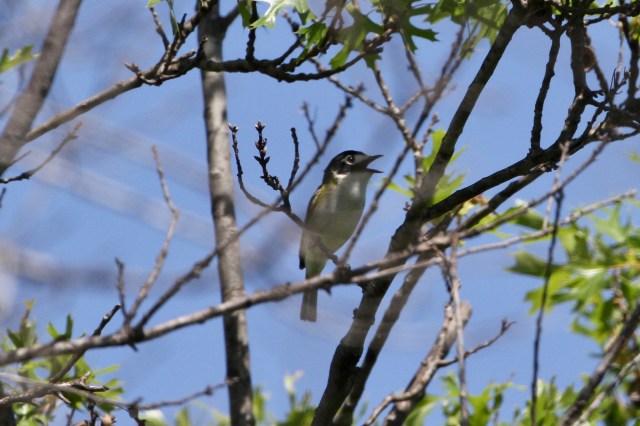
Black-capped Vireo – the other range-restricted target species

IMG_7079

Scott’s Oriole – another America tick for me

IMG_7089

Woodhouse’s Scrub-Jay – a comparatively recent split from Western Scrub-Jay

IMG_7206

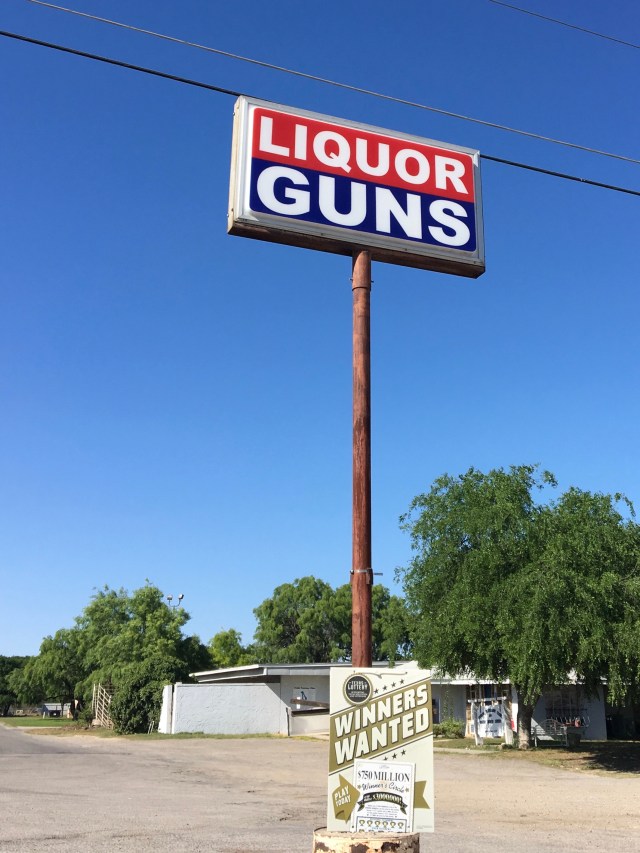
Away from birding, Jake and I spotted this sign in a local South Texas town – the perfect combination! It was, of course, a drive-thru

image1


Day 11 – farewell to the Valley

White-collared Seedeater

The last of our Valley target birds – White-collared Seedeater, seen at San Ygnacio

The WiFi signal is pretty non-existent here so I’ll keep this blog short. We’ve arrived at Neal’s Lodge, Concan, on the edge of the Texas High Country, having said farewell to the Rio Grande valley in style this morning. We set-off from our motel in Zapata in search of the last of the Valley specialities – White-collared Seedeater. Most of the recent reports have been from a site we visited yesterday, without success, and even then they’ve mostly been of fleeting views or ‘heard only’s. We decided to try our luck at one of the traditional locations for this species, San Ygnacio – a tiny parcel of land right by the Rio Grande. We hadn’t been there more than a quarter of an hour when Jake located a singing male atop a distant tree. Tickable views but nothing special. There were birds everywhere and we started to amass quite a list, including four species of bunting – Lazuli, Varied, Painted & Indigo, Yellow-breasted Chat, Blue Grosbeak, House Finch, Green Kingfisher, Caspian Tern – and eventually much better views of our target species. A great bird, in a great location, and a good way to finish off ten days of birding southern Texas.

Also seen at San Ygnacio – the usually skulking Yellow-breasted Chat

IMG_6866

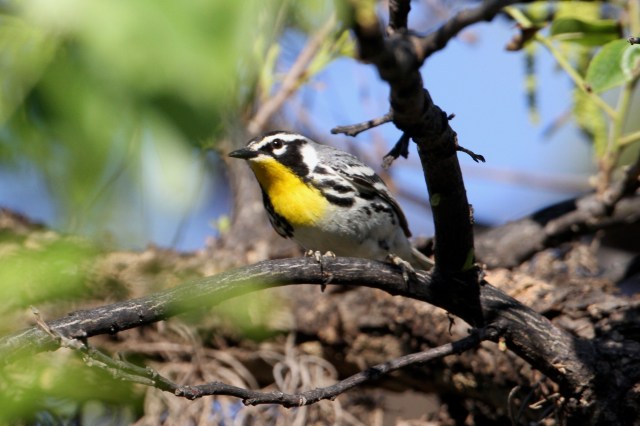
Once at our overnight stop of Neal’s Lodge (we’re here for three days actually), we began to see plenty of birds. Some, like this Yellow-throated Warbler were new for the trip 

IMG_6936

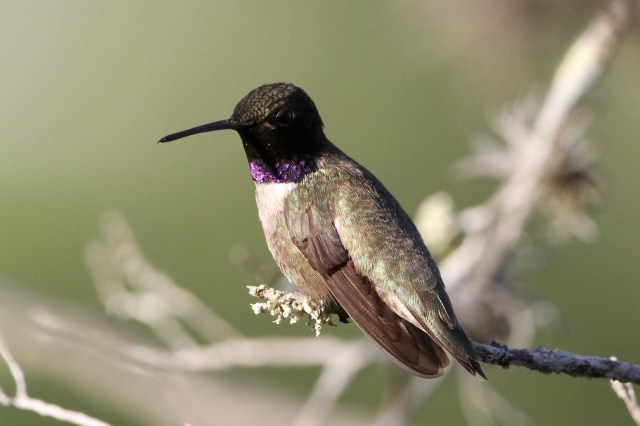
Others, like this Black-chinned Hummingbird, although not new were, nevertheless, nice to see around the feeders, outside our lodge

IMG_6991


Day 10 – more border birding

IMG_6667

Red-billed Pigeon – really a Mexican bird but seen from the US side of the Rio Grande

We’re currently heading west along the Rio Grande, stopping off at the few places where you can actually get to the river. The reason for doing so is that there are some birds which barely have a foot-hold in the USA – along the banks of the river and some which are basically Mexican birds but seen from American soil. They all count. Our list increased by ten today – made up of a few of those special birds and more regular stuff that we’ve previously not connect with. Tomorrow we head for the hill country of West Texas.

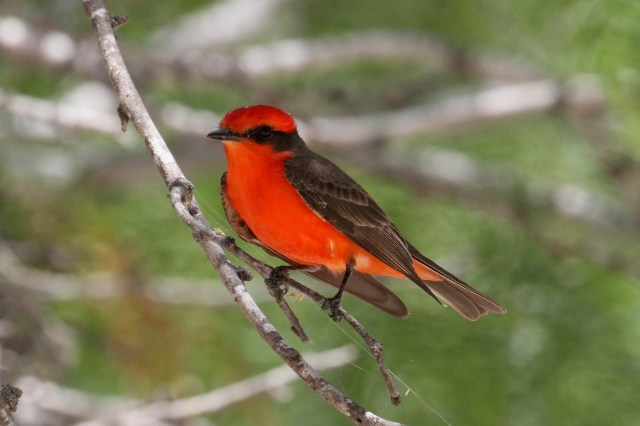
Another reasonably local speciality – Vermilion Flycatcher

IMG_6753

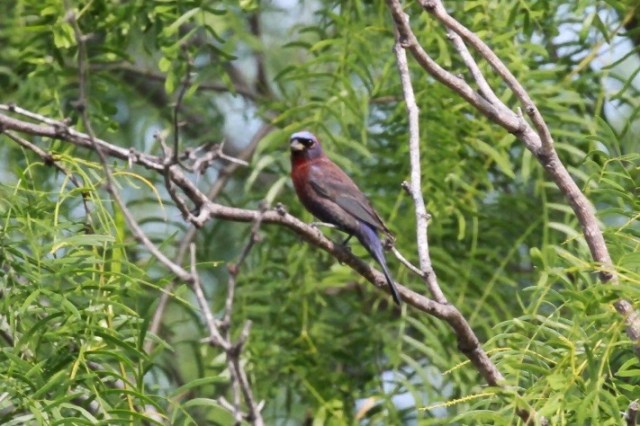
Varied Bunting, another South Texas species (photo courtesy of Jake)

IMG_6568 2

And for the non-birding followers of this blog – a photo of Jane and Jake at the Roma Bluffs over-view, with Mexico and one of the few official crossing points in the background. They’re actually watching for Groove-billed Ani..

IMG_0667

A cultural experience not to be missed (or possibly repeated!) this evening, Jake and I tried what we thought was a local Mexican beer. Well it was, only with several added ingredients including tomato, salt, lime & spices. Tasted more like fermented gazpacho – interesting! 

IMG_0670

Day 9 – evening entertainment

IMG_6622

Elf Owl – the worlds smallest – weighing in at just 40g and measuring less than 6 inches

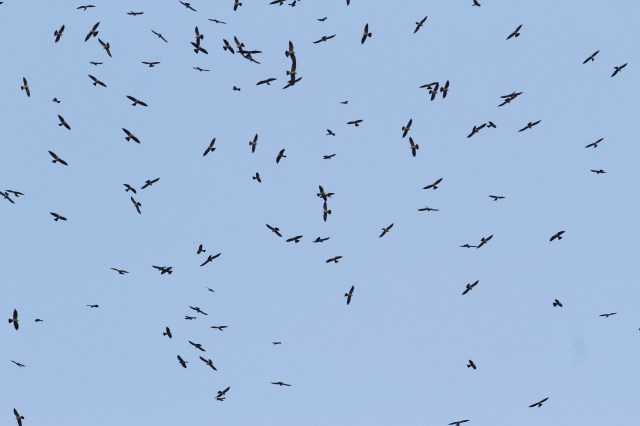
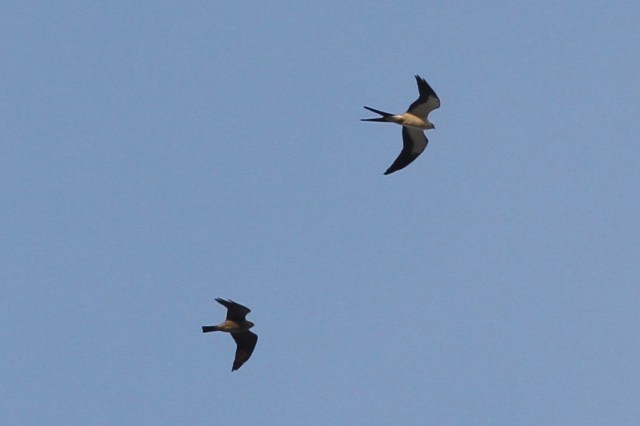
Our day was spent at more of the Lower Rio Grande premier birding sites, including Bentsen Rio Grande State Park, Anzalduas County Park, Frontera Audubon Thicket & Valley Nature Centre, Weslaco, adding another dozen new species. However, the real action came this evening when we were on our way to the parrot stake-out in McAllen. As we turned off the highway Jake noticed a kettle of raptors overhead. We got out to take a couple of record shots of, what we assumed would be, Broad-winged Hawks – later identified from photos as Mississippi Kite, when Jake identified a Swallow-tailed Kite! Later finding a second individual amongst the three hundred or so other raptors. We then headed for Bentsen for a rendezvous with a certain owl species. I’m pleased to say that the police officer who pulled me over for exceeding the speed limit was very understanding and let me off with a warning – thank you officer! We arrived just in time to see the Elf Owl – the worlds smallest owl, emerge from it’s hole, high up in a telegraph pole. We could just about make it out in the gloom of the Texas sunset. A fantastic end to another great day in The Valley.

‘Kettle’ of 300 Mississippi Kite over McAllen this evening (115 in this photo alone!)

IMG_6600

Swallow-tailed Kite – a really unexpected bonus bird

IMG_6607

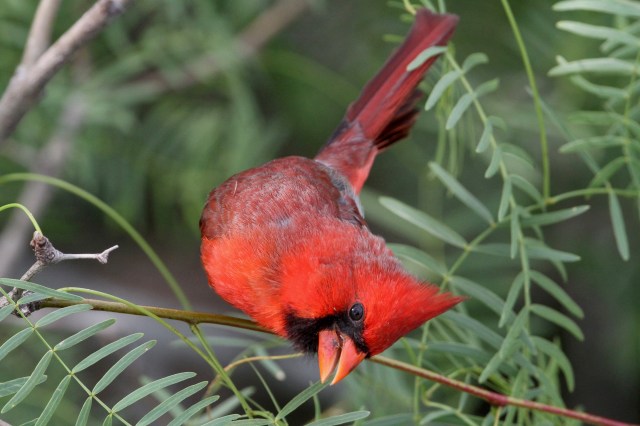
Seen in Bentsen Rio Grande State Park this morning – the common, but no less stunning, Cardinal and the much less common Altamira Oriole

IMG_6497

IMG_6434

Day 8, South to the Border, down Mexico way

IMG_0664

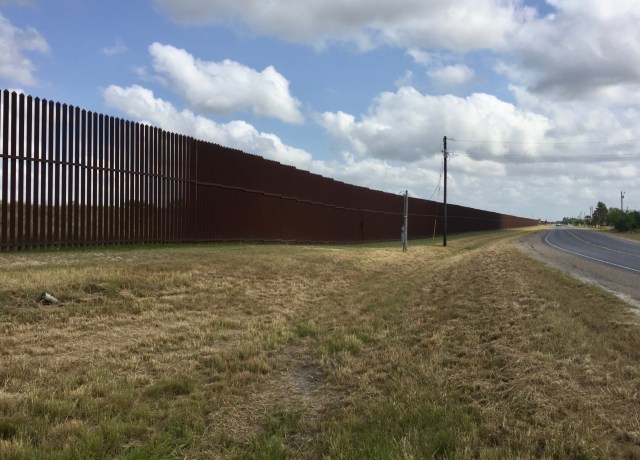
‘The Wall’ – fortunately, doing little to keep out the (avian) migrants!

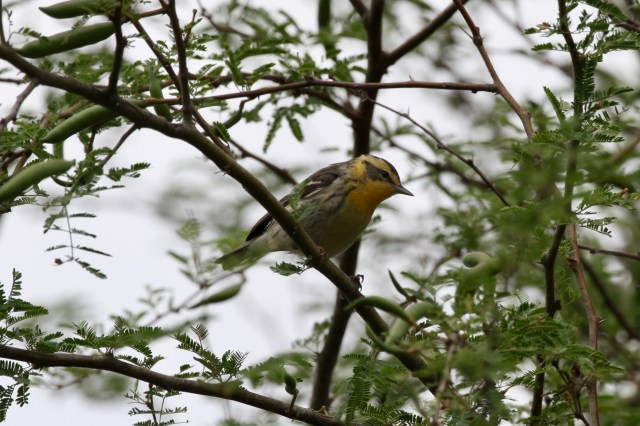
Today we spent our time visiting two reserves along the Mexican border. In fact, Santa Ana, which we did this morning before and after coffee, is the other side of ‘the wall’. Highlights from this site included the rare Northern Beardless-Tyrannulet, Tropical Parula, Altamira Oriole, Olive Sparrow & Black-crested Titmouse. We also came across a few migrants, including Blackburnian Warbler and Yellow-billed Cuckoo. In the afternoon we visited Estro Llano, where the highlights included Pauraque, Wilson’s Phalarope, Cinnamon Teal & American Wigeon.

Northern Beardless-tyrannulet – a very rare US breeding species but not especially eye-catching. We took a beating from the mosquitos to get these shots!

IMG_6121

Tropical Parula, seen in the same location as the above

IMG_6115

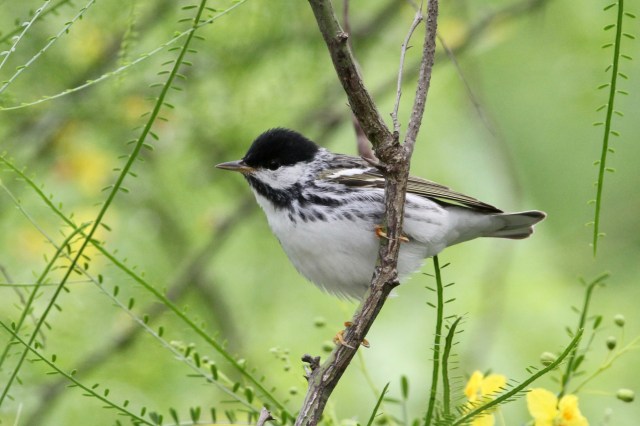
Female Blackburnian Warbler – a US ‘tick’ for me 

IMG_6256

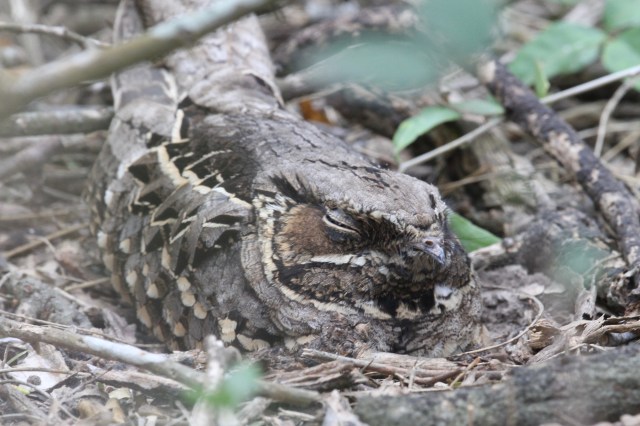
Pauraque – despite the large size of this ‘goat-sucker’ species it can be extremely difficult to locate roosting on the ground – well done Jane for finding this one

IMG_6326

Day 7 – a minor fall out

IMG_5922

Blackpoll Warbler – one of the species involved in todays fall-out. A US tick

Today it was back to the Gulf of Mexico for our last session of coastal birding before we get to Monterey, California, in a months time – South Padre and Boca Chica beach being our chosen locations. No birding holiday though would be complete without a trip to the rubbish dump – Brownsville in this case, to look for the elusive Tamaulipas Crow. This extreme US rarity had been absent for the past thirty five years but has reappeared recently at the dump. Unfortunately we dipped, so it was on to the Convention Centre, on South Padre Island, to look for shore birds and, hopefully, the odd migrant. It was evident as soon as we’d arrived that there was a minor fall-out occurring – when, due to the weather conditions, migrants crossing the Gulf ‘fall out of the sky’ on reaching their first  bit of land. Several species of warbler, vireo and oriole were flitting around the landscaped gardens of the Convention Centre and new birds were arriving all the time. Nothing particularly unusual but we did get close views of several of the species we’d only glimpsed at High Island. The shorebirds on the other hand were unremarkable and we added no new species. After lunch, with new arrival continuing, we went to the incredible birding ‘yard’ at Sheeps Head Street. This tiny former housing plot / garden is only about 30m square but is a magnet for migrants. In the hour we were there we saw four species of vireo, seven warblers, orioles and buntings – all at close-quarters. Our afternoon visit to Boca Chica only added a couple of new birds but the wader, duck and gull passage north, along the Gulf shore, was interesting to observe.

A selection of the warbler species seen at the Convention Centre & Sheeps Head Street. This one is Black-throated Green 

IMG_5766

Northern Waterthrush

IMG_5944

Wilsons Warbler

IMG_5896

Northern Parula

IMG_5842

Blue-winged Warbler

IMG_6032

Day 6 – An American Twitch

Northern Jacana – our first American ‘twitch 

Today we reached the Lower Rio Grande Valley, after another longish drive with some excellent birding on route – starting with our first American twitch! A Northern Jacana was found at the Botanical Gardens in Corpus Christi at the weekend, a rare bird for the States, attracting a steady trickle of visitors. We were there before the gates opened but were told by the ground staff that the bird was still present. After a rather twitchy start, when the bird couldn’t initially be found, Jake finally relocated it, close to the track and giving excellent views. We added half a dozen new species for the trip at this excellent site before heading to the bush country, on the edge of The Valley, for more birding – in temperatures in the eighties. Our last stop of the day at Edinburg Wetlands delivered a handful of anticipated ticks before finally arriving at The legendary Alamo Inn, our Valley base for the next few days.

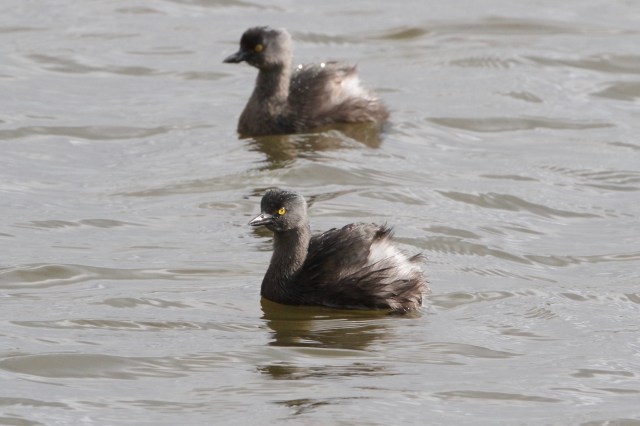
Another trip tick at the Botanical Gardens was Least Grebe

The site at La Sal Vieja produced a number of difficult to see species, including this White-tailed Hawk

Our final stop of the day at Edinburg Wetlands provided some excellent birding in shady cover, including this Buff-bellied Humming Bird – our fourth so far for the trip

Day 5 – transition day

IMG_5334

I forgot to feature this bird in yesterdays post – Roseate Spoonbill. Quite the Bobby dazzler

Today was a transition day, moving south from the Anahuac / High Island area down towards the Rio Grande, stopping overnight at Port Aransas. We birded up until lunchtime, then took the 200 mile, scenically challenging, drive to our hotel. First stop this morning was the coastal reserve at Bolivar Flats. Plenty of shore birds but nothing new over yesterday, except the rather surprising addition of Glaucous Gull. There’d been an Iceland Gull reported at this location over the past week but a birder, staying in the same hotel as us at Winnie, found the Glaucous whilst looking for the Iceland! It seems very odd to see this species, which I associate with Norfolk in mid-winter, straying as far south as the Gulf of Mexico. We caught the ferry to Galveston and checked out a couple of sites – one being Corp Woods which we visited on our last trip to Texas in 2009, the other being Lafitte’s Cove. We did add a couple of new species but generally it was pretty unexceptional.

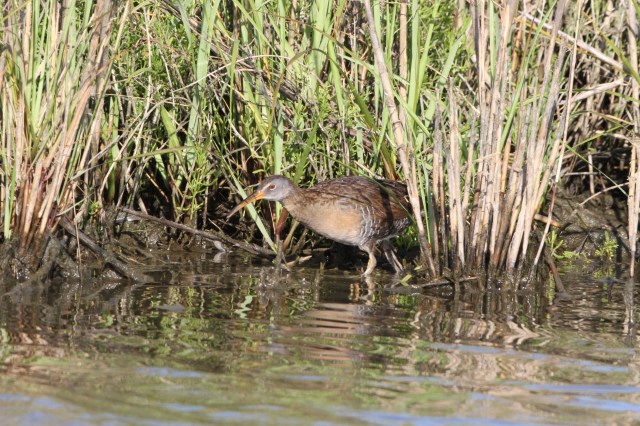
Clapper Rail in the early morning sun – West Frenchtown Road, Bolivar Flats

IMG_5368

Spotted Sandpiper, taken at the same location – like our own Common Sandpiper, only with spots!

IMG_5351

Perhaps the biggest surprise of the trip so far, Glaucous Gull – found by a birder looking for the reported Iceland Gull – Bolivar Flats. Record shots only

IMG_5388