Buff-breasted–Sandpiper at Davidstow airfield gets our Cornish week off to a good start
After the events of the past two weeks we’re taking a well-earned break in Cornwall. On Friday we drove as far as Bristol, completing our journey to Hayle yesterday- via a couple of birding spots. Cirl Bunting have, apparently, had a good breeding season and have been expanding their range. We found them in reasonable numbers around Budleigh Salterton. An update on the bird info. services included a report of the Buff-breasted Sandpiper at Davidstow airfield from Friday. We decided we’d give it a go. The old airfield is a vast tract of grass criss-crossed by disused runways. We drove around until I saw a couple of Ringed Plover at the edge of the main runway, with them was a very smart and approachable Buff-breasted Sandpiper. Nice to get the week off to a good start!
Nice supporting cast – a family party of Cirl Bunting
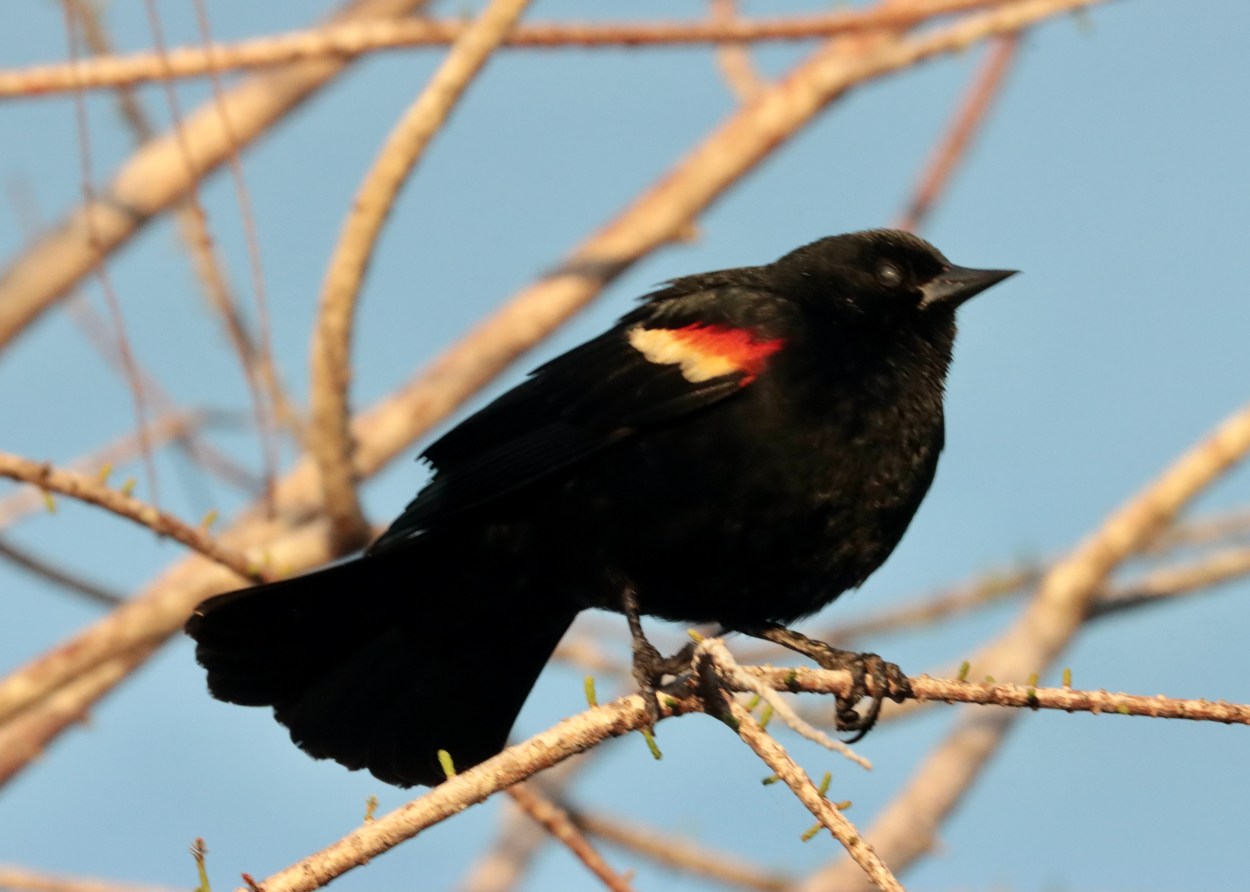
Red-winged Blackbird – universally common throughout our trip (and as a consequence never really photographed properly!)
It took longer than w’ed expected to get to Boston airport because of heavy traffic on the approach but the hire car hand-over, check-in and security were very efficient and we were sitting in the terminal with a beer in plenty of time for our scheduled departure. We were a little late in boarding but nothing the captain assured us which would delay our arrival back in the UK. We pushed off the stand and were just taxiing to the end of the runway when an announcement informed us that a passenger was feeling unwell and we were returning to the stand! It took two and a half hours before we eventually took off! Apparently – I was asleep at the time – due to a strong tail-wind and the need to make up time for those with connecting flights our aircraft actually reached supersonic speed over the Atlantic! A straightforward if somewhat lengthy train ride and we were home by mid-afternoon.
It’s been a superb six week journey, up the east coast of America from Florida Keys to the Bay of Fundy, following Spring bird migration. The inspiration for the venture came from our first Great American Birding RoAd Trip, a few years ago, when we followed the birds from Texas to Washington State. There have been many similarities but some significant differences. Whilst our west coast trip was mainly desert, once we left the Rio Grande all the way to the Pacific coast at Monterey, on this trip it was woods and wetlands which dominated. Most of the birds were familiar to us from our first trip but there were still plenty of new ones to watch out for. As I mentioned in an earlier post, this years migration was running late – three weeks we were told by birders on the Dry Tortugas – and it only just caught up with us at the end. During our last couple of days in Massachucetts we were still watching birds, which were destined to breed in Canada, feeding up along the coast and many of the wintering sea-birds remained. As far as variety was concerned we saw far fewer species on the east coast – just less than three hundred – whereas on GABRaT l we saw more than that in Texas alone and our overall list reached over 460. This time we visited more States – 13 in total, plus a few days in Ontario. America is a country of contrasts and we were struck again by the huge number of people who live in make-shift homes and, on the other hand, the opulence of the ‘haves’, with their ‘week-enders’ from Florida to Maine. In the east, particularly in New England, there is more visible history and culture with stronger echoes of European influence – perhaps less visibility of native American culture than in the west. The ‘gun thing’ is prevalent everywhere, even in National Parks in the north with signs telling you to keep firearms locked up – it’s much more overt in the south. Cannabis is legal in the ‘liberal’ States away from the south. The effects of Covid are still evident – a down-turn in the economy, fewer visitors, hotels being used for the homeless and everywhere a labour shortage. Yet the people were universally friendly and welcoming – with birders very keen to engage and share. By far the largest concentration of birders was, not surprisingly, at the The Biggest Week in American Birding – centred around Black Swamp Bird Observatory and Magee Marsh. For sheer atmosphere, anticipation and excitement it couldn’t have been better. We saw loads of good birds close-up and enjoyed much birding banter along the boardwalks – a great experience. The most notable omission from our bird list was Kirtland’s Warbler which we failed to see at Magee and elsewhere. They are generally a late warbler to arrive back on their very restricted breeding grounds and with the delay in Spring migration we were too early – the first one turned up in Ohio the night before we left for Canada! But overall it’s been a great birding road trip, reinforcing our love of American birds and birders. It was really nice to be joined along the way by our good friends Bob & Sue, Andy, Phil & Carolyn and Neil & Nicola – some great birding moments shared. A huge thanks goes to Jane for doing the lions share of the organising. Until the next time – possibly a trip up ‘the middle’ New Orleans to North Dakota?
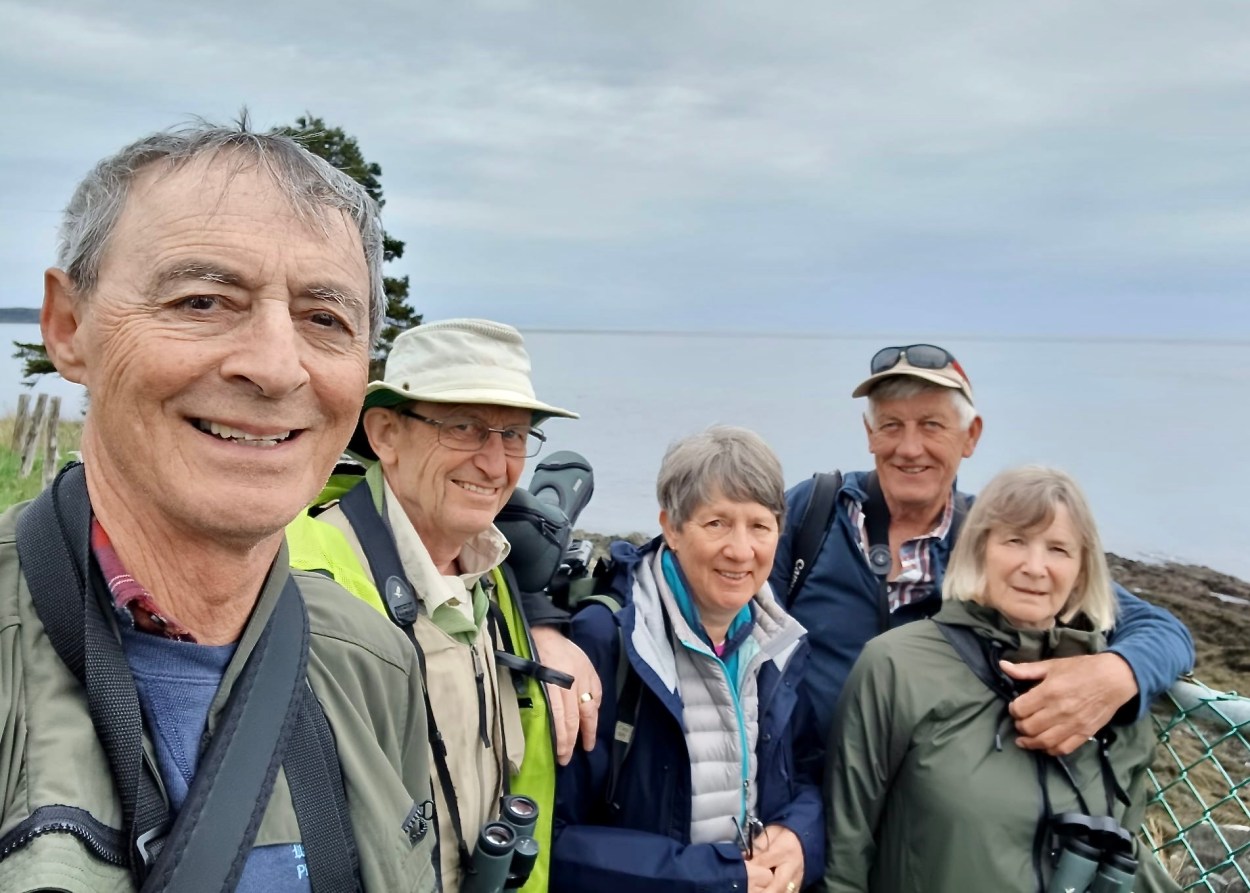
The gang on a final bird walk around Marble Head Neck Audubon sanctuary, before heading to Boston airport for our night flight
It’s time for our journey back to the UK, after an amazing few weeks travelling from southern Florida to the north-east tip of Maine – a total distance of 5414 miles – following the Spring bird migration. We were joined along the way by old friends Bob & Sue, Andy, Phil & Carolyn and Neil & Nicola, saw some great birds and made many happy memories. We’re still checking the lists but it looks like we got pretty close the 300 mark, with 30 new species for America. Not too shabby. Today we did manage to squeeze in a couple of hours birding at two small reserves along the coast, north of Boston. Nothing outstanding but we did see some old familiar friends – a dozen warbler species, vireos, waxwing and more. The only contender for ‘new bird’ were several very dark looking juvenile gulls – American Herring Gull perhaps? After some pretty lengthy delays getting into the airport we are happily checked in, the flight is supposedly on time and we should be back in the UK tomorrow – home to Norfolk, fingers crossed, by the evening. I’ll do a finally round up of the trip when I’m back – signing off for now.
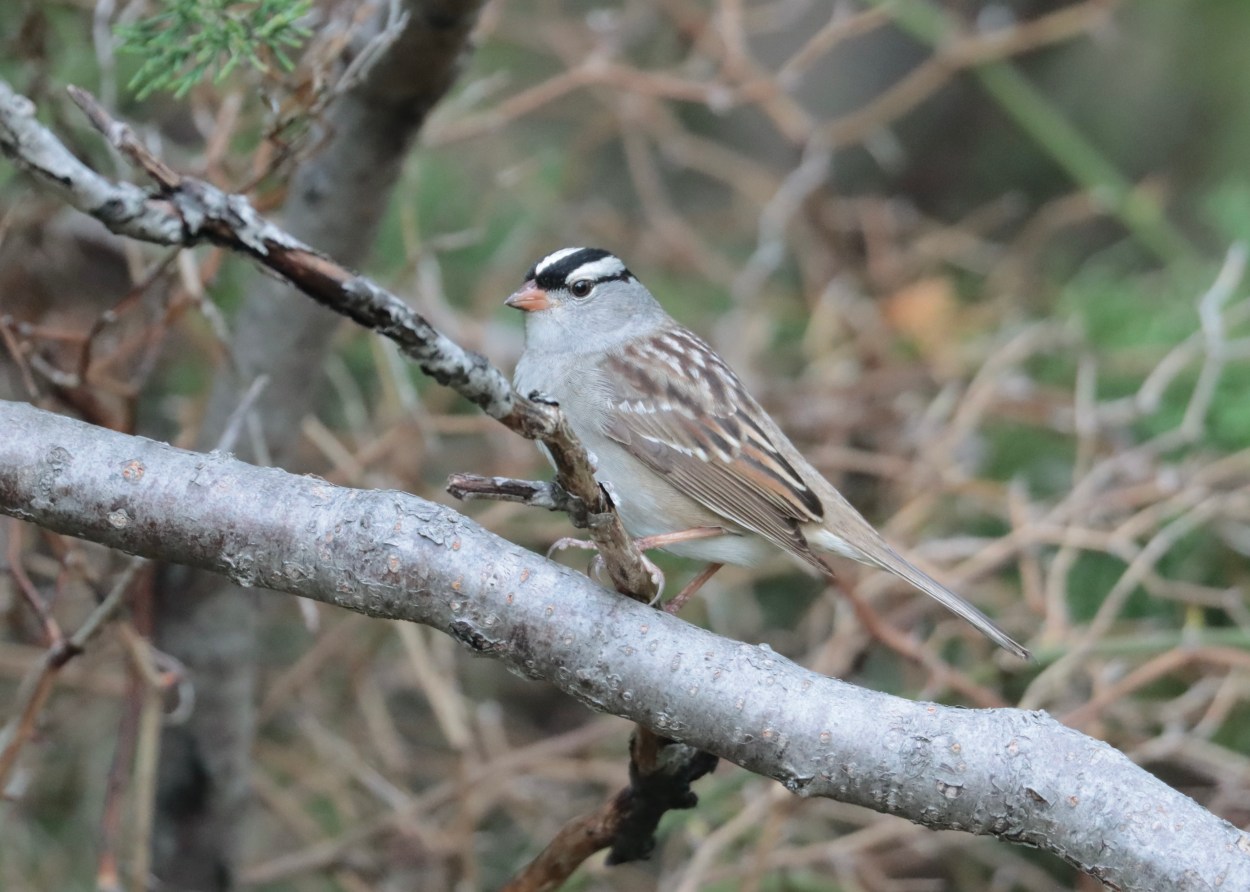
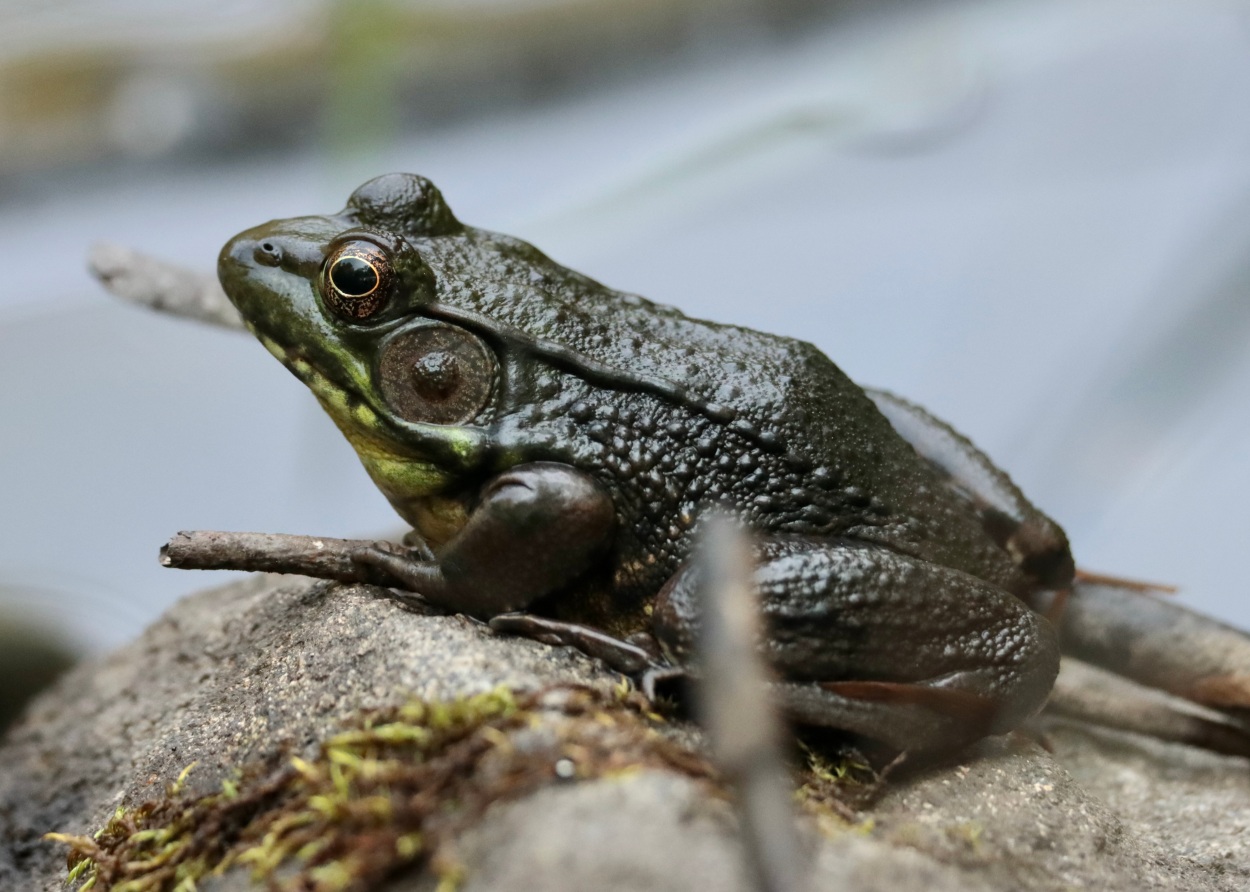
White-crowned Sparrow – always remind me of New Year 2008, Cley Only contender for a new bird today was this dark-looking juvenile gull – American Herring Gull perhaps?Finally, a frog with a drawing pin in it’s neck!
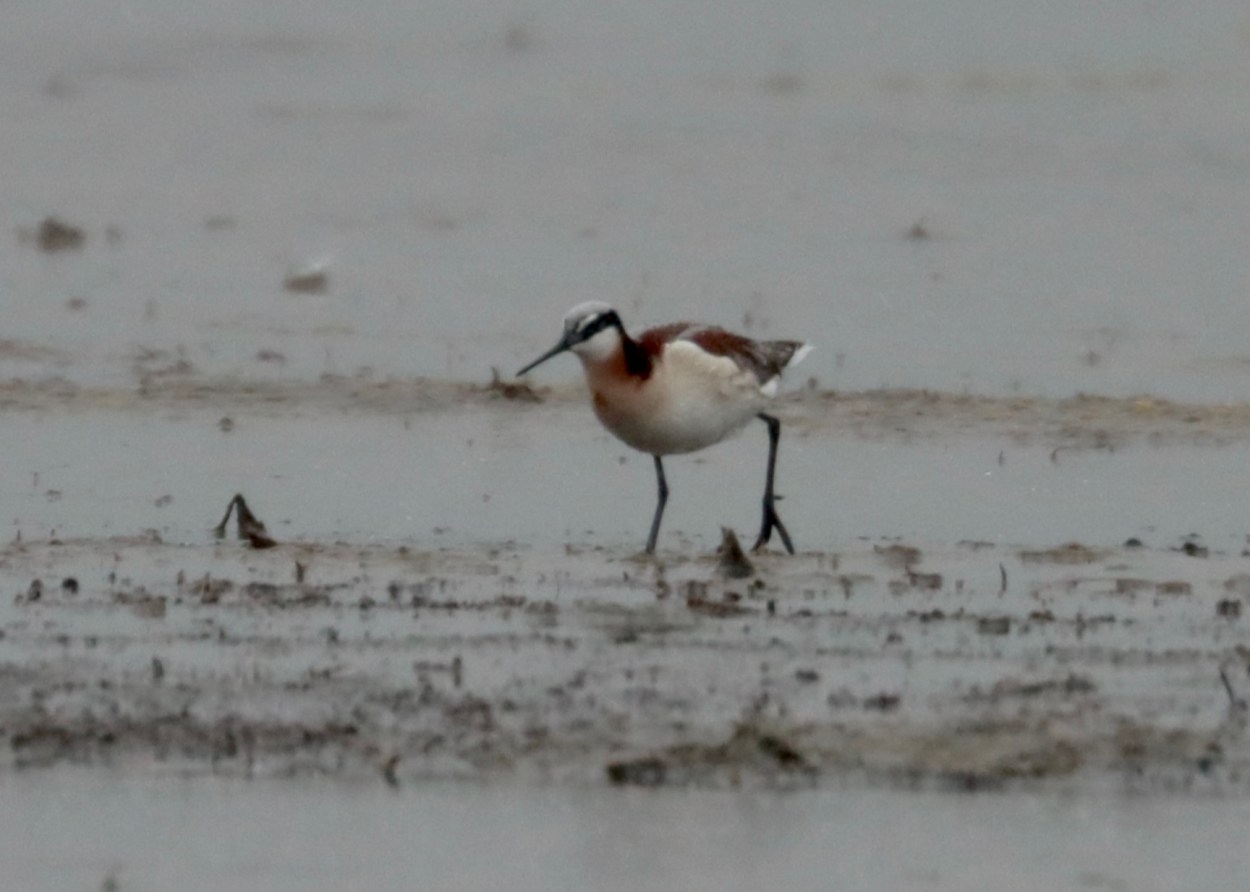
Wilson’s Phalarope at Parker River NWR was definitely not on our radar – record shot in the pouring rain
The morning was taken up with a drive of nearly 250 miles from our Baxter State Park base at East Millinocket to Parker River NWR – rendezvous point with Andy’s friends Lisa & Mike from Boston. It started to spit on our approach to Parker River and by the time we’d entered the park it was a steady drizzle. In the circumstances it’s remarkable that we saw any birds at all but whilst waiting for Mike & Lisa to arrive we did manage to see a couple of sparrows on the nearby salt marsh – turned out to be Saltmarsh Sparrow! Solitary & secretive, they nest along the narrow coastal strip of New England – first seen on the Outer Banks. We headed off with our hosts to explore the rest of the reserve but, in the worsening weather, eventually decided to abandon the idea and retreat to a local cafe for tea and cake. After a hour or so of fascinating conversation we said our farewells and, more in hope than expectation, decided to give the shore birds one last go. On arrival at the Salt Pannes there was only a handful of waders visible. A quick scan resulted in an involuntary expletive from me ‘……. not a dot day!’ – a Wilson’s Phalarope was busy ‘spinning’ on a nearby pool! It flew about, being harassed by the other waders, before joining its partner and eventually flying off in to the gloom. A remarkable end to a generally dismal day – made much better by the engaging company and the final Phalarope finale. Tomorrow we head for the airport, with one last morning birding session before we go – the end of our incredible Great American Birding Road Trip ll.
Saltmarsh Sparrow in the pouring rain – much better views than on the Outer BanksOur engaging hosts Mike & Lisa, with tea and cake, as the rain poured down outsideA summer plumage Willet in the pouring rain
Goldeneye – the bird which saved our bacon. Found mid-afternoon on Sandy Stream Pond – Baxter State Park
Today we returned to Baxter State Park to bird the southern section. When we created the GABRaT ll itinerary we deliberately chose Baxter SP because of it’s elevation and general proximity to Canada – these factors combined make it a special location for a couple of species which are hard to get in north-east America. Today was our opportunity – or so we thought – to hunt them down. When we arrived at the south gate we discovered that the road was closed well before the high montane habitat which we needed. So instead we spent the day walking the trails (doing the hard yards – literally) and searching the various camp grounds but without success. It was therefore well into the afternoon before we finally found a new bird for our GABRaT ll list and narrowly escaped a ‘dot day’! The bird that saved our bacon was Goldeneye – a reasonably familiar bird to us in Norfolk but a scarce bird on my American list. During the course of the day we did see more warblers – adding Blackpoll to the Maine State list. We also enjoyed some stunning scenery. Tomorrow we begin the long journey back to Boston and our flight home to the UK (fingers crossed) on Sunday.
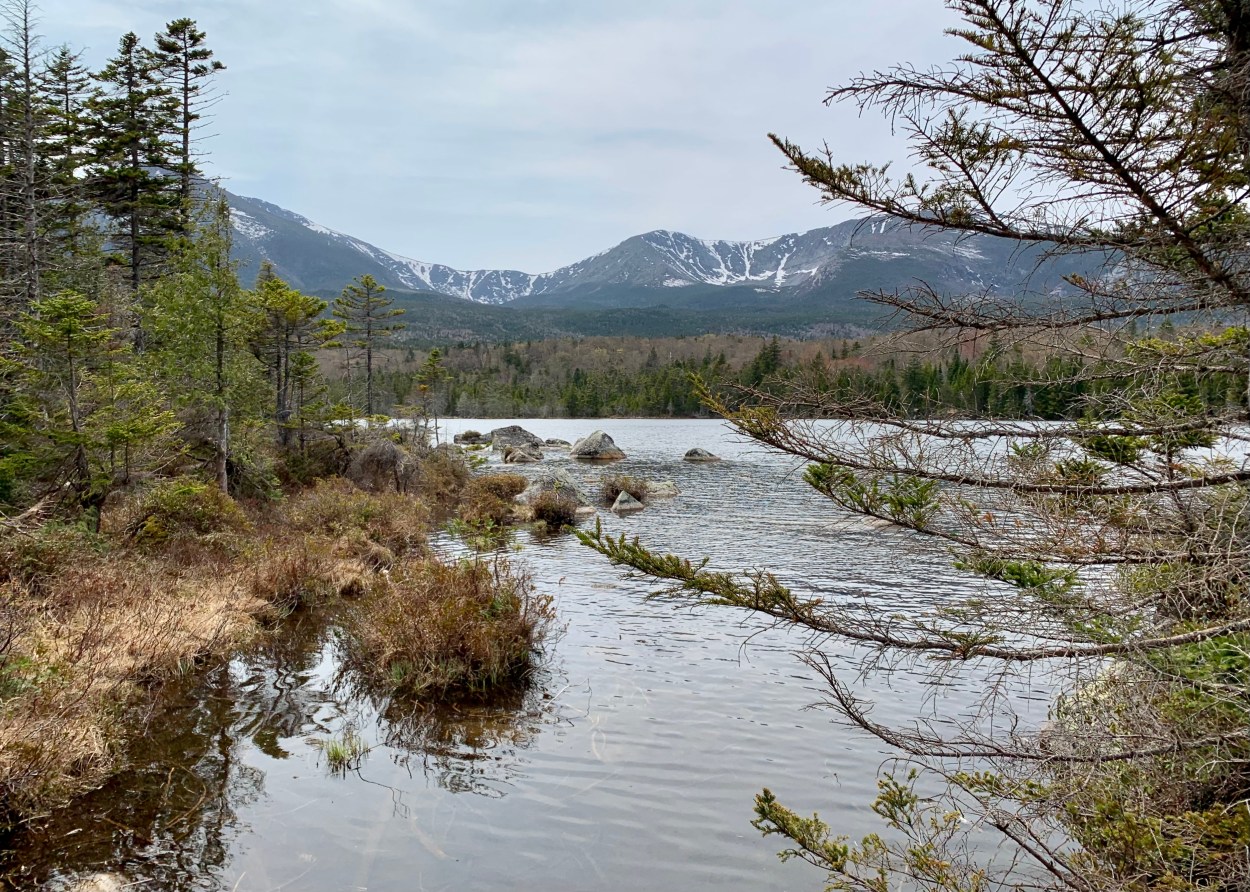
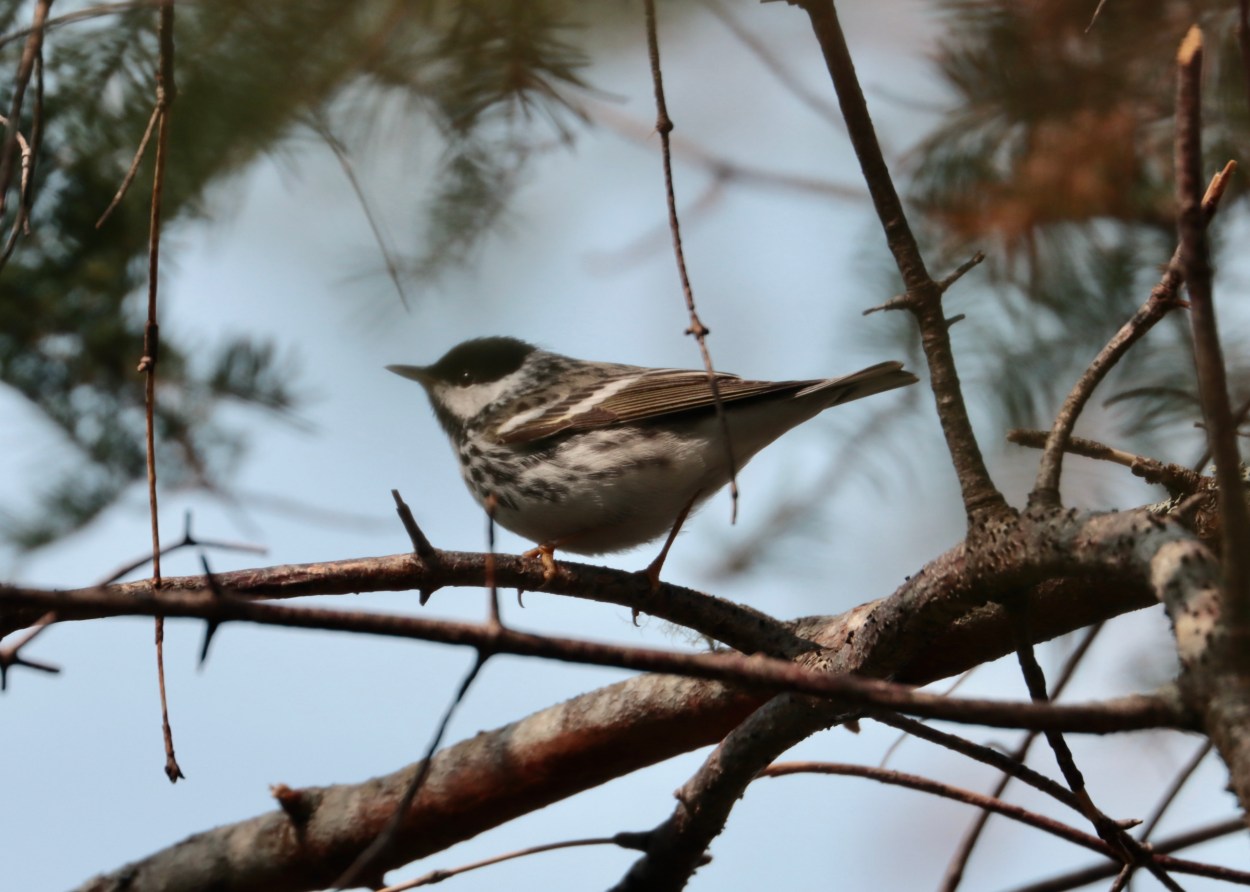
Sandy Stream Pond – with the stunning back-drop of snow-cloaked Mount Katahdrin in the backgroundBlackpoll Warbler – first seen in Florida – now firmly on the Maine State list
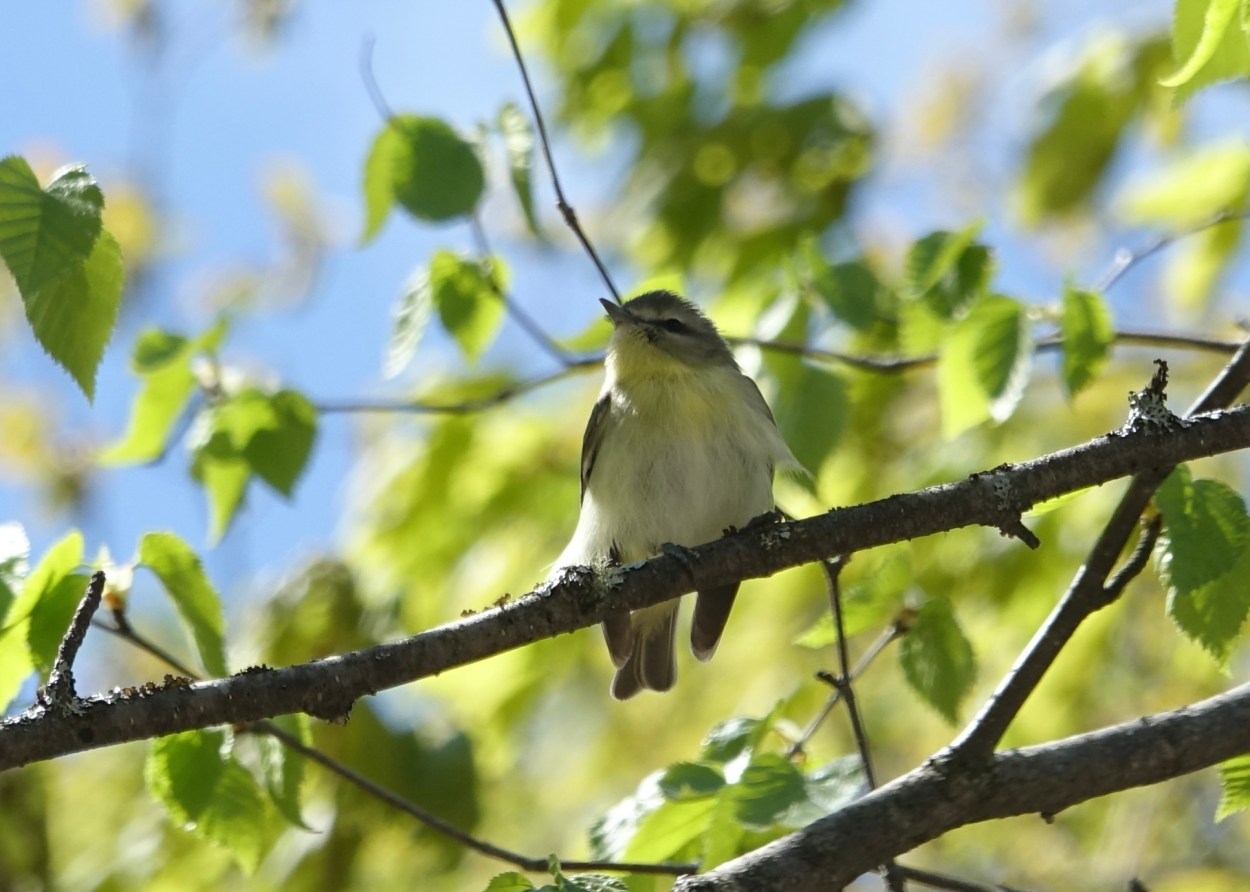
Philadelphia Vireo saved us from a ‘dot day‘ – a subtle version of Red-eyed Vireo, with less distinct head stripes and a lemon throat (photo courtesy of Jane) An uncommon vireo which breeds in southern Canada and north Maine
Baxter State Park is a 200,000 acre block of mountainous forest which includes Mount Katahdin, 5269 ft – the highest peak in Maine. There is a 40 mile drive which connects the north and south gates to the park. We got up early and drove the 140 mile drive to the north gate ready to enjoy a leisurely drive through the park to exit at the south gate, close to our base in East Millinocket. All was going well until the Park Ranger who greeted us at the north entrance told us that the road was still closed! We were able to drive nine miles into the park before turning back, and tomorrow we plan to do the southern half, as far as the road is open. Apparently the whole route is unlikely to open for the summer for another couple of weeks. We did however see a nice selection of warblers – all of which we’d seen at some point on our travels north from Florida – and other species of interest. The best birds of the day came within the first half mile of entering the park and at the very end, just after we’d left. A very vocal Philadelphia Vireo saved us from the anticipated ‘dot day’ and a Black-headed Woodpecker, flying low over the road on our way home, was a totally unexpected bonus, though unfortunately not seen by all the occupants of the vehicle.
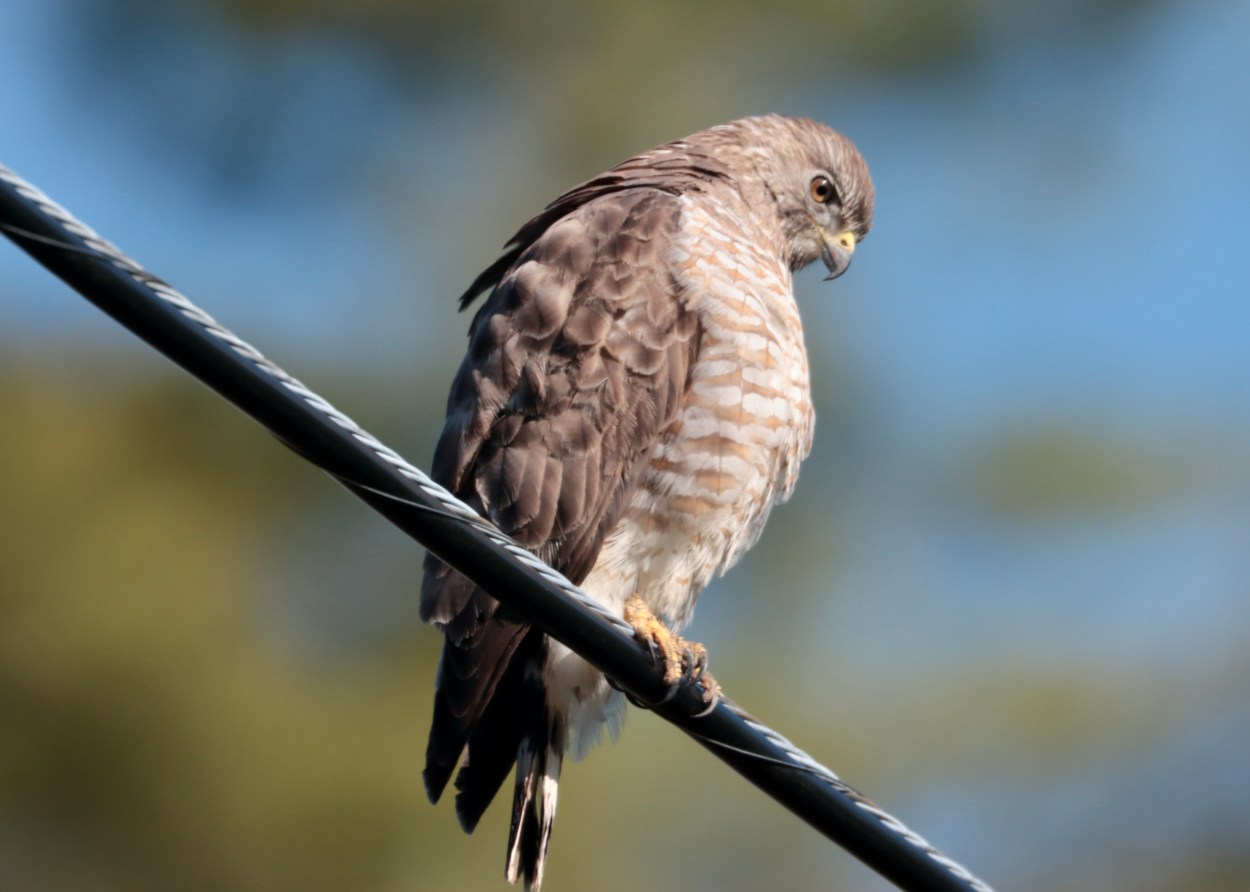
Broad-winged Hawk sat on roadside wiresThis Common Loon (Great Northern Diver) was our lunch-time entertainment, fishing in one of the many lakesWe’ve seen Blackburnian Warbler in various places during our journey north, following Spring migration – stunning nonetheless
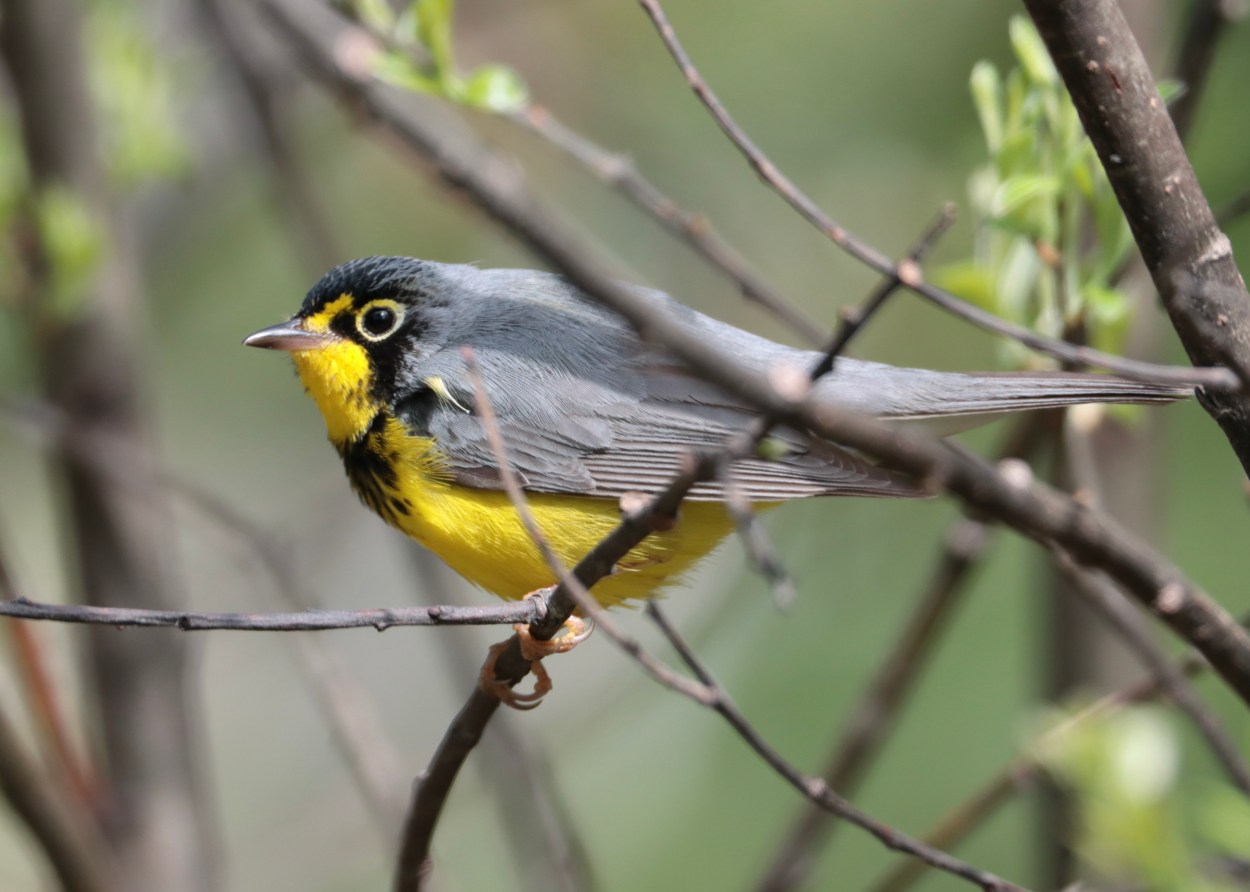
Canada Warbler comes to our rescue to prevent a ‘dot day’– a really stunning addition to my America list
We’re in the far north-east corner of America, close to the border town of Calais – lots of countryside but not many birds. We’ve spent the day, on and off, in the National Wildlife Refuge of Moosehorn (Baring Division). The birding has been challenging, with the weather alternating between cool sunshine and sleety showers. The temperature has stuck at 50 deg F or less, with a brisk north westerly wind. A combination of walking and driving has given us some good views of warblers and flycatchers but little else. We’ve searched long and hard for grouse sp. with no luck – despite the visitor information sheet giving the status as ‘abundant’! It felt very much like today would be a ‘dot day’ – after all we’ve been expecting it now for the past week – but then a splendid male Canada Warbler came to our rescue. It’s difficult with these New World warblers to pick a favourite, but this one must be in my top three. It also brings our GABRaT ll list to 280 (plus the extra Florida ferals) and our warbler count to 30 species – not too shabby.
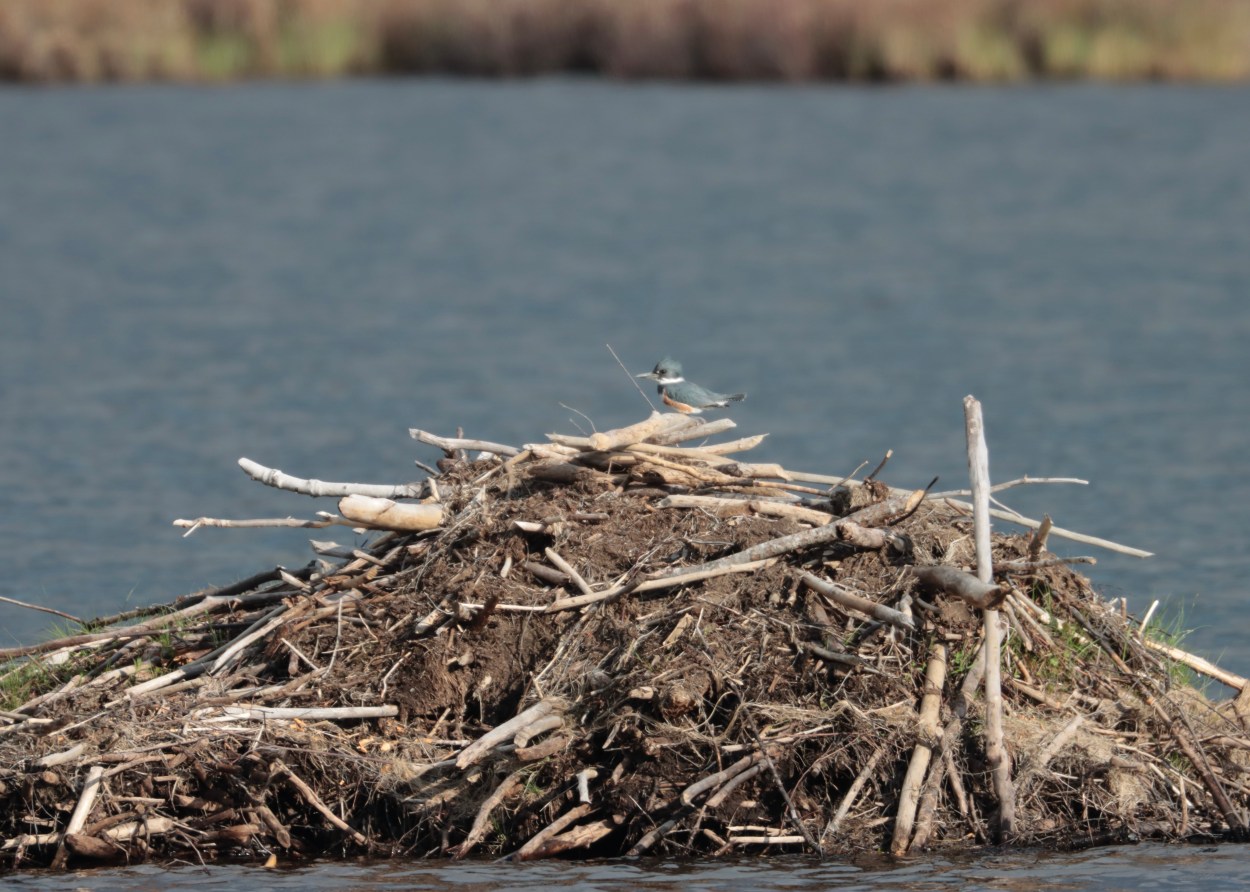
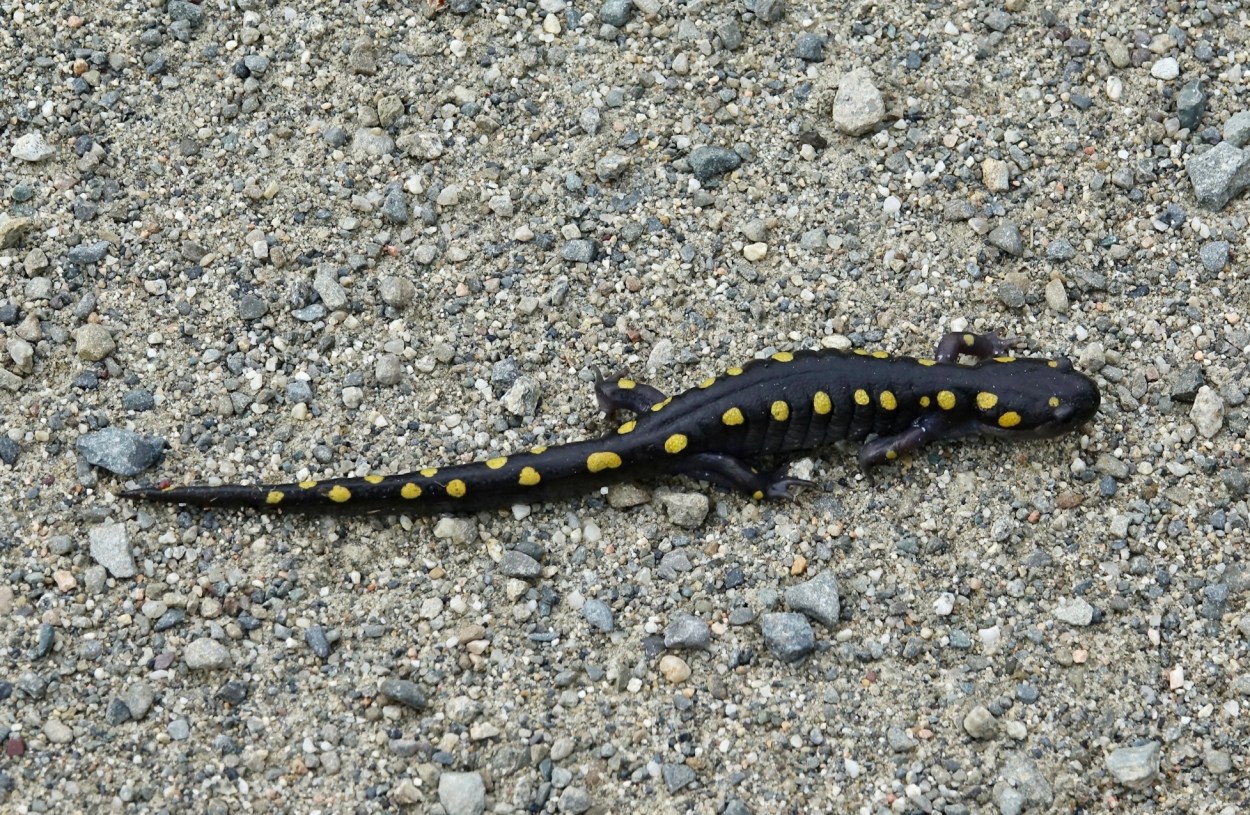
What we lost in volume and variety we made up for in terms of close views – this male American Redstartshowed well in Moosehorn NWRAs did thisChestnut-sided Warbler – a particular favourite On our evening tour of Moosehorn NWR this Belted Kingfisher was sat on top of a Beaver lodgeThisYellow-spotted Salamander crossing the road was a a nice surprise! (photo courtesy of Jane)
The default Loon is Common (Great Northern) – seen at a number of inland and coastal location during the past week
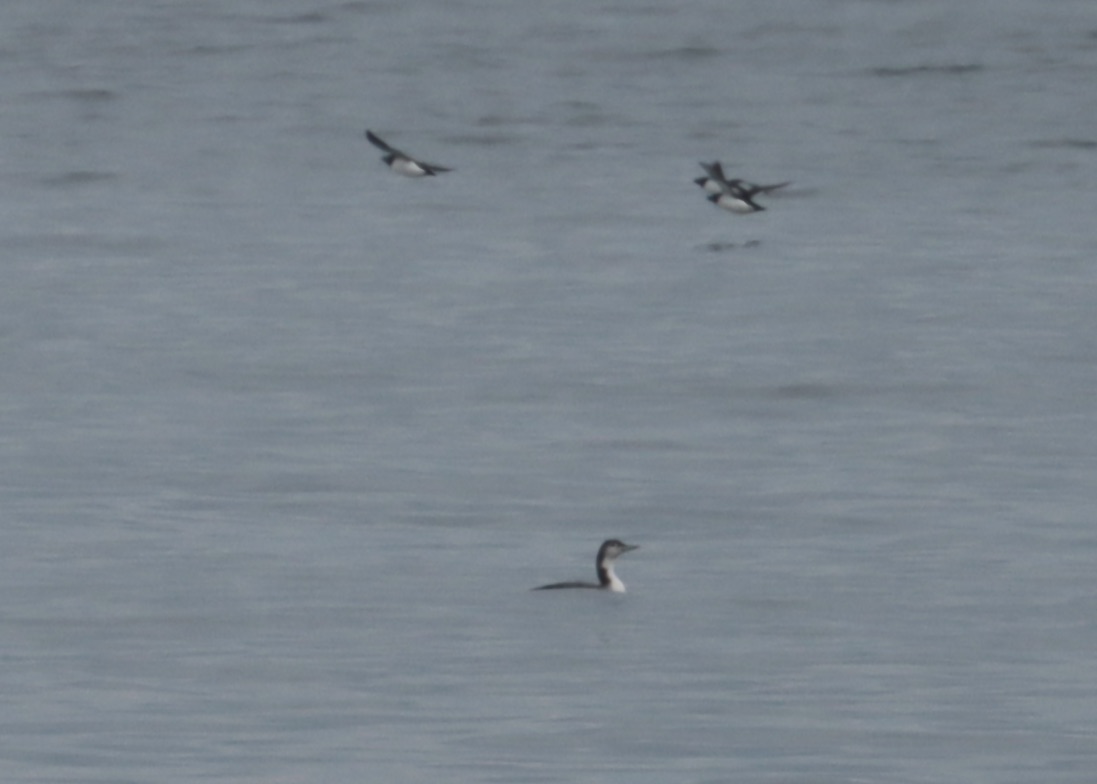
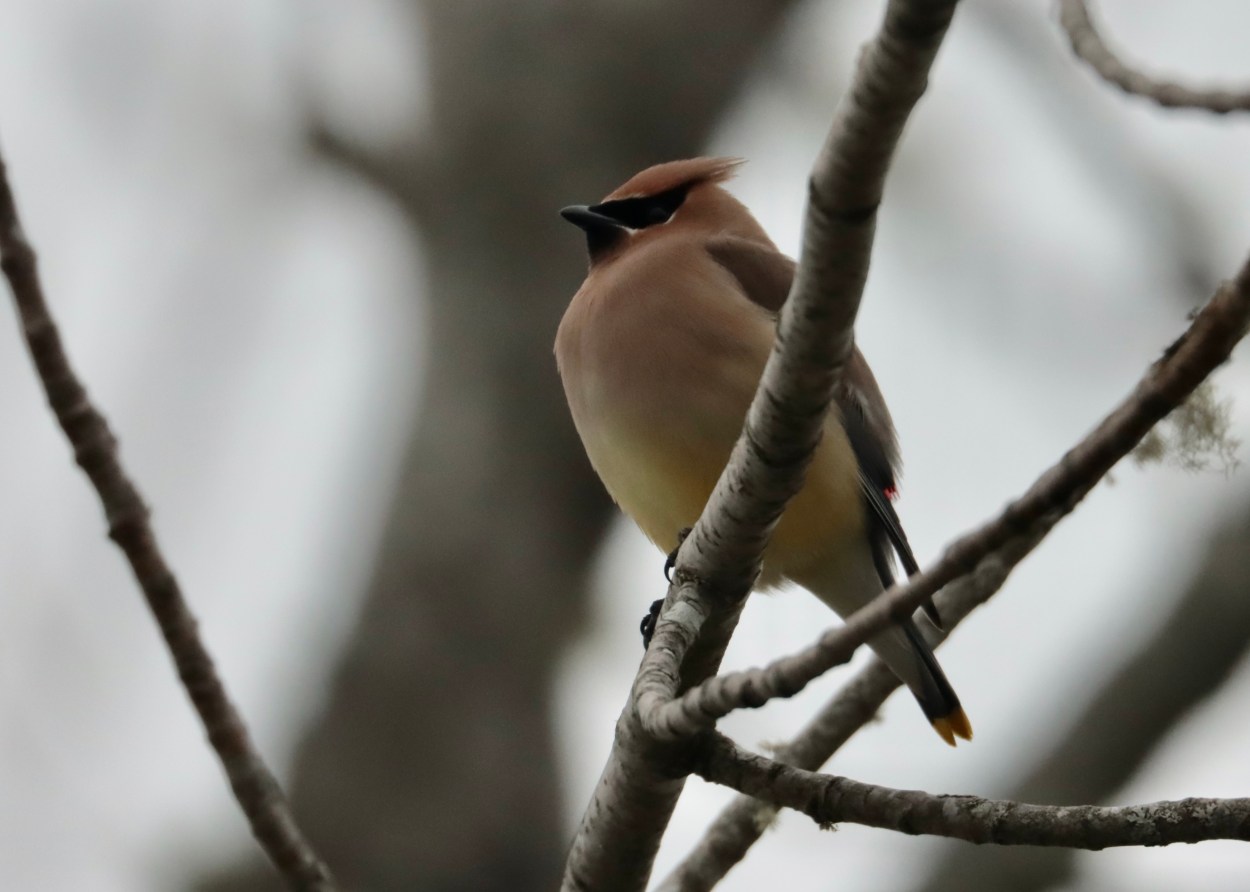
Today we’ve driven to the furthest point east in the United States – Quoddy Head lighthouse. As well as being an interesting historical site and a place of wild rugged beauty it also produced some excellent birding. We began the day at Petit Manan National Wildlife Refuge where from The Point you can look across the Gulf of Maine to Petit Manan Island – breeding location for Atlantic Puffin. However even with a ‘scope we couldn’t see a single auk-like bird. We did see lots more sea duck though and, just as we were about to pack up, Bob found a Red-throated Loon – a GABRaT ll trip tick! We then headed for Quoddy Head as it started to rain. Two hours later we arrived at our destination and, remarkably, it stopped raining. We ate lunch whist scanning the birds using the Grand Manan Channel, between The States and Canada. More sea-duck, several Common Loon and top bird, albeit briefly, several Razorbill. This is apparently the most reliable place in America for this rare auk. A distant Loon caught our attention as another possible Red-throated – after careful scrutiny it turned out to be a Pacific! Three Loons in one day – remarkable. In the bushes on the Head we found several good warblers and later, on the run-in to our log cabin base at Nash’s Lake, near Calais, we finally caught up with Cedar Waxwing – a trip tick for Andy and Bob & Sue.
Today, at Petit Manan Point we added Red-throated Loon to the trip list – avoiding the prospect of a ‘dot day’Then at Quoddy Head we managed to find a Pacific Loon – whilst watching for Razorbill. Both species caught in this one photo..Here’s us at the most easterly point in the USA– Quoddy HeadRecord shot of Cedar Waxwing – a trip tick for Andy and Bob & Sue
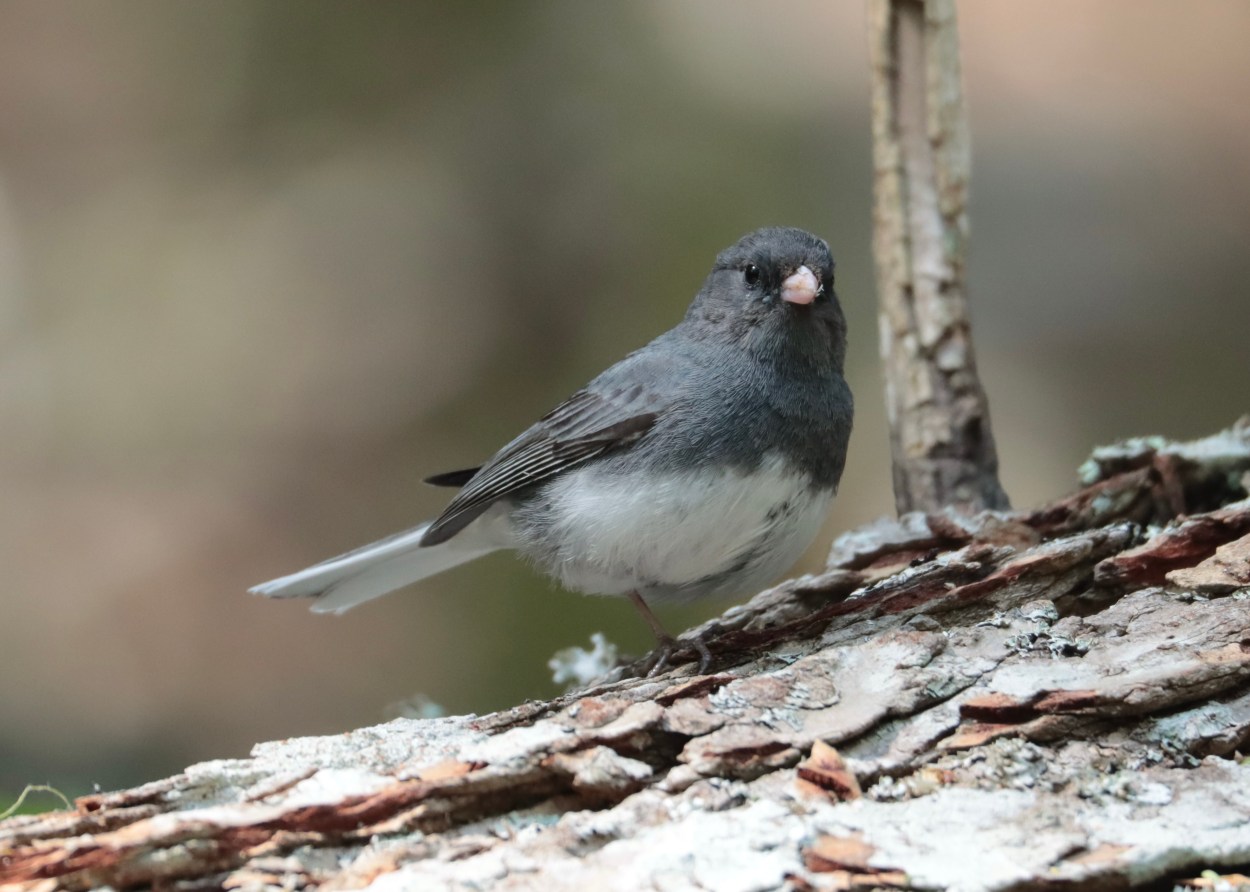
Slate-coloured Junco – a surprisingly late addition to the trip list
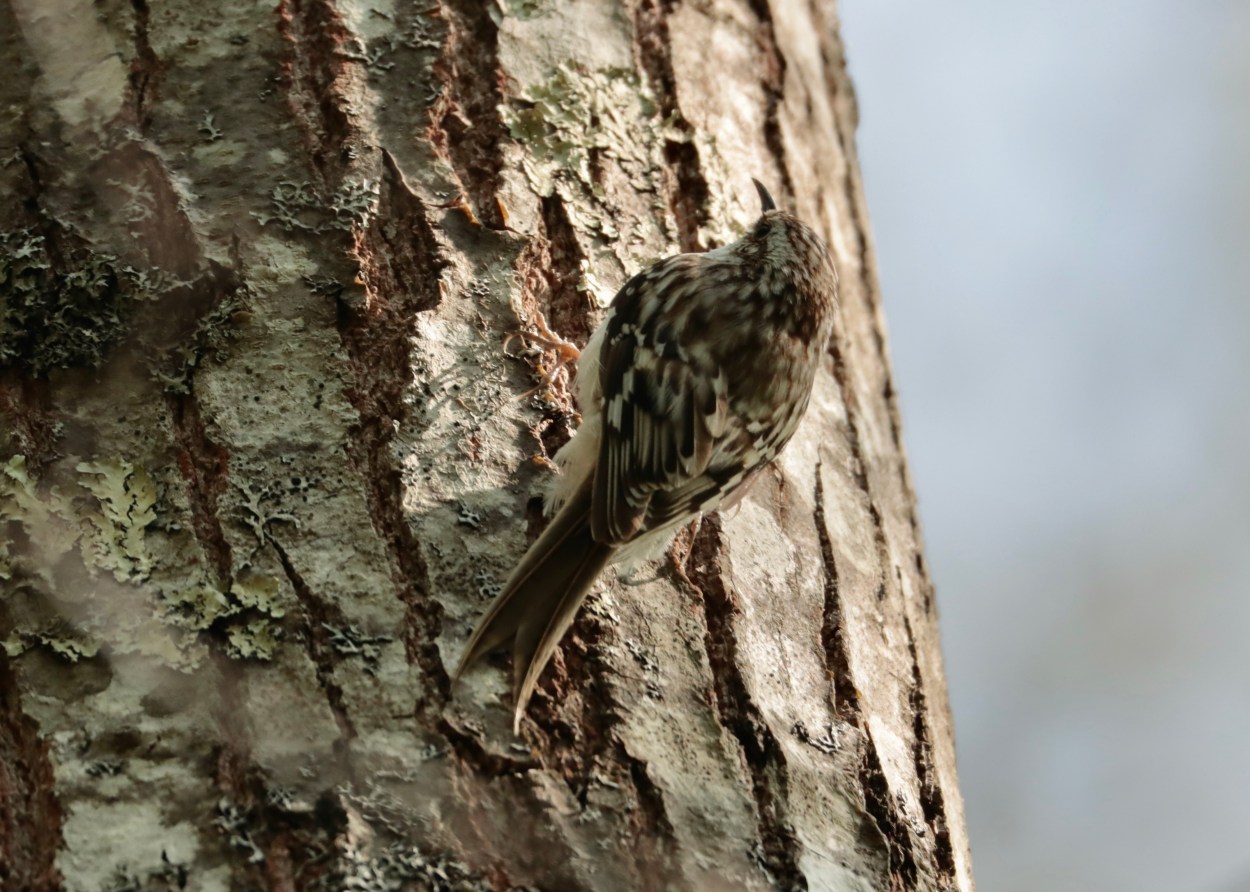
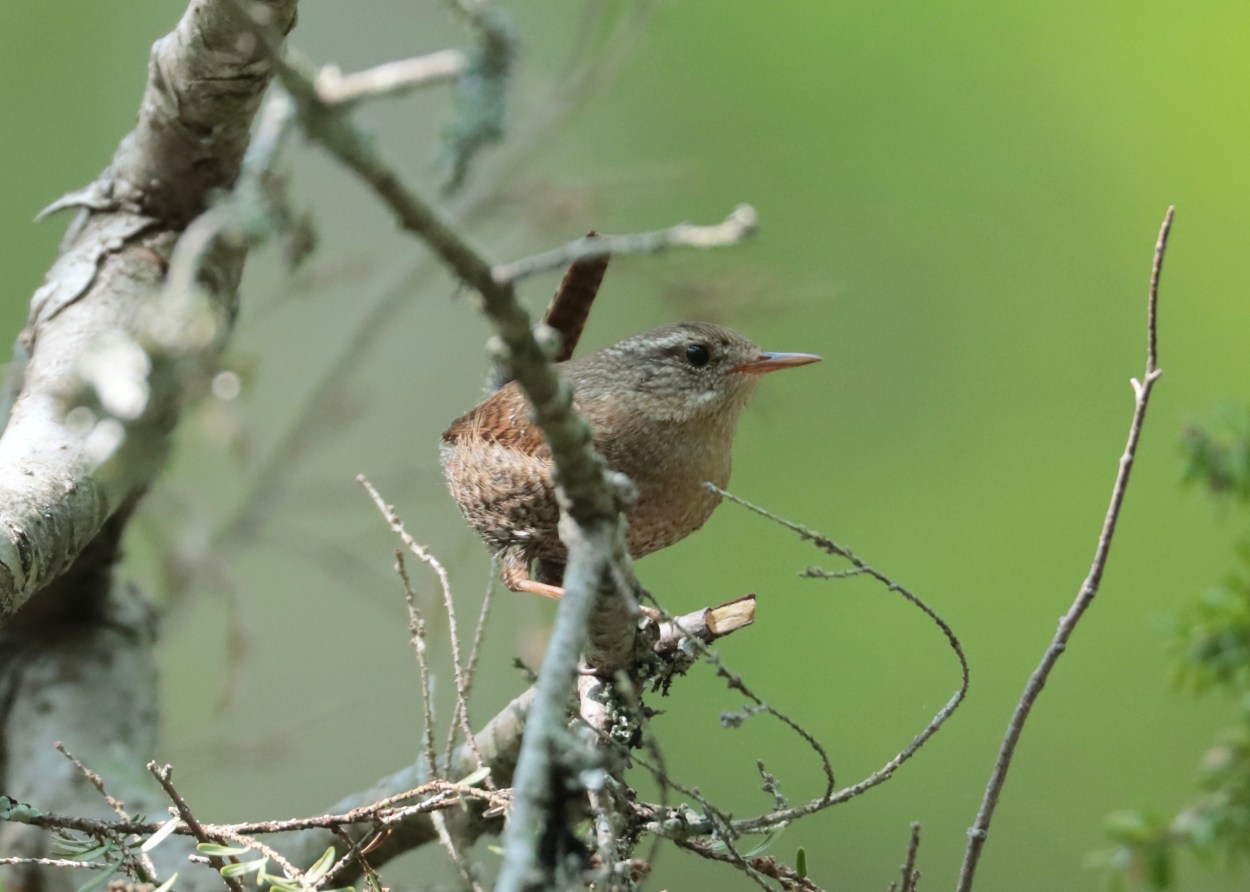
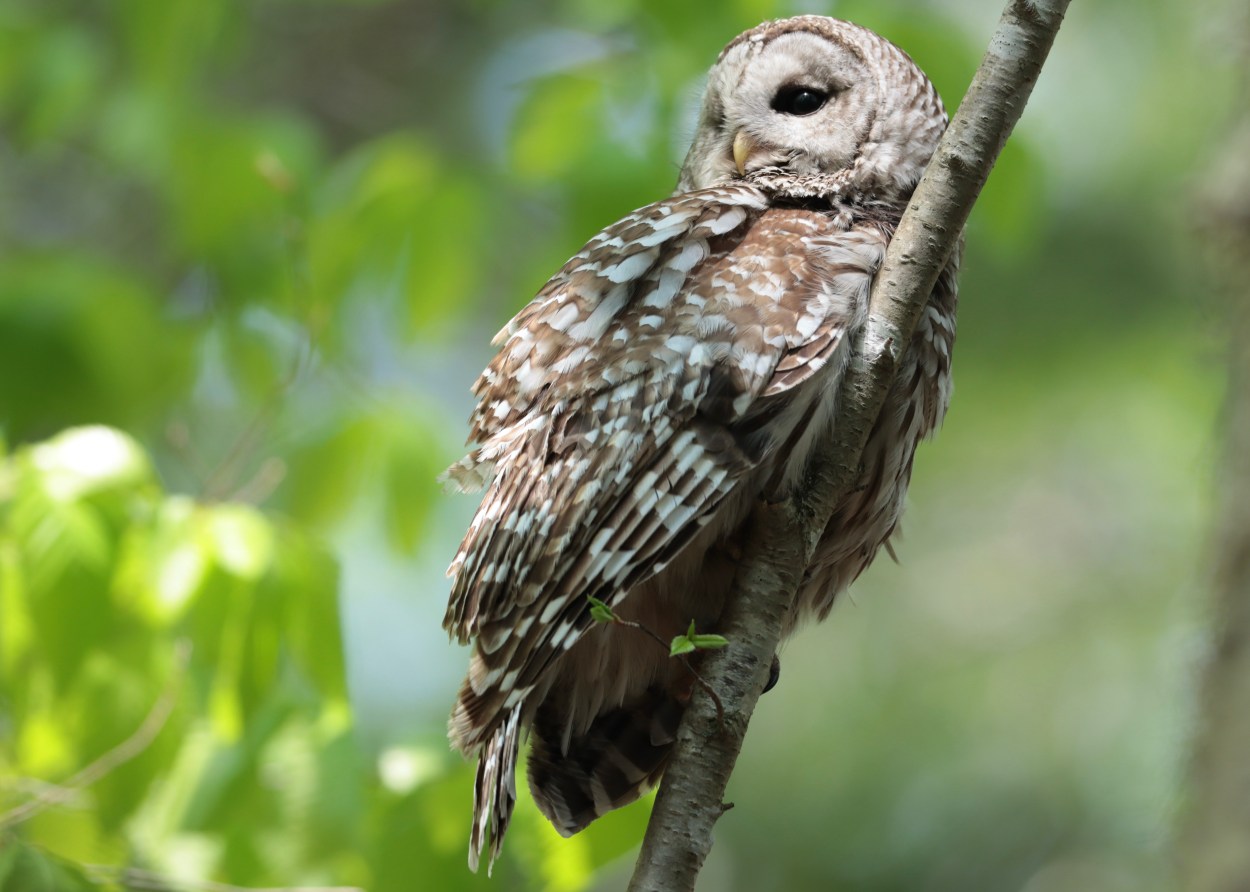
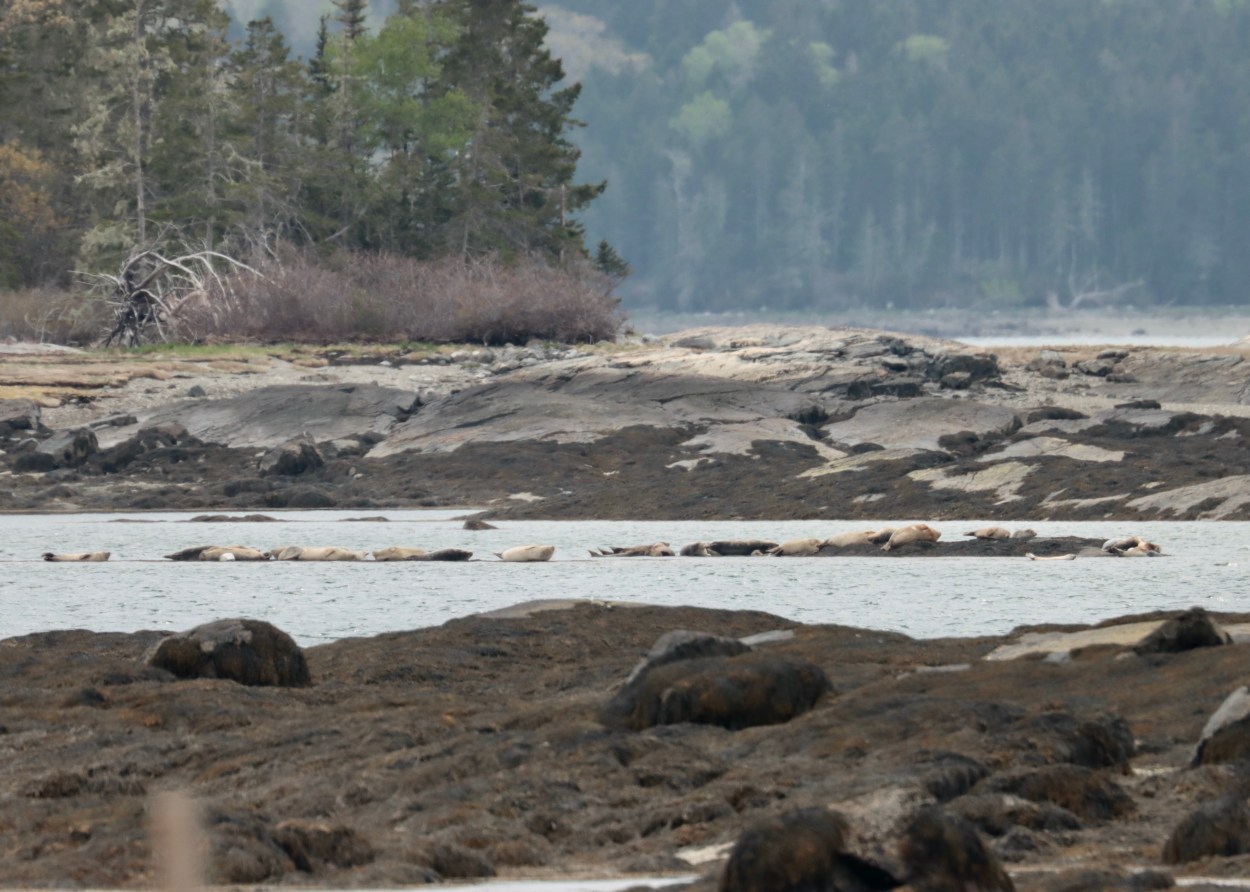
Described as the ‘crown jewel of the Atlantic coast’ Acadia National Park is nearly 50,000 acres and constitutes approximately half of Mount Desert Island, which lies off the north coast of Maine. The main attractions and birding areas are accessed off of a loop road, which is generally open May – November. A variety of habitats attract a good selection of birds which we spent the day exploring. Our first trip tick came as we crossed the causeway to the island. Several flocks of sea duck were gathered around the off-shore lobster farms, these included all three species of Scoter – Surf being our new bird, Long-tailed Duck, Common Loon & Red-necked Grebe. A mid-morning walk along the trails around the Abbe Museum and native plant gardens produced some excellent birds and another three trip ticks – Dark-eyed Junco, Winter Wren and Brown Creeper. The latter two, looking very similar to our own Wren and Tree-creeper, could have been on a walk around Felbrigg Lake. Highlight of the excursion was however stunning views of Barred Owl – a trip tick for Bob & Sue and Andy. During the afternoon we visited other locations, adding Laughing Gull – a scarce summer visitor to the Maine Coast – to our Maine State list. Harbor Seal, which came on a walk towards the end of the day, was a new mammal addition.
Two woodland additions to the trip list reminded me of a walk around Felbrigg Lake – this is Brown CreeperAnd Winter Wren – which is the same species as our own Wren
But the ‘show-stopper’ for us, and a number of walking parties along the trail, was this very obliging Barred Owl
Harbor Seal (Common Seal), a mammal tick for the trip, came on a walk at the end of the day
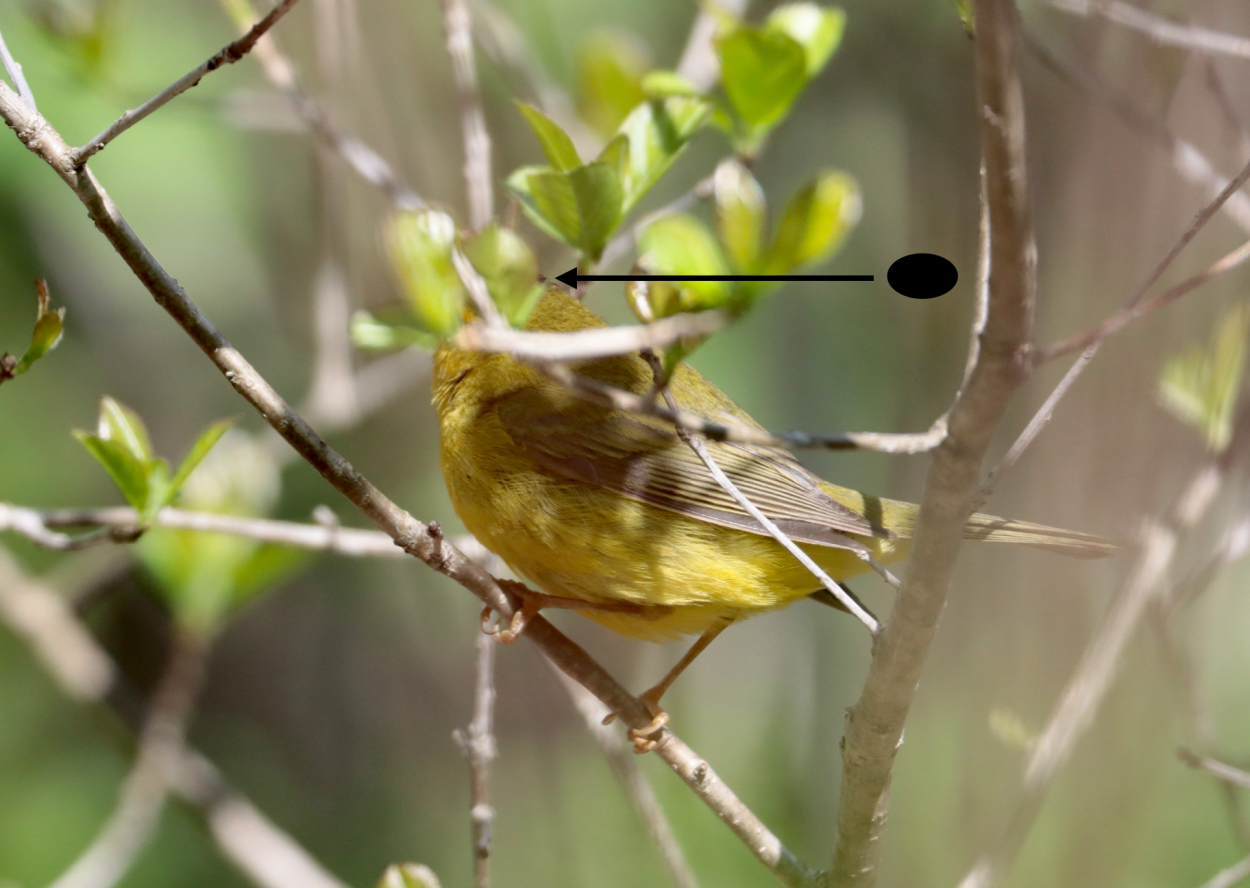
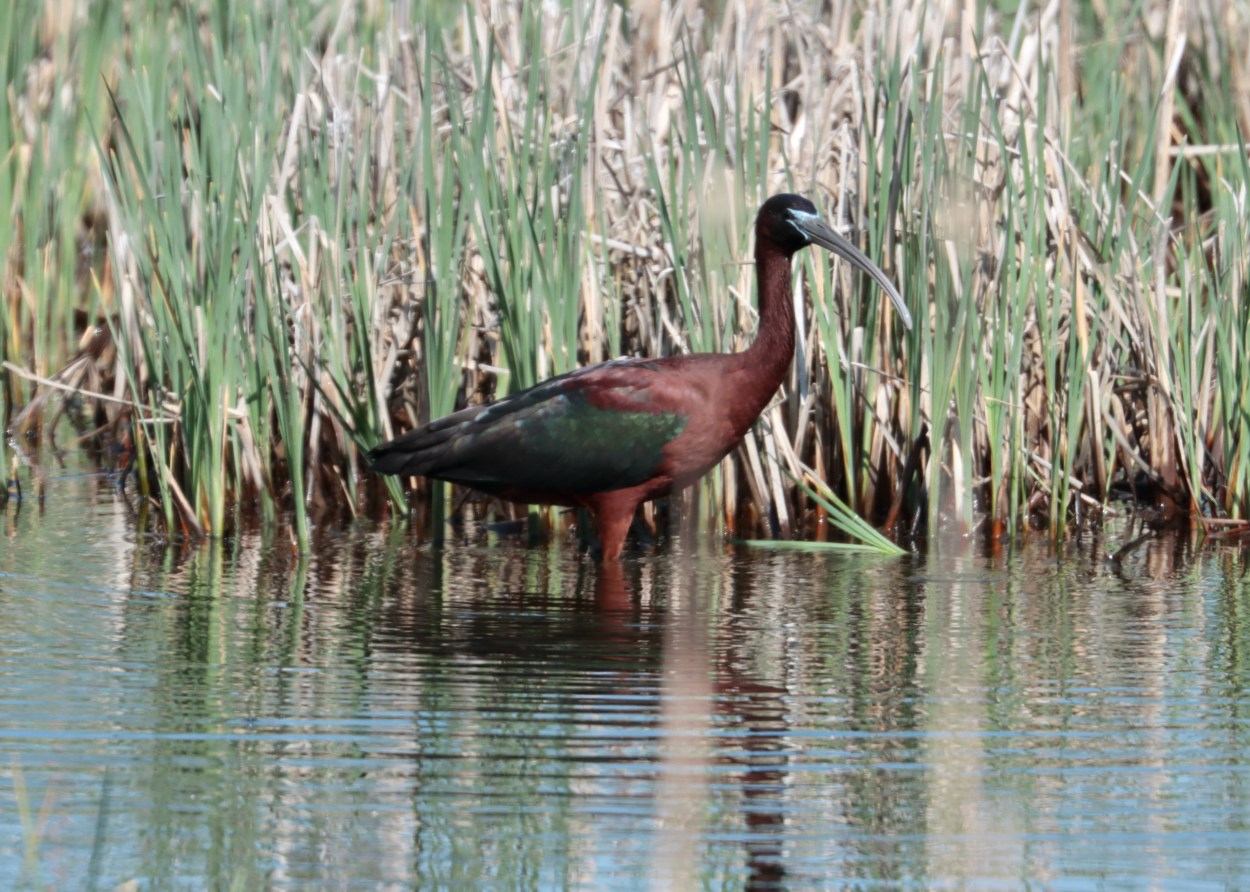
Today was the day when we said farewell to Neil and Nicola, who joined us before the Biggest Week in American Birding in Ohio. It’s been great having you guys along. Thanks Nicola for finding some great birds and to Neil for being Phil’s chauffeur and personal valet – safe journey home. Meanwhile we, the remaining five in the party, started our day at the Audubon reserve of Scarborough Marsh, a site which was on our radar for the Global Birding Day but we ran out of time. Within a few minutes of pulling into the carpark overlooking the marsh we’d had several species missed the day before, including Glossy Ibis and several wader sp. Oh well, that’s birding for you. Still it did provide us with our only tick of the day – a Wilson’s Warbler – which have just reached Maine on their journey north. They are a lovely little all-yellow warbler with a black skull-cap, which breed as far north as the timber line in Canada and (sensibly) winter in Mexico. After Scarborough Marsh we drove north-west through rural Maine to our next base at Ellsworth – through an interesting landscape of hay meadows, mixed forests and wild Blueberry clearings. We finished the day at the Stanwood Wildlife Sanctuary where we saw more migrants and had a closeup and personal experience with the local mosquito population. Today we’re in the Acadia National Park.
A near-perfect shot of Wilson’s Warbler which saved us from a dot day. Only trouble is it’s missing the essential id feature, a black skull-cap. You can’t be lucky all the time!Glossy Ibis – sadly missed from our Global Birding Day list but caught up with at Scarborough Marsh Hermit Thrush – another of those miniature New World thrushes













 Trevor On Tour